中文简体
 English
 日本語
 русский
 Español
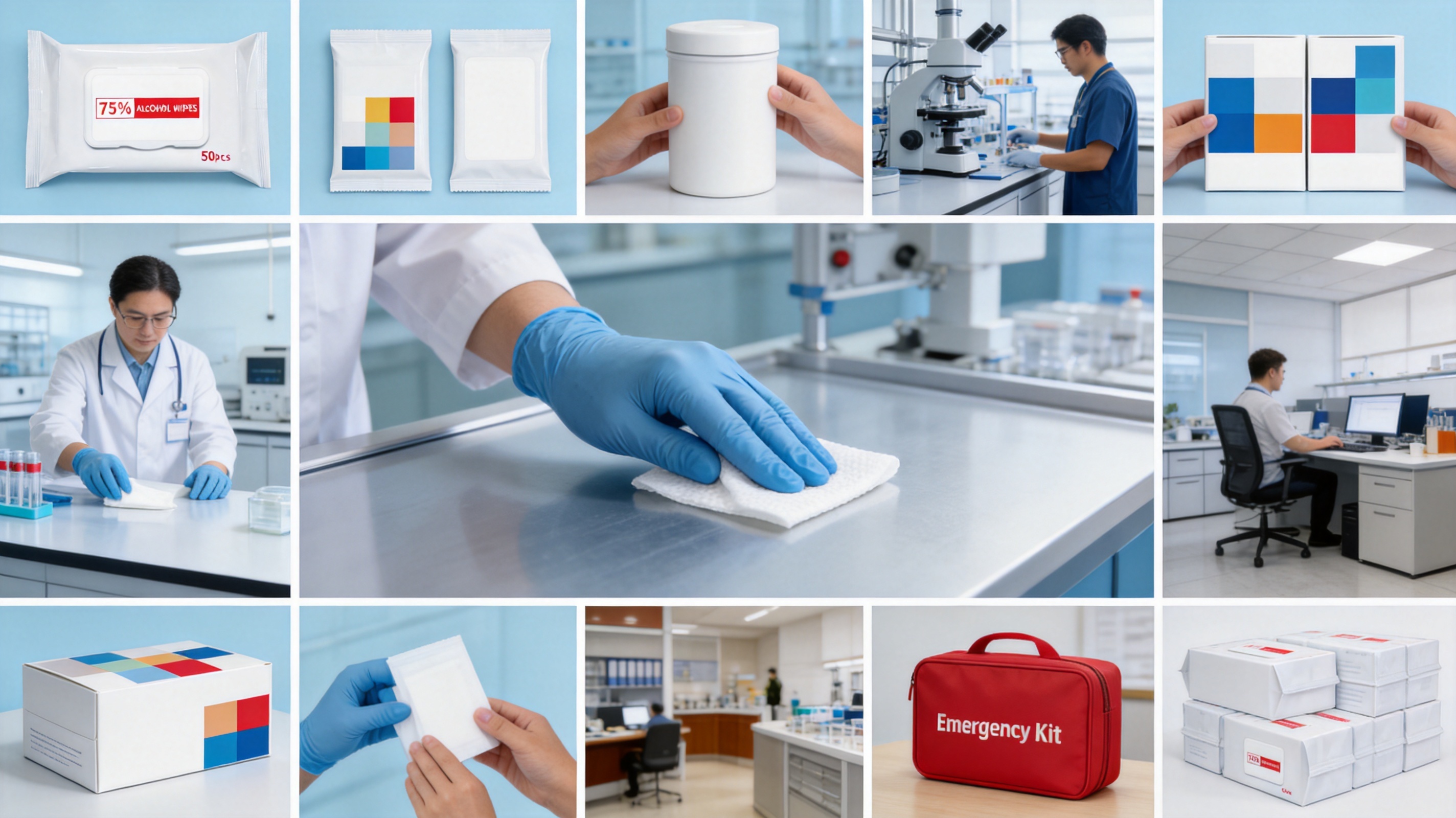
Alcohol wipes are an essential part of modern hygiene, medical, industrial, laboratory, and commercial cleaning programs. Designed for rapid, convenient, single-use disinfection, these pre-moistened wipes combine a soft nonwoven substrate with an alcohol-based solution. The result is a practical product that can be supplied in individual sachets, bulk packs, refill formats, canisters, and other packaging configurations to meet the needs of professional users.
The 75% alcohol wipe is particularly valued because its alcohol concentration is widely recognized as an effective level for routine disinfection when used correctly. The formulation can provide rapid wetting, convenient coverage, and reliable cleaning support for hands, skin, and suitable hard surfaces, subject to the applicable product instructions and local regulations. For healthcare distributors, private-label brands, industrial suppliers, laboratories, institutions, and wholesalers, a professionally manufactured 75% alcohol wipe offers a balance of performance, usability, customization, and supply efficiency.
This article examines the product’s construction, performance characteristics, manufacturing process, customization options, quality controls, packaging formats, and commercial advantages. It also explains why an experienced integrated manufacturer can provide greater value than a supplier that only converts or packages pre-made materials.
Understanding 75% Alcohol Wipes
75% alcohol wipes are disposable wipes saturated with a solution containing approximately 75% medical alcohol, depending on the approved formulation and destination-market requirements. The alcohol may be based on ethanol or another permitted alcohol ingredient. The final composition, labeling, claims, and intended use must always be evaluated according to applicable regulations in the target country.
The wipe itself is normally produced from a soft nonwoven fabric. Common substrate options include polyester, viscose, bamboo fiber, lyocell, cotton, and blended materials. The choice of material affects absorbency, wet strength, softness, lint performance, texture, cost, and suitability for the intended application.
Unlike dry tissues or ordinary cleaning cloths, an alcohol wipe is delivered ready to use. The user does not need to measure a disinfectant, find a separate cloth, or prepare a dilution. This convenience is particularly important in healthcare environments, laboratories, workshops, offices, transportation facilities, hospitality areas, and emergency response situations where speed and portability are important.
Professional buyers can select different alcohol concentrations, wipe dimensions, folding styles, substrate weights, packaging formats, and labeling options. The standard 75% formulation is one of the most requested options, but the exact product specification should be confirmed before production because regulatory requirements and permitted claims vary by market.
Why a 75% Alcohol Formulation Is Widely Used
Alcohol works by disrupting microorganisms and denaturing proteins. A properly balanced alcohol solution contains both alcohol and water. The water helps slow evaporation and supports the penetration of the active ingredient, while the alcohol contributes to the rapid action associated with the wipe.
A concentration that is too low may not provide the desired performance. A concentration that is excessively high may evaporate too quickly and may not provide the same level of penetration or contact time. For this reason, 75% alcohol is commonly selected for professional cleaning and disinfection products, provided that the formula is legally permitted and supported by appropriate testing.
The effectiveness of a wipe depends on more than alcohol concentration alone. Important factors include the amount of liquid released by the wipe, the contact time, the surface condition, the type of microorganism, the storage temperature, the integrity of the package, and the user’s application method. A well-designed product therefore combines an appropriate formulation with a substrate that can distribute the solution evenly.
The 75% alcohol wipes described in the supplied product information are positioned for fast cleaning and disinfection support. They are made with soft nonwoven materials and are described as mild, fragrance-free, and suitable for cleaning hands and skin. For professional applications, the final product claim should be based on verified test results, approved labeling, and the relevant regulatory classification.
Key Product Advantages
Convenient Ready-to-Use Format
One of the most important advantages of alcohol wipes is their immediate usability. Each wipe is already saturated with the required solution, allowing the user to open the package and begin cleaning without additional equipment. This reduces preparation time and simplifies daily hygiene procedures.
Ready-to-use packaging is valuable for mobile medical teams, emergency kits, laboratories, production lines, maintenance technicians, transportation staff, hotel employees, and facility-management teams. It also reduces the risk of incorrect dilution that may occur when users prepare liquid disinfectants themselves.
Fast and Practical Cleaning Support
Alcohol evaporates relatively quickly, which makes alcohol wipes practical for areas where rapid drying is preferred. They can help remove light contamination, oils, and residues while providing alcohol-based disinfection support. The wipe format also allows the user to apply the solution directly to a defined area without handling an open bottle.
For professional users, this can improve workflow efficiency. A worker can carry individually packed wipes to a workstation, medical cart, inspection area, or equipment cabinet. The product is especially useful when access to water and conventional cleaning tools is limited.
Soft Nonwoven Construction
The supplied product information specifies soft nonwoven fabric designed to provide a comfortable touch. Softness is important when the wipe is used on hands or skin, and it is also useful when wiping smooth surfaces that could be scratched by coarse materials.
Nonwoven fabrics can be engineered for different levels of softness, absorbency, tensile strength, thickness, and texture. The manufacturer can select polyester, viscose, bamboo, lyocell, cotton, or blended constructions according to the application. A healthcare wipe may prioritize softness and low lint, while an industrial wipe may require greater wet strength and resistance to tearing.
Fragrance-Free and Mild Options
Many professional buyers prefer fragrance-free products because they are more suitable for healthcare, laboratory, cleanroom, food-related, and sensitive-use environments. A fragrance-free formulation can also reduce the number of unnecessary ingredients and help meet the expectations of customers who prefer a neutral odor.
Although the standard product is presented as mild and fragrance-free, customized versions may be available for markets that request a fresh, lavender, lemon, lotus, fruit, coconut, cucumber, or other fragrance profile. Any added fragrance or functional ingredient should be assessed for compatibility, stability, skin tolerance, and regulatory compliance.
Flexible Packaging Options
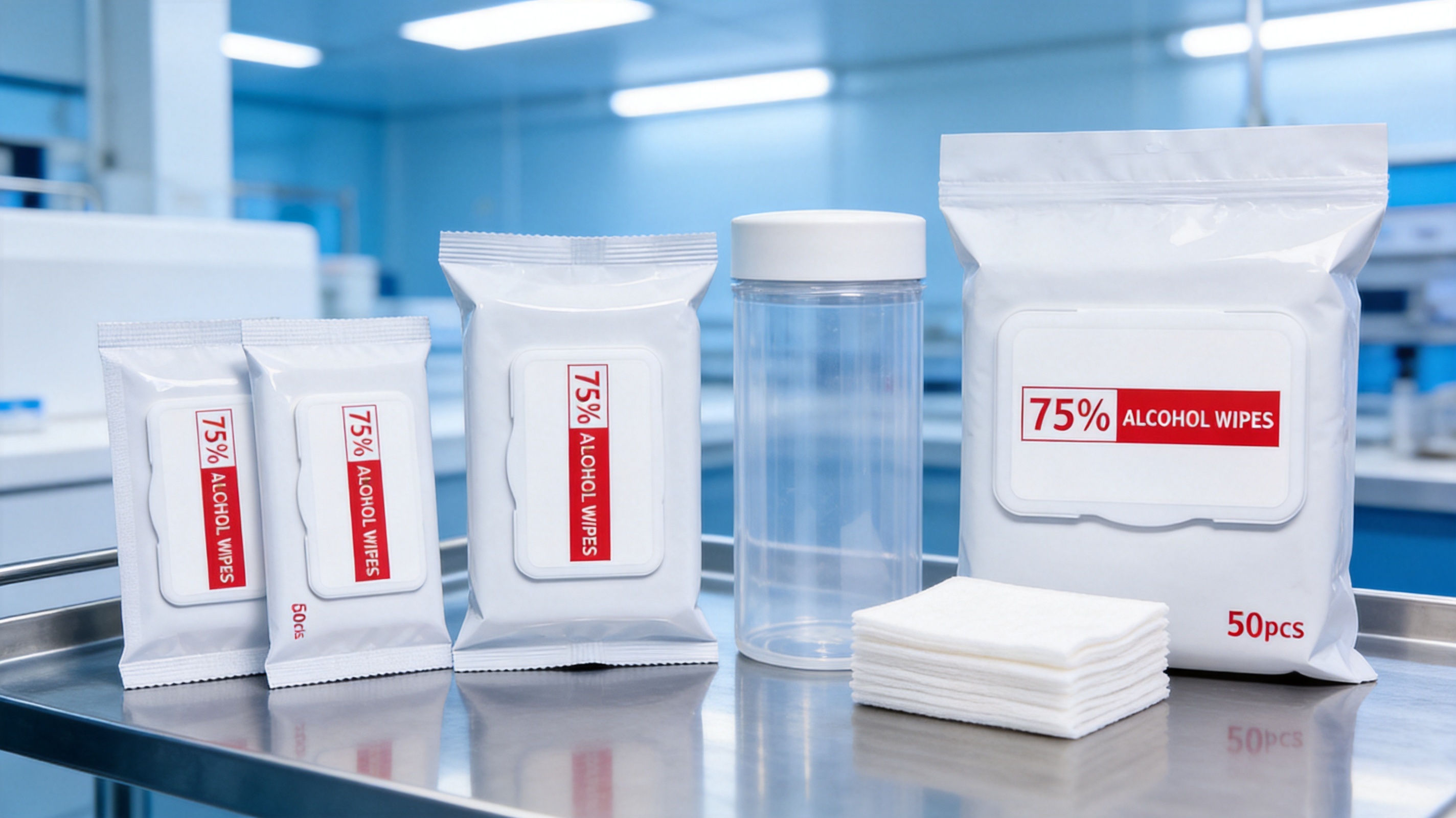
Packaging has a direct effect on product convenience, shelf life, transport efficiency, and brand presentation. Alcohol wipes can be packed in individual sachets for controlled single-use distribution, soft packs for regular workplace consumption, canisters for repeated access, tubs for facility use, refill packs for high-volume environments, or bulk packages for industrial buyers.
Individual sachets are suitable for first-aid kits, hospitals, airlines, hospitality services, vending channels, and promotional packs. Canisters and tubs are more efficient for fixed workstations, clinics, laboratories, and offices. Bulk refill formats can reduce packaging waste and support high-consumption programs when the customer has suitable dispensing equipment.
Advantages Over Basic or Low-Quality Alternatives
Consistent Saturation
Low-quality wipes may suffer from uneven liquid distribution. Some pieces may be excessively wet while others are too dry, creating inconsistent performance and poor user confidence. Professional production systems are designed to control the dosing of the alcohol solution so that each unit is manufactured within a defined specification.
Consistent saturation also supports more predictable coverage. The wipe should release enough solution for the intended use without creating unnecessary leakage, dripping, or premature drying. This balance depends on the substrate, folded dimensions, liquid volume, packaging seal, and storage conditions.
Reliable Substrate Quality
Inexpensive wipes may use weak fabric that tears during use, leaves lint, or feels rough against the skin. A higher-quality nonwoven substrate improves handling and helps the user complete the cleaning task without the wipe disintegrating.
The ability to select among several fibers and fabric weights gives buyers more control over the final product. The supplied specifications include materials such as polyester, viscose, bamboo, lyocell, and cotton, with grammage options from approximately 30 to 100 grams per square meter. This range allows the product to be adjusted for softness, strength, absorbency, and cost.
Controlled Folding and Dimensions
Wipe dimensions and folding methods influence how easily the product can be opened, unfolded, held, and applied. The supplied specification supports widths of approximately 12 to 22 centimeters and lengths of approximately 12 to 30 centimeters, with options for parallel and semi-cross folding.
A compact folded wipe is suitable for an individual sachet. A larger unfolded wipe may be better for cleaning work surfaces or equipment. Buyers can select the dimensions that correspond to their distribution channel, application requirements, packaging size, and target price.
Better Package Integrity
Alcohol is volatile, so package integrity is particularly important. If the seal is weak or the packaging material is unsuitable, the product may lose moisture during storage and transportation. A professional manufacturer evaluates sealing conditions, package materials, filling accuracy, and handling procedures to reduce the risk of leakage or evaporation.
Good packaging also protects the wipe from contamination before use. For individual sachets, seal strength and opening convenience are both important. For tubs and canisters, the lid, dispensing opening, and closure system must help preserve moisture after repeated opening.
More Suitable for Private Label Programs
Retail-ready and professional buyers increasingly seek products that carry their own brand identity. A full OEM and ODM service can include customized artwork, logo printing, multilingual labels, product names, carton designs, package dimensions, and pallet configurations.
This is more efficient than purchasing a generic product and attempting to repackage it independently. A coordinated manufacturer can manage substrate selection, liquid formulation, converting, filling, sealing, labeling, carton packing, and documentation as one integrated project.
Integrated Manufacturing Strengths
The manufacturer described in the supplied materials has a long history in nonwoven materials, nursing products, and hygiene products. Founded in 1987, the organization has developed production bases in several regions of China and has built capabilities covering nonwoven fabrics, wet wipes, dry wipes, baby diapers, training pants, wet toilet paper, cleansing wipes, and related products.
This broad product scope is important because alcohol wipes depend on several connected manufacturing disciplines. A supplier that understands only packaging may have limited control over the fabric. A supplier that only produces nonwoven rolls may not have the equipment or expertise needed for liquid dosing, folding, sachet sealing, finished-goods inspection, and export packaging.
An integrated producer can coordinate more stages internally. This may help shorten development cycles, improve traceability, reduce communication gaps, and provide better control over the consistency of the finished wipe. It also enables the manufacturer to recommend a substrate and package structure based on real production experience rather than relying only on standard catalog options.
The company information states that the group operates multiple production bases and has invested in advanced equipment and technologies from Europe. It also describes a full industrial chain extending from self-developed nonwoven substrates to finished hygiene products. These capabilities support the development of products for medical, maternal and baby care, beauty, household, industrial, clothing, and other applications.
For international buyers, production scale can be a significant advantage. Large capacity may support stable repeat orders, coordinated production schedules, and more reliable supply during periods of increased demand. However, capacity should always be evaluated together with quality systems, lead times, order minimums, documentation, and the manufacturer’s ability to support the specific project.
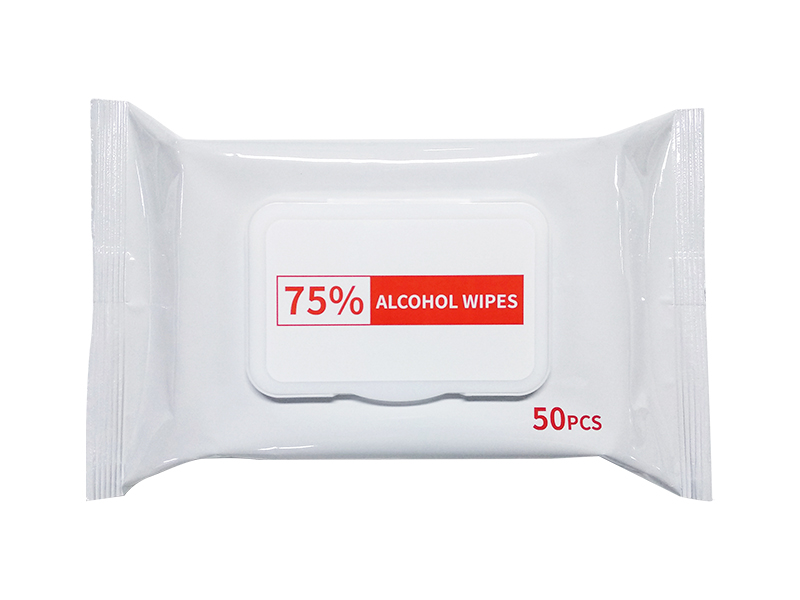
Alcohol 75 wipes
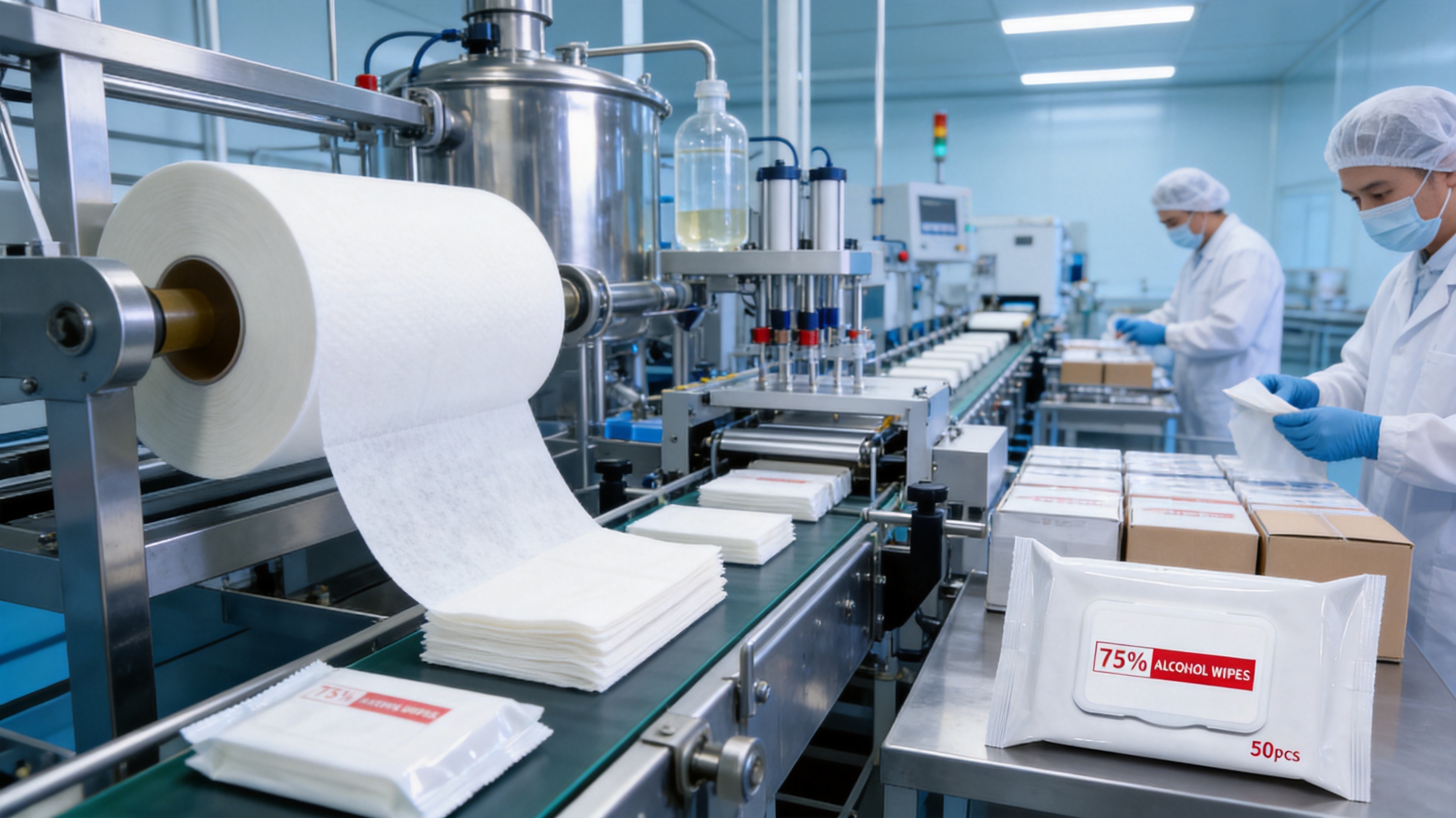
Manufacturing Process for 75% Alcohol Wipes
Step One: Raw Material Selection
Production begins with the selection and inspection of the nonwoven substrate, alcohol ingredients, packaging materials, labels, cartons, and other components. The substrate must match the intended use. For skin-contact applications, softness and compatibility are important. For industrial cleaning, wet strength, absorbency, and low-lint performance may be prioritized.
The alcohol solution must be prepared using approved raw materials and controlled water quality. The production team verifies the formulation, concentration, appearance, odor, and other relevant parameters according to the product specification. Raw material batches should be identifiable so that finished goods can be traced back through the manufacturing process.
Step Two: Nonwoven Fabric Preparation
Large rolls of nonwoven fabric are inspected before entering the converting line. Operators check the roll width, grammage, surface appearance, uniformity, tensile properties, and other defined characteristics. Defective sections can be identified and removed before the material reaches the cutting and folding stages.
The fabric may be processed with a plain, mesh, dot-embossed, flower, star, or other pattern. Pattern selection affects appearance, tactile feel, liquid distribution, and brand positioning. A plain fabric may be preferred for a medical or laboratory product, while an embossed design may be selected for household or personal-care applications.
Step Three: Cutting and Folding
The nonwoven roll is cut into the specified width and length. Automated equipment can be adjusted for different dimensions and folding configurations. Parallel folding and semi-cross folding are among the available options listed in the product information.
Accurate cutting and folding help ensure that every wipe fits correctly within its package. Poorly controlled folding can cause package bulging, incomplete sealing, difficult opening, or inconsistent presentation. In high-volume production, automated folding also improves throughput and reduces variation between batches.
Step Four: Preparation of the Alcohol Solution
The alcohol solution is prepared in controlled mixing equipment. The concentration is measured according to the approved formula, and the solution is kept in suitable tanks before impregnation. The manufacturer may use purified water and controlled processing conditions to support product quality.
The solution may be fragrance-free or customized with an approved fragrance or additional ingredient, depending on the specification. Any modification should be tested for compatibility with the nonwoven substrate, packaging film, sealing process, stability, and intended use.
Step Five: Liquid Impregnation
The folded or unfolded fabric is dosed with the alcohol solution using controlled equipment. The target liquid volume is determined by the wipe size, substrate weight, absorbency, package type, and intended application. The objective is to achieve even saturation without excessive free liquid.
During this stage, the production team monitors dosing accuracy and line performance. Samples may be weighed before and after impregnation to verify the liquid add-on. Visual checks can also identify dry areas, over-saturated sections, leakage, or other abnormalities.
Step Six: Individual or Bulk Packaging
For individually wrapped wipes, the saturated fabric is inserted into sachet material and sealed around the edges. The package is printed or labeled according to the customer’s artwork and regulatory requirements. For canisters, tubs, soft packs, or refill bags, the wipes are loaded in the defined quantity before the container or pouch is closed.
Packaging materials must be selected to provide suitable protection against evaporation, leakage, handling damage, and contamination. The packaging line is adjusted according to the format, and finished packs are inspected for seal quality, correct count, appearance, and legibility.
Step Seven: Finished-Product Inspection
Finished-product quality control may include checks for wipe count, dimensions, folding, saturation, alcohol concentration, package integrity, appearance, odor, labeling, carton quantity, and sampling-based microbiological or performance testing where applicable.
Quality records help support batch traceability and customer documentation. Depending on the project, the manufacturer may provide product specifications, test reports, certificates of analysis, safety documentation, packaging records, and other supporting materials.
Step Eight: Carton Packing and Shipment Preparation
Approved products are packed into export cartons according to the customer’s requirements. Carton markings may include product name, batch number, quantity, manufacturing date, expiry information, storage guidance, and handling symbols where required.
The shipment configuration is planned to protect the goods during transportation. Alcohol-containing products may be subject to special shipping, labeling, storage, and documentation requirements. Buyers should confirm these details with the manufacturer and their logistics provider before placing an order.
Quality Management and Production Environment
The supplied company information describes the use of 100,000-class GMP clean workshops, a purified water system, and a full-function testing center. These facilities are relevant to hygiene-product production because environmental control, water quality, equipment sanitation, and testing discipline can influence finished-product consistency.
A controlled production environment helps reduce the risk of unnecessary contamination during fabric handling, solution preparation, filling, and packaging. It also supports standardized operating procedures and more repeatable production conditions across different orders.
The manufacturer’s information further references extensive patent activity and product-development capabilities. Research and development resources can help support improvements in nonwoven materials, product softness, liquid retention, packaging efficiency, biodegradability, and application-specific design.
Quality should not be judged only by the appearance of a wipe. Professional buyers should also evaluate the manufacturer’s batch controls, inspection records, complaint procedures, raw-material traceability, production capacity, regulatory experience, and ability to maintain consistent performance during repeat orders.
Customization Options for OEM and ODM Buyers
Alcohol Concentration
The standard product is described as containing 75% medical alcohol. Other concentrations may be considered according to the customer’s market, application, regulatory classification, and product claims. The concentration must be agreed before production because it affects formulation, labeling, testing, safety documentation, and transportation requirements.
Substrate Material
Buyers can select polyester, viscose, bamboo, lyocell, cotton, or blended nonwoven materials. Polyester can provide strength and dimensional stability. Viscose may contribute softness and absorbency. Bamboo and lyocell can support a more natural or premium product position, while cotton may appeal to customers seeking a familiar skin-contact material.
The best choice depends on the application rather than on a single universal material. Medical and personal-care users may value softness. Industrial customers may prioritize durability and low lint. Environmentally focused buyers may request renewable or biodegradable components, subject to verified claims and local requirements.
Wipe Size and Grammage
The listed size range is approximately 12 to 22 centimeters in width and 12 to 30 centimeters in length, with grammage options from 30 to 100 grams per square meter. Larger and heavier wipes generally provide more handling area and liquid capacity, while smaller formats can reduce packaging size and unit cost.
Choosing the correct size can improve both user satisfaction and economic efficiency. A wipe that is too small may require multiple pieces for one task. A wipe that is unnecessarily large may increase material consumption and shipping volume. The manufacturer can help match size and grammage to the intended cleaning area.
Surface Pattern
Plain, mesh, dot-embossed, flower, and star patterns are among the available choices. Embossing can create a more distinctive tactile surface and may help with light mechanical cleaning. Pattern selection can also support a brand’s visual identity without changing the basic function of the product.
Fragrance and Sensory Profile
The product can be supplied unscented or developed with a selected fragrance profile. For professional healthcare, laboratory, food-processing, and cleanroom applications, unscented products are often preferred. For consumer-facing private-label programs, a light fresh or botanical fragrance may be requested.
Fragrance should never be added only for marketing appeal without considering user sensitivity, storage stability, compatibility with alcohol, and local labeling requirements. A fragrance-free option remains an important advantage for buyers serving regulated or sensitive environments.
Packaging and Artwork
OEM and ODM buyers can customize individual sachets, soft packs, canisters, tubs, refill bags, and bulk cartons. Artwork can include logos, colors, instructions, warnings, barcodes, multilingual text, batch areas, and destination-market information.
Packaging development should consider the complete supply chain. The pack must be easy to open, resistant to leakage, suitable for the selected alcohol formulation, and efficient to store. For export buyers, carton dimensions and pallet patterns should also be reviewed to reduce unnecessary freight costs.
Applications Across Professional Industries
Healthcare and Medical Distribution
Hospitals, clinics, nursing facilities, medical distributors, pharmacies, and first-aid suppliers use alcohol wipes in many routine situations. Individual sachets are convenient for medical kits, treatment rooms, mobile healthcare services, and patient-care environments.
Medical buyers require clear labeling, controlled specifications, reliable packaging, and suitable documentation. Product claims should be limited to those supported by testing and permitted in the destination market. The wipe should be used according to the instructions and should not replace specialized cleaning procedures where those are required.
Laboratories and Cleanrooms
Laboratories and cleanrooms often need compact, low-lint, controlled-use wipes for workstations, equipment exteriors, and routine hygiene procedures. An unscented product with a consistent substrate and well-sealed package may be particularly appropriate.
Cleanroom applications can have highly specific requirements concerning particle generation, extractables, packaging, and sterilization status. Buyers should communicate these requirements during product development rather than assuming that a standard alcohol wipe automatically meets cleanroom specifications.
Industrial Manufacturing
Industrial plants use alcohol wipes for workstation cleaning, tool maintenance, light residue removal, equipment preparation, and employee hygiene. The preferred wipe may require greater wet strength than a personal-care product so that it remains intact during vigorous handling.
Electronics and precision assembly environments may require low-lint materials and carefully controlled packaging. Compatibility with plastics, coatings, adhesives, metals, and sensitive components should be evaluated before large-scale use.
Food Processing and Hospitality
Food-processing facilities, restaurants, hotels, catering operations, and facility-management companies may use wipes for selected cleaning and hygiene tasks. The product must be used in accordance with site procedures and applicable food-contact or surface-disinfection regulations.
Hospitality buyers often value individually wrapped wipes because they can be placed in guest areas, travel kits, reception counters, meeting rooms, or service vehicles. Private labeling can help hotels, travel suppliers, and cleaning companies create a consistent professional presentation.
Commercial and Institutional Procurement
Schools, offices, public transportation operators, government departments, and large institutions may purchase alcohol wipes through centralized procurement programs. These buyers typically need stable supply, predictable specifications, competitive pricing, clear documentation, and packaging that supports controlled distribution.
Bulk purchasing can lower the unit cost and simplify inventory management. The manufacturer can provide different pack sizes for central warehouses, individual departments, field workers, and public-facing locations.
Industrial Safety and Emergency Kits
Safety suppliers and emergency-kit manufacturers often include alcohol wipes in first-aid boxes, travel packs, protective equipment kits, and workplace response products. Individual sachets are especially suitable because they are compact, sealed, and easy to distribute.
For these applications, the pack should clearly display product identity, usage instructions, warnings, and storage information. The product should also be checked periodically during inventory rotation to ensure that the packaging remains intact and the contents remain within specification.
Storage, Handling, and Transportation Considerations
Alcohol wipes should be stored in a cool, dry, well-ventilated area away from direct sunlight, excessive heat, ignition sources, and incompatible chemicals. The exact storage instructions depend on the alcohol type, concentration, packaging, and local regulations.
Packages should remain sealed until use. Damaged, leaking, excessively dry, or visibly contaminated packs should not be distributed. Warehouse operators should use a first-in, first-out inventory system and maintain appropriate records for batch identification and expiry control.
Because alcohol is flammable, transportation and warehouse requirements must be reviewed before shipment. Export documentation, carton markings, transport classification, and carrier acceptance may vary according to the product formulation and shipment quantity. A professional supplier should help provide the information needed for safe and compliant logistics planning.
How to Select the Right Product Specification
Buyers should begin by defining the intended user and application. A wipe for hand and skin cleaning may require a softer substrate and milder sensory profile than a wipe for industrial equipment. A product for a hospital may require different packaging and documentation from a product sold through a household private-label channel.
The next step is to confirm the target market and regulatory requirements. The alcohol ingredient, concentration, product claims, label language, safety information, and testing requirements should all be reviewed before artwork approval.
Buyers should then select the wipe dimensions, grammage, folding style, liquid volume, package format, and carton configuration. Samples are useful for evaluating softness, wet strength, saturation, opening convenience, odor, evaporation resistance, and overall user experience.
Finally, the commercial terms should be reviewed. Important factors include minimum order quantity, sampling fees, tooling or artwork charges, production lead time, payment terms, shipping method, documentation, quality agreement, inspection procedure, and after-sales support.
Q&A About 75% Alcohol Wipes
What alcohol concentration is available?
The featured product is specified as a 75% alcohol wipe. Other concentrations may be available for OEM projects, subject to formulation feasibility, local regulations, customer requirements, and supporting testing. The selected concentration should be confirmed before labeling and production.
Are these wipes intended for retail consumers?
The manufacturing service is designed primarily for B2B customers, including importers, wholesalers, healthcare distributors, private-label brands, industrial suppliers, laboratories, institutions, and e-commerce businesses purchasing in bulk. It is not positioned as a small-quantity retail service.
Can private-label alcohol wipes be manufactured?
Yes. OEM and ODM services can include alcohol formulation selection, nonwoven material selection, wipe dimensions, folding style, packaging format, logo printing, artwork adaptation, multilingual labeling, carton design, and export packaging.
What packaging formats are supported?
Available formats may include individual sachets, soft packs, canisters, tubs, refill packs, and bulk industrial packaging. The suitable format depends on the consumption rate, distribution channel, desired portability, storage conditions, and budget.
What nonwoven materials can be used?
Possible materials include polyester, viscose, bamboo, lyocell, cotton, spunlace nonwoven fabric, and blended substrates. Material selection should be based on softness, absorbency, wet strength, lint performance, sustainability objectives, and intended application.
What wipe sizes are available?
The supplied specification lists widths of approximately 12 to 22 centimeters and lengths of approximately 12 to 30 centimeters. Custom dimensions may be discussed according to the packaging format, application, and production feasibility.
Are fragrance-free wipes available?
Yes. Unscented and fragrance-free options are available and are often preferred for medical, laboratory, industrial, food-related, and sensitive-use applications. Scented versions may also be considered for selected private-label programs.
Can the wipes be used on skin?
The supplied product description states that the wipes can be used to clean hands and skin. Users must follow the approved label instructions, avoid contact with the eyes and mucous membranes, and discontinue use if irritation occurs. The final intended-use claim must be confirmed for the destination market.
What documents can be provided?
Depending on the formulation, product classification, and customer requirements, documentation may include specifications, test reports, safety information, certificates of analysis, batch records, and export-related materials. Specific certificates are subject to the selected product and applicable standards.
What industries purchase alcohol wipes in bulk?
Common buyers include healthcare distributors, hospitals, laboratories, cleanroom suppliers, industrial manufacturers, electronics companies, hospitality operators, food-processing businesses, facility-management companies, government organizations, pharmacies, supermarkets, and e-commerce brands.
How should alcohol wipes be stored?
They should generally be kept sealed in a cool, dry, ventilated location away from heat, sunlight, sparks, flames, and incompatible substances. Storage requirements should always follow the approved label, safety documentation, and local regulations.
How can buyers request a quotation?
A useful inquiry should include the desired alcohol concentration, wipe material, dimensions, grammage, folding method, packaging format, quantity per pack, private-label requirements, destination market, estimated order volume, and required documents. Providing this information helps the manufacturer prepare a more accurate proposal and sample plan.
Why Choose an Experienced Integrated Manufacturer?
Choosing a manufacturer with experience in both nonwoven materials and finished hygiene products can reduce the technical risks associated with alcohol wipe development. The supplier can evaluate how the fabric, alcohol formulation, package film, filling volume, seal, and storage conditions interact with one another.
An integrated manufacturer can also offer a broader product portfolio. A customer may source alcohol wipes together with dry wipes, cleansing wipes, baby-care products, training pants, wet toilet paper, or other nonwoven hygiene products. Consolidated sourcing can simplify supplier management and support consistent packaging and quality standards across a product range.
The supplied company profile highlights more than 30 years of development, multiple production bases, international production equipment, self-developed nonwoven substrates, GMP clean workshops, purified water systems, testing resources, and OEM/ODM capabilities. These strengths provide a foundation for serving customers that need more than a generic off-the-shelf wipe.
Production scale, technical depth, and customization flexibility are especially valuable for customers entering new markets. A capable partner can help refine the specification, produce samples, identify packaging risks, prepare documentation, and establish a repeatable process for commercial orders.
Conclusion
75% alcohol wipes combine a pre-moistened nonwoven substrate with a practical alcohol-based solution to support fast, convenient, single-use cleaning and disinfection. Their main advantages include ready-to-use convenience, soft material options, consistent dosing, flexible dimensions, fragrance-free availability, portable packaging, and suitability for many professional industries.
Compared with basic alternatives, a professionally developed product can offer more reliable saturation, stronger substrate performance, better package integrity, improved traceability, and greater customization potential. These benefits are particularly important for B2B buyers that need stable quality, private labeling, regulatory support, and dependable repeat supply.
The manufacturing process involves careful raw-material selection, nonwoven preparation, precision cutting, folding, controlled solution preparation, liquid impregnation, sealed packaging, finished-product inspection, and export packing. An integrated manufacturer with expertise across nonwoven fabrics and finished hygiene products can manage these stages more effectively and provide a stronger foundation for OEM and ODM projects.
For importers, healthcare suppliers, industrial distributors, laboratories, institutions, private-label brands, and bulk purchasers, the correct alcohol wipe specification should be selected according to the intended application, destination-market regulations, packaging needs, and expected consumption. When these factors are properly matched, 75% alcohol wipes can become a reliable and efficient component of a professional hygiene and cleaning program.
References
1. World Health Organization. Guide to Local Production: WHO-Recommended Handrub Formulations and General Alcohol-Based Hygiene Principles.
2. Centers for Disease Control and Prevention. Guidance on Alcohol-Based Disinfectants, Hand Hygiene, and Environmental Cleaning.
3. United States Environmental Protection Agency. General Regulatory Principles for Disinfectant Products and Product Label Claims.
4. European Committee for Standardization. Chemical Disinfectants and Antiseptics: General Principles for Testing and Evaluation.
5. International Organization for Standardization. Quality Management Systems: Requirements and Good Manufacturing Practices for Relevant Product Categories.
6. International Organization for Standardization. Nonwovens and Textile Testing Methods for Mass, Strength, Absorbency, and Dimensional Characteristics.
7. United States Pharmacopeia. General Principles for Purified Water, Microbiological Quality, and Pharmaceutical-Related Manufacturing Controls.
8. Product specifications and manufacturing information supplied for the 75% alcohol wipe product and associated OEM/ODM production services.