中文简体
 English
 日本語
 русский
 Español
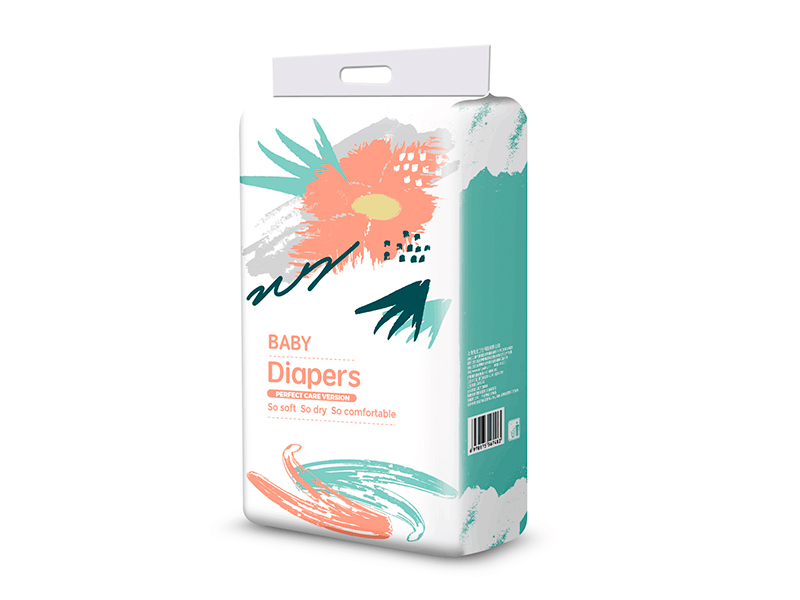
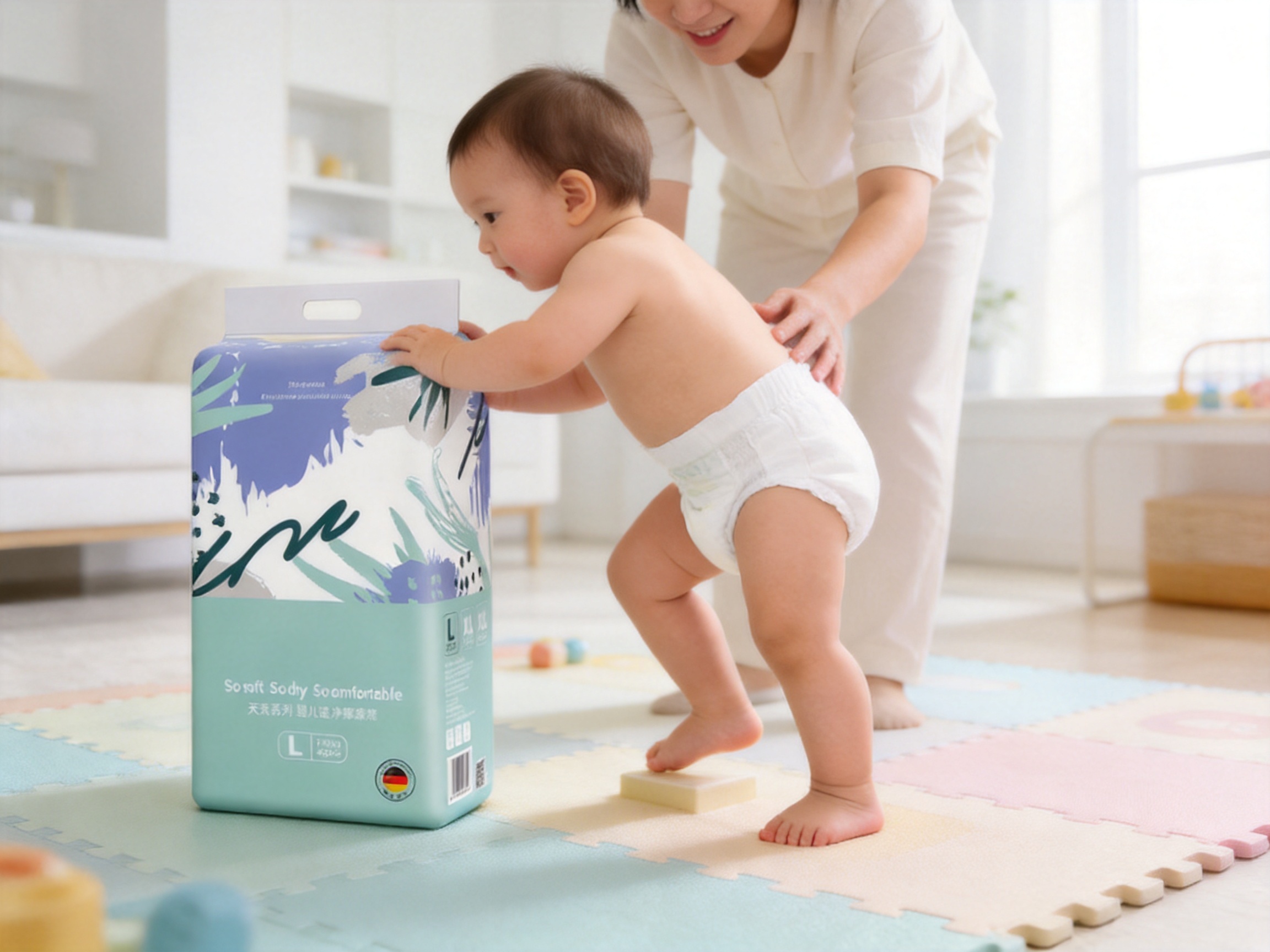
Baby pull-up pants are designed for a stage when infants become increasingly active and traditional taped diapers can become more difficult to use. As babies roll over, sit, crawl, stand, and walk, diaper changing often becomes more challenging. A well-designed pull-up pant provides an alternative that combines the absorbency and leakage protection of a diaper with the fit and convenience of underwear-style construction.
Premium baby pants are intended to support both babies and caregivers throughout daily routines. They can be pulled on like small shorts, remain secure during movement, and be removed quickly when necessary. Their construction typically includes an absorbent core, a soft topsheet, a breathable clothlike backsheet, elastic waist and leg areas, standing leak guards, and a wetness indicator. Together, these components help create a product that is comfortable, practical, and suitable for modern infant care.
For brand owners, importers, wholesalers, supermarket suppliers, and maternal and infant product distributors, the value of baby pull-up pants extends beyond the finished product. A reliable manufacturing partner must also provide stable material sourcing, consistent production, professional quality control, flexible customization, and dependable delivery. Zhejiang Uniquality Nursing Products Technology Co., Ltd., operating within the Kingsafe and Uniquality production network, combines hygiene product manufacturing experience with nonwoven material expertise and OEM/ODM capabilities.
This article examines the product structure, functional advantages, manufacturing strengths, customization possibilities, and commercial value of premium baby pants for business customers.
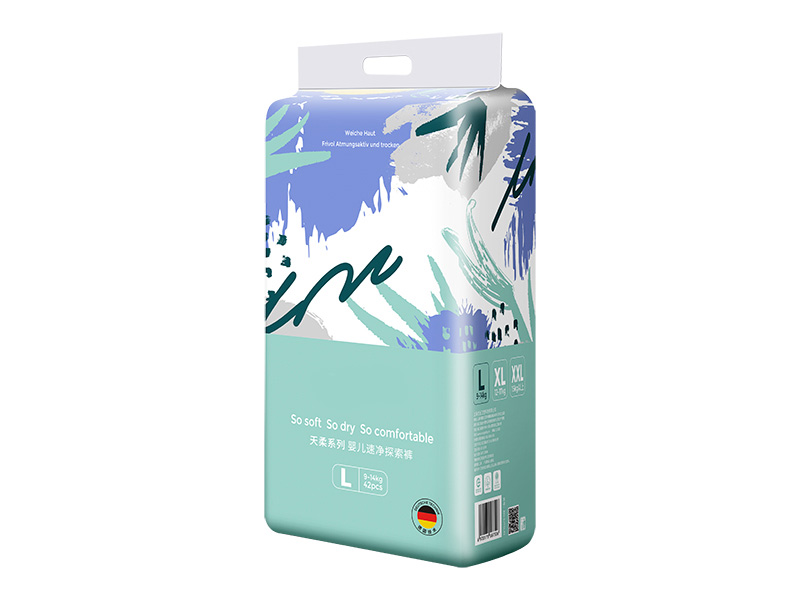
Baby Pants
Understanding Baby Pull-Up Pants
Baby pull-up pants are absorbent hygiene products shaped similarly to underwear. Instead of relying primarily on front fastening tabs, they use a continuous elastic waistband and stretchable side areas. This construction allows the caregiver to pull the product up around the baby’s hips and waist. When the product needs to be removed, the side seams can be torn open for quick disposal.
The product is especially appropriate for babies who are becoming more mobile. At the early stages of infancy, a baby may remain still during a diaper change. Later, the baby may turn, crawl away, stand, or resist lying down. Pull-up pants help simplify this process because the caregiver can put them on while the child is lying down, sitting, standing, or moving with assistance.
The underwear-like structure also supports a closer fit around the waist and thighs. This is important because a diaper must remain secure while the baby crawls, rolls, walks, bends, and plays. If the product is too loose, leakage may occur. If it is too tight, the baby may experience pressure, redness, or discomfort. A carefully engineered balance between stretch, recovery, softness, and absorbency is therefore essential.
Premium baby pants are not simply smaller versions of adult disposable underwear. They require materials and construction methods suited to sensitive infant skin. The topsheet must provide a soft contact surface. The absorbent core must distribute liquid efficiently. The backsheet must protect clothing while helping manage heat and moisture. The waistband and leg cuffs must stretch comfortably without causing excessive compression.
Key Product Advantages
Easy Putting On and Taking Off
The most visible advantage of pull-up pants is ease of use. Their pant-shaped design reduces the need to align fastening tabs precisely. Caregivers can pull the product upward in a straightforward motion, which is useful when the baby is active or unwilling to remain still.
Removal is equally convenient. The side seams can be torn open by hand, allowing the used product to be taken off without pulling it down over the baby’s legs. This is helpful after a bowel movement, during nighttime changes, or when the child is wearing clothing that makes a complete pull-down change inconvenient.
Compared with conventional taped diapers, pull-up pants can reduce the number of steps involved in changing. A caregiver does not need to repeatedly adjust the baby’s position, locate fastening points, or reopen and refasten the diaper several times. This convenience can be especially valuable in childcare centers, travel environments, and households with more than one child.
Superior Dryness and Liquid Management
Dryness is one of the most important performance factors in a baby hygiene product. The absorbent core in premium baby pants is designed to receive liquid quickly, distribute it through the absorbent structure, and retain it away from the skin. The material system may include absorbent pulp and superabsorbent polymer, commonly known as SAP.
The supplied product information identifies Sumitomo and BASF SAP together with Domtar pulp as available core materials. These materials are selected for their role in liquid absorption and retention. SAP can absorb and hold a substantial amount of fluid relative to its weight, while cellulose pulp helps distribute liquid throughout the core. The combination supports rapid acquisition, effective storage, and improved use of the available absorbent area.
A dry-feeling topsheet is also important. The topsheet is the layer that contacts the baby’s skin. An embossed dot pattern can help create small channels and contact points that support fluid passage into the absorbent core. This design may reduce the amount of liquid remaining on the surface and contribute to a drier skin-contact environment.
Dryness does not depend on the absorbent core alone. The product must also maintain its shape during movement, prevent liquid from flowing toward the edges, and preserve its performance throughout the wearing period. The combined use of an absorbent core, acquisition and distribution layer, leak guards, leg cuffs, and a secure waistband helps create a more complete fluid-management system.
Comfortable and Close-Fitting Construction
Babies spend much of their day moving, resting, and changing positions. A diaper that restricts movement or creates pressure around the abdomen and thighs can affect comfort. Baby pull-up pants therefore use elastic components to provide flexibility around the waist and legs.
The elastic and super-soft waistband is designed to follow the baby’s body as the child bends, sits, crawls, and walks. Its purpose is to help maintain contact without creating an unnecessarily tight feeling. The leg areas also use elastic recovery to help the product remain close to the body after movement.
A close fit supports leakage protection, but it must be achieved through flexible materials rather than excessive compression. In a well-balanced product, the waist and leg openings adapt to different body shapes within the specified size range. This adaptability is particularly important because babies grow quickly and can have different proportions even at the same age.
The soft, clothlike exterior can improve the overall wearing experience. It may feel more like fabric than a conventional plastic surface and can help reduce the perception of stiffness. A breathable backsheet may also support comfort by allowing a degree of moisture vapor transmission while maintaining the necessary barrier against liquid leakage.
Leak Guard and Leg Cuff Protection
Leakage commonly occurs when urine or other liquid moves toward the sides of the product. Leak guards and leg cuffs help create additional barriers in these areas. They are positioned near the inner leg openings and are designed to stand up or remain close to the body as the baby moves.
The effectiveness of a leg cuff depends on several factors, including elastic tension, material softness, cuff height, attachment quality, and the relationship between the cuff and the absorbent core. The cuff should be high enough to provide protection but soft enough to avoid discomfort. It should also maintain its position during crawling and walking.
Leak guards can be particularly useful during active daytime use. A baby may rotate the hips, spread the legs, or sit in different positions many times during a wearing period. A stable inner barrier helps reduce the risk that liquid will bypass the central absorbent area.
It is important to recognize that no disposable diaper can guarantee zero leakage in every situation. Performance depends on size selection, wearing time, the amount of fluid, body shape, and correct positioning. However, a well-designed leak guard and leg cuff system provides a meaningful advantage over products with weak or poorly controlled side protection.
Wetness Indicator Support
A wetness indicator can help caregivers understand when a change may be needed. The indicator changes appearance when exposed to moisture, providing a visual signal without requiring the caregiver to remove the product for inspection.
This feature can be valuable for newborn and infant care, especially when caregivers are still learning the baby’s individual elimination patterns. It may also help childcare staff monitor several children more efficiently. For distributors, wetness indicators can be a useful feature when positioning a product toward quality-conscious parents and professional care environments.
Support for Active Development
Baby pull-up pants are closely associated with developmental milestones. Rolling over, sitting independently, crawling, standing, and walking all involve frequent movement. A product that stays in place without restricting the legs can support ordinary play and exploration.
The pant-style format also helps reduce interruption. A quick change can allow the baby to return to play sooner, while caregivers may experience less physical effort during repeated changes. This does not mean the product replaces attentive care. Rather, it makes routine hygiene management easier within an active daily schedule.
For this reason, baby pants are often positioned between traditional infant diapers and early training pants. They provide the absorbency and protection needed for babies who are not toilet trained while introducing a more independent, underwear-like format.
Product Structure and Material System
Embossed Topsheet
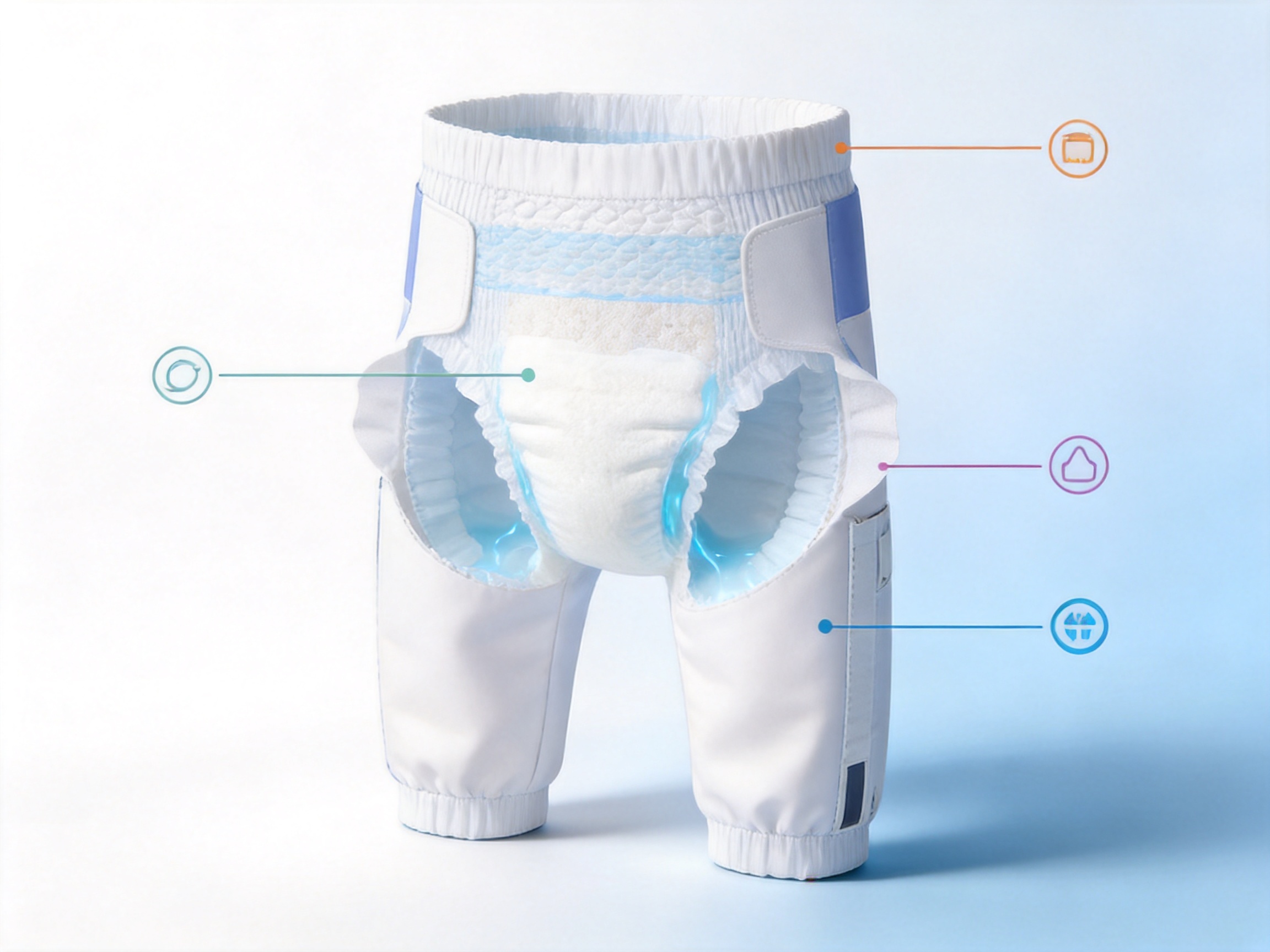
The topsheet is the first layer encountered by liquid and the layer closest to the baby’s skin. A soft nonwoven topsheet can improve comfort and reduce friction. Embossed dots or other surface patterns may help guide liquid downward and create a more pleasant tactile surface.
Material selection for the topsheet must consider softness, liquid acquisition speed, surface dryness, strength, and processing compatibility. The material should remain stable during production and should not easily tear when the product is stretched or handled. Consistent bonding between the topsheet and the underlying layers is also important.
Acquisition and Distribution Layer
The acquisition and distribution layer, often referred to as an ADL, helps move fluid away from the point of discharge. It can distribute liquid across a wider area before the fluid reaches the absorbent core. This reduces the risk of localized saturation and helps the core use its capacity more efficiently.
An effective ADL contributes to faster absorption and improved surface dryness. It can also help reduce the possibility of rewetting when pressure is applied, such as when the baby sits or moves. The exact construction can be adjusted according to absorbency requirements, product thickness, target market expectations, and cost objectives.
Absorbent Core
The absorbent core is the principal fluid-storage component. It commonly combines fluff pulp with SAP. The pulp helps create a porous structure that receives and distributes liquid, while SAP forms a gel that retains fluid.
Core design can be customized in terms of pulp-to-SAP ratio, distribution pattern, thickness, absorbency capacity, acquisition speed, and compression resistance. A premium product must balance these factors carefully. Increasing absorbency without considering fit and thickness may create a bulky product. Reducing thickness without sufficient liquid-storage capacity may affect performance.
Modern production methods can help control the placement and consistency of core materials. Stable material feeding and accurate process control support more uniform absorbency from one product to the next. This consistency is important for private-label customers, who need their products to perform reliably across repeated orders.
Clothlike Backsheet
The backsheet forms the outer barrier of the product. It helps prevent liquid from passing through to clothing and bedding. A clothlike backsheet can provide a softer, more textile-like exterior than a conventional smooth film surface.
The backsheet must combine softness, strength, flexibility, and liquid resistance. It should remain stable when the product is stretched around the waist and legs. It must also work effectively with adhesive, ultrasonic, or other bonding methods used in the manufacturing process.
Breathability is another consideration. A breathable backsheet may allow water vapor to pass through while continuing to block liquid. This can contribute to a more comfortable microclimate between the product and the baby’s clothing. Performance depends on the selected material, structure, and final product design.
Elastic Waistband and Leg Components
Elastic elements help the pants conform to the baby’s body. The waistband must stretch sufficiently for easy application while recovering enough to maintain a secure fit. Leg elastics help reduce open gaps that could allow leakage.
The distribution of elastic tension matters. Excessive tension can leave marks or cause discomfort, while insufficient tension may cause slippage and leakage. A professional manufacturer can adjust the elastic arrangement according to size, product positioning, target market preferences, and testing results.
The waistband and side construction also influence the product’s tearability. Caregivers need to be able to remove the pants efficiently without damaging the skin or creating unnecessary mess. Side-seam strength must therefore be balanced between secure wearing and controlled opening.
Advantages Compared with Conventional Diapers
Traditional taped diapers remain useful for newborns and younger infants who spend much of their time lying down. However, they may become less convenient as the child becomes more active. The caregiver may need to hold the baby in position while aligning the diaper and fastening both sides.
Pull-up pants reduce the dependence on precise fastening. This is a significant advantage when changing a child who rolls, crawls, or stands. They can also provide a more uniform fit around the waist because the waistband extends around the body rather than relying solely on manually positioned tabs.
Another difference is the wearing experience. Pull-up pants are shaped to follow the body more closely and may feel less bulky around the waist. The flexible construction can support movement during crawling, walking, and play. A soft clothlike backsheet and stretch panels can further improve comfort.
Compared with low-cost pull-up products, premium baby pants may offer more consistent materials, improved SAP distribution, stronger quality control, softer contact surfaces, better elastic recovery, and more reliable leak protection. These advantages are not determined by appearance alone. They result from engineering the entire material system and controlling the manufacturing process.
For a private-label brand, product consistency can be as important as individual performance. A diaper that performs well in one production batch but varies significantly in another can lead to customer complaints, returns, and damage to brand reputation. Stable material sourcing and documented quality procedures help reduce this risk.
| Product Consideration | Basic Taped Diaper | Premium Pull-Up Pants | Commercial Value |
|---|---|---|---|
| Application method | Requires alignment and fastening of tabs | Pulls on like underwear | Convenient for active babies and caregivers |
| Removal method | Open fastening tabs | Tear side seams for quick removal | Useful during standing or movement |
| Waist construction | Adjustable tab-based closure | 360-degree elastic waistband | Supports a close and flexible fit |
| Movement support | Depends on correct fastening and fit | Designed for crawling, standing, and walking | Suitable for active developmental stages |
| Leak protection | Depends on core, cuffs, and fastening | Combines core, leg cuffs, and elastic fit | Supports daily protection during activity |
| Brand customization | Can vary by supplier | Size, core, materials, graphics, and packaging can be adjusted | Suitable for OEM and private-label programs |
Advanced Manufacturing Capabilities
Integrated Nonwoven and Hygiene Product Experience
Zhejiang Uniquality Nursing Products Technology Co., Ltd. has experience in medical and hygienic nonwoven materials, nursing products, and related hygiene applications. The wider Kingsafe and Uniquality organization has developed production capabilities covering spunlace nonwoven fabrics, spunmelt nonwoven fabrics, hot-air-through nonwoven fabrics, flushable and degradable nonwoven materials, wet wipes, dry wipes, baby diapers, pull-ups, cleansing wipes, and other products.
This product breadth is commercially important because many diaper components are nonwoven materials. A manufacturer that understands nonwoven formation, softness, strength, liquid handling, bonding, and converting can approach baby pants as a complete system rather than as a simple assembly of purchased parts.
Material expertise can support more precise product development. For example, a customer may require a softer topsheet for a premium range, a stronger backsheet for a larger size, a thinner core for a daytime product, or a higher absorbency configuration for overnight use. Experience across multiple hygiene applications can help the manufacturer evaluate these requirements more efficiently.
Multiple Production Bases
The company information states that the organization has established multiple production bases in China, including facilities in Zhejiang, Guangdong, Jiangsu, and Hubei. A multi-base structure can support production capacity, regional supply coordination, and business continuity.
For overseas clients, manufacturing scale is especially relevant. Importers and brand owners often need regular container shipments, repeat production, and the ability to increase volume when demand grows. A supplier with broader production resources may be better positioned to support these requirements than a small workshop with limited equipment and labor capacity.
Multi-site operations also encourage the development of standardized procedures. To maintain consistent quality across production locations, the company must manage material specifications, process parameters, inspection rules, packaging requirements, and documentation. These systems are essential for long-term OEM and ODM cooperation.
Professional Production Equipment
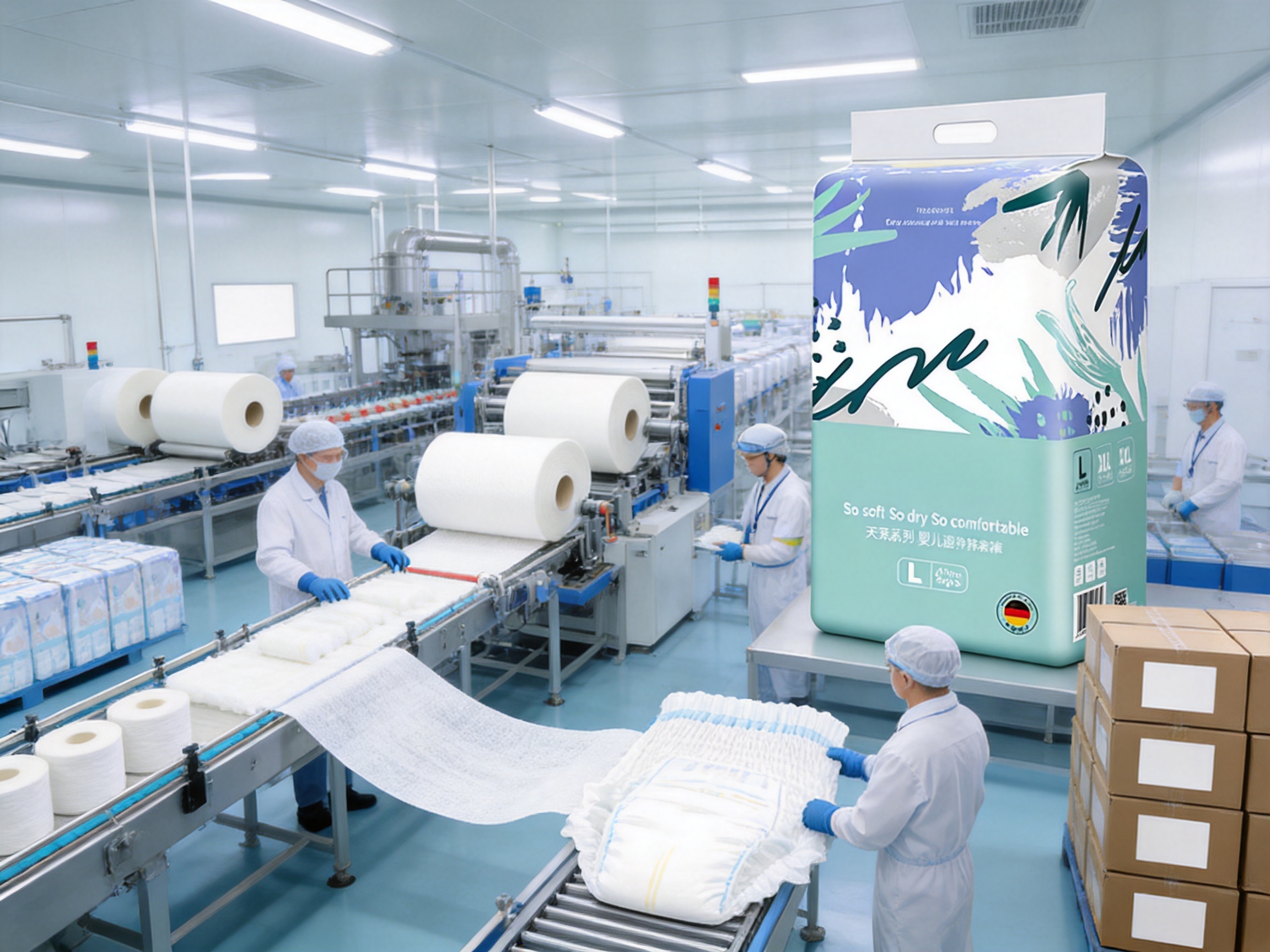
High-speed hygiene production requires accurate control of material feeding, core forming, elastic placement, bonding, cutting, folding, and packaging. The company has introduced advanced equipment and technology from Europe, including Germany, France, and Italy, according to the supplied company information.
Modern equipment can improve productivity and reduce variation when properly operated and maintained. It can support accurate dimensions, stable elastic positioning, controlled core placement, consistent sealing, and efficient packaging. Automation also helps reduce unnecessary manual handling during key production stages.
Equipment alone does not guarantee a quality product. Its value depends on engineering control, maintenance, trained operators, process monitoring, and effective inspection. The strongest manufacturing systems combine machinery with documented procedures and experienced technical personnel.
GMP-Standard Production Environment
Baby hygiene products require a clean and controlled production environment. The company provides GMP-standard production environments and a comprehensive quality testing system, as stated in the supplied materials. A controlled environment helps reduce contamination risks and supports orderly handling of raw materials, work-in-progress products, and finished goods.
Environmental control may include personnel hygiene procedures, production-area management, equipment cleaning, material protection, pest control, waste handling, and controlled storage. These practices are especially important for products used by infants, whose skin may be sensitive to contamination and irritating residues.
A professional facility should also separate different stages of operation where appropriate. Raw materials must be inspected before use. Finished products should be packed in a way that protects them from dust and moisture. Inventory should be managed using clear identification and traceability procedures.
Quality Management and Testing
Quality control for baby pants involves more than checking the appearance of the package. It includes inspection of incoming materials, monitoring of production parameters, sampling of semi-finished goods, and testing of completed products.
Typical product checks may include dimensions, weight, absorbency, rewet performance, acquisition speed, leakage resistance, elastic recovery, seam strength, topsheet condition, backsheet integrity, odor, packaging quality, and wetness indicator performance. The exact testing plan can be adjusted according to product design and customer requirements.
Process inspection is particularly important for elastic components and absorbent cores. A small change in elastic tension can affect fit, while inconsistent SAP or pulp distribution can affect absorbency. Regular sampling and recorded test results help identify variation before products reach the customer.
Finished-product inspection may also include carton quantity, barcode accuracy, lot identification, print quality, sealing condition, and pallet configuration. These details directly affect warehouse operations and the customer’s ability to distribute products efficiently.
OEM and ODM Customization Options
Baby pants can be developed as a standard product or customized for a specific brand and market. OEM services generally involve producing a customer’s defined product under the customer’s brand, while ODM services may include support with product structure, material selection, design, packaging, and development.
Size and Size Combinations
The supplied product information identifies sizes from S through XXL. Exact weight ranges and dimensions can be developed according to the customer’s target market, local sizing conventions, and product positioning.
Some customers may require a narrow size range for a focused product line, while others may want multiple sizes covering early infancy through toddlerhood. Size combinations can also be planned according to regional demand, sales channels, and carton efficiency.
Absorbent Core Design
Core customization may include absorbency level, SAP quantity, pulp structure, thickness, acquisition speed, and distribution pattern. A customer may request a lightweight daytime pant, a high-absorbency overnight pant, or a balanced everyday product.
Core design should always be evaluated together with fit and comfort. More absorbent material can increase thickness or stiffness if not engineered carefully. A professional development process examines absorbency, leakage resistance, flexibility, and wearer comfort as connected performance factors.
Outer Nonwoven Materials
The outer surface can be adjusted according to softness, breathability, strength, texture, and cost requirements. Customers may choose different clothlike finishes or nonwoven constructions for value, standard, and premium product tiers.
Material selection must also consider the intended sales market. Some customers may prioritize a very soft exterior, while others may emphasize breathability, recycled-content goals, or a particular tactile experience. The manufacturer can assess the compatibility of requested materials with production equipment and product performance.
Waistband and Elastic Design
The waistband can be developed with different stretch levels, widths, patterns, and softness characteristics. Larger sizes may require different elastic behavior from smaller sizes because the product must accommodate greater body movement and circumference.
Customers can also consider different leg-cuff arrangements, side-seam structures, and tear-opening designs. These details can influence the product’s fit, appearance, removal convenience, and perceived quality.
Appearance and Printing
Product appearance is a major part of private-label positioning. Customers may request customized colors, character themes, patterns, size identification, and visual branding. The design should remain clear and consistent with the intended market and age group.
Printing must be evaluated for clarity, durability, and compatibility with the selected backsheet. Graphics should not interfere with product inspection, size recognition, wetness indicators, or packaging information.
Individual and Outer Packaging
Packaging can be customized for retail shelves, e-commerce fulfillment, wholesale distribution, or club-store sales. Options may include bag size, count per pack, carton configuration, labeling, language requirements, barcode placement, and shipping marks.
Packaging design should protect the product during transport and storage. The packaging must also provide clear information about size, quantity, product features, usage instructions, and any applicable market requirements.
Commercial Benefits for B2B Buyers
Baby pants are primarily a B2B product for brand owners, importers, wholesalers, retailers, and distributors. These buyers need more than a low unit price. They require stable quality, predictable lead times, clear communication, suitable documentation, and the ability to reorder the same product consistently.
A reliable manufacturer can help reduce the number of suppliers involved in product development. Instead of sourcing nonwoven materials from one company, absorbent cores from another, and finished diapers from a third, a buyer may work with a supplier capable of coordinating several stages of the product system.
One-stop OEM/ODM support can also shorten the path from concept to market. The manufacturer may assist with material selection, sample development, size confirmation, packaging preparation, trial production, quality evaluation, and mass production. This is especially useful for new brands and importers entering a new regional market.
For established brands, customization can support product-line expansion. A company may launch a premium baby pants series, a value-oriented range, a sensitive-skin-focused product, or a product designed for particular absorbency requirements. A flexible manufacturing partner can help manage these variations without abandoning common supply-chain foundations.
Long-term cooperation also makes demand planning easier. Repeated orders can be based on confirmed specifications, established quality standards, and known packaging formats. Over time, this can improve communication and reduce the risk of misunderstanding between the buyer and manufacturer.
Application and Usage Guidance
The correct size is essential for performance. Caregivers should select a size according to the manufacturer’s recommended weight range and the baby’s body shape. If the waistband leaves deep marks, the leg openings appear excessively tight, or the product is difficult to pull on, a larger size may be appropriate. If the pants slide down or leave large gaps around the legs, a smaller size or better positioning may be needed.
When putting on the product, caregivers should identify the front and back, open the leg areas fully, and guide the baby’s legs through the openings. The waistband should sit comfortably around the waist rather than being folded inward. The inner leg cuffs should be pulled outward if they become tucked inside during application.
After use, the side seams can be torn open for removal. The used product should be rolled or folded and disposed of according to local waste-management practices. Disposable baby pants should not be flushed unless they are specifically designed and labeled for that purpose.
Caregivers should change the product regularly and should not rely solely on the wetness indicator. A change may be needed after bowel movement, before sleep, after waking, or whenever the product feels heavily loaded. Babies with sensitive skin may require more frequent changes and additional skin-care attention.
Why Manufacturing Transparency Matters
In the hygiene product sector, buyers increasingly evaluate suppliers according to manufacturing transparency. They want to understand where materials originate, how products are tested, how complaints are handled, and whether production can remain stable as order volume increases.
A supplier with experience in nonwoven materials and finished hygiene products can provide a stronger technical foundation. Such a supplier is more likely to understand the relationship between softness, absorbency, breathability, strength, and converting performance.
Production history also matters. The company was founded in 1987 and has developed experience in medical, maternal and infant, beauty, home-care, industrial-cleaning, and clothing-related applications. This broad background indicates familiarity with different nonwoven technologies and customer requirements.
The company’s stated ability to support product development, packaging customization, and supply-chain coordination gives B2B customers a basis for developing complete hygiene-product programs. Its multiple production bases and international business experience may also support customers that require larger-scale or recurring supply.
Manufacturing transparency should be supported by practical documents and communication. During a project, buyers may request product specifications, raw material information, testing reports, packaging proofs, production schedules, inspection records, and shipment documentation. Clear procedures help both parties manage expectations.
Product Positioning for Different Markets
In premium retail channels, baby pants can be positioned around softness, dryness, fit, convenience, and advanced materials. The embossed topsheet, clothlike backsheet, elastic waistband, wetness indicator, and selected absorbent materials can be presented as parts of a complete comfort and protection system.
In value-oriented markets, the focus may be on dependable daily absorbency, efficient packaging, convenient sizing, and competitive total cost. Customization does not always require adding more features. It can also mean selecting the most efficient combination of materials for the buyer’s target price and performance requirements.
For e-commerce brands, packaging clarity and product differentiation are particularly important. Customers often make purchasing decisions based on product images, feature explanations, size guidance, and reviews. A well-developed private-label product should therefore deliver a consistent experience that supports repeat purchases.
For supermarket and chain-retail suppliers, carton configuration, barcodes, pallet stability, delivery reliability, and inventory planning may be as important as the diaper itself. A manufacturing partner should be able to discuss these logistical requirements during the development process rather than after production is complete.
For maternal and infant distributors, a complete product line may include taped diapers, pull-up pants, training pants, wipes, and other care products. A supplier with a broader hygiene portfolio can help buyers coordinate related products and build a more coherent offering.
Quality, Safety, and Compliance Considerations
Baby pants should be developed with attention to applicable regulations and customer requirements in the destination market. Requirements may concern product safety, labeling, packaging language, chemical restrictions, material declarations, testing, and import documentation.
The exact regulatory obligations vary by country and product category. Buyers should identify the requirements of their target market before finalizing specifications. The manufacturer can then review whether the proposed materials, packaging, tests, and production documentation are suitable for the intended destination.
Quality control should address both visible and functional factors. A product can look attractive while still having inconsistent absorbency or weak side seams. Conversely, a technically strong product may perform well but fail commercially if the packaging is damaged or incorrectly labeled.
A complete quality approach therefore includes raw-material inspection, controlled production, finished-product testing, packaging inspection, traceability, and corrective-action procedures. These measures support the buyer’s ability to maintain a consistent product standard over time.
Q&A About Baby Pull-Up Pants
Q1: What are baby pull-up pants?
Baby pull-up pants are absorbent diaper products shaped like underwear. They use a stretchable waistband and side construction so they can be pulled on easily. The sides can usually be torn open when the product needs to be removed.
Q2: Which babies are suitable for pull-up pants?
They are especially suitable for active babies who are rolling over, sitting, crawling, standing, or learning to walk. They can also be used whenever caregivers prefer an underwear-style diaper format. The correct size should be selected according to the manufacturer’s size guidance and the baby’s body shape.
Q3: What makes premium baby pants different from basic products?
Premium products may provide a softer topsheet, more consistent absorbent-core construction, better SAP and pulp distribution, a clothlike backsheet, stronger leak guards, improved elastic recovery, a wetness indicator, and more consistent quality control. The specific performance depends on the final design and testing results.
Q4: Can the product be customized for a private-label brand?
Yes. OEM and ODM services can include product size, absorbency, core structure, nonwoven material, waistband design, appearance, individual packaging, carton packaging, and other functional details. The final options should be confirmed during product development.
Q5: Which sizes are available?
The product information identifies sizes from S through XXL. Exact dimensions, weight ranges, absorbency levels, and size combinations can be discussed according to the target market and customer requirements.
Q6: What materials are used in the absorbent core?
The supplied specifications identify Sumitomo and BASF SAP together with Domtar pulp as available absorbent-core materials. The final material combination can be adjusted according to absorbency, thickness, softness, cost, and market requirements.
Q7: How does the wetness indicator work?
A wetness indicator is designed to change appearance when it comes into contact with moisture. It gives caregivers a visual signal that the product may need to be checked or changed. It should be used together with regular care observation rather than as the only basis for changing.
Q8: Do pull-up pants prevent all leakage?
No disposable diaper can guarantee complete leakage prevention in every situation. Leakage can be affected by size, body shape, wearing time, fluid volume, movement, and application. Proper sizing, correctly positioned cuffs, and regular changes help support the best possible performance.
Q9: What manufacturing capabilities support this product?
The company has experience in nonwoven material development and hygiene product manufacturing. Its stated capabilities include multiple production bases, professional production equipment, GMP-standard production environments, quality testing, and OEM/ODM support for product and packaging development.
Q10: Who can purchase these products?
The products are primarily intended for baby diaper brand owners, maternal and infant product importers, wholesalers, chain retailers, supermarket suppliers, and cross-border e-commerce operators. The manufacturing model is focused on bulk orders, customized development, and long-term supply cooperation.
Q11: Are these products suitable for individual small-quantity purchases?
The product program is designed mainly for B2B customers rather than individual consumers, small-batch retail purchases, or one-time trial quantities. Buyers should discuss minimum order quantities, sampling arrangements, and production schedules with the supplier.
Q12: Can the company help with packaging?
Yes. Packaging customization can include individual bag design, pack count, carton configuration, product information, printing, barcode placement, and shipping marks. Packaging should be developed according to the target market, sales channel, and applicable requirements.
Q13: How is product quality controlled?
Quality control may include raw-material inspection, production-process monitoring, finished-product testing, packaging inspection, and batch traceability. Relevant tests can cover dimensions, absorbency, rewet, leakage resistance, elasticity, seam strength, appearance, and packaging accuracy.
Q14: Can customers develop a product for a specific overseas market?
Yes. Product specifications, packaging, sizing, documentation, and certification requirements can be reviewed according to the destination country and customer’s commercial plan. Buyers should provide market requirements as early as possible during development.
Conclusion
Premium baby pull-up pants combine the convenience of underwear-style wearing with the absorbency and leakage protection expected from a modern disposable diaper. Their principal advantages include easy application and removal, a flexible 360-degree waistband, soft contact materials, efficient liquid management, leg-cuff protection, a clothlike backsheet, and support for babies who are actively exploring their environment.
The product’s performance depends on the interaction of every layer. The topsheet must be soft and liquid-friendly. The ADL must distribute fluid. The pulp and SAP core must provide reliable storage. The backsheet must protect clothing while supporting comfort. The waistband, side panels, and leg cuffs must maintain a secure fit without excessive pressure.
For B2B buyers, manufacturing capability is equally important. Zhejiang Uniquality Nursing Products Technology Co., Ltd., together with the broader Kingsafe and Uniquality production network, offers experience in nonwoven materials, infant care products, medical applications, hygiene manufacturing, OEM/ODM development, packaging customization, and supply-chain support.
With multiple production bases, professional equipment, controlled production environments, material expertise, and quality-management capabilities, the company can support customers developing baby pants for different market positions. Whether the requirement is a premium private-label product, a high-volume retail program, or a customized overseas product line, the development process can be adjusted around the buyer’s target users, specifications, packaging, and supply expectations.
As babies become more mobile, caregivers need products that adapt to movement without compromising comfort or protection. As the global maternal and infant market becomes more competitive, brands need manufacturing partners that can deliver both product performance and commercial reliability. A well-engineered baby pull-up pant, supported by a capable and experienced manufacturer, can address both needs.
References
1. Product specification and feature information for premium baby pull-up pants, including topsheet, backsheet, absorbent core, elastic waistband, leg cuffs, wetness indicator, and available sizes.
2. Company information supplied for Zhejiang Uniquality Nursing Products Technology Co., Ltd. and the Kingsafe and Uniquality manufacturing network.
3. General technical literature on disposable hygiene product construction, absorbent cores, superabsorbent polymers, cellulose pulp, acquisition and distribution layers, and nonwoven materials.
4. General manufacturing guidance concerning hygiene-product quality management, process control, raw-material inspection, finished-product testing, packaging inspection, and traceability.
5. General reference materials on infant diaper fit, leakage protection, skin-contact comfort, caregiver convenience, and developmental-stage requirements.