中文简体
 English
 日本語
 русский
 Español
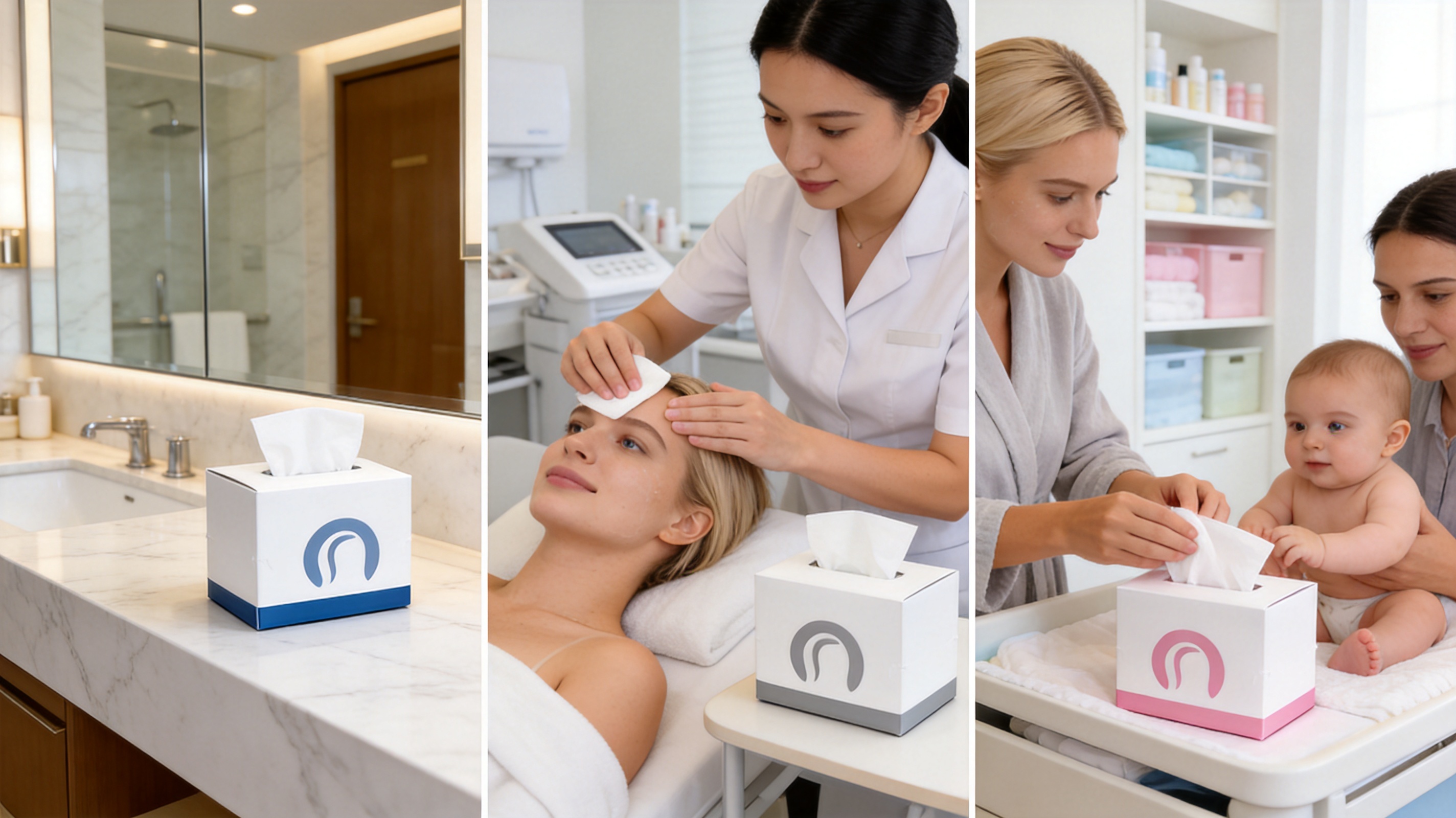
Dry wipes in a box are a simple product with an important role in personal care, family hygiene, beauty routines, healthcare support, hospitality, and daily household cleaning. By combining absorbent dry wipe material with a rigid dispensing box, this format offers a more organized and convenient alternative to loose towels, open tissue stacks, and ordinary wipe packs. The one-pull-one-use design helps users take a single wipe quickly, while the box protects the remaining wipes from deformation, dust, and unnecessary handling.
For consumers, the product provides a clean and orderly experience. For retailers, hotels, clinics, beauty salons, maternity facilities, and private-label brands, it creates an opportunity to offer a practical hygiene product with strong visual appeal and flexible customization. The format is especially suitable for bathrooms, vanities, changing areas, bedrooms, travel preparations, and other locations where appearance and convenience matter equally.
Manufacturing quality is central to the performance of boxed dry wipes. The wipe must be soft enough for regular facial and skin contact, strong enough to resist tearing during use, absorbent enough for drying and cleansing support, and compatible with a dispensing system that allows smooth one-at-a-time removal. The packaging must also protect the product while presenting a neat appearance in the home or commercial environment.
Zhejiang Uniquality Nursing Products Technology Co., Ltd., operating under the Kingsafe and Uniquality product groups, has extensive experience in medical and hygienic nonwoven materials, nursing products, and related textile applications. Founded in 1987, the company has developed manufacturing capabilities covering research and development, nonwoven material production, converting, product assembly, and private-label cooperation. Its experience across medical, maternal and baby, beauty, household, and industrial cleaning categories supports the development of dry wipes in a box for different markets and user requirements.
What Are Dry Wipes in a Box?
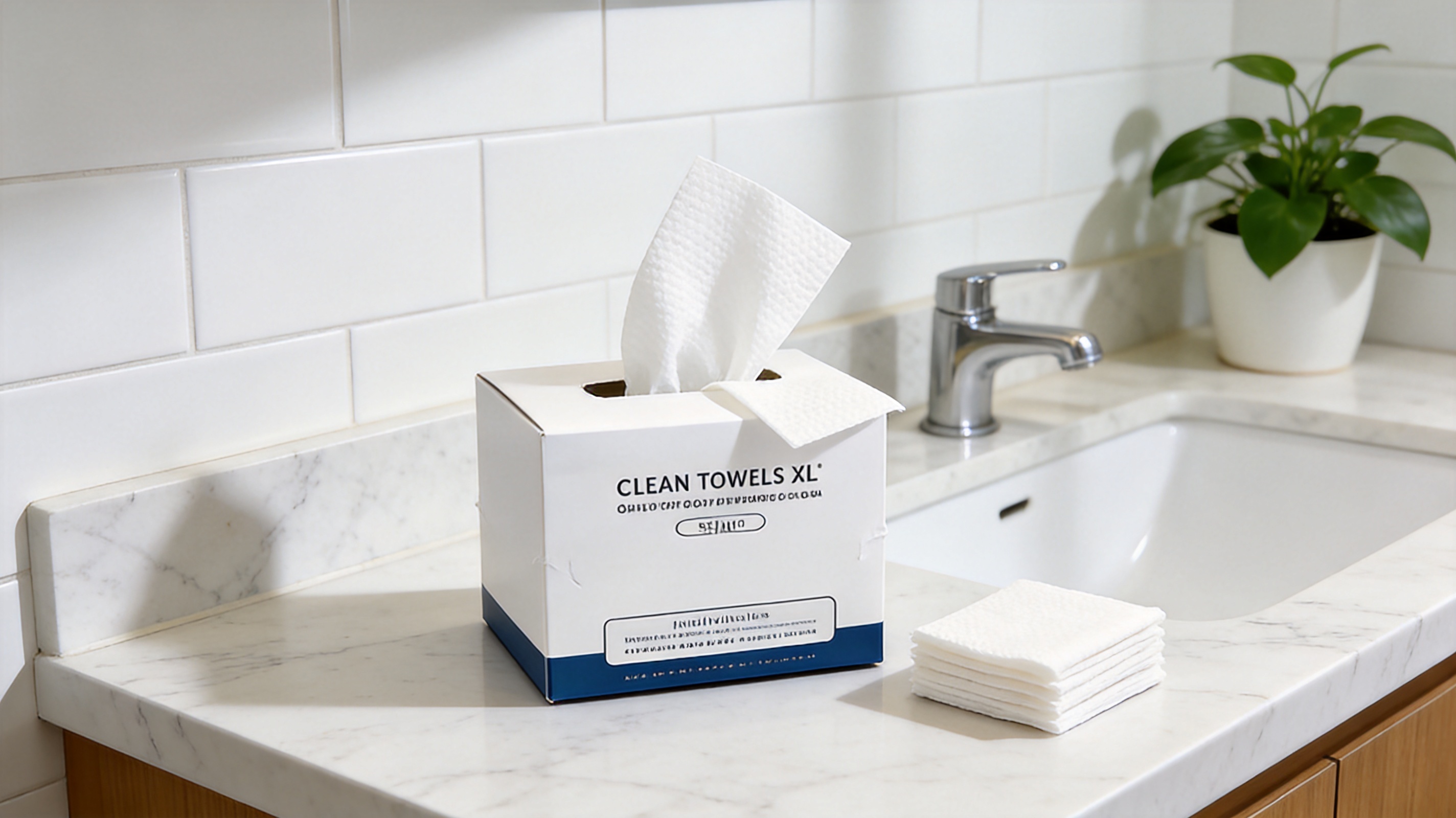
Dry wipes in a box are pre-cut, dry, disposable sheets placed inside a rigid carton or other structured dispenser. The box is designed to hold the wipes in a stable stack or interfolded arrangement. When the user pulls the exposed wipe, the next wipe is positioned for convenient access. This creates a tissue-style dispensing experience while retaining the functional advantages of a dry wipe.
Unlike wet wipes, boxed dry wipes do not contain a cleansing lotion, preservative system, fragrance, or moisturizing solution unless a customer later adds a compatible liquid during use. Their dry format gives brands and users greater flexibility. A wipe can be used dry for gentle drying, or it can be moistened with water, a suitable cleansing liquid, or another approved solution depending on the intended application and safety requirements.
The product is commonly positioned as a face towel, facial drying sheet, baby-care wipe, beauty-care sheet, household cleaning wipe, or general-purpose personal hygiene wipe. The final positioning depends on the nonwoven material, dimensions, folding method, packaging design, labeling, and claims supported by testing.
The rigid box is not merely an outer container. It performs several functional tasks. It helps prevent the wipes from being crushed during storage and transport, keeps the stack aligned, reduces exposure to surrounding dust, and provides a controlled opening for dispensing. At the same time, the box creates a clean visual presence that can fit naturally on a bathroom shelf, vanity, bedside table, reception counter, or hotel amenity station.
Why the Boxed Format Is Increasingly Valuable
Many disposable wipes are packaged in flexible bags or soft plastic pouches. These packages can be efficient and economical, but they may become wrinkled, collapsed, or difficult to stack after repeated use. When a package loses its shape, the remaining wipes can shift inside, and users may need to reach into the opening to retrieve one sheet. This can reduce convenience and create unnecessary contact with the unused product.
A rigid box addresses these issues through structural stability. It maintains a defined shape throughout the product’s life cycle and provides a more predictable dispensing experience. A well-designed opening supports one-pull-one-use access, helping users remove one wipe without disturbing the rest of the stack.
The box also creates a stronger connection between packaging and interior design. In bathrooms and vanities, consumers often prefer products that look orderly and refined. A rigid dispenser can be coordinated with a brand’s color system, typography, and visual identity. Compared with an unstructured plastic bag, it can communicate a more premium and intentional product position.
For professional environments, the benefits are even more practical. Hotels, clinics, salons, childcare facilities, and offices need products that are easy to identify, replenish, and use. A box can be placed in a fixed position, reducing clutter and making the wipe supply visible. It can also help staff maintain a consistent presentation across guest rooms, treatment areas, nursing rooms, and service counters.
Key Benefits of the Boxed Dispensing System
One-pull-one-use convenience: The dispensing structure is designed to help users retrieve one wipe at a time. This reduces the need to open a large pack or search through a loose stack.
Improved product protection: The rigid box helps protect the wipes from deformation, compression, and excessive exposure during normal storage and use.
Better organization: The box maintains a tidy footprint and can be positioned neatly in bathrooms, vanities, bedrooms, clinics, or hospitality settings.
Premium shelf presentation: A structured package provides more surface area for brand design, product information, and a visually coordinated appearance.
Flexible application: Dry wipes can be used for facial drying, hand drying, baby care, beauty care, light cleansing support, and selected household tasks.
Potential for lower formulation complexity: Because the wipes are dry, the product does not require a liquid preservation system. This can simplify certain aspects of product development, although all materials and claims must still be evaluated for the intended market.

Dry Wipes in Box
Material Quality and User Comfort
The performance of a dry wipe begins with the nonwoven substrate. Nonwoven materials are manufactured by bonding or entangling fibers rather than weaving yarns into a conventional fabric. This allows producers to adjust softness, strength, absorbency, thickness, surface texture, and biodegradability according to the intended use.
For a face towel application, softness and skin comfort are particularly important. The wipe may come into contact with the cheeks, forehead, eyeside area, nose, and other sensitive regions. A suitable structure should feel smooth and gentle rather than rough or abrasive. The wipe should also maintain its integrity when folded, pulled from the dispenser, or used with water.
Strength is another essential characteristic. A wipe that tears too easily can create frustration and increase consumption because the user may need two or more sheets for a task. Stronger materials support more controlled use and provide a dependable experience during drying or light cleansing. However, excessive stiffness can reduce comfort, so the material must be balanced according to the application.
Absorbency affects how effectively the wipe can remove water or moisture from the skin. The level of absorbency may be influenced by fiber selection, web structure, basis weight, embossing, hydroentanglement conditions, and finishing processes. Different markets may prefer a lighter sheet for facial use, a more substantial sheet for baby care, or a stronger format for household applications.
Nonwoven production also allows the manufacturer to develop differentiated product structures. Spunlace nonwoven materials, for example, use high-pressure water jets to entangle fibers and create a cohesive web. This process can support a soft hand feel, good strength, and a textile-like surface. Spunmelt materials, hot-air-through nonwovens, flushable structures, and degradable materials may be selected for other product categories or specific customer requirements.
Important Material Characteristics
Softness: Suitable for frequent skin contact and facial drying.
Wet strength: Important when users moisten the dry wipe before use.
Dry strength: Helps the sheet remain intact during dispensing and handling.
Absorbency: Supports drying and removal of water or light moisture.
Low lint performance: Helps reduce loose fibers during use, subject to the selected material and manufacturing controls.
Uniform thickness: Contributes to consistent touch, folding, dispensing, and packaging appearance.
Skin-contact suitability: Requires appropriate raw materials, process control, and testing for the intended application and market.
Advanced Manufacturing Capabilities
The development of a reliable boxed dry wipe requires more than simply cutting and packing nonwoven fabric. The entire process must connect material engineering, product design, folding, dispensing, packaging, quality assurance, and supply-chain management. A manufacturer with capabilities across these stages can respond more effectively to customer specifications and market differences.
The company behind the product has built its business around the research, production, and sale of medical and hygienic nonwoven materials, nursing products, and high-end clothing interlining. Its long operating history provides an industrial foundation for understanding fiber behavior, web formation, converting, and product assembly.
Internationally sourced production equipment and technology from Germany, France, and Italy have supported the company’s manufacturing development. Such equipment can help improve process stability, production speed, web uniformity, cutting precision, and quality consistency. In a disposable hygiene product, these details matter because even small variations can affect softness, tear resistance, folding accuracy, package filling, and dispensing performance.
The company has also established multiple production bases in China, including facilities associated with Huzhou, Foshan, Nantong, and Wuhan. A multi-base manufacturing network can provide broader production capacity, regional support, and improved ability to manage different product categories. It may also help brands arrange supply plans for standard items, seasonal demand, and customized programs.
From Fiber to Finished Product
The manufacturing process generally begins with the selection and preparation of fibers. Depending on the product specification, the raw materials may be selected for softness, absorbency, strength, environmental profile, or compatibility with a particular nonwoven technology. Fiber quality and consistency influence the final texture and performance of the wipe.
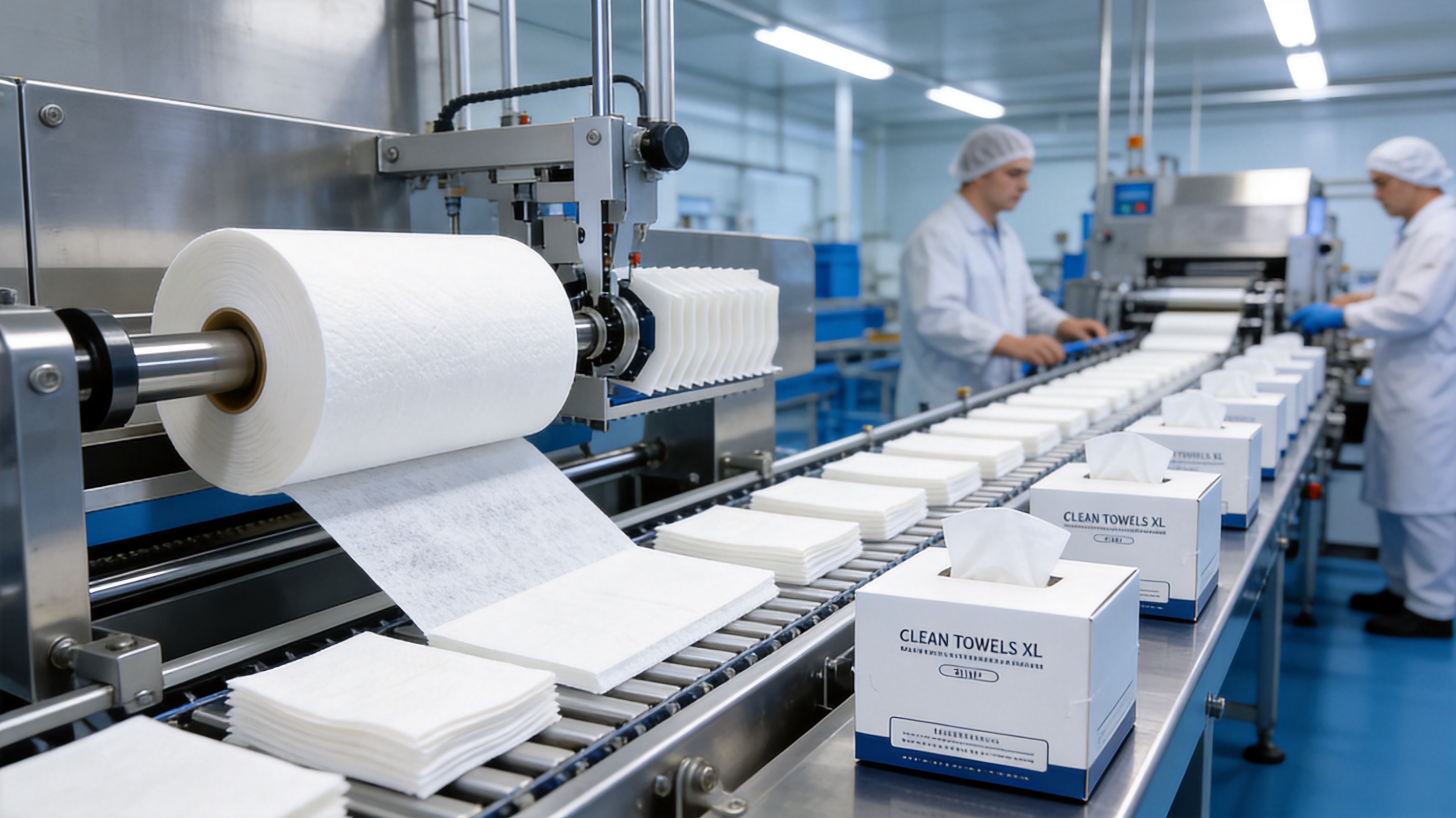
The fibers are formed into a web through a controlled production process. For spunlace materials, water-jet entanglement integrates the fibers into a stable sheet. The web may then undergo drying, finishing, inspection, and winding. Process parameters are managed to achieve the target basis weight, thickness, tensile strength, elongation, and appearance.
After the nonwoven roll is prepared, it is converted into individual wipes. Conversion may include slitting, cutting, folding, interfolding, stacking, counting, and insertion into the dispenser box. Each stage requires coordination. If the fold is too tight, dispensing may become difficult. If the stack is too loose, the product may shift inside the box. If the opening is not aligned with the fold pattern, one-pull-one-use performance may be affected.
Packaging assembly is followed by inspection and carton packing. Depending on the customer’s program, quality checks may cover dimensions, weight, sheet count, appearance, fold accuracy, opening performance, package integrity, and labeling. Retention samples and batch records can support traceability and continuous improvement.
Process Control Supports Consistency
Consistency is one of the most important advantages of an experienced manufacturer. Consumers expect every wipe in the box to feel similar and every box to dispense in a comparable way. Brands also need stable specifications across production batches to protect their customer experience and reduce complaints.
Process control can address several potential sources of variation:
Raw material variation: Fiber quality and blend ratios must be monitored to maintain a stable substrate.
Web formation: Uneven fiber distribution can result in differences in thickness, strength, or absorbency.
Moisture control: Dry wipe products require appropriate moisture management during production and storage.
Cutting accuracy: Consistent dimensions help ensure a neat stack and predictable use.
Folding precision: Correct folding supports smooth dispensing and reduces jams.
Counting accuracy: Accurate sheet counts help meet package specifications and customer expectations.
Packaging integrity: Properly assembled boxes protect the product and preserve its appearance during distribution.
Advantages Over Ordinary Loose Towels and Flexible Packs
Dry wipes in a box compete with several product formats, including reusable cloth towels, facial tissues, loose disposable towels, and flexible-pack wet or dry wipes. Each format has a place in the market, but boxed dry wipes offer a combination of structure, hygiene, convenience, and customization that can be difficult to achieve with alternatives.
| Product format | Typical advantage | Potential limitation | How boxed dry wipes compare |
|---|---|---|---|
| Reusable cloth towel | Can be washed and reused | Requires laundering, drying, and regular replacement | Offers a ready-to-use disposable option with a cleaner individual-use format |
| Loose disposable towel | Simple and inexpensive packaging | Can become disorganized, exposed, or difficult to retrieve | Provides a stable dispenser and more orderly presentation |
| Flexible wipe pouch | Lightweight and easy to transport | May collapse or deform after opening | Uses rigid packaging to maintain shape and protect the stack |
| Wet wipe pack | Ready-to-use moisture and cleansing solution | Requires formulation, preservation, and moisture retention | Offers a dry, flexible sheet that can be used dry or moistened as needed |
| Facial tissue | Soft and widely available | May have lower strength when wet or used for drying | Can provide a stronger, more towel-like sheet for selected applications |
The table illustrates that the value of boxed dry wipes does not depend on one single feature. Instead, the product brings together several advantages: a stable box, controlled dispensing, a functional nonwoven sheet, and broad application flexibility. This combination makes it suitable for users who want a more hygienic and organized alternative to shared towels or unstructured wipe packs.
In a bathroom, for example, a reusable towel may remain damp between uses, while a facial tissue may tear when wet. A dry wipe in a box can provide a single-use sheet with greater structural integrity. In a hotel room, a boxed dispenser can look more presentable than a soft package that becomes misshapen. In a baby-care setting, the dry sheet can be moistened only when needed, allowing caregivers to control the amount and type of liquid used.
Applications Across Multiple Sectors
Face and Beauty Care
The face towel category is one of the most natural applications for this product. Consumers may use the wipes after cleansing, bathing, exercising, traveling, or applying skincare products. The sheet can help remove excess water without requiring a shared towel that may remain in a humid environment.
Beauty salons, spas, skincare clinics, and makeup studios can use boxed dry wipes during facial treatments and service procedures. A clean, uniform sheet supports a professional presentation and can be placed conveniently near a treatment bed or vanity. Private-label brands may specify dimensions, softness, packaging artwork, and sheet count to align with their service model.
Maternal and Baby Care
Dry wipes can be useful in newborn and baby-care routines when caregivers want a soft disposable sheet that can be used dry or moistened. The product may support hand drying, face cleaning, changing-area preparation, or gentle wiping, subject to the specific material and safety testing required for infant contact.
Dry products can also be attractive to caregivers who prefer to choose the liquid used during cleaning. Water or a separately selected care solution can be added at the point of use. This format may be especially useful in environments where dry storage, flexible preparation, and controlled consumption are important.
Healthcare and Nursing Environments
Medical and nursing environments require carefully specified products, but dry wipes can support a range of non-sterile hygiene tasks when properly selected and labeled. They may be used for general cleaning support, patient comfort, surface preparation, or personal care applications that match the approved product specification.
The manufacturer’s background in medical and hygienic nonwoven materials provides relevant experience for customers developing healthcare-related products. However, healthcare buyers must define whether a product requires sterile processing, biocompatibility evaluation, specific packaging, or regulatory documentation. A general dry wipe should not be represented as sterile or medical-grade unless the product has been manufactured and tested accordingly.
Hotels and Hospitality
Hospitality businesses often seek products that combine functionality with visual quality. Boxed dry wipes can be placed in guest bathrooms, hotel rooms, spas, lounges, restaurants, and conference facilities. A rigid package is easy for guests to recognize and can contribute to a more polished room presentation.
Hotels may also choose customized packaging that reflects their interior design, service standards, or sustainability communication. Depending on the program, the product can be supplied in different box sizes, wipe counts, sheet dimensions, and material weights.
Household and Daily Cleaning
Although facial drying is a leading application, dry wipes can also be positioned for selected household uses. They may support light dust removal, quick drying, personal hand drying, or cleaning tasks that do not require a pre-moistened chemical solution. Product claims should remain specific and supported by appropriate testing.
For families, the box format can be convenient in kitchens, bathrooms, bedrooms, and entryways. The rigid dispenser reduces clutter and makes the wipes accessible to children and adults, while the dry format allows users to decide whether moisture is needed for a particular task.
Private-Label and OEM/ODM Development
Private-label buyers increasingly seek products that can be differentiated through material performance, packaging, functionality, and market positioning. A boxed dry wipe provides several customization points without requiring a completely new product concept.
Customers may specify the wipe material, basis weight, dimensions, folding method, sheet count, box size, opening design, printing, color, and carton configuration. They may also request different positioning, such as facial care, baby care, beauty care, hotel use, household hygiene, or premium bathroom accessories.
OEM and ODM cooperation can follow different levels of involvement. In an OEM project, the customer may provide a clear specification and artwork while the manufacturer produces and packs the product. In an ODM project, the manufacturer may contribute more actively to material selection, design development, packaging structure, sampling, and production optimization.
A capable partner can help the customer compare material options and understand how each choice affects softness, absorbency, strength, cost, package capacity, and transportation efficiency. This is especially valuable for brands that are entering the wipe category for the first time.
Typical Customization Options
Material selection: Different nonwoven structures can be evaluated for softness, strength, absorbency, and environmental objectives.
Sheet dimensions: Small facial sheets, medium personal-care wipes, and larger towel formats can be developed for different use cases.
Basis weight: A lighter material may support economical daily use, while a heavier material may provide a more substantial towel-like feel.
Folding pattern: The fold must be matched to the dispensing opening and desired one-pull-one-use performance.
Sheet count: The pack can be configured for travel, trial, household, hospitality, or professional use.
Box structure: Packaging dimensions and opening designs can be adjusted for appearance, stackability, and dispensing convenience.
Artwork and labeling: Brands can apply their visual identity and provide product information in accordance with the target market.
Outer cartons: Shipping cartons can be arranged to support warehouse handling, retail distribution, or direct-to-consumer fulfillment.
Quality Assurance and Product Evaluation
Quality assurance should cover both the wipe and the package. A visually attractive box cannot compensate for poor sheet performance, and a high-quality wipe may not deliver a satisfactory experience if the dispenser jams or the package becomes damaged.
During development, buyers may evaluate the product through a combination of laboratory testing, production samples, and simulated use. Testing should be matched to the intended application rather than based on a generic checklist.
Performance Areas to Consider
Dimensions and weight: The finished sheet should remain within the agreed tolerance for size, basis weight, and pack weight.
Tensile strength: Testing in machine and cross directions can help assess resistance to tearing during handling and use.
Absorbency: Water absorption capacity and absorption speed may be relevant for face towel and drying applications.
Softness: Instrumental evaluation and controlled user assessment can help compare material options.
Lint and surface appearance: Visual inspection and suitable testing may be used to evaluate loose fibers and surface uniformity.
Dispensing: Test users should be able to remove sheets smoothly under normal conditions, ideally one at a time.
Package durability: Boxes should remain intact during filling, storage, transport, shelf display, and ordinary consumer use.
Storage stability: The product should be evaluated under appropriate temperature and humidity conditions for the target distribution environment.
Label accuracy: Instructions, warnings, material information, and claims should correspond to the actual product and applicable market requirements.
A formal quality system also benefits from batch traceability, documented inspections, nonconformance procedures, corrective actions, and customer feedback analysis. These systems help turn individual production observations into long-term product improvement.
Packaging Design and User Experience
Packaging design affects how users understand and interact with the product. The box should communicate what the product is, how it should be used, how many sheets it contains, and where it is appropriate. Clear information reduces uncertainty and supports correct use.
The dispensing opening should be large enough for easy access but controlled enough to retain the remaining wipes. Its position should align with the folded stack. Rounded edges, appropriate board strength, and a stable base can improve the user experience. If the box is intended for a bathroom or vanity, resistance to ordinary handling and a neat appearance are especially valuable.
Graphics can help differentiate a private-label product. A minimalist design may communicate premium facial care, while a colorful design may appeal to family or baby-care shoppers. Hotel and institutional buyers may prefer restrained branding that fits a professional environment. Because the rigid box provides a broad printable surface, the package can become part of the product’s identity rather than merely a protective shell.
Packaging efficiency should also be considered. The box must provide enough internal space for the wipe stack without allowing excessive movement. Its dimensions should support efficient case packing and transportation. Reducing unnecessary empty space may improve shipping efficiency, while maintaining sufficient protection is essential to prevent compression damage.
Environmental and Material Considerations
Environmental performance is an important consideration in the disposable hygiene sector. Customers increasingly evaluate fiber sources, packaging materials, manufacturing efficiency, and disposal instructions. A responsible product development process should consider the complete life cycle rather than focusing on one attribute in isolation.
Dry wipes may have certain formulation-related advantages because they do not require a liquid lotion or preservative system. However, the overall environmental profile also depends on the nonwoven fibers, packaging board, inks, adhesives, production energy, transportation, and disposal route.
Customers may explore options such as renewable fibers, recycled-content packaging, reduced packaging weight, recyclable box structures, biodegradable materials, or certified raw materials where appropriate. Any environmental claim must be supported by reliable evidence and presented accurately. Terms such as biodegradable, compostable, flushable, recyclable, or plastic-free should not be used casually because their meaning depends on material composition, testing, facilities, and local regulations.
The company’s experience with multiple nonwoven technologies, including flushable and degradable nonwoven materials, provides a foundation for discussing different material pathways. The correct option depends on the customer’s product claims, target market, required performance, disposal conditions, and budget.
Manufacturing efficiency can also contribute to responsible production. Stable processes may reduce material waste, rework, and rejected products. Accurate cutting and counting can improve resource utilization. Efficient case packing and transportation planning may reduce unnecessary volume across the supply chain.
Supply Capability and Industry Experience
A long-established manufacturer can provide value beyond the production line. The company’s development from a nonwoven materials supplier into a broader producer of medical, maternal and baby, beauty, home, industrial cleaning, and clothing-related products has created cross-category knowledge.
This range of experience is relevant because boxed dry wipes often require an understanding of more than one market. A facial-care brand may prioritize softness and premium presentation. A baby-care brand may emphasize gentle materials and safety documentation. A hotel buyer may focus on consistent supply, packaging appearance, and cost control. A healthcare customer may require detailed specifications, traceability, and controlled claims.
The company’s production network and industrial scale can support both standardized products and customized programs. Its experience working with domestic and international brands also provides familiarity with different product expectations, packaging standards, and procurement processes. For buyers, this may reduce the need to coordinate separate partners for material development, wipe converting, and final packaging.
At the same time, every project should begin with a clear technical brief. A strong manufacturing partner cannot replace precise communication. The buyer should define the intended use, target users, market, sheet size, packaging format, performance priorities, expected annual volume, shipping conditions, and regulatory needs.
How to Select the Right Product Specification
Choosing the right boxed dry wipe begins with the question: what will the user do with the wipe? A sheet designed for facial drying may not be identical to one designed for household cleaning. The intended application influences softness, basis weight, strength, absorbency, dimensions, packaging, and labeling.
The second question concerns the user environment. A bathroom vanity may require a premium-looking box with a compact footprint. A hotel may need a consistent format that fits guest-room amenities. A clinic may require clear labeling and controlled documentation. A family product may benefit from a larger sheet count and durable packaging.
The third question concerns whether the wipe will be used dry, moistened with water, or paired with another solution. If wet use is expected, the sheet should be tested in a wet condition. The packaging and instructions should also make the intended method clear.
The fourth question concerns distribution. Products shipped over long distances or stored in humid environments may need stronger outer cartons, additional protective packaging, or storage recommendations. The final package should be evaluated in conditions resembling the actual supply chain.
Recommended Buyer Checklist
Define the primary application and target user.
Set the preferred sheet dimensions, basis weight, texture, and absorbency.
Determine whether the product is intended for dry use, wetting at the point of use, or another approved application.
Select the number of sheets per box and the desired box dimensions.
Confirm the dispensing method and conduct one-pull-one-use trials.
Discuss required testing, certifications, claims, and market documentation.
Review artwork, labeling, language, warnings, and usage instructions.
Confirm production minimums, sampling stages, lead times, and shipment configuration.
Evaluate storage conditions, case packing, and transportation requirements.
Approve a production sample and retain the agreed specification for future orders.
Why This Product Is a Strong Private-Label Opportunity
Private-label brands need products that are understandable, useful, and capable of standing apart from generic alternatives. Dry wipes in a box satisfy these criteria through a clear value proposition: a clean, convenient, organized, and versatile disposable towel format.
The product can be positioned at multiple price levels. A basic version may focus on everyday household use, while a premium version may use a softer, heavier material, refined packaging, and a higher sheet count. A hotel version may prioritize presentation and easy replenishment. A baby-care version may emphasize gentle touch and controlled wetting. This range allows brands to serve different customer segments without changing the basic dispensing concept.
Packaging customization further strengthens brand differentiation. A retailer can use a distinctive color system and design language. A skincare company can integrate the box into its bathroom collection. A hotel chain can apply its own identity. A healthcare supplier can use functional labeling and clear product information.
The product also supports category expansion. A brand that begins with boxed face towels may later develop matching dry wipes, wet wipes, cleansing wipes, baby products, training pants, or other nursing products. A manufacturer experienced in these categories can help coordinate product development and maintain a consistent quality standard across the range.
Q&A: Common Questions About Dry Wipes in a Box
What are dry wipes in a box primarily used for?
They are commonly used for facial drying, personal hygiene, baby care, beauty routines, hotel amenities, nursing support, and selected household tasks. The correct application depends on the material, testing, labeling, and product claims.
Are boxed dry wipes the same as facial tissues?
No. Both products may be dispensed from a box, but dry wipes are generally made from nonwoven material and can offer a more towel-like combination of strength, texture, and absorbency. Facial tissues are usually paper-based and may have different wet strength and handling characteristics.
Can dry wipes be used with water?
Many dry wipes can be moistened with water, but the suitability depends on the material and intended use. The product instructions should explain the appropriate method, and the wipe should be evaluated under wet conditions before commercial claims are made.
Does the box help maintain hygiene?
The box helps protect the unused wipes from deformation and unnecessary exposure during ordinary storage and use. It does not make the product sterile unless the product has been specifically sterilized and validated for that purpose. Users should follow the storage and handling instructions.
How does one-pull-one-use dispensing work?
The wipes are folded or interfolded so that pulling the exposed sheet helps position the next sheet at the opening. Correct fold dimensions, stack alignment, opening design, and material properties are all important to reliable dispensing.
Can the box and wipe dimensions be customized?
Yes. Private-label and OEM/ODM projects may include customized sheet sizes, sheet counts, folding methods, box dimensions, opening designs, artwork, and outer cartons. The final design should be tested to ensure that packaging changes do not reduce dispensing performance.
What nonwoven materials can be used?
Material options may include different spunlace, spunmelt, hot-air-through, degradable, or other nonwoven structures, depending on the intended application. The best selection balances softness, strength, absorbency, cost, environmental objectives, and regulatory requirements.
Are boxed dry wipes suitable for babies?
They may be developed for baby-care applications when the material, production controls, testing, and labeling are appropriate for the intended use. A general-purpose wipe should not automatically be considered suitable for newborn or infant skin without suitable evaluation.
Can a company order private-label boxed dry wipes?
Yes. A private-label buyer can work with the manufacturer on product specifications, packaging artwork, sampling, testing, production, and shipment. The required order quantity and development process depend on the selected configuration and customization level.
What should buyers test before placing a large order?
Buyers should review appearance, softness, dimensions, absorbency, dry and wet strength, sheet count, box durability, dispensing performance, labeling, and storage stability. Testing should reflect the actual target application and distribution environment.
Are these products environmentally friendly?
Environmental performance depends on the fibers, packaging, manufacturing process, transportation, and disposal route. Customers can discuss renewable, recycled-content, recyclable, biodegradable, or other options, but each claim must be supported by appropriate evidence and comply with the target market’s requirements.
What makes an experienced manufacturer valuable?
An experienced manufacturer can combine material knowledge, nonwoven production, converting, package assembly, quality control, customization, and supply management. This integrated capability helps reduce coordination problems and supports more consistent finished products.
Conclusion
Dry wipes in a box provide a practical answer to several everyday hygiene needs. They combine the softness and absorbency potential of nonwoven materials with the orderliness and protection of a rigid dispenser. Their one-pull-one-use structure supports convenience, while the box helps preserve product shape and improve presentation in bathrooms, vanities, hotels, clinics, salons, homes, and care facilities.
Compared with loose towels, ordinary tissues, and flexible wipe packs, this format offers a balanced combination of structure, cleanliness, dispensing control, and design flexibility. It can be used dry or adapted for certain moist applications, making it suitable for facial care, baby care, beauty services, hospitality, nursing support, and selected household tasks.
The product’s success depends on the complete manufacturing system. High-quality fibers, stable nonwoven formation, precise cutting and folding, reliable counting, durable packaging, and documented quality control all contribute to the final user experience. A manufacturer with long-term expertise in nonwoven materials and hygiene products can help brands develop specifications that are both attractive and practical.
Zhejiang Uniquality Nursing Products Technology Co., Ltd. brings decades of experience in research, production, and sales across medical and hygienic nonwovens, nursing products, and related industrial textile fields. Its advanced equipment, broad product knowledge, multi-site production capabilities, and OEM/ODM experience create a strong foundation for customers seeking private-label dry wipes in a box.
For brands, distributors, and professional buyers, the next step is to define the intended use and develop the product around real user needs. With the right material, dispensing system, packaging structure, and quality plan, boxed dry wipes can become more than a basic disposable item. They can serve as a dependable, attractive, and scalable hygiene product for modern care markets.
References
1. International Organization for Standardization. Nonwoven Materials: General Principles of Terminology and Testing.
2. Association of the Nonwoven Fabrics Industry. Technical Guidance on Nonwoven Fabric Structure and Performance.
3. World Health Organization. Principles of Hygiene, Hand Care, and Personal-Care Product Use.
4. United States Pharmacopeia. General Considerations for Packaging, Quality Control, and Product Protection.
5. European Commission. General Principles for Consumer Product Safety and Product Information.
6. Textile Exchange. Guidance on Responsible Fiber and Material Selection.
7. International Organization for Standardization. Quality Management Systems: Requirements and Continuous Improvement Principles.
8. International Organization for Standardization. Environmental Management and Life-Cycle Considerations for Manufactured Products.