中文简体
中文简体 English
 日本語
日本語 русский
 Español
Alcohol wipes are a practical and efficient solution for professional cleaning and disinfection. They combine a pre-moistened nonwoven substrate with an alcohol-based formulation to provide convenient, single-use hygiene performance. The 75% Alcohol Wipes described in this article are designed for business customers that require consistent quality, flexible customization, dependable production capacity, and export-oriented packaging. They are suitable for healthcare distributors, medical suppliers, industrial manufacturers, laboratories, cleanrooms, commercial cleaning companies, institutional procurement departments, and private label brands.
Unlike ordinary cleansing wipes, alcohol disinfection wipes are developed to deliver a controlled amount of alcohol to the target surface or skin area. Their pre-moistened format reduces preparation time, minimizes cross-contamination associated with reusable cloths, and supports standardized cleaning procedures. Individually packed wipes are especially useful in environments where hygiene, portability, traceability, and controlled usage are important.
The product combines a soft nonwoven fabric with an alcohol solution commonly specified at 75% concentration. The material may be selected from polyester, viscose, bamboo, lyocell, cotton, or other suitable nonwoven substrates depending on the intended application. Customers can also request different wipe dimensions, folding styles, packaging formats, artwork, and carton configurations for their own markets.
What Are 75% Alcohol Wipes?
75% Alcohol Wipes are disposable wipes saturated with a solution containing approximately 75% alcohol, generally ethanol or another approved alcohol formulation selected according to the application and destination-market requirements. The remaining portion of the solution normally consists of purified water and, where permitted and required, other formulation components. The exact formulation should always be confirmed through technical documentation and regulatory review before commercial use.
The wipe is manufactured by converting a nonwoven roll into a specified size, folding it according to the selected format, saturating it with the alcohol solution, and sealing it into suitable packaging. The packaging is important because alcohol is volatile. A correctly sealed sachet, soft pack, canister, refill pack, or bulk package helps preserve moisture content and product performance throughout the intended shelf life.
Alcohol wipes are available for different application categories. Some are intended for general surface cleaning and disinfection, while others may be formulated and labeled for hand or skin use. These applications should not be treated as interchangeable. The substrate, alcohol type, concentration, regulatory classification, compatibility testing, warning information, and instructions for use must all correspond to the approved purpose of the finished product.
The product supplied for professional customers can be produced as an OEM or ODM item. This means a buyer may develop a product under its own brand, select the packaging format, specify the wipe size, request a certain nonwoven composition, and prepare artwork for its target market. This flexibility is valuable for importers, distributors, healthcare suppliers, pharmacy groups, industrial safety companies, and e-commerce brands purchasing in bulk.
Core Product Advantages
Controlled Alcohol Formulation
A principal advantage of the product is its controlled alcohol formulation. A concentration around 75% is widely recognized as an effective range for many general disinfection applications because alcohol needs sufficient water content to support penetration and protein denaturation. An excessively high alcohol concentration may evaporate too quickly or produce a surface effect that limits penetration, while an excessively low concentration may not provide the desired disinfection performance.
In commercial production, formulation control is more important than simply stating an alcohol percentage. The manufacturer must control the raw materials, mixing process, filling quantity, saturation uniformity, packaging seal, and storage conditions. A wipe that contains the correct formulation in the liquid tank but is inconsistently saturated during conversion may not provide consistent performance. Professional manufacturing therefore requires coordination between formulation preparation and wet-wipe production.
Customers may request different alcohol concentrations when required by local legislation, product classification, customer specifications, or intended use. The most common specification in many markets is 70% alcohol, while this product is presented as a 75% alcohol wipe. The selected concentration should be agreed during product development and supported by appropriate testing, labeling, and technical documentation.
Soft Nonwoven Fabric
The wipe substrate is made from soft nonwoven material designed to provide comfortable handling and effective liquid distribution. Available material options include polyester, viscose, bamboo, lyocell, cotton, and blended constructions. The best choice depends on the application. Polyester can provide strength and dimensional stability, while viscose and cellulose-based fibers can offer a softer hand feel and suitable absorbency.
A high-quality wipe must balance several performance characteristics. It should be strong enough to remain intact during wiping, absorbent enough to distribute the solution, soft enough to reduce uncomfortable friction, and compatible with the alcohol formulation. For professional users, low lint generation may also be important, particularly in laboratories, electronics assembly, cleanrooms, and precision manufacturing environments.
The manufacturer can provide different basis weights, generally within a range of approximately 30 to 100 grams per square meter. A lighter wipe may be appropriate for small individual sachets or quick-use applications, while a heavier substrate may be preferred where greater coverage, strength, or liquid-holding capacity is required. Material selection can be adapted to the customer’s product positioning and technical requirements.
Convenient Single-Use Format
Disposable alcohol wipes are designed to simplify cleaning procedures. The user can open one package, wipe the target area, and dispose of the used wipe according to local waste-handling requirements. This eliminates the need to prepare a cloth and liquid separately and reduces the possibility of repeatedly using a contaminated cloth.
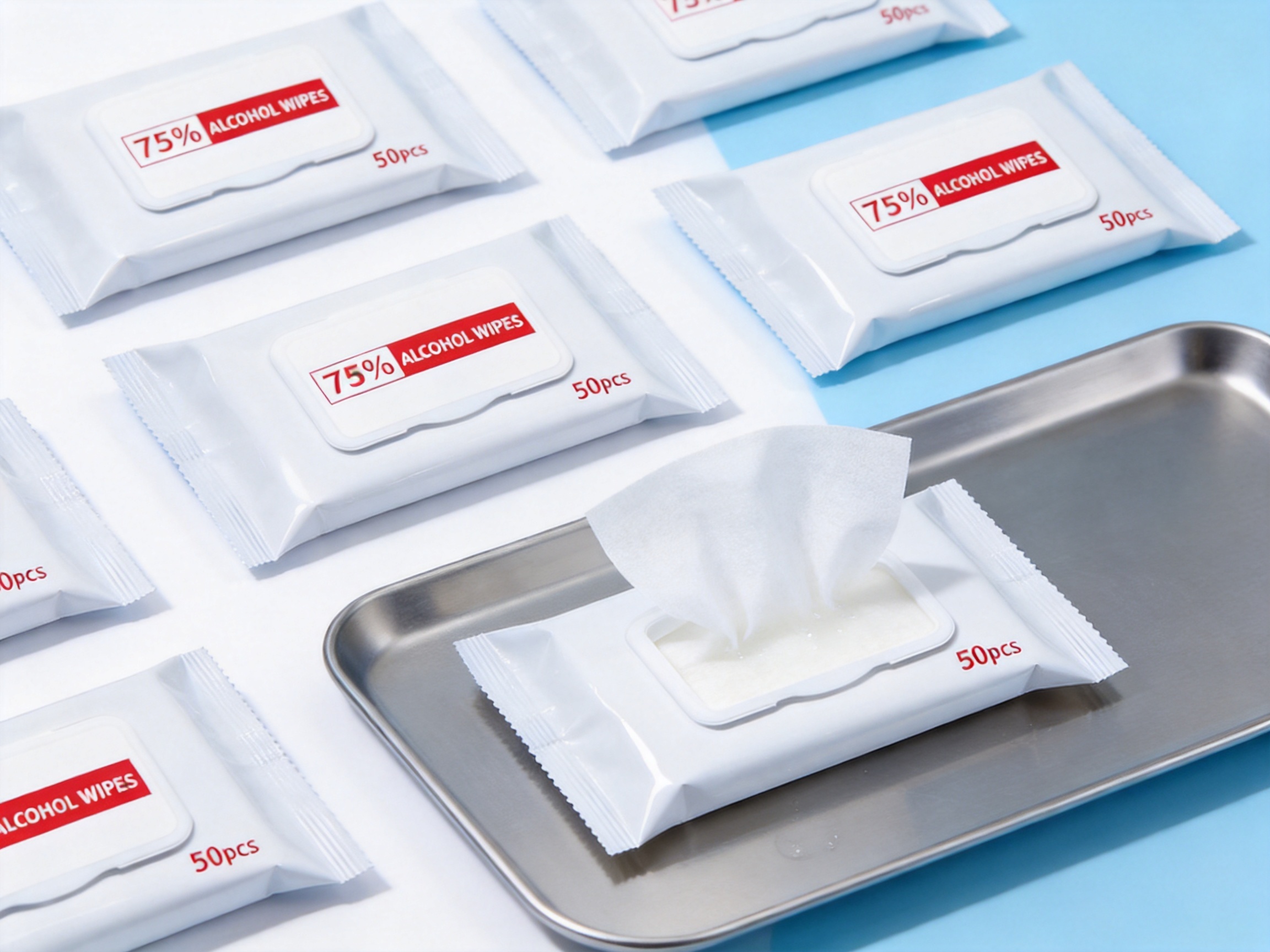
Individual sachets are particularly suitable for medical kits, first-aid packs, travel hygiene products, emergency response supplies, workplace safety kits, hospitality amenities, and institutional procurement. Canisters and soft packs are useful for locations with repeated daily use, including clinics, laboratories, factories, offices, warehouses, and commercial facilities.
Bulk formats can help industrial buyers reduce packaging consumption and optimize logistics. Refill packs may be supplied for compatible dispensers or canisters. Packaging can be selected according to the customer’s distribution model, usage frequency, shelf-life expectations, shipping requirements, and local labeling regulations.
Fast Application and Broad Usability
Alcohol wipes are valued for their speed. The user does not need to measure liquid, prepare a spray bottle, or locate a separate cloth. This can support more consistent cleaning routines in busy professional environments. The compact format also allows wipes to be placed at points of use, such as entrances, workstations, medical carts, production lines, reception areas, laboratories, and service counters.
Potential application areas include general workplace hygiene, external surface disinfection, medical supply distribution, laboratory environments, industrial maintenance, electronics assembly, facility management, hospitality, food-service support areas, commercial cleaning, and institutional procurement. The product’s suitability for a specific surface or use should be confirmed through compatibility and regulatory evaluation.
Alcohol may affect certain plastics, coatings, painted surfaces, leather, varnished materials, acrylics, and sensitive electronic components. Professional users should follow the product instructions and test compatibility on an inconspicuous area before broad application. The wipes are not a universal substitute for every cleaning chemical or every disinfection protocol.
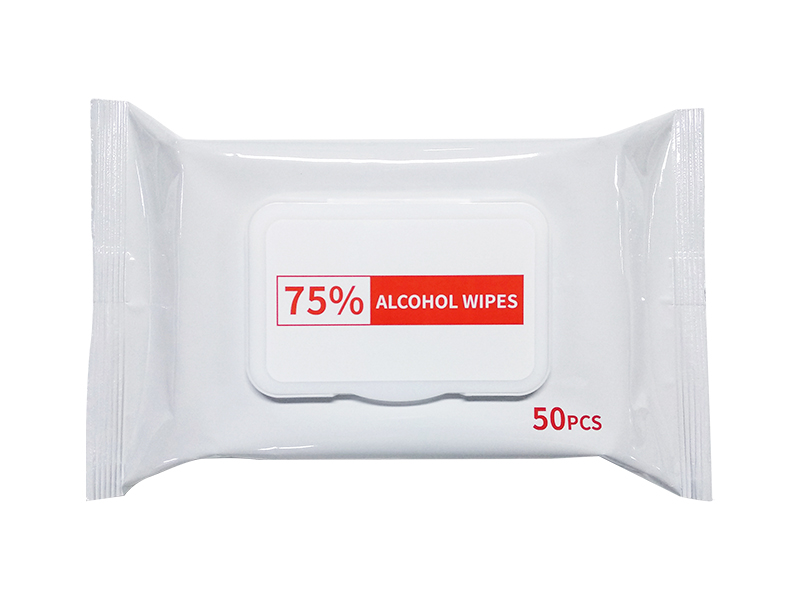
Alcohol 75 wipes
Available Specifications and Customization Options
One of the strongest advantages for B2B purchasers is the ability to configure the product rather than purchase a single fixed retail specification. Customization can cover the wipe substrate, dimensions, folding pattern, alcohol concentration, packaging format, printing, carton design, labeling language, and pallet configuration.
Item |
Available or Typical Options |
Business Benefit |
Alcohol formulation |
75% specification; other concentrations subject to requirements |
Supports different markets and applications |
Material |
Polyester, viscose, bamboo, lyocell, cotton, and blends |
Allows adjustment of softness, strength, absorbency, and cost |
Basis weight |
Approximately 30–100 gsm |
Matches coverage and liquid capacity requirements |
Wipe size |
Width approximately 12–22 cm; length approximately 12–30 cm |
Supports compact, standard, or larger professional formats |
Folding technology |
Parallel, semi-cross, and other agreed configurations |
Improves dispensing and packaging compatibility |
Pattern |
Plain, mesh, dot embossed, flower, and star patterns |
Provides functional or visual differentiation |
Fragrance |
Unscented, fresh, lavender, lemon, lotus, fruit, coconut, cucumber, and others |
Supports market positioning; fragrance-free options suit sensitive applications |
Packaging |
Individual sachets, soft packs, canisters, tubs, refill packs, and bulk packaging |
Matches usage patterns and distribution channels |
Private label |
Logo, artwork, multilingual labeling, carton design, and export packaging |
Enables brand ownership and market-specific presentation |
Wipe Size and Basis Weight
Wipe dimensions influence coverage, handling, packaging efficiency, and the amount of liquid required per unit. Smaller wipes may be appropriate for compact kits, small contact areas, or applications where one wipe is used per item. Larger wipes can provide more coverage and may be preferred for broad surfaces or professional cleaning procedures.
Basis weight affects the tactile quality and mechanical performance of the wipe. A heavier material can feel more substantial and may resist tearing during demanding use. However, heavier substrates also require more liquid and may increase packaging and shipping weight. A product development team can help balance these factors according to the customer’s target price, application, and positioning.
Folding and Pattern Selection
Parallel and semi-cross folding formats can be selected to suit sachet filling, stack dispensing, canister loading, or automated packaging equipment. Folding should be evaluated together with the final package because the folded dimensions determine how efficiently the wipe fits into the sachet or container.
Plain materials offer a clean and professional appearance. Mesh, dot-embossed, flower, and star patterns can provide a different tactile effect or visual identity. Embossing may also help create surface texture, although the appropriate pattern depends on the required softness, lint performance, absorbency, and manufacturing process.
Fragrance and Fragrance-Free Production
Many professional customers prefer unscented wipes because fragrance can be unsuitable in healthcare, laboratory, industrial, food-related, and sensitive-user environments. A fragrance-free formulation can also make the product easier to position as a neutral professional hygiene solution.
Other markets may request fresh, lavender, lemon, lotus, fruit, coconut, cucumber, or comparable fragrance profiles. Fragranced products require additional review for formulation stability, user acceptance, allergen disclosure, packaging compatibility, and destination-market requirements. Fragrance should never be added merely for marketing appeal without considering the intended professional use.
Manufacturing Process and Quality Control
Advanced manufacturing begins with controlled raw-material selection. Nonwoven rolls, alcohol, purified water, packaging film, labels, cartons, and other components must be evaluated before entering production. Supplier approval, incoming inspection, batch identification, and material traceability help reduce variability and support reliable finished-product quality.
Raw-Material Preparation
Nonwoven materials are selected according to the product specification. The production team reviews fiber composition, basis weight, width, tensile strength, absorbency, appearance, and potential lint generation. Materials that do not meet the agreed requirements are separated and handled according to the quality system.
Alcohol and water quality are also important. The solution must be prepared using controlled ingredients and suitable equipment. A purified water system can help reduce unwanted impurities and improve formulation consistency. Mixing tanks, transfer lines, and filling equipment must be maintained and cleaned according to documented procedures.
Solution Preparation
The alcohol solution is prepared according to a controlled formula. Operators or automated systems measure the required components, mix them thoroughly, and record the batch information. The solution may be checked for concentration, appearance, odor, and other parameters defined by the product specification.
Batch control is essential because the finished wipe’s performance depends on the interaction between the liquid and the substrate. A formulation that is correct in theory must also be applied evenly across the entire production run. Sampling and testing can be performed at appropriate stages to identify deviations before goods are released.
Slitting, Cutting, and Folding
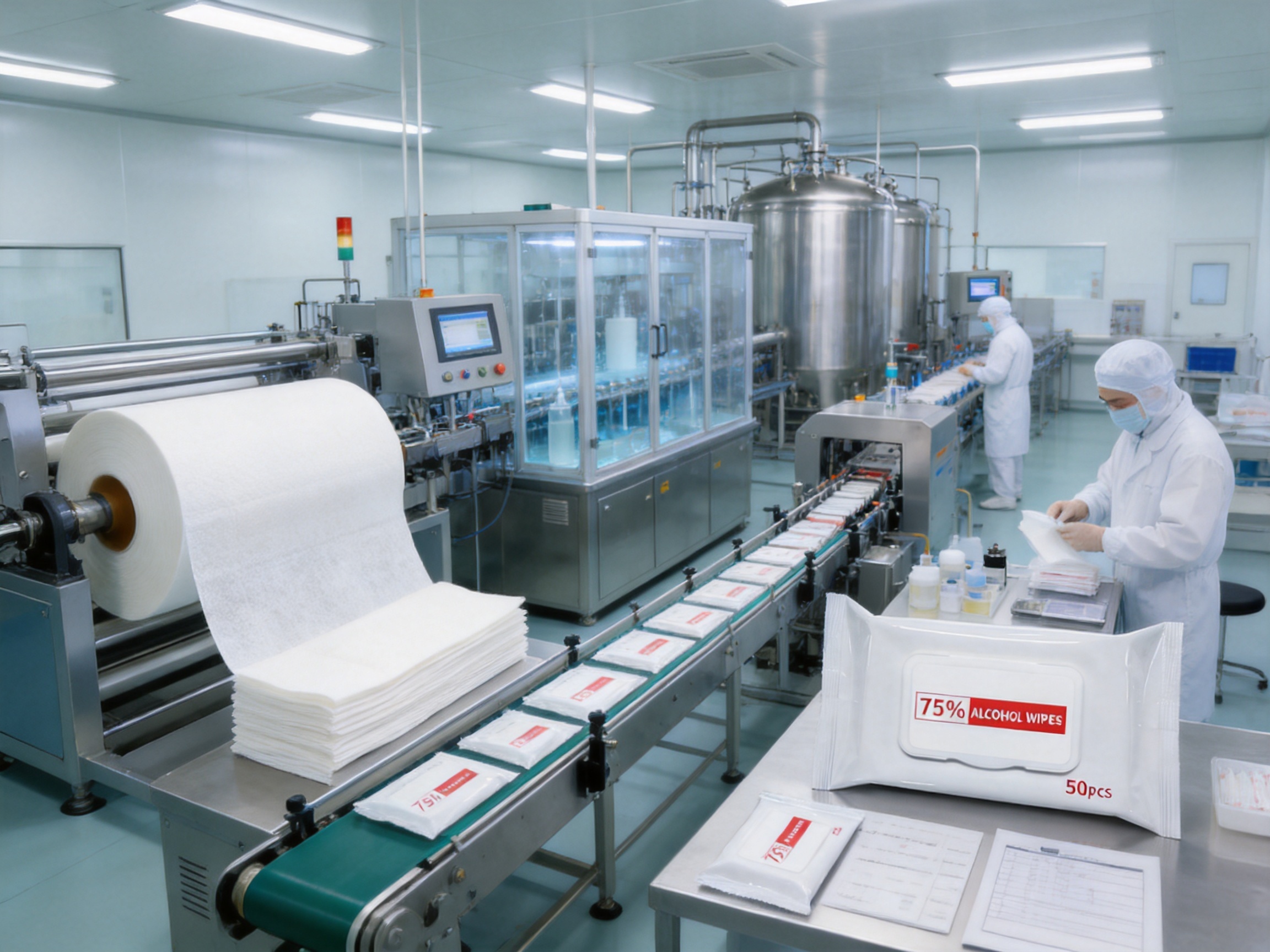
Large nonwoven rolls are converted into the required web width and then cut into individual wipes. Modern equipment can support precise dimensions and high-volume production. The cut pieces are folded using the selected configuration and transferred to the saturation and packaging stages.
Dimensional consistency matters for both user experience and packaging efficiency. Wipes that are too large or too small may cause filling problems, inconsistent liquid dosage, or difficulty removing the product from the package. Automated equipment and regular in-process inspection help maintain the required size and folding accuracy.
Liquid Saturation
The folded wipes are saturated with the approved alcohol solution. The amount of solution applied must be controlled so that the wipe is adequately wet without excessive leakage or insufficient coverage. Production teams may monitor liquid consumption, line speed, batch quantity, and sample weights to support uniformity.
Uniform saturation is one of the most important quality characteristics of a wet wipe. It affects cleaning performance, user perception, evaporation rate, package stability, and shelf-life behavior. A professional manufacturer therefore treats saturation as a controlled production parameter rather than an informal filling step.
Sealing and Packaging
After saturation, wipes are sealed in the selected format. Individual sachets normally require packaging film with appropriate barrier performance and reliable heat seals. Canisters, tubs, and soft packs require suitable closures to reduce evaporation after opening. Refill packs and bulk packaging are designed around the customer’s dispenser or storage system.
Packaging inspection may include seal integrity, print quality, fill count, coding, appearance, and carton configuration. Correct batch codes and date information support traceability and inventory management. Export packaging can be developed with multilingual instructions, warnings, transportation marks, and destination-market information.
Clean Production Environment
Manufacturing hygiene is particularly important for products used in healthcare, personal hygiene, and professional cleaning. The company’s production capabilities include GMP-oriented clean workshops and a purified water system designed to support controlled manufacturing. Cleanroom classification, environmental monitoring, sanitation procedures, personnel practices, and product-specific requirements should be confirmed for each project.
A clean production environment does not replace finished-product testing or regulatory compliance. Instead, it forms part of a broader quality-management approach that includes documented procedures, employee training, equipment maintenance, process validation, supplier control, batch records, complaint handling, and corrective-action systems.
Why Professional Buyers Choose a Specialized Manufacturer
Purchasing alcohol wipes from a specialized manufacturer can provide advantages over sourcing a generic product from a trading company or a small converter. The most important advantages are process control, customization, capacity, technical support, and supply continuity.
Integrated Industrial Chain
The company described in the supplied materials operates across nonwoven substrates and finished hygiene products. This integrated structure can provide better coordination between fabric development, wet-wipe conversion, packaging, and private label production. When the substrate and finished product are managed within a connected manufacturing system, the customer may receive faster technical feedback and more consistent material availability.
Vertical integration can also help reduce dependence on multiple unrelated suppliers. A buyer may coordinate product development, material selection, packaging, quality documentation, and production scheduling through one manufacturing partner. This can simplify communication, especially for customers launching a new private label or adapting a product for different countries.
Large-Scale Capacity
The company has reported multiple production bases in China and an expanding international manufacturing network. Large-scale capacity can be valuable for B2B customers that require regular container shipments, seasonal volume increases, national distribution programs, or multi-market supply. Capacity, however, should be matched with appropriate production planning and confirmed lead times for every order.
High production capacity can also support more stable procurement. A supplier with several facilities may be better positioned to manage maintenance, demand fluctuations, raw-material changes, and long-term programs. Buyers should discuss the designated factory, backup arrangements, quality consistency between sites, and approval procedures before placing recurring orders.
OEM and ODM Expertise
Private label customers often need more than a finished wipe. They may require help choosing the material, defining the dimensions, preparing artwork, selecting packaging, determining case quantities, and coordinating product documentation. An experienced OEM and ODM manufacturer can support these stages from initial concept through mass production.
OEM production generally follows the customer’s approved specification and branding. ODM services may include assistance with product architecture, material selection, package development, and market-oriented configuration. The appropriate service model depends on the customer’s internal technical resources, regulatory responsibilities, and launch schedule.
Testing and Technical Support
A full-function testing center and research capability can help the manufacturer evaluate raw materials and finished products. Potential test areas include alcohol concentration, appearance, dimensions, material weight, liquid content, seal integrity, microbial or disinfection-related performance where applicable, packaging stability, and transportation behavior.
Testing requirements differ according to the intended use and destination market. Medical, cosmetic, household chemical, biocidal, and general cleaning products may fall under different regulatory frameworks. Customers should identify the intended classification early so that the formulation, claims, packaging, documentation, and testing plan are aligned.
Patent and Innovation Resources
The company reports a substantial patent portfolio and a long-term focus on research and development. Innovation in this sector may involve nonwoven structures, absorbency, softness, embossing, packaging, production equipment, sustainability, or process efficiency. A research-oriented supplier can help customers explore differentiated product features rather than offering only an undistinguished standard item.
Innovation should remain connected to practical performance. For alcohol wipes, useful improvements may include better seal reliability, lower lint, improved wetness uniformity, more ergonomic folding, reduced packaging material, or a substrate that provides an appropriate combination of strength and softness. These improvements can create meaningful value for professional users.
Advantages Compared with Ordinary Wipes and Generic Suppliers
More Reliable Disinfection-Oriented Design
Ordinary wet wipes may be designed primarily for cleansing, moisturizing, fragrance, or cosmetic use. They are not automatically suitable for disinfection. Alcohol wipes are developed around the interaction between the alcohol formulation, nonwoven substrate, package, and intended application. This makes them more appropriate for customers that require a controlled disinfection-oriented product.
A generic wipe may also use an unspecified or inconsistent alcohol concentration. Professional purchasing departments need clear specifications, batch records, test reports, and labeling information. These documents help the buyer assess whether the product is appropriate for its own quality system and market obligations.
Greater Customization
Retail products are usually available only in a limited range of sizes, packages, and formulations. A specialized B2B manufacturer can produce different dimensions, materials, folds, liquid loads, and packaging formats. This is particularly important when a customer has a proprietary dispenser, a fixed carton size, a retail shelf strategy, or a country-specific label requirement.
Improved Supply-Chain Coordination
Working with a manufacturer that controls or coordinates nonwoven production, wet-wipe conversion, and packaging may reduce the number of handoffs in the supply chain. Fewer handoffs can simplify quality communication, reduce the risk of specification differences, and make it easier to investigate any production issue.
Better Support for Large Orders
Small suppliers may be able to produce limited batches but struggle with large or recurring programs. A major manufacturer with several production bases, professional equipment, and established export experience can be better suited to long-term bulk purchasing. Buyers should still confirm minimum order quantities, production slots, lead times, payment terms, inspection procedures, and shipment arrangements.
Applications Across Professional Industries
Healthcare and Medical Distribution
Medical distributors may purchase alcohol wipes for inclusion in first-aid kits, examination supplies, workplace medical cabinets, travel health products, or institutional hygiene programs. The product can be packed in individual sachets for convenient distribution. Medical customers should verify the approved use, labeling, claims, and applicable documentation for their jurisdiction.
Laboratories and Cleanrooms
Laboratories and controlled production areas often require convenient wipes for designated cleaning tasks. In these environments, low-lint performance, packaging cleanliness, material compatibility, and traceable batch control may be more important than fragrance or decorative appearance. An unscented, appropriately tested substrate is often preferred.
Industrial Manufacturing
Factories may use alcohol wipes for workstations, tools, equipment exteriors, handles, control panels, and other suitable surfaces. The wipe format helps workers perform quick cleaning without carrying a separate bottle and cloth. Industrial buyers should assess flammability controls, storage requirements, ventilation, surface compatibility, and workplace safety procedures.
Electronics and Precision Assembly
Alcohol-based wipes may be used in selected electronics and assembly applications where residue control and fast evaporation are valued. However, not every alcohol wipe is suitable for sensitive components, optical surfaces, coatings, screens, or energized equipment. Product evaluation and compatibility testing are essential before use on precision parts.
Hospitality and Facility Management
Hotels, offices, transportation facilities, gyms, schools, and commercial buildings may use wipes at high-contact points or in maintenance programs. Soft packs, canisters, and refill systems can support frequent access. Customized branding and packaging can help facility-management companies standardize supplies across multiple locations.
Government and Institutional Procurement
Public institutions and large organizations often require documented specifications, stable supply, controlled packaging, and transparent quality procedures. A manufacturer with export experience and broad production resources can support tender documentation, sample approval, repeat orders, and delivery planning. Requirements should be defined clearly before quotation and production.
Packaging, Storage, and Transportation Considerations
Alcohol is flammable and volatile, so packaging and logistics must be planned carefully. The finished goods should be stored in a cool, dry, well-ventilated area away from heat, sparks, open flames, and direct sunlight. Storage instructions must follow the approved product documentation and the rules of the destination market.
Packaging must be sealed effectively to reduce evaporation. Individual sachets offer strong unit-level protection and are convenient for controlled distribution. Canisters and tubs are appropriate for repeated use but depend on users closing the lid correctly after each opening. Soft packs and refill packs can reduce packaging weight but require compatible closure systems and proper handling.
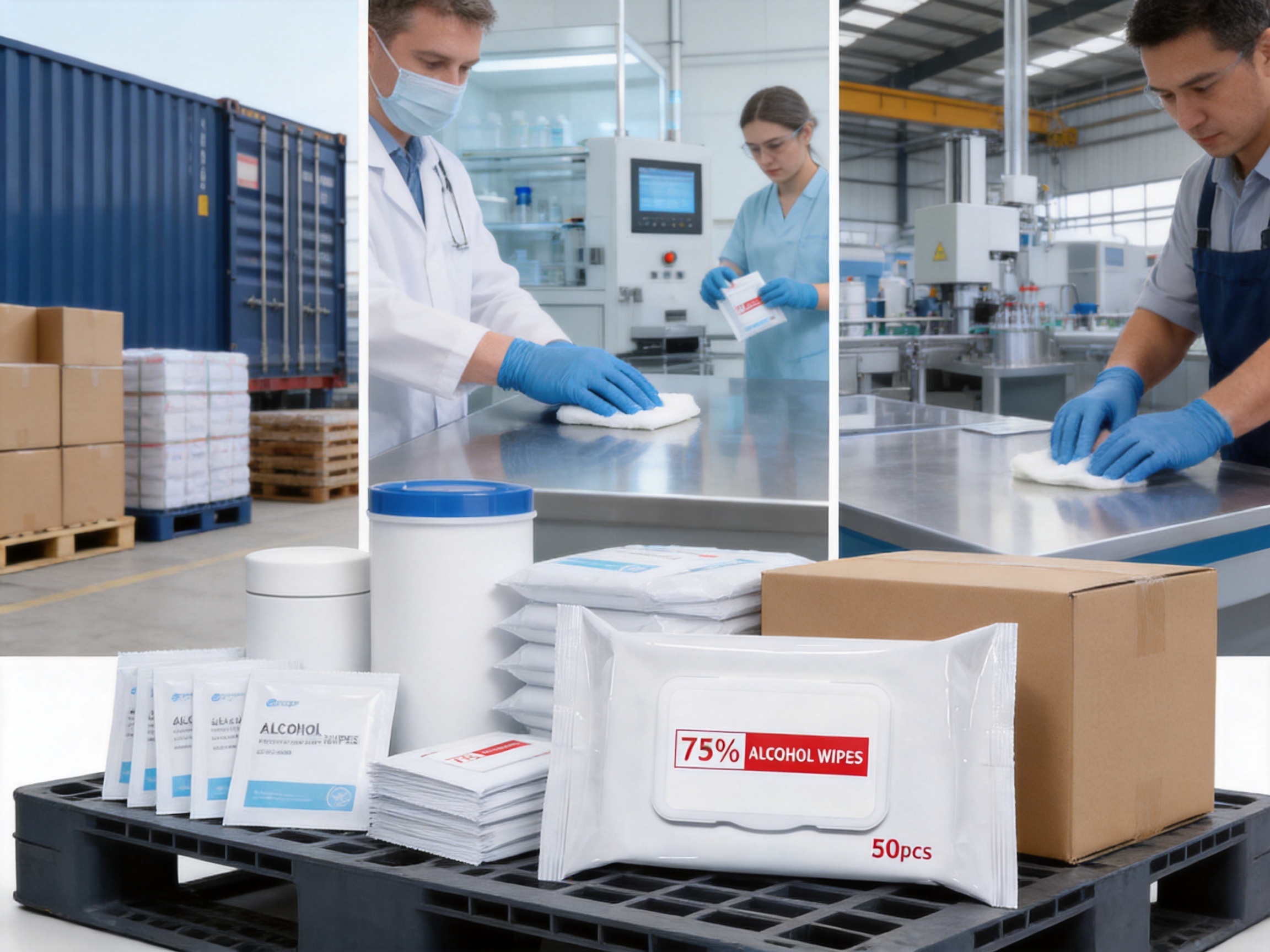
Carton design should protect the inner packages from crushing, puncture, excessive heat, and moisture. Palletization should support stable stacking and efficient container loading. Export shipments may require special transport declarations or documentation because of the alcohol content. The buyer and manufacturer should confirm applicable shipping classifications before dispatch.
Shelf life depends on the formulation, substrate, package barrier, seal quality, storage conditions, and local testing requirements. Buyers should request the relevant shelf-life information and avoid making claims beyond the validated product specification. Samples from production batches may be retained for reference and quality investigations.
Private Label Development Process
A successful private label project normally begins with a product brief. The brief should state the intended use, target market, alcohol concentration, wipe size, material preference, packaging type, expected annual volume, target price, labeling language, certifications or documents required, and delivery destination.
The manufacturer can then recommend a substrate and production configuration. Samples may be prepared for evaluation of softness, wetness, dimensions, odor, folding, package opening, and surface compatibility. If the buyer needs a specialized claim, such as a particular disinfection performance statement, additional testing and regulatory review may be necessary.
Artwork is developed after the product specification is sufficiently defined. Labels should include the correct product name, ingredients or formulation information where required, directions, warnings, storage instructions, batch information, manufacturer details, importer information, and disposal guidance. Claims should be reviewed carefully because terms such as “sterile,” “disinfectant,” “sanitizing,” “antibacterial,” and “kills 99.9%” may have specific legal meanings.
Before mass production, the customer should approve a reference sample or pre-production sample. The approved sample can define the final material, liquid amount, folding style, print color, package dimensions, and carton appearance. Any subsequent changes should be documented and approved through the appropriate change-control process.
Mass production is scheduled after commercial terms, packaging materials, formula, artwork, and quality requirements are confirmed. During production, the manufacturer should retain batch information and conduct in-process checks. Finished goods may be inspected before release according to the agreed quality plan.
Safety and Responsible Use
Alcohol wipes are intended for controlled use and should be kept away from children, heat sources, sparks, and open flames. Users should follow the instructions on the approved package. Wipes should not be swallowed, placed in the eyes, or used on damaged skin unless the product is specifically approved and labeled for that purpose.
Users should allow treated surfaces to remain wet for the contact time stated in the instructions when a specific disinfection procedure requires it. Wiping and immediate drying may not provide the same performance as maintaining the required wet contact time. The correct procedure depends on the approved formulation, target organism, surface, and regulatory claim.
Used wipes should be disposed of according to local waste rules. They should not be flushed unless the product has been specifically engineered, tested, and labeled as flushable. Alcohol wipes are generally not the same as flushable wet toilet tissue, and disposal through toilets can create plumbing or environmental problems.
Professional users should maintain suitable ventilation when using large quantities. Bulk storage should be managed under the organization’s chemical and fire-safety procedures. Employers should provide relevant safety information and training where required by workplace regulations.
Quality Documentation for B2B Buyers
Before ordering, buyers should request a technical data sheet describing the material, dimensions, alcohol type, concentration, liquid content, packaging, shelf life, storage conditions, and intended application. A certificate of analysis or batch test report may also be requested for each production lot or according to the purchasing agreement.
Additional documents may include safety data information, packaging specifications, transportation guidance, quality-system documents, test reports, factory audit materials, and declarations relevant to the destination market. Specific certificates are dependent on the formulation, claims, production standards, and legal classification of the product.
Buyers should also clarify whether the manufacturer provides regulatory support or only manufacturing documentation. In many markets, the importer, brand owner, or distributor remains responsible for registration, notification, labeling review, language requirements, and local compliance. Clear allocation of responsibilities can prevent delays after production.
How to Select the Right Configuration
The best alcohol wipe is not always the heaviest or wettest option. Selection should begin with the task. If the wipe is intended for quick individual use, a compact sachet and medium-weight material may be appropriate. If it is intended for broad surface cleaning, a larger wipe with higher liquid capacity may be more effective.
For cleanroom or laboratory applications, the buyer may prioritize low lint, unscented formulation, controlled packaging, and traceability. For hospitality or general facility use, easy dispensing, attractive artwork, and refill convenience may receive greater emphasis. For industrial buyers, strength, pack count, carton durability, and shipping efficiency can be decisive.
Material selection should consider the target surface. A textured wipe can improve mechanical cleaning, but a smooth wipe may be preferred for delicate surfaces. A strong synthetic substrate may withstand demanding wiping, while a cellulose-rich substrate may provide a softer or more absorbent feel. Testing should be performed on representative surfaces before final approval.
Packaging selection should consider how the product will be stored and used. Individual sachets reduce exposure after opening and are suitable for controlled distribution. Canisters are convenient for repeated access. Soft packs can be efficient for high-volume consumption. Bulk or refill formats may reduce unit packaging but require a suitable dispenser and controlled workplace procedure.
Long-Term Manufacturing Strengths
The company’s history in nonwoven materials and hygiene products provides an important foundation for alcohol wipe production. A long-established manufacturer can accumulate experience in fiber selection, web formation, converting, liquid application, packaging, export handling, and customer-specific production. This experience can help reduce development errors and improve communication during large projects.
The reported manufacturing network includes several domestic production bases and advanced equipment introduced from international sources. A broad production footprint can support different product categories and provide access to specialized equipment. It may also help the company coordinate supply for medical, maternal and baby, beauty, household, industrial, and clothing-related nonwoven applications.
The company’s product portfolio includes spunlace nonwoven fabrics, spunmelt materials, hot-air-through nonwovens, flushable and degradable materials, wet wipes, dry wipes, baby diapers, pull-ups, wet toilet paper, and cleansing wipes. This product breadth demonstrates experience with multiple nonwoven technologies and finished hygiene formats.
Its reported research, testing, patent, and clean-production resources are relevant to buyers that require more than a basic commodity product. For private label customers, these capabilities can support differentiation through substrate selection, packaging development, functional design, and process optimization.
Environmental responsibility is also increasingly important in procurement decisions. Buyers may ask about material sourcing, packaging reduction, production energy, wastewater management, recycled content, biodegradable options, and factory environmental controls. Any environmental claim should be supported by specific evidence and should correspond to the actual formulation and substrate used in the ordered product.
Q&A About 75% Alcohol Wipes
What alcohol concentration is available?
The product specification presented here is based on a 75% alcohol formulation. Other concentrations, including commonly requested specifications around 70%, may be discussed according to customer requirements, local regulations, and the intended product classification. The final concentration must be confirmed in the approved technical specification and product documentation.
Can these wipes be manufactured under a private label?
Yes. OEM and ODM services can include product specification, alcohol formulation selection, nonwoven material, wipe size, folding, packaging, logo printing, multilingual artwork, carton design, and export packaging. The customer should provide its target market and compliance requirements at the beginning of the project.
What packaging formats are available?
Available formats may include individual sachets, soft packs, canisters, tubs, refill packs, and bulk industrial packaging. The best format depends on usage frequency, distribution channel, evaporation control, dispenser compatibility, shipping requirements, and desired retail or institutional presentation.
What nonwoven materials can be used?
Possible materials include polyester, viscose, bamboo, lyocell, cotton, and blended nonwoven fabrics. Spunlace substrates are commonly considered for their softness, absorbency, and flexibility. The final material should be chosen through sample evaluation and application testing.
Are the wipes scented?
Unscented production is available and is often preferred for healthcare, laboratory, industrial, and sensitive-use applications. Other fragrance options may be discussed for markets that prefer a fresh or recognizable scent. Fragrance selection should take account of user preferences, allergen information, formulation stability, and local requirements.
Can the wipes be used on every surface?
No. Alcohol can damage or discolor some plastics, coatings, painted surfaces, leather, varnishes, acrylics, and sensitive components. Users should follow the approved instructions and conduct a compatibility test before applying the product to an unfamiliar surface. Electrical equipment should be switched off and handled according to the equipment manufacturer’s safety instructions.
Do the wipes provide a 99.9% sterilization rate?
The supplied product information states a 99.9% sterilization or disinfection rate. Such a performance statement should only be used in commercial labeling when it is supported by the appropriate test method, organism selection, contact time, product formulation, and regulatory approval. Buyers should request the relevant test documentation and confirm the exact wording permitted in their destination market.
Are the wipes sterile?
“Sterile” is a specific technical and regulatory claim and should not be assumed solely because the wipe contains alcohol or is individually packed. Whether a product can be described as sterile depends on the validated manufacturing and packaging process, applicable standards, and approved labeling. The customer and manufacturer should agree on the correct terminology before artwork approval.
What industries purchase alcohol wipes in bulk?
Common purchasing sectors include healthcare, medical distribution, laboratories, cleanrooms, electronics assembly, industrial manufacturing, hospitality, food-processing support areas, facility management, commercial cleaning, schools, offices, government procurement, and private label e-commerce businesses.
Can documentation be provided?
Product documentation and testing reports can be provided according to customer requirements and destination-market needs. Possible documents include technical data, batch information, safety information, packaging specifications, and applicable test reports. Specific certificates depend on the selected formulation, claims, production standards, and legal classification.
Are small retail orders accepted?
The manufacturing service is intended for B2B customers and bulk purchasing programs rather than retail consumers or very small orders. Importers, distributors, private label brands, institutional buyers, and industrial customers can discuss their expected volume, packaging, delivery schedule, and product requirements with the sales team.
How should the product be stored?
Alcohol wipes should be stored in a cool, dry, well-ventilated location away from direct sunlight, high temperatures, ignition sources, sparks, and open flames. Packages should remain sealed until use. Storage and transport procedures should follow the approved safety documentation and local regulations.
Conclusion
75% Alcohol Wipes provide a convenient, professional format for alcohol-based cleaning and disinfection applications. Their principal advantages include a controlled alcohol formulation, soft nonwoven fabric, single-use convenience, flexible dimensions, multiple packaging options, and suitability for private label development. For business customers, the value of the product extends beyond the wipe itself: reliable manufacturing, material expertise, testing capability, production capacity, and technical support are equally important.
The manufacturer’s experience in nonwoven materials and finished hygiene products supports a broad range of OEM and ODM possibilities. Customers can select polyester, viscose, bamboo, lyocell, cotton, or blended substrates; choose different basis weights and dimensions; request parallel or semi-cross folding; specify fragrance-free or fragranced options; and develop individual sachets, canisters, soft packs, refill packs, or bulk packaging.
Professional buyers should evaluate the intended use, applicable regulations, surface compatibility, packaging requirements, storage conditions, test documentation, and supply expectations before placing an order. When these factors are defined clearly, an experienced manufacturing partner can provide a dependable alcohol wipe program for healthcare, industrial, laboratory, commercial, institutional, and private label markets.
References
1. World Health Organization. Guide to Local Production: WHO-Recommended Handrub Formulations and General Alcohol-Based Disinfection Principles.
2. United States Centers for Disease Control and Prevention. Infection Control and Hand Hygiene Guidance for Healthcare and Professional Settings.
3. European Committee for Standardization. Standards and Test Methods Relating to Chemical Disinfectants and Antiseptics.
4. United States Environmental Protection Agency. Guidance on Disinfectant Product Registration, Labeling, and Performance Claims.
5. International Organization for Standardization. Quality Management Principles and Requirements for Manufacturing Organizations.
6. International Organization for Standardization. Guidance on Cleanroom Operation, Environmental Control, and Contamination Management.
7. Technical product information supplied for 75% Alcohol Wipes, including material, size, packaging, OEM, ODM, and manufacturing specifications.