中文简体
中文简体 English
 日本語
日本語 русский
 Español
Dust is one of the most persistent cleaning challenges in homes, offices, hospitality facilities, healthcare environments, factories, vehicles, and commercial buildings. Fine particles settle on furniture, floors, appliances, shelves, window frames, and other surfaces shortly after cleaning. Hair, lint, fibers, and pet dander can make the problem even more difficult, especially in bedrooms, bathrooms, living rooms, and households with cats or dogs. Traditional brooms may lift dust into the air, while ordinary cloths can push particles from one area to another or leave behind lint and residue.
Dry dust wipes provide a practical alternative. Designed to collect and hold dust instead of simply moving it, these wipes combine a soft nonwoven structure with physical and electrostatic dust-capture performance. They can be used on furniture, floors, appliances, shelves, and many other compatible surfaces. Their disposable format also helps reduce cross-contamination between cleaning areas and eliminates the need for laundering after every use.
Furniture dust wipes are developed for buyers that require dependable cleaning performance, consistent manufacturing quality, and flexible product customization. They are suitable for private-label brands, cleaning product distributors, wholesalers, facility management suppliers, industrial supply companies, hospitality buyers, healthcare distributors, supermarket procurement teams, and e-commerce companies purchasing in bulk.
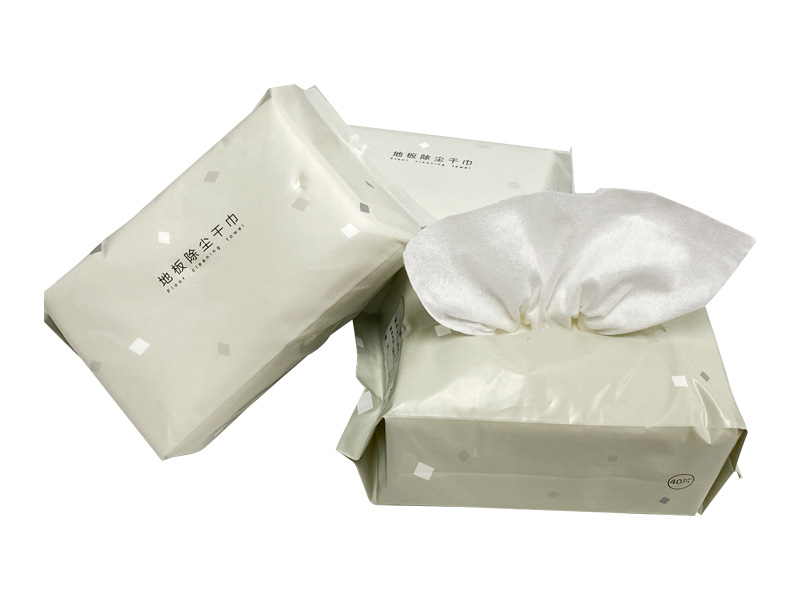
Furniture dust wipes
Why Dust Removal Requires More Than Ordinary Wiping
Dust is not a single type of contaminant. It may include soil particles, textile fibers, skin flakes, pollen, pet hair, microscopic debris, and particles carried indoors on clothing or footwear. Some particles are heavy enough to settle quickly, while others remain airborne and move whenever a person walks across a room, opens a door, or shakes bedding. Because of this variety, a cleaning material must do more than provide a smooth surface for wiping.
Many conventional towels absorb liquids effectively but are not optimized for dry dust collection. When used on a dry surface, an ordinary towel may leave dust behind, generate lint, or cause fine particles to become airborne. A broom can create a similar problem by disturbing dust rather than retaining it. In contrast, a purpose-designed dry dust wipe is engineered to increase contact with particles and retain them within or on the surface of the fabric.
The structure of a dust wipe is particularly important. A soft, flexible substrate can conform to furniture edges, floor contours, appliance surfaces, and narrow gaps. A textured or corrugated surface creates more contact points than a completely flat sheet. During wiping, friction can generate static electricity, which helps attract and hold lightweight particles. This combination of physical collection and electrostatic attraction gives dust wipes a practical advantage over cleaning materials designed only for liquid absorption.
Dry dust wipes are also useful in situations where water or chemical cleaners are not desirable. Electronics, polished furniture, bookshelves, decorative items, and certain finished surfaces may require gentle dry cleaning. A dry wipe can remove loose particles without leaving a wet film. For surfaces that can tolerate moisture, the same general product concept may also support light wet or dual-use applications when specified during product development.
Core Product Advantages
Effective Dust and Hair Capture
The primary function of a furniture dust wipe is to capture dust, hair, lint, and other fine debris. Its nonwoven construction offers a large, flexible cleaning surface, while the fabric pattern can improve contact with particles. As the wipe moves across a surface, loose debris becomes attached to the substrate rather than being pushed ahead of it. This is especially valuable for homes with pets, where hair can accumulate rapidly on floors, furniture, and bedding.
Hair removal is often difficult with a traditional mop or broom because long strands can wrap around bristles, wheels, or joints. A dry dust wipe provides a simpler solution. Hair and lint are collected directly by the sheet and can be discarded after cleaning. This helps reduce the time spent removing tangled fibers from cleaning tools and supports a more hygienic cleaning routine.
Anti-Static Performance and Reduced Airborne Dust
When a dry wipe moves across a surface, friction may create static electricity. This electrostatic effect can help attract lightweight dust particles and reduce the amount of dust that becomes airborne during cleaning. The wipe’s physical structure also contributes to collection by providing textured areas that trap debris.
Anti-static dust collection is especially useful in bedrooms, offices, nurseries, and areas where airborne dust is undesirable. It can also help improve the visual result of cleaning because particles are collected rather than redistributed. Depending on the required application, dust-attracting properties may be achieved through the selection of suitable fibers, fabric construction, surface treatment, or a combination of these factors.
Soft, Flexible, and Surface-Friendly Construction
Furniture, appliances, shelves, and other household items often have delicate finishes. A cleaning wipe must therefore balance cleaning strength with softness. Nonwoven substrates made from polyester, viscose, bamboo, lyocell, cotton, or blended fibers can be selected according to the required feel, absorbency, durability, sustainability profile, and cost target.
A soft wipe can move over finished wood, plastic, glass, metal, and coated surfaces with less risk of scratching than a rough abrasive material. The final suitability always depends on the surface and the product specification, but the ability to select different materials gives buyers greater control over performance. A supplier with in-house material and product development capabilities can adjust the substrate rather than relying on a single standard fabric for every market.
Low-Lint and Residue-Free Cleaning
Lint left behind after cleaning can be as noticeable as the original dust. It may be particularly inconvenient on dark furniture, glass, mirrors, screens, and polished appliances. Dust wipes can be designed to provide low-lint performance and reduced residue, helping surfaces appear cleaner after wiping.
Fabric selection, bonding technology, fiber quality, web formation, finishing, cutting, and packaging conditions all influence lint performance. Consistent production control is therefore essential. A low-quality wipe may have uneven edges, loose fibers, inconsistent weight, or poor strength. Advanced manufacturing and inspection processes help reduce these problems and produce sheets with more uniform cleaning behavior.
Dry and Lightly Treated Options
Dry dust wipes are convenient because they are ready to use without adding water. They are suitable for quick daily cleaning, touch-up work, and dust removal between more intensive cleaning operations. Some buyers may prefer a completely dry product, while others may require a lightly treated wipe with improved dust attraction, fragrance, or moisture retention.
These options can be developed according to the intended use. A household furniture wipe may prioritize softness and a pleasant handling experience. An industrial dust wipe may require higher tensile strength and a larger sheet. An automotive detailing wipe may require low-lint performance and compatibility with interior surfaces. By defining the application before production, the manufacturer can recommend an appropriate fabric, treatment, folding method, packaging format, and sheet count.
Convenient Disposable Format
Disposable wipes reduce the need to wash and dry reusable cleaning cloths after every task. This can save labor and simplify cleaning routines in busy households and commercial environments. A used wipe can be folded inward to contain collected debris and then discarded according to local waste-handling requirements.
In commercial settings, disposable sheets can support task separation. For example, a cleaning team may use different packs for guest rooms, offices, restrooms, production areas, or equipment surfaces. Clear packaging and private-label identification can make it easier to organize supplies and communicate intended use.
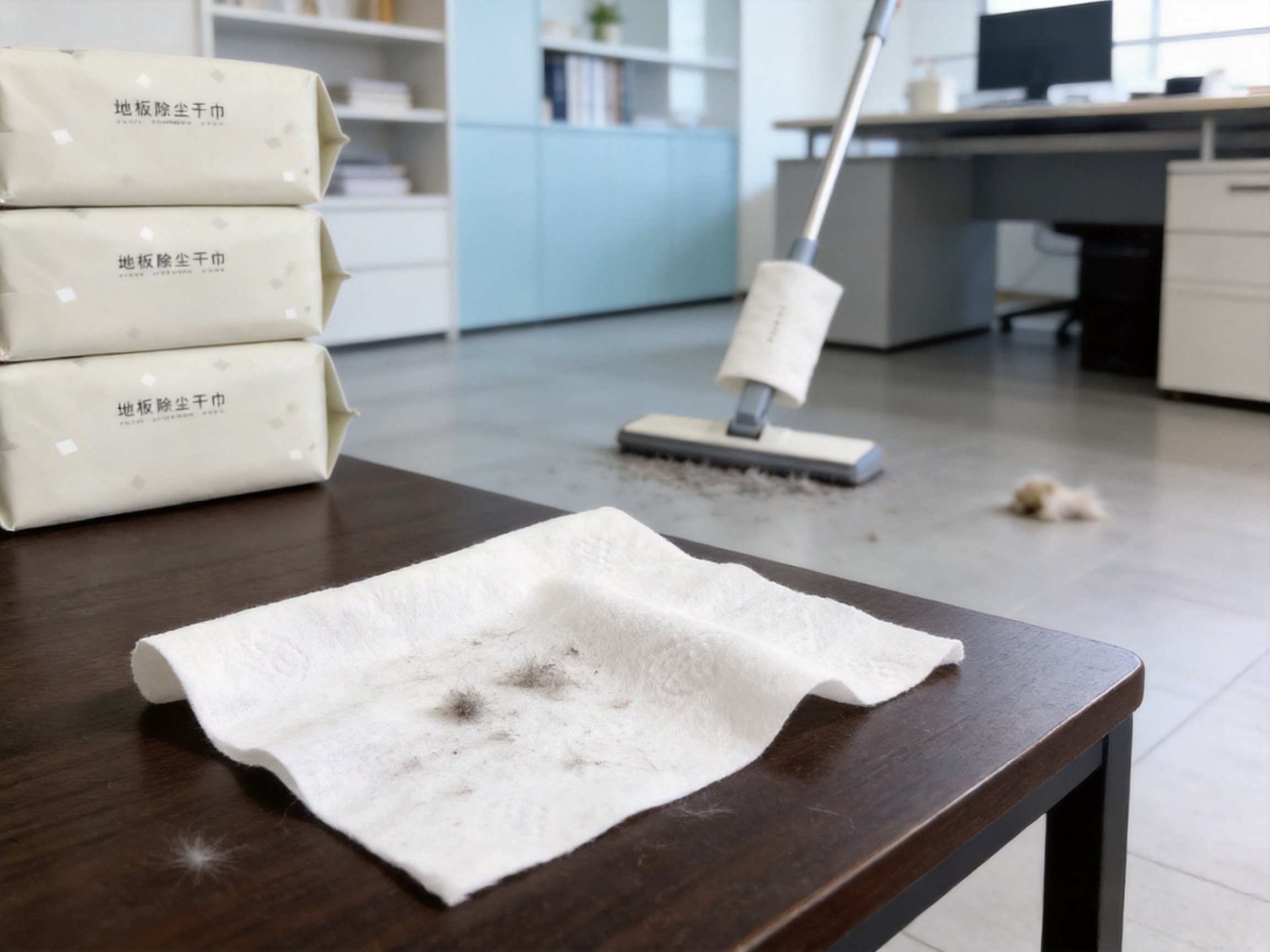
Materials and Fabric Technologies
The material used in a dust wipe has a direct effect on its softness, strength, dust retention, absorbency, environmental profile, and cost. A professional manufacturer should be able to offer more than one material option so that the finished product can be matched to its market position and application.
| Material or Construction | Typical Performance Characteristics | Potential Applications |
|---|---|---|
| Polyester nonwoven | Strong, durable, dimensionally stable, and suitable for repeated friction during a cleaning task | Household, commercial, automotive, and industrial dust removal |
| Viscose blend | Soft hand feel with useful absorbency and flexibility | Furniture, appliance, and general household cleaning |
| Bamboo fiber blend | Soft texture and an option for buyers seeking plant-based fiber content | Eco-positioned household and private-label products |
| Lyocell blend | Soft, comfortable, and suitable for products emphasizing fiber innovation | Premium household and specialty cleaning lines |
| Cotton blend | Natural-fiber feel with flexibility and absorbency potential | Household, hospitality, and selected specialty applications |
| PP nonwoven | Lightweight, economical, and adaptable to high-volume disposable products | Industrial, commercial, and value-oriented cleaning products |
| Composite or customized substrate | Allows the manufacturer to balance strength, softness, lint control, and dust pickup | Specialized OEM and ODM programs |
The available fabric weight may range from approximately 30 to 100 grams per square meter, depending on the target product. A lighter sheet can support economical packaging and high sheet counts. A heavier sheet may provide a more substantial feel, higher strength, and greater durability during demanding cleaning tasks. The correct choice depends on the buyer’s target price, required performance, packaging size, and customer expectations.
Fabric formation technology also affects performance. Parallel and semi-cross web arrangements can be selected for different strength and handling characteristics. Pattern options may include plain surfaces, mesh, dot embossing, floral structures, or star patterns. Textured patterns can improve the wipe’s physical contact with dust and may also help differentiate a private-label product in the marketplace.
A product developer may combine a suitable fiber blend with a particular web structure, embossing pattern, and finishing method. This makes it possible to create a product for a specific use rather than simply selecting a generic sheet. For example, a wipe for delicate furniture may emphasize softness and low lint, while a wipe for factory maintenance may prioritize strength, size, and resistance to tearing.
Product Specifications and Customization
Furniture dust wipes can be supplied in a wide range of configurations. Current specification options include approximately 1 to 200 pieces per pack, fabric weights of about 30 to 100 grams per square meter, and sheet dimensions commonly ranging from 12 to 28 centimeters in width and length. These specifications can be adjusted during OEM or ODM development.
| Customization Item | Available Options | Business Benefit |
|---|---|---|
| Product type | Dry dust wipes, electrostatic dust wipes, industrial dust wipes | Supports different cleaning segments and performance claims |
| Fabric | Spunlace, PP nonwoven, polyester, viscose, bamboo, lyocell, cotton, or customized blends | Balances softness, strength, absorption, lint, and cost |
| Sheet size | Custom width and length | Matches furniture, floor, equipment, or packaging requirements |
| Fold type | Flat fold, Z fold, or customized fold | Improves dispensing and packaging efficiency |
| Sheet count | Customized from small professional packs to bulk formats | Supports retail-style packs and commercial supply programs |
| Fragrance | Fragrance-free or customized fragrance | Meets preference, allergy-conscious, and market positioning needs |
| Packaging | Soft pack, canister, refill pack, or bulk carton | Adapts the product to retail, professional, or industrial channels |
| Branding | Private-label artwork, logo, barcode, carton printing, and multilingual labels | Creates a market-ready branded product |
Sheet size is one of the most important decisions. Smaller sheets may be convenient for quick furniture cleaning or individual tasks. Larger sheets can cover more floor area and may be preferred by janitorial teams or facility service providers. A buyer should consider the size of the cleaning tool, the surface being cleaned, the expected usage time, and the amount of waste generated per task.
Fold type influences dispensing and user convenience. Flat-fold sheets are simple and versatile. Z-fold sheets can support controlled dispensing from a dispenser or pack. Custom folding may be developed for a specific canister, refill bag, mop head, or automated packaging line. Sheet count and folding should be considered together because they affect pack dimensions, carton loading, transportation efficiency, and storage requirements.
Applications Across Multiple Industries
Household Furniture and Floors
In homes, dust wipes can be used on tables, cabinets, shelves, television stands, bed frames, window ledges, and other furniture. They are also useful for collecting hair and dust from floors before or after wet mopping. Removing loose dry debris first can help prevent dust and hair from mixing with water and becoming more difficult to clean.
Bedrooms and bathrooms often require frequent hair removal. Long strands can accumulate around skirting boards, behind furniture, and near drains or corners. A dry wipe can collect these materials quickly without requiring a broom or vacuum cleaner for every small cleaning task. In homes with pets, the same product can help capture loose fur from hard floors and selected furniture surfaces.
Offices and Commercial Buildings
Office environments generate dust from paper, clothing fibers, foot traffic, heating and cooling systems, and outdoor particles. Dry wipes can be used for desks, cabinets, conference tables, shelves, reception counters, and other hard surfaces. A disposable format can help janitorial staff maintain organized cleaning routines while reducing the handling of used reusable cloths.
For commercial buildings, procurement teams may require consistent sheet size, predictable case quantities, clear labeling, and stable delivery. A private-label supply program can help facility service companies offer cleaning materials under their own brand while maintaining control over packaging and product positioning.
Hotels and Hospitality Facilities
Hotels need efficient cleaning products that can be used in guest rooms, public areas, offices, and back-of-house spaces. A soft, low-lint dust wipe can support room attendants when cleaning furniture, headboards, shelves, lamps, and other surfaces. Disposable sheets may also help simplify the separation of cleaning tasks between rooms.
Hospitality buyers often value product appearance, packaging quality, reliable availability, and consistent performance. Custom sheet counts and packaging formats can be developed to fit housekeeping carts, supply closets, refill stations, or branded amenity programs.
Healthcare and Institutional Cleaning
Healthcare and institutional facilities require disciplined cleaning procedures and clear product identification. Dust wipes can be used for compatible noncritical surfaces where dry dust removal is part of the cleaning routine. Product specifications, handling instructions, and intended-use information should be defined with the buyer and aligned with the facility’s own procedures.
A professional manufacturer can support institutional procurement through batch control, specification documentation, packaging customization, and stable production. The wipe itself should not be represented as a disinfectant unless it has been separately developed, tested, and registered for that purpose. Dust removal and disinfection are different functions and should be communicated accurately.
Industrial and Facility Maintenance
Factories, workshops, warehouses, and maintenance departments frequently need to remove dust, lint, and loose particles from equipment exteriors, workstations, storage areas, and production support spaces. Industrial users may prefer a stronger or larger sheet that tolerates friction and does not tear easily during use.
Industrial dust wipes can be supplied in bulk cartons, refill packs, or other formats that reduce packaging cost and support high consumption. Customized materials may be considered for particular environments, provided that the final product is tested for strength, lint, compatibility, and handling requirements.
Automotive Detailing
Vehicle interiors collect dust on dashboards, instrument panels, door trims, consoles, and vents. A soft, low-lint wipe can support routine interior detailing when used on compatible surfaces. Automotive buyers may request a particular sheet size, fold style, pack count, or packaging format suitable for detailing centers, dealerships, mobile cleaning teams, or private-label car-care brands.
Manufacturing Strengths and Integrated Production
Zhejiang Uniquality Nursing Products Technology Co., Ltd., together with the Kingsafe and Uniquality production network, operates as an integrated manufacturer of nonwoven materials and hygiene products. The company was founded in 1987 and has developed capabilities covering research and development, raw material and substrate production, converting, packaging, quality control, and finished-product supply.
The company states that it has eight domestic production bases and is developing an additional factory in Vietnam. This manufacturing network can support both domestic and overseas supply requirements. Multiple production locations may also improve capacity planning, product allocation, and delivery flexibility for long-term customers, subject to the specific production schedule and order arrangement.
One of the major strengths of an integrated supply chain is the ability to coordinate material development and finished-product manufacturing. Instead of purchasing a standard substrate from an unrelated supplier for every project, an integrated manufacturer can evaluate the relationship between fiber selection, nonwoven formation, finishing, cutting, folding, and packaging. This can make product optimization more efficient and help reduce variation between development samples and mass production.
The company’s product portfolio includes spunlace nonwoven fabrics, spunmelt nonwovens, hot-air-through nonwovens, flushable and degradable nonwoven materials, wet wipes, dry wipes, baby diapers, training pants, wet toilet paper, cleansing wipes, and other hygiene products. This broad experience provides a useful technical foundation for developing dust wipes for household, medical-support, beauty, baby-care, industrial, and institutional markets.
According to the supplied company information, the organization has ranked among leading Chinese nonwoven manufacturers for many consecutive years and among major global nonwoven producers. It also reports the use of internationally sourced production equipment and technologies associated with Germany, France, and Italy. These statements reflect the company’s stated manufacturing profile; buyers should request current certificates, audit reports, and technical documentation relevant to a specific project.
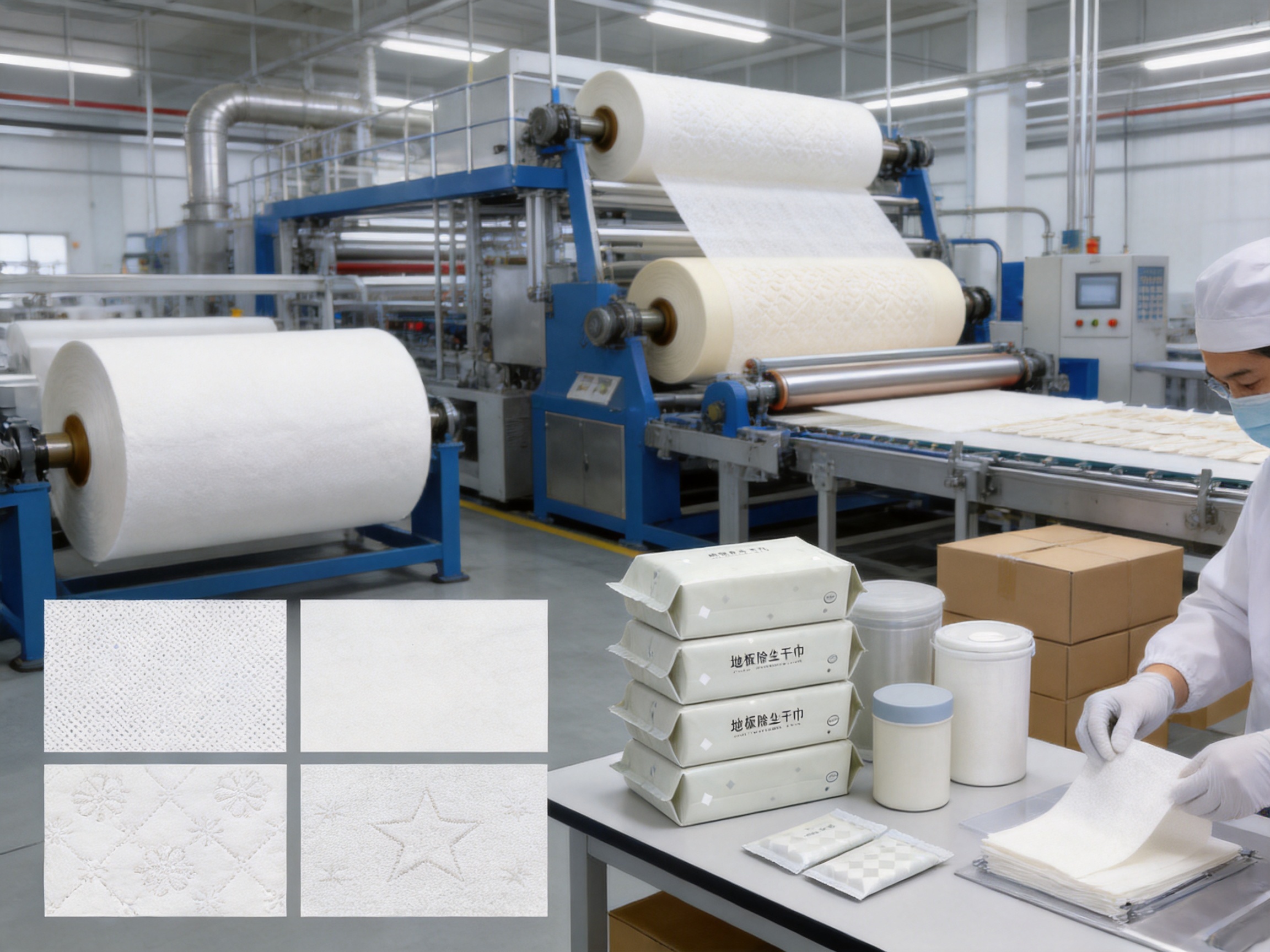
Advanced Nonwoven Production Processes
Material Selection and Preparation
Production begins with the selection of fibers and additives appropriate for the product specification. The manufacturer evaluates factors such as fiber type, length, fineness, color, moisture condition, cleanliness, and blend ratio. For dust wipes, the selection must support adequate softness, tensile strength, dust retention, and low-lint performance.
Material preparation is important because inconsistent fiber quality can lead to uneven web formation, variable thickness, weak areas, or irregular appearance. A controlled preparation process helps establish more stable production conditions. For customized projects, the buyer’s target market, intended application, packaging format, and price position should be considered before the final material recipe is approved.
Web Formation and Bonding
Nonwoven web formation arranges fibers into a sheet without weaving or knitting. Spunlace technology uses high-pressure water jets to entangle fibers, creating a soft and flexible fabric with useful strength. Other nonwoven processes may be selected when the project requires a different combination of weight, stiffness, cost, liquid handling, or durability.
The bonding method influences how the wipe feels and performs. A well-designed fabric should remain intact during normal use while still being flexible enough to follow surface contours. For dry dust wipes, excessive stiffness can reduce contact with uneven surfaces, while insufficient strength can cause tearing. The manufacturing team therefore balances softness, strength, thickness, and pattern according to the product’s intended use.
Embossing and Surface Patterning
Embossing can create dots, mesh, floral shapes, stars, or other patterns. These patterns may enhance visual appearance, increase surface texture, improve contact with particles, and help distinguish one product series from another. Pattern selection also affects folding, thickness, tactile feel, and packaging volume.
For private-label projects, embossing can contribute to brand differentiation without changing the fundamental cleaning function. Buyers may select a subtle pattern for a premium household product or a more pronounced structure for a commercial dust-collection wipe. The final pattern should be evaluated through sample testing to confirm that it does not create excessive lint or damage sensitive surfaces.
Functional Treatment and Finishing
Some dust wipes are supplied completely dry, while others may receive a light treatment intended to improve dust attraction, fragrance, softness, or moisture retention. Treatment selection must be controlled carefully. Excessive treatment can create residue, affect packaging stability, or change the way the wipe performs on furniture and appliances.
Fragrance-free products may be preferred by healthcare, institutional, allergy-conscious, or fragrance-sensitive users. Customized fragrance options may be suitable for household or consumer-facing products when the target market expects a scented cleaning experience. Any formulation should be assessed for compatibility, stability, odor profile, and applicable regulatory requirements.
Converting, Cutting, Folding, and Packing
After the fabric is produced and finished, it is converted into individual sheets. Cutting equipment must provide consistent dimensions and clean edges. Folding systems are selected according to the packaging design, dispensing method, and customer requirements. Accurate sheet counting is essential for pack integrity and inventory planning.
Packaging may include soft packs, canisters, refill packs, or bulk cartons. Soft packs can be lightweight and convenient for household or professional use. Canisters provide structured dispensing and may be suitable for workstations, vehicles, or commercial cleaning stations. Refill packs can reduce packaging material and support customers who reuse a canister. Bulk cartons are practical for industrial users and high-volume distributors.
Quality Control and Testing Considerations
Reliable dust wipe production requires quality control at several stages. Incoming fibers and materials should be checked against approved specifications. During nonwoven production, key process conditions such as fabric weight, thickness, strength, moisture, appearance, and uniformity should be monitored. Finished wipes should then be inspected for dimensions, sheet count, folding, packaging, sealing, labeling, and appearance.
Performance testing can be tailored to the product’s intended use. Relevant evaluations may include dust pickup, hair collection, lint release, tensile strength, tear resistance, softness, surface compatibility, moisture retention, fragrance stability, and packaging integrity. Not every test is required for every product, but a clear testing plan helps ensure that marketing claims are supported by product evidence.
| Quality Area | What May Be Evaluated | Why It Matters |
|---|---|---|
| Substrate uniformity | Basis weight, thickness, appearance, and fiber distribution | Promotes consistent handling and cleaning performance |
| Mechanical strength | Tensile strength, elongation, and tear resistance | Reduces tearing during wiping and folding |
| Dust collection | Pickup of fine particles, lint, and hair | Confirms the core cleaning function |
| Lint control | Loose fibers and residue after use | Protects the appearance of cleaned surfaces |
| Surface compatibility | Interaction with glass, plastic, metal, coated wood, and other intended surfaces | Helps reduce the risk of marks or damage |
| Packaging integrity | Seal strength, count accuracy, label placement, and pack appearance | Supports product protection and customer confidence |
| Stability | Storage behavior, odor, moisture, and treatment consistency | Helps maintain quality throughout the supply chain |
The company reports operating 100,000-class GMP clean workshops, a purified water system designed to pharmacopoeia standards, and a full-function testing center. These facilities are particularly relevant to the company’s broader hygiene and medical-related product portfolio. For a dry dust wipe project, buyers should confirm which specific production line, testing method, and quality system apply to the requested item.
The supplied company information also refers to support from 169 patents. Patents do not automatically establish the performance of every product, but they indicate an emphasis on research, development, and process innovation. Buyers evaluating a new dust wipe should still review product-specific specifications, test reports, samples, compliance documents, and production records.
Advantages Over Generic Competitor Products
Generic dusting products may be available at low prices, but they do not always provide the same level of customization, material control, or supply support. A standard product may use one fixed fabric weight, one sheet dimension, one packaging format, and one unchangeable formulation. This can create difficulties for brands that need to meet different retail channels or application requirements.
A key advantage of a specialized OEM manufacturer is the ability to optimize the complete product. Buyers can select the fabric, sheet size, fold type, sheet count, pattern, fragrance, packaging, label, and carton configuration. This makes it possible to create a value product, a premium product, an industrial product, or an eco-positioned product using the same broad manufacturing platform.
Integrated nonwoven production can also improve communication between material engineers and product engineers. If a customer reports that a wipe needs higher strength, lower lint, improved hair collection, or a softer feel, the manufacturer can investigate the substrate and converting process together. This is generally more efficient than asking multiple unrelated suppliers to coordinate changes.
Production scale is another important consideration. High-volume buyers require stable capacity, predictable lead times, and consistent quality from one shipment to the next. A manufacturer with multiple production bases and a broad product portfolio may be better positioned to support long-term programs than a small converter that depends on limited external supply. The exact advantage depends on order volume, factory allocation, quality requirements, and confirmed production planning.
Packaging development also creates a competitive distinction. A manufacturer that offers soft packs, canisters, refill packs, bulk packs, customized artwork, barcodes, multilingual labels, and carton printing can provide a more complete path from product concept to market launch. This reduces the number of separate vendors a buyer must manage and can shorten the development process.
Finally, a company experienced in medical, baby, household, industrial, and eco-oriented nonwoven products is familiar with different quality expectations. This cross-sector experience can support better product recommendations, although every dust wipe remains subject to its own testing, specifications, and compliance review.
OEM and ODM Support for B2B Buyers
The product is intended for business customers rather than individual retail orders. The typical customer may be a brand owner, importer, wholesaler, cleaning product distributor, industrial supplier, facility management company, supermarket buyer, private-label retailer, e-commerce brand, or government and commercial procurement organization.
OEM manufacturing allows a buyer to place an existing product concept under its own brand. The manufacturer can support private-label packaging, logo printing, product dimensions, sheet count, carton artwork, barcode placement, and multilingual labeling. OEM is suitable when the buyer already understands the target market and needs a dependable manufacturing partner.
ODM support is more development-oriented. It can include recommendations for material selection, dust-attracting performance, embossing, folding, fragrance, packaging, and product positioning. The manufacturer may help transform a general idea into samples, a technical specification, and a mass-production plan. ODM is useful for companies that want to launch a new cleaning product but do not have an internal nonwoven engineering team.
A successful development project begins with a clear product brief. The buyer should explain the target market, intended surfaces, cleaning environment, desired price range, expected order quantity, packaging preference, performance priorities, and any certification or regulatory requirements. The more complete the information, the more accurately the supplier can recommend a construction.
Typical Development Workflow
The first stage is requirement review. The buyer and manufacturer identify the intended application and define the most important performance characteristics. For example, a furniture wipe may need a soft feel and low lint, while an industrial wipe may need high strength and a larger format.
The second stage is material and structure selection. The manufacturer proposes one or more fiber blends, fabric weights, patterns, and sheet sizes. Samples are then produced for practical evaluation. Buyers should test samples on representative surfaces and compare dust pickup, hair collection, tearing, residue, handling, and packaging convenience.
The third stage is packaging development. Artwork, pack style, sheet count, folding, carton dimensions, label language, barcode details, and shipping requirements are reviewed. Packaging should protect the wipes from contamination, moisture changes, compression, and damage throughout transportation and storage.
The fourth stage is confirmation and mass production. Once the buyer approves the product specification and packaging, the manufacturer prepares production documentation and schedules the order. Quality requirements should be written clearly so that future batches can be compared with the approved sample.
The final stage is supply continuity. Long-term customers may establish forecast arrangements, repeat-order specifications, carton standards, and quality review procedures. Stable cooperation can help improve planning and reduce the risk of changes in material or packaging without prior approval.
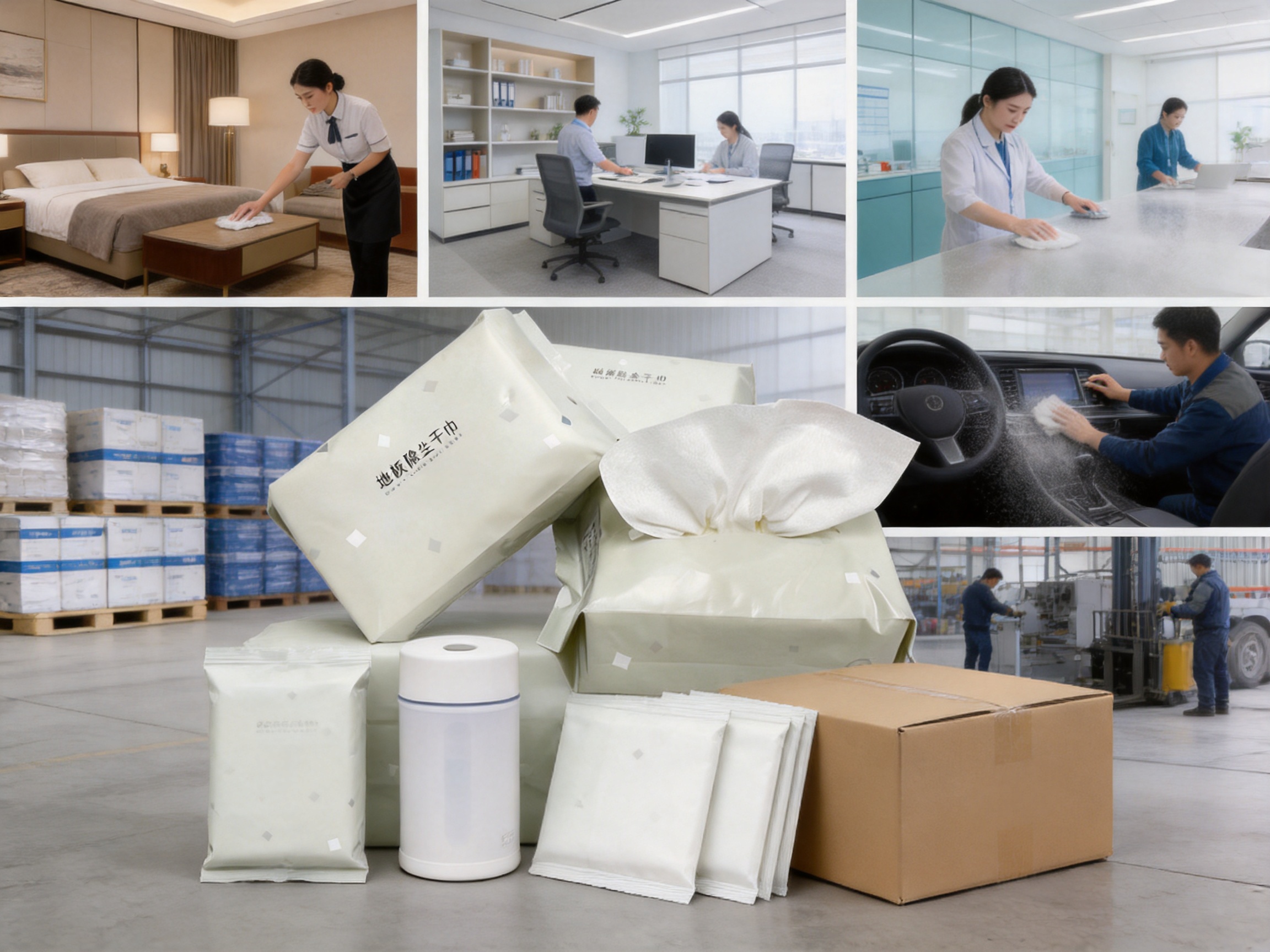
Packaging, Storage, and Supply Chain Efficiency
Packaging is not merely a visual component. It protects the wipe, controls dispensing, communicates instructions, and affects transportation cost. A soft pack can be designed for compact storage and efficient pallet loading. A canister can provide convenient one-sheet dispensing in professional environments. A refill pack can reduce the amount of rigid packaging required for repeat purchases.
Bulk packaging may be preferred by industrial suppliers, commercial cleaning contractors, and distributors that repackage products for their own channels. In these cases, the buyer should define the desired carton quantity, inner pack arrangement, pallet configuration, labeling, and handling requirements. Correct carton planning can reduce damage and improve warehouse efficiency.
Storage conditions should be selected according to the product type. Dry wipes should generally be kept in clean, dry conditions away from excessive heat, moisture, direct sunlight, and strong odors. Lightly treated or fragranced products may require additional stability evaluation. The manufacturer and buyer should agree on shelf-life information and storage instructions based on the final formulation and packaging.
For international buyers, export documentation and packaging compliance are important. Labels may need multiple languages, country-specific information, product identification, batch information, and importer details. The manufacturer can support artwork preparation, but the buyer remains responsible for confirming the requirements of the destination market and intended sales channel.
Sustainability and Responsible Product Development
Sustainability is increasingly important in the cleaning products market. Buyers may seek reduced packaging, plant-based fibers, recycled-content options, lower-impact manufacturing, or products designed for efficient use. Bamboo, viscose, lyocell, cotton, and other fiber options may be considered depending on the desired product profile and applicable sourcing requirements.
Material selection should be evaluated realistically. A fiber described as plant-based does not automatically mean that the complete wipe is compostable or biodegradable under all conditions. The full product, including any treatment, bonding components, packaging, and disposal pathway, must be assessed before environmental claims are made. Buyers should request supporting documentation and use accurate wording in marketing materials.
Product efficiency can also contribute to responsible consumption. A wipe that captures dust effectively may reduce repeated passes over the same surface. Appropriate sheet sizing can prevent users from using an unnecessarily large sheet for a small task. Refill packaging may reduce packaging volume for repeat purchases. These benefits should be measured and communicated carefully rather than overstated.
The company reports eco-friendly green production initiatives and offers nonwoven products described as flushable and degradable within its wider portfolio. However, a dust wipe should not be labeled flushable or biodegradable unless that specific product has been tested and meets the relevant requirements. Dust wipes are generally intended for disposal in accordance with local waste-management practices, not for flushing through toilets.
How to Select the Right Dust Wipe Specification
Buyers should begin by identifying the main cleaning task. If the product is intended for delicate furniture, softness and low lint may be the highest priorities. If it is intended for floors, sheet size, strength, and hair collection may be more important. If it is intended for industrial maintenance, durability, bulk packaging, and consistent supply may determine the final design.
The surface type should also be considered. Glass and polished surfaces can reveal lint and residue. Finished wood and coated surfaces may require gentle handling. Plastic and metal surfaces may tolerate a stronger texture, although compatibility testing is still recommended. Electronics and sensitive equipment require careful review of moisture, treatment, and static behavior.
Next, the buyer should define the desired user experience. A consumer pack may need attractive artwork, easy opening, clear instructions, and a pleasant feel. A professional pack may prioritize rapid dispensing, a high sheet count, and compact storage. An industrial carton may focus on cost per sheet, strength, and simple identification.
Performance claims should be supported by objective evaluation. Terms such as “powerful dust capture,” “anti-static,” “low lint,” “residue-free,” and “hair removal” should reflect the tested properties of the final product. Buyers can request samples and compare them with existing products using a consistent test method. Practical tests may include wiping a measured area with a standard number of passes and examining collected dust, remaining fibers, and surface appearance.
Recommended Buyer Information for Quotation
To prepare an accurate quotation, a buyer should provide the target market, intended application, preferred fabric, sheet dimensions, sheet count, fold type, packaging format, fragrance preference, estimated order quantity, private-label requirements, and expected delivery destination. If special certifications, testing, sustainability documentation, or packaging regulations apply, these should be mentioned at the beginning of the project.
The estimated order quantity is particularly important because it affects material purchasing, machine scheduling, packaging costs, printing methods, carton quantities, and shipping arrangements. Buyers should distinguish between an initial trial order, a regular monthly requirement, and a long-term annual forecast. This information allows the manufacturer to recommend a more suitable production and packaging plan.
It is also helpful to provide competitor samples or a written comparison. A buyer may want a wipe that is softer than an existing product, stronger during use, less linty, more effective on pet hair, or more economical per cleaning task. Clear comparison goals allow the manufacturer’s development team to focus on measurable improvements.
Practical Use Guidance
For routine dry dusting, unfold the wipe and attach it to an appropriate cleaning tool or hold it by hand. Move across the surface with steady strokes rather than rapidly brushing back and forth. When the exposed area becomes loaded with dust or hair, refold the wipe to present a clean section if the format permits. Dispose of the sheet when it no longer collects debris effectively.
For floors, it may be useful to remove loose hair and dust before wet mopping. Work from cleaner areas toward areas with more visible debris, and pay attention to corners, edges, and spaces beneath furniture. For furniture and appliances, use gentle pressure and check the surface after cleaning. Avoid using a dry dust wipe on surfaces where the manufacturer’s care instructions prohibit disposable nonwoven materials.
Dust wipes should not automatically be treated as disinfecting wipes, polishing wipes, or chemical cleaners. If a buyer needs antimicrobial, sanitizing, polishing, or specialized industrial performance, the product must be developed and labeled for that purpose. Separate testing and regulatory review may be required.
Q&A: Frequently Asked Questions About Furniture Dust Wipes
1. What are furniture dust wipes used for?
Furniture dust wipes are disposable cleaning sheets designed to collect dust, hair, lint, pet fur, and other fine particles from compatible surfaces. They can be used on furniture, floors, shelves, appliances, office equipment exteriors, and selected commercial or industrial surfaces.
2. How do dry dust wipes collect dust?
They use a combination of physical contact and, depending on the design, electrostatic attraction. Friction created during wiping may generate static electricity that attracts lightweight particles. The texture and fiber arrangement of the nonwoven sheet also help hold dust and hair on the wipe.
3. Are these wipes suitable for homes with pets?
Yes. Pet hair is one of the common applications for dust wipes. The disposable sheet can collect loose fur from hard floors and selected furniture surfaces, reducing the need to remove tangled hair from brooms or mop heads.
4. Can the wipes be used wet?
The standard product is a dry dust wipe. However, the manufacturer can develop dry, lightly treated, or dual-use versions according to the buyer’s requirements. Any wet-use design should be tested for moisture retention, surface compatibility, packaging stability, and the intended cleaning result.
5. What materials can be used?
Available materials may include polyester, viscose, bamboo, lyocell, cotton, spunlace nonwoven, PP nonwoven, and customized blends. The appropriate material depends on softness, strength, lint control, dust pickup, absorbency, sustainability goals, and target cost.
6. What sheet sizes are available?
Common specifications can range from approximately 12 to 28 centimeters in width and length, although custom dimensions can be developed. The correct size depends on whether the wipe is intended for furniture, floors, mop tools, equipment, or hand use.
7. Can private-label packaging be produced?
Yes. OEM services can include logo printing, private-label artwork, barcode placement, carton design, multilingual labels, customized sheet counts, and selected packaging formats such as soft packs, canisters, refill packs, and bulk cartons.
8. Can the product be made fragrance-free?
Yes. Fragrance-free options are available for buyers that prefer a neutral product or serve fragrance-sensitive, healthcare, institutional, or professional markets. Customized fragrances may also be evaluated for suitable consumer applications.
9. What is the difference between OEM and ODM service?
OEM generally means manufacturing a product according to the buyer’s established specifications and brand requirements. ODM includes a greater level of product development support, such as material recommendations, performance adjustments, packaging concepts, sample development, and technical optimization.
10. Are dust wipes disinfecting products?
Not unless they have been separately formulated, tested, registered, and labeled for disinfection. A standard dust wipe is designed for dust and particle removal. Buyers should avoid making disinfecting or antimicrobial claims without appropriate evidence and regulatory approval.
11. Can dust wipes be customized for industrial use?
Yes. Industrial versions can be developed with different fabric weights, larger sheet sizes, stronger substrates, bulk cartons, and other specifications suitable for workshops, factories, warehouses, facility maintenance, or commercial cleaning operations.
12. What information is needed for a quotation?
The manufacturer generally needs the target market, application, preferred material, sheet size, sheet count, folding method, packaging style, fragrance preference, estimated order quantity, delivery destination, and OEM or ODM requirements. Samples or competitor specifications can also help clarify the project.
13. Are small consumer orders available?
The supplied product information states that the product is intended for B2B customers and does not support retail sales or small-quantity individual orders. Brand owners, importers, wholesalers, distributors, institutional buyers, and other bulk purchasers can contact the sales team for samples and quotations.
14. How should the wipes be stored?
Store them in a clean, dry location away from excessive heat, direct sunlight, moisture, and strong odors. The exact storage and shelf-life requirements should be confirmed for the final product, especially if it includes fragrance, moisture, or a special treatment.
15. Can the wipes be flushed down a toilet?
They should not be flushed unless the specific product has been tested and approved for flushability under the relevant standards. Standard dust wipes should be disposed of according to local waste-management requirements.
Conclusion
Furniture dust wipes offer a convenient and effective way to collect dust, hair, lint, pet fur, and other fine particles without relying on water or electrical equipment. Their advantages come from the combination of soft nonwoven materials, flexible sheet construction, textured surfaces, physical dust retention, and optional electrostatic or lightly treated performance. They can help reduce airborne dust, limit residue, simplify hair removal, and improve routine cleaning efficiency.
For B2B buyers, the value of the product extends beyond the wipe itself. A capable integrated manufacturer can support material selection, nonwoven production, embossing, finishing, converting, folding, packaging, testing, private labeling, and long-term supply. This full-chain approach makes it easier to develop products for household, hospitality, healthcare-support, industrial, automotive, facility management, and private-label markets.
Zhejiang Uniquality Nursing Products Technology Co., Ltd. and its Kingsafe and Uniquality manufacturing network provide OEM and ODM capabilities for buyers seeking customized dry dust wipes and related nonwoven hygiene products. With decades of industry experience, multiple production bases, technical development resources, clean manufacturing facilities, testing capabilities, and a broad nonwoven product portfolio, the company can help customers move from a product concept to samples and mass production.
The most successful projects begin with clear requirements and realistic performance claims. Buyers should define the application, surface types, material preferences, sheet dimensions, packaging needs, order volume, and compliance expectations. By combining these details with professional material and production support, brands and distributors can create dust wipes that offer reliable cleaning performance, strong market differentiation, and a stable foundation for long-term commercial supply.
References
1. Product specification and application information supplied for furniture dust wipes, including material, fabric weight, size, pattern, and packaging customization options.
2. Company profile information supplied by Zhejiang Uniquality Nursing Products Technology Co., Ltd. regarding nonwoven material production, hygiene product manufacturing, production bases, and OEM/ODM services.
3. General principles of nonwoven fabric formation, spunlace processing, fiber entanglement, embossing, and disposable wipe converting.
4. General cleaning-product quality considerations covering dust pickup, lint control, tensile strength, surface compatibility, packaging integrity, storage, and product labeling.
5. General guidance for responsible communication of environmental, electrostatic, low-lint, residue-free, and specialized cleaning claims.