中文简体
中文简体 English
 日本語
日本語 русский
 Español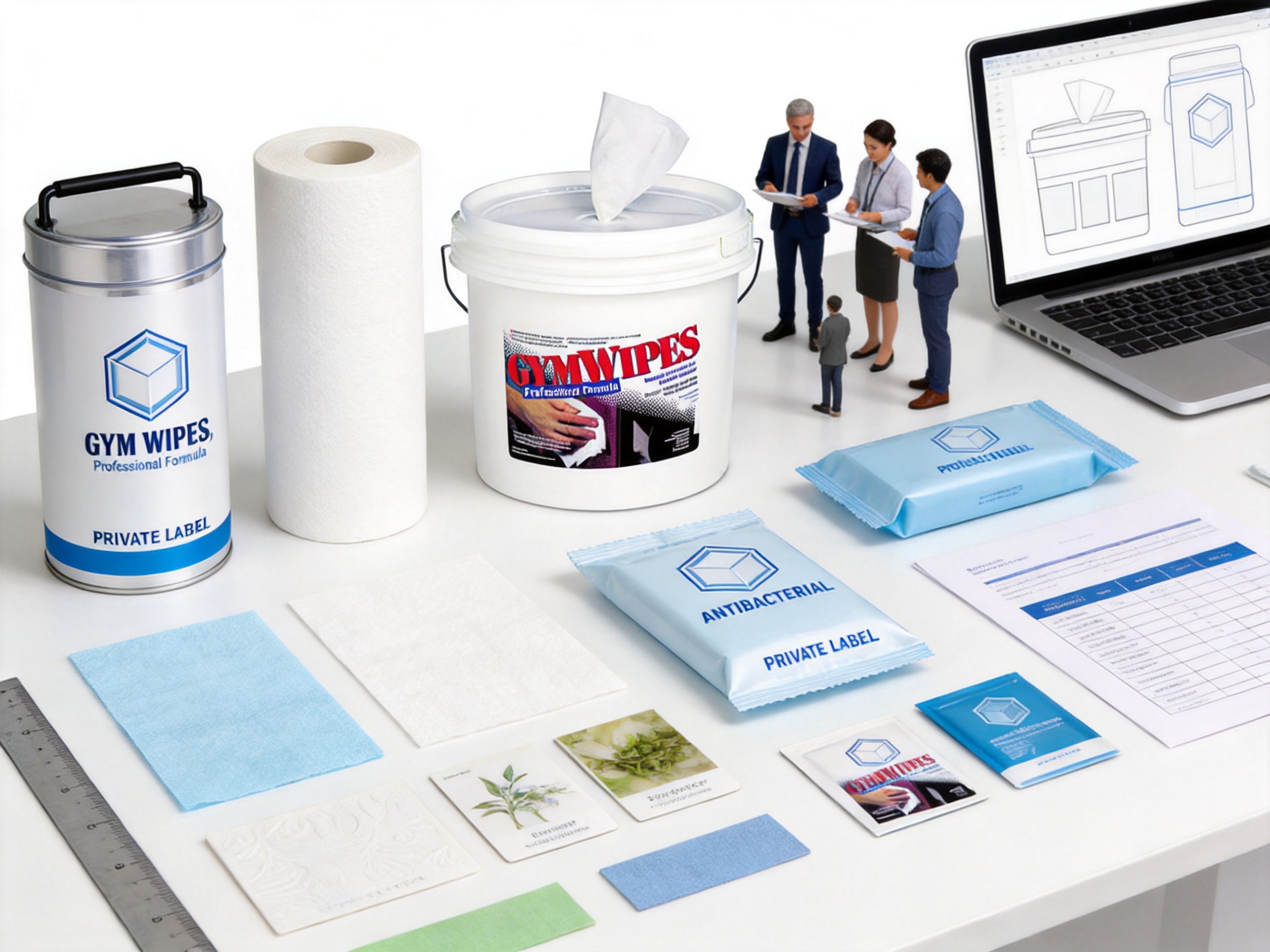
Modern fitness facilities depend on cleanliness, convenience, and user confidence. Members expect exercise machines, benches, weights, mats, lockers, and other shared surfaces to be maintained throughout the day. A well-designed gym wipe program helps operators address visible sweat, oil residue, dirt, and microorganisms while giving users a practical way to clean equipment before or after use.
Antibacterial gym wipes are manufactured specifically for demanding fitness environments. Unlike ordinary household wipes, they can be developed around the frequent cleaning of coated metal, plastic, vinyl, rubber, composite materials, and other surfaces commonly found in gyms and sports facilities. Their format, fabric, moisture level, solution, packaging, and dispensing system can all be adapted to commercial requirements.
This product is supplied for wholesale, commercial, OEM, and private-label purchasing. It is suitable for gym chains, fitness clubs, sports centers, facility management companies, equipment manufacturers, distributors, importers, and institutional buyers that require stable supply and customized production.
Why Antibacterial Gym Wipes Matter in Fitness Facilities
Fitness centers are high-contact environments. A single piece of equipment may be touched by many users in one day. Hands, arms, clothing, towels, and skin come into contact with seats, handles, screens, adjustment levers, dumbbells, mats, and support surfaces. Exercise also produces sweat and oil, which can leave residue on equipment and make surfaces feel unpleasant.
Regular wiping supports a cleaner and more professional environment. It also helps fitness operators demonstrate that hygiene is an active part of their service rather than an occasional maintenance task. Conveniently positioned wipe dispensers can encourage members to clean equipment before and after use, reducing the burden on cleaning staff and supporting consistent daily routines.
Gym wipes may be used for several purposes:
- Removing sweat and skin oil from exercise equipment.
- Cleaning high-touch surfaces between users.
- Supporting routine hygiene procedures in fitness facilities.
- Reducing unpleasant odors caused by residue and repeated contact.
- Providing a convenient cleaning option for members and staff.
- Maintaining a more comfortable and professional user experience.
- Supporting cleaning programs in sports clubs, wellness centers, and training facilities.
Different facilities have different needs. A premium health club may prefer a soft, low-lint wipe with a light fragrance and attractive branded packaging. A large commercial gym may prioritize economical bulk rolls, high dispensing efficiency, and consistent replenishment. A medical fitness center may require a disinfecting formula, documented testing, and packaging that supports controlled use. The manufacturing program can be adjusted according to the intended market and application.
Broad-Spectrum Antibacterial Performance
The featured antibacterial formulation uses benzalkonium chloramine as its bactericidal component. This active ingredient is described as a broad-spectrum bactericide. Its intended sterilization principle is to affect bacterial cytoplasmic substances and interfere with microbial metabolism, helping reduce microorganisms on treated surfaces when the product is used according to its validated instructions.
The formulation is designed to target a wide range of common microorganisms. Product information identifies organisms such as Escherichia coli, Staphylococcus aureus, Candida albicans, and Pseudomonas aeruginosa among the microorganisms that may be addressed by the formulation under applicable test conditions.
The stated sterilization rate is up to 99.9%. Any numerical efficacy claim must be understood in relation to the specific laboratory method, contact time, test organism, surface, concentration, and regulatory requirements applicable to the target market. Buyers should request current technical documentation and verify that the final product is suitable for the intended claims and jurisdiction.
For commercial customers, this approach offers flexibility. The standard antibacterial formulation can serve as a starting point, while alternative solutions may be developed for customers requiring alcohol-free cleaning, general antibacterial action, disinfecting performance, fragrance-free use, or a market-specific formula.
The formulation can also be developed around practical surface-cleaning concerns. A gym wipe should not merely contain an active ingredient; it should distribute the solution evenly, provide sufficient wetness, remove residue effectively, and remain convenient for the user. The balance between cleaning performance and material compatibility is especially important because gym equipment may include painted steel, powder-coated metal, polyurethane, artificial leather, natural rubber, thermoplastic materials, acrylic displays, and electronic control panels.
Advantages Over Ordinary Cleaning Wipes
Many general-purpose wipes are made for household use and may not be optimized for intensive fitness environments. They may be too small for large equipment surfaces, too dry for removing sweat, too wet for rapid turnover, or packed in a format that is inconvenient for high-frequency dispensing. Antibacterial gym wipes can be designed more specifically around the operating patterns of fitness facilities.
Designed for Frequent, High-Touch Use
Gym equipment is cleaned repeatedly throughout the day. The wipe therefore needs a substrate that offers adequate strength during wiping without feeling excessively rough. Spunlace and other nonwoven technologies can be selected to provide a balance of softness, absorbency, wet strength, and surface cleaning performance.
Available materials include polyester, viscose, bamboo, lyocell, cotton, spunlace, and biodegradable spunlace options. Each substrate offers a different performance profile. Polyester can contribute strength and dimensional stability. Viscose and lyocell can provide softness and liquid absorption. Bamboo-based materials can support customers seeking plant-derived fibers. Cotton can offer a familiar tactile experience. The final material selection can be based on cleaning requirements, sustainability objectives, price targets, and local labeling rules.
Suitable Moisture and Wipe Construction
A wipe that is too dry may not remove sweat or spread the solution evenly. A wipe that is excessively saturated may drip, feel inconvenient, or require a longer drying time. The production process can be adjusted to establish a suitable liquid-to-wipe ratio for the intended packaging format and application.
The available manufacturing specifications include weights from approximately 30 to 100 grams per square meter. A lighter substrate may be appropriate for economical, high-volume dispensing. A heavier substrate may be selected when customers want a more substantial hand feel, improved absorbency, or greater cleaning coverage.
Wipe construction is also customizable. Parallel and semi-cross technologies may be used according to the desired strength, texture, and manufacturing requirements. Patterns may include plain, mesh, dot embossed, flower, or star designs. Embossing can influence hand feel and liquid distribution while also giving the product a recognizable visual identity.
Multiple Packaging Choices
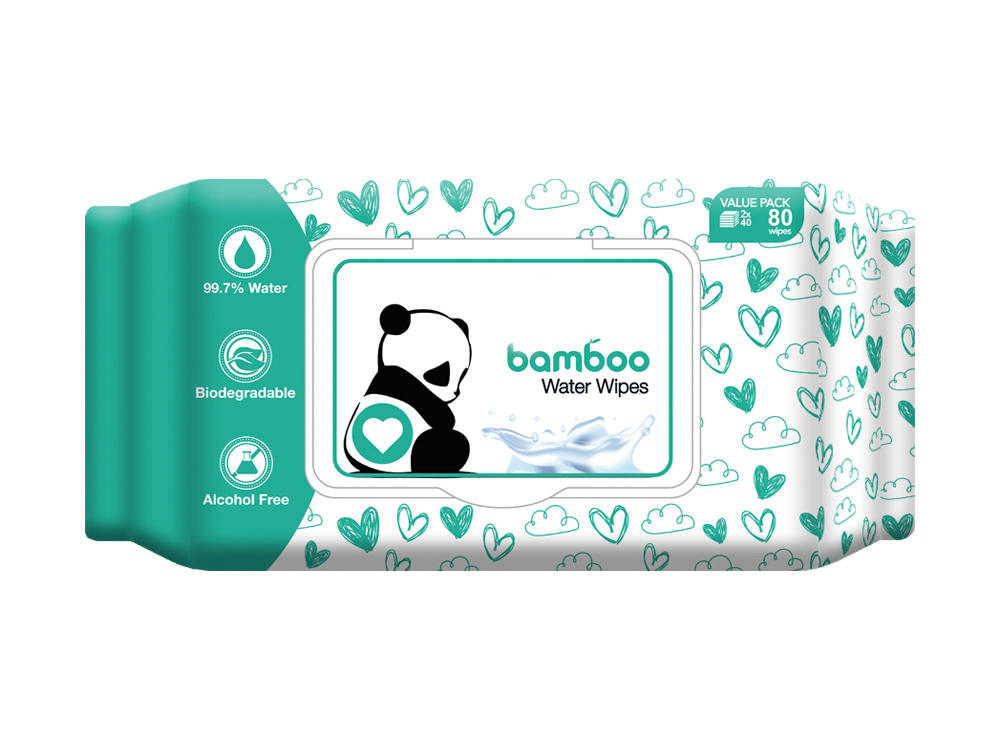
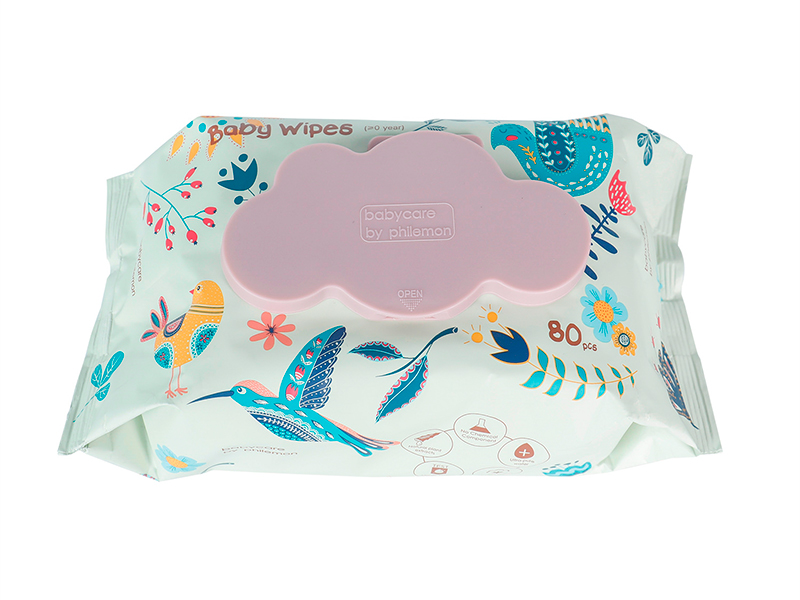
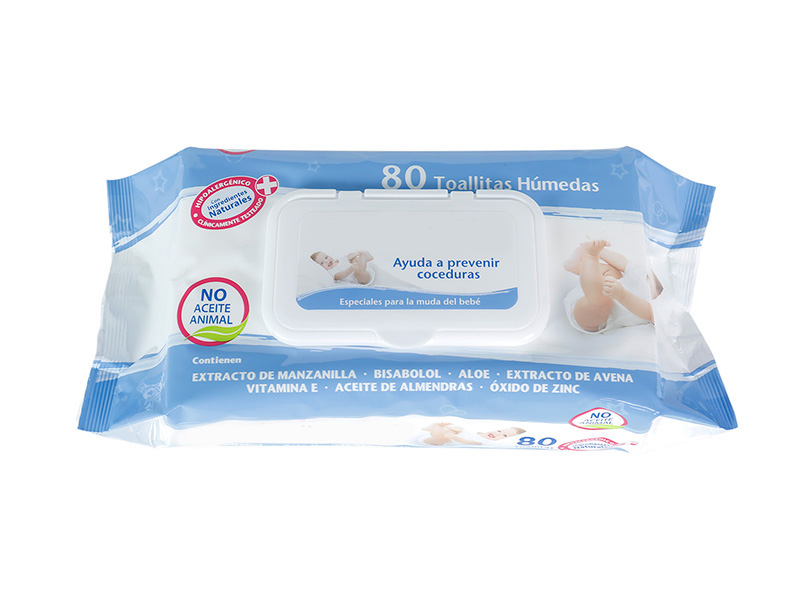
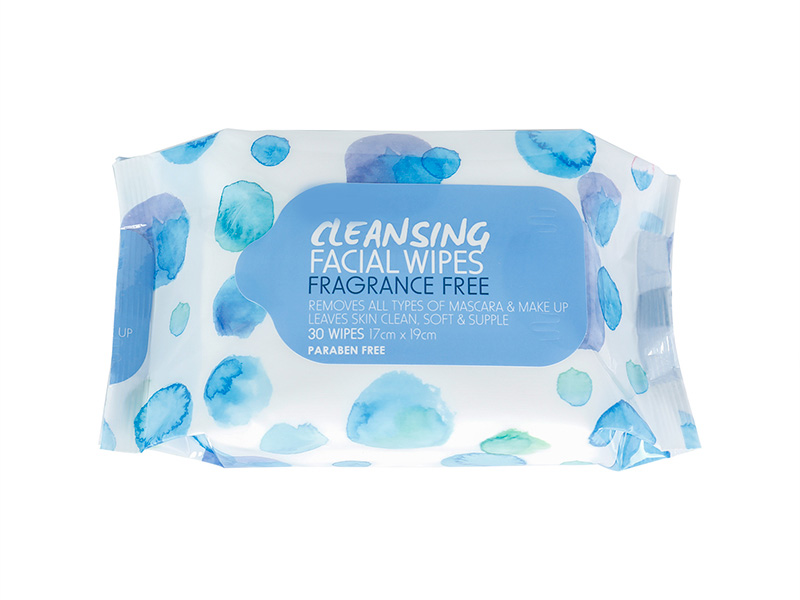
Packaging has a direct impact on hygiene, convenience, storage, and operating cost. The product can be supplied in canisters, flow packs, refill rolls, buckets, soft packs, or other customized formats.
Canisters are suitable for visible placement near machines, reception desks, and changing areas. Refill rolls can reduce packaging waste and support dispensers designed for large-volume use. Buckets may be appropriate for janitorial teams and industrial cleaning programs. Soft packs can be lightweight and efficient for distribution. Flow packs can support portable use in sports clubs, events, and training facilities.
Packaging can be designed around the buyer’s dispensing system, product volume, and branding strategy. Lid structures, opening size, pull-out behavior, closure performance, label placement, and carton configuration can all affect the daily user experience.
Flexible Fragrance Options
Fitness facilities have different preferences regarding fragrance. Some operators prefer unscented wipes to minimize sensory distractions and reduce the risk of fragrance sensitivity. Others may want a fresh scent that reinforces the perception of cleanliness.
Available fragrance directions include unscented, fresh, Johnson-style, lavender, lemon, lotus, fruit, coconut, cucumber, and other customized options. Fragrance selection should be assessed together with the intended market, user expectations, formula compatibility, packaging stability, and relevant safety or labeling requirements.
Product Specification Overview
| Specification | Available Options | Commercial Considerations |
|---|---|---|
| Product type | Antibacterial gym wipes | Designed for fitness equipment and other high-touch surfaces |
| Active solution direction | Benzalkonium chloramine antibacterial formulation or customized formula | Claims and use instructions should be validated for the target market |
| Materials | Polyester, viscose, bamboo, lyocell, cotton, spunlace, biodegradable spunlace | Selection depends on softness, strength, absorbency, sustainability, and cost |
| Basis weight | Approximately 30–100 gsm | Can be adjusted according to wipe feel, strength, and application |
| Size | Width approximately 12–22 cm; length approximately 12–30 cm | Custom dimensions are available for equipment and packaging requirements |
| Fabric technology | Parallel and semi-cross constructions | Supports customized texture and physical performance |
| Pattern options | Plain, mesh, dot embossed, flower, stars | May support tactile differentiation and brand presentation |
| Fragrance | Unscented, fresh, lavender, lemon, lotus, fruit, coconut, cucumber, and others | Can be customized for market positioning |
| Packaging | Canister, flow pack, refill roll, bucket, soft pack | Selected according to dispensing, logistics, and facility use |
| Pieces | Approximately 1–800 pieces per package or customized quantity | Final count depends on packaging format and product dimensions |
| Branding | Private label, printed logo, customized artwork | Supports distributor, fitness brand, and institutional programs |
Performance on Fitness Equipment
Fitness equipment is made from a wide variety of materials. A treadmill may combine a powder-coated frame, plastic housing, rubber handrails, a digital display, and a synthetic belt. A weight bench may use vinyl upholstery over foam with metal adjustment components. Free weights may have painted, chrome-plated, rubberized, or urethane surfaces. Yoga and stretching accessories may use foam, fabric, cork, or rubber.
For this reason, the final wipe should be evaluated against representative surfaces before commercial launch. A product that performs well on stainless steel may require different instructions for painted surfaces or electronic screens. The wipe should be used in accordance with the equipment manufacturer’s care guidance, especially around displays, openings, electrical controls, and sensitive coatings.
The nonwoven substrate helps lift and hold moisture, dirt, sweat, and oily residue during wiping. A well-balanced wipe should remain intact during use and should not fragment easily. Dimensional stability is important when users wipe handles, seat edges, machine frames, or broad surfaces. Low-lint performance can also be valuable in facilities where visible fibers would affect the appearance of equipment.
The formulation and substrate must work together. A highly absorbent fabric may retain more liquid within the wipe, while a more open structure may release the solution more readily onto the surface. Surface texture can influence the removal of residue. Packaging must then preserve moisture and maintain the intended product condition throughout storage and use.
For a commercial customer, these details can be addressed during sample development. The buyer may submit target equipment materials, preferred wipe size, desired wetness, fragrance expectations, packaging references, and cleaning procedures. The engineering and quality teams can use this information to support product selection and sample refinement.
Gym wipes antibacterial
Manufacturing Strength and Integrated Production
The manufacturer behind this product is Zhejiang Uniquality Nursing Products Technology Co., Ltd., operating within the Kingsafe and Uniquality manufacturing group. The company was founded in 1987 and has developed extensive experience in medical and hygiene nonwoven materials, nursing products, and related textile applications.
One of the company’s important strengths is its integrated industrial structure. Rather than depending entirely on unrelated third-party suppliers, the business has experience spanning nonwoven substrate development, wet and dry wipe production, and finished hygiene products. This structure can improve coordination between fabric selection, solution application, converting, packaging, quality control, and shipment planning.
The company operates multiple production bases in China, including facilities associated with Zhejiang, Guangdong, Jiangsu, and Hubei. It also identifies an international expansion plan involving a Vietnam factory. Multiple production locations can support capacity planning, supply continuity, regional logistics, and the ability to handle different product categories.
The stated annual capacity covers nonwoven fabrics, wet wipes, dry wipes, and diapers. This broad manufacturing base allows the company to apply knowledge from several hygiene product categories to the development of commercial gym wipes. Experience with absorbent substrates, liquid loading, folding, sealing, roll conversion, package design, and hygiene controls is valuable when producing high-volume wipes.
Advanced Nonwoven Expertise
Nonwoven fabric is the foundation of a wipe’s performance. The company’s product range includes spunlace nonwovens, spunmelt nonwovens, hot-air-through nonwovens, flushable and degradable nonwovens, wet wipes, dry wipes, cleansing wipes, and other hygiene materials.
Spunlace technology is especially relevant to gym wipes because it can create a soft, flexible, and absorbent fabric suitable for wiping. By adjusting fiber type, basis weight, bonding structure, and finishing conditions, manufacturers can create substrates for different levels of cleaning strength and tactile quality.
Internal expertise in nonwoven materials can shorten communication between the customer and the production team. Instead of treating the wipe fabric as a fixed commodity, the supplier can evaluate whether a polyester-viscose blend, bamboo-based material, lyocell-rich composition, cotton option, or biodegradable spunlace construction better matches the customer’s objectives.
Clean Manufacturing and Water Management
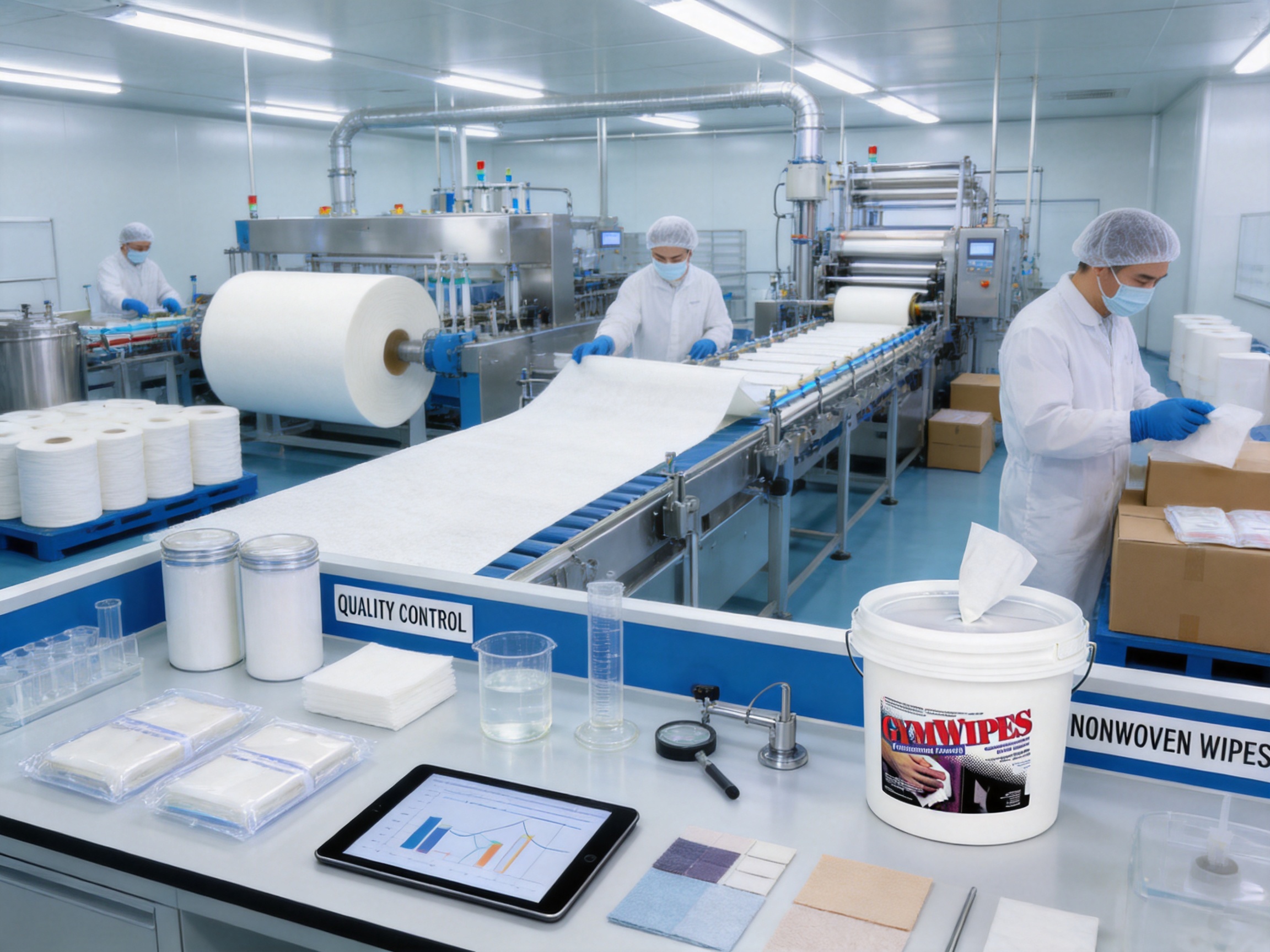
The manufacturing program includes 100,000-class GMP clean workshops and a purified water system described as meeting pharmacopoeia-related standards. Controlled production environments are important for hygiene products because raw materials, equipment, personnel movement, water quality, filling operations, and packaging conditions can all influence finished-product quality.
For gym wipes, clean manufacturing helps support consistent product handling from substrate preparation to final packing. Purified water is particularly important because water is a major component of many wet wipe solutions. Consistent water quality helps reduce variability and supports the stability and appearance of the final product when combined with the selected formula and preservatives.
Clean production does not replace product-specific testing or regulatory review. Instead, it forms part of a broader quality system that should include approved raw materials, documented processes, batch records, inspection procedures, microbiological controls, packaging checks, and finished-product release requirements.
Testing and Quality Support
The company reports a full-function testing center supported by numerous patents. Testing capability is important for OEM customers because commercial wipes need to meet more than a single performance expectation.
Typical development and quality considerations may include:
- Nonwoven basis weight and dimensional accuracy.
- Wipe size and piece count.
- Liquid loading and moisture uniformity.
- Appearance, odor, and fragrance consistency.
- Package seal integrity and leakage resistance.
- Pull-out performance and dispensing behavior.
- Fabric strength before and after wetting.
- Lint, residue, and surface compatibility.
- Microbiological quality of the finished product.
- Antibacterial or disinfecting efficacy under defined test conditions.
- Storage stability and shelf-life performance.
- Carton strength and transportation suitability.
Testing requirements vary according to the customer’s country, product claims, formula, packaging, and sales channel. A buyer seeking to make disinfectant claims should confirm the required test standards before final artwork and mass production. The supplier can provide applicable reports and documentation where available and can coordinate additional testing when required by the target market.
OEM and ODM Customization
The product is suitable for companies that want to create a dedicated gym hygiene line rather than purchase a generic wipe. OEM production allows the customer to use its own brand, packaging artwork, product naming, and market positioning. ODM support can extend further into formula selection, substrate development, packaging structure, fragrance, and product concept design.
Custom Wipe Size
Wipe size affects coverage, user perception, package capacity, and cost per use. Smaller wipes may be suitable for handles, control buttons, and portable sports kits. Larger wipes can cover benches, machine seats, mats, and broad equipment panels more efficiently.
The available size range is approximately 12–22 centimeters in width and 12–30 centimeters in length, with custom dimensions possible depending on production conditions and packaging design. A buyer should assess the typical surface area, expected number of wipes per cleaning task, available dispenser space, and desired retail or commercial pack size before choosing the final dimensions.
Substrate Selection
Substrate selection is a central part of product positioning. A standard polyester or viscose blend may provide a practical balance between price and performance. Bamboo or lyocell may appeal to brands emphasizing plant-derived or renewable fibers. Biodegradable spunlace may support a sustainability-oriented range where the product configuration and local waste infrastructure are compatible with the intended environmental claims.
Environmental statements must be accurate and supported by the complete product design. A biodegradable substrate does not necessarily mean that the entire wipe, liquid formula, packaging, and disposal method are biodegradable. Responsible product communication should distinguish between fiber composition, biodegradability, compostability, flushability, and general environmental impact.
Customized Solution Formula
Customers may request alcohol-free, antibacterial, disinfecting, fragrance-free, or other customized formulas. The formula should be developed in relation to the substrate, packaging, target surface, storage conditions, and claims.
An alcohol-free formula can be attractive for facilities that prefer reduced flammability concerns or a different sensory profile. A fragrance-free formula may be appropriate for healthcare, wellness, or sensitive-use environments. A disinfecting formula may be required when the buyer intends to make regulated antimicrobial claims. A general cleaning formula may be preferable for routine removal of sweat and residue when a disinfectant claim is not necessary.
Formula customization should include compatibility testing. Changes in active ingredients, surfactants, preservatives, fragrance, pH, or solvent content can influence fabric strength, package stability, odor, drying speed, surface appearance, and user comfort. A controlled development process helps reduce the risk of making changes that perform well in a laboratory sample but create problems during long-term storage or mass production.
Private-Label Packaging and Artwork
Private-label customers can customize the front label, back label, color system, logo, product claims, instructions, warning statements, barcode, carton design, and package count. Packaging can be created for a professional fitness brand, a janitorial supplier, a healthcare distributor, a sports equipment manufacturer, or a national retail and wholesale program.
Artwork should be prepared with regulatory review in mind. Claims such as “kills 99.9% of bacteria,” “disinfectant,” “antibacterial,” “biodegradable,” or “safe for all surfaces” may be regulated or may require specific substantiation. The final wording should be approved according to the destination market and the verified performance of the finished product.
Packaging Formats for Different Commercial Operations
Canister Wipes
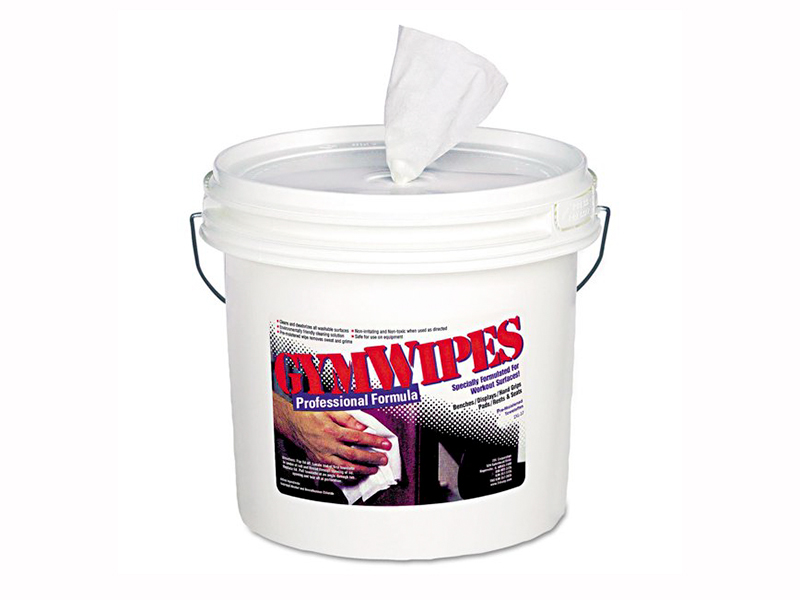
Canisters are widely suited to gyms and fitness centers because they are easy to recognize and can be placed next to treadmills, cycling machines, weight stations, benches, and reception areas. A well-designed lid helps protect the remaining wipes from evaporation and contamination while supporting one-at-a-time dispensing.
Canister labels provide a large area for brand presentation and usage instructions. Operators may also use different colors to identify standard cleaning wipes, antibacterial wipes, fragrance-free wipes, or premium facility programs.
Refill Rolls
Refill rolls are useful when a facility has wall-mounted or floor-standing dispensers. They can reduce the number of rigid containers consumed over time and may simplify storage for high-volume operations. A refill system should be evaluated for roll diameter, core size, perforation strength, pull-out consistency, and compatibility with the selected dispenser.
For large gym chains, refill rolls may support centralized procurement and consistent equipment placement across multiple locations. The customer can select a standard roll configuration or develop a proprietary format for a specific dispensing system.
Buckets
Buckets can be appropriate for cleaning teams, industrial training facilities, sports arenas, and large institutional sites. They may hold a substantial quantity of wipes and support frequent cleaning rounds. The bucket design should include a secure lid, practical carrying features, and sufficient resistance to handling and transportation.
Soft Packs and Flow Packs
Soft packs and flow packs are lightweight options for sports clubs, mobile trainers, events, schools, and portable cleaning kits. They can be stored efficiently and may reduce shipping volume compared with rigid containers. A reliable resealable label or closure is important because repeated exposure to air can affect moisture retention.
The appropriate packaging format depends on the frequency of use, storage conditions, dispensing method, sustainability goals, shipping distance, and expected purchase price. The manufacturer can help the buyer compare these factors during development.
Advantages for Distributors and Private-Label Brands
Distributors need products that are easy to explain, consistently available, and adaptable to different customer segments. Antibacterial gym wipes can be positioned as part of a broader hygiene program for fitness, sports, wellness, hospitality, education, and institutional environments.
A distributor may choose to offer several specifications under one product family. For example, a basic economical wipe could use a lighter substrate and standard packaging. A premium version could use a heavier fabric, a refined texture, a custom fragrance, and branded canister packaging. A sustainable option could use a selected biodegradable spunlace substrate with carefully reviewed environmental messaging. A facility-management version could be supplied in large buckets or refill rolls.
Private-label production also allows buyers to build customer loyalty. Instead of reselling an interchangeable generic product, the distributor can offer a branded wipe with a distinctive package, consistent formula, and documented supply program. The supplier’s engineering and quality teams can support sample approval, specification confirmation, pilot production, and mass production.
The company’s broad product experience is another advantage for buyers that want to consolidate sourcing. In addition to gym wipes, the organization manufactures or develops medical, baby, household, industrial, cleansing, dry wipe, and eco-oriented nonwoven products. A customer may therefore be able to coordinate multiple hygiene categories through one experienced manufacturing partner.
Quality and Supply-Chain Advantages
Large-volume wipe programs require more than a competitive quotation. Buyers need dependable raw material planning, stable production capacity, clear specifications, quality records, packaging coordination, and export experience. Delays in any one of these areas can interrupt a distributor’s inventory or a gym chain’s daily operation.
The manufacturer reports eight domestic production bases and a wide product capacity. A multi-site structure can support production scheduling and help the business serve customers with different volumes and product requirements. It can also provide flexibility when certain facilities are dedicated to particular technologies or product categories.
Experience in international supply supports the needs of overseas buyers. Export-oriented production requires attention to carton dimensions, pallet configuration, shipping conditions, documentation, labeling, customs requirements, and destination-market expectations. The final supply program should be agreed through a detailed product specification and purchase contract.
For long-term customers, supply planning may include rolling forecasts, safety-stock discussions, scheduled production windows, standardized artwork, approved alternative materials, and quality-release procedures. These measures can help reduce variation and make replenishment more predictable.
The company also emphasizes environmentally responsible production and green manufacturing. Sustainability objectives can be addressed through material selection, packaging reduction, production efficiency, waste management, and logistics planning. Because environmental requirements differ widely, each project should define measurable and supportable goals rather than relying on broad claims.
Recommended Use in Fitness Facilities
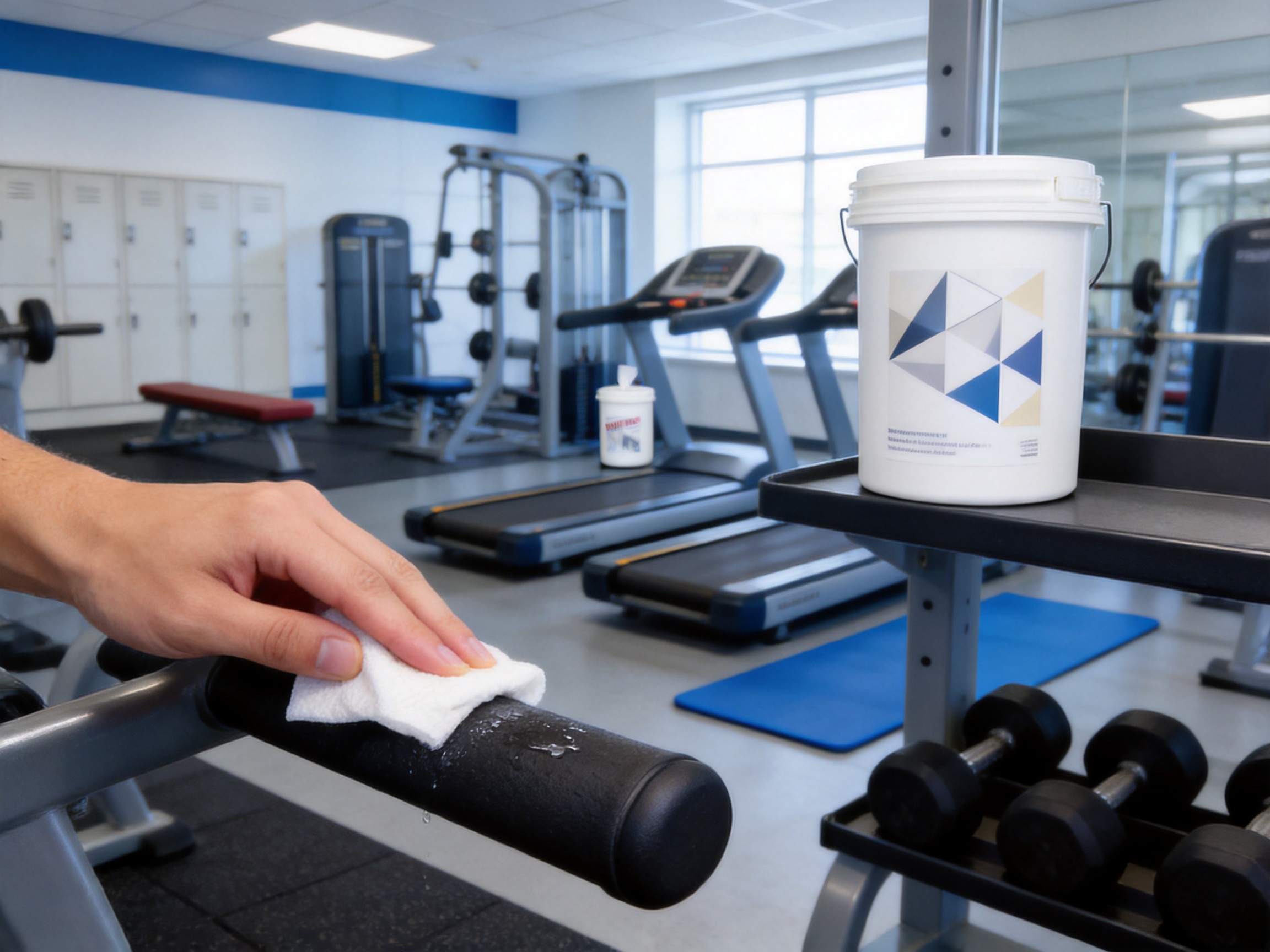
Gym wipes should be placed where they are visible, accessible, and protected from unnecessary exposure. Common locations include equipment rows, free-weight areas, stretching zones, group exercise studios, reception desks, locker rooms, and staff cleaning stations.
Facility operators may establish a simple routine:
- Place dispensers near high-contact equipment.
- Provide clear instructions for taking one wipe at a time.
- Encourage users to wipe handles, seats, benches, screens, and other contact areas.
- Allow the surface to remain wet for the required contact time when a disinfecting claim applies.
- Observe equipment manufacturer instructions for sensitive materials and electronics.
- Dispose of used wipes in suitable waste containers.
- Inspect dispensers regularly and replenish them before they become empty.
- Train cleaning personnel to use the selected product consistently.
Wipes should not automatically be flushed unless the product has been specifically designed, tested, and labeled for flushability. Standard gym wipes should generally be disposed of in accordance with local waste-management requirements. Facilities should also avoid allowing used wipes to accumulate around machines or enter drains.
Antibacterial wipes are not a substitute for a complete cleaning and hygiene program. Regular deep cleaning, ventilation, hand hygiene, laundry management, restroom maintenance, and staff training remain important. Wipes are most effective when integrated into a broader facility-management system.
Product Development Process
A professional OEM project normally begins with a discussion of the intended use and market. The buyer should provide information about the target customer, sales country, expected annual volume, preferred packaging, desired claims, surface types, fragrance preferences, sustainability requirements, and budget range.
Step One: Requirement Confirmation
The supplier and buyer confirm the basic specification, including wipe material, dimensions, basis weight, solution type, fragrance, piece count, package format, carton quantity, and branding requirements. This stage helps identify technical or regulatory issues before sampling.
Step Two: Formula and Material Selection
Engineering and quality personnel review the requested formula and substrate combination. They consider liquid absorption, wet strength, dispensing behavior, odor, stability, surface compatibility, and packaging interaction. If the buyer wants a specific antibacterial claim, the appropriate validation plan should be discussed at this stage.
Step Three: Sample Development
Samples are produced for evaluation. The buyer can assess wipe feel, moisture, size, texture, fragrance, cleaning performance, packaging appearance, and ease of dispensing. Samples should be tested on representative gym equipment and stored under expected conditions when practical.
Step Four: Artwork and Packaging Approval
After the physical product is selected, the buyer submits or approves the artwork. Label content should include the product name, intended use, directions, precautions, ingredients or active components where required, storage guidance, batch information, and disposal instructions. Claims should be reviewed against available test evidence and local rules.
Step Five: Pilot and Quality Confirmation
A pilot run may be used to verify filling, folding, sealing, pull-out performance, package count, coding, and carton packing. Any necessary adjustments can be made before full production. This stage is particularly useful for new packaging formats or large multi-site programs.
Step Six: Mass Production and Shipment
Once the specification and samples are approved, production can proceed according to the agreed schedule. Finished goods are inspected, packed, documented, and prepared for shipment. Long-term customers may establish recurring supply schedules and rolling forecasts.
Who Should Purchase This Product?
These antibacterial gym wipes are intended for commercial and wholesale buyers rather than individual retail orders. The product is suitable for:
- Gym chains and independent fitness centers.
- Sports clubs and athletic training facilities.
- Yoga, Pilates, and functional training studios.
- Hotels and resorts with fitness rooms.
- Equipment manufacturers and equipment distributors.
- Janitorial and facility-management companies.
- Healthcare and wellness distributors.
- Importers and wholesalers.
- Private-label hygiene brands.
- Government and institutional procurement departments.
- Schools, universities, and sports academies.
- Event organizers and mobile training providers.
Buyers should provide the expected monthly or annual volume, destination market, preferred package, target price, required certifications, and desired delivery schedule when requesting a quotation. Minimum order quantity depends on the specification, packaging format, formula, and customization level.
Q&A: Antibacterial Gym Wipes
What are antibacterial gym wipes used for?
They are designed to clean fitness equipment and other high-touch surfaces, including exercise machines, benches, weights, yoga mats, handles, seats, control panels, and locker-room surfaces. The selected formula may support general cleaning, antibacterial use, or disinfecting claims when validated for those purposes.
Can the wipes remove sweat and oil residue?
Yes. The nonwoven substrate and liquid solution are designed to help lift sweat, skin oil, dirt, and other common residues from suitable surfaces. Cleaning performance depends on the substrate, solution, wipe wetness, surface condition, and usage method.
Does the product kill 99.9% of bacteria?
The product information states a sterilization rate of 99.9% under applicable test conditions. Buyers should request the relevant test report and confirm the exact organisms, method, contact time, and regulatory basis before using this claim on commercial packaging.
What active ingredient is used?
The described antibacterial product uses benzalkonium chloramine as its bactericidal component. Customized formulas may also be discussed according to the buyer’s technical requirements and target-market regulations.
Are the wipes alcohol-free?
An alcohol-free formula is available as a customization direction. The final formula should be confirmed during product development because different buyers may require antibacterial, disinfecting, fragrance-free, or general-cleaning performance.
What nonwoven materials are available?
Available options include polyester, viscose, bamboo, lyocell, cotton, spunlace, biodegradable spunlace, and other customized substrates. The best material depends on strength, softness, absorbency, sustainability goals, packaging, and cost.
Can the wipe dimensions be customized?
Yes. Standard development information includes widths of approximately 12–22 centimeters and lengths of approximately 12–30 centimeters, while custom sizes may be considered according to equipment, packaging, and production requirements.
What packaging formats can be manufactured?
Available formats include canisters, flow packs, refill rolls, buckets, soft packs, and other customized structures. Packaging can be developed for individual dispensers, janitorial teams, gym chains, sports clubs, or distribution programs.
Can a private-label logo be printed on the product?
Yes. OEM and ODM services include private-label design, logo printing, customized labels, artwork, carton design, and branded packaging. Artwork must be reviewed for technical accuracy and regulatory compliance.
Can fragrances be customized?
Yes. Options include unscented, fresh, lavender, lemon, lotus, fruit, coconut, cucumber, and other fragrance directions. Fragrance-free production is also available for customers that prefer a neutral product.
Are the wipes suitable for electronic screens?
Suitability depends on the equipment manufacturer’s care instructions and the final formula. Buyers should test the product on representative screens and sensitive components. Wipes should not be allowed to enter electrical openings or remain excessively wet on electronic controls.
Are these wipes flushable?
Standard gym wipes should not be flushed unless they are specifically designed, tested, and labeled as flushable. Used wipes should normally be disposed of in suitable waste containers according to local requirements.
What is the minimum order quantity?
MOQ depends on the material, formula, packaging format, piece count, artwork, and customization level. The supplier can provide an accurate quotation after reviewing the buyer’s project details.
Can the manufacturer support large-volume supply?
Yes. The company reports multiple production bases, broad nonwoven capacity, hygiene-product manufacturing experience, and support for stable bulk production and long-term supply programs.
Can testing documents be provided?
Relevant testing reports and certification documents may be provided upon request where applicable. The exact documentation depends on the final formula, claims, destination market, and customer requirements.
Does the company provide samples?
Sample development can be arranged as part of the OEM or ODM process. Buyers should provide their desired size, material, formula direction, packaging, fragrance, and target application to make the sample more representative of the final project.
Why Choose an Experienced Integrated Manufacturer?
Choosing a wipe supplier involves more than comparing the price of one carton. The supplier’s ability to control raw materials, maintain stable quality, solve technical problems, and coordinate packaging can strongly influence the success of a commercial hygiene program.
An integrated manufacturer can connect nonwoven development with finished wipe production. This may provide greater control over fabric consistency and help the engineering team respond to requests for different textures, weights, fiber blends, and sustainability targets.
Long-term industry experience also helps a manufacturer understand the practical challenges of hygiene products. These challenges include liquid stability, evaporation, seal integrity, folding accuracy, package leakage, fragrance migration, fabric compatibility, transport conditions, and product documentation.
The company’s reported history since 1987, multi-base production structure, clean workshops, purified water system, testing capabilities, international equipment, patent portfolio, and broad hygiene product range provide a substantial foundation for commercial OEM cooperation.
For customers serving several markets, the supplier’s experience across medical, maternal and baby, household, beauty, industrial cleaning, clothing, and other fields may also be valuable. Product development knowledge can be transferred across categories while the specific gym wipe specification remains controlled and purpose-built.
Conclusion
Antibacterial gym wipes provide a practical way to support cleaner, more comfortable, and more professionally managed fitness environments. Their value comes from the combination of an appropriate antibacterial solution, durable nonwoven fabric, suitable moisture level, convenient packaging, and clear usage guidance.
The product can be customized in material, size, texture, basis weight, fragrance, solution, packaging, artwork, and branding. This flexibility allows a gym chain, distributor, equipment manufacturer, facility-management company, or private-label brand to develop a specification that fits its market and operating model.
Zhejiang Uniquality Nursing Products Technology Co., Ltd., together with the Kingsafe and Uniquality manufacturing group, offers integrated experience in nonwoven materials, wet wipes, dry wipes, nursing products, and hygiene manufacturing. Its production bases, clean workshops, purified water system, testing resources, OEM capability, and broad capacity support the requirements of buyers seeking stable commercial supply.
For the best results, buyers should define the intended surface applications, cleaning claims, formula requirements, packaging system, annual volume, target market, and documentation needs before production. With careful sample evaluation and specification control, antibacterial gym wipes can become an effective part of a modern fitness facility’s hygiene program and a strong addition to a professional private-label product portfolio.
References
1. Product technical information supplied for antibacterial gym wipes, including materials, sizes, packaging formats, fragrance options, and antibacterial formulation details.
2. Manufacturer-provided company profile and production capability information for Zhejiang Uniquality Nursing Products Technology Co., Ltd. and the Kingsafe and Uniquality manufacturing group.
3. General principles of nonwoven fabric selection for wet wipes, including considerations for absorbency, wet strength, softness, texture, and liquid distribution.
4. General hygiene-management principles for shared fitness equipment and high-touch surfaces in commercial facilities.
5. Applicable national and regional requirements for antibacterial, disinfectant, antimicrobial, biocidal, labeling, packaging, and environmental claims.
6. Equipment manufacturer care instructions for cleaning coated metals, plastics, synthetic leather, rubber, displays, and electronic control surfaces.