中文简体
 English
 日本語
 русский
 Español
Introduction
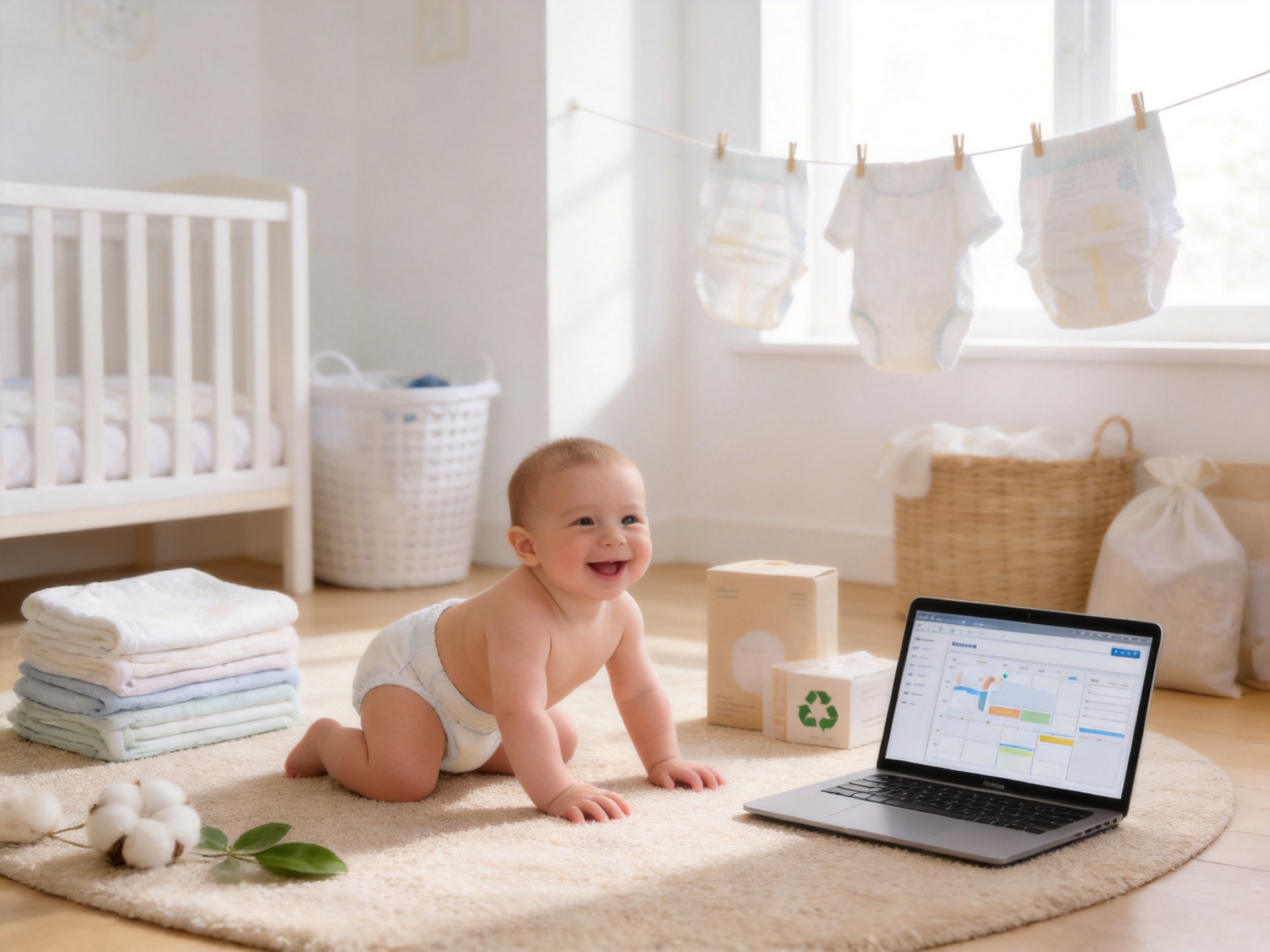
Washable diapers for babies are becoming an increasingly important product category for parents, baby-care brands, retailers, and distributors seeking practical alternatives to conventional single-use diapers. A modern reusable diaper must do much more than simply replace a disposable product. It must provide a comfortable fit, dependable absorbency, skin-friendly contact, convenient adjustment, attractive appearance, and sufficient durability for repeated washing and use. It must also be suitable for different climates, consumer preferences, sizing systems, and retail requirements.
The washable baby diaper described in this article is designed around these expectations. Its ultra-thin construction, soft and breathable materials, adjustable magic buckle, elastic waistline, and absorbent performance create a balanced solution for everyday baby care. The product is intended to help reduce discomfort, support freedom of movement, and provide a reusable option for families and businesses developing sustainable hygiene product lines.
For business customers, the product is also supported by a complete OEM and ODM manufacturing system. This includes product structure development, material selection, absorbency adjustment, size customization, color and pattern design, packaging development, and private label production. Such flexibility allows importers, wholesalers, retailers, online sellers, and baby-care brands to create products that correspond to their target markets rather than relying only on standard products.
With extensive experience in nonwoven materials, hygiene products, and medical and nursing applications, the manufacturer can coordinate material development, production, testing, and finished-product manufacturing within an integrated supply chain. This level of manufacturing control is especially valuable for washable diapers because product performance depends on the correct relationship among surface fabric, absorbent layers, waterproof or protective components, fastening systems, elastic elements, stitching, and final quality inspection.
What Are Washable Diapers for Babies?
Washable diapers are reusable baby-care products designed to be worn, removed, washed, dried, and used again. Unlike disposable diapers, which are discarded after a single period of use, washable products are constructed from durable textile and absorbent components that can support repeated use when handled according to the recommended care instructions.
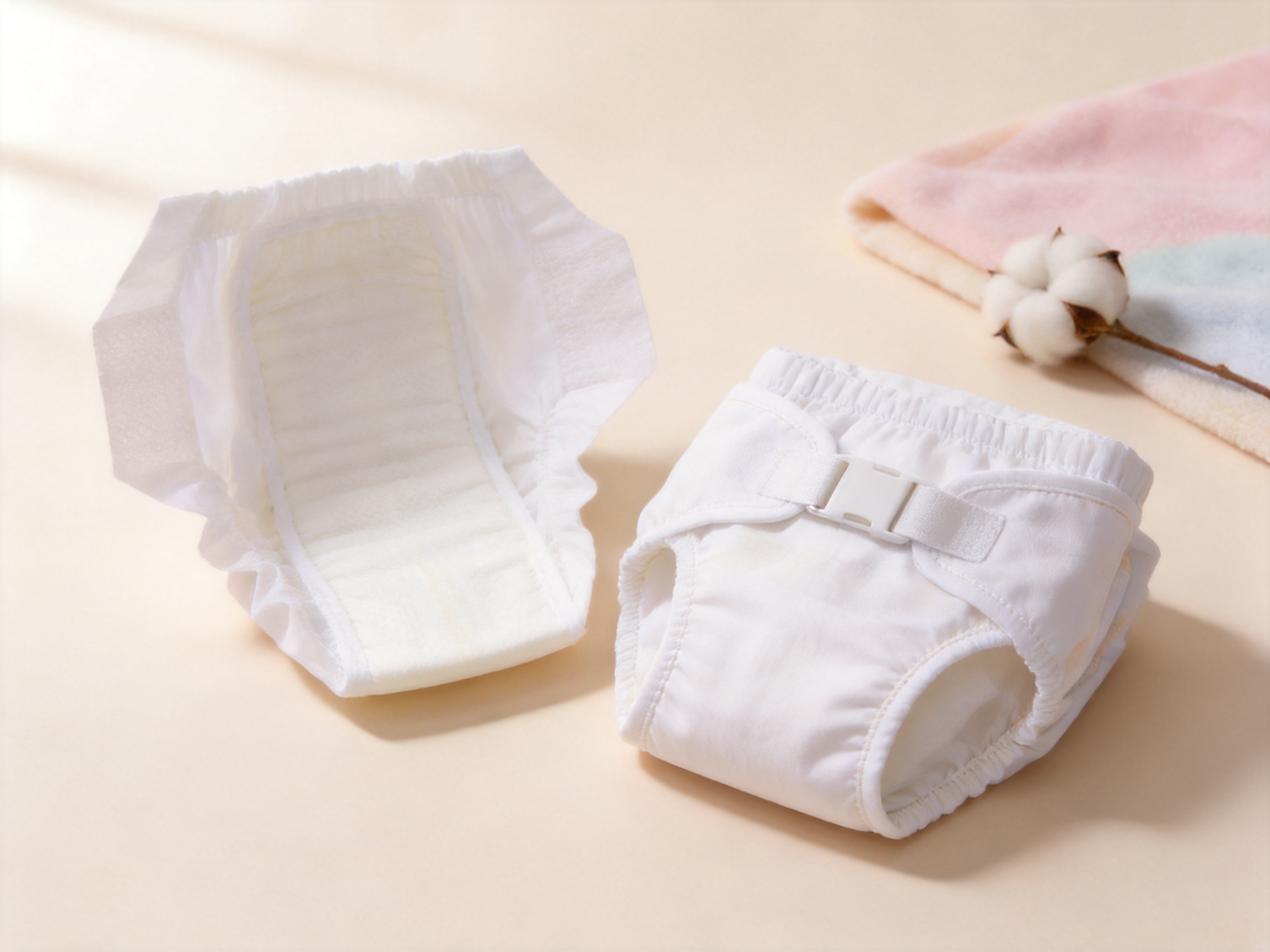
The product discussed here belongs to the regular diaper category and is developed for babies at different growth stages. Its adjustable construction is intended to accommodate a broad range of body shapes and sizes. The fastening system allows the diaper to be opened, adjusted, and secured without the need for conventional adhesive tabs. The elastic waistline helps the product remain close to the baby’s body while allowing comfortable movement.
A reusable diaper generally includes several functional zones. The outer layer contributes to the product’s appearance, structural stability, and protection. The inner surface contacts the baby’s skin and should be smooth, soft, and breathable. The absorbent area receives and distributes liquid. The leg and waist regions help reduce leakage risk when correctly fitted. The fastening system provides adjustment, while elastic components help maintain a secure but comfortable fit.
Each of these zones must work together. A highly absorbent diaper may still perform poorly if its fit is incorrect. A soft diaper may not be practical if it loses its shape after washing. A durable outer layer may not be comfortable if the inner surface is rough. Therefore, washable diaper development should be approached as a complete product engineering project rather than as a simple fabric assembly process.
Core Product Advantages
Ultra-Thin Construction
The ultra-thin design is one of the product’s most important advantages. A thin diaper can reduce bulk between the baby’s legs and make it easier for the baby to crawl, sit, stand, and walk. Excessive thickness may interfere with movement, create pressure under clothing, and make the product feel heavy. By optimizing the material layers and absorbent structure, the diaper can provide functional protection while maintaining a relatively light and flexible profile.
Thinness does not mean that performance must be sacrificed. The absorbent system can be configured to distribute liquid efficiently across the usable absorbent area. Depending on the customer’s requirements, the structure, material combination, and absorbency level can be adjusted for different product positions. A light daytime version, a higher-absorbency version, and a training-oriented version may all be developed from the same basic product concept.
Soft and Breathable Materials
Babies spend extended periods wearing diapers, so softness and breathability are central to product acceptance. The material contacting the skin should feel gentle and should not create unnecessary friction during movement. Breathable materials can also support improved air circulation around the diaper area, helping create a more comfortable wearing environment.
The product is described as soft and breathable to help reduce discomfort during normal use. These characteristics are particularly important in warm or humid climates, where heat and moisture can make diaper use more challenging. Material selection can be adjusted according to the target market, seasonal conditions, required hand feel, and price positioning.
In comparison with lower-quality reusable products that may use coarse fabrics, unstable elastic, or poorly finished edges, a professionally developed diaper can offer more consistent comfort. The objective is not only to select a soft fabric but also to control the entire product structure so that seams, edges, closures, and elastic sections do not create avoidable pressure points.
Support for Skin Comfort
A baby’s skin is sensitive and requires careful consideration during product design. A smooth inner surface, appropriate moisture management, suitable material selection, and a comfortable fit can help reduce sources of irritation. The product is designed to help prevent the conditions commonly associated with a damp and uncomfortable diaper area, including excessive moisture and friction.
No diaper can guarantee that skin irritation will never occur, because skin condition is influenced by many factors, including the baby’s individual sensitivity, wearing time, hygiene routine, washing process, detergent selection, and fit. However, a breathable and well-constructed reusable diaper can provide a strong foundation for comfortable daily use when combined with appropriate care practices.
Absorbent Performance
The product uses an absorbent system designed to support rapid liquid uptake. The supplied product description refers to SAP, or superabsorbent polymer, as part of the instant absorption function. For customized projects, the absorbent structure can be evaluated and adjusted according to the expected use, target age group, desired capacity, and market positioning.
Absorbency is affected by more than the quantity of absorbent material. Liquid distribution, acquisition speed, core thickness, surface construction, compression, stitching, and fit all influence practical performance. A product that absorbs quickly but cannot distribute liquid may become saturated in one area. A well-balanced structure can help spread moisture through the absorbent zone and improve the effective use of the available capacity.
Business customers can discuss different absorbency expectations with the manufacturing team during development. For example, a customer may require a slim daytime design, a more absorbent night-use product, or a product intended for short changes during travel or childcare. The final configuration should be verified through sample evaluation and performance testing before bulk production.
Adjustable Magic Buckle
The magic buckle is a practical feature for reusable baby diapers. It enables the caregiver to open and secure the diaper repeatedly and adjust the fit as the baby grows. This supports the reusable nature of the product and allows one design to serve a broader size range than a fixed-size garment.
Adjustable fastening is also useful for accommodating differences in body shape. Babies of the same age may have different waist and leg measurements, so an adjustable closure can help caregivers achieve a closer fit. Correct adjustment is important because a diaper that is too loose may leak, while a diaper that is too tight may cause pressure and discomfort.
Compared with simple products using weak or inconvenient closures, a carefully selected and properly attached fastening system can improve ease of use and product life. The buckle area must be securely integrated with the diaper body and tested for repeated opening and closing. Its position, size, strength, and edge finishing can be customized according to the product design.
Elastic Waistline
The elastic waistline helps the diaper remain in position as the baby moves. It can provide gentle support around the waist while allowing a degree of flexibility. This is especially important for active babies who crawl, roll, stand, or walk during the wearing period.
A well-designed waistline should balance security and comfort. Excessive tension can create pressure, while insufficient tension may allow the diaper to shift. The type of elastic, width, sewing method, and placement can all be adjusted during product development. These details are important indicators of manufacturing quality and should be evaluated during sample testing.
Broad Size Adaptability
The product is intended to support a full range of diaper sizes for babies in different countries. International markets often use different size labels, weight ranges, measurement standards, and consumer expectations. A manufacturer serving global customers must therefore be able to modify dimensions and grading rather than offering only one fixed specification.
Size customization may include waist circumference, leg opening, rise height, absorbent pad dimensions, fastening positions, and overall product length. Customers can provide their preferred size chart or request recommendations based on their target market. Samples can then be produced for review before the size system is finalized.
Size adaptability gives brands greater flexibility. A retailer may require a compact range of three sizes, while another brand may want multiple sizes for newborns, infants, toddlers, and growing children. The product can be developed for different sales channels, provided that the structure, materials, and performance requirements are clearly defined.

Washable diapers for babies
How the Product Compares with Conventional Alternatives
Compared with Single-Use Disposable Diapers
Disposable diapers are widely used because they are convenient and require no washing. However, they generate ongoing waste and require repeated purchasing. Washable diapers offer a reusable alternative for families and organizations that value repeated use, reduced dependence on single-use products, or greater control over materials and appearance.
The principal advantage of a washable diaper is reusability. Once properly washed and dried, the diaper can be used again. This can support a different household consumption model and may appeal to environmentally conscious consumers. It can also give brands an opportunity to develop a sustainability-focused product line.
Washable diapers do require additional care. Users need access to suitable washing, drying, and storage arrangements. They must also follow instructions regarding washing temperature, detergents, drying methods, and replacement. For this reason, the most successful reusable diaper products combine environmental positioning with convenient design, clear instructions, dependable fastening, comfortable materials, and durable construction.
Compared with Basic Reusable Diapers
Not all reusable diapers offer the same level of engineering. Basic products may provide a reusable shell but lack optimized absorbency, soft inner materials, reliable elasticity, or a carefully designed size system. Some may also be difficult to adjust or may lose shape after repeated laundering.
The product described here is positioned as a more complete hygiene solution. It combines an ultra-thin profile, breathable and soft construction, an absorbent system, a reusable fastening mechanism, an elastic waistline, and size adaptability. For B2B customers, the ability to customize each of these elements creates an advantage over generic products that are available only in a fixed design.
Compared with Low-Cost, Unverified Products
Low-cost products can be attractive at the initial purchasing stage, but inconsistent materials, weak stitching, uncertain absorbency, and limited quality control may increase long-term costs. Product failure can lead to customer complaints, returns, negative reviews, and damage to a brand’s reputation.
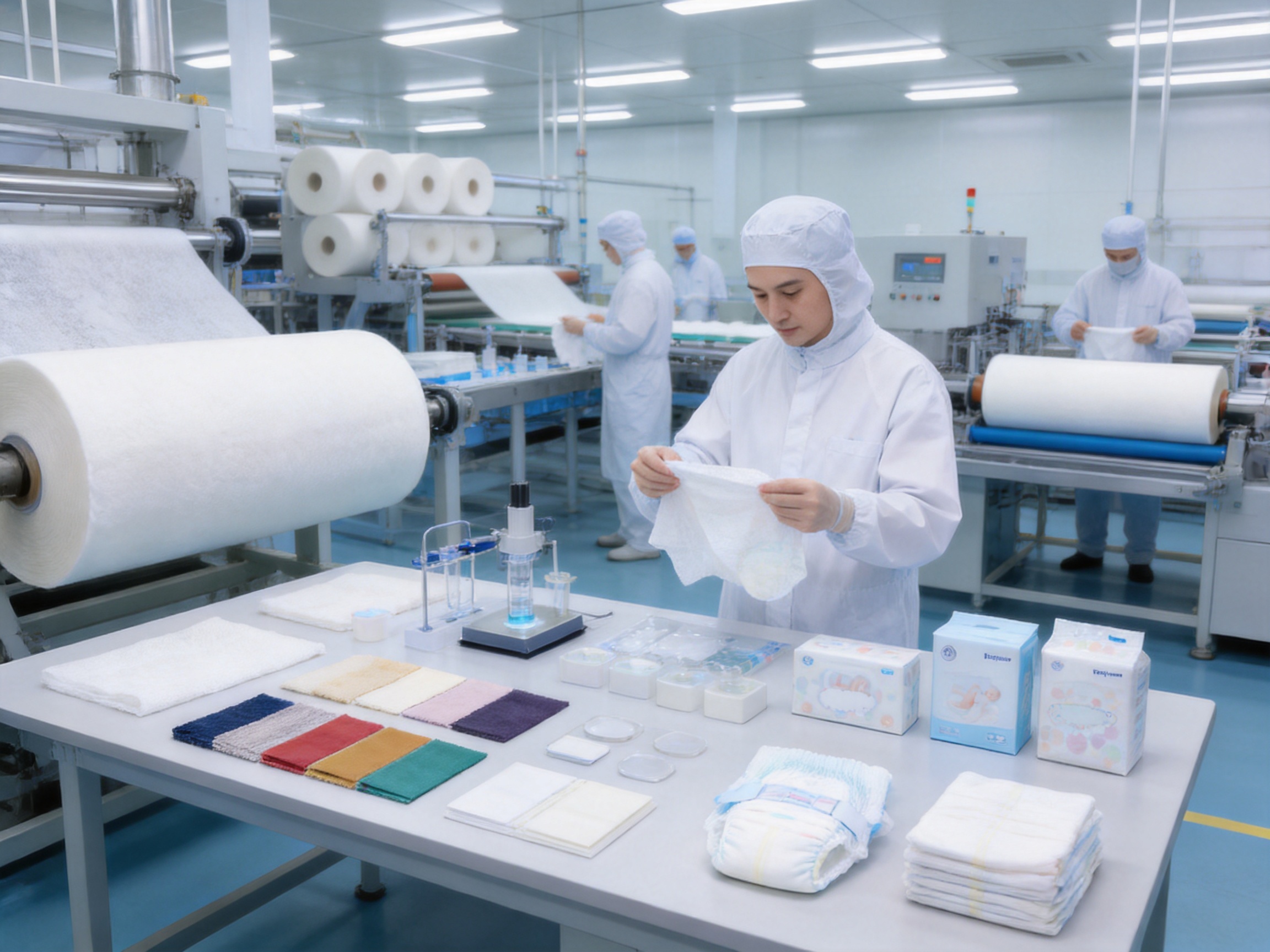
An integrated manufacturer can reduce these risks by coordinating raw materials, production processes, testing, and final inspection. The presence of professional facilities, clean workshops, a purified water system, and a testing center supports a more controlled manufacturing environment. Customers should still define their quality standards and approve samples, but an established production system provides a stronger foundation for dependable supply.
| Evaluation Area | Washable Customized Diaper | Basic Reusable Product | Single-Use Disposable Diaper |
|---|---|---|---|
| Primary use model | Reusable after suitable washing and drying | Reusable, depending on construction quality | Single use |
| Fit adjustment | Magic buckle and elastic waistline can be customized | May have limited adjustment | Usually uses disposable fastening tabs |
| Material customization | Surface, absorbent, structural, and packaging options | Often limited to standard materials | Generally fixed by the manufacturer |
| Product profile | Ultra-thin structure can be developed for mobility | Thickness may vary significantly | Varies by brand and absorbency level |
| Brand development | Suitable for OEM, ODM, and private label programs | May offer limited branding support | Usually sold under the original manufacturer’s brand |
| Market positioning | Sustainable, reusable, customizable, and premium or value-based | Primarily functional and price-oriented | Convenience-oriented and disposable |
Integrated Manufacturing Capabilities
The strength of this product is supported by the manufacturer’s broader industrial capabilities. The company specializes in nonwoven materials and hygiene products and operates multiple domestic production bases. An upcoming production facility in Vietnam is also intended to strengthen international supply capabilities and regional manufacturing support.
Manufacturing control begins with materials. Nonwoven substrates can influence softness, strength, liquid management, breathability, and visual quality. By developing or controlling nonwoven materials internally, the manufacturer can coordinate material performance with finished-product design. This is particularly useful when a customer requires a specific hand feel, absorbency behavior, thickness, color, or sustainability profile.
The production scope covers spunlace nonwoven fabrics, spunmelt nonwoven fabrics, hot-air-through nonwoven fabrics, flushable and degradable nonwoven fabrics, wet wipes, dry wipes, baby diapers, training pants, wet toilet paper, cleansing wipes, and other hygiene products. This broad product experience enables knowledge transfer among related categories. For example, expertise in nonwoven softness, liquid management, and clean production can support the development of baby-care products.
Clean Production Environment
The manufacturing facilities include 100,000-class GMP clean workshops. A controlled workshop environment is important for hygiene products because it supports organized production, environmental management, process discipline, and contamination control. Clean production is particularly relevant when products are intended for babies, medical applications, personal care, or other sensitive-use categories.
The use of a pharmacopoeia-standard purified water system further demonstrates attention to controlled manufacturing conditions. Although a washable diaper is not a pharmaceutical product, high-quality water systems and clean production practices can contribute to the manufacturer’s overall hygiene management capabilities.
Customers developing private label products can benefit from a production partner that understands the importance of consistent handling, traceability, environmental control, and finished-product inspection. These capabilities support stable production across different orders and reduce dependence on uncontrolled subcontracting arrangements.
Professional Testing Center
The company maintains a professional testing center and has support from 169 patents across its technical and product development activities. Testing is a necessary part of washable diaper development because performance must be evaluated rather than assumed.
Potential test areas may include absorbency, liquid acquisition, rewet, leakage resistance, tensile strength, fastening strength, elastic recovery, dimensional stability, color fastness, softness, seam integrity, and wash durability. The precise test program should be agreed with the customer and adapted to the target market, product design, and applicable standards.
Repeated-wash testing is especially important for reusable diapers. A product may perform well when new but change after multiple laundering cycles. The absorbent core, surface material, elastic, seams, fastening system, and overall dimensions should be assessed after washing. This allows the manufacturer and customer to identify potential improvements before mass production.
Complete Process Coverage
The manufacturer’s integrated process can cover material development, product design, sampling, testing, production, packaging, and export support. This reduces the coordination burden for customers who would otherwise need to manage separate suppliers for fabric, absorbent components, sewing, printing, packaging, and finished-product assembly.
A complete process is also useful when a customer wants to modify an existing diaper. Instead of starting with a completely new supply chain, the brand can discuss changes to the current design, such as a softer surface, a thinner absorbent core, a wider size range, a different fastening position, a new print, or more sustainable packaging.
OEM and ODM Customization Services
Product Structure Design
Product structure is the foundation of performance. Customers can discuss the number of layers, the placement of absorbent materials, the type of inner and outer surfaces, the fastening location, the shape of the leg openings, and the design of the waist area. The structure can then be optimized according to the intended use and target cost.
Some brands may prefer a very slim product for daytime use, while others may prioritize additional absorbency for longer wearing periods. Some markets may favor a simple solid color, whereas others may require playful prints and character-inspired patterns. Structure and appearance should be developed together so that the final product meets both functional and commercial objectives.
Material Selection
Material selection can cover the surface layer, absorbent materials, outer fabric, elastic components, fastening elements, thread, labels, and packaging. Customers may request specific fiber types, fabric weights, colors, tactile characteristics, or environmental requirements.
The material decision should consider the complete product life cycle. A material that feels soft may have different washing requirements from a more durable fabric. A particular absorbent component may provide high capacity but increase thickness. A decorative print may require specific color-fastness testing. The manufacturer can help evaluate these trade-offs during development.
Size Adjustment
Size adjustment is available for different countries and commercial channels. Customers may provide measurements based on their own size chart, or they may request a recommended grading system. Important dimensions include waist circumference, leg opening, rise, overall length, absorbent zone, and fastening position.
Samples should be evaluated on representative baby mannequins or through appropriate fit assessments before production approval. Size development should also consider the clothing habits and body proportions common in the target market. A design created for one region may require changes before being introduced in another.
Absorbency Customization
Absorbency can be adapted for product positioning. The customer may specify a desired capacity, absorption speed, thinness, distribution performance, or rewet target. The manufacturer can evaluate suitable combinations of absorbent materials and surface layers.
Because washable diapers are used repeatedly, absorbency should also be evaluated after laundering. Customers should decide how many wash cycles represent their intended performance benchmark. The product may be designed for everyday use, travel, childcare, or a particular retail segment, and each application may require a different balance between capacity and drying time.
Color and Pattern Customization
Appearance has a strong influence on consumer choice in the baby-care market. Customers can request customized colors, patterns, prints, labels, and visual details. A soft neutral palette may suit a premium minimalist brand, while bright patterns may appeal to family-oriented retailers.
Pattern placement should be coordinated with the shape of the product and the position of the absorbent and fastening areas. Color fastness and wash durability are important for reusable products because the appearance must remain acceptable after repeated laundering. Sample approval helps confirm whether the finished print corresponds to the intended brand image.
Packaging and Private Label Solutions
Packaging can be developed for different sales channels, including supermarkets, specialty baby stores, wholesale distribution, subscription programs, and e-commerce. Customers can request individual packaging, multipacks, gift sets, instruction inserts, size labels, barcode areas, and shipping cartons.
Private label production allows a brand to present the product under its own identity while using the manufacturer’s development and production capabilities. Packaging content should explain fitting, washing, drying, storage, and replacement recommendations clearly. Good instructions are especially important for reusable products because correct care can influence product performance and customer satisfaction.
Recommended Product Development Process
Stage One: Requirement Confirmation
The first stage is to define the product objective. Customers should identify the target market, intended age range, size system, expected absorbency, preferred materials, product thickness, design style, packaging format, estimated order quantity, and certification or testing expectations.
A clear requirement document reduces misunderstandings and makes quotation and sample development more efficient. If a customer is uncertain about technical details, the manufacturing team can provide options based on the intended market and price level.
Stage Two: Technical Proposal
After the requirements are confirmed, the manufacturer can recommend a product structure and material combination. The proposal may include several options, such as an economical version, a balanced mainstream version, and a premium version. Each option can have different materials, absorbency, packaging, and finishing details.
This stage should also address the expected washing method and product life. Customers should communicate whether the diaper is intended for machine washing, hand washing, air drying, or another routine. The final recommendations should be consistent with the product’s intended use.
Stage Three: Sample Development
Samples allow customers to review the product before bulk production. Evaluation can cover softness, thickness, appearance, fastening, elastic tension, size, absorbency, ease of use, and general fit. The sample stage is also an opportunity to compare several materials or structures.
For private label projects, packaging samples and printed components should be reviewed at the same time. This prevents a situation in which the product is approved but the packaging does not communicate the brand’s specifications accurately.
Stage Four: Testing and Revision
Testing should be conducted according to the agreed product requirements. If the results show that the product is too thick, absorbs too slowly, shifts during movement, or loses shape after washing, the design can be revised. It is more efficient to make improvements during sampling than after mass production.
Customers may also perform independent testing or request documentation for their local market. The manufacturer can discuss available test reports, production records, and other technical documents as part of the order process.
Stage Five: Mass Production
Once the product, packaging, and specifications are approved, the order can move to mass production. Production planning should confirm material availability, estimated lead time, inspection points, packaging quantities, carton dimensions, and shipping arrangements.
Consistent production requires control of raw materials, equipment settings, sewing or bonding operations, printing, assembly, and final packing. Quality checks should be applied throughout the process rather than only at the end.
Stage Six: Shipment and Ongoing Support
International customers require organized export support and communication. The manufacturer can assist with production coordination, packaging confirmation, shipment preparation, and future repeat orders. For growing brands, ongoing support may include product improvements, additional sizes, seasonal designs, or related baby-care products.
Quality and Performance Considerations
Absorption and Leakage Control
Absorption testing should examine how rapidly liquid enters the product, how well it distributes, and how much moisture remains near the surface. Leakage performance depends on the absorbent core, fit, leg opening, waistline, and the way the diaper is worn. Testing should therefore include both material-level analysis and product-level evaluation.
Caregivers should be provided with clear instructions regarding correct positioning. Even a well-designed diaper may leak if it is fastened too loosely, folded incorrectly, worn beyond its intended capacity, or not changed at an appropriate interval.
Wash Durability
Repeated washing can affect dimensions, color, absorbency, elastic recovery, fastening strength, and surface softness. Durability testing helps determine whether the diaper remains functional after multiple cycles. The recommended number of cycles should reflect the product’s market positioning and customer expectations.
Washing instructions should explain suitable water temperatures, detergent selection, drying methods, and storage. Harsh chemicals, excessive heat, or improper drying may shorten the product’s useful life. Clear instructions can reduce misuse and help protect the brand’s reputation.
Comfort and Fit
Fit evaluation should include different body shapes and movement conditions. The diaper should remain stable without creating excessive pressure around the waist or legs. The magic buckle should be easy for caregivers to use and should not create a hard or uncomfortable area against the baby’s skin.
Comfort is both a technical and commercial factor. If a baby-care product is difficult to wear, too bulky, or uncomfortable during movement, consumers may not repurchase it. An adjustable, breathable, soft, and relatively thin design can improve the likelihood of continued use.
Hygiene Management
As a baby-care product, the diaper should be manufactured and packed under controlled hygiene conditions. Clean workshops, organized material handling, appropriate protective procedures, and final product inspection all contribute to a safer and more consistent supply.
Customers should define their own documentation requirements based on the destination market. Local regulations may differ, and importers are responsible for confirming the applicable legal and labeling requirements in the countries where the product will be sold.
Applications and Target Customers
Washable baby diapers can be developed for a variety of B2B customers. Baby-care brands may use the product as the foundation for a new reusable diaper collection. Importers and wholesalers may request a standard specification with custom packaging. Retailers may develop exclusive colors or patterns. E-commerce suppliers may create multipacks or subscription-oriented product bundles.
The product may also be suitable for businesses serving environmentally conscious consumers, parents seeking reusable options, specialty baby boutiques, maternity stores, and distributors in markets where washable textile products are familiar. The product can be positioned as a practical everyday item, a premium sustainable product, or a value-focused reusable alternative.
Because customization is available, the same basic product concept can support several commercial levels. A value product may use a simple color, standard absorbency, and economical packaging. A premium product may include softer materials, specialized absorbency, detailed patterns, upgraded packaging, and expanded size options.
Environmental and Commercial Value
Reusable diapers can contribute to a product strategy focused on reducing dependence on single-use items. Their environmental impact depends on many factors, including the number of uses, washing frequency, energy source, water consumption, detergent, drying method, and final disposal. For this reason, environmental claims should be accurate, specific, and supported by appropriate analysis.
From a commercial perspective, reusability creates opportunities for brand differentiation. Many disposable diapers compete through absorbency, softness, price, and convenience. A washable diaper adds another set of selling points: repeated use, adjustable fit, textile design, material transparency, and long-term product value.
Brands should communicate the product honestly. Rather than presenting reusable diapers as requiring no effort, packaging can explain the washing routine and highlight the benefits of a well-managed reusable system. Clear communication builds trust and helps customers select the right product for their household.
Why Choose an Experienced Manufacturing Partner?
An experienced manufacturer offers more than production capacity. It provides technical knowledge, material resources, quality systems, product development support, and the ability to manage complex customer requirements. This is particularly important for washable diapers because successful products depend on many interconnected details.
The manufacturer described in the supplied information was founded in 1987 and has developed more than three decades of experience in nonwoven materials, medical products, hygiene products, and high-end clothing interlining. Its production network includes eight domestic bases and an upcoming Vietnam facility. This scale can support larger orders, repeat production, and international customer requirements.
The company has introduced advanced equipment and technology from Germany, France, and Italy. Its product categories cover medical, maternal and baby, beauty, household, industrial cleaning, clothing, and other fields. This broad technical background supports an understanding of different nonwoven structures and finished-product applications.
The company also reports long-term cooperation with well-known domestic and international brands. Such experience can be valuable for customers that require stable specifications, controlled packaging, reliable delivery, and professional communication throughout the development process.
For customers seeking one-stop OEM and ODM services, the combination of material capability, clean manufacturing, testing resources, product customization, and export support can reduce complexity. Instead of coordinating multiple independent suppliers, customers can work with one manufacturing team from concept development through mass production.
Buyer Checklist for Customized Orders
Before requesting a quotation, buyers should prepare as much information as possible. The following checklist can help streamline communication:
- Target market and destination country
- Expected baby age range and size system
- Preferred product thickness and absorbency level
- Surface material and softness requirements
- Fastening system and elastic preferences
- Color, pattern, logo, and labeling requirements
- Packaging format and number of units per pack
- Estimated first order quantity and future demand
- Required samples and testing expectations
- Applicable certification, labeling, and documentation requirements
- Shipping destination and preferred delivery schedule
Providing this information allows the manufacturer to prepare a more accurate proposal. If some details are not yet decided, customers can request several development options and compare their technical and commercial advantages.
Q&A
Q1: Are washable diapers suitable for OEM customization?
Yes. The product is suitable for OEM and ODM development. Customers can customize product structure, materials, dimensions, absorbency, fastening details, colors, patterns, labels, packaging, and private label information.
Q2: What materials can be used for washable baby diapers?
Materials can be selected according to the product’s required softness, absorbency, breathability, durability, thickness, appearance, and price level. Options may include different surface fabrics, absorbent materials, structural layers, elastic components, and outer materials. The final selection should be confirmed through sample evaluation and testing.
Q3: Can the diaper size be adjusted for different countries?
Yes. The product can be developed according to different size charts, weight ranges, waist measurements, leg openings, and fit preferences. Customers may provide their own specifications or request a recommended size system for their target market.
Q4: Can samples be provided before bulk production?
Yes. Sample development can be arranged so customers can evaluate the product’s materials, dimensions, absorbency, softness, fastening system, appearance, and general function before approving mass production.
Q5: Does the product use superabsorbent polymer?
The supplied product description refers to SAP as part of its instant absorption function. The exact absorbent composition and structure should be confirmed for each customized project because customers may require different absorbency, thinness, wash durability, and material specifications.
Q6: How should washable diapers be cared for?
Care instructions depend on the final material combination. In general, the product should be washed according to the approved instructions, thoroughly dried, and stored in a clean and dry location. Customers should request final washing and care recommendations for inclusion in the packaging or instruction insert.
Q7: Can the product be used for newborns and older babies?
The product can be developed in different sizes for different growth stages. The appropriate size depends on the baby’s measurements, the customer’s size chart, and the product structure. Samples should be evaluated to confirm fit and comfort for each intended size range.
Q8: Can customers request custom colors and patterns?
Yes. Colors, printed patterns, labels, and other visual details can be customized. Reusable products should also be evaluated for color fastness and appearance after repeated washing.
Q9: What testing can be performed?
Testing may cover absorbency, liquid acquisition, leakage resistance, rewet, dimensional stability, elastic recovery, fastening strength, seam integrity, color fastness, softness, and wash durability. The exact testing plan should be discussed according to the target market and customer requirements.
Q10: Does the manufacturer support international orders?
Yes. The manufacturer provides export support for global customers and can assist with customized hygiene product development, packaging coordination, production planning, and shipment preparation.
Q11: What information is needed for a customized quotation?
Customers should provide the desired product type, size range, materials, absorbency requirements, colors and patterns, packaging details, target market, certification expectations, estimated order quantity, and delivery destination. The more complete the information, the more accurately the quotation can be prepared.
Q12: Is the product intended for individual consumer orders?
The product is primarily designed for B2B customers, including baby-care brands, importers, wholesalers, retailers, and e-commerce suppliers. Customers seeking private label or customized production can discuss their requirements with the manufacturing team.
Conclusion
Washable diapers for babies provide a reusable and customizable alternative for modern baby-care markets. Their success depends on the combination of comfort, breathability, absorbency, fit, durability, appearance, and convenience. The ultra-thin structure supports mobility, the soft and breathable materials contribute to comfort, the absorbent system supports rapid liquid management, and the magic buckle and elastic waistline help caregivers adjust the fit as the baby grows.
For B2B customers, the product’s greatest advantage is the ability to customize the complete solution. Product structure, material selection, sizing, absorbency, patterns, colors, packaging, and private label details can be developed for different markets and commercial positions.
The manufacturer’s integrated capabilities in nonwoven materials, hygiene products, clean production, testing, OEM, ODM, and international supply support provide a strong foundation for stable product development. With multiple production bases, advanced imported equipment, professional testing resources, extensive industry experience, and a broad product portfolio, the company can support customers from initial concept through mass production.
For brands and distributors seeking a dependable reusable diaper program, a carefully engineered washable diaper can combine practical baby care with flexible market positioning. The best results will come from close cooperation among the customer, product development team, testing personnel, and production specialists to ensure that the final product meets its intended performance and market requirements.
References
1. Product specification and supplied technical description for washable diapers for babies.
2. Manufacturer profile and corporate information provided for Zhejiang Uniquality Nursing Products Technology Co., Ltd.
3. General principles of reusable textile hygiene product design, including fit, absorbency, material selection, and wash durability.
4. General quality management practices for nonwoven materials and personal hygiene product manufacturing.
5. General guidance for OEM and ODM development of baby-care products, including sampling, testing, packaging, and private label production.