中文简体
 English
 日本語
 русский
 Español
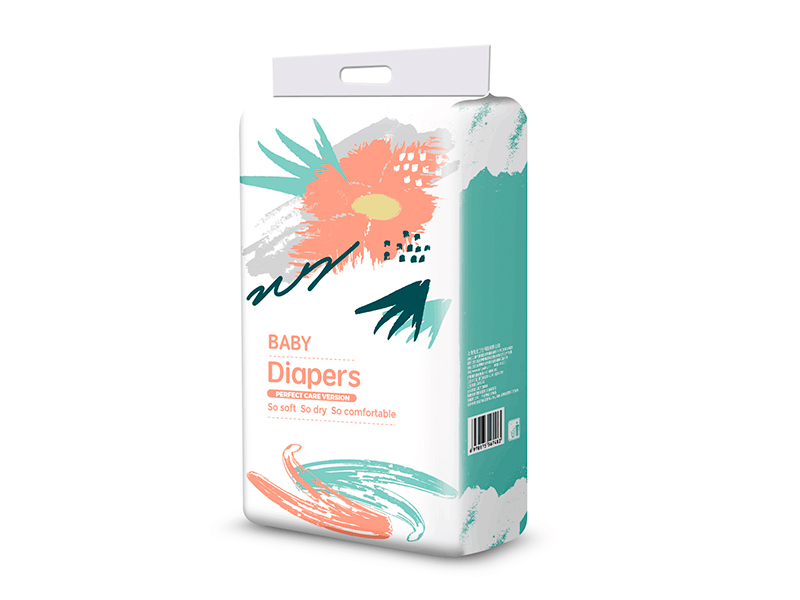
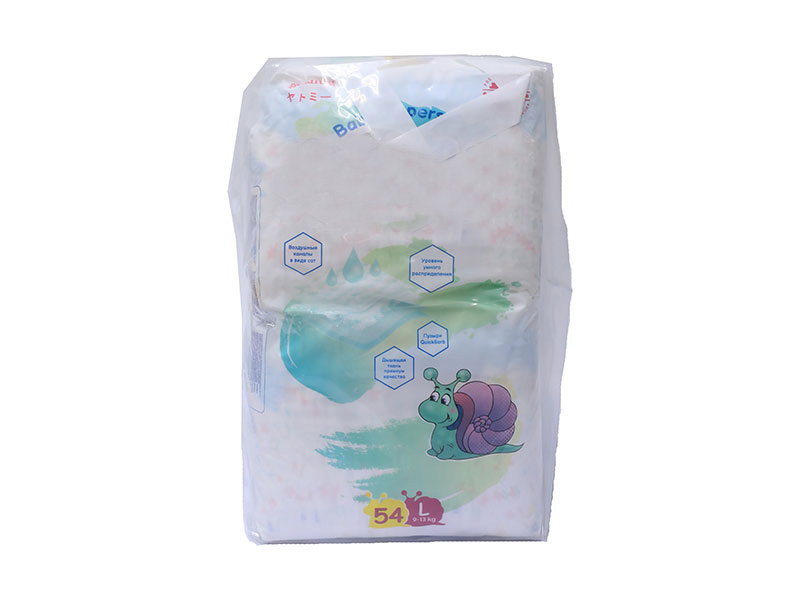
Choosing the right baby diaper requires more than comparing price and package appearance. Parents, retailers, distributors, and baby-care brands must consider skin comfort, absorption speed, leakage protection, material safety, manufacturing consistency, packaging flexibility, and supply reliability. Natural baby diapers are designed to address these expectations through a combination of gentle materials, breathable construction, efficient liquid management, and carefully controlled production.
This product is a regular-quality baby diaper developed for customers who want a dependable balance between performance and cost. Compared with an economical diaper structure, it contains a higher proportion of super absorbent polymer, or SAP, and uses a separation layer between the fluff pulp and SAP. This structure allows liquid to spread more efficiently through the absorbent core, supporting faster absorption and improved liquid distribution. The result is a diaper that can provide a more comfortable wearing experience while helping reduce wrinkling, bunching, and pressure around the baby’s skin.
Natural baby diapers are also suitable for brands that want to develop their own products. Through OEM and ODM services, customers can customize sizes, product structures, absorption performance, materials, surface design, and packaging. This flexibility makes the product suitable for baby-care brands, importers, wholesalers, supermarkets, retail chains, and distributors seeking a stable hygiene-product manufacturing partner.
Unlike products developed only for low-cost purchasing, natural baby diapers are intended to combine practical performance with a gentle product concept. A natural plant-based top sheet, breathable back sheet, skin-friendly materials, pH-balanced rash-protection features, 3D leak guards, and high-absorption construction can help create a more reassuring daily-care product for newborns and older babies. The final specification can be adjusted according to the target market, customer expectations, and applicable regulatory requirements.
Natural baby diapers
Understanding the Natural Baby Diaper Concept
The term “natural baby diaper” generally describes a diaper developed with particular attention to gentle materials, breathable construction, and a comfortable contact surface. It does not mean that every component is entirely natural or that the product is free from all synthetic materials. Modern disposable diapers require carefully engineered materials to provide liquid absorption, structural stability, leakage protection, and hygienic performance. Instead, the natural concept usually focuses on selecting skin-friendly materials and avoiding unnecessary substances that may be unsuitable for sensitive skin.
The top sheet is the layer that touches the baby’s skin. For this reason, it has a significant influence on perceived softness and comfort. The product can be configured with a natural plant-based top sheet designed to provide a gentle contact surface. The top sheet may also be manufactured to support rapid liquid transfer from the skin into the absorbent core. A well-designed surface can help keep moisture away from the baby’s body and support a drier feeling during use.
The back sheet forms the outer layer of the diaper. A breathable back sheet can assist air circulation and help reduce the closed, humid feeling that may occur when a diaper is worn for an extended period. Breathability must be balanced with liquid resistance. A high-quality back sheet should help prevent leakage while allowing a controlled level of moisture vapor transmission. This balance is important for comfort, particularly in warm climates or during active movement.
Natural baby diapers may also be produced without fluorescent whitening agents and with attention to limiting unnecessary or harmful chemicals. Material selection should be confirmed according to the actual product specification, customer requirements, and relevant testing documentation. For brands serving newborns and families with sensitive-skin concerns, transparent material information is an important part of responsible product development.
The product can include a pH-balanced skin-care approach. This feature is intended to support a skin-friendly environment rather than to replace medical treatment or professional advice. When combined with appropriate changing practices, breathable materials, effective liquid absorption, and a clean contact surface, the diaper may help reduce discomfort associated with prolonged wetness and friction.
How the Absorbent Structure Works
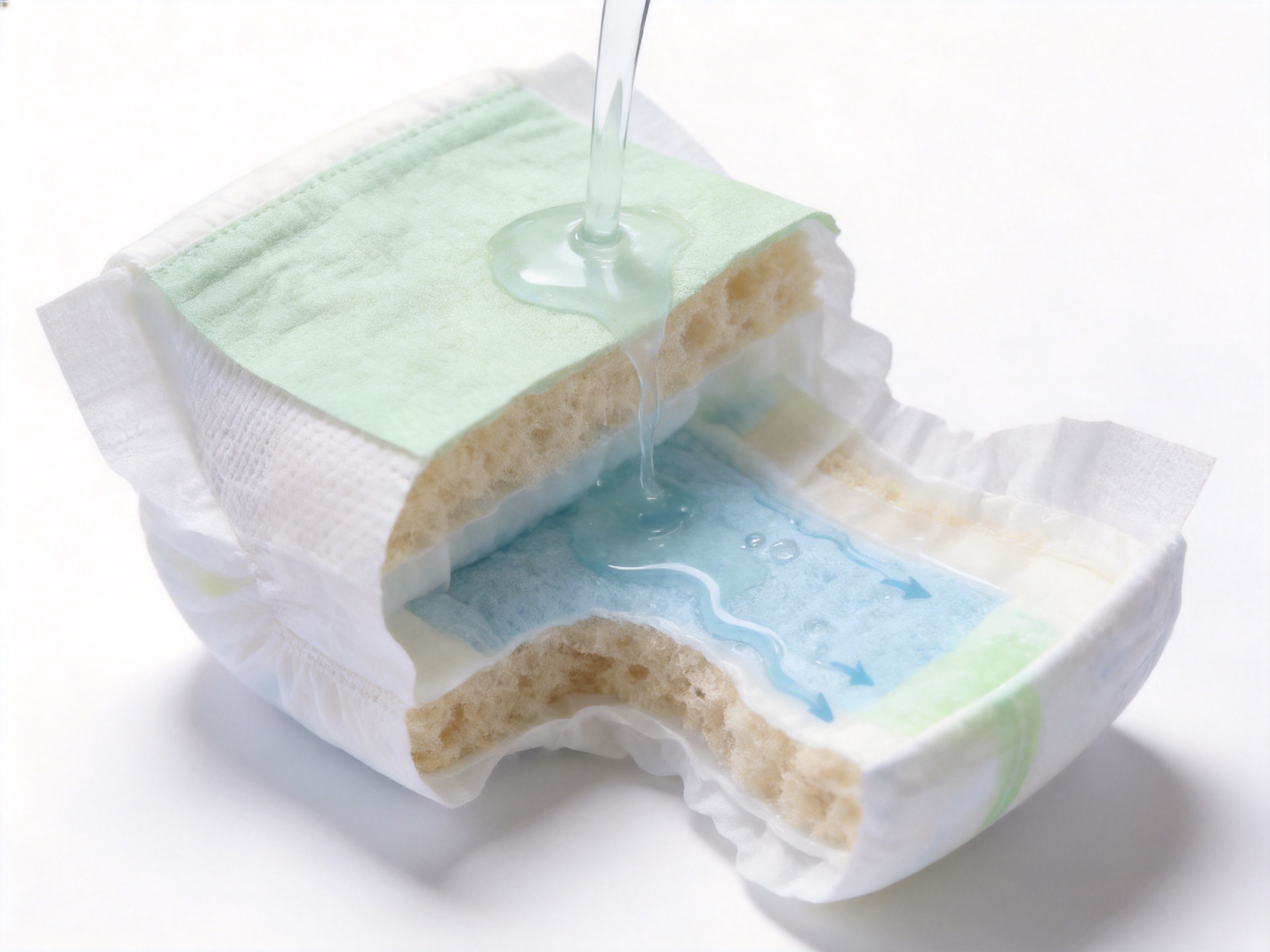
The absorbent core is one of the most important parts of a disposable diaper. It is responsible for receiving liquid, distributing it across the available area, retaining moisture, and helping prevent rewetting. Natural baby diapers in this product category use fluff pulp and SAP as key absorbent materials. Fluff pulp provides bulk, softness, and liquid distribution, while SAP absorbs and retains a large quantity of liquid relative to its own weight.
Compared with a more economical diaper design, this regular diaper increases the SAP content. A higher SAP level can improve the diaper’s ability to retain liquid and support longer periods of use when the product is correctly sized and applied. The exact absorbency performance depends on the material grade, core design, diaper size, liquid volume, pressure, storage conditions, and manufacturing parameters.
A separation layer between the fluff pulp and the SAP is another important structural feature. Without effective internal separation, SAP particles may not distribute evenly throughout the core. Some areas may receive too much material while other areas may have insufficient absorbent capacity. The separation layer helps create a more organized structure and can support the movement of liquid through the core.
When liquid enters the diaper, the acquisition layer or surface structure receives the fluid and guides it toward the absorbent core. The liquid then moves through the distribution system, allowing the SAP and fluff pulp to work together. Better liquid mobility can support faster absorption and more even use of the core. This is especially valuable when liquid enters a concentrated area, such as the center of the diaper.
A well-balanced core can also improve comfort. If the absorbent materials are unevenly distributed, the diaper may become stiff, bulky, or prone to folding. If the core is too thin or lacks sufficient absorbent capacity, it may become saturated quickly. The regular-quality structure aims to provide a practical middle point: stronger absorption and comfort than an economical design, while remaining suitable for price-sensitive markets.
Absorption and Rewetting Control
Absorption speed refers to how quickly liquid is taken away from the surface and drawn into the core. Fast absorption can help reduce the period during which liquid remains near the baby’s skin. Rewetting refers to the return of absorbed liquid toward the surface when pressure is applied. A diaper with good rewetting control can support a drier contact surface when the baby sits, crawls, turns, or sleeps.
Natural baby diapers are designed with high absorption and anti-back-osmosis performance as important product objectives. The actual result depends on the interaction of the top sheet, acquisition layer, absorbent core, SAP distribution, compression level, and elastic fit. Product testing should therefore evaluate multiple performance indicators instead of considering SAP quantity alone.
Recommended evaluations may include absorption speed, total absorption capacity, rewetting under pressure, leakage resistance, core integrity, and performance after movement. These tests can be adjusted for different sizes and target markets. A manufacturer with experience in nonwoven fabrics and disposable hygiene products can help customers select a suitable combination of materials and specifications.
Comfort-Focused Diaper Construction
A baby diaper must remain secure without creating excessive pressure. The product’s comfort is influenced by softness, flexibility, elasticity, core thickness, leg opening design, waist fit, and the ability of the diaper to remain stable during movement. Natural baby diapers are designed to offer a more comfortable experience than a basic economical diaper structure.
The diaper can be produced with soft nonwoven fabrics that feel gentle against the skin. Nonwoven material selection influences softness, tensile strength, liquid transfer, air permeability, and the overall appearance of the diaper. Different nonwoven technologies can be used for different components, including the top sheet, back sheet, acquisition layer, cuffs, fastening system, and waistband.
The diaper structure is also designed to help reduce wrinkling. Wrinkling can occur when the core shifts, the material folds, or the diaper does not fit the baby’s body properly. A stable absorbent core, controlled bonding, and appropriate elastic placement can help the product maintain its intended shape. Reducing unnecessary folds may help limit friction and improve the overall wearing experience.
Three-dimensional leak guards are positioned along the leg area to help contain liquid and reduce side leakage. These guards must be soft enough to avoid discomfort while remaining elastic enough to follow the baby’s leg movement. Their performance depends on the height, elasticity, bonding method, material choice, and the fit of the complete diaper.
The waist area can be designed to provide a secure but flexible fit. An adjustable fastening system allows caregivers to position the diaper according to the baby’s body shape. A well-designed waist should hold the diaper in place without excessive tightening. For private label projects, waist dimensions, fastening options, elastic tension, and overall fit can be discussed during product development.
Comfort is particularly important for newborns and babies with sensitive skin. No disposable diaper can eliminate every possible skin reaction, because skin condition, changing frequency, climate, and individual sensitivity also influence comfort. However, a combination of soft materials, breathable construction, efficient absorption, low surface rewetting, and appropriate fit can support a more skin-friendly daily-care experience.
Key Product Features
| Product element | Function | Potential customer value |
|---|---|---|
| Natural plant-based top sheet | Provides a soft contact layer and supports liquid transfer | Supports a gentle product positioning for newborns and sensitive-skin markets |
| Increased SAP content | Retains liquid within the absorbent core | Offers stronger absorption than a basic economical structure |
| Separation layer | Helps organize the relationship between fluff pulp and SAP | Supports more mobile and even liquid distribution |
| Breathable back sheet | Allows controlled air and moisture-vapor circulation while resisting liquid leakage | Helps improve wearing comfort in different climates |
| 3D leak guards | Creates additional protection around the legs | Helps reduce side leakage during movement |
| Soft nonwoven components | Contribute to flexibility and skin comfort | Supports a premium appearance and comfortable daily use |
| Private label packaging | Allows customer branding and market-specific communication | Helps brands create a differentiated product line |
The features in this table are not independent. The final performance of a diaper depends on how the components work together. For example, increasing absorbent material without adjusting the core design may increase thickness or reduce flexibility. Similarly, choosing a highly breathable back sheet without properly controlling bonding and liquid resistance may affect leakage performance. Product development must therefore evaluate the full structure rather than focusing on a single material.
Advantages Compared with Economical Diaper Structures
Economical diapers are often developed with a strong focus on minimizing material consumption and reducing the unit price. They may be appropriate for certain markets, promotional programs, or short-duration use. However, a lower-cost construction can have limitations in absorption capacity, liquid distribution, softness, core stability, or resistance to rewetting.
The regular natural baby diaper offers a more balanced alternative. Its increased SAP content supports stronger liquid retention, while the separation layer helps liquid move through the core. These structural improvements can contribute to faster absorption and more effective use of the available absorbent area. The product is therefore positioned between an economical diaper and a highly premium diaper, providing a practical combination of performance and cost control.
Compared with a basic design, the product can offer a more comfortable surface and improved flexibility. Soft nonwoven materials, a breathable back sheet, and a well-structured core may reduce the stiff or bulky feeling that is sometimes associated with low-cost diapers. The diaper can also be designed to remain closer to the baby’s body, supporting freedom of movement during crawling, standing, and sleeping.
Leakage protection is another important point of comparison. A properly designed diaper uses multiple protective elements rather than relying only on the absorbent core. The top sheet guides liquid inward, the acquisition and distribution system spreads it, the SAP retains it, and the leg guards and back sheet help prevent outward leakage. This layered approach gives the product a more dependable structure for daily use.
Compared with some high-end products, a regular-quality diaper may not use the highest-cost materials or the most complex construction available. This can be an advantage for customers who need to control retail pricing while still offering meaningful performance benefits. The product can be adapted to local purchasing power, sales channels, package size, and target consumer expectations.
For distributors and retailers, the product may be easier to position because it serves a broad market. It can be presented as a dependable, comfortable, and skin-conscious diaper rather than an entry-level product. For private label brands, the structure provides room to develop different versions, such as a standard regular diaper, an enhanced overnight version, or a premium natural-material series.
Material Selection and Skin-Friendly Design
Material selection begins with understanding the product’s intended use. A diaper designed for newborns may require a softer and more delicate surface than a diaper intended for toddlers. A product for a hot and humid region may place greater emphasis on breathability. A product for overnight use may require higher absorbency and stronger leakage protection. OEM and ODM development allows these priorities to be reflected in the final specification.
The top sheet may be selected according to softness, hydrophilicity, liquid acquisition speed, strength, and appearance. A plant-based material concept can be incorporated into the surface design to support a natural positioning. Customers may also request different textures, embossed patterns, colors, or printing arrangements, provided that the design remains suitable for skin contact and complies with applicable requirements.
Fluff pulp and SAP must be selected together. Fluff pulp contributes to liquid spreading and core formation, while SAP provides retention capacity. Their ratio, distribution, particle characteristics, and processing conditions influence the finished diaper. The separation layer can help maintain a more stable internal arrangement and support liquid mobility.
The back sheet may combine liquid resistance with breathability. Its texture, noise level, flexibility, and strength can influence consumer perception. A soft cloth-like back sheet can create a more comfortable and premium appearance. The exact back-sheet specification can be adjusted according to customer needs and cost targets.
Elastic components also require careful evaluation. Leg elastics, waist elastics, and fastening systems must be securely bonded and appropriately positioned. Excessive tension may leave marks or cause discomfort, while insufficient tension may reduce leakage protection. A professional manufacturer can test different elastic arrangements to achieve a stable fit.
Skin-friendly design should be supported by clear production controls. Materials should be stored correctly, production areas should be clean, and finished products should be tested according to the intended market. Claims such as “natural,” “safe,” “hypoallergenic,” or “suitable for sensitive skin” should be used responsibly and supported by appropriate evidence.

Advanced Manufacturing Capabilities
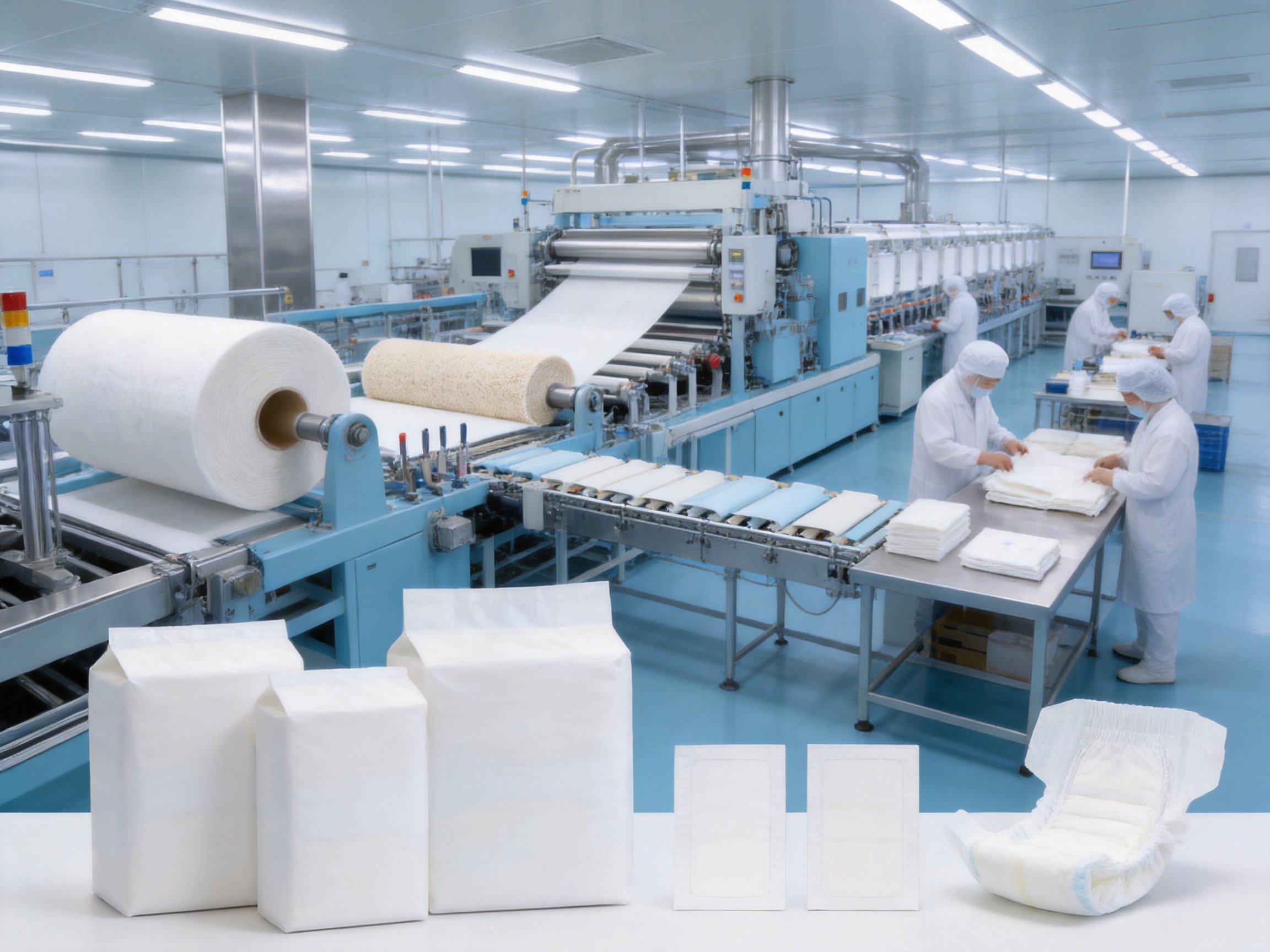
The manufacturer behind this product has extensive experience in nonwoven materials, disposable hygiene products, nursing products, and related industrial textiles. Established in 1987, the company has developed from a specialist manufacturer into an integrated enterprise covering research and development, material production, product manufacturing, and sales support.
Its manufacturing network includes eight domestic production bases and an upcoming factory in Vietnam. This geographical structure supports production capacity, regional supply planning, and international customer service. It can also help customers evaluate alternative production arrangements when they are developing a long-term private label program.
The company operates an industrial chain that covers nonwoven material development, absorbent hygiene components, and finished products. This integration is valuable because the quality of a baby diaper depends on coordination among multiple materials. When a manufacturer understands the production of nonwoven fabrics as well as finished diapers, it can make more informed decisions about softness, strength, liquid transfer, breathability, and bonding.
Manufacturing facilities include 100,000-class GMP clean workshops, a purified-water system designed according to pharmacopoeia-related standards, and a professional testing center. Clean production conditions are important for hygiene products because they help control environmental conditions and support consistent manufacturing practices. The exact cleanliness and testing requirements for each product should be confirmed according to the customer’s market and certification plan.
The company is supported by 169 patents, reflecting long-term investment in technical development. Patent numbers alone do not determine the quality of a specific diaper, but they indicate a history of research and engineering activity. Experience in spunlace nonwoven fabrics, spunmelt materials, hot-air-through nonwovens, flushable materials, degradable materials, wipes, diapers, training pants, and other hygiene products provides a broad technical foundation for product development.
Internationally sourced equipment and technology from Germany, France, and Italy contribute to the company’s manufacturing capabilities. Advanced equipment can support more precise material handling, stable production speed, accurate cutting, controlled bonding, and consistent product dimensions. These factors are particularly important when a customer requires repeat orders with the same specifications.
Production Process Overview
The production process begins with product planning. The customer and technical team define the target market, diaper size, absorbency level, material preferences, packaging requirements, and estimated order volume. At this stage, the project team can identify regulatory expectations and determine which product claims may be used in the final marketing materials.
Materials are then selected and inspected. Nonwoven fabrics, fluff pulp, SAP, elastic components, fastening materials, adhesives, release paper, packaging films, and other components must be checked against established specifications. Material inspection helps reduce variation before production begins.
The absorbent core is formed by combining fluff pulp and SAP according to the approved design. The separation layer and other acquisition or distribution components are placed in the intended positions. The core may then be compressed or shaped to achieve the required thickness, stability, and absorbency profile.
The top sheet, back sheet, leg guards, elastic components, and fastening system are assembled around the absorbent core. Adhesive application and thermal or mechanical bonding must be controlled to ensure that components remain securely attached without creating excessively stiff areas. Cutting and shaping determine the outline of the diaper and the fit around the waist and legs.
Finished diapers are inspected for appearance, size, bonding, elasticity, absorbency, leakage resistance, packaging accuracy, and other agreed parameters. Samples may be retained for traceability and future comparison. Packaging is completed after the product passes the required inspection procedures.
Production records and quality data provide a basis for continuous improvement. If a customer requests a change in absorbency, softness, thickness, or package format, the technical team can evaluate the effect on the complete product rather than changing one component without considering the others.
Quality Control and Testing
Quality control is essential for any baby-care product. A diaper may look acceptable from the outside while still having problems with core distribution, bonding strength, elastic placement, or leakage performance. For this reason, a structured quality system should include incoming material inspection, in-process monitoring, finished-product testing, and shipment verification.
Incoming materials may be checked for dimensions, appearance, basis weight, tensile strength, softness, absorbency, moisture, and other relevant properties. The precise test items depend on the material and the customer’s requirements. Consistent incoming materials provide a stronger foundation for stable finished-product performance.
During production, operators and quality personnel can monitor line speed, core weight, SAP distribution, adhesive application, component alignment, cutting accuracy, and packaging quantity. Automated equipment may support dimensional control, while trained personnel can identify visual or structural issues that require adjustment.
Finished diapers may be assessed for absorption capacity, absorption speed, rewetting, leakage resistance, tensile strength, softness, odor, appearance, and package integrity. Testing should reflect realistic use conditions while also following recognized industry methods where applicable. Customers may request additional tests for specific countries, retailers, or certification programs.
Traceability is another important quality element. Batch records can connect finished products with raw materials, production dates, machine settings, and inspection results. This information supports internal management and helps customers investigate any quality question efficiently.
Quality control should not be limited to laboratory results. Product usability also matters. Samples should be evaluated for fit, comfort, fastening performance, movement stability, and ease of changing. Feedback from customers and market testing can provide useful information for future improvements.
OEM and ODM Services for Private Label Brands
Private label customers often need more than a finished diaper purchased from an existing catalog. They may want a specific size range, absorbency level, package design, material story, or market position. OEM and ODM services allow the manufacturer to support both straightforward branding projects and more detailed product-development programs.
OEM production usually begins with a customer-defined product specification. The manufacturer produces the diapers according to the agreed structure, materials, dimensions, packaging, and quality requirements. This model is suitable for brands that already have a clear product concept and want a reliable production partner.
ODM development provides additional technical support. The manufacturer can help the customer select materials, optimize the absorbent core, adjust the fit, develop packaging, and create a finished product based on a target market. This option can be useful for new brands, importers, and distributors that understand their market but do not have an internal diaper engineering team.
Available customization options include diaper size, product structure, absorbency performance, top-sheet material, back-sheet construction, fastening method, elastic arrangement, surface design, package format, printing, and product quantity planning. Customers can also discuss different versions for newborns, infants, crawlers, toddlers, overnight use, or value-focused retail channels.
Packaging design is an important part of private label development. The package should communicate the product’s key features without making unsupported claims. It may include information about softness, breathability, absorbency, plant-based materials, size, quantity, usage guidance, and storage. Packaging can be produced according to the customer’s brand identity and target retail environment.
Order quantities and production schedules should be discussed early. The required minimum order quantity may depend on size, packaging materials, printing requirements, product structure, and the number of variations. Early planning can help customers avoid unnecessary changes after packaging production begins.
The manufacturer can also assist customers with international market requirements. Different regions may have specific expectations concerning labeling, material declarations, testing, packaging language, product claims, and certification. Customers should provide their target-market information so that the technical and commercial teams can align the project with the appropriate requirements.
Benefits for Different Customer Groups
Baby-Care Brands
Baby-care brands can use natural baby diapers as a foundation for a product line positioned around gentle materials and dependable daily performance. The brand may choose a standard regular version for general use and later add enhanced products with different absorbency levels or package sizes.
A private label program also allows the brand to control its visual identity. Package colors, illustrations, product naming, size indicators, and feature communication can be aligned across diapers, wipes, training pants, and other baby-care products. This creates a more consistent experience for consumers.
Importers and Wholesalers
Importers and wholesalers can benefit from a product that combines broad market appeal with customizable specifications. The regular-quality construction is suitable for customers who want more performance than an economical product without entering the highest retail price range.
Importers may also request packaging in different languages or formats for different destinations. A manufacturer with international production experience can help coordinate documentation, sample approval, packaging confirmation, and shipment planning.
Supermarkets and Retail Chains
Retail chains often require consistent supply, stable quality, clear packaging, and competitive pricing. A private label diaper can provide greater control over assortment and positioning than a purely branded resale product. Different sizes and package quantities can be planned according to sales data and shelf strategy.
Retail customers may also value a reliable supplier that can support ongoing product improvements. As consumer expectations change, the diaper structure, packaging, or material concept can be reviewed without rebuilding the entire supply relationship.
Hygiene Product Distributors
Distributors can add natural baby diapers to an existing portfolio of wipes, nursing products, medical nonwovens, or household hygiene products. Since the manufacturer has experience across multiple hygiene categories, distributors may be able to consolidate product development and sourcing activities.
Responsible Product Positioning
Natural baby diapers should be marketed with clear and responsible communication. Consumers appreciate information about materials, breathability, absorbency, and skin comfort, but product claims should accurately reflect testing and regulatory requirements. Words such as “natural,” “plant-based,” “gentle,” and “skin-friendly” should be linked to the actual product construction.
It is also important to distinguish between supporting skin comfort and treating a medical condition. A diaper may be designed to help reduce discomfort associated with wetness, friction, or poor breathability, but it should not be presented as a treatment for diaper rash unless the product has the necessary regulatory status and evidence.
Responsible positioning can strengthen consumer trust. Packaging may explain that the product uses a natural plant-based top sheet, breathable construction, a high-absorption core, and 3D leak guards. It can also provide practical instructions for selecting the correct size, changing the diaper regularly, checking the fit, and storing the product in a clean, dry place.
Environmental communication should be equally precise. If a product uses selected plant-based materials, that information may be presented as part of the material story. However, a plant-based component does not automatically mean the entire diaper is biodegradable or compostable. Any environmental claim should be supported by appropriate documentation and should clearly identify which component or process it refers to.
Storage, Handling, and Use Considerations
Disposable diapers should be stored in a clean, dry environment away from direct sunlight, excessive humidity, strong odors, chemicals, and potential contamination. Packaging should remain intact until the product is ready for use. Correct storage helps protect the materials and preserve the intended performance.
Caregivers should choose the size according to the baby’s weight, body shape, and fit requirements rather than relying only on age. A diaper that is too small may create pressure and leakage, while one that is too large may not form an effective seal around the legs and waist. The correct fit allows the absorbent core and leak guards to function properly.
The diaper should be changed at appropriate intervals and whenever it becomes wet or soiled. Even a high-absorption diaper is not intended to replace regular changing practices. Frequent changes help support cleanliness and comfort.
When applying the diaper, the back and front should be aligned, the leg guards should be pulled outward if necessary, and the fastening tabs should be adjusted without excessive tightening. Caregivers should check that the diaper is secure but not pressing uncomfortably against the baby’s skin.
If persistent redness, irritation, or another skin concern occurs, use should be reviewed and professional medical advice should be obtained when appropriate. Individual reactions can occur with any hygiene product, even when the product is designed with skin-friendly materials.
How to Develop a Customized Project
A successful private label project benefits from a clear development process. The first step is to define the target market and consumer group. Customers should identify whether the product is intended for newborns, infants, toddlers, overnight use, premium retail, supermarkets, pharmacies, or value-focused channels.
The next step is to determine the required size range and product structure. This may include the number of sizes, expected weight ranges, core thickness, absorbency level, fastening system, waistband style, leg guard design, and preferred nonwoven materials.
Customers should then specify the desired brand position. A natural and skin-conscious product may require particular attention to plant-based top-sheet materials, breathable back sheets, material declarations, and package communication. A value-oriented product may prioritize efficient material use and competitive pricing while maintaining the core performance requirements.
Samples can be arranged for evaluation before bulk production. Sample review should include appearance, softness, fit, absorbency, rewetting, leakage resistance, fastening, package presentation, and overall consumer impression. It is useful to test samples on babies of different body shapes when appropriate and with suitable parental supervision.
After sample approval, the customer and manufacturer confirm the final specification. This normally includes drawings, material details, size measurements, packaging artwork, order quantity, inspection standards, delivery schedule, and documentation requirements.
Bulk production can then proceed under the approved conditions. Changes after approval should be communicated clearly because even a small change in material weight, elastic tension, core distribution, or package format may affect the final product. A documented change-control process helps protect consistency.
Why Integrated Manufacturing Matters
Integrated manufacturing can reduce communication gaps between raw-material production and finished-product assembly. When a manufacturer produces or understands multiple nonwoven materials and hygiene products, it can evaluate how a change in one layer affects the complete diaper.
For example, a change in top-sheet softness may influence liquid acquisition. A change in SAP content may affect thickness and flexibility. A different back sheet may influence breathability, noise, and leakage resistance. A different adhesive pattern may affect core stability and skin comfort. Integrated technical knowledge helps manage these relationships.
Integrated manufacturing can also improve development efficiency. Instead of searching for separate suppliers for nonwoven fabrics, absorbent materials, finished diapers, wipes, and packaging coordination, customers can work with a broader production partner. This may simplify communication, shorten development cycles, and support more consistent quality management.
Large-scale production capacity is another advantage for customers planning growth. A small initial private label order may develop into a regional or international program. A manufacturer with multiple production bases and broad product experience is better positioned to discuss capacity planning, product expansion, and supply continuity.
At the same time, scale should not replace project-specific attention. Every customer has different market requirements, and every product should be confirmed through samples, testing, and specification approval. The strongest manufacturing relationship combines large-scale capability with detailed technical support.
Conclusion
Natural baby diapers provide a practical solution for customers seeking a comfortable, skin-conscious, and commercially flexible diaper product. The regular-quality structure increases SAP content and introduces a separation layer between fluff pulp and SAP, helping improve liquid mobility, absorption speed, and core utilization compared with a more economical diaper design.
Soft nonwoven materials, a natural plant-based top sheet, a breathable back sheet, pH-balanced skin-care positioning, high absorption, anti-back-osmosis performance, and 3D leak guards contribute to a well-rounded product concept. Together, these elements can support comfort, fit, leakage protection, and a more reassuring experience for babies and caregivers.
The product is also supported by extensive manufacturing capabilities in nonwoven materials and disposable hygiene products. Multiple production bases, clean workshops, a professional testing center, advanced equipment, technical patents, and integrated material-to-finished-product expertise create a strong foundation for OEM and ODM cooperation.
For baby-care brands, distributors, retailers, importers, and wholesalers, the product offers room for customization in size, absorbency, materials, structure, packaging, and branding. With appropriate testing, responsible claims, and clear project communication, natural baby diapers can become a dependable part of a modern hygiene-product portfolio.
Q&A
Q1: What are natural baby diapers?
Natural baby diapers are disposable diapers developed with attention to gentle materials, breathable construction, skin comfort, and effective liquid management. They may use a natural plant-based top sheet, soft nonwoven fabrics, a breathable back sheet, and materials selected to support sensitive-skin product positioning. The product still uses engineered absorbent materials such as fluff pulp and SAP to provide reliable performance.
Q2: How are these diapers different from economical diapers?
The regular-quality natural baby diaper uses an increased SAP content and a separation layer between fluff pulp and SAP. This design helps liquid move more efficiently through the absorbent core and can provide faster absorption and improved liquid retention than a basic economical structure. It is intended to balance performance and cost rather than compete only on the lowest unit price.
Q3: What is the function of SAP in a baby diaper?
SAP, or super absorbent polymer, absorbs and retains liquid within the diaper core. It works together with fluff pulp, which helps distribute liquid and provide core structure. The amount and distribution of SAP influence absorption capacity, rewetting, thickness, and flexibility.
Q4: Why is a separation layer used in the absorbent core?
A separation layer helps organize the relationship between fluff pulp and SAP. It can support more even material distribution and improve liquid mobility through the absorbent core. This may help the diaper absorb liquid faster and use the available core area more effectively.
Q5: Are the diapers suitable for newborns?
The product can be developed for newborns, provided that the selected size, fit, materials, and specifications are appropriate. Newborn versions should place particular emphasis on softness, gentle contact materials, secure but comfortable fit, and suitable absorbency. Customers should confirm the exact newborn specification during product development.
Q6: Can the diapers be customized with a private brand?
Yes. OEM and ODM services are available for private label projects. Customers can customize packaging, product design, dimensions, absorbency performance, materials, surface design, and product specifications according to their brand positioning and target market.
Q7: What customization options are available?
Customization options may include diaper size, product structure, SAP level, absorbency performance, top-sheet material, back-sheet construction, elastic arrangement, leak-guard design, fastening system, packaging format, printing, and package quantity. The final options depend on technical feasibility, order quantity, and market requirements.
Q8: Can samples be provided before mass production?
Yes. Samples can be arranged for evaluation before bulk production. Customers can review the sample’s appearance, softness, fit, absorbency, leakage protection, rewetting performance, fastening, and packaging presentation before approving the final specification.
Q9: What information is needed for a customized diaper project?
Customers should provide the target market, intended consumer group, size range, required absorbency, preferred materials, packaging details, estimated order quantity, product claims, and applicable testing or certification requirements. Clear information at the beginning helps the technical team prepare an efficient development plan.
Q10: What markets can the product serve?
The diapers can be developed for international markets, including baby-care brands, retail chains, distributors, importers, wholesalers, and supermarkets. Product details, packaging language, documentation, testing, and claims can be adjusted according to regional requirements.
Q11: Does a breathable back sheet prevent all leakage?
A breathable back sheet is designed to balance air or moisture-vapor circulation with liquid resistance, but no single component can prevent all leakage under every condition. Leakage performance also depends on size, fit, absorbent capacity, core design, leg guards, movement, and changing frequency.
Q12: Can the product be developed for overnight use?
Yes. An overnight version may be developed with increased absorbency, a modified absorbent core, enhanced leakage protection, and a suitable fit. The required specification should be confirmed through samples and performance testing because overnight use places greater demands on the product.
Q13: How does the manufacturer support quality control?
Quality support may include raw-material inspection, production monitoring, absorbent-core control, dimensional inspection, finished-product testing, package verification, batch records, and sample retention. The exact quality plan can be agreed according to the customer’s specification and target market.
Q14: Can the manufacturer support other hygiene products?
Yes. The company has experience in nonwoven fabrics, wet wipes, dry wipes, baby diapers, pull-ups, training pants, wet toilet paper, cleansing wipes, medical products, household products, and industrial cleaning materials. This broad portfolio can support customers that want to develop multiple hygiene categories.
Q15: How should natural-material claims be verified?
Natural-material claims should be based on the actual material composition and supported by appropriate documentation or testing. The customer and manufacturer should review the wording before it is printed on packaging or used in advertising. Claims should clearly describe the relevant component and should not imply that the entire diaper is biodegradable, chemical-free, or medically protective unless those statements are properly supported.
References
1. Company-provided product information for natural baby diapers and regular diaper construction.
2. Company-provided manufacturing profile covering nonwoven materials, disposable hygiene products, production bases, clean workshops, and testing capabilities.
3. General technical principles for disposable absorbent hygiene products, including fluff pulp, super absorbent polymer, acquisition layers, distribution layers, and leakage-control components.
4. General quality-management practices for nonwoven materials and disposable baby-care products.
5. General product-development principles for OEM and ODM private label hygiene manufacturing.