中文简体
 English
 日本語
 русский
 Español

Parents, healthcare professionals, retailers, and baby-care brands are paying closer attention to the materials used in everyday hygiene products. Baby wipes are no longer viewed as simple disposable cleaning sheets. They are now expected to deliver softness, reliable moisture, convenient packaging, skin compatibility, responsible sourcing, and environmental performance in one practical product. For importers and private-label businesses, the challenge is even greater: a successful baby wipe must satisfy consumers while also supporting consistent production, regulatory documentation, attractive packaging, and dependable global supply.
OEM private label organic cotton baby wipes provide a solution that combines natural fiber performance with advanced nonwoven manufacturing. Designed for delicate skin and frequent use, these wipes can be produced with selected materials, customized formulas, flexible sheet counts, and brand-specific packaging. They are suitable for cleaning hands, faces, bodies, and diaper areas, and can be developed for newborn care, travel, household use, or premium baby-care lines.
The product described in this article is positioned around a soft, biodegradable wipe substrate, with organic cotton as the principal premium option. Depending on the buyer’s requirements, manufacturers may also supply bamboo, viscose, lyocell, polyester, or blended nonwoven constructions. This flexibility allows brands to select the correct balance of softness, strength, absorbency, cost, environmental performance, and market positioning.
1. Why Baby Wipe Material Matters
A baby’s skin is thinner and more sensitive than adult skin. It can react more quickly to friction, excessive moisture loss, fragrances, preservatives, or poorly controlled ingredients. For that reason, the wipe substrate is one of the most important product decisions. The material touches the skin directly, determines the wipe’s tactile feel, influences liquid retention, and affects how the product behaves during wiping.
Traditional low-cost wipes often use synthetic fibers or blends selected primarily for price and mechanical strength. These materials can perform adequately, but they may not provide the natural softness and breathable feel expected by premium consumers. Synthetic fibers may also persist in the environment after disposal, particularly when the wipe contains plastic-based components.
Organic cotton offers a naturally soft and absorbent alternative. As a cellulose-based plant fiber, cotton can provide a smooth, comfortable surface suitable for delicate skin. When processed into a high-quality spunlace nonwoven, it can form a durable yet gentle sheet that distributes moisture evenly and remains comfortable during use.
For consumers, the choice of cotton communicates simplicity, familiarity, and natural care. For brands, it provides a strong foundation for premium positioning. However, responsible marketing requires companies to distinguish between ordinary cotton, organic cotton, and certified organic cotton. Any organic claim should be supported by appropriate supply-chain documentation and certification applicable to the target market.
Softness and Reduced Friction
The first noticeable advantage of a cotton baby wipe is its soft hand feel. A well-designed cotton substrate can reduce the sensation of roughness during repeated wiping. This is particularly important when parents clean sensitive areas such as the cheeks, around the mouth, or the diaper area.
Reduced friction does not depend on fiber type alone. It is also influenced by fiber preparation, web formation, hydroentanglement conditions, embossing, moisture content, lotion viscosity, and sheet weight. Advanced manufacturing therefore combines natural raw materials with controlled processing. The objective is to create a wipe that feels plush while retaining enough strength for practical cleaning.
Moisture Retention
The wipe must remain moist throughout its intended shelf life and during use. A dry or unevenly saturated wipe can create unnecessary friction and require greater pressure from the user. Cotton fibers naturally interact with water, helping the sheet hold and release moisture in a controlled manner.
Moisture retention is influenced by the selected lotion formula, packaging seal, sheet density, storage temperature, and production conditions. A reliable manufacturer evaluates the entire system rather than treating the substrate as an isolated component. Even a high-quality fiber can underperform if the formula, folding method, or packaging barrier is unsuitable.
Strength During Use
Softness must be balanced with wet strength. Baby wipes should not tear easily when removed from the pack, unfolded, or used on a wet surface. Spunlace technology can entangle fibers through high-pressure water jets, creating a coherent nonwoven structure without relying on traditional chemical binders.
Production settings can be adjusted to create parallel, semi-cross, or other fiber orientations. These structures influence tensile strength, elongation, absorbency, and drape. Through process control, the manufacturer can develop a sheet appropriate for light facial cleaning, general baby care, or heavier-duty household applications.
2. Product Overview and Available Specifications
The baby wipes can be developed in a broad range of specifications to meet different market requirements. A standard premium version may use a 100% organic cotton substrate, purified water, and a fragrance-free formula. Other versions may use bamboo, viscose, lyocell, or selected blends to achieve different tactile and cost targets.
| Specification | Available Options | Business Value |
|---|---|---|
| Primary materials | Organic cotton, cotton, bamboo, viscose, lyocell, polyester, or blends | Supports different price points, sustainability goals, and performance requirements |
| Sheet count | Approximately 1 to 200 pieces per pack | Allows travel packs, standard family packs, refill packs, and large-value formats |
| Basis weight | Approximately 30 to 100 gsm | Enables lightweight, economical sheets or thicker premium constructions |
| Sheet dimensions | Width approximately 12 to 22 cm; length approximately 12 to 30 cm | Suitable for newborn, standard baby, travel, and specialized cleaning formats |
| Fiber structure | Parallel, semi-cross, and other engineered arrangements | Helps balance softness, strength, absorbency, and tear resistance |
| Surface pattern | Plain, mesh, dot embossed, flower, or star patterns | Creates tactile differentiation and supports brand design requirements |
| Fragrance options | Unscented, fresh, lavender, lemon, lotus, fruit, coconut, cucumber, and others | Supports fragrance-free sensitive-skin lines and scented mainstream products |
| Fold types | Z-fold, cross-fold, pop-up, and other folding arrangements | Improves dispensing performance and supports different packaging formats |
These specifications are examples rather than fixed limitations. Final parameters should be confirmed through sample approval, technical evaluation, and production discussion. The ideal combination depends on the buyer’s target consumer, intended use, retail price, packaging format, shipping conditions, and regulatory obligations.
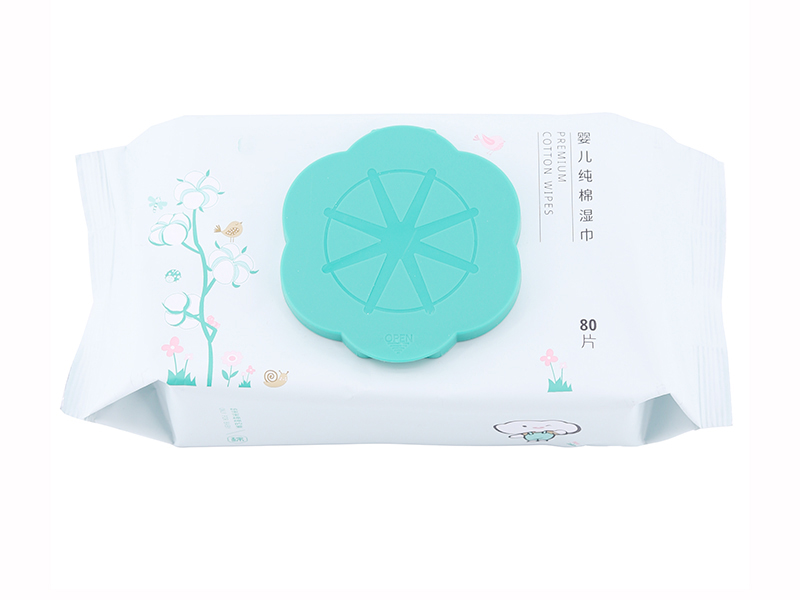
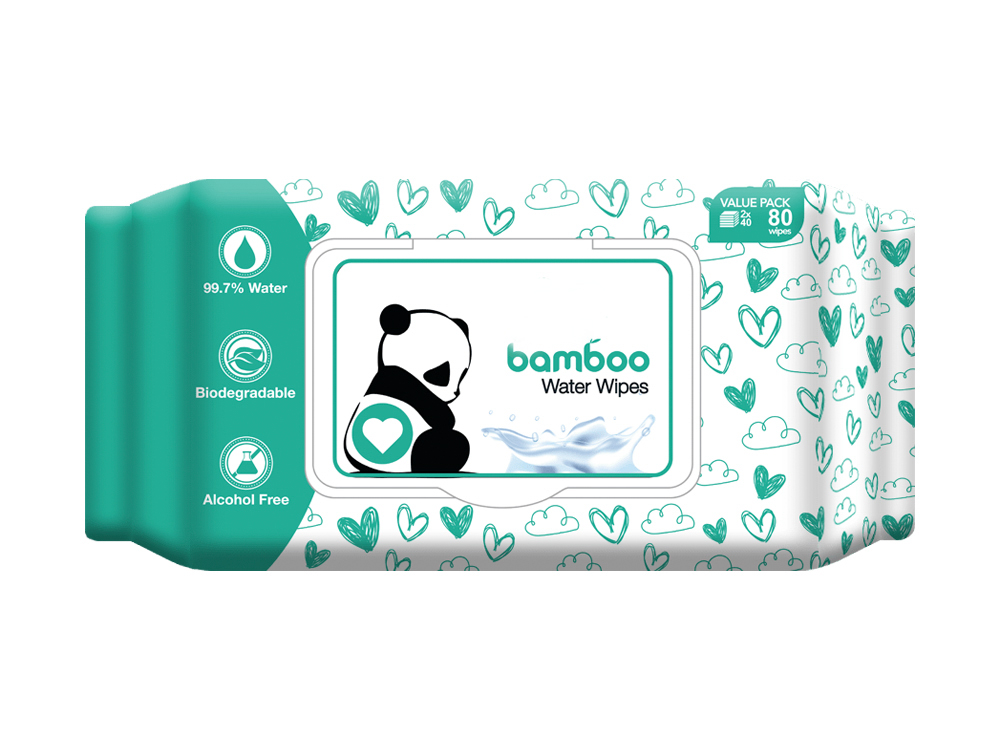
Bamboo baby wipes biodegradable
3. Advantages Over Conventional Synthetic Wipes
Organic cotton baby wipes compete in a market that includes polyester-based, rayon-based, bamboo-based, and mixed-fiber products. Each material has potential benefits, and no single fiber is automatically suitable for every application. The strongest advantage of a cotton wipe is the combination of a familiar natural fiber, a soft skin feel, strong absorbency potential, and compatibility with premium environmental positioning.
Natural Fiber Appeal
Consumers increasingly read ingredient lists and product descriptions before purchasing baby-care products. A clear material statement such as “100% organic cotton substrate” is easy to understand and can strengthen trust when supported by accurate documentation. Natural-fiber positioning may also help a product stand out from wipes that contain high percentages of synthetic materials.
For a private-label brand, the substrate can become an important part of the product story. Packaging may communicate softness, plant-based sourcing, biodegradability, or reduced plastic use, provided that the claims accurately reflect the finished product and applicable regulations.
Biodegradability Potential
Cotton and other cellulose fibers are capable of biological breakdown under appropriate environmental conditions. A wipe made entirely from suitable plant-based fibers may offer a lower long-term plastic burden than a wipe made with polyester or other persistent synthetic fibers. This is an important consideration for environmentally conscious families and retailers.
Nevertheless, biodegradability claims should be evaluated carefully. The substrate, lotion, binding materials, packaging, labels, inks, and disposal instructions can all affect the environmental profile. A product should not be described as fully biodegradable unless the finished construction and supporting evidence justify that claim. Disposal through toilets should also never be recommended unless the complete product has passed the relevant flushability assessments.
Comfort for Frequent Cleaning
Babies may require multiple cleanings each day. A wipe used repeatedly must offer a comfortable surface and an appropriate moisture level. Cotton can provide a soft, absorbent sheet that feels less harsh than a rough or overly thin synthetic wipe. This may be especially valuable for newborn-care products and premium sensitive-skin ranges.
Premium Differentiation
Private-label brands need more than a generic product to compete successfully. Organic cotton creates opportunities for distinctive positioning, including newborn care, clean beauty, environmentally responsible parenting, pharmacy-grade hygiene, and premium giftable baby-care sets.
Differentiation can be reinforced through sheet thickness, embossed patterns, high-quality packaging, fragrance-free formulas, plant-based lotions, recyclable outer packs, and transparent product documentation. A manufacturer with flexible production capabilities can help the buyer build a complete product concept rather than merely supplying a standard commodity wipe.
4. Formula Development for Sensitive Skin
The wipe substrate is only one part of the user experience. The liquid formula determines how the product cleans, feels, smells, and remains stable during storage. For sensitive-skin baby wipes, many brands prefer purified water and a short, carefully selected ingredient list.
A fragrance-free formula may be appropriate for newborns and consumers who wish to minimize potential irritants. Other products may use mild fragrances such as lavender, coconut, cucumber, fresh, or fruit notes. Fragrance selection should be based on the target market, user expectations, allergen management, and regulatory requirements.
Alcohol-free formulas are commonly requested for baby-care applications because they are designed to provide gentle cleansing without the drying sensation associated with some alcohol-containing products. Plant extracts or skin-care ingredients may also be considered, but each addition requires compatibility, safety, stability, and labeling evaluation.
Purified Water and Hygiene Control
Water is usually the largest component of a wet wipe formula. Its quality has a direct influence on product safety and shelf stability. The manufacturing system described for this product uses a pharmacopoeia-standard purified water approach and controlled production environments. Such systems help reduce contamination risk and support consistent batch quality.
Purified water alone does not guarantee microbiological stability. The complete formula, preservative system, packaging seal, filling process, and storage conditions must be evaluated together. Finished products should undergo appropriate microbiological testing and stability assessment before commercial release.
Formula Customization
OEM and ODM customers may request a formula based on purified water, fragrance-free ingredients, alcohol-free requirements, or selected botanical components. The buyer’s approved formula should be documented clearly, including ingredient specifications, concentration ranges, manufacturing instructions, and finished-product acceptance criteria.
Formula customization enables a brand to create products for different consumer groups. For example, a sensitive-skin line may use an unscented formula with minimal ingredients, while a retail family pack may use a light fragrance and a more cost-efficient substrate. Both products can be manufactured within the same broader product category while serving different commercial purposes.
5. Advanced Nonwoven Manufacturing
High-quality baby wipes depend on accurate nonwoven engineering. The manufacturing process begins with fiber selection and preparation. Fibers are opened, blended when necessary, and formed into a web with controlled weight and uniformity. The web is then consolidated, often through hydroentanglement, in which high-pressure water jets intertwine the fibers.
Hydroentanglement is particularly suitable for wipes because it can create a soft, flexible, absorbent fabric without the stiff feel that may result from certain adhesive bonding systems. The process can be adjusted according to fiber length, fiber blend, basis weight, web speed, water pressure, and drying conditions.
Fiber Selection and Blending
Organic cotton is selected when the buyer prioritizes natural softness, absorbency, and premium positioning. Bamboo and viscose may be selected for specific hand-feel or cost objectives. Lyocell can provide a smooth, high-quality cellulose-based surface, while polyester may be included when additional strength or dimensional stability is required.
Blending should be approached strategically. A blend can improve processability or performance, but it may alter biodegradability claims and certification eligibility. Every material declaration should match the actual composition of the finished wipe.
Web Formation
Uniform web formation helps prevent thin spots, uneven absorbency, and inconsistent tensile strength. Automated equipment can control the distribution of fibers across the width of the production line. This is especially important for large-scale private-label programs, where the same product may be manufactured in repeated batches over an extended period.
Hydroentanglement and Surface Structure
Water-jet entanglement creates a coherent fabric structure while preserving a textile-like feel. The process can be configured to produce a plain surface, mesh structure, or embossed appearance. Dot, flower, and star patterns can provide tactile distinction and may also influence liquid distribution across the sheet.
Surface texture should not be selected only for visual appeal. It must be tested for comfort, cleaning performance, lotion retention, linting, and compatibility with the target application. A pattern that is suitable for household cleaning may be unnecessarily textured for newborn skin.
Drying, Slitting, and Converting
After entanglement, the nonwoven material must be dried under controlled conditions. Excessive heat may affect fiber performance, while insufficient drying can create quality and storage problems. The material is then slit, wound, cut, folded, and converted into the required wipe format.
Dimensions and folding accuracy influence dispensing. A wipe that is too tightly folded may be difficult to open, while an overly loose fold may create dispensing problems or waste. Automated converting equipment helps maintain consistency across high-volume production.
6. Clean Manufacturing and Quality Assurance
Baby-care products require disciplined manufacturing controls. The production environment should be designed to reduce dust, foreign matter, and microbiological contamination. The manufacturing facilities described for this product include 100,000-class GMP clean workshops, controlled water systems, and a full-function testing center.
Good manufacturing practice is not limited to the cleanroom itself. It includes employee hygiene, raw-material inspection, equipment sanitation, pest control, batch traceability, document management, environmental monitoring, and corrective-action procedures. These systems help transform a product specification into reliable commercial output.
Raw-Material Inspection
Incoming fibers, packaging films, labels, cartons, fragrances, and formula ingredients should be checked against approved specifications. Inspection may include material identity, appearance, odor, moisture, basis weight, certificate review, and supplier documentation.
For organic cotton products, supply-chain documentation is especially important. Buyers may request evidence relating to organic sourcing, transaction certificates, fiber composition, and processing stages. The precise documentation depends on the certification scheme and the destination market.
In-Process Testing
During production, operators and quality personnel can monitor sheet weight, dimensions, tensile strength, absorbency, moisture distribution, folding accuracy, seal quality, and appearance. In-process inspection helps identify issues before a large quantity of material is converted or packed.
Finished-Product Testing
Finished wipes may be evaluated for microbiological quality, liquid content, pH, packaging integrity, odor, appearance, tensile performance, and stability. Additional tests may be required for specific claims, such as biodegradability, skin compatibility, compostability, or flushability.
Testing should be matched to the product’s intended claims. A wipe marketed for babies, for example, should have documentation supporting its formula safety and quality controls. A wipe marketed as biodegradable should have evidence that relates to the finished substrate and the relevant test method.
Traceability and Batch Management
Traceability allows a manufacturer and buyer to identify the raw materials, production date, equipment, operators, inspection results, and packaging associated with a finished lot. This is valuable for quality assurance, customer service, regulatory review, and continuous improvement.
For international buyers, clear batch coding and export documentation also support warehouse management and market surveillance. A professional supplier should be able to explain how samples, pilot orders, and mass-production lots are controlled.
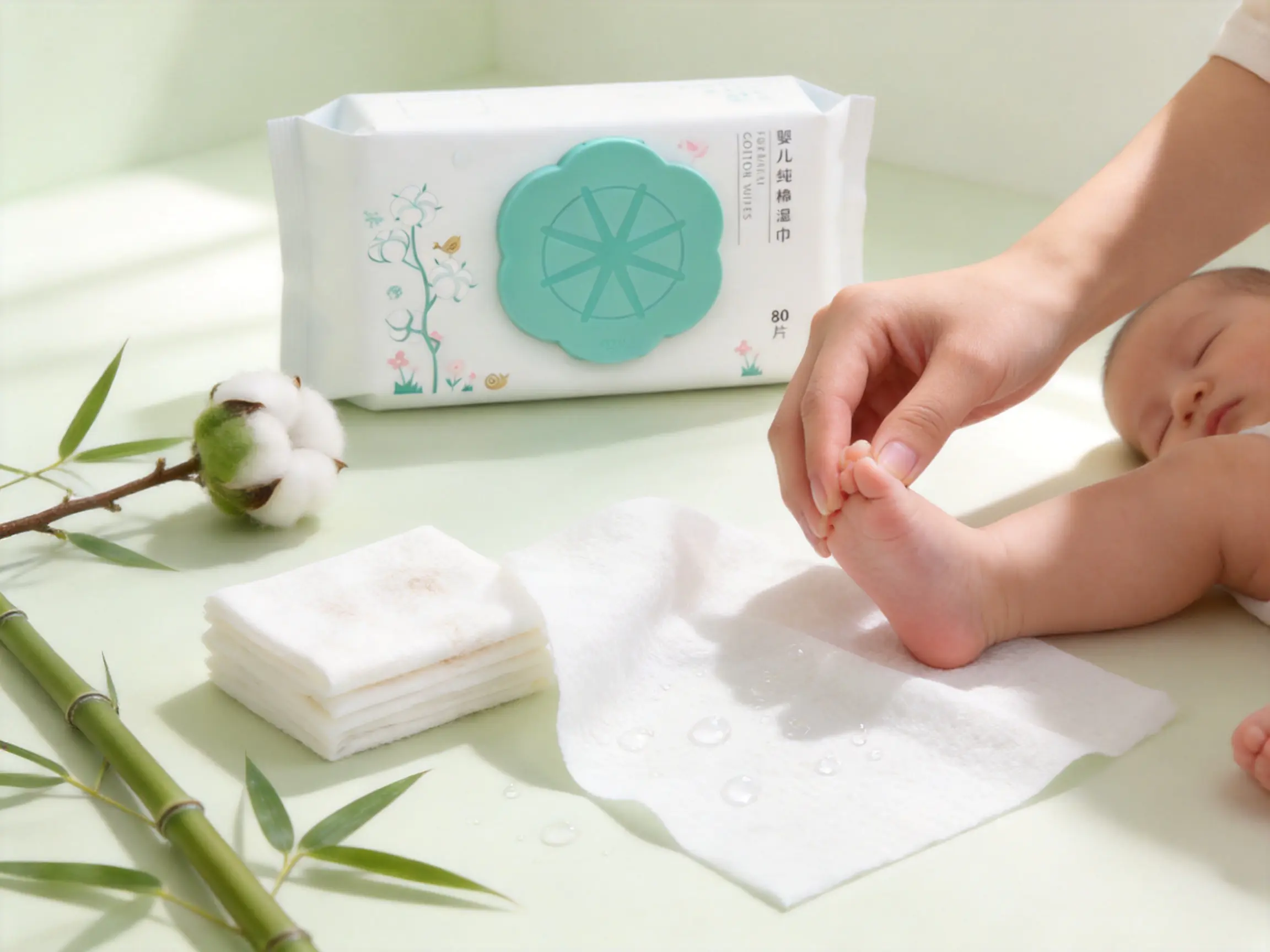
7. Manufacturing Capacity and Integrated Supply Advantages
Zhejiang Uniquality Nursing Products Technology Co., Ltd., together with the Kingsafe and Uniquality manufacturing network, provides an integrated platform for nonwoven materials and finished hygiene products. The group was founded in 1987 and has developed experience in medical and hygienic nonwovens, nursing products, and related textile applications.
The company operates production bases in several regions of China and has built capabilities covering raw nonwoven materials, wet wipes, dry wipes, baby diapers, training pants, cleansing wipes, wet toilet paper, and other hygiene products. This breadth can be valuable to buyers that want to develop coordinated product families rather than purchase individual items from unrelated suppliers.
An integrated supply chain may shorten communication paths between material development and finished-product production. It can also make it easier to test different substrates, compare sheet weights, adjust folding formats, and coordinate packaging development. For private-label customers, this reduces the risk of a gap between the material supplier’s specification and the final wipe manufacturer’s actual process.
Research and Development
Product development requires more than production capacity. It involves understanding fiber behavior, fluid management, converting performance, packaging interaction, and customer usage. The company reports extensive technical experience, proprietary development capabilities, and a portfolio of patents supporting nonwoven and hygiene-product innovation.
Research and development can assist buyers with selecting a substrate, optimizing a formula, improving dispensing, reducing lint, increasing wet strength, or creating a distinctive surface pattern. It can also support reformulation when a market changes its environmental or ingredient expectations.
Scalable Production
Scalability is critical for a growing private-label brand. A supplier should be able to support initial sampling, pilot quantities, first commercial orders, and repeat production without unnecessary changes in quality or specifications. Multiple production bases and broad equipment capabilities can provide additional flexibility for capacity planning.
Large-scale capacity should not be confused with automatic suitability. Buyers should still assess the specific factory, product line, approved sample, quality agreement, lead time, minimum order quantity, and export process. A well-managed supplier will provide clear communication at every stage.
One-Stop OEM and ODM Support
OEM manufacturing means producing according to the customer’s approved design and specifications. ODM support can involve proposing materials, formulas, structures, packaging options, and product concepts based on the buyer’s target market. Both models are available for the baby wipes described here.
Support may begin with product consultation and continue through laboratory samples, package artwork review, testing, pilot production, mass production, inspection, and shipment. This coordinated workflow is useful for importers and brands that do not maintain their own technical or manufacturing departments.
8. Private Label Customization Options
Private-label customers can customize nearly every visible and functional aspect of the product. The objective is to create a wipe that reflects the brand’s identity while maintaining dependable manufacturing performance.
Material Customization
Customers may select 100% organic cotton, standard cotton, bamboo, viscose, lyocell, or a blended structure. They may also define the preferred basis weight, softness, strength, absorbency, texture, and environmental positioning.
A premium newborn product may use a thicker organic cotton substrate and a fragrance-free formula. A travel product may use a lighter sheet and compact packaging. A household family pack may prioritize a larger sheet, stronger wet performance, and a more economical material configuration.
Size and Sheet Count
Sheet dimensions can be customized for different usage occasions. Smaller wipes may be convenient for travel or facial cleaning, while larger formats can provide greater coverage during diaper changes. Sheet count influences the pack size, retail price, shipping efficiency, and consumer perception of value.
Fold and Dispensing Format
Z-fold and cross-fold configurations are commonly used in soft packs and flow packs. Pop-up formats may allow one-handed dispensing, although the dispensing performance depends on the fold geometry, sheet thickness, packaging opening, and interfold tension.
A buyer should test the complete pack rather than approving the fold in isolation. The final consumer experience includes opening force, wipe separation, resealing, moisture retention, and the number of sheets dispensed at once.
Packaging Options
Available formats may include flow packs, soft packs, refill packs, travel packs, and multipacks. Packaging can be developed with brand colors, multilingual instructions, ingredient declarations, barcodes, recycling information, and market-specific warnings.
Packaging materials should be selected with attention to seal integrity and moisture retention. A package that looks attractive but loses moisture during storage will damage consumer satisfaction. For sustainability-focused products, brands may also explore reduced-material packaging or recyclable structures where technically and legally appropriate.
Branding and Artwork
Private-label services may include logo printing, customized artwork, multilingual packaging, carton design, barcode labeling, and pallet solutions. Buyers should provide final artwork in the required format and approve color proofs before production.
Claims such as “organic,” “biodegradable,” “plastic-free,” “hypoallergenic,” and “dermatologically tested” should be reviewed carefully before printing. Marketing language must match the supporting evidence and the regulations of the destination market.
9. Sustainability Considerations
Sustainability is increasingly important in baby care, but it must be addressed across the full product life cycle. Fiber selection is important, yet it is only one element. Responsible sourcing, energy use, water consumption, production waste, packaging, transportation, and disposal all influence the environmental impact.
Organic cotton may support a natural-fiber and reduced-synthetic positioning. Bamboo, viscose, and lyocell may also be considered depending on their source and processing documentation. Brands should avoid treating all plant-based materials as identical. Their environmental profiles can vary according to cultivation, pulping, bleaching, transportation, and certification.
The wipe’s end-of-life pathway should be communicated clearly. Biodegradable does not mean suitable for sewer disposal, and compostable does not necessarily mean home compostable. Unless the complete product is specifically tested and approved for flushing, consumers should dispose of it in household waste according to local guidance.
Manufacturers can support sustainability by optimizing sheet weight, reducing process waste, improving packaging efficiency, using responsible water systems, and managing production energy. A lighter package may reduce transportation emissions, but it must still provide adequate moisture protection and product safety.
Transparent Environmental Claims
Consumers value honest information. A strong product description should identify the actual substrate, explain whether the wipe contains synthetic fibers, state whether the packaging is recyclable, and provide appropriate disposal instructions. If the product is made from organic cotton, the claim should be supported by valid documentation.
Transparency protects both consumers and brands. It also helps importers prepare product files and answer questions from retailers, distributors, and regulatory authorities.
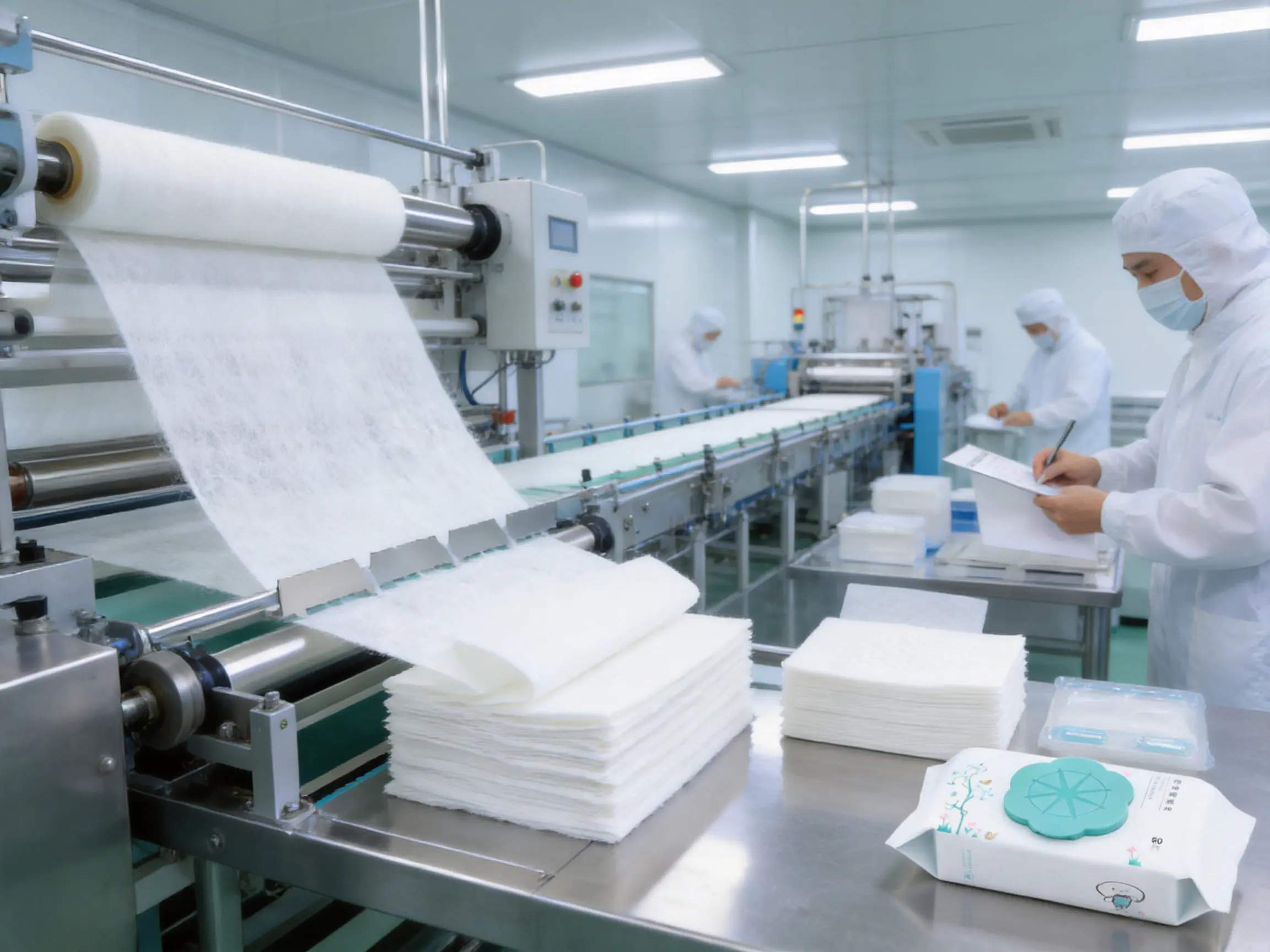
10. Product Development Process for B2B Buyers
The development of a private-label baby wipe normally follows several stages. A structured process helps reduce misunderstanding and improves the likelihood that the first mass-production order will match the buyer’s expectations.
Stage One: Requirement Definition
The buyer should provide information about the target market, consumer group, desired material, fragrance preference, sheet dimensions, sheet count, packaging type, annual forecast, target price, and required certifications. The more precise the initial brief, the easier it is for the manufacturer to recommend a suitable construction.
Stage Two: Material and Formula Selection
The manufacturer proposes substrate options and formula directions. Samples may be prepared using different basis weights, textures, liquid levels, and fragrances. At this stage, the buyer can compare softness, absorbency, tensile strength, odor, and overall user experience.
Stage Three: Sample Evaluation
Samples should be tested under realistic conditions. Buyers may evaluate the wipe on hands, faces, and other intended cleaning areas, while also checking dispensing, resealing, leakage, linting, and storage behavior. If the product is intended for sensitive skin, appropriate safety and compatibility assessments should be planned.
Stage Four: Packaging Confirmation
After the wipe specification is approved, packaging artwork and structure are confirmed. The buyer should check dimensions, colors, text, ingredient declarations, warnings, country-of-origin information, barcodes, carton markings, and disposal instructions.
Stage Five: Pilot Production
A pilot run can verify that the approved material, formula, folding method, and packaging work correctly on production equipment. It also provides an opportunity to confirm inspection methods and acceptance criteria before the full order.
Stage Six: Mass Production and Inspection
Mass production proceeds according to the approved specification and quality agreement. Depending on the buyer’s requirements, inspections may be performed during production or before shipment. Finished goods should be packed securely for international transportation.
Stage Seven: Shipment and Ongoing Support
The supplier may assist with export cartons, pallet solutions, documentation, and delivery coordination. After launch, the buyer can provide market feedback so the manufacturer can support future improvements in formula, packaging, or product performance.
11. Typical B2B Applications
These wipes are designed for wholesale and OEM/ODM cooperation rather than individual retail purchasing. The product is suitable for companies that need a stable manufacturing partner and a customizable finished good.
- Baby-care brands developing organic or natural product lines
- Private-label owners seeking a differentiated wipe substrate
- Supermarket and retail chains building exclusive baby-care ranges
- Pharmacies and healthcare distributors requiring documented hygiene products
- Importers and wholesalers serving regional markets
- Online marketplace sellers launching branded baby wipes
- Promotional product suppliers creating family-care packages
- Regional distributors seeking repeatable supply and packaging support
The product can be adapted for newborn care, daily diaper changes, hand and face cleaning, travel kits, hospital discharge packs, maternity bundles, and premium gift sets. A coordinated manufacturer may also supply related dry wipes, diapers, training pants, cleansing wipes, and other personal-care products, allowing a buyer to develop a broader product portfolio.
12. How the Product Compares with Other Wipe Categories
Consumers and buyers should compare wipes based on the complete specification rather than a single marketing phrase. A cotton wipe may provide excellent softness and natural-fiber appeal, while a bamboo or lyocell wipe may offer a different combination of drape, absorbency, and cost. A synthetic blend may provide high strength but less favorable environmental positioning.
| Wipe Category | Potential Strengths | Important Considerations |
|---|---|---|
| Organic cotton | Soft hand feel, natural fiber identity, absorbency, premium positioning | Requires accurate organic documentation and careful supply management |
| Bamboo or regenerated cellulose | Plant-based positioning, smooth texture, flexible product development | Processing method and final fiber composition should be documented |
| Lyocell | Smooth surface, good liquid management, premium textile feel | May have a higher material cost depending on specification |
| Viscose blends | Softness, absorbency, and broad availability | Environmental claims depend on sourcing and blend composition |
| Polyester blends | Strength, dimensional stability, and process flexibility | Contains synthetic fiber and may not support plastic-free positioning |
The most suitable category depends on the brand strategy. A company focused on natural baby care may prioritize organic cotton. A value retailer may select a blended construction to meet a price target. A buyer developing several product levels may use different substrates within one portfolio.
13. Important Considerations Before Ordering
Before placing a bulk order, buyers should request a complete technical specification. This should identify fiber composition, basis weight, dimensions, lotion content, pH range, fragrance, preservative system, fold type, packaging materials, sheet count, carton quantity, and storage conditions.
Buyers should also clarify the minimum order quantity. MOQ can vary according to substrate, formula, packaging, artwork, and customization requirements. A standard product may have a lower MOQ than a fully customized organic cotton product with new packaging and a special formula.
Lead time should be discussed at the quotation stage. Sampling, artwork confirmation, raw-material procurement, testing, production, inspection, and shipping all contribute to the schedule. International buyers should allow additional time for regulatory review and import documentation.
It is also important to define quality acceptance criteria in writing. Terms such as “soft,” “strong,” or “natural” can mean different things to different parties. A clear specification can include measurable ranges for sheet size, basis weight, moisture, tensile strength, pH, microbiological limits, and packaging tolerance.
14. Frequently Asked Questions
Q1. Are these baby wipes made from 100% organic cotton?
The premium product can be manufactured with a 100% organic cotton substrate. The final material specification should be confirmed before production, and organic claims should be supported by the relevant supply-chain documents and certifications required in the destination market. Other materials, including bamboo, viscose, lyocell, cotton, and blends, can also be developed when requested.
Q2. Are the wipes suitable for newborn skin?
The product can be developed for newborn and sensitive-skin applications using a soft substrate, purified water, and a fragrance-free or otherwise approved mild formula. Suitability depends on the final formula, testing, labeling, and market requirements. Buyers should approve the complete finished product rather than relying only on the fiber description.
Q3. Can the formula be fragrance-free and alcohol-free?
Yes. Fragrance-free and alcohol-free formulas can be developed. Customers may also request purified water, selected plant extracts, or other formula requirements. All ingredients should be reviewed for safety, stability, compatibility, and regulatory compliance before production.
Q4. What sheet sizes and weights are available?
Typical dimensions range from approximately 12 to 22 centimeters in width and 12 to 30 centimeters in length. Basis weights may range from approximately 30 to 100 gsm. Final dimensions and weight can be customized according to the intended application, pack size, price target, and performance requirements.
Q5. Can the wipes be packaged under our own brand?
Yes. OEM and private-label services can include logo printing, customized artwork, multilingual packaging, barcode labeling, export cartons, and pallet solutions. The buyer normally approves the artwork and packaging sample before mass production.
Q6. What packaging formats are available?
Available formats may include flow packs, soft packs, refill packs, travel packs, and multipacks. The final selection should consider moisture retention, dispensing, shipping efficiency, retail presentation, and the buyer’s sustainability goals.
Q7. Are the wipes biodegradable?
A wipe made from suitable plant-based fibers may be designed to biodegrade more readily than a wipe containing synthetic fibers. However, the finished product, including its substrate and any other components, should be evaluated before a specific biodegradability claim is made. Biodegradable wipes should not automatically be flushed down toilets.
Q8. Can I request samples before placing a bulk order?
Yes. Samples can be prepared for material evaluation, formula review, packaging confirmation, dispensing tests, and performance testing. Sample approval is an important step before mass production.
Q9. What quality documents are available?
Documents may include material information, test reports, product specifications, safety data, export documents, and certification-related records, depending on the product and destination market. The exact document package should be confirmed during the quotation and development process.
Q10. Which markets can the manufacturer supply?
The company works with customers in North America, Europe, the Middle East, Southeast Asia, Oceania, and other international markets. Product specifications, labeling, testing, and export documents should be adapted to the requirements of each destination.
Q11. What is the minimum order quantity?
MOQ depends on the material, packaging format, formula, printing requirements, and degree of customization. It can be discussed according to the buyer’s product plan and target market. Customized packaging and special materials generally require more planning than standard products.
Q12. Can one supplier provide other hygiene products?
Yes. The manufacturing network covers wet wipes, dry wipes, baby diapers, training pants, cleansing wipes, nonwoven materials, and related hygiene products. This may help buyers develop coordinated product lines and simplify supplier management.
15. Why Choose an Experienced Manufacturing Partner?
Baby wipes are deceptively complex products. They must balance softness, absorbency, strength, moisture stability, microbiological control, packaging performance, regulatory compliance, and cost. An experienced manufacturer can help buyers avoid common problems such as uneven lotion distribution, poor resealing, excessive lint, weak wet strength, unstable fragrance, or packaging leakage.
A long-established supplier may also provide greater confidence in raw-material sourcing, factory controls, equipment maintenance, and export support. The company described in this article has operated since 1987 and has developed capabilities in medical, baby, household, beauty, industrial, and other nonwoven applications. Its product knowledge across multiple categories can support more informed material and process decisions.
The combination of multiple production bases, integrated nonwoven capabilities, clean workshops, purified water systems, testing resources, and OEM/ODM experience creates a practical platform for international buyers. The value is not limited to manufacturing volume. It also includes technical communication, sampling support, quality consistency, packaging coordination, and long-term product development.
16. Conclusion
OEM private label organic cotton baby wipes provide a strong foundation for brands seeking a softer, more natural, and environmentally conscious baby-care product. Their advantages include a comfortable skin feel, strong moisture-retention potential, flexible nonwoven engineering, and an attractive platform for premium product positioning.
The product can be customized in material, basis weight, dimensions, texture, fragrance, formula, fold type, sheet count, packaging, and branding. This flexibility allows a buyer to create products for newborns, sensitive skin, travel, retail, pharmacy, and family-care applications.
Performance depends on more than the word “cotton.” It depends on fiber quality, web formation, hydroentanglement, drying, converting, formula design, packaging integrity, clean manufacturing, testing, and traceability. For that reason, selecting an experienced integrated manufacturer is essential.
With advanced nonwoven production, controlled hygiene processes, OEM and ODM support, broad product capabilities, and international supply experience, Zhejiang Uniquality Nursing Products Technology Co., Ltd. and its Kingsafe and Uniquality manufacturing network can support buyers from initial concept to finished shipment. For companies seeking reliable private-label baby wipes, the combination of natural materials, technical customization, and scalable production offers a practical route to long-term market growth.
References
1. General principles of good manufacturing practice for cosmetic, personal-care, and hygiene products.
2. Technical literature on spunlace nonwoven manufacturing, hydroentanglement, and fiber-web formation.
3. Textile and nonwoven testing principles for basis weight, tensile strength, absorbency, moisture retention, and dimensional stability.
4. International guidance concerning organic fiber certification, chain-of-custody documentation, and textile labeling.
5. Scientific literature concerning infant skin barrier function and the selection of mild cleansing products.
6. Industry guidance on wet-wipe microbiological quality, preservation, packaging integrity, and shelf-life evaluation.
7. Environmental assessment principles for biodegradable, compostable, recyclable, and plant-based hygiene products.
8. Manufacturer-provided product specifications, production information, customization options, and company background materials.