中文简体
 English
 日本語
 русский
 Español
Medical antibacterial wipes
Medical antibacterial wipes are an important part of modern infection prevention. In hospitals, clinics, dental practices, laboratories, nursing facilities, and other healthcare environments, many surfaces must be cleaned and disinfected repeatedly throughout the day. Bedside furniture, treatment carts, diagnostic equipment, dental chairs, operating tables, incubators, and work surfaces can all become exposed to microorganisms through contact with patients, healthcare workers, instruments, and contaminated materials.
Medical disinfectant wipes provide a practical solution for these daily requirements. They combine a pre-moistened nonwoven substrate with a prepared cleaning or disinfecting formulation, allowing healthcare personnel to wipe a surface immediately without first measuring, diluting, or transferring a liquid disinfectant. This ready-to-use format can improve workflow consistency, reduce preparation errors, and support better compliance with cleaning protocols.
For professional buyers, however, product quality involves more than the presence of disinfectant liquid in a package. A dependable medical wipe must balance antimicrobial performance, material compatibility, wet strength, softness, liquid retention, packaging integrity, ease of use, and regulatory suitability. It should also be produced through controlled manufacturing processes that support stable quality from batch to batch.
As an experienced manufacturer of medical and hygiene nonwoven products, Zhejiang Uniquality Nursing Products Technology Co., Ltd. provides medical wipes and related OEM and ODM solutions for healthcare brands, distributors, hospitals, clinics, pharmacies, medical device manufacturers, and institutional procurement organizations. The company combines nonwoven material development, formulation selection, converting, packaging, inspection, and private-label support within an integrated production system.
This article explains the applications, construction, benefits, manufacturing strengths, customization options, and procurement considerations associated with professional medical antibacterial wipes.
1. What Are Medical Antibacterial Wipes?
Medical antibacterial wipes are pre-moistened disposable wipes designed to help clean and disinfect specified surfaces or, where the formulation and intended use allow it, support particular hygiene applications. They generally consist of three main components: a nonwoven substrate, a liquid formulation, and packaging.
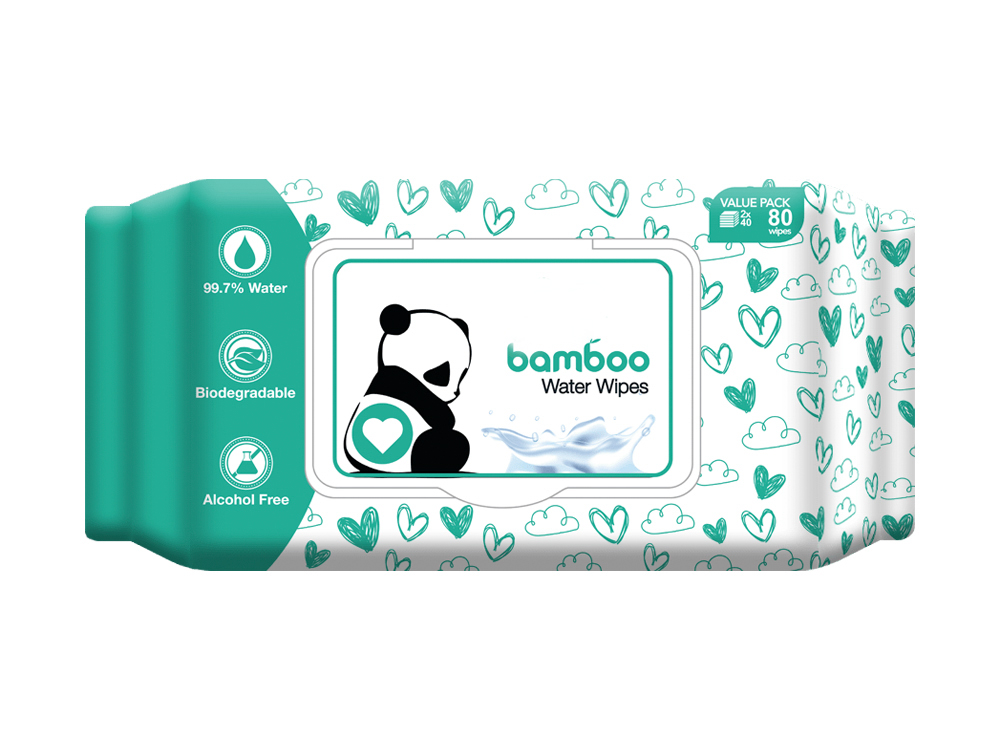
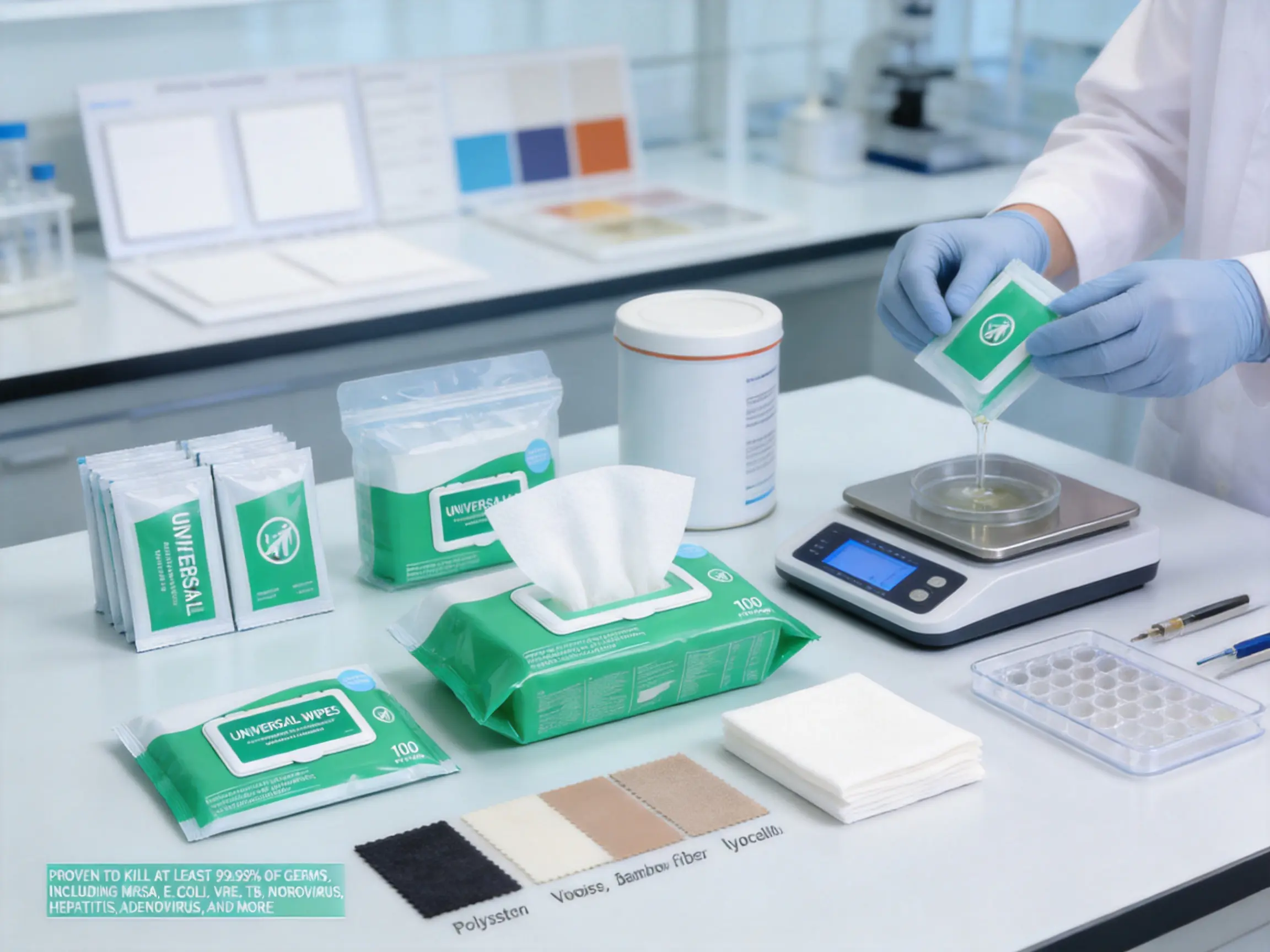
The nonwoven substrate acts as the carrier for the solution. It must absorb and retain enough liquid to wet the target surface effectively while maintaining sufficient strength during wiping. Depending on the intended application, the substrate may be manufactured from polyester, viscose, bamboo fiber, lyocell, cotton, or blended fibers.
The liquid formulation may contain purified water, alcohol, quaternary ammonium compounds, biguanides, chlorine-based ingredients, or other customer-specified active ingredients. The correct formula depends on the product’s intended use, target microorganisms, contact time, surface compatibility, destination-market requirements, and applicable regulatory framework.
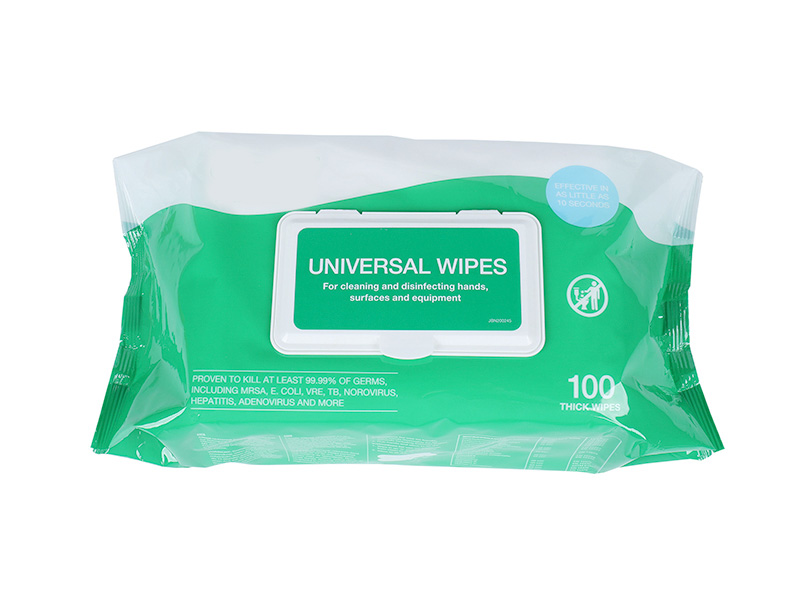
Packaging protects the wipe from contamination, evaporation, leakage, and loss of active ingredients. Individual sachets can be suitable for point-of-care use or emergency kits, while soft packs, canisters, refill packs, and bulk institutional packaging can support frequent use in hospitals and other professional environments.
It is important to distinguish between antibacterial, disinfecting, sanitizing, cleansing, and patient-care wipes. These terms may have different technical and regulatory meanings in different markets. A professional buyer should always verify the intended claims, active ingredients, contact time, testing data, labeling requirements, and approved use conditions before selecting a product.
2. Common Healthcare Applications
Medical antibacterial wipes are designed for frequent use across a wide range of healthcare settings. The exact application should follow the product label and the manufacturer’s instructions. The following uses represent common professional scenarios.
2.1 ICU and Critical-Care Areas
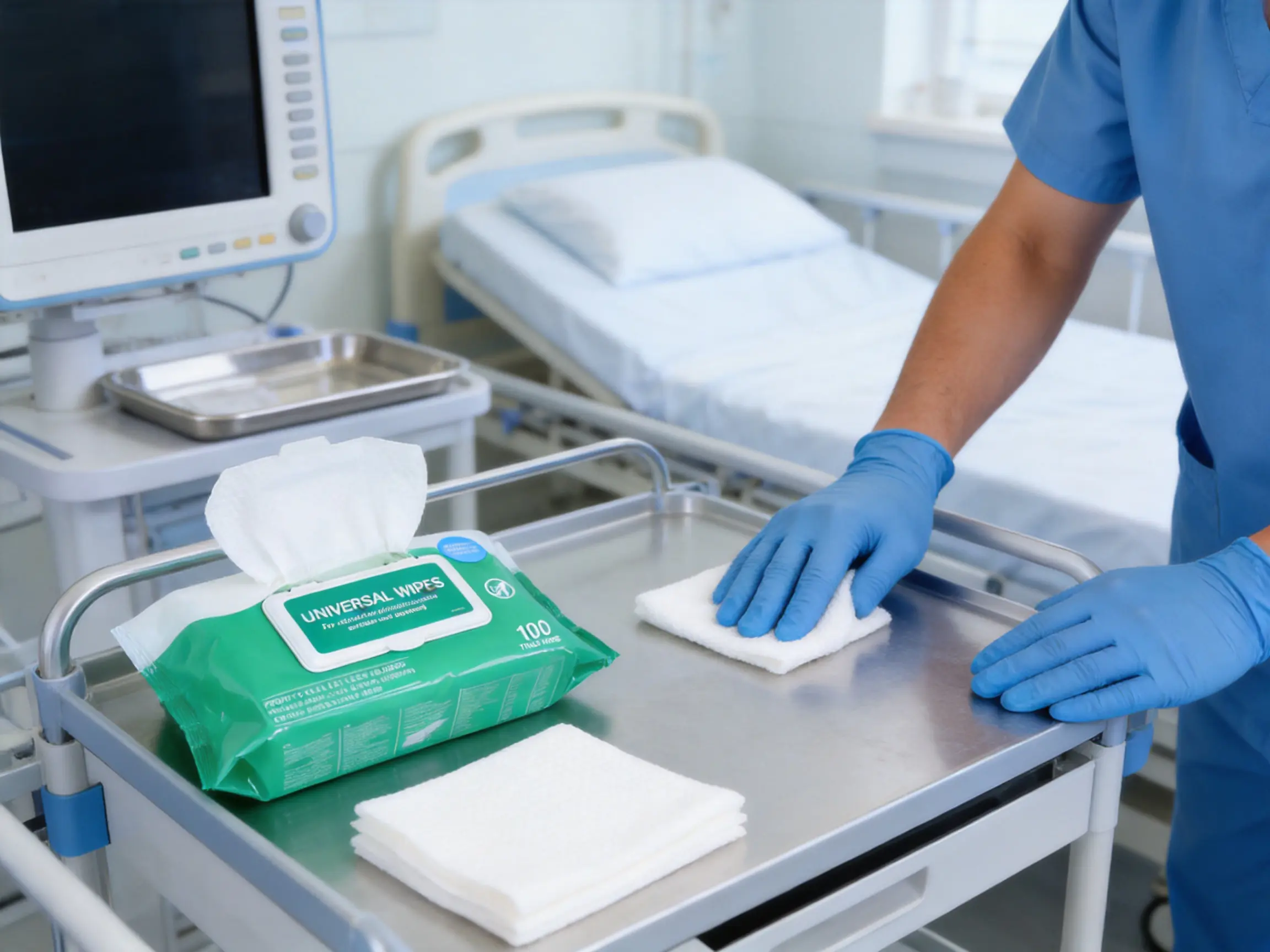
Intensive care units contain numerous high-contact surfaces and complex medical devices. Bedside tables, bed rails, control panels, monitor exteriors, treatment carts, and surrounding work surfaces may require repeated cleaning and disinfection. A ready-to-use wipe can help staff perform rapid surface treatment between procedures, according to institutional protocols.
Critical-care environments also require careful attention to material compatibility. Certain equipment surfaces may be sensitive to alcohol, chlorine, or repeated exposure to strong chemicals. Therefore, the selected wipe should be matched with the equipment manufacturer’s cleaning instructions.
2.2 Neonatal and Pediatric Areas
Neonatal intensive care units and pediatric wards demand careful hygiene management because equipment and surfaces are used around vulnerable patients. Wipes may be used on approved external surfaces of incubators, cots, furniture, and related equipment. Formulation selection should consider residue, odor, surface compatibility, and the need for thorough drying before patient contact.
2.3 Burn Wards and Hemodialysis Centers
Burn wards and hemodialysis centers have demanding cleaning requirements. Bed units, treatment areas, carts, machine exteriors, chair surfaces, and other high-touch points may need regular disinfection. Wipes with suitable wet strength and sufficient liquid loading can help operators cover a surface evenly without tearing or drying too quickly.
For hemodialysis machines and other specialized equipment, only products approved for the relevant external surfaces should be used. The wipe should not be applied to internal components, screens, ports, or sensitive areas unless the equipment manufacturer specifically permits it.
2.4 Treatment Rooms and Procedure Areas
Treatment rooms often require rapid turnover. Healthcare workers may need to clean examination tables, worktops, instrument surfaces, carts, handles, and other objects between patients or procedures. A pre-moistened wipe eliminates the need to prepare a separate bucket or dilute a concentrated solution, helping simplify the cleaning sequence.
2.5 Dental Clinics
Dental chairs and diagnosis-and-treatment units contain multiple surfaces that may be touched during patient care. Medical wipes can be developed for compatible external surfaces, including chair upholstery, armrests, handles, trays, control housings, and surrounding work areas. Because dental equipment may incorporate plastics, coated metals, synthetic leather, and electronic controls, compatibility testing is particularly important.
2.6 Operating Rooms
After surgery, operating tables, equipment exteriors, instrument surfaces, nearby worktops, and related objects may require cleaning and disinfection. A wipe should provide consistent liquid release and enough strength for removing visible soil before or during disinfection, when permitted by the protocol. Heavy organic contamination may require a separate cleaning step before application of the disinfectant wipe.
2.7 Supply and Packaging Areas
Supply rooms and packaging areas also require controlled hygiene. Work surfaces used for inspection, preparation, or packaging can be wiped with suitable medical disinfectant wipes. The convenience of individually packaged or multi-wipe formats can be useful where cleaning materials must be available at multiple workstations.
2.8 General High-Touch Surfaces
Medical wipes may be used on approved general surfaces such as door handles, light switches, drawer pulls, counters, bedside furniture, and treatment carts. The product’s label should identify the permitted surfaces and required contact time. A wipe should not be assumed to be suitable for skin, open wounds, instruments, or medical devices simply because it is described as “medical.”
3. Product Construction and Material Options
The quality of a medical wipe depends strongly on the relationship between the substrate and the liquid formulation. A high-quality solution cannot compensate for a substrate that tears, sheds excessive lint, releases liquid unevenly, or dries prematurely.
3.1 Polyester Nonwoven
Polyester can provide strong wet tensile performance and good dimensional stability. It may be suitable for wiping demanding surfaces, equipment exteriors, and areas where the wipe must remain intact during repeated passes. Polyester substrates can also be engineered for different textures and absorbency levels.
3.2 Viscose Nonwoven
Viscose is valued for softness and absorbency. It can provide a pleasant wiping feel and effective liquid uptake. Depending on the blend and bonding structure, viscose-based substrates may be suitable for applications requiring a softer surface contact profile.
3.3 Bamboo Fiber
Bamboo fiber can be selected for customers seeking a plant-derived fiber option or a differentiated sustainability story. Its final performance depends on the fiber type, blend ratio, bonding method, basis weight, and intended application. Claims concerning biodegradability or environmental performance should be supported by appropriate technical evidence.
3.4 Lyocell
Lyocell is a cellulose-based fiber known for softness and absorbency. It may be incorporated into wipes designed to provide a smooth tactile feel and efficient liquid distribution. It can also be considered in product concepts that emphasize renewable or lower-impact material choices, subject to the specific construction and certification requirements.
3.5 Cotton-Based Substrates
Cotton and cotton-containing materials may be selected for softness and familiarity. In medical wipes, the final substrate must still meet the required strength, lint, absorbency, and compatibility specifications. A cotton-based wipe can be useful where a more natural fiber profile is desired.
3.6 Basis Weight and Dimensions
The available basis weight range is approximately 30 to 100 gsm, while common dimensions include widths of 12 to 22 centimeters and lengths of 12 to 30 centimeters. Lower basis weights can support economical, lightweight products, whereas higher basis weights may improve hand feel, opacity, liquid capacity, and wiping durability.
Wipe dimensions should be selected according to the surface area, dispensing format, expected usage time, and desired cost per application. A small wipe may be suitable for spot cleaning or individual equipment components. Larger wipes may be more efficient for bedsides, treatment carts, operating tables, or broad work surfaces.
4. Manufacturing Technologies and Wipe Structures
The company’s product specifications include parallel and semi-cross manufacturing technologies. These structures influence fiber orientation, appearance, strength, absorbency, and wiping performance.
| Specification | Available Options | Typical Considerations |
|---|---|---|
| Material | Polyester, viscose, bamboo, lyocell, cotton, and blends | Softness, absorbency, wet strength, sustainability profile, and surface compatibility |
| Basis weight | Approximately 30–100 gsm | Thickness, liquid capacity, opacity, durability, and unit cost |
| Technology | Parallel and semi-cross structures | Fiber orientation, tensile balance, texture, and wiping behavior |
| Pattern | Plain, mesh, dot embossed, flower, and stars | Liquid distribution, mechanical cleaning effect, appearance, and branding |
| Size | Approximately 12–22 cm wide and 12–30 cm long | Coverage area, pack format, dispensing, and application efficiency |
| Fragrance | Unscented, fresh, lavender, lemon, lotus, fruit, coconut, cucumber, and others | Market preference, odor profile, sensitivity considerations, and regulatory requirements |
| Pack count | Single wipe, 10, 20, 50, 80, 100, or customized | Point-of-use convenience, institutional consumption, and logistics |
Parallel structures may provide a distinctive fiber arrangement and consistent appearance, while semi-cross structures can help balance strength in more than one direction. The ideal structure depends on the required wipe size, folding pattern, liquid loading, packaging format, and surface type.
Embossed patterns can increase tactile texture and may help distribute liquid over a surface. They may also improve the operator’s grip or support the removal of light soils. However, the pattern should not create excessive lint, leave residue, or interfere with the intended disinfection process.
5. Formulation Choices for Professional Applications
Different active ingredients provide different performance characteristics. The choice should be based on target microorganisms, contact time, surface compatibility, user safety, odor, residue, and regulatory status in the intended market.
5.1 Quaternary Ammonium Formulations
Quaternary ammonium compounds are widely used in surface disinfecting products. Properly formulated products may be suitable for reducing bacteria, certain cocci, pathogenic yeasts, and other microorganisms identified by the applicable product claims and test methods. They are often considered for general hard-surface disinfection where material compatibility and low odor are priorities.
The effectiveness of a quaternary ammonium wipe depends on concentration, formulation design, wet contact time, surface coverage, and the presence of organic soil. The wipe must leave the surface visibly wet for the specified period. A quick pass followed by immediate drying may not provide the claimed performance.
5.2 Alcohol-Based Formulations
Alcohol wipes can provide rapid evaporation and a familiar application profile. They may be selected for certain equipment surfaces or targeted disinfection needs. However, repeated alcohol exposure may affect some plastics, coatings, adhesives, synthetic leather, or display surfaces. Buyers should confirm compatibility before large-scale use.
5.3 Biguanide-Based Formulations
Biguanide ingredients may be incorporated into selected disinfecting products. They can offer a different formulation profile from alcohol or quaternary ammonium systems. The concentration, claims, safety data, and intended application must be reviewed for the destination market and the specific surface category.
5.4 Chlorine-Containing Formulations
Chlorine-containing products can provide broad antimicrobial activity in suitable applications. At the same time, chlorine may create odor, corrosion, discoloration, or material compatibility concerns if used incorrectly. Packaging, concentration stability, contact time, ventilation, and surface rinsing requirements should be assessed during product development.
5.5 Compound Formulations
Some customers require compound formulations combining more than one active ingredient or adding cleaning, moisturizing, or surface-care components. Such products require careful stability testing, compatibility assessment, and market-specific review. The formulation must remain stable within the wipe package throughout the intended shelf life.
Fragrance-free products are often preferred in healthcare settings where odor sensitivity is important. Other markets may request fresh, lavender, lemon, lotus, fruit, coconut, cucumber, or customized fragrance profiles. Any fragrance should be evaluated for user acceptability, compatibility, and labeling requirements.
6. Advantages Compared with Conventional Liquid Disinfectants
6.1 Ready-to-Use Convenience
Traditional liquid disinfectants may require dilution, measuring, container preparation, and transfer to a spray bottle or bucket. Medical wipes are supplied ready for immediate use. This can simplify workflow and reduce the risk of incorrect dilution.
6.2 Reduced Cross-Contamination Risk
Reusable cloths and wiping rags can become contaminated when repeatedly immersed in a shared disinfectant solution. If the solution is not changed or the cloth is not properly laundered, microorganisms may be transferred from one surface to another. A single-use wipe helps reduce the risk associated with repeated reuse, provided it is discarded after the appropriate application.
6.3 Consistent Liquid Delivery
A controlled wipe manufacturing and filling process can provide a more consistent liquid-to-substrate ratio than manually soaked cloths. Consistency supports predictable surface wetting, packaging performance, and user experience.
6.4 Improved Workflow Efficiency
Healthcare personnel can take a wipe from a sachet, pack, or canister and begin cleaning immediately. There is no need to prepare a separate solution or spend time handling a bucket and reusable cloth. This may be especially valuable in busy treatment rooms, emergency areas, and high-turnover environments.
6.5 Better Portability
Individual sachets and compact packs can be placed in procedure trays, emergency kits, carts, laboratories, dental rooms, ambulances, and mobile service cases. Portability allows cleaning materials to be available close to the point of use.
6.6 Reduced Residue and Handling Steps
When the formulation is correctly designed and used according to instructions, medical wipes can combine cleaning and disinfection in a single operational step. This may reduce the need to prepare a solution, apply it with a separate cloth, and perform additional handling to remove excess residue. The exact process still depends on the level of contamination and the product instructions.
7. Integrated Manufacturing Strengths
A major advantage of working with an integrated manufacturer is the ability to coordinate substrate development, formulation selection, converting, packaging, and quality control. Instead of treating the wipe as a simple commodity, an integrated production system can optimize the complete product for its intended use.
Zhejiang Uniquality Nursing Products Technology Co., Ltd. was founded in 1987 and has developed expertise in medical and hygiene nonwoven materials, nursing products, and related textile applications. The company operates production bases in several regions of China and has built capabilities across nonwoven fabric production, wet wipes, dry wipes, diapers, training pants, cleansing products, and other hygiene categories.
The company’s broader manufacturing resources include self-developed nonwoven substrates, finished hygiene products, OEM and ODM services, and product lines serving medical, baby care, household, industrial, and environmentally oriented applications. This broad experience supports flexible material selection and efficient transfer of nonwoven technology between different product categories.
7.1 High-Capacity Production Infrastructure
Large production capacity can help support both standard products and major private-label programs. It can also provide advantages in raw-material planning, production scheduling, packaging coordination, and delivery management. For distributors and institutional buyers, stable capacity is important when demand varies across different seasons or procurement cycles.
7.2 Controlled Production Environments
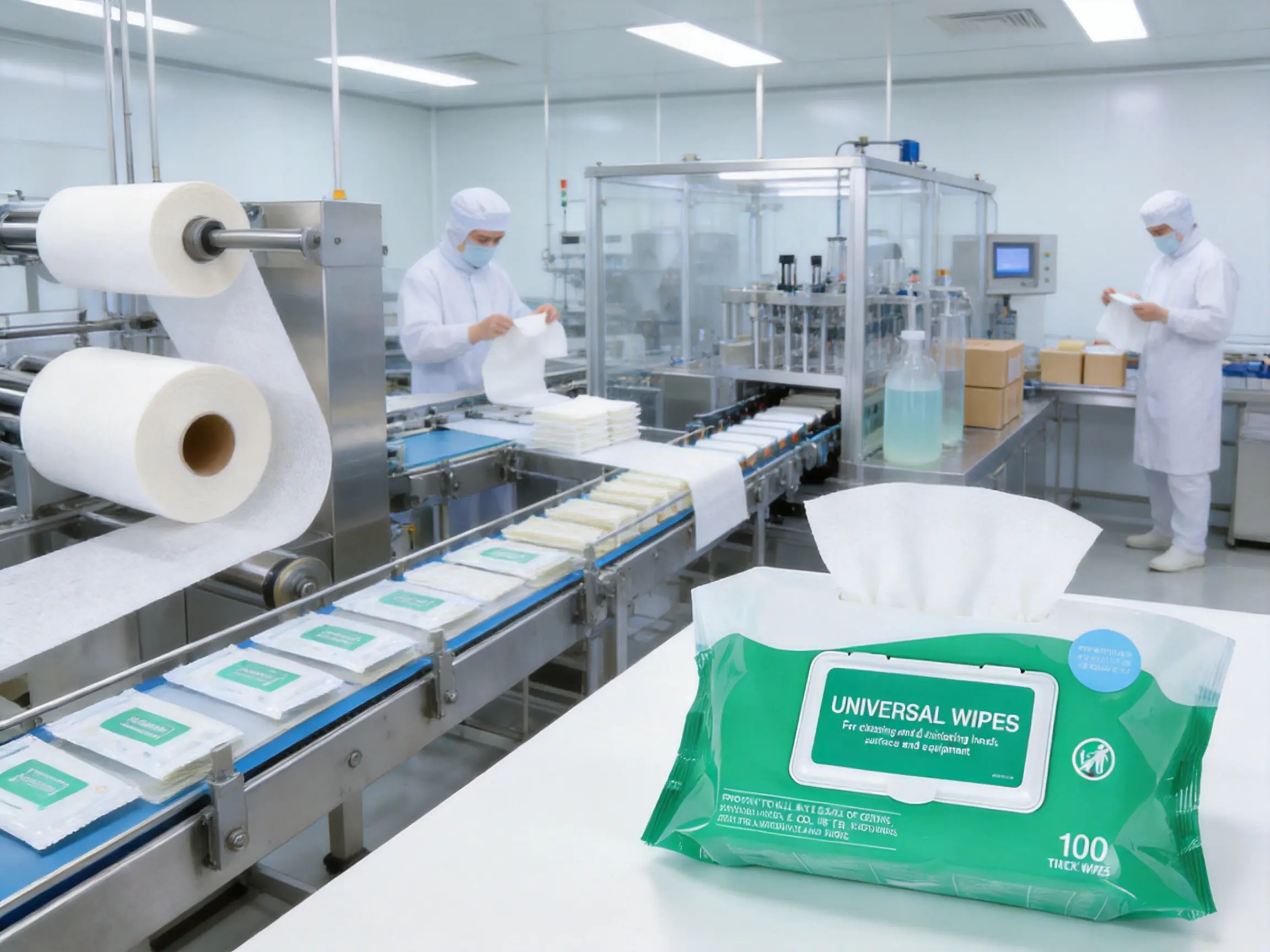
The company states that it operates 100,000-class GMP clean workshops and uses a purified water system designed according to pharmacopoeia-related standards. Controlled production environments are important for reducing avoidable contamination risks during liquid preparation, wipe conversion, and packaging.
Clean production should be understood as one part of a complete quality system. Raw-material approval, equipment sanitation, personnel hygiene, environmental monitoring, batch records, in-process inspection, packaging checks, and finished-product testing must work together to support reliable performance.
7.3 Testing and Technical Development
The company also reports a full-function testing center and a portfolio of patents. Testing capability can help evaluate substrate properties, liquid composition, package integrity, microbial or antimicrobial performance, stability, absorbency, tensile strength, and other specifications relevant to a project.
Testing requirements vary by product type and destination market. A professional development program should define the relevant test methods before production begins. Claims should be supported by appropriate evidence rather than relying only on general descriptions such as “rapid germ elimination” or “broad-spectrum sterilization.”
7.4 Full Industrial Chain
Control over nonwoven substrate production can provide advantages over manufacturers that purchase all fabric from unrelated suppliers. The manufacturer may be able to adjust fiber selection, basis weight, pattern, absorbency, strength, and texture more efficiently. This integrated approach can shorten communication cycles and make it easier to develop a wipe for a specific machine, pack format, or target surface.
8. OEM and ODM Customization Capabilities
Medical wipes are often purchased under private labels or as part of a broader healthcare product portfolio. Buyers may need a product adapted to a particular market, distribution channel, clinical application, or brand identity. OEM and ODM services can support this process from initial concept through commercial production.
8.1 Substrate Customization
Customers can discuss spunlace nonwoven, biodegradable nonwoven, bamboo fiber, cotton-based nonwoven, polyester, viscose, lyocell, or blended constructions. The final material should be selected according to the required balance of wet strength, softness, absorbency, lint control, sustainability profile, and cost.
8.2 Formula Customization
Potential formulation options include purified water systems, alcohol-based solutions, chlorhexidine-related concepts, benzalkonium chloride formulations, other quaternary ammonium systems, and customer-specified formulas. Active ingredients, concentration, preservatives, fragrance, pH, skin-friendly additives, and compatibility requirements can be discussed during development.
Formulation customization must be conducted responsibly. A formula that works well for one surface or market may not be appropriate for another. The buyer should provide the intended claims, application environment, target organisms, contact time, packaging type, shelf-life expectation, and regulatory destination at the beginning of the project.
8.3 Packaging Options
Available packaging formats include individual sachets, soft packs, canisters, refill packs, and bulk institutional packs. Sachets can provide strong portability and individual protection. Soft packs are convenient for routine use and can support multiple wipe counts. Canisters may be preferred for fixed workstations, while refill packs can reduce packaging consumption where an approved dispenser system is available.
8.4 Private-Label Design
Private-label support may include logo printing, artwork development, multilingual packaging, customized labels, carton design, and product documentation. Packaging should clearly communicate the intended use, active ingredients, warnings, directions, contact time, storage conditions, lot information, expiration or use-by information, and other required details.
8.5 Pack Counts and Commercial Positioning
Single wipes, 10-count packs, 20-count packs, 50-count packs, 80-count packs, 100-count packs, and customized counts can be considered. Smaller packs may suit mobile healthcare workers, dental rooms, or emergency kits. Larger packs can provide better economy for hospitals, clinics, laboratories, and institutional users.
9. Quality Control from Raw Material to Finished Product
A reliable medical wipe requires quality control at every stage. Substrate inspection should evaluate basis weight, dimensions, absorbency, wet strength, tensile performance, appearance, odor, and foreign-material control. If a specific pattern or texture is required, production should confirm that the surface remains consistent across the roll and finished packs.
Liquid preparation requires controlled weighing, mixing, filtration where applicable, pH monitoring, ingredient verification, and batch documentation. The formulation should be checked for appearance, odor, concentration, stability, and compatibility with the selected substrate and packaging material.
During converting, operators should monitor cutting accuracy, folding, stacking, liquid loading, seal quality, printing, label placement, and foreign-material control. The wipe should be sufficiently saturated for the intended use but not so wet that it leaks, damages packaging, or becomes difficult to handle.
Packaging inspection should include seal integrity, leak resistance, opening performance, print clarity, barcode readability, correct product identification, and pack count. A package that loses moisture during storage cannot deliver the designed performance, even if the initial wipe formulation is excellent.
Finished-product inspection may include visual checks, weight checks, dimensions, tensile testing, absorbency evaluation, liquid content, microbiological testing, antimicrobial efficacy testing, package integrity testing, and stability studies. The exact quality plan should be agreed upon with the customer according to the product’s intended claims and market.
10. How Medical Wipes Compare with Competitor Products
Medical antibacterial wipes compete in a crowded market that includes general-purpose cleaning wipes, low-cost household wipes, alcohol pads, reusable cloth systems, and specialized equipment wipes. Their competitive value should be judged by total performance rather than unit price alone.
10.1 Compared with Household Disinfecting Wipes
Household wipes may be designed for general domestic surfaces and may not provide the documentation, substrate options, pack formats, or technical customization expected by healthcare buyers. Medical wipe programs can be developed around professional applications, controlled specifications, and institutional packaging.
10.2 Compared with Alcohol Pads
Small alcohol pads are useful for targeted applications but may be too small for bedsides, equipment housings, treatment carts, or work surfaces. Medical antibacterial wipes can be produced in larger dimensions with higher liquid capacity and substrate options suited to broader surface coverage.
10.3 Compared with Reusable Cloth Systems
Reusable cloths may require collection, laundering, inspection, storage, and controlled preparation with disinfectant solution. Disposable wipes simplify the process and help reduce risks related to repeated reuse. They also offer a consistent, pre-measured format for point-of-use cleaning.
10.4 Compared with Generic Low-Cost Wipes
The lowest-cost wipe may have inconsistent saturation, weak wet strength, poor sealing, excessive lint, or limited formulation support. An integrated manufacturer can offer more control over material, liquid, packaging, testing, and private-label development. This can create better value for buyers that need dependable long-term supply rather than an isolated low-price shipment.
10.5 Customization as a Competitive Advantage
Customization is especially valuable for distributors and healthcare brands. A product can be configured for a specific wipe size, active ingredient, pack count, artwork, language set, fragrance profile, and target use. This makes it possible to create a more differentiated product instead of competing only on price.
11. Selecting the Correct Product for a Healthcare Program
Before requesting a quotation, buyers should define the intended application clearly. The following questions can help identify the correct specification:
- Which surfaces will be cleaned or disinfected?
- Will the product be used on general hard surfaces, medical equipment exteriors, dental equipment, or another category?
- What microorganisms and performance claims are relevant?
- What contact time is acceptable in the operating environment?
- Is a fragrance-free formulation required?
- Are there sensitive materials such as plastics, coatings, synthetic leather, screens, or adhesives?
- What wipe size and basis weight are required?
- Will the product be supplied in sachets, soft packs, canisters, refill packs, or bulk cartons?
- What pack quantity is appropriate?
- What annual demand and delivery schedule should be planned?
- Which export market and regulatory framework apply?
- What private-label artwork and language requirements must be met?
Buyers should also request representative samples and evaluate them under realistic conditions. A wipe should be tested for ease of opening, hand feel, wetness, surface coverage, tearing resistance, residue, odor, drying time, and compatibility with the actual surfaces used in the facility.
12. Safe and Effective Use
Medical disinfectant wipes should be used exactly as instructed on the label or technical documentation. The surface should be free of heavy visible soil or cleaned according to the facility’s procedure before disinfection when necessary. The wipe should be applied evenly, and the surface should remain wet for the stated contact time.
One wipe should not be reused across unrelated high-risk areas. A used wipe should be discarded appropriately after the intended application. Users should avoid mixing disinfectant products, especially those containing incompatible chemical systems. Gloves and other protective equipment should be used when required by the safety data sheet or institutional policy.
Wipes intended for surfaces should not be applied to skin, eyes, mucous membranes, wounds, food-contact surfaces, or internal medical equipment unless the product is specifically designed and labeled for that use. Healthcare workers should follow the equipment manufacturer’s instructions for sensitive devices.
Storage conditions also matter. Products should be kept sealed, away from excessive heat, freezing conditions, direct sunlight, and sources of contamination. Proper stock rotation helps ensure that wipes are used within the recommended shelf life.
13. Sustainability and Responsible Product Development
Environmental performance is increasingly important in healthcare procurement. Buyers may consider bamboo, lyocell, cotton-based, biodegradable, or other lower-impact substrate options. However, sustainability claims must reflect the entire product system, including fiber processing, chemical formulation, packaging, disposal, transportation, and local waste-management conditions.
A biodegradable substrate does not automatically mean that the finished wipe is flushable or suitable for sewer disposal. Medical and disinfectant wipes should not be flushed unless the product is specifically designed, tested, labeled, and approved for that application. In many healthcare settings, used wipes should be handled as regulated or controlled waste according to local procedures.
Packaging optimization can also reduce material consumption. Buyers may compare lightweight sachets, refill systems, bulk formats, and recyclable packaging components where appropriate. The selected format must still protect moisture content, sterility or hygienic quality where applicable, and product integrity throughout distribution.
14. Why an Experienced Manufacturer Matters
Medical wipes combine nonwoven engineering, liquid chemistry, packaging technology, quality management, and market compliance. An experienced manufacturer can coordinate these disciplines more effectively than a supplier that only performs final packing.
With decades of experience in nonwoven and hygiene products, Zhejiang Uniquality Nursing Products Technology Co., Ltd. is positioned to support projects from basic specification development to complete private-label supply. Its capabilities include substrate selection, formulation discussion, sample preparation, packaging development, production planning, inspection, and export-oriented documentation.
The company’s experience across medical, maternal and baby care, beauty, household, industrial cleaning, and clothing-related nonwoven applications also supports material innovation. Its production network and broad category knowledge can help customers select a practical construction that balances performance, cost, appearance, and supply stability.
For business buyers, this type of partnership can reduce development time and simplify communication. Instead of coordinating separate suppliers for fabric, liquid, converting, printing, and packing, the customer can work with one manufacturing partner for a more integrated solution.
15. OEM Project Information Required for Quotation
To prepare an accurate quotation and development proposal, customers should provide as much project information as possible. The intended application is the starting point, followed by the required wipe size, fabric material, formula, packaging format, pack quantity, annual demand, export market, and private-label requirements.
It is also helpful to provide target price expectations, estimated first order quantity, desired delivery schedule, current product samples, preferred active ingredients, performance targets, artwork status, and required documentation. If the product will be used on specific medical devices, equipment compatibility information should be supplied during the early development stage.
After reviewing the information, the manufacturer can recommend an appropriate substrate, liquid loading, pack format, and testing plan. Samples can then be evaluated and adjusted before confirmation of the final specification.
16. Q&A About Medical Antibacterial Wipes
Q1: What types of medical wipes can be manufactured?
A manufacturer with integrated nonwoven and wet-wipe capabilities can produce alcohol wipes, disinfecting wipes, patient-care wipes, medical equipment wipes, examination wipes, and other customized formats. The wipe size, substrate, formula, packaging, and labeling can be developed for different healthcare applications.
Q2: Can medical wipes be produced under a private label?
Yes. Private-label services may include formula selection or development, substrate selection, packaging design, logo printing, multilingual artwork, customized pack counts, and finished-product manufacturing. The final scope depends on the customer’s market and project requirements.
Q3: Which packaging formats are available?
Common options include individual sachets, soft packs, canisters, refill packs, and bulk packaging. The best format depends on whether the product is intended for mobile use, fixed workstations, routine institutional cleaning, emergency kits, or wholesale distribution.
Q4: Can the liquid formulation be customized?
Yes. Potential options include purified-water systems, alcohol-based formulations, quaternary ammonium compounds, biguanide-related systems, chlorine-containing products, chlorhexidine-related concepts, and customer-specified formulations. Any formula must be assessed for stability, compatibility, safety, claims, and destination-market requirements.
Q5: Are fragrance-free products available?
Yes. Fragrance-free wipes can be produced for healthcare environments where odor sensitivity is important. Customized fragrance profiles may also be discussed for markets that prefer fresh, lavender, lemon, lotus, fruit, coconut, cucumber, or other scents.
Q6: What wipe materials are available?
Available materials may include polyester, viscose, bamboo fiber, lyocell, cotton, spunlace nonwoven, biodegradable nonwoven, and blends. The appropriate material depends on the required softness, absorbency, wet strength, lint level, sustainability profile, and surface application.
Q7: How should contact time be considered?
Contact time is the period during which the treated surface must remain visibly wet to support the stated performance. The required time depends on the formula and the applicable test method. Product users should always follow the label or technical instructions rather than assuming that immediate drying provides full disinfection.
Q8: Can these wipes be used on all medical equipment?
No. Medical equipment varies widely in its surface materials and electronic components. The product should be used only on surfaces approved by the wipe instructions and the equipment manufacturer. Compatibility testing is recommended for sensitive plastics, coatings, screens, upholstery, and control panels.
Q9: What documents may be available for a project?
Depending on the product and destination market, documentation may include material specifications, batch records, quality inspection reports, safety information, technical data, stability information, and other compliance documents requested by the customer. The exact documentation package should be agreed upon before production.
Q10: What information is needed for an OEM quotation?
The manufacturer generally needs the intended application, wipe dimensions, substrate preference, formulation requirements, packaging type, pack quantity, estimated annual demand, target export market, private-label requirements, and any special performance or documentation needs.
17. Conclusion
Medical antibacterial wipes offer healthcare organizations a convenient, controlled, and portable approach to surface cleaning and disinfection. Their advantages include ready-to-use handling, reduced preparation requirements, consistent liquid delivery, improved workflow efficiency, and lower dependence on reusable wiping materials.
The best product is not necessarily the cheapest wipe. It is the product that provides the correct antimicrobial formulation, suitable substrate, reliable wet strength, sufficient liquid capacity, secure packaging, clear instructions, and consistent quality for the intended application. Hospitals, clinics, medical distributors, and private-label brands should evaluate the complete product system rather than focusing on one specification.
Zhejiang Uniquality Nursing Products Technology Co., Ltd. combines long-term nonwoven manufacturing experience, integrated production capabilities, OEM and ODM support, multiple material options, flexible packaging, formulation development, and quality-control resources. This combination enables the development of medical wipes for a wide range of professional healthcare applications.
By defining the target use, surface type, formulation, pack format, market requirements, and annual demand at the beginning of a project, business buyers can obtain a more suitable and reliable medical wipe solution. A carefully engineered product can help support hygienic operations, efficient staff workflows, dependable supply, and stronger differentiation in the professional healthcare market.
References
1. World Health Organization. Guidelines and technical resources concerning infection prevention and control in healthcare settings.
2. United States Centers for Disease Control and Prevention. Guidance concerning environmental infection control and cleaning and disinfection in healthcare facilities.
3. International Organization for Standardization. Standards and technical guidance relating to nonwoven materials, quality management, packaging, and medical products.
4. European Committee for Standardization. Applicable standards for chemical disinfectants, antimicrobial efficacy testing, and healthcare surface disinfection.
5. United States Environmental Protection Agency. General regulatory and labeling principles for antimicrobial pesticide products and disinfectants.
6. Pharmacopoeial and purified-water requirements applicable to the development and manufacture of healthcare hygiene products.
7. Manufacturer technical information concerning polyester, viscose, bamboo, lyocell, cotton, spunlace, biodegradable nonwoven substrates, and medical wipe construction.
8. Manufacturer quality and product-development information concerning OEM and ODM medical wipes, packaging formats, formulation options, and private-label services.
9. Institutional healthcare cleaning protocols concerning surface preparation, wet contact time, equipment compatibility, single-use wiping, and waste disposal.