中文简体
 English
 日本語
 русский
 Español
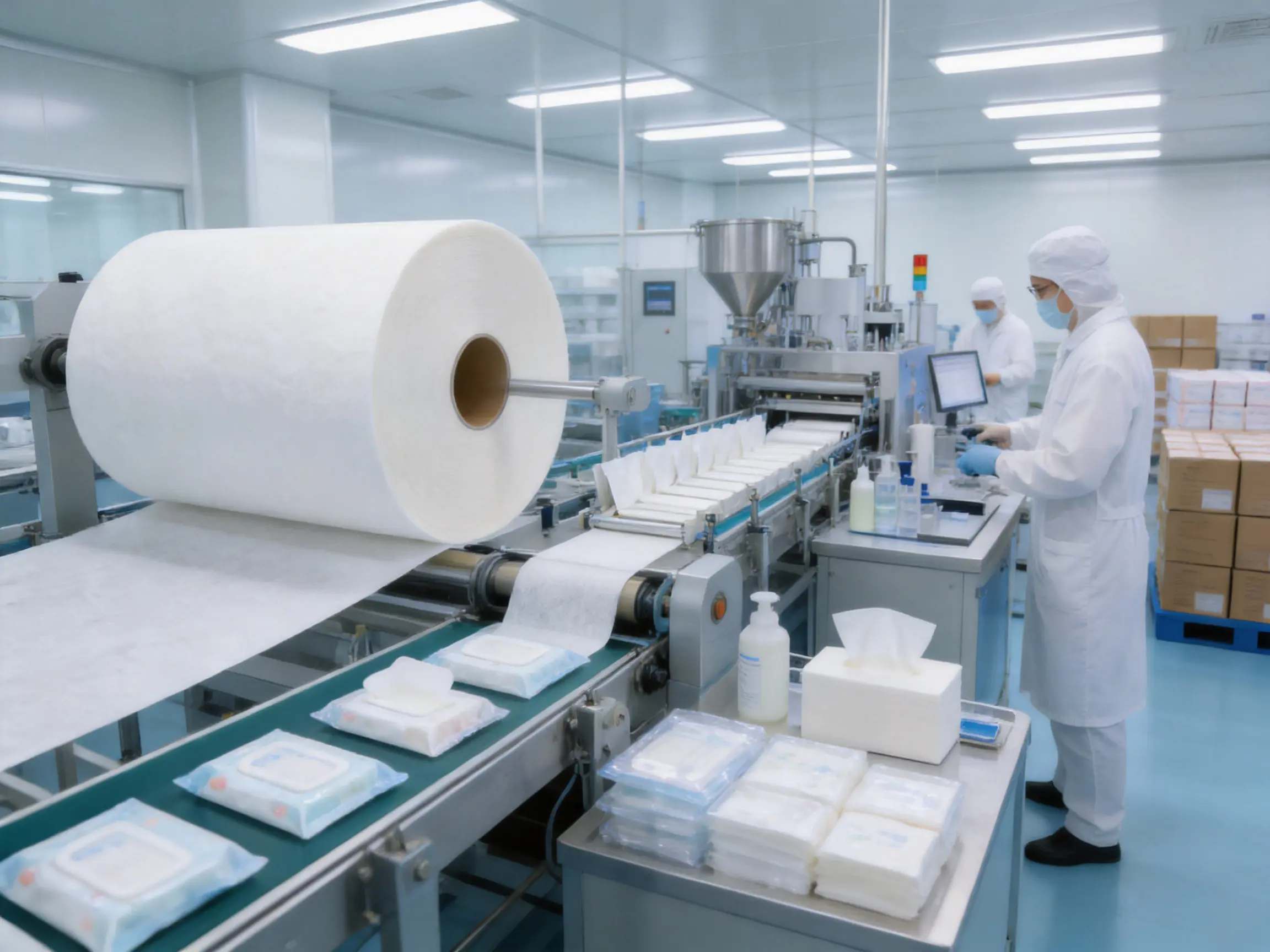
Baby wet wipes are an essential hygiene product used by parents, caregivers, hospitals, childcare providers, and retailers around the world. Because these wipes come into frequent contact with delicate infant skin, the quality of the underlying nonwoven fabric is especially important. The substrate must be soft enough for repeated use, strong enough to remain intact during wiping, absorbent enough to remove moisture and soils efficiently, and suitable for the intended disposal method. At the same time, brands and manufacturers are under increasing pressure to reduce plastic use, improve biodegradability, and develop products with a lower environmental impact.
Lyocell and wood pulp flushable fabric offers a balanced solution for these requirements. By combining approximately 30% lyocell fiber with 70% wood pulp fiber, this wet-laid spunlace material provides a soft, absorbent, plastic-free substrate for baby wet wipes. The composition can also be adjusted to meet different performance targets, production processes, and regional market requirements. When properly engineered and tested, the fabric can support flushable wipe applications while maintaining the softness and skin-friendly characteristics expected in baby care products.
Zhejiang Uniquality Nursing Products Technology Co., Ltd., operating within the Kingsafe and Uniquality manufacturing group, provides this material for commercial and industrial customers. The company combines nonwoven material production with finished hygiene product manufacturing, creating an integrated supply chain that extends from fiber selection and web formation to wet wipe conversion, quality inspection, and international delivery. This integrated capability allows customers to source both raw material rolls and finished private label products through one experienced manufacturing partner.
Why the Substrate Matters in Baby Wet Wipes
A baby wet wipe may appear simple, but its performance depends on several interconnected components. The fabric must hold a suitable amount of cleansing lotion without becoming excessively wet or difficult to handle. It must release the liquid gradually during use, remain stable when pulled from a package, and provide a smooth wiping surface. If the substrate is too rough, it may cause discomfort. If it is too weak, it may tear during use. If it contains excessive plastic-based fibers, it may create difficulties for brands seeking biodegradable or plastic-free product claims.
The substrate also influences the appearance, folding behavior, lotion distribution, packaging efficiency, and consumer perception of the finished wipe. A well-designed fabric can support a premium product position while allowing manufacturers to maintain efficient production speeds. This is particularly important for baby wipes, where consumers often compare softness, thickness, moisture retention, odor, packaging quality, and environmental credentials before making a purchase.
Traditional synthetic nonwoven fabrics can offer high strength and consistent processing performance, but many are made from petroleum-derived fibers such as polypropylene or polyester. These materials may persist in the environment and are not normally suitable for biodegradable product positioning. A lyocell and pulp construction addresses this concern by using plant-derived fibers and a plastic-free material structure.
However, natural or cellulose-based fibers must be carefully engineered. Ordinary wood pulp can provide excellent absorbency but may have limited wet strength when used alone. Lyocell can improve wet integrity and dimensional stability, but the blend ratio, fiber preparation, web structure, bonding process, and finishing treatment must all be controlled. The purpose of the combined structure is to balance softness, absorption, wet strength, dispersibility, and manufacturing reliability.
Material Composition and Functional Design
The standard composition of this flushable fabric is approximately 30% lyocell and 70% wood pulp. This ratio is not fixed for every project. It can be customized according to the customer’s target strength, absorbency, softness, dispersibility, converting equipment, and market positioning.
Lyocell is a regenerated cellulose fiber produced from dissolving wood-derived cellulose and reforming it into a continuous or staple fiber structure. It is valued in hygiene and textile applications because it combines a soft hand feel with good moisture management and relatively high wet strength compared with many conventional regenerated fibers. In this fabric, lyocell supports the structural integrity of the sheet and helps the material maintain its dimensions during lotion application and wiping.
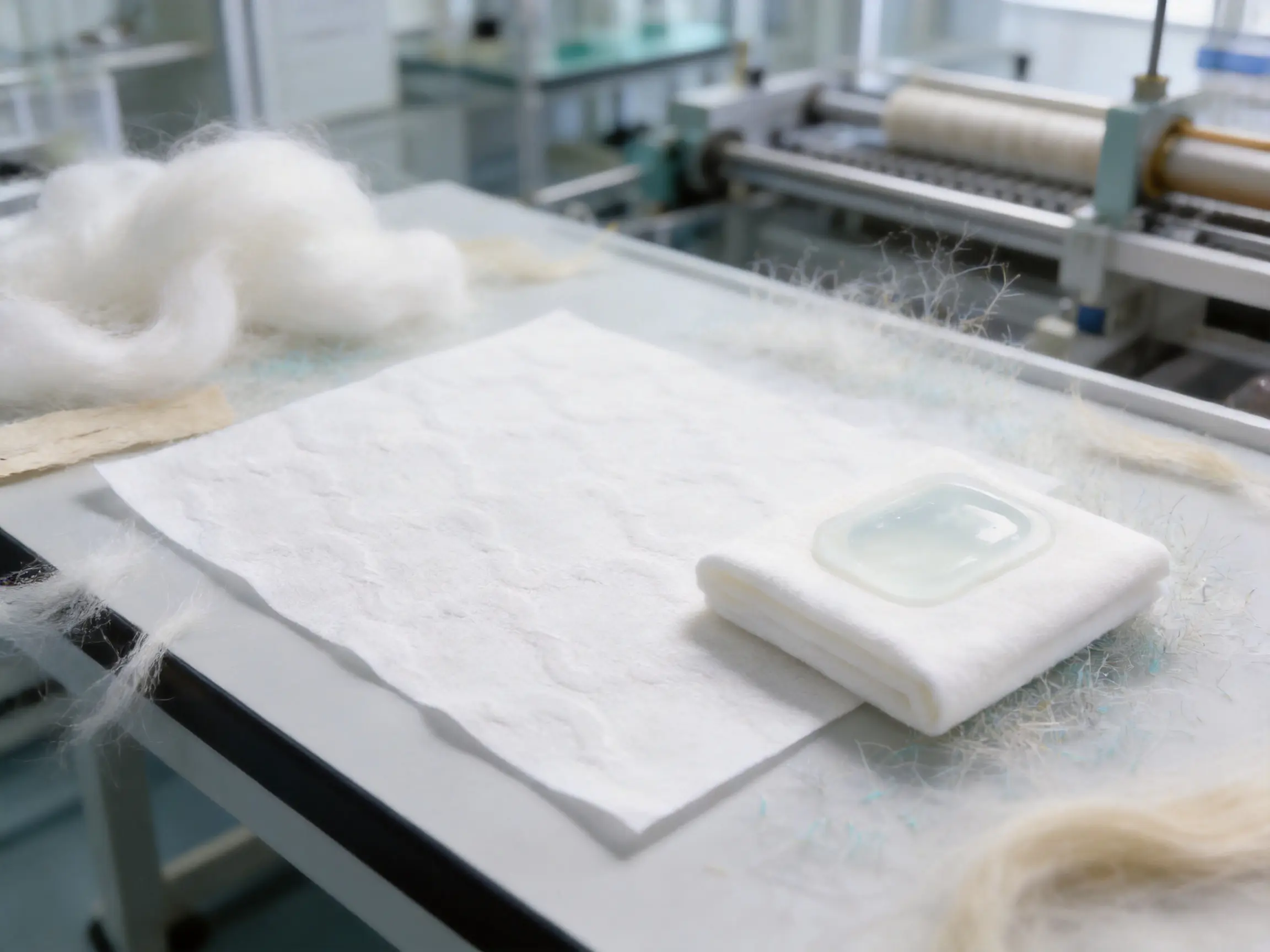
Wood pulp contributes a highly absorbent fiber network. Its open structure can rapidly take up water-based lotions and help distribute liquid through the wipe. Pulp also contributes a natural, fluffy texture that is suitable for products designed for sensitive skin. When the two fiber types are combined through wet-laid spunlace technology, the result is a cellulose-based nonwoven that can be engineered for both user comfort and disposal performance.
| Material feature | Contribution to the finished fabric | Importance for baby wet wipes |
|---|---|---|
| Lyocell fiber | Improves wet strength, softness, and dimensional stability | Helps the wipe remain intact and comfortable during use |
| Wood pulp fiber | Provides rapid liquid absorption and a fluffy texture | Supports cleansing performance and a gentle skin feel |
| Cellulose-based composition | Enables a plastic-free material direction | Supports biodegradable and sustainability-focused product development |
| Wet-laid spunlace structure | Forms an entangled, uniform, flexible nonwoven web | Allows production of soft, absorbent, and converting-friendly wipe substrates |
| Customizable fiber ratio | Allows adjustment of performance characteristics | Helps brands match the material to specific product and regional requirements |
The ratio of lyocell to pulp affects the behavior of the finished sheet. A higher proportion of lyocell may be selected when a customer requires additional wet integrity or improved dimensional stability. A higher proportion of pulp may be desirable when maximum absorbency, rapid dispersibility, or a particularly fluffy texture is the priority. The final selection should be verified through laboratory testing and production trials rather than determined by composition alone.
Wet-Laid Spunlace Technology
The fabric is produced using wet-laid spunlace technology. In a wet-laid process, fibers are dispersed in water to create a uniform suspension. This suspension is deposited onto a forming surface, where the fibers are distributed into a controlled web. Water is removed, and the web is subsequently strengthened through high-pressure water-jet entanglement. The resulting nonwoven structure does not depend on traditional woven or knitted yarns, making it suitable for soft, flexible, and highly absorbent hygiene materials.
Spunlace technology is particularly appropriate for baby wipe substrates because it can create a smooth surface while preserving a high level of drape and softness. The process also supports different fiber blends, basis weights, surface patterns, and roll formats. By controlling the water-jet pressure, web uniformity, fiber distribution, and drying conditions, the manufacturer can produce materials with consistent physical characteristics across large production runs.
Wet-laid formation helps distribute the pulp and lyocell fibers evenly throughout the sheet. This is important because uneven fiber distribution can create weak spots, inconsistent absorption, and irregular lotion retention. A uniform web is also easier to convert into folded wipes, rolls, and other finished formats. For high-volume customers, consistency from roll to roll is a key factor in reducing production interruptions and maintaining a stable finished product.
The spunlace process can also be adapted to produce different embossing styles. Available options include plain, pearl, mesh, and customized patterns. Embossing can influence the tactile impression, surface area, lotion distribution, and cleaning performance of the wipe. A plain surface may be selected for a smooth and understated appearance, while a pearl or mesh pattern can create additional texture for wiping and improve visual differentiation on the retail shelf.
Unlike adhesive-bonded nonwovens, water-jet entanglement can form a flexible web without relying on large quantities of chemical binders. This supports the development of soft, skin-contact materials and allows the manufacturer to focus on fiber selection and mechanical web integrity. Specific formulations and treatments remain dependent on the intended application, but the underlying process is well suited to cellulose-based flushable materials.
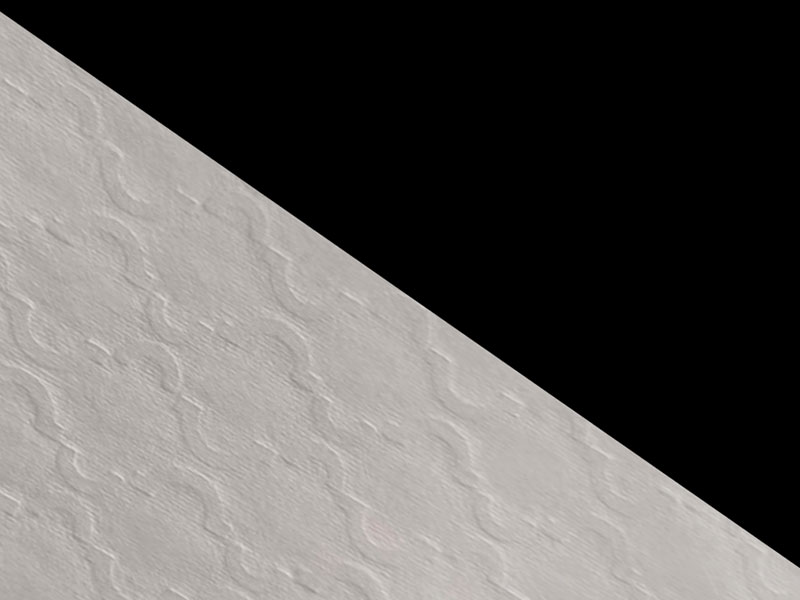
Lyocell/Pulp Flushable Fabric For Baby Wet Wipes
Flushability and Dispersibility
Flushability is a performance characteristic that requires careful definition. A material described as suitable for flushable applications must be designed to disperse under appropriate water and wastewater conditions, rather than simply being biodegradable in a general environmental sense. The wipe must also be evaluated for wet strength, disintegration, dispersibility, and potential impact on drainage systems.
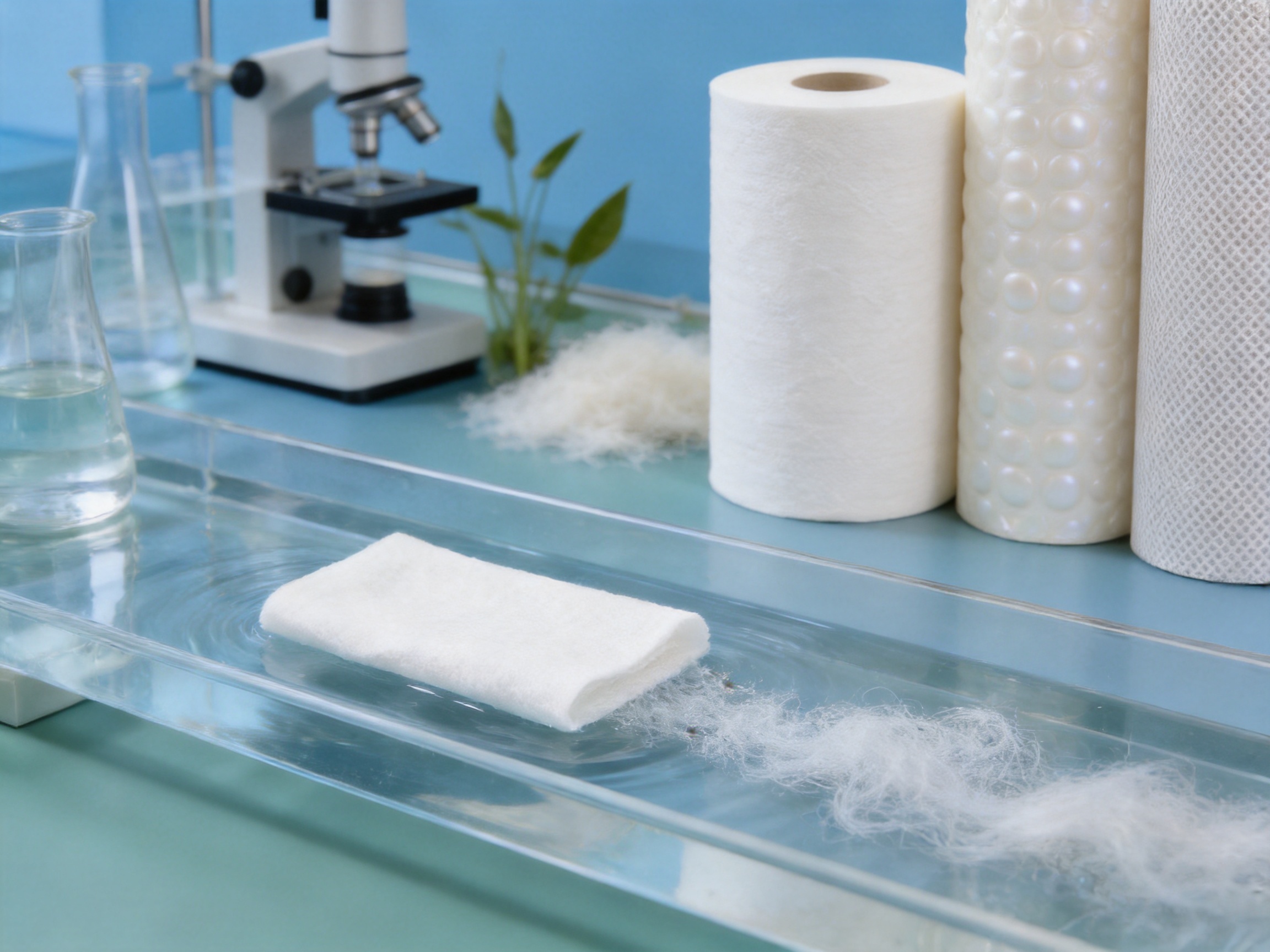
The lyocell and pulp structure is designed to support rapid water dispersion and anti-clogging performance. Wood pulp fibers can separate and disperse when exposed to sufficient water agitation, while the proportion and arrangement of lyocell help the fabric retain sufficient integrity during normal use. The objective is to balance two apparently opposite requirements: the wipe should remain strong and functional in the user’s hands, but it should be capable of breaking down after disposal through a suitable toilet and wastewater pathway.
Flushability should never be treated as an automatic result of using plant-based fibers. The finished wipe, including its lotion, folding configuration, packaging format, and any surface treatment, must be tested as a complete product. Different countries, municipalities, wastewater systems, and certification bodies may use different evaluation methods. For this reason, the manufacturer works with customers to define the target performance requirements and verify the final product against applicable regional standards.
Material testing may include assessments of wet tensile strength, dry tensile strength, absorbency, thickness, basis weight, dispersibility, disintegration, fiber composition, and microbiological quality. Finished wipes may require additional testing after lotion application and packaging. These evaluations help confirm that the product is suitable for its stated use and that its performance remains consistent during transportation, storage, and consumer handling.
Responsible product communication is equally important. A wipe should only be marketed as flushable when the complete product has been evaluated for the intended disposal system and relevant requirements. The manufacturer can support customers with material samples, development trials, technical documentation, and quality inspection. Final claims remain dependent on the customer’s product design, market regulations, test results, and labeling decisions.
Softness and Baby Skin Comfort
Baby skin is more delicate than adult skin and may be more vulnerable to friction, dryness, and irritation. The fabric used in a baby wipe therefore needs to provide a smooth and gentle contact surface. Softness is influenced by the fiber type, fiber fineness, web density, embossing pattern, finishing treatment, moisture level, and lotion formulation.
Lyocell contributes a smooth and comfortable touch, while pulp provides a soft, fluffy structure. Together, they create a substrate that can be designed for gentle wiping without excessive roughness. The material is also suitable for hydrophilic treatment, which allows the surface to accept water-based lotions efficiently. A well-controlled hydrophilic finish can help the wipe absorb and distribute cleansing liquid, reducing dry patches and supporting a more uniform user experience.
It is important to distinguish the softness of the fabric from the overall mildness of the finished wipe. Skin comfort also depends on the lotion ingredients, preservative system, pH, fragrance, folding method, storage conditions, and the frequency of use. A high-quality substrate provides a strong foundation, but the complete baby wipe must be evaluated through appropriate safety, stability, and compatibility testing.
The company’s production and quality teams can work with customers to select an appropriate fabric weight, surface pattern, and finishing technology. This allows different brands to develop products for newborn care, everyday diaper changes, travel use, sensitive skin, or premium retail lines. The material can also be adapted for dry wipe products when customers require a soft, absorbent sheet without pre-applied lotion.
Absorbency and Liquid Management
Absorbency is one of the most visible performance characteristics in a wet wipe. A suitable fabric should take up liquid quickly, distribute it evenly, and retain enough moisture for effective cleaning. Excessive liquid can cause dripping, package leakage, or a product that feels unpleasantly wet. Insufficient liquid may result in poor cleaning performance and increased friction during use.
The high pulp content in this fabric supports rapid water absorption. The open cellulose fiber network can hold a significant amount of liquid relative to the dry mass of the sheet. Lyocell helps maintain the structure of the sheet when wet, allowing the wipe to be handled without immediately losing its shape. This combination is useful for baby wipes, where the product needs to remove lotions, food residues, and everyday soils while remaining gentle on the skin.
Absorbency can be adjusted through basis weight, fiber ratio, web density, surface pattern, and finishing treatment. A lighter fabric may be suitable for compact travel wipes or cost-sensitive applications. A heavier sheet may be selected for premium products, larger wipe sizes, or applications that require additional liquid capacity. The standard fabric range is approximately 50 to 100 grams per square meter, with specifications determined according to the customer’s requirements.
Roll width is also customizable, from approximately 10 centimeters to 320 centimeters. This range allows the material to be supplied for different converting lines and product dimensions. Narrower rolls may be used for specific wipe formats, while wider jumbo rolls can support high-volume converting operations. Roll length, winding direction, core specifications, packaging, and labeling can be coordinated during the project development stage.
Environmental Advantages Compared with Conventional Synthetic Substrates
Many conventional wet wipe substrates rely on plastic-based fibers. Although synthetic fibers can provide strength and processing stability, they may contribute to long-term environmental persistence. They can also make it more difficult for brands to develop plastic-free product lines. A cellulose-based lyocell and pulp fabric offers an alternative direction for companies seeking to reduce or eliminate plastic fibers in selected wipe applications.
The material is designed to be biodegradable and plastic-free. Lyocell and wood pulp are plant-derived cellulose fibers, and the absence of conventional plastic fibers supports a more environmentally focused product concept. The fabric can also be engineered for rapid water dispersion, which is important for customers developing flushable wipes. These characteristics may help brands respond to consumer demand for products that combine hygiene performance with improved sustainability.
Environmental performance should be assessed across the full product lifecycle. Fiber sourcing, water consumption, energy use, lotion ingredients, packaging, transport, consumer use, and disposal all contribute to the overall impact of a wet wipe. A plastic-free substrate is a meaningful design improvement, but it should be presented accurately and supported by appropriate testing and documentation. Customers may also need to review local biodegradability claims, disposal instructions, wastewater requirements, and packaging regulations.
The integrated manufacturing model can help reduce unnecessary supply chain complexity. Customers may source nonwoven jumbo rolls, finished wet wipes, baby diapers, training pants, dry wipes, or related hygiene products through coordinated production resources. Consolidating development, material production, conversion, inspection, and delivery can improve communication and reduce the number of separate supplier interfaces involved in a product launch.
Product Specifications and Customization Options
The fabric is available in a range of specifications for baby wet wipe manufacturers, private label brands, nonwoven converters, importers, distributors, and hygiene product factories. The following specifications represent the standard development direction and can be adjusted according to the project.
| Specification | Standard offering | Customization potential |
|---|---|---|
| Composition | Approximately 30% lyocell and 70% wood pulp | Fiber ratio can be adjusted for strength, softness, absorbency, and dispersibility |
| Technology | Wet-laid spunlace | Process settings can be optimized for target performance |
| Pattern | U-style structure | Plain, pearl, mesh, or customized embossing patterns |
| Basis weight | Approximately 50 to 100 grams per square meter | Weight can be developed for product size and application |
| Roll width | Approximately 10 to 320 centimeters | Width, length, winding, and packaging can be coordinated with converting equipment |
| Finishing | Hydrophilic treatment and other available finishes | Hydrophilic, coating, antistatic, and related treatments may be discussed |
| Application | Baby wet wipes and related hygiene products | Can support dry wipes, flushable wipes, and selected nonwoven applications |
Customization begins with a technical discussion. The customer may provide information about the intended wipe size, lotion type, folding format, packaging equipment, required wet strength, target absorbency, disposal method, and market regulations. The engineering team can then recommend a preliminary composition and basis weight for sample production.
Embossing is another important customization area. Plain fabric provides a clean, smooth appearance and may be appropriate for sensitive skin products. Pearl patterns can add visual interest and tactile softness. Mesh structures may improve surface texture and liquid distribution. Customized patterns can help a private label brand create a distinct appearance while maintaining the desired functional characteristics.
Finishing technologies are selected according to the product’s requirements. Hydrophilic finishing promotes liquid uptake and distribution. Coating may be considered for specialized surface properties. Antistatic treatment can be relevant in certain manufacturing or handling conditions. Any finishing technology must be evaluated for compatibility with the intended skin-contact application, lotion chemistry, flushability target, and regulatory requirements.
Integrated Manufacturing Capabilities
Zhejiang Uniquality Nursing Products Technology Co., Ltd. is part of a manufacturing group with a long history in nonwoven materials and hygiene products. Founded in 1987, the group has developed capabilities in research and development, production, quality management, and sales. Its product portfolio includes spunlace nonwovens, spunmelt nonwovens, hot-air-through nonwovens, flushable and degradable materials, wet wipes, dry wipes, baby diapers, pull-ups, wet toilet paper, cleansing wipes, and other medical, maternal, household, industrial, and apparel-related products.
The company operates production resources in China and has expanded its manufacturing footprint to Vietnam. Multiple production bases provide additional capacity and support supply continuity for customers with regional or international sourcing needs. The company’s location in Zhejiang places it within the Yangtze River Delta manufacturing and logistics region, with access to established industrial resources and transportation networks.
An integrated production chain is a significant advantage for customers developing new hygiene products. Instead of coordinating separate suppliers for fibers, nonwoven rolls, wet wipe conversion, finished packaging, and quality inspection, a customer can work with a partner that understands each stage of the process. This can shorten communication cycles, simplify technical problem-solving, and improve consistency between the fabric specification and the final wipe format.
The company provides OEM and ODM services for both material and finished product projects. OEM customers may bring their own specifications, brand requirements, packaging designs, and performance targets. ODM customers may request support with product concept development, fiber selection, wipe construction, formulation coordination, packaging format, testing, and mass production. These services are designed for established brands as well as companies entering the baby care or flushable hygiene market for the first time.
Clean Production and Quality Management
Baby care products require strong control over cleanliness, production conditions, raw materials, and finished product inspection. Production is carried out in controlled clean workshops, including 100,000-class clean manufacturing areas, and supported by purified water systems. These conditions help reduce contamination risks during material production and wet wipe conversion.
A comprehensive testing center supports product development and quality verification. Testing may include physical performance, absorbency, moisture content, basis weight, thickness, tensile strength, composition, microbial indicators, packaging integrity, and other project-specific characteristics. The exact testing program depends on the product category, customer requirements, intended market, and applicable standards.
Quality management begins with incoming materials. Fiber specifications, packaging materials, lotions, and auxiliary components need to be checked before entering production. During nonwoven formation, process parameters are monitored to maintain web uniformity and consistent roll quality. During conversion, folding, cutting, lotion application, and packaging are reviewed to reduce defects such as incorrect counts, uneven wetting, damaged seals, or dimensional variation.
Finished goods inspection provides an additional control point before shipment. Customers may request inspection records, samples, batch documentation, or project-specific certificates. The goal is to create a traceable production process that supports stable quality over repeated orders. For international buyers, clear documentation and consistent communication are especially important because products may be transported over long distances and distributed through multiple channels.
Advantages for Commercial Buyers
Commercial buyers evaluate more than the technical properties of a fabric. They also consider supply stability, minimum order quantities, sample availability, delivery schedules, documentation, customization flexibility, and the supplier’s ability to support future growth. The integrated manufacturing model addresses these concerns through coordinated material and finished product resources.
First, the material provides a differentiated product concept. A baby wipe based on lyocell and wood pulp can be positioned around softness, absorbency, plastic-free construction, biodegradability, and flushable application development. This gives brands an alternative to ordinary synthetic nonwoven wipes and may support premium, natural, eco-conscious, or sensitive-skin product lines.
Second, the fabric is compatible with different production strategies. Customers can purchase jumbo rolls for their own converting operations, or they can request finished wet wipes through OEM or ODM manufacturing. This flexibility is useful for large converters that want to control final production as well as private label brands that prefer a complete finished product service.
Third, customization reduces the need to compromise between performance and cost. A customer can request a lighter basis weight for a value product, a heavier structure for a premium wipe, a higher lyocell ratio for increased wet strength, or a more pulp-rich design for absorbency and dispersibility. The final specification can be developed through sampling and testing rather than relying on a one-size-fits-all material.
Fourth, the company’s experience across multiple hygiene categories supports cross-category development. A customer interested in baby wipes may later require dry wipes, diapers, pull-ups, cleansing wipes, or other personal care products. A supplier with experience across these categories can help coordinate material selection, packaging formats, quality systems, and production planning.
Applications Beyond Baby Wet Wipes
The primary application is baby wet wipes, but the fabric can also be considered for related cellulose-based hygiene products. Potential applications include sensitive-skin cleansing wipes, flushable personal care wipes, wet toilet paper, dry baby wipes, household cleaning wipes, and other products where softness, absorbency, and reduced plastic content are important.
For dry wipes, the material’s soft and fluffy structure can provide a comfortable sheet for use with water, cleansing solutions, or dry cleaning. For personal care wipes, the fiber ratio and surface pattern can be adjusted to match the desired wiping strength and tactile experience. For household applications, customers may explore a higher basis weight or a different embossing structure to improve liquid capacity and cleaning performance.
Not every application should use the same specification. Baby skin contact products generally prioritize softness, cleanliness, and mildness. Household products may prioritize strength, texture, and cost efficiency. Flushable products require particular attention to dispersibility and disposal testing. The ability to customize the material allows the supplier to develop separate specifications for each category rather than applying a single fabric design to every use.
Development Process from Sample to Mass Production
A structured development process helps reduce technical risk. The first stage is requirement collection. The customer provides details about the product format, target market, wipe dimensions, lotion system, packaging, disposal claims, expected annual volume, and preferred delivery format. The manufacturer reviews these requirements and identifies the main performance priorities.
The second stage is material selection. Engineers consider the lyocell and pulp ratio, basis weight, width, surface pattern, finishing, and roll format. If flushability is required, the intended test method and regional requirements are discussed at this stage. The material design should be linked to the final product rather than evaluated only as an isolated dry sheet.
The third stage is sample production. Sheet samples or sample rolls can be provided for laboratory evaluation and converting trials. Customers may test the material on their own equipment, apply their own lotion, assess folding behavior, inspect softness, and conduct preliminary flushability or dispersibility evaluations. Feedback from these trials is used to refine the specification.
The fourth stage is pilot production and quality confirmation. A pilot batch allows the customer and manufacturer to review production stability, roll quality, packaging, and finished wipe performance. Any necessary changes to fiber ratio, web density, embossing, or finishing can be made before full-scale production.
The final stage is mass production and delivery. Production planning is coordinated according to the confirmed specification, order quantity, packaging format, and shipping requirements. Ongoing quality inspection helps ensure that repeat orders remain consistent with the approved sample. This process is suitable for both new product launches and long-term supply programs.
Frequently Asked Questions
What is the standard composition of the fabric?
The standard composition is approximately 30% lyocell and 70% wood pulp. The ratio can be customized according to the required softness, wet strength, absorbency, dimensional stability, dispersibility, and converting performance.
Is the material suitable for flushable baby wipes?
Yes. The fabric is developed for flushable applications and can support baby wipe products that require rapid water dispersion and reduced clogging risk. The complete finished wipe should be tested against the relevant standards and disposal requirements in the target market before a flushable claim is made.
Is the fabric plastic-free?
The material is designed as a plastic-free cellulose-based substrate using lyocell and wood pulp fibers. Customers should confirm the complete product formulation, finishing system, packaging, and any additional components when making a plastic-free product claim.
Why are lyocell and wood pulp used together?
Lyocell helps improve wet strength, softness, and dimensional stability, while wood pulp provides rapid absorption and a fluffy texture. Combining the two fibers creates a balance between wipe integrity during use and dispersibility after disposal.
What fabric weights are available?
The standard basis weight range is approximately 50 to 100 grams per square meter. Custom weights may be developed based on the wipe size, product positioning, absorbency target, package format, and converting equipment.
Can the embossing pattern be customized?
Yes. Available options include plain, pearl, mesh, and customized patterns. The pattern can be selected according to the desired tactile feel, appearance, lotion distribution, cleaning performance, and brand presentation.
What roll widths can be supplied?
Roll widths can range from approximately 10 centimeters to 320 centimeters. Roll length, core size, winding direction, packaging, and labeling can also be discussed according to the customer’s equipment and logistics requirements.
Can the company supply jumbo rolls?
Yes. Jumbo rolls are available in customized widths, lengths, and packaging formats. The recommended roll specification depends on the customer’s converting line, storage conditions, production speed, and order volume.
What finishing technologies are available?
Hydrophilic, coating, antistatic, and other finishing options may be considered. The selected treatment must be compatible with the intended application, skin-contact requirements, lotion chemistry, flushability target, and relevant quality standards.
What is the minimum order quantity?
Minimum order quantity depends on the composition, basis weight, width, finishing, packaging, customization requirements, and production schedule. Customers should provide project details to receive a specific quotation and order recommendation.
Are samples available?
Yes. Sheet samples or sample rolls can be supplied for material evaluation, laboratory testing, and converting trials before mass production. Sample requirements should include the intended product application and preferred specification.
Can the company support private label products?
Yes. OEM and ODM services are available for private label brands, baby wipe manufacturers, hygiene factories, converters, importers, distributors, retailers, and global sourcing companies. Support may include material development, finished wipe production, packaging coordination, quality inspection, and international delivery.
Can the fabric be used for products other than baby wipes?
Yes. Depending on the specification, it may be considered for dry wipes, sensitive-skin wipes, flushable personal care wipes, wet toilet paper, household cleaning wipes, and other cellulose-based nonwoven applications. Each application should receive its own performance and compatibility evaluation.
How does the company support new product development?
The technical team can support material selection, fiber ratio adjustment, basis weight development, embossing selection, finishing, sampling, testing, pilot production, and mass manufacturing. The process is intended to help customers move from an initial concept to a stable commercial product.
Conclusion
Lyocell and pulp flushable fabric provides a practical platform for developing next-generation baby wet wipes. Its combination of plant-derived fibers, soft texture, rapid absorption, improved wet strength, and plastic-free construction addresses several of the most important requirements in modern baby care products. The wet-laid spunlace process creates a flexible and uniform substrate, while customizable fiber ratios, basis weights, embossing patterns, roll widths, and finishing technologies allow the material to be adapted to different product concepts.
Compared with conventional synthetic nonwoven substrates, the material offers an alternative path for brands seeking biodegradable, plastic-free, and flushable product solutions. At the same time, its performance must be confirmed through complete product testing. Flushability, biodegradability, skin compatibility, and other claims should be supported by appropriate standards, laboratory evaluations, and market-specific documentation.
Zhejiang Uniquality Nursing Products Technology Co., Ltd. strengthens this material offering through integrated manufacturing capabilities, multiple production resources, controlled clean workshops, purified water systems, testing support, and OEM and ODM services. From fiber selection and nonwoven roll production to finished wipes, packaging, inspection, and delivery, the company can support customers throughout the product lifecycle.
For baby wipe manufacturers, private label brands, converters, importers, distributors, and hygiene product developers, this integrated approach can simplify sourcing and accelerate product development. By combining cellulose-based material innovation with large-scale manufacturing experience, technical customization, and quality management, the company provides a reliable foundation for brands seeking softer, more absorbent, and more environmentally responsible baby wet wipe products.
References
1. Product specification and technical information for lyocell and pulp flushable fabric supplied for baby wet wipe applications.
2. General principles of wet-laid nonwoven formation and water-jet spunlace bonding technology.
3. Technical literature on lyocell fiber properties, cellulose regeneration, moisture management, and wet strength.
4. Technical literature on wood pulp fiber absorbency, cellulose fiber dispersion, and nonwoven web formation.
5. Regional guidance and industry testing principles for flushable wipes, dispersibility, disintegration, and wastewater compatibility.
6. Quality management and hygiene manufacturing practices for baby care products and skin-contact nonwovens.
7. Company-provided information on integrated nonwoven production, OEM and ODM manufacturing, clean workshops, testing facilities, and hygiene product development.