中文简体
 English
 日本語
 русский
 Español
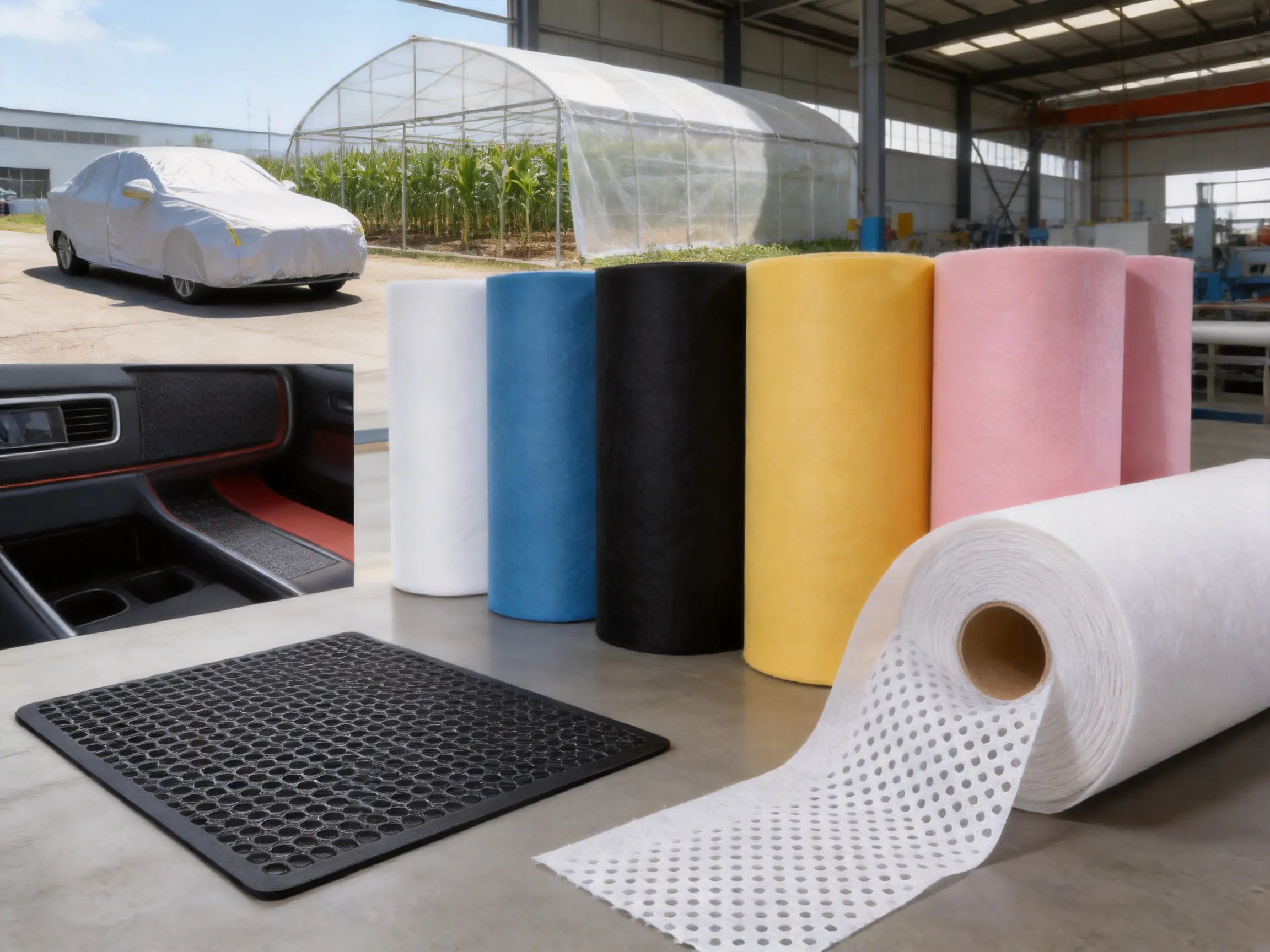
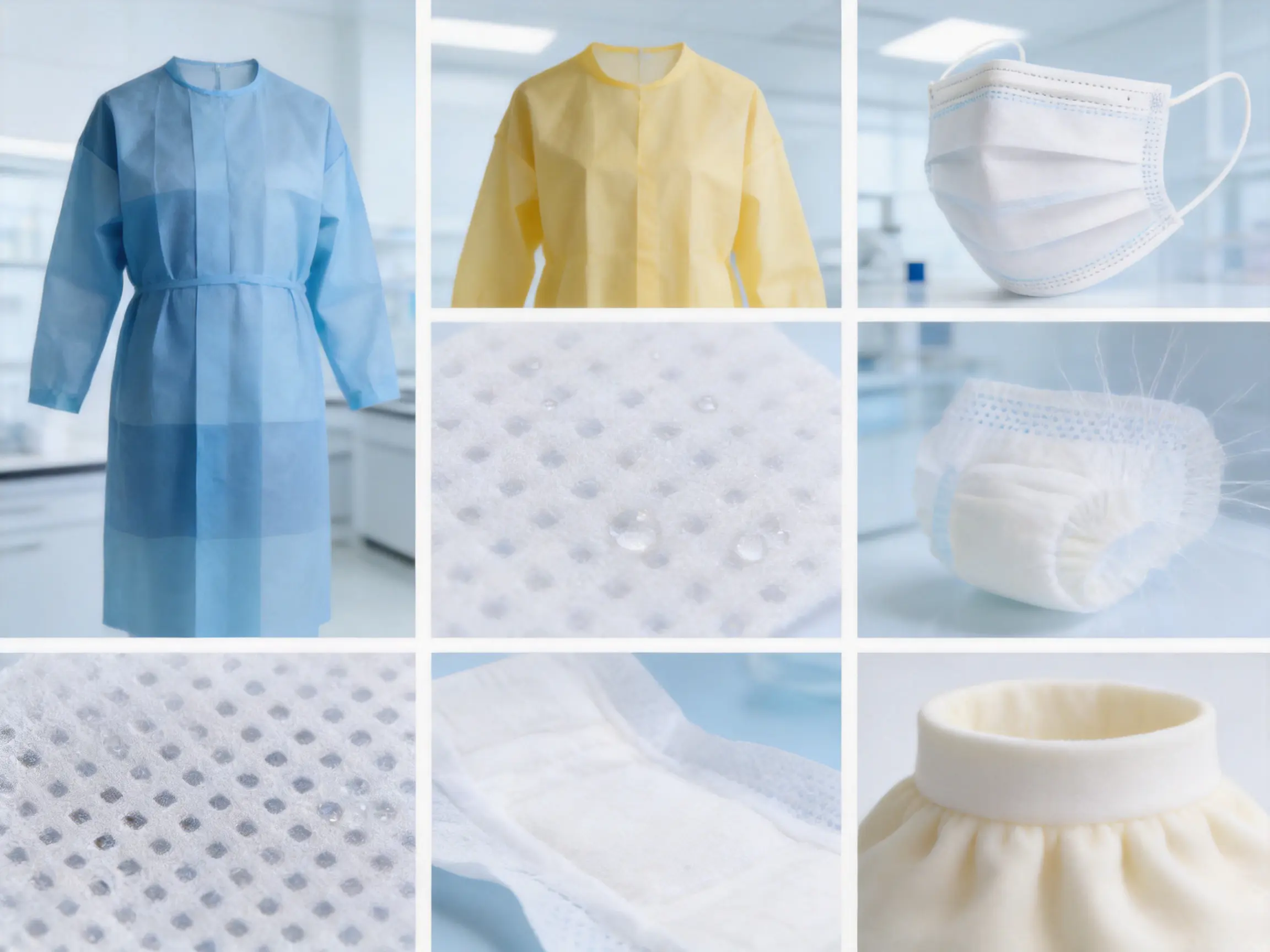
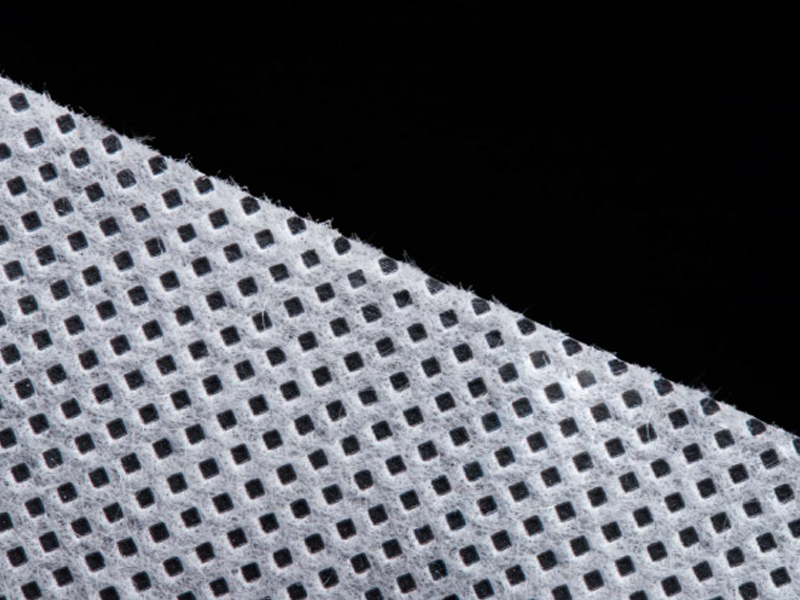
Square Dot Spunbond and Meltblown, also known as spunmelt nonwoven fabric, is an engineered polypropylene material designed for applications that require softness, strength, protection, filtration, liquid management, and reliable processing performance. By combining advanced spunbond and meltblown technologies with customized additives and functional treatments, this product family can support a wide range of medical, hygiene, automotive, agricultural, and industrial requirements.
Unlike ordinary nonwoven fabric designed for only one general-purpose application, this material can be developed with different layer structures, basis weights, colors, patterns, surface properties, and functional characteristics. Customers can select from SS, SSS, SMS, SMMS, SSMMS, SSSMS, and M configurations according to the required balance of softness, barrier performance, strength, filtration, and cost.
The Square Dot pattern provides a recognizable surface appearance while also supporting customized product design. The pattern can be adjusted to meet specific customer requirements, and the material can be supplied in white, blue, yellow, pink, black, and other customized colors. Basis weights range from lightweight 8-gram materials to heavier 80-gram constructions for spunbond and spunmelt products. Meltblown filter media can generally be customized from 20 to 50 grams.
Produced by a manufacturer with more than three decades of experience in medical, hygiene, nonwoven, and textile-related industries, the material benefits from advanced equipment, broad production capabilities, technical expertise, and an established quality-management approach. Its development is supported by international production technology and manufacturing resources located across several major industrial regions in China.
What Is Square Dot Spunbond and Meltblown Fabric?
Spunbond and meltblown are two important nonwoven manufacturing technologies. Both use thermoplastic polymers, most commonly polypropylene, but they create fibers with different dimensions and functional characteristics.
In spunbond production, molten polymer is extruded through spinnerets to form continuous filaments. These filaments are stretched, distributed across a moving web, and bonded through thermal, mechanical, or other bonding methods. Spunbond fabric is known for its tensile strength, uniformity, dimensional stability, and efficient production.
In meltblown production, molten polymer is extruded through fine die openings and attenuated by high-velocity hot air. The resulting microfibers form a fine-fiber web with a large surface area and small pore structure. Meltblown layers are particularly useful when filtration and liquid or aerosol barrier performance are important.
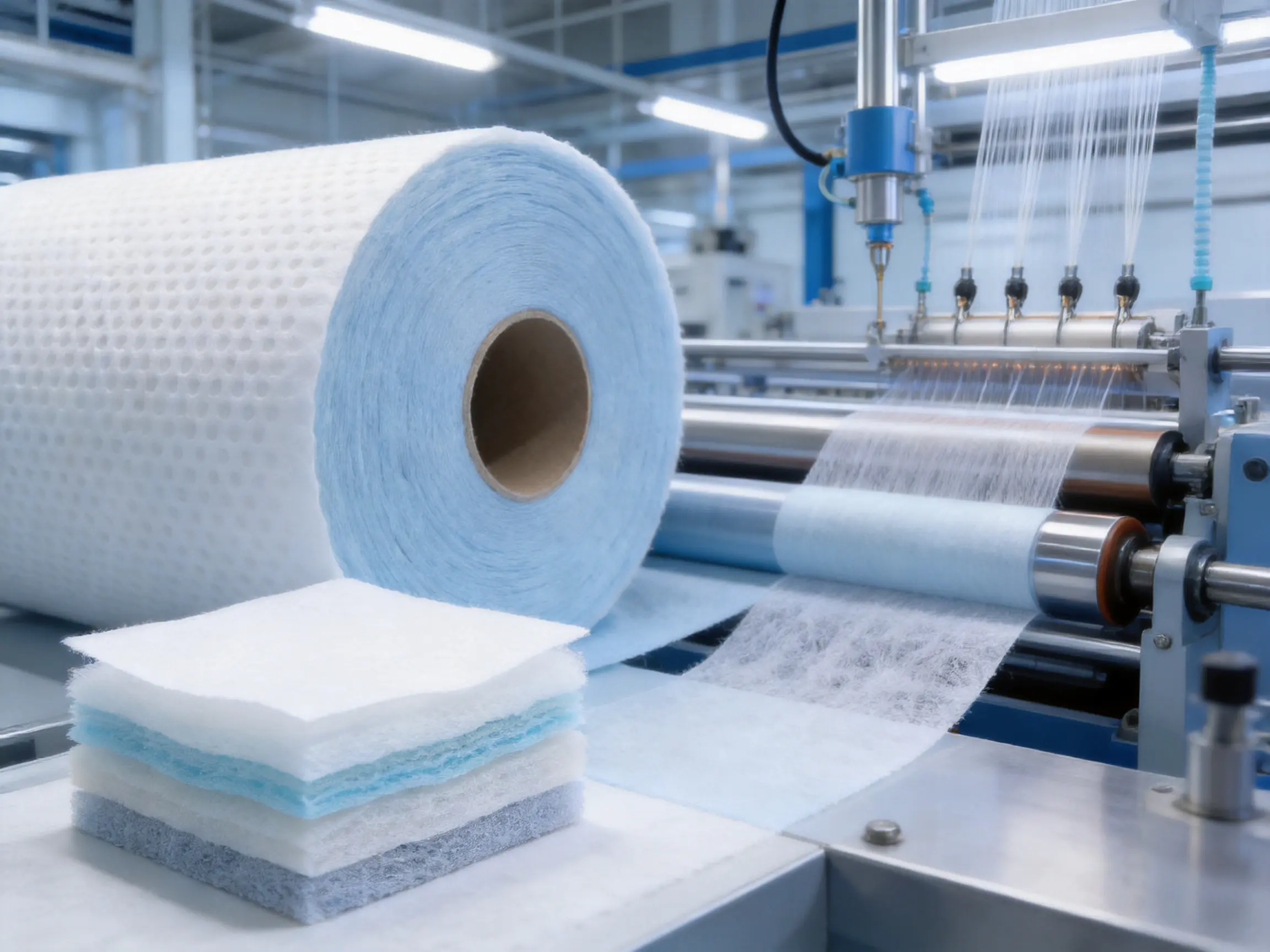
Spunmelt fabric combines one or more spunbond layers with one or more meltblown layers in an integrated production process. Depending on the construction, the outer spunbond layers can provide strength, softness, and handling performance, while the inner meltblown layer can improve filtration and barrier properties.
The Square Dot design refers to the visible surface pattern of the fabric. Although pattern selection is partly an aesthetic and branding decision, the bonding pattern also influences the material’s hand feel, surface texture, tensile behavior, and resistance to deformation. A properly engineered pattern can help balance softness and structural integrity without creating an unnecessarily harsh surface.
Core Material and Product Architecture
The primary raw material is polypropylene. Polypropylene is widely used in medical and hygiene nonwovens because it is lightweight, chemically stable in many common environments, processable at high production speeds, and suitable for a variety of functional treatments.
The product may also incorporate masterbatch, functional masterbatch, and functional additives. These components enable the manufacturer to adjust color, hydrophilicity, antistatic behavior, softness, flame resistance, antibacterial performance, liquid repellency, and other requirements.
Material architecture is selected according to the final use. For example, a simple SS structure may be appropriate for soft hygiene components, while an SMS or SMMS construction may be selected when a combination of strength, barrier performance, and efficient fiber formation is needed. SSMMS or SSSMS structures can provide additional layering options for protective apparel and technical applications.
| Construction | General Structure | Typical Performance Focus | Common Applications |
|---|---|---|---|
| SS | Spunbond and spunbond | Softness, strength, surface uniformity | Diaper components, waist materials, general hygiene products |
| SSS | Three spunbond layers | Higher strength, balanced hand feel, dimensional stability | Medical apparel, masks, automotive and industrial materials |
| SMS | Spunbond, meltblown, spunbond | Strength with a central barrier or filtration layer | Protective clothing, isolation apparel, mask materials |
| SMMS | Spunbond, two meltblown layers, spunbond | Enhanced barrier and filtration potential | Isolation clothing, surgical apparel, protective products |
| SSMMS | Two spunbond layers, two meltblown layers, spunbond | Multilayer protection, strength, and coverage | Surgical gowns, protective clothing, technical materials |
| SSSMS | Multiple spunbond layers with meltblown layers | Customized protection and mechanical performance | Specialized medical and industrial applications |
| M | Meltblown | Fine-fiber filtration media | Mask filter layers |
The ability to supply multiple structures is a major advantage over suppliers that focus on a single standard grade. Buyers can select one source for different product lines instead of managing several suppliers with different technical systems, production standards, and delivery arrangements.
Important Product Advantages
Customized Basis Weight
Basis weight is one of the most important variables in nonwoven fabric design. Lightweight materials can reduce product weight and material consumption, while heavier grades can provide more coverage, strength, opacity, and barrier support.
Spunbond and spunmelt products can be customized from approximately 8 grams to 80 grams. This range supports thin hygiene components, medium-weight medical materials, and heavier industrial or automotive constructions. Meltblown filter media can be customized from approximately 20 grams to 50 grams according to the target filtration and processing requirements.
Customization helps manufacturers avoid using an unnecessarily heavy product for a lightweight application. It can also help buyers achieve a better balance between cost and performance. Basis weight should always be selected together with the layer structure, fiber diameter, bonding pattern, additive package, and intended end use.
Softness and Skin Contact Performance
Softness is essential for products that touch the skin, including diaper components, period pants, pull-up waistbands, mask inner layers, and medical garments. A fabric that feels harsh or abrasive can reduce user acceptance even if it provides adequate mechanical performance.
The product range includes soft, super-soft, cotton-soft, and skin-friendly options. Through polymer selection, web formation, bonding control, and additive technology, the manufacturer can develop materials with a more comfortable hand feel while maintaining sufficient strength and processability.
For hygiene manufacturers, the availability of several softness levels makes it easier to match the fabric to different product tiers. A premium baby-care product may require an especially soft surface, while an industrial cover may prioritize ageing resistance or flame retardancy.
Liquid Management and Barrier Options
Nonwoven products used in medical and hygiene applications often require carefully controlled interaction with liquids. Some components must rapidly accept and distribute liquid, while others must repel liquid and help prevent leakage.
Hydrophilic treatment can improve liquid acceptance and is commonly selected for core covers and other absorbent hygiene components. Water-repellent treatment can help protect garments and external surfaces from liquid penetration. The product range also includes three-anti performance against alcohol, blood, and grease for selected medical apparel applications.
These properties are not interchangeable. A diaper core cover normally benefits from hydrophilicity, while an isolation garment or surgical gown may require repellency. The manufacturer can adjust the product according to the location of the fabric within the finished article.
Filtration Performance
Meltblown fabric is valued for its fine fibers and filtration potential. The supplied product range includes water-electret meltblown and electric-electret meltblown options. Electret treatment gives the material an electrostatic component that can improve the capture of fine particles without requiring an excessively dense structure.
According to the supplied product information, the water-electret meltblown option can achieve filtration efficiency associated with European FFP2 and FFP3 levels and American Level 2 and Level 3 requirements. Electric-electret meltblown can achieve BFE99+ and PFE99 performance when produced to the appropriate specification.
Actual performance depends on the final material design, test method, product construction, manufacturing conditions, and certification requirements. Buyers should request current test reports and confirm the applicable standard before using the material in a regulated product.
Functional Additives
The product can be customized with a broad selection of functional characteristics. Options include antistatic performance, flame retardancy, antibacterial treatment, anti-skid performance, ageing resistance, hydrophilicity, water repellency, and different degrees of softness.
Fragrance can also be incorporated for selected applications. Available scent examples include mint and apple, while customized scent development may be discussed. Aloe essence can be added to hydrophilic products, and other essence options may be evaluated according to technical feasibility and regulatory requirements.
Functional additives should be selected according to the final use environment. For example, an antistatic material may be suitable for protective clothing or technical applications, while a fragrance-treated fabric may be intended for consumer-oriented hygiene products. The manufacturer’s technical team can help evaluate compatibility, durability, odor intensity, and processing behavior.
Square Dot Spunbond & Meltblown(Spunmelt) Non-woven Fabric
Applications in Medical Products
Surgical Gowns
Surgical gowns require a controlled combination of barrier performance, strength, flexibility, softness, and comfort. SSMMS material in blue with three-anti performance is available in a representative 37-gram specification. A heavier 45-gram SSMMS option can provide additional coverage for applications that require a more substantial fabric.
The multilayer construction enables spunbond layers to contribute mechanical strength and handling performance while meltblown layers support barrier behavior. Color customization can help differentiate gown types, product grades, or hospital departments.
For surgical gown manufacturers, consistent roll quality is as important as nominal basis weight. Even web formation, stable bonding, low defect levels, and controlled winding help reduce interruptions during cutting, sewing, ultrasonic bonding, and final garment assembly.
Isolation Clothing
Isolation clothing may require water repellency, antistatic characteristics, or a defined level of liquid protection. A 26-gram SMMS yellow specification is listed for isolation clothing with water repellency and American Standard Level 2 performance. A 45-gram SSMMS white specification is also available for isolation and protective clothing applications.
Another construction combines polypropylene spunbond with polyethylene film, represented by a 35-gram SSS plus 30-gram polyethylene specification. This type of composite may be considered when a more pronounced liquid barrier is needed. Material selection should be based on the intended exposure, garment design, seam construction, and applicable testing requirements.
Face Mask Surface and Inner Layers
Mask surface and inner layers must provide a comfortable user experience while remaining compatible with high-speed mask-making equipment. The listed 20-gram, 25-gram, 30-gram, and 50-gram SSS options are designed with antibacterial, skin-friendly, and super-soft characteristics.
Surface and inner-layer materials differ from filter media. The outer surface may need to resist handling contamination and provide a clean appearance, while the inner layer is normally selected for comfort and skin contact. In both cases, low lint, stable dimensions, and consistent roll unwinding are valuable manufacturing benefits.
Mask Filter Layers
The M-grade meltblown product is designed for use as a mask filter layer. The representative specifications include 25-gram white water-electret meltblown associated with FFP2 and FFP3 filtration levels, and 25-gram white electric-electret meltblown associated with BFE99+ and PFE99 performance.
Filter media selection should consider filtration efficiency, breathing resistance, microbial filtration, particle filtration, electrostatic stability, web uniformity, and compatibility with the mask’s outer and inner layers. A well-designed filter layer must not only capture particles but also support comfortable airflow and reliable converting performance.
Applications in Hygiene Products
Diaper Core Cover
A diaper core cover helps manage the movement of liquid between the topsheet and absorbent core. The listed 12-gram SS, SSS, or SMS materials are available in white and can be treated for hydrophilic performance.
The suitable grade depends on the diaper design, core composition, acquisition layer, line speed, and desired liquid distribution. A uniform hydrophilic treatment can help maintain consistent liquid acceptance across the width of the roll. The fabric must also withstand unwinding, cutting, folding, and bonding without excessive stretching or tearing.
Anti-Leakage Protection
Anti-leakage protection materials are used in areas where softness and liquid repellency must work together. A representative 12-gram SSMMS material is available in white or creamy white with water repellency and super-soft, cotton-soft, or soft hand-feel options.
This balance is important in baby diapers, adult incontinence products, and period pants. The fabric should help create a comfortable barrier while supporting the integrity of the finished product. Depending on the construction, it may be combined with films, elastics, absorbent cores, or other nonwoven layers.
Pull-Up and Period Pants Waist Materials
Waist materials must be soft, flexible, and comfortable because they remain in close contact with the wearer during movement. The product range includes 15-gram and 16-gram SS or SSS materials in creamy white with super-soft, cotton-soft, or soft characteristics.
Manufacturers can select the most suitable structure according to elasticity, lamination, bonding, and garment-converting requirements. Surface uniformity is especially important when the material is laminated with elastic components or used in a visible waistband area.
The availability of multiple softness levels allows brands to create different product grades while maintaining a consistent supply relationship. Color and pattern customization can also support visual differentiation in premium or specialty products.
Applications in Industrial and Technical Products
Car Covers and Agricultural Sheds
A 35-gram SSS fabric with ageing resistance is listed for car covers and agricultural sheds. These applications may expose nonwoven materials to sunlight, temperature changes, moisture, dust, and repeated handling. Ageing-resistant treatment can help extend functional service life, although the actual durability depends on exposure conditions and product design.
For vehicle covers, the material must be lightweight enough for convenient handling while providing adequate coverage and resistance to tearing. For agricultural applications, the fabric may be integrated into temporary or semi-permanent coverings, protective structures, or other technical assemblies.
Automotive Interiors
A 40-gram SSS material with flame-retardant performance is listed for car interiors. Automotive interior materials are often required to meet demanding requirements for appearance, dimensional stability, abrasion behavior, odor, flame response, and processing compatibility.
Nonwoven fabric can be used in trim components, backing materials, acoustic structures, protective layers, and other interior assemblies. The exact specification must be selected according to the vehicle program, component location, bonding method, and applicable automotive test requirements.
Non-Slip Mats
A 36-gram SSS material with single-side anti-skid performance is available for non-slip mat applications. Anti-skid treatment can be applied to one side so that the opposite side remains suitable for printing, lamination, bonding, or contact with another material.
This construction can be considered for household mats, protective pads, packaging-related materials, and technical products that require improved surface grip. The performance should be evaluated under dry, wet, clean, and contaminated conditions depending on the intended environment.
Manufacturing Process and Quality Advantages
Integrated Polymer Processing
Advanced spunbond and meltblown production begins with controlled polymer feeding and melting. Polypropylene and selected additives must be blended consistently before extrusion. Stable temperature control is essential because changes in melt viscosity can influence fiber formation, web uniformity, strength, softness, and filtration behavior.
Modern extrusion systems support accurate control of polymer flow, temperature, pressure, and throughput. These controls help reduce variation across the production width and from batch to batch. Consistency is particularly important for customers operating high-speed diaper, mask, medical garment, or lamination lines.
Precision Fiber Formation
Spunbond filaments are formed through spinnerets and attenuated into a continuous web. Meltblown fibers are created through fine die openings and high-velocity air streams. The stability of these processes affects fiber diameter, distribution, pore structure, basis-weight uniformity, and tensile performance.
Internationally developed equipment and technology from Germany, France, and Italy support the manufacturer’s production capabilities. Advanced machinery can improve process repeatability, enable a wide range of material structures, and provide greater control over customized product development.
Layer Formation and Bonding
For spunmelt products, multiple webs are formed and combined in a controlled sequence. The number and position of spunbond and meltblown layers can be adjusted according to the required function. Thermal bonding then integrates the layers into a stable nonwoven structure.
Bonding conditions influence softness, tensile strength, elongation, tear behavior, air permeability, and surface appearance. Excessive bonding can make a material harsh or reduce flexibility, while insufficient bonding can cause poor dimensional stability or fiber shedding. A balanced process is therefore essential.
Pattern Engineering
The Square Dot pattern is created through controlled bonding. The pattern can be customized to support appearance, texture, and performance requirements. Pattern design may be adjusted for different product categories, customer branding strategies, converting methods, or surface-contact expectations.
Pattern consistency across the roll is important. Variation in dot shape, spacing, bonding intensity, or pattern alignment can influence the visual quality and mechanical behavior of the finished product. Stable calendering and web tension control help maintain a uniform appearance.
Functional Treatment and Additive Control
Hydrophilic, water-repellent, antistatic, antibacterial, flame-retardant, anti-skid, and ageing-resistant properties require careful additive selection and dosage control. Functional agents must be compatible with polypropylene and should not create unacceptable odor, discoloration, migration, or processing instability.
For fragrance and essence products, the formulation must be evaluated for odor stability, user acceptance, storage behavior, and compatibility with the final product. Aloe essence may be used in selected hydrophilic products, while mint, apple, and customized fragrance options may be considered for consumer-oriented applications.
Roll Winding and Converting Readiness
Even a technically excellent nonwoven fabric can create problems if it is poorly wound. Correct roll tension, edge alignment, roll hardness, and packaging protection help ensure smooth delivery to the customer’s converting line.
Medical gowns, diapers, masks, and technical products may use high-speed cutting, folding, laminating, ultrasonic bonding, thermal bonding, sewing, or elastic attachment. The fabric must therefore be supplied in a condition that supports stable unwinding and efficient downstream processing.
Why This Product Can Outperform Standard Alternatives
Broader Specification Range
Many general-purpose nonwoven suppliers offer only a narrow selection of basis weights or one standard layer structure. The product described here offers a broader range of options, including lightweight hygiene grades, multilayer medical grades, fine-fiber meltblown filter media, and heavier industrial materials.
This broader range allows customers to optimize material consumption without sacrificing the required function. It also enables a single supplier to support several product categories, which can simplify procurement and technical coordination.
Combination of Comfort and Protection
Some protective materials provide good barrier performance but feel stiff or uncomfortable. Some soft materials provide a pleasant hand feel but do not meet the barrier or strength requirements of demanding applications. The combination of spunbond and meltblown layers allows the manufacturer to design a more balanced material.
For medical and hygiene products, this balance is particularly important. Gowns must be protective but wearable. Masks must filter particles but remain comfortable. Diaper components must manage liquid while maintaining a soft surface. The ability to adjust layer structure and functional treatment supports these competing requirements.
Customization Capability
Customization extends beyond color. Customers can request different basis weights, layer structures, patterns, additives, softness levels, fragrances, and functional treatments. This is valuable for private-label manufacturers, medical-product suppliers, hygiene brands, and industrial converters seeking differentiated products.
Customized specifications can help a finished-product manufacturer achieve a specific target for softness, appearance, barrier behavior, filtration, or processing. The development process should include sample approval, laboratory testing, line trials, and final specification confirmation.
Experience Across Multiple Industries
The manufacturer’s product portfolio covers medical, maternal and baby care, beauty, household, industrial cleaning, automotive, agriculture, and clothing-related fields. This cross-industry experience can support practical problem-solving because the same nonwoven technology may be adapted for very different operating conditions.
Knowledge gained from hygiene applications can contribute to softness and liquid-management development. Medical applications can strengthen process control and barrier expertise. Automotive and industrial applications can encourage improvements in ageing resistance, flame retardancy, dimensional stability, and durability.
Company Manufacturing Strengths
The manufacturer was established in 1987 and has developed into a national high-technology enterprise focused on medical and hygienic nonwoven materials, nursing products, and high-end clothing interlinings. More than 30 years of development provide a substantial foundation for product engineering, manufacturing organization, customer service, and application support.
The company is headquartered in Changxing, Huzhou, Zhejiang, within the Yangtze River Delta region. It has also established production bases in areas including Foshan, Nantong, and Wuhan. A multi-base manufacturing network can support broader capacity planning, regional supply coordination, and production flexibility.
The organization has ranked among leading companies in China’s nonwoven industry for many consecutive years and has been recognized among major global nonwoven manufacturers. Such industry experience is valuable when customers require stable supply, technical customization, and long-term cooperation rather than one-time spot purchasing.
Production resources include advanced equipment and technology introduced internationally from Germany, France, and Italy. This technical foundation supports spunlace, spunmelt, hot-air-through, flushable, degradable, and other nonwoven product categories in addition to wipes, diapers, pull-ups, wet toilet paper, cleansing wipes, and related nursing products.
A broad product portfolio gives the company insight into both raw-material production and finished-product requirements. The manufacturer can therefore understand how fabric characteristics influence absorbent products, protective apparel, mask assembly, packaging, lamination, and other downstream processes.
The company’s stated enterprise values emphasize dedication, innovation, inclusiveness, attention to detail, and cooperation. These principles are relevant to customized nonwoven production because successful projects normally require communication among polymer specialists, production engineers, quality personnel, purchasing teams, and finished-product manufacturers.
Recommended Selection Process
Choosing the correct Square Dot spunbond or spunmelt grade should begin with the finished product rather than the fabric name alone. Buyers should define the application, contact conditions, required barrier or filtration performance, converting method, color, roll dimensions, and applicable standards.
For medical products, the required protection level, liquid exposure, seam design, sterilization conditions, and regulatory market should be considered. For diapers and period pants, softness, hydrophilicity, leakage control, skin contact, elastic lamination, and line speed are critical. For masks, filtration, breathing resistance, electrostatic stability, and layer compatibility must be evaluated.
Industrial customers should consider ultraviolet exposure, temperature, humidity, abrasion, flame behavior, dimensional stability, ageing, and mechanical loading. A material designed for an indoor automotive component may not be suitable for an outdoor agricultural structure without additional testing.
| Selection Question | Why It Matters | Examples of Possible Choices |
|---|---|---|
| What is the end use? | Determines the required performance profile | Diaper, gown, mask, car cover, mat, or agricultural product |
| Is liquid absorption or repellency required? | Determines surface treatment and layer design | Hydrophilic for core covers; water-repellent for protective apparel |
| Is filtration required? | Determines whether a meltblown layer is necessary | Meltblown or spunmelt filter construction |
| What level of softness is needed? | Influences comfort and user acceptance | Soft, cotton-soft, super-soft, or skin-friendly |
| What basis weight is suitable? | Affects coverage, strength, cost, and product weight | Approximately 8 to 80 grams for spunbond and spunmelt |
| Are special functions required? | Determines additive and treatment selection | Antistatic, flame retardant, antibacterial, anti-skid, or ageing resistance |
| What converting process will be used? | Determines roll quality and mechanical compatibility | Lamination, sewing, ultrasonic bonding, folding, or elastic attachment |
| Which color or pattern is required? | Supports product identification and market differentiation | White, blue, yellow, pink, black, or customized Square Dot design |
Quality and Compliance Considerations
Nonwoven fabric buyers should evaluate both routine quality and application-specific performance. Basic quality checks may include basis weight, width, thickness, color, tensile strength, elongation, surface appearance, roll length, moisture, and packaging condition.
For hydrophilic products, liquid strike-through, absorption behavior, and treatment uniformity should be considered. For water-repellent products, hydrostatic pressure, spray behavior, or other relevant liquid-barrier tests may be necessary. For antistatic materials, surface resistance and charge-decay performance should be evaluated under defined humidity conditions.
For meltblown filter media, buyers should examine bacterial filtration efficiency, particle filtration efficiency, pressure drop, air permeability, electrostatic stability, and aging behavior. The applicable test method must be clearly identified because results from different standards are not always directly comparable.
Medical and protective apparel customers should confirm whether the material is appropriate for the intended regulatory market. A supplier’s product description is an important starting point, but finished-product manufacturers remain responsible for validating the complete product, including seams, closures, elastic components, packaging, sterilization, and labeling.
Colorants, fragrances, antibacterial agents, and other additives should also be reviewed for regulatory suitability. The buyer should communicate the destination market and intended product category at the beginning of development so that the material specification can be evaluated appropriately.
Packaging, Storage, and Handling
Nonwoven rolls should be protected from dust, moisture, direct sunlight, excessive heat, and chemical contamination. Proper packaging helps preserve surface cleanliness, color, softness, and functional treatment during transportation and storage.
Rolls should be stored in a clean, dry, and ventilated area. Excessive humidity may influence electrostatic performance, surface treatment, and converting behavior. Heavy objects should not be placed on rolls, and handling equipment should avoid damaging roll edges or packaging.
Before production, the material should be conditioned when necessary so that its temperature and humidity are reasonably similar to the converting environment. This is particularly useful for high-speed processes and materials with sensitive electrostatic or hydrophilic properties.
Q&A
What is Square Dot spunbond and meltblown fabric?
It is a patterned nonwoven material made from polypropylene using spunbond, meltblown, or combined spunmelt technology. The Square Dot pattern can be customized, and the material can be supplied in several layer structures, colors, basis weights, and functional grades.
What is the difference between spunbond and meltblown?
Spunbond uses continuous filaments and is generally associated with strength, softness, and dimensional stability. Meltblown uses much finer fibers and is commonly selected for filtration and barrier applications. Spunmelt combines both technologies in one multilayer fabric.
Which structures are available?
Available structures include SS, SSS, SMS, SMMS, SSMMS, SSSMS, and M. The appropriate choice depends on whether the finished product prioritizes softness, strength, liquid repellency, filtration, or multilayer protection.
What basis weights can be customized?
Spunbond and spunmelt products can generally be customized from approximately 8 to 80 grams. Meltblown products can generally be customized from approximately 20 to 50 grams. The final range depends on the structure, application, and production requirements.
Can the fabric be supplied in colors other than white?
Yes. Available color examples include blue, yellow, pink, and black, in addition to white. Customized colors can be discussed according to the customer’s product and color-management requirements.
Can the Square Dot pattern be changed?
Yes. The pattern can be customized. Pattern development should consider appearance, surface feel, bonding, tensile behavior, and compatibility with the customer’s converting process.
Which material is suitable for a diaper core cover?
A 12-gram SS, SSS, or SMS material with hydrophilic treatment is listed for core-cover applications. The final selection should be validated against the diaper design, liquid-management requirements, and production line conditions.
Which materials are available for anti-leakage protection?
A representative 12-gram SSMMS material is available in white or creamy white with water repellency and super-soft, cotton-soft, or soft hand-feel options.
Which materials are suitable for surgical gowns?
Representative options include 37-gram and 45-gram SSMMS materials in blue or other selected colors with three-anti performance against alcohol, blood, and grease. The final grade must be confirmed through product-level testing.
Can the material be used for mask filters?
Yes. The M-grade meltblown material is designed for mask filter layers. Representative options include water-electret meltblown associated with FFP2 and FFP3 filtration levels and electric-electret meltblown associated with BFE99+ and PFE99 performance.
What special functions are available?
Potential options include hydrophilicity, water repellency, antistatic performance, antibacterial performance, flame retardancy, anti-skid performance, ageing resistance, three-anti protection, super softness, and customized treatments.
Can fragrance or essence be added?
Selected products can be supplied with scents such as mint or apple. Aloe essence can be added to hydrophilic products, and customized essence options may be evaluated according to technical and regulatory requirements.
Why is multilayer construction important?
Multilayer construction allows different layers to perform different functions. Spunbond layers can provide strength and softness, while meltblown layers can contribute to filtration and barrier performance. This helps create a balanced material rather than relying on one layer to perform every function.
What should buyers request before placing an order?
Buyers should request a technical data sheet, sample rolls or sheets, current test reports, basis-weight information, width and roll specifications, additive details, color standards, packaging information, and a clear statement of the intended application.
Can the material be customized for private-label products?
Yes. Customized basis weight, layer structure, color, pattern, softness, functional treatment, and fragrance can support private-label medical, hygiene, and industrial products. Development should include sample approval and production-line validation.
Conclusion
Square Dot Spunbond and Meltblown Nonwoven Fabric is a versatile platform for manufacturers that require more than a standard polypropylene sheet. Its range of SS, SSS, SMS, SMMS, SSMMS, SSSMS, and M constructions enables targeted development for diapers, period pants, medical gowns, isolation clothing, masks, car covers, agricultural sheds, automotive interiors, non-slip mats, and other products.
The product’s main advantages include customizable basis weight, multiple layer architectures, soft and skin-friendly grades, hydrophilic and water-repellent options, specialized medical protection, electret meltblown filtration, functional additives, color flexibility, and Square Dot pattern customization.
These benefits are supported by an experienced manufacturer with a long operating history, multiple production bases, internationally introduced equipment and technology, and expertise spanning nonwoven raw materials and finished nursing products. This combination can help customers improve product differentiation, simplify sourcing, and develop materials that are better aligned with their production processes.
For the best result, buyers should define the end-use requirements clearly, select the appropriate structure and basis weight, confirm functional treatments, review relevant testing, and conduct trials on the actual converting line. With proper specification and validation, this spunbond and meltblown platform can provide a reliable foundation for high-quality medical, hygiene, and technical products.
References
1. Product technical information for Square Dot Spunbond and Meltblown Nonwoven Fabric, including structures, basis weights, colors, functions, applications, and representative specifications.
2. General principles of polypropylene spunbond nonwoven manufacturing, filament formation, web laying, and thermal bonding.
3. General principles of meltblown microfiber production, electret treatment, filtration, and mask-filter construction.
4. Technical guidance for nonwoven materials used in medical gowns, isolation apparel, masks, absorbent hygiene products, and industrial coverings.
5. General quality-control practices for nonwoven roll goods, including basis weight, tensile strength, softness, liquid management, filtration, winding, packaging, and storage.
6. Manufacturer-provided company information concerning production experience, manufacturing bases, international equipment, technology development, and application fields.