中文简体
中文简体 English
 日本語
日本語 русский
 Español
Stain remover wipes are designed to provide a fast, convenient, and practical response to localized stains on clothing, textiles, upholstery, vehicle interiors, and other suitable surfaces. Instead of carrying a bottle of liquid cleaner, searching for water, or waiting until a garment can be washed, users can apply a pre-moistened wipe directly to a fresh stain. This makes the product valuable for households, hotels, uniform suppliers, apparel retailers, automotive care providers, cleaning companies, and many other professional applications.
For business buyers, however, a stain remover wipe is more than a simple consumer cleaning article. It is a product category that combines wipe substrate engineering, formulation development, packaging design, production consistency, quality control, and supply-chain management. A successful private-label product must perform reliably while also meeting the packaging, regulatory, logistics, and market-positioning requirements of different countries and customer groups.
This article examines the functions, advantages, manufacturing considerations, customization possibilities, and commercial applications of stain remover wipes. It also explains how an integrated nonwoven and hygiene-product manufacturer can support OEM and ODM projects from material selection through mass production and export preparation.
1. Understanding Stain Remover Wipes
A stain remover wipe is a pre-moistened cleaning wipe intended for the rapid treatment of localized marks. The wipe normally contains a nonwoven substrate saturated with a water-based or specially developed cleaning formulation. Depending on the intended use, the formulation may be designed to loosen food residue, coffee marks, oil, dust, makeup, or everyday dirt from suitable surfaces.
The product is not necessarily intended to replace complete laundering or deep cleaning. Its principal function is immediate intervention. When a stain occurs, quick treatment can help prevent the contaminant from becoming more difficult to remove. The user can gently dab or wipe the affected area, absorb loosened soil, and allow the treated surface to dry or proceed with normal cleaning later.
This rapid-response function gives stain remover wipes a clear advantage over conventional cleaning products in situations where time, portability, and convenience are important. A bottle of liquid detergent may offer strong cleaning performance, but it is less convenient to carry, can leak, and often requires a cloth, water, or additional tools. A dry tissue may absorb surface moisture, but it may not contain the active ingredients needed to loosen a stain. Stain remover wipes combine a ready-to-use substrate with a prepared cleaning solution in one compact format.
The product can be manufactured in multiple formats, including individually wrapped sachets, resealable soft packs, canisters, and other packaging structures. The best format depends on the application. Individual sachets may be suitable for travel, hospitality, retail sampling, uniforms, and emergency kits. Multi-wipe packs may be more economical for household, automotive, and professional cleaning applications.
2. Key Product Advantages
Rapid Localized Treatment
The primary advantage of stain remover wipes is their ability to address a small stain immediately. A user does not need to wash an entire garment or prepare a cleaning solution. The wipe can be taken from its package and applied directly to the affected area.
Early treatment is particularly useful for fresh food spills, beverage marks, dust, and daily dirt. The cleaning solution helps moisten and loosen the soil, while the nonwoven fabric provides a surface for wiping and absorption. The exact result depends on the type of stain, the age of the stain, the surface material, and the customized formula.
Portable and Ready to Use
Portability is one of the strongest differentiators between stain remover wipes and many traditional cleaning products. A compact pack can be stored in a handbag, suitcase, desk drawer, glove compartment, hotel service cart, school bag, or workplace emergency kit.
Because the wipe is pre-moistened, it does not require the user to measure liquid, add water, or carry a separate cloth. This simple user experience is highly attractive to consumers and professional users who need fast treatment away from a laundry room or cleaning station.
Convenient No-Rinse Application
For suitable surfaces and correctly developed formulas, stain remover wipes can provide a no-rinse cleaning experience. This is particularly useful when water is unavailable or when the user needs to return quickly to normal activities. A well-balanced formulation should loosen common soils without leaving excessive residue or visible marks when used as directed.
No-rinse performance must be evaluated carefully during product development. The wipe should deliver enough cleaning power while controlling foaming, stickiness, odor, and residue. The final result depends on the relationship between the formula, the nonwoven substrate, the wipe size, the liquid add-on, and the target surface.
Controlled Liquid Delivery
Compared with pouring a liquid cleaner onto a garment, a pre-moistened wipe offers more controlled liquid delivery. The substrate holds and releases a measured amount of solution during use. This helps reduce accidental over-application and makes the product easier for inexperienced users to handle.
Controlled liquid delivery is also important for commercial applications. Hotel staff, car care technicians, uniform managers, and professional cleaners may use large quantities of wipes. A consistent wipe format supports predictable application and can improve workplace efficiency.
Low-Mess Handling
Stain remover wipes are designed to minimize the mess associated with liquid cleaning products. The liquid is contained inside the package and held within the nonwoven sheet. When the packaging is properly sealed, the product is easier to store, transport, and distribute than an open bottle or loose cleaning cloth.
Low-mess handling is especially valuable in vehicles, offices, hospitality environments, and retail stores. Users can address a stain without creating a larger wet area or needing to clean additional tools afterward.
Flexible Market Positioning
The product can be positioned in several ways. It may be marketed as an emergency garment-care item, a household cleaning accessory, a hotel amenity, an automotive interior-care product, or a professional stain-treatment solution. This flexibility allows distributors and private-label brands to develop different packaging and communication strategies around the same basic manufacturing platform.
OEM and ODM customers can also select different substrates, sizes, softness levels, packaging formats, and formula characteristics. This makes it possible to create products for value-oriented, premium, eco-conscious, hospitality, or industrial markets.
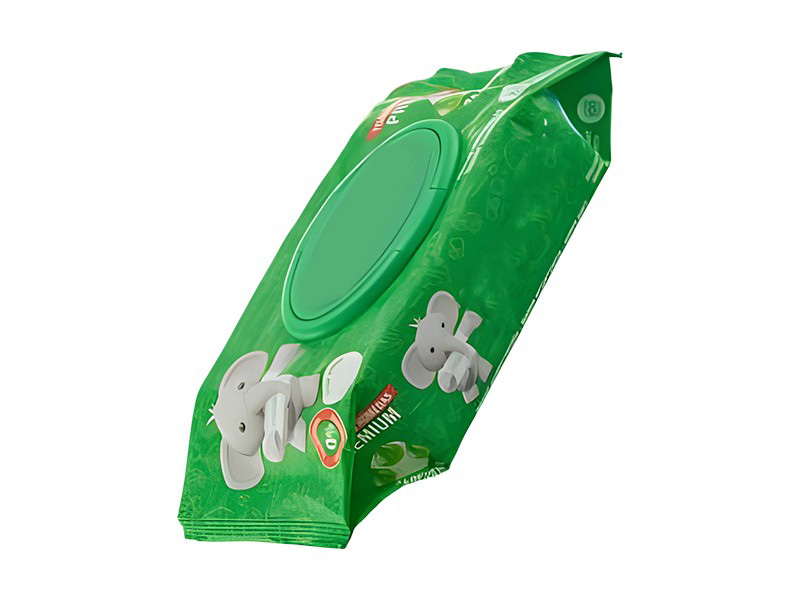
Stain Remover Wipes
3. Product Construction and Material Selection
The performance of a stain remover wipe depends on more than the liquid formulation. The nonwoven substrate is equally important because it affects strength, absorbency, softness, liquid release, lint behavior, tactile quality, and wiping efficiency.
Spunlace Nonwoven Substrate
Spunlace nonwoven fabric is a widely used option for wet wipes because it can offer a balanced combination of softness, strength, absorbency, and drape. The fibers are entangled through high-pressure water jets rather than being bonded only by chemical adhesives. This construction can create a pleasant wiping feel while supporting the mechanical demands of use.
For stain remover wipes, the substrate can be selected according to the intended surface and cleaning action. A softer fabric may be suitable for clothing or delicate household surfaces, while a stronger structure may be preferable for automotive interiors or professional cleaning tasks.
Alternative Nonwoven Materials
Other suitable nonwoven fabrics may also be considered based on performance and market requirements. Material selection can be adjusted for tensile strength, thickness, absorbency, softness, cost, sustainability objectives, and compatibility with the selected formula.
Some customers may request a more textile-like hand feel. Others may prioritize a heavier wipe with greater liquid capacity or a thinner wipe designed for individual sachets. The manufacturer can evaluate the required balance rather than assuming that one substrate is appropriate for every market.
Wipe Size and Fold Pattern
Wipe dimensions influence convenience, coverage, liquid capacity, packaging efficiency, and user perception. A compact wipe may be ideal for emergency garment treatment, while a larger wipe may be more suitable for automotive seats, uniforms, or hospitality service.
Fold patterns also affect the final package size and the way the user unfolds the product. Common configurations can be adjusted according to the packaging format and customer requirements. A private-label project may specify the wipe dimensions in relation to the intended retail shelf, amenity kit, cleaning cart, or promotional pack.
Thickness, Softness, and Strength
Thickness contributes to the hand feel and the amount of liquid the wipe can hold. A thicker wipe may provide a more substantial user experience, while a lighter wipe may support cost-efficient packaging and transportation. Softness is important when the product is intended for clothing or frequently touched surfaces. Strength is necessary to prevent tearing during wiping.
These properties should be evaluated together. A very soft wipe may not provide sufficient durability for vigorous cleaning. A highly strong wipe may feel less comfortable on delicate textiles if its surface is not appropriately engineered. Product development therefore requires practical use testing rather than relying on one specification in isolation.
4. Formulation Development for Different Stains
The formulation determines how the wipe interacts with the target soil and surface. A stain remover wipe may be developed for general daily dirt or optimized for specific categories such as food stains, coffee, oil, dust, or cosmetic marks. Formula customization allows the product to respond to the requirements of different markets and application scenarios.
Common formulation considerations include cleaning power, surface compatibility, residue control, odor, pH, preservation, stability, and regulatory requirements. The appropriate formulation must be selected according to the intended use and the materials likely to be treated.
General-Purpose Cleaning
A general-purpose formula may be designed for everyday marks and light soil. This type of product is suitable for household cleaning lines, hotel supplies, travel kits, and retail stain-treatment products. It should provide convenient cleaning while maintaining a pleasant user experience and reducing the risk of visible residue on suitable surfaces.
Food and Beverage Stains
Food and beverage marks are common targets for emergency stain-removal products. Coffee, tea, sauces, and other food residues can become more difficult to treat after drying. A formula developed for these applications may focus on rapidly wetting the soil and helping to lift organic residues from suitable textile surfaces.
Testing should account for different fabric colors, finishes, and compositions. The recommended directions should clearly explain that users should follow care labels, avoid aggressive rubbing on delicate materials, and test the product in an inconspicuous area when appropriate.
Oil and Grease Marks
Oil-based contamination may require a different formulation approach from water-soluble dirt. The cleaning system may need to help disperse or loosen oily soil while maintaining compatibility with the target surface. Automotive interior care, workwear, uniforms, and industrial cleaning customers may have particular interest in this type of performance.
Because oil and grease can vary considerably, product claims should be based on controlled testing. The wipe may be highly effective for fresh and localized marks while requiring additional treatment for old, heavy, or deeply embedded stains.
Residue and No-Marks Performance
A high-quality stain remover wipe should be developed with residue control in mind. Excessive surfactant, fragrance, or liquid can leave a damp ring or tacky feeling. The formula and substrate must work together to release enough cleaning solution for effective treatment without saturating the surface unnecessarily.
No-mark performance is influenced by fabric color, weave, surface finish, stain type, wiping pressure, and drying conditions. For this reason, product development should include testing across representative materials instead of relying on a single laboratory sample.
5. Advanced Integrated Manufacturing Capabilities
A major advantage for B2B customers is access to an integrated manufacturer with capabilities covering nonwoven material development, wipe production, and finished hygiene products. This structure can simplify communication and reduce the number of external suppliers involved in a project.
Kingsafe and Uniquality operate as an integrated enterprise specializing in medical and hygienic nonwoven materials, nursing products, wet wipes, dry wipes, and related hygiene products. The company was founded in 1987 and has developed production bases in several regions of China, including facilities associated with Zhejiang, Guangdong, Jiangsu, and Hubei.
The company’s broad industrial background supports the development of products across medical, maternal and baby, beauty, household, industrial cleaning, and clothing-related fields. This experience is relevant to stain remover wipes because the product requires knowledge of both nonwoven material engineering and finished wipe manufacturing.
Self-Developed Nonwoven Materials
Control over nonwoven materials can provide an important foundation for product consistency. Instead of treating the wipe substrate as a generic purchased component, an integrated manufacturer can evaluate material structures according to the cleaning application and customer requirements.
This approach allows technical teams to consider fiber characteristics, fabric weight, absorbency, softness, tensile strength, surface texture, and liquid retention. Such control may help reduce variation between development samples and mass-production batches.
Modern Production Equipment
The company has introduced advanced production equipment and technologies from international sources, including Germany, France, and Italy. Modern equipment can support more stable web formation, cutting, folding, filling, sealing, and packaging operations.
Equipment capability is particularly important for private-label projects with detailed specifications. Customers may require exact wipe dimensions, consistent fold patterns, precise liquid addition, controlled pack counts, and accurate label placement. Automated and well-maintained production systems help support these requirements.
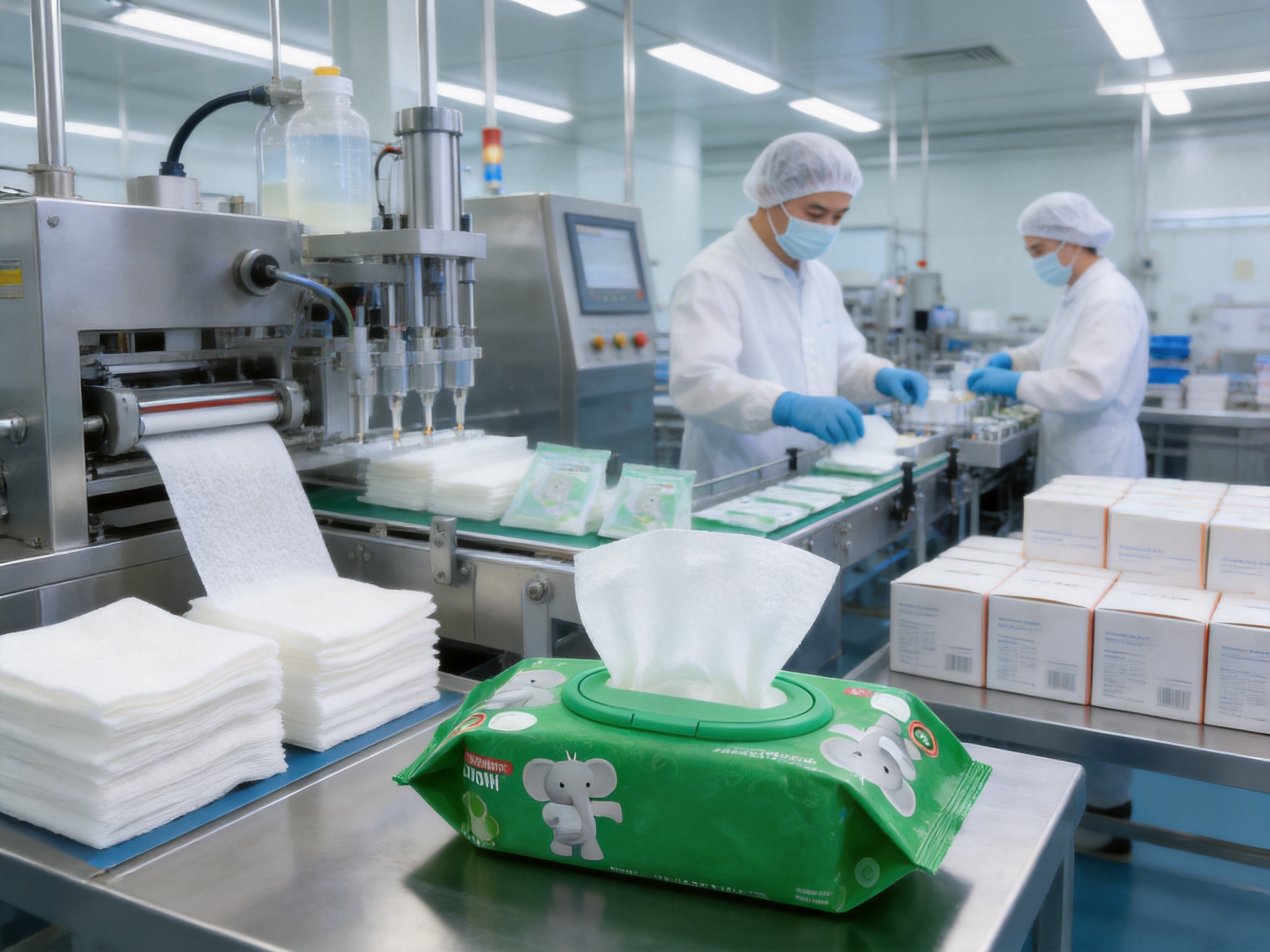
GMP-Standard Clean Workshops
Wipe production benefits from controlled manufacturing environments. GMP-standard clean workshops, appropriate hygiene procedures, and managed production areas can help reduce contamination risks and support consistent product quality.
Clean production is especially important for manufacturers serving medical, baby, personal-care, and household markets. Even when a stain remover wipe is not a medical product, professional manufacturing discipline helps establish reliable handling, filling, packaging, and quality-control practices.
Purified Water Systems
Water is a major component of many wet wipe formulations. The quality of process water can influence product stability, appearance, odor, and microbiological performance. Purified water systems provide a controlled foundation for formulation preparation and production.
Water treatment must be combined with appropriate preservation, equipment sanitation, environmental monitoring, and finished-product testing. No single process step replaces a complete quality system, but controlled water quality is an important part of responsible wet wipe manufacturing.
Professional Testing Capabilities
Testing supports decisions about substrate selection, formulation compatibility, packaging stability, and finished-product performance. A professional testing program may include appearance, odor, dimensions, weight, liquid content, tensile strength, seal integrity, microbiological indicators, stability, and application performance.
For stain remover wipes, practical testing should also examine the product on representative textiles and surfaces. The development team may assess how quickly the wipe wets a stain, how well it lifts soil, whether it leaves residue, whether the fabric color changes, and whether the wipe remains intact during use.
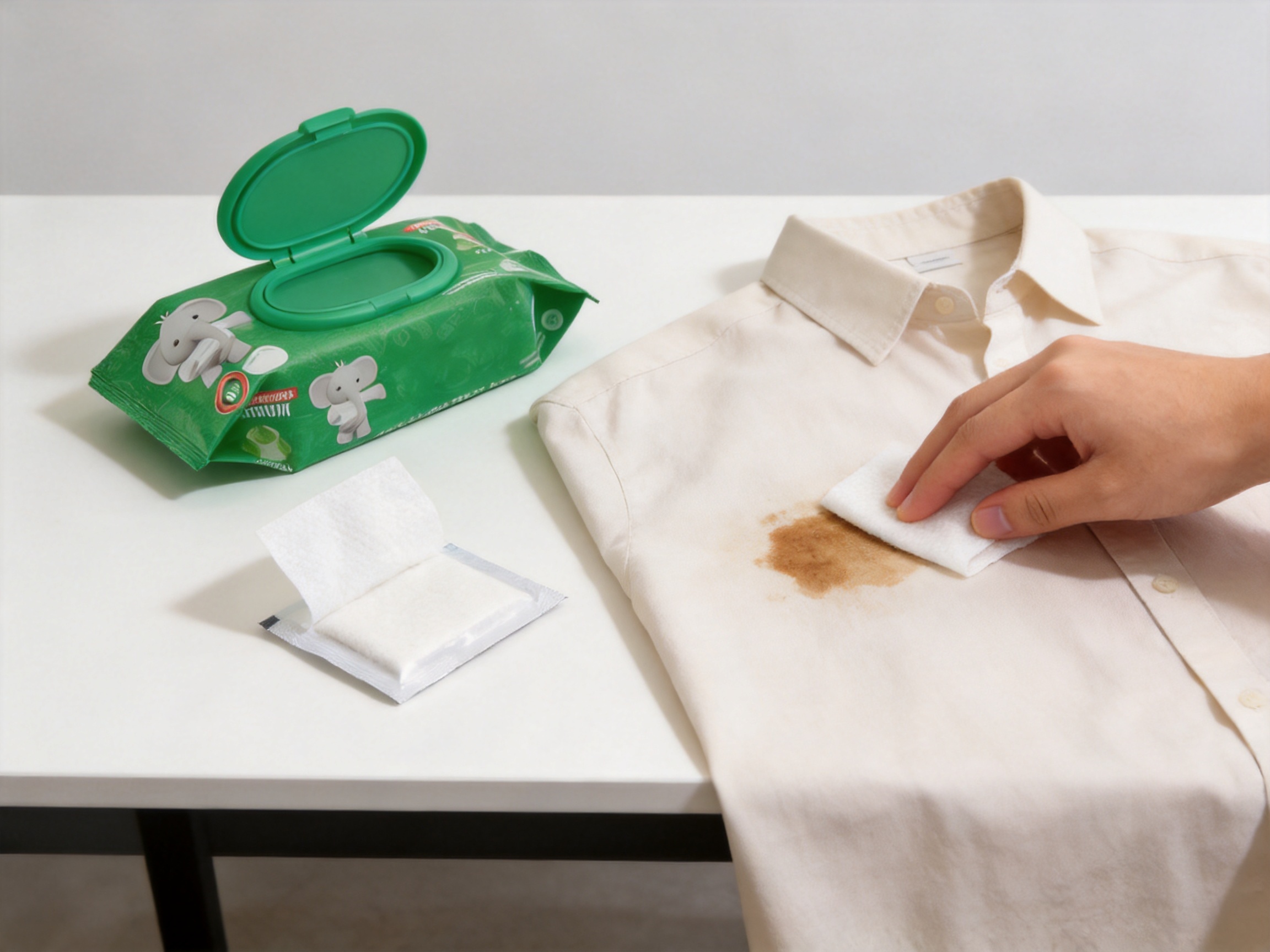
6. OEM and ODM Customization Options
OEM and ODM services allow brands, distributors, retailers, importers, hotel suppliers, car-care companies, and professional cleaning providers to launch products under their own market identity. Customization can range from simple private-label packaging to a complete product-development project involving substrate engineering and formula adjustment.
Substrate Customization
Customers can choose spunlace nonwoven fabric or another suitable substrate according to the target application. The selection may be based on softness, strength, thickness, absorption, surface texture, sustainability goals, and cost position.
A garment-care product may prioritize a soft, low-lint surface. An automotive product may require greater tensile strength and a larger format. A professional cleaning wipe may need a heavier construction to withstand repeated wiping. The manufacturer can review these requirements before recommending a material structure.
Formula Customization
Formula customization allows the product to be adapted for target stains, surfaces, climate conditions, market regulations, fragrance preferences, and brand positioning. Some customers may prefer a neutral or low-odor product, while others may request a light fragrance for a stronger freshness impression.
Formula development should consider compatibility with the chosen nonwoven material and packaging. Certain ingredients may affect fabric strength, seal performance, odor, or long-term stability. Laboratory assessment and pilot production are therefore important before commercialization.
Size and Thickness Customization
Wipe size and thickness can be tailored to the expected use pattern. Small individual wipes are convenient for handbags, travel packs, hospitality rooms, uniforms, and promotional distribution. Larger wipes can provide more coverage for vehicle interiors, workwear, furniture, or household cleaning.
The size should also be considered in relation to packaging, carton dimensions, shipping efficiency, and retail presentation. A balanced design can help the product achieve an appropriate combination of usability and logistics efficiency.
Packaging and Private Labeling
Packaging is an important commercial feature because it protects the wipes from drying and communicates the product’s purpose. Customers can customize packaging design, label printing, colors, graphics, instructions, barcode information, and brand identity.
Available formats may include individual sachets, resealable packs, and other suitable structures. The choice should reflect the product’s distribution channel. A hotel supplier may prefer individually packed wipes for guest rooms or service kits. A household retailer may need a resealable pack with a prominent front label. A professional distributor may choose a larger pack designed for frequent use.
Market-Specific Specifications
Different markets may require different pack counts, labeling languages, warning statements, ingredient declarations, documentation, and performance expectations. OEM and ODM development can take these factors into account at the beginning of the project rather than attempting to modify the product after mass production.
Early specification review helps reduce delays, packaging revisions, and compliance risks. Customers should provide the target countries, application scenarios, preferred claims, anticipated order quantities, and required certifications or test documents whenever possible.
7. Manufacturing Process from Concept to Shipment
A structured development process helps convert a product idea into a stable commercial item. The following stages provide a practical framework for B2B stain remover wipe projects.
Stage One: Requirement Assessment
The process begins with a review of the customer’s objectives. The manufacturer should understand the target users, stain categories, application surfaces, packaging format, wipe dimensions, formula preferences, order volume, destination markets, and expected price position.
For example, a distributor serving hotels may prioritize individually wrapped wipes, compact dimensions, a neutral scent, and attractive presentation. An automotive-care company may need larger and stronger wipes with a formula optimized for interior materials. A household brand may require a resealable pack with a premium soft feel.
Stage Two: Material and Formula Selection
Technical teams then evaluate suitable nonwoven substrates and formulation directions. Samples may be prepared with different fabric weights, softness levels, liquid add-ons, fragrances, or cleaning systems. The goal is to identify a practical balance between performance, cost, packaging compatibility, and user experience.
Stage Three: Sample Development
Prototype samples allow the customer to assess the wipe in real use. Testing should cover the intended stain types and representative surfaces. The customer can review wipe feel, dimensions, moisture level, odor, cleaning effect, packaging convenience, and appearance.
Feedback at this stage is valuable because small adjustments can significantly influence the final product. The wipe may need to be thicker, softer, drier, stronger, more absorbent, or more compact. The formula may require changes to cleaning intensity, fragrance, residue control, or surface compatibility.
Stage Four: Pilot Production
Pilot production verifies whether the approved design can be manufactured consistently on production equipment. It also provides an opportunity to confirm filling volume, sealing conditions, folding performance, label placement, coding, and packaging appearance.
Pilot batches can reveal issues that are not visible during laboratory development. For instance, a formula that performs well in a beaker may interact differently with a nonwoven web during high-speed production. A package that appears suitable in a design file may require adjustments to seal strength or opening behavior.
Stage Five: Quality Verification
Before mass production, the product specifications and inspection standards should be confirmed. Quality verification may cover raw materials, in-process controls, finished wipes, packaging, carton packing, and shipment quantities.
Documentation may include product specifications, test reports, packaging approvals, batch records, and other information requested by the customer or destination market. Clear documentation helps support repeat orders and consistent communication between the manufacturer and buyer.
Stage Six: Mass Production and Export Preparation
Once the product is approved, mass production can proceed according to the agreed specifications. Integrated manufacturing capabilities can support coordination between material preparation, formulation, wipe conversion, packaging, inspection, and carton loading.
Export preparation includes outer-carton requirements, shipping marks, palletization where applicable, product coding, documentation, and coordination with the buyer’s logistics provider. A reliable export process is essential for international B2B customers because delivery performance affects inventory planning and customer relationships.
8. Comparison with Conventional Stain-Cleaning Products
Stain remover wipes compete with liquid sprays, detergent pens, dry tissues, household cloths, and general-purpose wet wipes. Each category has its own strengths, but stain remover wipes provide a distinctive combination of portability, controlled application, and ready-to-use convenience.
| Product Format | Main Strength | Common Limitation | Where Stain Remover Wipes Stand Out |
|---|---|---|---|
| Liquid stain remover bottle | Can provide a larger volume for repeated use | Less portable and may require a separate cloth or water | Pre-moistened, compact, and easier to use during travel or emergencies |
| Detergent pen | Precise application to small areas | Limited surface coverage and possible dosage inconsistency | Provides both cleaning liquid and a wipe surface for lifting soil |
| Dry tissue | Low cost and easy availability | Usually lacks a dedicated stain-removing formulation | Combines absorbency with a customized cleaning solution |
| Household cloth | Reusable and suitable for larger cleaning tasks | Requires washing, storage, and a separate cleaning agent | Disposable and ready for immediate localized treatment |
| General-purpose wet wipe | Convenient for basic wiping | May not be developed specifically for stain treatment | Can be formulated for food, coffee, oil, dust, and daily dirt applications |
The competitive advantage of stain remover wipes is therefore not necessarily maximum cleaning strength for every possible stain. Instead, the advantage lies in the product’s balanced performance, convenience, portability, controlled liquid delivery, and suitability for immediate localized treatment.
For B2B brands, the ability to customize the product may be an additional advantage. A private-label customer can create a wipe that is more closely aligned with its target market than a generic product purchased from a standard catalog.
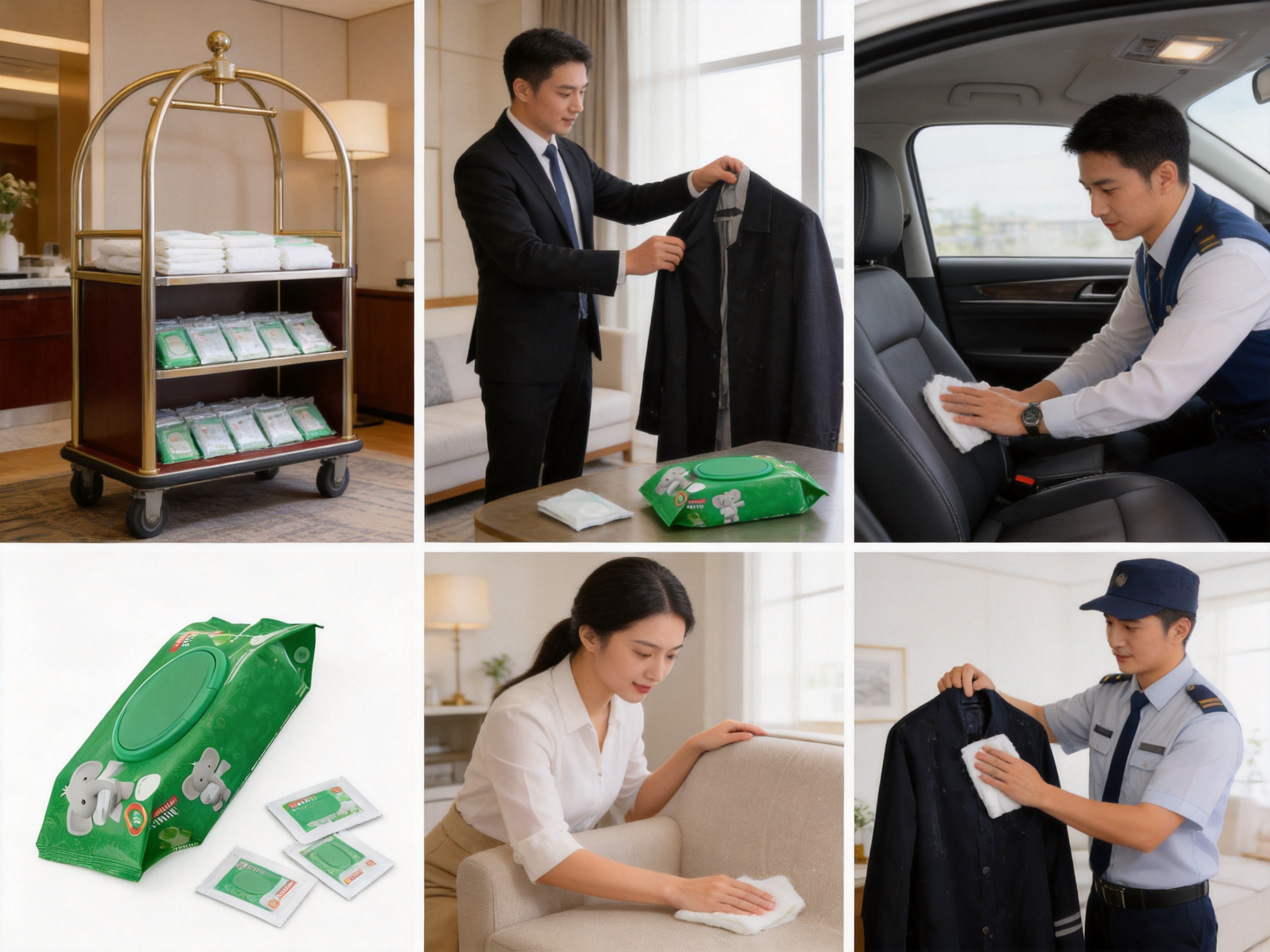
9. Applications Across Multiple Industries
Textile and Garment Cleaning
Garment-care is the most direct application for stain remover wipes. Consumers can carry the product to work, school, restaurants, events, and travel destinations. Clothing retailers may include individual wipes in customer-care kits, while uniform suppliers may offer them to corporate clients.
Fashion brands and apparel distributors can also use private-label wipes as an accessory that supports garment maintenance. The product may be placed near checkout counters, included in travel collections, or bundled with garments that are likely to be worn during commuting and business travel.
Hotel and Hospitality Supplies
Hotels, serviced apartments, airlines, restaurants, and event venues can use stain remover wipes in guest amenity kits, housekeeping carts, staff uniforms, and customer service packages. Individually wrapped formats are convenient for room placement and controlled distribution.
Hospitality buyers often value packaging appearance, low odor, ease of storage, and dependable supply. A customized label can reinforce the identity of the hotel group or service provider while providing a practical benefit to guests.
Automotive Interior Care
Vehicle interiors are exposed to food, beverages, dust, cosmetics, and everyday dirt. Stain remover wipes can be included in car-care kits, dealership delivery packages, rental-car supplies, and professional detailing programs.
For this application, the substrate may need to provide adequate strength and low-lint performance. Formula development should consider compatibility with common interior materials such as coated surfaces, synthetic leather, plastic, and textile upholstery. Instructions should identify suitable surfaces and advise users to test an inconspicuous area when necessary.
Household Cleaning Product Lines
Household brands can position stain remover wipes as a convenient supplement to laundry detergent, fabric-care products, kitchen cleaning items, or travel cleaning kits. The product may be sold through supermarkets, e-commerce channels, convenience stores, and home-supply retailers.
Packaging design and clear communication are important in this category. Consumers should understand the main applications, proper use, disposal guidance, and any surface limitations. The brand may select a premium format, an economical family pack, or a compact emergency pack depending on its retail strategy.
Commercial and Industrial Applications
Offices, factories, workshops, logistics centers, schools, clinics, and maintenance teams may use stain remover wipes for uniforms, workwear, furniture, equipment exteriors, or other suitable surfaces. These customers often require bulk supply, consistent specifications, and packaging that can be stored conveniently at multiple locations.
Industrial users may also request stronger substrates, larger wipe sizes, or formulas developed for specific types of daily contamination. The product should be evaluated against the exact application rather than promoted with broad claims that cannot be verified.
10. Quality and Consistency for International B2B Buyers
International buyers need more than a single successful sample. They require confidence that the same product can be supplied repeatedly with stable quality, predictable lead times, and appropriate documentation. A manufacturer’s production scale, technical resources, and supply-chain structure are important factors in this evaluation.
Kingsafe and Uniquality have extensive experience in nonwoven materials, wet wipes, dry wipes, diapers, training pants, cleansing wipes, and other hygiene-related products. This broad product background can support the management of different raw materials, packaging components, formulations, and production requirements.
Eight domestic production bases provide a foundation for expanded manufacturing capacity and supply coordination. For overseas customers, multiple production resources may help support larger projects, product-category expansion, and continuity planning, subject to specific production scheduling and allocation arrangements.
Raw Material Control
Stable raw material sourcing is essential for product consistency. The wipe substrate, packaging film, labels, cartons, formula ingredients, and other components must meet approved specifications. Changes in material weight, absorbency, sealability, or chemical compatibility can affect the finished wipe.
An integrated manufacturer can coordinate technical review across material and finished-product teams. This may help identify potential compatibility issues earlier and reduce the risk of unexpected changes during scale-up.
Process Control
Process control includes monitoring fabric cutting, folding, liquid addition, sealing, coding, packaging, and carton packing. Consistent machine settings and documented operating procedures help keep the product within agreed tolerances.
Process control is especially important when the customer requires a specific wipe count, moisture level, package size, or opening experience. Small deviations can affect consumer satisfaction and create problems during retail distribution or automated warehouse handling.
Finished-Product Inspection
Finished-product inspection should verify both functional and visual characteristics. Inspectors may examine package integrity, wipe dimensions, liquid content, appearance, odor, softness, strength, labeling, and carton quantities.
For stain remover wipes, performance checks can be included according to the project requirements. These may involve controlled testing on selected textile types or representative surfaces. The results should be used to support realistic product claims and usage instructions.
Supply Stability
Supply stability is a central concern for distributors and brands. A product may be successful in the market but difficult to scale if the manufacturer lacks adequate production planning or component coordination. A manufacturer with an established industrial chain can provide a stronger basis for repeat production and new product development.
Customers should still confirm capacity, lead time, order forecasts, packaging availability, and production schedules during commercial negotiations. Clear planning benefits both the manufacturer and the buyer.
11. Sustainability and Responsible Product Development
Sustainability considerations are becoming increasingly important in the wipe industry. Customers may request biodegradable or flushable-related materials for some product categories, but stain remover wipes must be developed according to their actual disposal route and application requirements.
Not every wipe is suitable for flushing, and a stain remover wipe intended for garments or automotive interiors should not be presented as flushable unless it has been specifically designed, tested, and approved for that purpose. Clear disposal instructions are essential.
Material selection can consider renewable fibers, reduced packaging, optimized wipe dimensions, and efficient carton utilization where appropriate. However, environmental claims should be supported by relevant evidence and should not compromise product safety, performance, package integrity, or regulatory compliance.
Packaging optimization may reduce unnecessary material use and improve transportation efficiency. A smaller pack can require less storage space, while an accurately selected wipe size can prevent excess material consumption during use. These decisions should be evaluated across the product’s complete life cycle rather than based only on one characteristic.
12. How Brands Can Build a Strong Product Offering
A successful private-label stain remover wipe should be developed around a clear commercial proposition. The brand should decide whether it is selling emergency convenience, premium garment care, hospitality support, automotive cleanliness, professional efficiency, or a broader household solution.
Define the Primary User
The first step is to identify who will use the product. A travel customer may need an individually wrapped wipe that fits easily into a pocket. A family may prefer a resealable multi-pack. A hotel may require a compact amenity format. A workshop may want larger and stronger wipes in a bulk package.
Defining the user helps guide wipe size, packaging, formula, instructions, price point, and marketing language.
Choose Realistic Performance Claims
Product communication should describe the intended benefits accurately. Claims such as portable emergency stain removal, rapid treatment of common marks, convenient no-rinse use on suitable surfaces, and customized cleaning performance may be appropriate when supported by testing and instructions.
Broad claims covering every stain and every fabric can create unrealistic expectations. A responsible brand should state that performance depends on stain type, material, age of the stain, and use conditions.
Optimize the User Experience
Opening the package, removing the wipe, unfolding it, applying it, and disposing of it should be simple. Packaging that is difficult to open or reseal can reduce satisfaction even when the cleaning performance is strong.
The wipe should also have an appropriate moisture level. An overly dry wipe may provide insufficient cleaning action, while an excessively wet wipe may create a larger damp area or increase the chance of residue. User testing is valuable for finding the correct balance.
Develop a Coherent Product Family
Brands can use the same manufacturing platform to develop related products. A stain remover wipe may be offered alongside general cleaning wipes, dry wipes, laundry accessories, automotive wipes, or hospitality-care products. Shared packaging styles and coordinated formulations can help create a recognizable product family.
An integrated manufacturer with experience across multiple wipe and hygiene categories can support this type of portfolio development. The customer may begin with one product and later expand into additional formats as market demand becomes clearer.
13. Recommended Buyer Evaluation Checklist
Before selecting a manufacturing partner, B2B customers should evaluate the following areas:
- Experience with wet wipes, dry wipes, and nonwoven substrates
- Ability to provide OEM and ODM development support
- Availability of suitable clean production facilities
- Water treatment and formulation preparation capabilities
- Testing and quality-control procedures
- Substrate, size, thickness, and softness customization
- Formula development and adjustment support
- Packaging and private-label capabilities
- Production capacity and repeat-order planning
- Export preparation and international customer support
- Ability to provide samples and pilot production
- Clear communication regarding MOQ, lead time, and specifications
Customers should request a detailed product specification before placing an order. The specification may include substrate type, fabric weight, wipe dimensions, fold pattern, liquid content, formula characteristics, packaging format, pack count, carton quantity, shelf-life expectations, inspection standards, and labeling requirements.
14. Frequently Asked Questions
Q1: What types of stains can stain remover wipes clean?
Cleaning performance depends on the customized formula, substrate, stain type, and surface. Common target applications include food stains, coffee marks, oil stains, dust, and daily dirt on suitable textiles or surfaces. Fresh and localized stains are generally more appropriate for quick wipe treatment than old, dried, or deeply embedded contamination.
Q2: Can the formula be customized for different markets?
Yes. OEM and ODM customers can request formula adjustments based on target markets, application scenarios, fragrance preferences, surface compatibility, and regulatory requirements. Any customized formula should be evaluated through laboratory testing, stability assessment, and practical application testing before mass production.
Q3: What materials are available for stain remover wipes?
The wipe substrate can be customized according to the required softness, strength, absorbency, thickness, surface feel, and cost position. Spunlace nonwoven fabric is one common option, while other suitable nonwoven materials may be considered for specific applications.
Q4: Can wipe size and thickness be customized?
Yes. Customers can request different wipe dimensions, thicknesses, weights, fold patterns, and pack counts. The recommended configuration depends on the intended use, packaging format, target users, transportation requirements, and market positioning.
Q5: Can private-label packaging be provided?
Yes. Private-label support may include brand labeling, package design, printed films, individual sachets, resealable packs, carton artwork, product instructions, and market-specific specifications. Packaging details should be confirmed early because they affect sampling, production planning, and lead time.
Q6: Are stain remover wipes suitable for all fabrics?
No product should be assumed to be suitable for every fabric. Users should follow garment-care instructions and test the wipe on an inconspicuous area when appropriate. Delicate materials, specialty finishes, unstable dyes, leather, suede, and other sensitive surfaces may require special evaluation or avoidance.
Q7: Can stain remover wipes be used without rinsing?
A no-rinse application may be possible on suitable surfaces when the product is used as directed. The exact result depends on the formula, amount of soil, wipe moisture, surface type, and drying conditions. Instructions should explain the intended use and any situations where additional cleaning or rinsing is recommended.
Q8: What is the minimum order quantity?
MOQ depends on the wipe specifications, formula, packaging format, printed materials, customization level, and production plan. Standard products may have different requirements from fully customized OEM or ODM projects. Buyers should contact the manufacturer for project evaluation and a quotation.
Q9: What information should a buyer provide for a quotation?
A buyer should provide the intended application, target market, wipe size, material preference, packaging format, pack count, formula expectations, estimated order quantity, branding requirements, delivery destination, and any required certifications or documentation. More complete information allows the manufacturer to recommend a more accurate solution.
Q10: Can the manufacturer support product development from beginning to end?
Yes. The development process can include material selection, formula adjustment, sample preparation, packaging design coordination, pilot production, quality verification, mass production, and export preparation. The exact scope depends on the project requirements and the customer’s level of customization.
15. Conclusion
Stain remover wipes provide a practical solution for fast, localized cleaning when portability and convenience are important. Their main advantages include ready-to-use operation, controlled liquid delivery, low-mess handling, compact packaging, and the ability to treat common fresh stains without washing an entire garment or carrying a bottle of cleaner.
For B2B customers, the product’s commercial value extends beyond convenience. A successful stain remover wipe requires an appropriate nonwoven substrate, a carefully balanced formulation, secure packaging, reliable production, realistic performance claims, and stable international supply. OEM and ODM customization allows brands, distributors, retailers, hospitality suppliers, automotive-care companies, and professional cleaning providers to create products aligned with their specific markets.
Kingsafe and Uniquality bring extensive experience in nonwoven materials, wet wipes, dry wipes, nursing products, and hygiene manufacturing. Their integrated industrial chain, multiple production bases, modern equipment, GMP-standard clean workshops, purified water systems, and professional testing capabilities provide a strong foundation for customized stain-removing wipe projects.
By combining material expertise, formulation development, packaging flexibility, quality management, and export support, the manufacturer can help international customers move from an initial product concept to a dependable private-label solution. With appropriate testing and clear specifications, stain remover wipes can become a valuable addition to household, garment-care, hospitality, automotive, commercial, and industrial cleaning product lines.
References
1. International Organization for Standardization. Quality Management Principles and Quality Management Systems Guidance.
2. International Organization for Standardization. Nonwovens and Textile Testing Principles.
3. World Health Organization. Good Manufacturing Practices for Pharmaceutical and Hygiene-Related Production Environments.
4. Association of the Nonwoven Fabrics Industry. Technical Information on Nonwoven Fabric Structures and Applications.
5. U.S. Consumer Product Safety Commission. General Guidance for Consumer Cleaning Products and Product Labeling.
6. European Chemicals Agency. General Principles for Chemical Product Safety, Classification, and Market Compliance.
7. International Association of the Soap, Detergent and Maintenance Products Industry. Guidance on Cleaning Product Performance and Responsible Product Communication.
8. Kingsafe and Uniquality. Manufacturer-provided information on nonwoven materials, wet wipes, dry wipes, hygiene products, OEM, ODM, and production capabilities.