中文简体
中文简体 English
 日本語
日本語 русский
 Español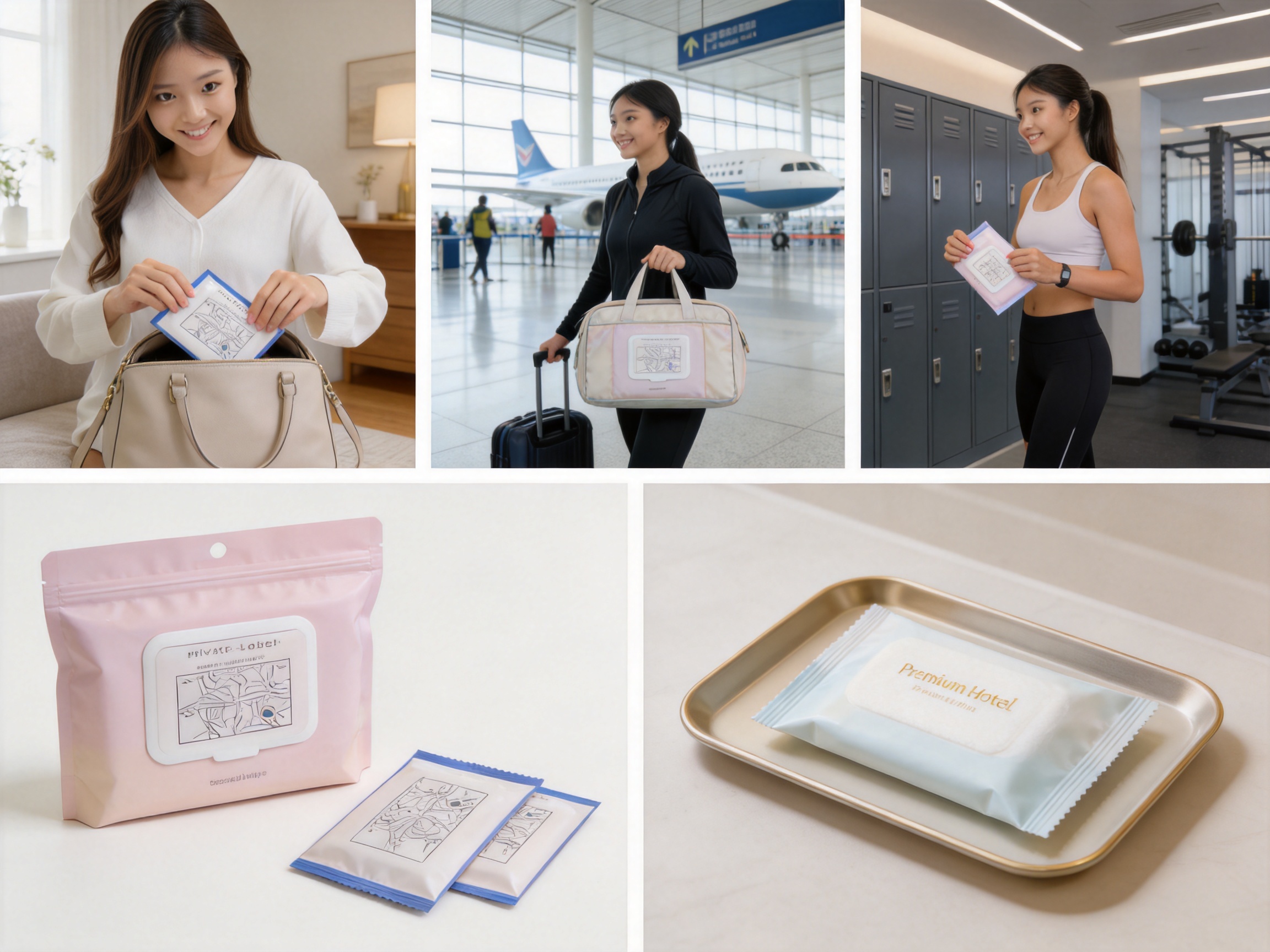
Feminine wipes have become an important personal-care solution for women seeking convenient freshness and gentle intimate hygiene throughout the day. Designed for use when water and conventional cleansing facilities are unavailable, these wipes can support a comfortable feeling after exercise, during travel, at work, while outdoors, or during the menstrual cycle. The most effective products are not simply ordinary wet tissues with feminine-oriented packaging. They are developed around the specific needs of delicate skin, with attention to softness, moisture balance, material selection, formulation, packaging, quality control, and user convenience.
Feminine Wipes from Kingsafe and Uniquality are positioned as a daily intimate-care product featuring a gentle, pH-balanced formula. The product is intended to clean and refresh without creating an unnecessarily harsh cleansing experience. Its non-irritating concept, soft nonwoven substrate, controlled moisture content, and flexible private-label manufacturing options make it suitable for personal-care brands, retailers, distributors, hospitality providers, healthcare channels, and other customers seeking dependable intimate hygiene products.
Behind the finished wipes is a manufacturing organization with experience in medical and hygienic nonwoven materials, nursing products, and related textile technologies. Founded in 1987, Zhejiang Uniquality Nursing Products Technology Co., Ltd. operates under the Kingsafe and Uniquality business structure and has developed production capabilities covering nonwoven materials, wet wipes, dry wipes, diapers, training pants, and other care products. Its experience in material research, product development, production management, and OEM/ODM cooperation supports a controlled approach from raw-material selection to finished-pack inspection.
This article examines the product’s practical advantages, the considerations involved in feminine-wipe development, the manufacturing strengths behind the product, customization possibilities, quality expectations, and questions frequently asked by buyers and end users.
Feminine Wipes
Understanding the Role of Feminine Wipes
Intimate skin requires a thoughtful approach to cleansing. The skin around the external intimate area can be more sensitive than many other parts of the body, and aggressive rubbing, unsuitable fragrances, excessive cleansing, or poorly balanced formulas may lead to discomfort. Feminine wipes are therefore generally designed for external use and should be selected according to softness, formulation quality, intended usage, and packaging hygiene.
A well-designed wipe combines several functions in a single product. First, it provides physical cleaning through a soft, moist sheet. Second, it delivers a measured amount of cleansing or refreshing solution. Third, it offers portability, allowing the user to maintain a sense of freshness outside the home. Finally, it acts as a convenient extension of a personal-care routine rather than as a replacement for normal bathing or professional medical care.
The product described in the supplied specifications belongs to the Adult Wipes category. It is formulated for daily intimate hygiene and emphasizes a gentle, pH-balanced experience. This positioning is important because users increasingly expect intimate-care products to be purpose-developed rather than adapted from general-purpose household wipes. Buyers also look for products that combine comfort, attractive presentation, dependable manufacturing, and the possibility of private-label branding.
Feminine wipes may be used after physical activity, during commuting, while traveling, during long working days, after using public facilities, or as part of a menstrual-care routine. They can also be useful for consumers who need a compact hygiene product in handbags, gym bags, luggage, office drawers, or emergency kits. Their value is based on convenience, but convenience does not eliminate the need for responsible product design.
Key Product Advantages
Gentle, pH-Balanced Formulation
The central product advantage is the use of a gentle, pH-balanced formula intended to respect the needs of delicate external skin. The phrase “pH-balanced” reflects an effort to avoid an unnecessarily alkaline or acidic cleansing environment. In product development, this requires more than selecting a marketing phrase. The formulation team must consider the water system, cleansing agents, preservatives, humectants, botanical components if used, fragrance level, stability, and compatibility with the selected nonwoven material.
A mild formula should provide a pleasant cleansing experience without leaving the skin feeling excessively dry, sticky, or tight. The formula may also be designed to distribute evenly across the sheet, remain stable during storage, and maintain consistent performance from the first wipe in a pack to the last. The specific formula can be adjusted for different market requirements, regulatory expectations, and customer preferences through OEM/ODM development.
Compared with general-purpose wipes that may be developed primarily for hands, surfaces, or broad personal cleaning, a dedicated feminine wipe is created with greater attention to intimate-use expectations. This difference can help a private-label brand communicate a clearer product benefit and build a more focused personal-care range.
Softness for Delicate Skin
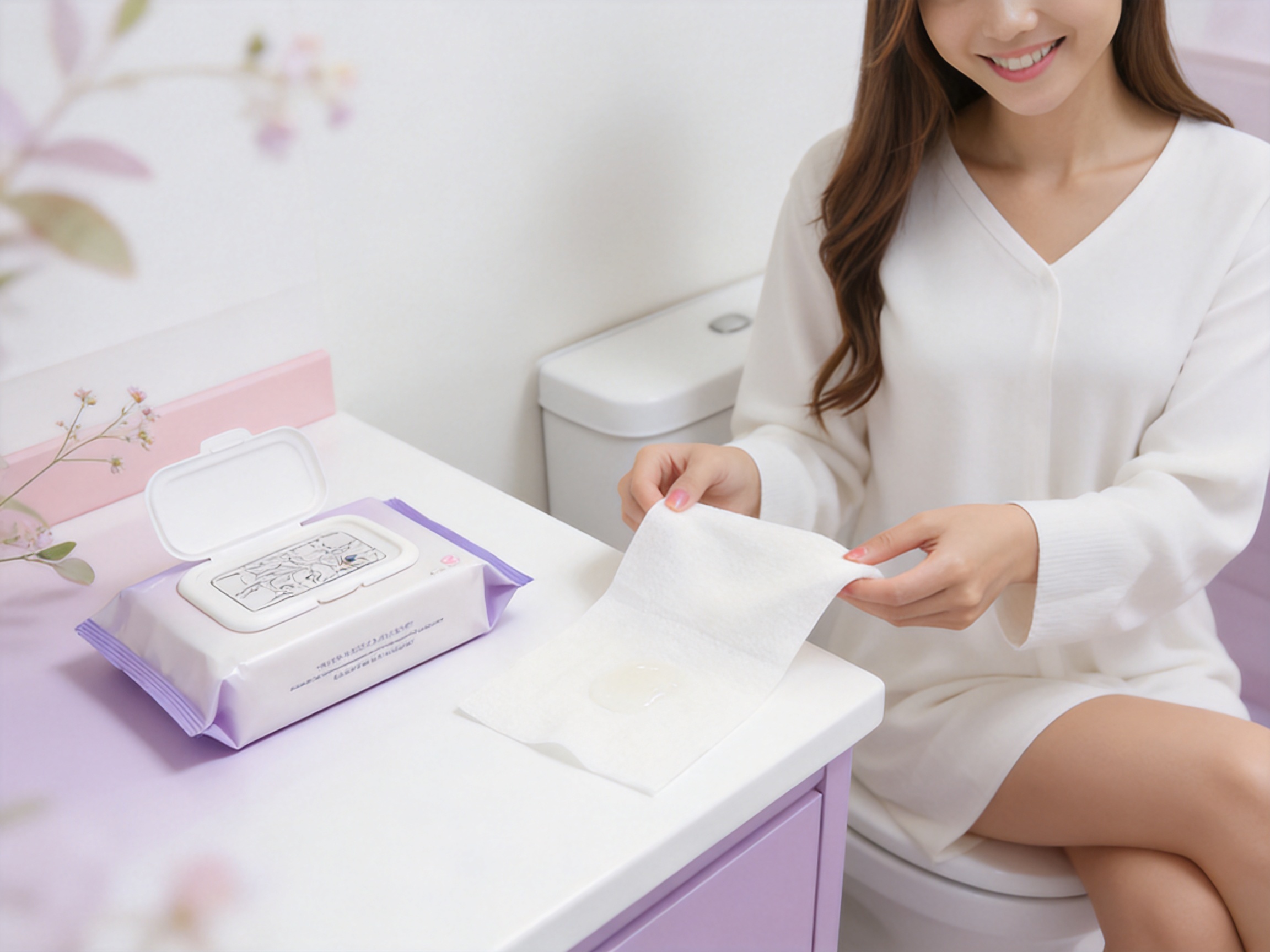
Softness is one of the most noticeable attributes of any feminine wipe. The wipe should feel smooth against the skin, provide adequate wetness without being overly saturated, and retain its structure during use. A scratchy, weak, or rough sheet can negatively affect the entire user experience even if the liquid formula is well developed.
Kingsafe’s background in spunlace nonwoven fabrics and other hygienic nonwoven materials provides a strong foundation for substrate development. Spunlace technology uses high-pressure water jets to entangle fibers, producing a fabric-like sheet without relying on traditional woven construction. Depending on the fiber blend and production settings, the material can be engineered for softness, strength, absorbency, drape, and surface texture.
For feminine wipes, the balance between softness and tensile strength is especially important. The sheet should be comfortable while remaining intact during wiping. It should also fold neatly, dispense smoothly, and resist excessive linting. Material selection can be tailored according to the target market, pack format, sheet size, basis weight, and desired positioning.
Convenient Daily Portability
Feminine wipes are designed for situations in which traditional washing is inconvenient. A compact pack can be carried discreetly in a handbag, backpack, luggage case, vehicle, or desk drawer. This portability gives the product a practical advantage over bulkier hygiene formats and supports use across many daily situations.
Packaging can be developed in several formats, including resealable soft packs, individual sachets, travel packs, and larger multi-use packs. A resealable opening helps reduce evaporation after opening, while individually wrapped wipes may be appropriate for hospitality, healthcare, travel, events, or premium personal-care programs. The appropriate format depends on the customer’s sales channel and expected use frequency.
Portability also supports international distribution. A private-label brand can offer a consistent core product in different pack counts and visual designs for pharmacies, supermarkets, e-commerce platforms, beauty retailers, convenience stores, or professional supply channels.
Reliable Moisture Distribution
Moisture distribution affects both performance and consumer perception. A wipe that is too dry may not clean comfortably, while one that is excessively wet may drip, feel messy, or create packaging problems. Controlled lotion application helps ensure that the sheet remains adequately moistened throughout the pack.
Manufacturing controls may include liquid preparation, filtration, batching, controlled dosing, line-speed coordination, and inspection of finished packs. The substrate’s absorbency also influences how the lotion is held and released. A high-quality wipe should release enough solution during use while retaining sufficient integrity to avoid tearing.
Consistent wetness is particularly important for private-label products. Consumers expect the same experience when purchasing a second pack, a different pack size, or a product from another production lot. Stable manufacturing parameters and documented quality procedures help reduce variation.
Versatility Across Customer Segments
The product can serve different customer groups without losing its core identity. A personal-care brand may develop a feminine-care line around the wipes. A supermarket may offer them under a private label. A hotel, airline, gym, or wellness center may use individual sachets as a guest amenity. A healthcare or nursing-products distributor may include them in broader hygiene-supply programs.
This versatility is supported by OEM/ODM capabilities. Customers may request changes to sheet dimensions, pack counts, label design, fragrance direction, formula components, carton configuration, or target-market documentation. Such flexibility allows the same basic product category to be adapted for mass-market, premium, sensitive-skin, travel, or institutional positioning.
Comparison with Ordinary General-Purpose Wipes
Not all wet wipes are designed for the same application. General-purpose wipes may be intended for hands, surfaces, household cleaning, cosmetics, babies, or industrial use. Each category has different requirements concerning cleansing strength, skin contact, absorbency, fragrance, durability, and packaging. Using a general-purpose wipe for intimate hygiene may not provide the same level of product specialization as using a purpose-developed feminine wipe.
| Evaluation Area | Purpose-Developed Feminine Wipes | Generic General-Purpose Wipes |
|---|---|---|
| Primary application | External intimate hygiene and refreshing | Broad or unspecified cleaning applications |
| Formula direction | Gentle, pH-balanced, and designed for delicate skin | May use a formula developed for hands, surfaces, or general cleaning |
| Material expectations | Soft, smooth, absorbent, and strong enough for personal use | Performance may vary according to the original application |
| Packaging purpose | Portable, discreet, resealable, or individually wrapped | Often optimized for a different use environment |
| Brand positioning | Supports intimate-care and feminine-wellness product lines | May offer limited category differentiation |
| Customization | Formula, substrate, size, pack count, and artwork may be developed for the target market | Customization may be more limited or less application-specific |
The comparison does not mean that every generic wipe is unsuitable for every personal-care application. Rather, it highlights why product specialization matters. A dedicated feminine wipe allows the manufacturer to consider the skin-contact environment, user expectations, packaging discretion, and category-specific communication from the beginning of development.
Another advantage is the ability to coordinate several technical elements. Formula, substrate, folding pattern, liquid loading, closure, packaging film, and quality standards should work together. A supplier experienced in both nonwoven materials and finished nursing products can evaluate these elements as a system instead of treating them as unrelated components.
Material Technology and Sheet Construction
Spunlace Nonwoven Expertise
Nonwoven technology is central to wipe performance. Kingsafe has a long history in the research, production, and sales of medical and hygienic nonwoven materials. Its product scope includes spunlace nonwoven fabrics, spunmelt nonwoven fabrics, hot-air-through nonwoven fabrics, and flushable or degradable nonwoven materials. This breadth gives the company experience across different fiber arrangements, bonding methods, and performance requirements.
Spunlace material is widely used in wipes because it can provide a soft, textile-like feel. The entangled fiber structure can be engineered for absorbency and strength, while the sheet remains flexible enough for folding and packaging. Depending on the product concept, the material may be adjusted in weight, fiber composition, embossing, texture, and surface finish.
For feminine wipes, the sheet should not merely absorb liquid. It must also support controlled release, comfortable contact, clean folding, and reliable conversion on high-speed equipment. Production parameters such as water-jet pressure, fiber distribution, drying conditions, web speed, and finishing treatment influence the final result.
Substrate Selection for Comfort and Integrity
A wipe substrate is selected according to the intended balance of softness, strength, absorbency, and environmental requirements. Some customers may prioritize a luxurious, smooth feel. Others may focus on economical pack pricing, high absorbency, or a biodegradable material direction. The manufacturer can evaluate the target specification and recommend a suitable construction.
Fiber selection is also important. Different fibers influence moisture retention, surface feel, tensile performance, and disposal characteristics. When a customer is interested in biodegradable or flushable-related materials, the product must be assessed as a complete system, including the fiber blend, bonding structure, liquid formulation, packaging, and local disposal expectations. Such claims should be supported by appropriate testing and market-specific documentation rather than applied broadly without verification.
The company’s experience with both conventional and specialized nonwoven materials provides a useful platform for customer discussions. A brand can begin with a standard soft spunlace wipe and later explore alternative substrates as its product line develops.
Conversion and Folding
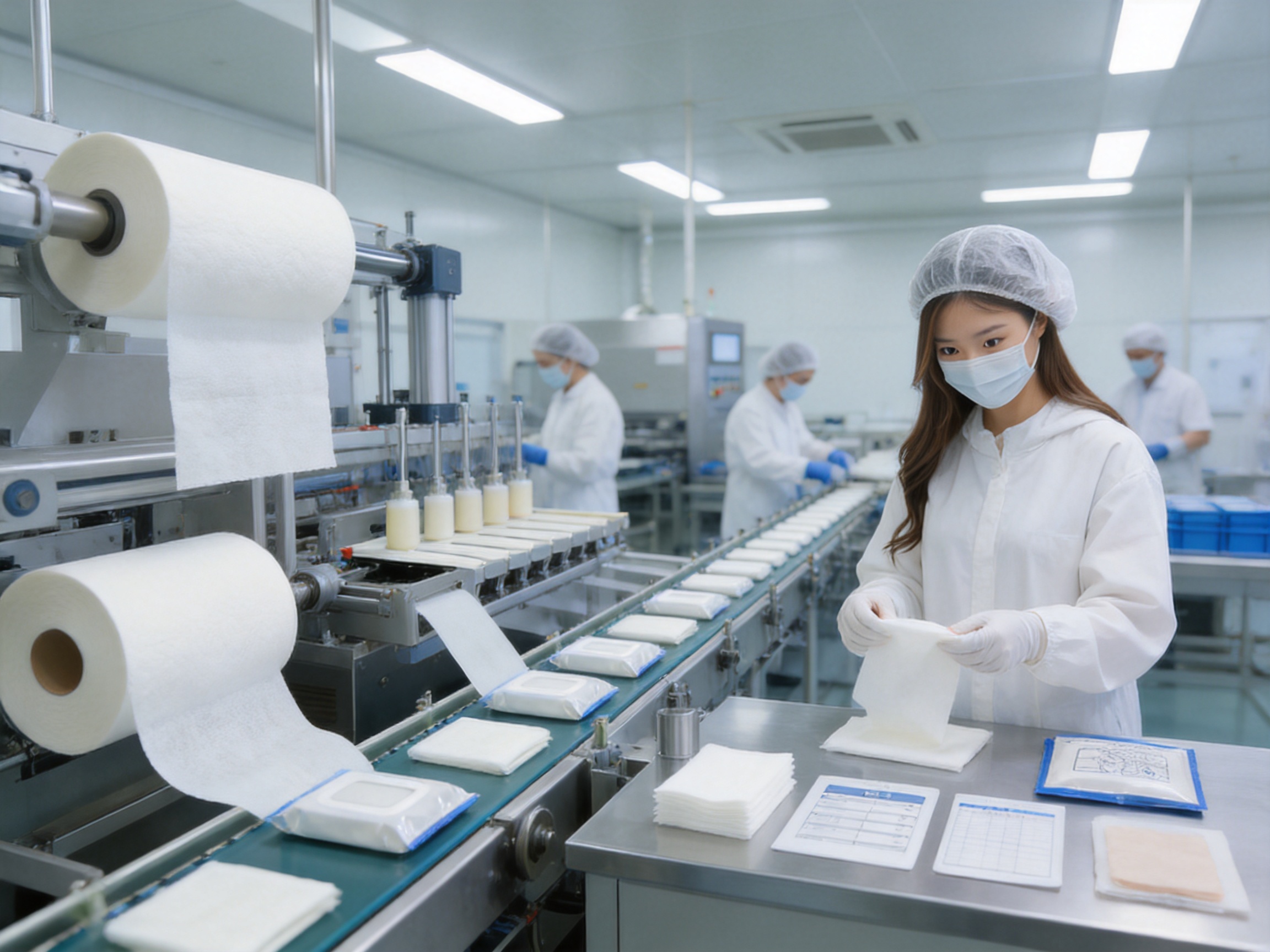
After the nonwoven web is produced, it is converted into sheets suitable for the selected package. Conversion includes slitting, cutting, folding, lotion application, stacking, and packing. Each step can affect the user experience. A well-folded wipe should unfold easily, fit the pack opening, and remain consistent in size.
Sheet dimensions should reflect the intended use. A smaller travel wipe may be convenient for compact packaging, while a larger sheet can provide greater coverage and a more substantial feel. Fold style influences dispensing and pack volume. The optimal configuration is therefore a combination of user needs, machine capability, package design, and shipping efficiency.
Careful conversion also helps reduce waste and improves line efficiency. Automated equipment can provide repeatable cutting and folding, while inspection systems help identify issues such as incorrect counts, poor seals, misaligned labels, or abnormal sheet placement.
Formulation Development and Safety Considerations
The liquid formulation is one of the most important components of a feminine wipe. It determines much of the product’s sensory experience and contributes to stability, preservation, cleaning performance, and skin compatibility. A well-developed formula should remain uniform during storage and should not separate, discolor, or develop an undesirable odor under expected conditions.
pH Control
pH control requires measurement and process discipline. The target value should be selected according to the product’s intended external-use application and applicable market requirements. The liquid batch should be tested before production, and finished products may also be assessed to confirm that the formulation remains within the designated specification.
pH is only one aspect of mildness. A suitable formula must also consider the concentration and type of cleansing agents, preservatives, fragrances, botanical extracts, salts, humectants, and other ingredients. An attractive pH value cannot compensate for an otherwise unsuitable formula. For this reason, formulation development should be conducted as a complete compatibility and stability project.
Non-Irritating Product Direction
The supplied product concept emphasizes a non-irritating experience. This direction reflects the sensitivity of the intended application, but it should be supported by responsible formulation design and appropriate testing. Customers may request fragrance-free, low-fragrance, dermatologically evaluated, or sensitive-skin versions according to their market positioning.
Claims must always match the available evidence and the rules of the destination market. A manufacturer can assist with formula development, ingredient review, stability work, microbiological testing, packaging compatibility, and documentation. The private-label customer remains responsible for approving the final claims, artwork, and market-specific compliance strategy with qualified regulatory support where necessary.
Preservation and Microbiological Control
Because wet wipes contain water, microbiological control is essential. The production environment, raw materials, water system, liquid preparation area, filling process, packaging seals, and storage conditions all influence product safety and shelf life. A preservation system should be selected for compatibility with the formula, substrate, packaging, and expected market requirements.
Manufacturers commonly use controlled water treatment, sanitation procedures, batch records, environmental monitoring, microbial testing, and finished-product testing as part of a broader quality-management approach. The exact testing program should be established according to product classification, customer requirements, and applicable regulations.
Packaging integrity is equally important. Even a well-preserved formula can be compromised if the package leaks, the seal is incomplete, or the closure allows excessive evaporation or contamination after opening. Quality control must therefore cover both the lotion and the package.
Advanced Manufacturing Strengths
Long-Term Industry Experience
Founded in 1987, Kingsafe and Uniquality have more than three decades of development experience in hygienic nonwovens and nursing products. Long-term experience is valuable because it supports accumulated knowledge in materials, equipment, process control, procurement, product development, and customer service.
The company has developed from a nonwoven-material specialist into a broader manufacturer serving medical, maternal and baby, beauty, home, industrial cleaning, clothing, and other fields. This diversified product background provides insight into different requirements for softness, cleanliness, absorbency, strength, packaging, and supply-chain management.
Multiple Production Bases
The company is headquartered in Changxing, Huzhou, Zhejiang, and has established eight production bases in China, including locations in Foshan, Guangdong, Nantong, Jiangsu, and Wuhan, Hubei. A multi-base structure can support production capacity, regional coordination, equipment specialization, and supply continuity when managed through consistent procedures.
For international customers, manufacturing scale can be an important consideration. Large or growing brands require more than a sample that performs well in a laboratory. They need a supplier capable of supporting repeat orders, maintaining specifications, coordinating packaging materials, and responding to changing demand. Production-base resources can contribute to this capability, although every project should still be evaluated according to its individual capacity plan and quality agreement.
International Equipment and Technology
Kingsafe introduced advanced production equipment and technology from Germany, France, and Italy. International equipment can support precision, automation, line efficiency, and stable production when properly operated and maintained. More importantly, equipment investment must be accompanied by trained personnel, documented procedures, preventive maintenance, and effective quality checks.
In wipe manufacturing, advanced equipment may be used across web formation, hydroentanglement, drying, slitting, folding, lotion application, packaging, sealing, coding, and inspection. Integration of these operations can help reduce handling, protect hygiene, improve consistency, and increase production efficiency.
Research, Development, and Customization
The company’s product scope demonstrates experience in research and development for nonwoven materials and finished care products. This matters for private-label projects because customers often need more than a standard catalog item. They may require a different pack count, a new sheet size, a specialized lotion, a new substrate, a distinct closure, or packaging suited to a particular retail channel.
OEM/ODM cooperation enables the customer and manufacturer to define the product together. OEM projects typically begin with an existing product platform that is produced under the customer’s brand. ODM projects may involve deeper participation in formula, structure, packaging, and product concept development. The appropriate model depends on the customer’s technical resources, launch schedule, target price, and desired level of differentiation.
Integrated Product Portfolio
In addition to wet wipes, the company produces dry wipes, baby diapers, pull-ups, training pants, wet toilet paper, cleansing wipes, and other nursing products. This integrated portfolio can be useful to buyers building a broader hygiene range. A customer may begin with feminine wipes and later expand into baby care, adult care, household cleaning, or other adjacent categories.
Working with a supplier that understands multiple hygiene formats may simplify communication concerning raw materials, packaging, quality systems, and production planning. It can also support consistent brand architecture across several product lines.
Private-Label and OEM/ODM Opportunities
Private-label feminine wipes allow retailers, distributors, and consumer brands to enter or expand the intimate-care category without building a complete manufacturing facility. The product can be developed under the customer’s own brand identity, with packaging, artwork, pack size, and positioning tailored to the intended audience.
Product Specification Options
Depending on the project, customers may discuss the following specifications:
• Sheet dimensions and folded format.
• Nonwoven material type, weight, texture, and fiber direction.
• Lotion volume and moisture level.
• Fragrance-free, low-fragrance, or selected fragrance options.
• pH target and formula components.
• Pack count and packaging size.
• Resealable label, rigid lid, individual sachet, or other closure format.
• Printed film, label design, carton configuration, and shipping case requirements.
• Market-specific language, warnings, directions, and compliance information.
• Standard, premium, travel, sensitive-skin, or institutional positioning.
Each change should be reviewed for technical compatibility. For example, a new sheet size may require a different folding configuration. A higher lotion load may affect drying time, package dimensions, and sealing. A biodegradable substrate may require new performance testing. Product development is therefore most efficient when the customer defines the intended market and use case before finalizing individual specifications.
Brand Differentiation
The feminine-wipe category can be competitive, so a clear product story is valuable. A brand may differentiate through gentle formulation, discreet packaging, premium softness, fragrance-free design, travel convenience, sustainable material choices, or an integrated feminine-care portfolio.
Manufacturing flexibility allows these differences to be converted into tangible specifications. A claim about softness should correspond to a suitable substrate. A claim about pH balance should correspond to documented testing. A claim about sustainable materials should be supported by verified material information and appropriate disposal guidance. This connection between marketing and manufacturing helps create a more credible product.
Development Process
A typical private-label development process begins with product consultation. The buyer defines the target consumer, market, sales channel, price range, pack format, and desired product benefits. The manufacturer then reviews available material and formulation options and proposes an initial specification.
Samples are prepared for evaluation. The customer assesses softness, wetness, odor, sheet size, folding, dispensing, packaging appearance, and overall user experience. Technical testing may be conducted in parallel. Once the sample is approved, artwork and packaging details are finalized, production documentation is prepared, and a manufacturing schedule is established.
Before mass production, the parties should confirm the approved sample, raw-material standards, artwork version, inspection criteria, packaging specifications, and applicable certificates or test reports. Clear approval procedures reduce the risk of misunderstandings and help ensure that future production remains aligned with the original product concept.
Quality Management from Raw Material to Finished Pack
Quality management begins before the production line starts. Nonwoven rolls, packaging films, labels, cartons, liquid ingredients, and other materials should be received according to documented specifications. Incoming inspection can include appearance, dimensions, weight, identification, packaging condition, and other project-specific checks.
In-Process Controls
During production, operators and quality personnel can monitor sheet dimensions, folding accuracy, liquid application, count, seal integrity, coding, and packaging appearance. Process controls help detect problems early, when correction is easier and material loss is lower.
Liquid batches may be checked for appearance, odor, pH, uniformity, and other agreed parameters. The nonwoven web may be inspected for basis weight, softness, strength, absorbency, surface defects, and cleanliness. Finished packs may be checked for weight, dimensions, leakage, seal quality, and closure performance.
Finished-Product Evaluation
Finished-product testing should reflect the intended specification and market. Possible evaluations include microbiological testing, pH testing, stability observation, package-leak testing, seal-strength checks, wipe-count verification, and visual inspection. Additional testing may be required for special claims, sensitive-skin positioning, biodegradable materials, or particular regulatory classifications.
Documentation is an important part of quality. Batch records, inspection reports, raw-material information, sample approvals, corrective-action records, and shipment documents help create traceability. Traceability supports efficient investigation if a customer identifies a concern after delivery.
Packaging and Storage
Wet wipes should be stored in conditions appropriate to the formula and packaging materials. Excessive heat, direct sunlight, freezing temperatures, or high humidity may affect the product. Distribution planning should consider transit duration, warehouse conditions, pallet configuration, carton strength, and stock rotation.
Packaging should protect the wipes from contamination and moisture loss. Resealable closures should be evaluated for repeated use, while individual sachets should be checked for seal integrity and ease of opening. Cartons should provide sufficient protection during handling without creating unnecessary shipping volume.
Responsible Product Communication
Feminine wipes should be presented as an external hygiene and refreshing product. Directions should explain appropriate use, disposal, storage, and any relevant precautions. Unless a product has been specifically tested, certified, and labeled for a particular disposal route, users should not assume that it is flushable. Disposal guidance should follow the approved product specification and destination-market requirements.
Marketing language should also avoid implying that wipes diagnose, prevent, or treat medical conditions unless the product has the appropriate classification and supporting evidence. A straightforward communication strategy can focus on gentle cleansing, convenient freshness, soft material, pH-balanced formulation, portability, and private-label quality.
For brands entering the intimate-care market, education can improve user confidence. Packaging may explain that the wipes are intended for external use, that they are not a substitute for normal washing, and that users should discontinue use if discomfort occurs. Clear communication demonstrates respect for consumers and helps distinguish professional personal-care products from vague or exaggerated alternatives.
Applications and Sales Channels
Retail and E-Commerce
Retail products typically require attractive shelf presentation, compact packaging, clear benefit communication, and dependable replenishment. A resealable pack with a practical count may suit supermarkets, pharmacies, beauty stores, and convenience outlets. E-commerce products may be sold individually, in multipacks, or as part of a larger feminine-care bundle.
Online product pages can emphasize the product’s intended use, sheet softness, gentle pH-balanced formula, pack size, ingredient information, storage guidance, and manufacturing quality. Product photography and clear descriptions should match the actual specification supplied to consumers.
Travel and Hospitality
Travelers often value small, discreet hygiene products. Individual sachets or compact packs can be provided in hotels, airlines, trains, wellness facilities, spas, and travel kits. Packaging may be customized with the service provider’s identity or included as part of a broader guest-care program.
For hospitality use, consistent appearance and easy storage are particularly important. The pack should be compact, sealed, simple to distribute, and suitable for the expected environment. The manufacturer can help determine whether an individual format or multi-use pack is more appropriate.
Fitness and Wellness
Gyms, yoga studios, sports clubs, and wellness centers can offer feminine wipes in changing rooms, restrooms, reception areas, or member-care kits. Physical activity can create a need for convenient freshness, and a dedicated intimate-care product can complement other personal-care amenities.
Healthcare and Nursing Product Distribution
Because Kingsafe and Uniquality have experience in medical and nursing-product fields, feminine wipes may also be considered for professional distribution programs where product documentation, packaging discipline, and supply reliability are important. Any healthcare-related use should be evaluated according to the requirements of the relevant institution and market.
Environmental and Material Considerations
Consumers and brands increasingly examine the environmental profile of wipes. Considerations may include fiber origin, biodegradability, packaging material, production efficiency, transportation volume, and disposal instructions. No single material decision solves every environmental concern, so product development should consider the full life cycle and the expectations of the target market.
Kingsafe’s product portfolio includes flushable and degradable nonwoven materials, creating a basis for discussion when customers are interested in alternative substrate directions. However, environmental claims should be made carefully. A wipe’s performance, disintegration behavior, packaging, liquid formula, and disposal route all require appropriate evaluation. A material described as biodegradable is not automatically suitable for sewer disposal, and a product should not be labeled flushable without relevant testing and market approval.
Packaging reduction can also be considered. A suitable pack count, efficient folding method, compact carton, and optimized shipping configuration may reduce material use and transport volume. At the same time, packaging must maintain product hygiene and moisture retention. The best solution is usually a balance between environmental objectives, user convenience, product protection, and regulatory expectations.
Why Manufacturing Integration Matters
A feminine wipe consists of multiple interacting elements. The substrate affects liquid absorption. The liquid affects softness and drying. The folding pattern affects pack size and dispensing. The packaging affects shelf life and moisture retention. The artwork affects consumer understanding. The production line affects consistency and cost. When these elements are developed separately, performance problems can appear late in the project.
An integrated manufacturer can coordinate material research, formulation development, nonwoven production, wipe conversion, packing, quality control, and logistics planning. This can make communication more efficient and provide a clearer path from concept to commercial production.
Uniquality’s relationship with Kingsafe gives customers access to an organization focused on both materials and finished hygienic products. The company’s experience extends across nonwoven fabrics, wet wipes, dry wipes, diapers, pull-ups, training pants, wet toilet paper, cleansing wipes, and related products. This breadth may be especially useful for customers seeking a long-term supplier rather than a one-time purchase.
Long-term cooperation also supports product improvement. After launch, customer feedback may identify opportunities to adjust wetness, fragrance, softness, packaging, sheet dimensions, or pack count. A manufacturer familiar with the product’s material and production history can respond more efficiently than a supplier with no involvement in the original development.
Buyer Checklist for Feminine Wipes
Before selecting a supplier, buyers should define the required product specification and commercial objective. Important questions include:
• Is the product intended for daily personal use, travel, hospitality, healthcare, or another channel?
• Is the wipe for external intimate hygiene only?
• What sheet size, material, softness, and strength are required?
• Should the formula be fragrance-free, lightly scented, or developed around selected ingredients?
• What pH range and testing documentation are needed?
• What pack count and closure format best fit the sales channel?
• Is the product intended for a standard, premium, sensitive-skin, or environmentally focused market?
• What language, labeling, regulatory, and packaging requirements apply in the destination country?
• What order volume, lead time, replenishment plan, and carton configuration are expected?
• Which quality tests and approval documents should be completed before mass production?
Providing this information at the beginning allows the manufacturer to make more accurate recommendations. It also helps prevent unnecessary sample revisions and supports clearer cost and scheduling discussions.
Frequently Asked Questions
What are feminine wipes used for?
Feminine wipes are used for convenient external intimate cleansing and refreshing. They can be useful during travel, after exercise, during long days away from home, or whenever access to water is limited. They should be used according to the product directions and should not be considered a replacement for regular bathing or medical treatment.
Are these wipes suitable for daily use?
The product is designed around daily intimate hygiene and a gentle, pH-balanced formula. Individual skin sensitivity varies, so users should follow the label directions and stop using the product if irritation or discomfort develops. The final suitability statement should always reflect the approved formulation, testing, and destination-market labeling.
What does pH-balanced mean in a feminine wipe?
pH-balanced means that the formula is developed to maintain a selected pH range suitable for its intended external intimate-care application. pH is only one part of product mildness; the complete formula, preservation system, fragrance level, substrate, and testing program must also be considered.
Can the wipes be used internally?
Unless the product is specifically developed, tested, and labeled for internal use, feminine wipes should be used externally only. Product packaging should provide clear directions and precautions so that consumers understand the intended application.
Can the wipes be flushed down the toilet?
Users should follow the disposal instructions on the final package. Wipes should not be described or treated as flushable unless the complete product has been appropriately tested and approved for that claim in the relevant market. Standard disposal guidance is generally to place used wipes in a waste receptacle.
What makes the substrate suitable for intimate care?
A suitable substrate should offer softness, smooth surface contact, adequate wetness retention, absorbency, and sufficient strength during use. Spunlace nonwoven technology can provide a textile-like feel and flexible performance, with the precise construction adjusted according to the product specification.
Can the product be customized under a private label?
Yes. OEM/ODM development can cover packaging artwork, sheet size, pack count, material selection, formula direction, closure style, and other agreed specifications. The exact options depend on the project, order volume, technical requirements, and destination-market regulations.
Can customers request fragrance-free or sensitive-skin versions?
Customers may discuss fragrance-free, low-fragrance, or other sensitive-skin-oriented directions during product development. Any final claim must be supported by the approved formulation, testing, documentation, and applicable labeling requirements.
What types of packaging are available?
Possible formats include resealable soft packs, packs with rigid lids, travel packs, and individually wrapped sachets. The best choice depends on whether the product is intended for retail, e-commerce, travel, hospitality, healthcare, or institutional distribution.
How does the manufacturer control product quality?
Quality management may include incoming raw-material inspection, liquid-batch checks, pH testing, process monitoring, sheet and count verification, seal inspection, microbiological testing, finished-pack evaluation, and production traceability. The final quality plan should be agreed according to the product specification and customer requirements.
What manufacturing experience supports the product?
Kingsafe and Uniquality were founded in 1987 and specialize in medical and hygienic nonwoven materials, nursing products, and related textile applications. The organization has developed multiple production bases in China and offers experience in spunlace materials, wet wipes, dry wipes, diapers, pull-ups, training pants, and other care products.
Can a customer begin with a standard product and customize it later?
A customer may begin with an established product platform and later explore changes to packaging, sheet size, formula, material, or pack count. Any modification should be evaluated for performance, compatibility, testing, cost, and regulatory impact before commercial approval.
What information should be provided for a quotation?
A buyer should provide the intended application, target market, estimated order quantity, sheet size, pack count, packaging preference, formula direction, artwork needs, delivery destination, and required certifications or tests. More complete information usually leads to a more accurate quotation and development plan.
Conclusion
Feminine wipes are a focused intimate-care solution that combines a soft nonwoven sheet, controlled moisture, portable packaging, and a formulation developed for gentle external hygiene. Their advantages over ordinary general-purpose wipes come from product specialization: attention to pH balance, delicate-skin comfort, sheet integrity, packaging discretion, and the practical needs of daily use.
The manufacturing foundation behind the product is equally important. Kingsafe and Uniquality bring long-term experience in medical and hygienic nonwoven materials, a broad portfolio of nursing products, international production technology, multiple Chinese production bases, and OEM/ODM development capabilities. This combination allows customers to approach feminine-wipe production through an integrated process that includes material selection, formulation, converting, packaging, quality control, and supply planning.
For private-label brands and professional buyers, the product offers room for differentiation through sheet softness, fragrance direction, pH target, pack format, environmental material choices, and brand presentation. For end users, the essential benefits are convenience, freshness, portability, and a gentle cleansing experience. With responsible product communication, suitable testing, careful packaging, and a well-controlled manufacturing process, feminine wipes can become a reliable part of a modern personal-care portfolio.
References
1. Product information supplied for Feminine Wipes, Adult Wipes category.
2. Company information supplied for Zhejiang Uniquality Nursing Products Technology Co., Ltd.
3. Technical background information supplied on spunlace nonwoven fabrics, spunmelt nonwoven fabrics, hot-air-through nonwoven fabrics, flushable materials, degradable materials, wet wipes, dry wipes, diapers, and nursing products.
4. General principles of personal-care product formulation, pH control, microbiological quality, packaging integrity, and consumer-use labeling.
5. General nonwoven technology references concerning fiber entanglement, absorbency, softness, tensile strength, and wipe conversion.