中文简体
 English
 日本語
 русский
 Español
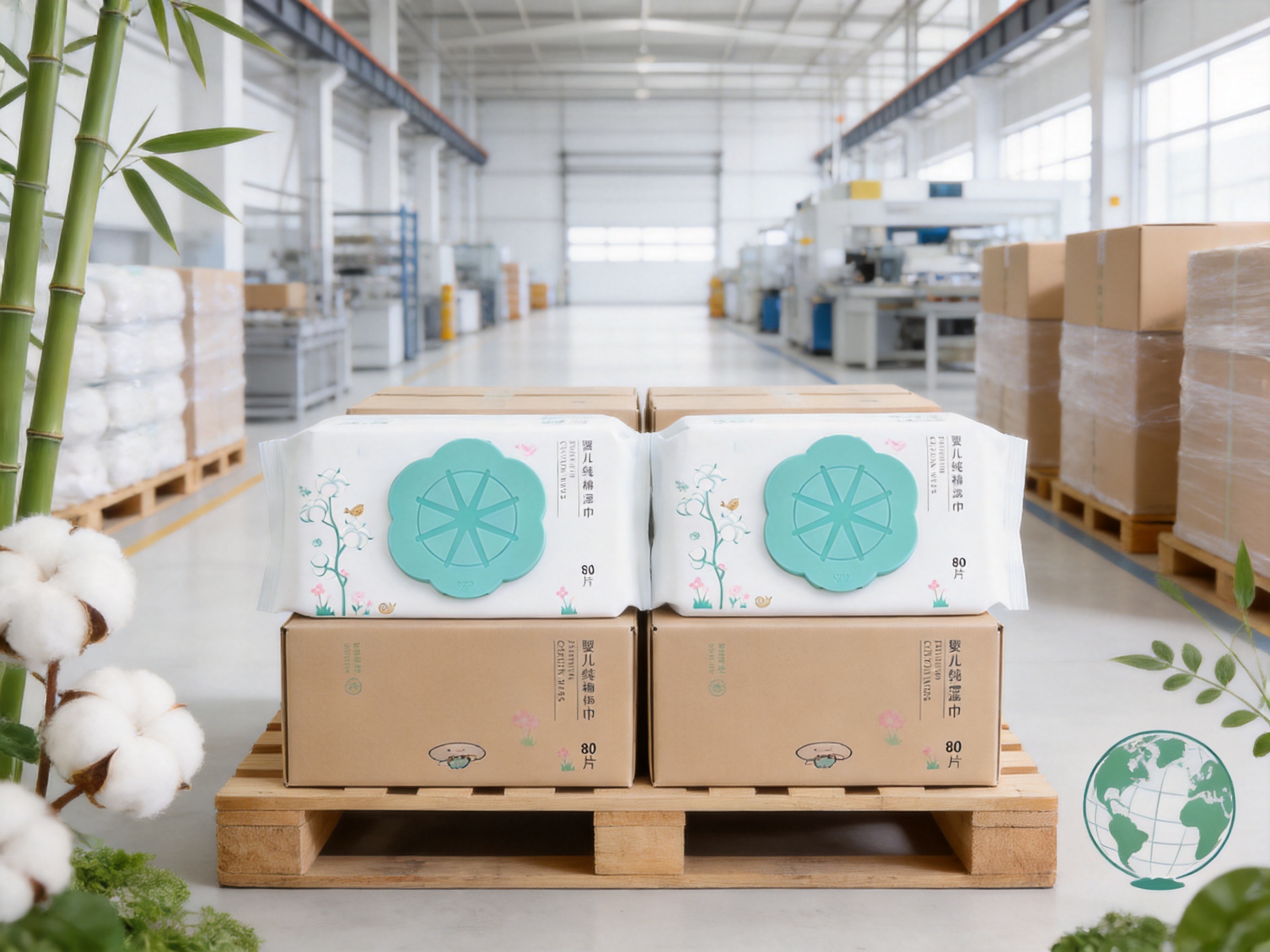
Baby wipes have become an essential part of modern childcare. Parents use them for diaper changes, cleaning hands and faces, refreshing skin during travel, and managing everyday messes. As demand continues to grow, buyers are no longer evaluating baby wipes only by price and sheet count. They increasingly examine the fiber source, softness, moisture performance, formula safety, packaging, biodegradability, manufacturing controls, and the supplier’s ability to provide consistent international production.
For baby care brands, retailers, importers, pharmacies, supermarkets, and online sellers, the choice of manufacturing partner can determine whether a product succeeds in a crowded market. A reliable partner must offer more than a basic wet wipe. It should provide suitable nonwoven materials, dependable converting equipment, controlled wetting and packaging processes, quality documentation, private label support, and the production capacity required for long-term supply.
The organic cotton baby wipes described in this article are designed for customers seeking a premium, customizable, and environmentally responsible solution. The wipes are based on soft plant-derived fibers, with organic cotton available as the principal substrate. Depending on customer specifications, the material range can also include bamboo, viscose, lyocell, and selected polyester blends. Because the supplied product information includes both cotton and bamboo terminology, buyers should confirm the final substrate composition on the approved specification before production. This step ensures that product claims, packaging language, testing, and regulatory documents all match the actual finished product.
The product combines a soft tactile experience with flexible manufacturing options. Customers can select sheet size, weight, fold type, pattern, fragrance, formula, sheet count, packaging format, artwork, and carton configuration. This flexibility makes the wipes suitable for different retail positions, from fragrance-free newborn products to premium organic cotton wipes for environmentally conscious families.
Behind the product is Zhejiang Uniquality Nursing Products Technology Co., Ltd., operating within the Kingsafe and Uniquality manufacturing organization. Founded in 1987, the company has developed extensive experience in nonwoven materials, medical and hygienic products, nursing products, baby care items, and related textile applications. Its production network includes multiple domestic bases, specialized equipment, clean production facilities, testing capabilities, and OEM and ODM support for international customers.
This article examines the product’s material advantages, performance characteristics, customization possibilities, manufacturing strengths, quality approach, sustainability considerations, and suitability for B2B buyers.
1. Why Material Selection Matters in Baby Wipes
A baby wipe may appear simple, but its performance depends on several interconnected elements. The substrate must feel soft against delicate skin, retain sufficient moisture, resist tearing during use, and release the cleansing solution evenly. The formula must support safe cleaning without unnecessary irritation. The package must protect the contents from contamination and prevent premature drying. Finally, the manufacturing process must maintain consistency from the first production batch to future replenishment orders.
Traditional low-cost wipes may rely heavily on synthetic fibers. Some synthetic substrates offer good strength and low manufacturing cost, but they may not deliver the natural hand feel, plant-based positioning, or biodegradability profile that many modern consumers expect. Parents who are concerned about plastic waste increasingly look for wipes made with cotton, bamboo, lyocell, or other renewable fibers.
Organic cotton is particularly attractive because it is naturally soft, breathable, and familiar to consumers. It can provide a comfortable wiping experience for diaper areas, hands, faces, and other sensitive applications. Cotton fibers also have a natural moisture content that helps the substrate remain pliable rather than feeling excessively dry or harsh.
Material selection should nevertheless be approached carefully. “Natural,” “plant-based,” “organic,” and “biodegradable” are not interchangeable terms. A product marketed as 100% organic cotton should be supported by appropriate material documentation and supply-chain records. A wipe made from a blend of cotton and synthetic fibers should be described accurately. Similarly, the biodegradability of the finished wipe depends on the complete substrate, binder, lotion, packaging, and disposal conditions.
For this reason, the manufacturer works with customers to confirm the exact material specification before production. Depending on the project, the substrate may be developed from 100% organic cotton or from other requested fibers such as bamboo, viscose, lyocell, or a controlled blend. This approach allows brands to develop products that match their intended claims, target market, price point, and performance requirements.
Natural Softness for Delicate Skin
Baby skin is more delicate than adult skin and may be more vulnerable to friction, dryness, and irritation. A wipe that feels rough or poorly saturated can create an uncomfortable experience, especially when used repeatedly during diaper changes. Organic cotton fibers provide a plush and gentle touch that supports a more comfortable cleaning routine.
The softness of a wipe is influenced not only by the fiber itself but also by fiber fineness, web formation, bonding, embossing, lotion loading, and converting conditions. A carefully engineered cotton substrate can deliver a smoother surface while preserving enough strength for practical use. The available technologies include parallel and semi-cross structures, which can be selected according to the required balance between softness, absorbency, tensile strength, and production efficiency.
Moisture Retention and Reduced Dry Friction
The supplied product information identifies a natural moisture content of approximately 8% to 10% for cotton fibers. This helps the wipe remain flexible and supports moisture retention. A properly saturated wipe can reduce the dry friction sometimes associated with rough or insufficiently moistened substrates.
Moisture retention also depends on the lotion formula, sheet density, package seal, and storage conditions. For a private label project, the formula and packaging must therefore be developed together. A high-quality wipe should distribute the cleansing solution throughout the sheet without excessive dripping, uneven wetness, or rapid evaporation after opening.
Breathability and Skin Comfort
Natural cellulose fibers can provide a breathable and comfortable surface. This characteristic is useful when wipes are used on the face, hands, and diaper area. A breathable substrate can help create a less occlusive feel than some dense synthetic materials.
Breathability does not replace the need for safe formula design or proper hygiene. Instead, it contributes to the overall user experience. The best results come from combining a suitable substrate, purified water, a carefully reviewed ingredient system, and packaging that protects the wipes without causing excessive moisture loss.
2. Key Product Advantages Compared with Conventional Wipes
The organic cotton baby wipes offer several potential advantages over conventional synthetic or poorly specified wipes. These advantages are most valuable when they are supported by accurate documentation and communicated transparently to buyers and end consumers.
Plant-Based Material Positioning
Many consumers now actively seek products that contain renewable or plant-derived fibers. Cotton, bamboo, viscose, and lyocell can support this positioning when the final composition is properly verified. For brands building a natural baby care range, a plant-based wipe can complement organic diapers, reusable accessories, natural skincare products, and sustainable packaging.
Plant-based positioning also creates opportunities for different product tiers. A basic wipe can use a qualified viscose or cotton blend, while a premium product can use a 100% organic cotton substrate with a fragrance-free formula and environmentally considered packaging. The manufacturer can help customers evaluate the technical and commercial implications of each option.
Softness and Premium Touch
Low-cost wipes often compete mainly on price and quantity. Premium cotton wipes compete on comfort, tactile quality, and trust. A soft, plush wipe can make a meaningful difference in the daily experience of parents and babies. The surface should be gentle enough for frequent cleaning while maintaining sufficient integrity during use.
Different patterns can also influence the touch and cleaning performance of the sheet. Available pattern options include plain, mesh, dot embossed, flower, and star designs. Embossing may improve texture and help create a premium appearance, while a plain surface may be preferred for a minimalist or medical-style product.
Biodegradability Considerations
Wipes made entirely from suitable plant-based fibers may break down more readily than wipes containing conventional plastic fibers. This can reduce the long-term plastic burden associated with disposable hygiene products. However, biodegradability claims must be based on the actual final product rather than on one component alone.
Brands should verify the substrate composition, wet-strength treatment, lotion ingredients, packaging materials, and applicable testing requirements before making environmental claims. The product can be developed with a strong eco-conscious direction, but the exact claim should reflect the approved specification and destination-market regulations.
Flexible Formula Development
Customers can request purified water, fragrance-free formulas, alcohol-free options, or selected plant extracts where applicable. This allows brands to create different product variants for newborns, sensitive skin, travel, family use, or premium natural care.
A fragrance-free option is often preferred for newborn products because it minimizes unnecessary sensory ingredients. Other customers may request a light fresh, lavender, lemon, lotus, fruit, coconut, cucumber, or similar fragrance profile. The fragrance must be reviewed for suitability, stability, and compliance with the requirements of the intended market.
Multiple Sheet and Package Configurations
The product can be manufactured in quantities ranging from approximately 1 to 200 pieces per pack, depending on the selected packaging and product design. Flow packs, soft packs, refill packs, travel packs, and multi-packs can be developed for different distribution channels.
A travel pack may contain a smaller number of sheets and emphasize portability. A family pack may focus on value and a larger sheet count. A refill pack may reduce packaging material and fit into an existing dispenser. Retail and pharmacy products may require tamper-evident construction, clear labeling, and strong shelf presentation. These options allow one manufacturing platform to support multiple commercial strategies.
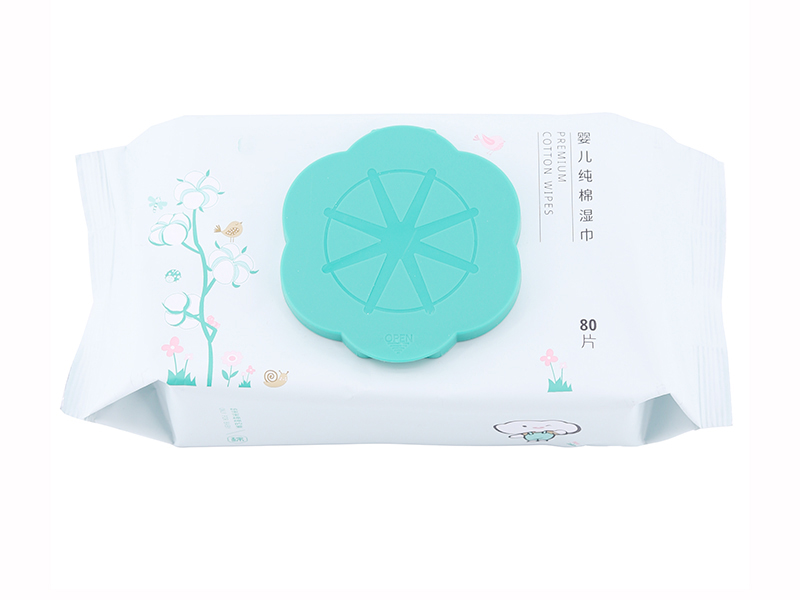
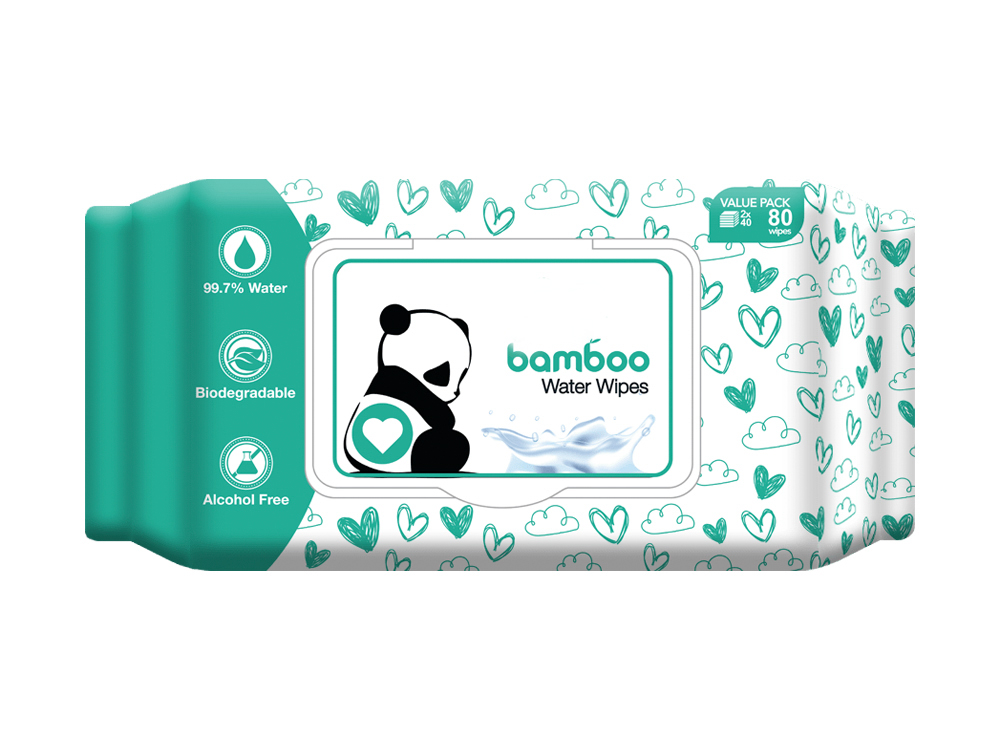
Bamboo baby wipes biodegradable
3. Product Specifications and Customization Options
One of the primary strengths of this product is the ability to tailor the wipe to a customer’s requirements. The following table summarizes the principal options described in the supplied product information. Final specifications should be confirmed during sampling and approved before mass production.
| Specification | Available or Customizable Options | Commercial Considerations |
|---|---|---|
| Primary materials | Organic cotton, cotton, bamboo, viscose, lyocell, selected polyester blends | Choose according to softness, strength, sustainability goals, claims, and cost |
| Technology | Parallel and semi-cross structures | Influences web formation, tensile strength, absorbency, and hand feel |
| Basis weight | Approximately 30–100 gsm | Higher weights may provide a more substantial feel and greater liquid capacity |
| Sheet width | Approximately 12–22 cm | Can be selected for newborn, standard, premium, or multipurpose formats |
| Sheet length | Approximately 12–30 cm | Should match the intended use, fold type, and package dimensions |
| Surface pattern | Plain, mesh, dot embossed, flower, stars | Supports cleaning performance, tactile differentiation, and shelf appeal |
| Fragrance | Unscented, fresh, Johnson-style, lavender, lemon, lotus, fruit, coconut, cucumber, and other options | Formula and fragrance must be reviewed for target-market compliance |
| Fold type | Z-fold, cross-fold, pop-up, and other configurations | Determines dispensing behavior and package compatibility |
| Sheet count | Custom quantity per pack | Supports travel, standard retail, value, and refill formats |
| Packaging | Flow pack, soft pack, refill pack, travel pack, multi-pack | Can be developed for different channels and price positions |
| Private label | Logo, artwork, multilingual packaging, barcode labeling | Enables brand ownership and market-specific presentation |
| Carton configuration | Customized export cartons and pallet solutions | Supports logistics, warehouse handling, and transport efficiency |
Sheet Weight and Dimensions
A basis weight range of approximately 30 to 100 gsm provides substantial room for product development. A lighter sheet may be appropriate for economical travel wipes or high-volume applications. A heavier sheet may provide improved coverage, a more luxurious touch, and greater liquid-holding capacity.
Dimensions should be selected based on the intended cleaning area and the target customer. A compact wipe may be useful for hand and face cleaning, while a larger sheet may be more practical for diaper changes. The fold format must be considered at the same time because a larger unfolded sheet can still fit into a compact package when folded efficiently.
Embossing and Surface Design
Plain wipes offer a simple, clean appearance and may be suitable for medical, newborn, or minimalist brands. Mesh structures can add texture and support cleaning. Dot embossing may improve tactile interest while creating a distinctive visual identity. Flower and star patterns can be used for child-focused packaging and differentiated retail lines.
Surface design should not be selected only for appearance. The pattern can affect softness, lotion distribution, friction, and how the wipe picks up light soil. Samples should be evaluated for both tactile and functional performance before final approval.
Formula Options
The formula is one of the most important aspects of a baby wipe. A basic system may use purified water with carefully selected skin-compatible ingredients. Brands may request fragrance-free, alcohol-free, or plant-extract formulas. Any additional ingredient should be evaluated for stability, compatibility with the substrate, microbial control, and regulatory acceptability.
The manufacturer’s production team can work with customers on formula confirmation, but the customer remains responsible for defining the desired market positioning and approving the final formula. For products intended for newborns or sensitive skin, a conservative ingredient approach is often preferred.
4. Manufacturing Process and Quality Control
Manufacturing quality begins long before the wipe is sealed in its retail package. It starts with supplier qualification, fiber selection, incoming inspection, water treatment, formula preparation, nonwoven web formation, cutting, folding, wetting, packaging, and final inspection. Each stage can influence the performance and safety of the finished product.
Raw Material Selection
The first step is confirming the requested fiber composition and quality level. For an organic cotton product, the manufacturer and customer should agree on the cotton specification, relevant documentation, target basis weight, color, fiber cleanliness, and intended claims. For bamboo, viscose, lyocell, or blended substrates, the same principle applies.
Raw materials should be checked for appearance, odor, weight, dimensions, and other characteristics relevant to the approved specification. Material traceability helps identify the source of each batch and supports investigation if a quality issue occurs.
Nonwoven Web Formation
The supplied information identifies parallel and semi-cross technologies. These structures can be selected according to the required balance of strength, softness, absorbency, and production efficiency. Web formation must be carefully controlled so that the final wipe has consistent thickness and fiber distribution.
Uniformity is important because uneven areas may absorb different amounts of lotion or feel inconsistent during use. A well-controlled web also supports more accurate cutting, folding, and packaging. The manufacturer’s experience in nonwoven production provides a technical foundation for developing different wipe constructions.
Cutting and Folding
After the substrate is produced, it is converted into the selected sheet dimensions. Precision cutting helps ensure that each pack contains sheets of consistent size. Folding equipment can create Z-fold, cross-fold, pop-up, or other dispensing formats.
The fold must be compatible with the package opening. If the sheet is too large, too thick, or poorly folded, it may not dispense correctly. If the package opening is too small, users may pull out multiple sheets. Sampling and dispensing tests are therefore essential before the design is finalized.
Liquid Preparation and Application
The moisturizing solution is prepared according to the approved formula. Purified water systems help reduce impurities and support consistent production. Ingredients should be weighed and mixed according to controlled procedures. The solution may then be applied to the dry sheets at a specified loading level.
Moisture distribution should be checked across the production batch. Under-saturated sheets may feel dry and create friction, while over-saturated sheets may leak, become difficult to dispense, or create package instability. A well-balanced loading level supports comfort, cleaning effectiveness, and shelf-life performance.
Packaging and Sealing
Packaging protects the wipes from contamination, evaporation, and handling damage. Flow packs, soft packs, refill packs, travel packs, and multi-packs can be produced according to the customer’s requirements. Sealing conditions must be monitored to prevent leakage and premature drying.
Packaging artwork should include the required product information for the destination market. This may include material description, sheet count, dimensions, ingredients, directions, warnings, storage instructions, batch information, manufacturer details, barcode, and disposal guidance. Multilingual packaging can be arranged for international distribution.
Clean Production Environment
The supplied company information describes 100,000-class GMP clean workshops and a purified water system designed according to pharmacopoeia standards. These facilities are important for hygiene-product manufacturing because they support controlled environmental conditions and cleaner production processes.
A clean workshop does not eliminate the need for testing, sanitation procedures, employee hygiene, equipment maintenance, and documented quality control. Instead, it forms part of a broader quality system. The combination of controlled facilities, trained personnel, process monitoring, and final inspection helps reduce production risks.
Testing and Inspection
The company operates a full-function testing center and reports support from a portfolio of patents. Depending on the product and target market, testing may include basis weight, dimensions, tensile strength, absorbency, moisture content, seal integrity, microbial indicators, formula analysis, stability, and packaging performance.
Available reports and documents depend on the specific product and destination market. Buyers should discuss their requirements during the quotation and sampling stages. Early communication helps prevent delays caused by missing documents or unsuitable claims after production has begun.
5. Why Manufacturing Scale Matters to B2B Buyers
A product can be attractive in a sample but difficult to supply consistently at commercial scale. B2B buyers need to evaluate whether a manufacturer can support initial launch quantities, repeat orders, seasonal increases, packaging changes, and expansion into additional markets.
Kingsafe and Uniquality report more than 30 years of development in medical and hygienic nonwoven materials, nursing products, and related textile applications. The organization has established eight production bases in China and is developing an additional factory in Vietnam. This network can provide greater production flexibility than a small workshop operating from one location.
The company reports large annual capacity across nonwoven fabrics, wet wipes, dry wipes, diapers, training pants, and related hygiene products. Capacity alone does not guarantee suitability, but it can be valuable for buyers who require stable supply, multiple product categories, and long-term cooperation.
Integrated Industrial Chain
An integrated production structure can reduce dependence on external suppliers. The company describes capabilities extending from self-developed nonwoven substrates to finished hygiene products. This allows customers to discuss the wipe material, converting process, formula, packaging, and finished product with an organization that understands the entire production chain.
Integration may also improve communication. When material and finished-product teams operate within the same manufacturing organization, changes to basis weight, surface design, fiber composition, or sheet dimensions can be evaluated more efficiently. It may also support better coordination between raw material planning and finished-goods delivery.
OEM and ODM Experience
OEM means the manufacturer produces according to the buyer’s brand and specifications. ODM generally includes a greater degree of product development support, allowing the manufacturer to help create a product based on a market concept or performance objective.
For private label baby wipes, support may include material selection, sample development, formula confirmation, packaging artwork coordination, barcode labeling, carton design, testing documentation, and shipment preparation. This is particularly useful for companies entering the baby care category for the first time.
Multi-Category Production Capability
The company’s product coverage includes medical wipes, baby wipes, dry wipes, cleansing wipes, diapers, pull-ups, wet toilet paper, flushable and degradable nonwovens, and industrial cleaning products. A buyer may therefore be able to develop a broader hygiene portfolio through one manufacturing relationship.
For example, a brand may begin with organic cotton baby wipes and later add dry cotton wipes, toddler training pants, diaper products, household cleaning wipes, or healthcare wipes. Working with a supplier that understands several related categories can simplify supplier management and support coordinated brand growth.
6. Sustainability and Responsible Product Development
Sustainability is increasingly important in baby care, but responsible communication requires precision. A wipe should not be described as environmentally friendly solely because one fiber is natural. The complete product lifecycle should be considered, including raw materials, formula, production energy, packaging, transportation, consumer use, and disposal.
Organic cotton can support a renewable-material strategy when its sourcing and certification documentation are available. Bamboo, viscose, and lyocell may also be considered, although the environmental profile depends on the specific production method and processing system. Brands should obtain appropriate evidence before using strong environmental claims.
Reducing Plastic Fiber Content
One important sustainability objective is reducing unnecessary plastic fibers in disposable wipes. A product made from suitable cellulose-based fibers may help reduce persistent plastic residue compared with a product containing conventional synthetic fibers. The exact composition should always be clearly confirmed.
Customers can discuss whether a 100% organic cotton substrate, a bamboo-based substrate, a lyocell construction, or a blended option best meets their performance and commercial requirements. Each material has different characteristics relating to strength, absorbency, softness, cost, and biodegradation.
Packaging Choices
Packaging can have a significant effect on the environmental profile of a wipe. Flow packs offer practical protection and efficient transport, while refill packs may reduce the amount of packaging used per sheet when consumers reuse a dispenser. Multi-packs can improve shipping efficiency, although they may increase the amount of secondary packaging.
The correct solution depends on the market and distribution channel. Packaging must still protect the product from drying and contamination. Reducing material use at the expense of poor package performance can create product waste, which may undermine the intended sustainability benefit.
Clear Disposal Guidance
Most baby wipes should be disposed of with household waste unless the product has been specifically tested, certified, and labeled for a suitable alternative disposal method. Even plant-based wipes should not automatically be flushed. A responsible brand should provide clear disposal guidance and avoid confusing consumers.
Flushability is a separate technical category that requires specialized testing and appropriate product design. The organic cotton baby wipes described here should be marketed according to their approved disposal instructions and destination-market requirements.
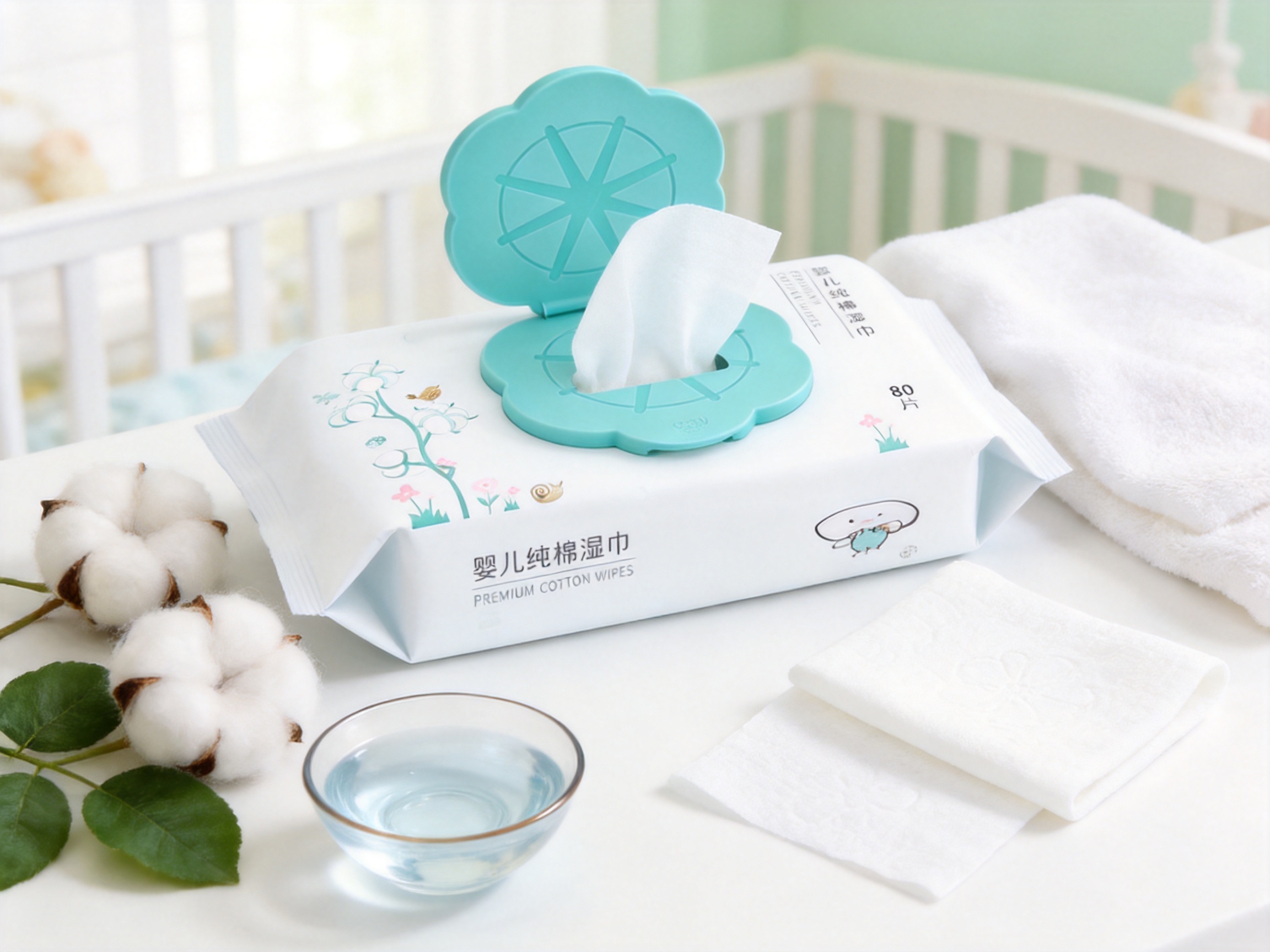
7. Private Label Development from Concept to Shipment
Successful OEM and ODM production usually follows a defined development process. Establishing clear approval points helps reduce misunderstandings and prevents costly changes late in the project.
Step One: Define the Product Concept
The buyer should identify the target consumer, intended use, retail channel, price position, and market. For example, a newborn product may require fragrance-free organic cotton, while a travel product may prioritize a compact package and lower sheet count. A premium retail product may require embossed sheets, sophisticated artwork, and a heavier basis weight.
The buyer should also decide whether the product will be sold as organic cotton, cotton, bamboo, biodegradable, sensitive, natural, or another category. Claims should be discussed with the manufacturer before artwork is finalized.
Step Two: Confirm Material and Formula
The manufacturer can present suitable substrate options and formula directions. Customers may request organic cotton, cotton, bamboo, viscose, lyocell, or other qualified materials. They may also select purified water, fragrance-free, alcohol-free, or plant-extract formulations.
At this stage, the customer should request material information and available documentation. If a certification is essential to the product’s marketing plan, it should be identified before sampling rather than after mass production.
Step Three: Develop and Evaluate Samples
Samples allow the buyer to assess softness, sheet size, pattern, strength, absorbency, saturation, fragrance, dispensing, and package appearance. Testing should be performed under realistic use conditions. A wipe intended for diaper changes should be evaluated differently from one intended for hand and face cleaning.
Sample approval should include written confirmation of the material, basis weight, sheet dimensions, fold, formula, sheet count, package type, artwork, and other critical details. A retained approved sample can serve as a reference for future production.
Step Four: Confirm Packaging and Artwork
Packaging development includes structure, opening design, film or pouch selection, label information, colors, images, language, barcode, and carton configuration. The packaging should be reviewed for both visual quality and practical performance.
Artwork must accurately reflect the final product. For example, a package should not describe the wipe as 100% organic cotton if the approved specification is a cotton-viscose blend. It should not make a biodegradable claim unless the relevant evidence and market requirements have been reviewed.
Step Five: Conduct Pre-Production Approval
Before bulk production, the buyer and manufacturer should confirm the purchase order, approved sample, raw materials, formula, packaging, quantity, delivery schedule, inspection requirements, and documents. Any special requirements for pallets, cartons, labeling, or export should be recorded.
Pre-production confirmation reduces the risk of discrepancies between the sample and the commercial batch. It also allows the factory to reserve suitable production capacity and packaging materials.
Step Six: Manufacture, Inspect, and Ship
During production, the factory monitors the substrate, wetting process, folding, packing, sealing, and carton loading. Finished products may be inspected according to agreed quality requirements. Export documents and shipping arrangements are then prepared for the destination market.
The manufacturer’s experience with international customers and multiple export regions can support buyers in North America, Europe, the Middle East, Southeast Asia, Oceania, and other markets. Specific compliance responsibilities should be confirmed according to the laws of the importing country.
8. Buyer Evaluation: Questions to Ask Before Ordering
Choosing a supplier is a strategic decision. Buyers should evaluate more than the unit price. The following questions can help compare manufacturers fairly.
Material and Claims
What is the exact fiber composition of the wipe? Is the product 100% organic cotton, conventional cotton, bamboo, lyocell, viscose, or a blend? Can the supplier provide material documentation? Are the proposed environmental claims supported by applicable testing or certification?
Formula and Safety
What water system is used? Is the formula fragrance-free or alcohol-free? Can the customer approve the ingredients? How is microbial quality controlled? What stability and compatibility information is available? Does the formula meet the requirements of the intended market?
Production Capacity
Can the manufacturer support the required monthly volume? What is the normal lead time for samples, packaging, and bulk production? Can the supplier manage seasonal demand? Are alternative production bases available if capacity becomes constrained?
Quality and Documentation
What inspections are performed during production? What testing can be provided? How are batches identified and traced? Can the factory provide product specifications, test reports, export documents, and other records required by the buyer?
Customization
Can the supplier produce the requested size, fold, pattern, sheet count, fragrance, packaging, and carton design? Is the artwork reviewed before printing? Can the supplier support multilingual packaging and barcode labeling?
Communication and Service
Does the supplier provide a clear contact process from sampling to shipment? Are technical questions answered promptly? Will the production team communicate if raw material or packaging issues arise? Strong communication can be as important as production equipment when developing a new private label product.
9. Suitable Applications and Customer Segments
The product is designed for B2B supply rather than individual retail purchase. Its flexible specifications make it suitable for a wide range of professional buyers.
Baby Care Brands
Established baby care brands can use the product to expand their existing range or introduce a premium organic cotton series. A brand may offer fragrance-free newborn wipes, lightly scented family wipes, travel packs, and larger value packs under the same visual identity.
Private Label Owners
Private label companies can develop a product without investing in their own wipe production line. The manufacturer can support substrate selection, formula development, packaging, and bulk production while the buyer focuses on branding, sales, distribution, and customer relationships.
Supermarkets and Retail Chains
Retail groups often require stable supply, competitive pricing, standardized packaging, and reliable replenishment. A manufacturer with multiple production bases and broad product capability may be able to support both entry-level and premium store-brand ranges.
Pharmacies and Healthcare Distributors
Pharmacies may prefer fragrance-free, gentle, and clearly documented baby wipes. Product descriptions, ingredient information, testing records, and packaging compliance can be especially important in this channel.
Importers and Wholesalers
Importers and wholesalers can use OEM production to build differentiated products for regional markets. Localized packaging, language, sheet count, fragrance preference, and carton configuration can be adapted to the needs of each territory.
Online Marketplace Sellers
Online sellers often compete through product differentiation, visual presentation, customer reviews, and niche positioning. An organic cotton or plant-based baby wipe can provide a clear product story, particularly when supported by accurate specifications and high-quality packaging.
10. Frequently Asked Questions
Q1. Are the wipes made from 100% organic cotton?
The product can be manufactured with a 100% organic cotton substrate when this specification is selected and approved. The supplied product information also lists bamboo, viscose, lyocell, cotton, and polyester among possible materials. Buyers should confirm the final composition before production and ensure that the packaging claims match the approved material specification.
Q2. Why does the product information mention both bamboo and cotton?
The product title refers to bamboo baby wipes, while the main description presents 100% cotton and organic cotton options. This indicates that the manufacturing platform may support more than one substrate direction. The buyer should clarify whether the intended product is bamboo, cotton, organic cotton, or a blend. The final material should be documented in the purchase specification and printed accurately on the package.
Q3. Can the wipes be manufactured under my own brand?
Yes. OEM and private label services are available. Customers can request logo printing, packaging artwork, multilingual labeling, barcode support, customized cartons, and other brand-related services.
Q4. Can the wipe size and sheet count be changed?
Yes. The manufacturer can discuss custom sheet dimensions, fold types, and sheet quantities. The selected size must be compatible with the package format and production equipment. Samples should be approved before bulk production.
Q5. Is a fragrance-free formula available?
Yes. Fragrance-free and alcohol-free options can be discussed. Customers may also request selected plant extracts or other formula directions where applicable. The final formula should be reviewed for safety, stability, microbial control, and destination-market requirements.
Q6. Are the wipes biodegradable?
Wipes made from appropriate plant-based fibers may offer improved biodegradability compared with wipes containing conventional plastic fibers. However, the claim must be based on the complete finished product and applicable evidence. Buyers should confirm the substrate, additives, packaging, and required testing before using a specific biodegradability statement.
Q7. Can the wipes be flushed down the toilet?
Not unless the product has been specifically designed, tested, certified, and labeled for flushability. Plant-based or biodegradable does not automatically mean flushable. Unless the approved packaging states otherwise, baby wipes should generally be disposed of with household waste according to local instructions.
Q8. What packaging types are available?
Available options include flow packs, soft packs, refill packs, travel packs, and multi-packs. The best format depends on the sheet count, intended sales channel, desired shelf life, dispensing method, and packaging budget.
Q9. Can I request samples before placing a bulk order?
Yes. Samples can be used to evaluate material, softness, dimensions, pattern, formula, saturation, fragrance, fold, packaging, and dispensing performance. Sample approval is strongly recommended before mass production.
Q10. What is the minimum order quantity?
The MOQ depends on the material, packaging, sheet count, artwork, formula, and customization requirements. It should be discussed with the manufacturing team during quotation. Customized packaging and special formulas may require different minimum quantities from standard products.
Q11. What certifications and documents are available?
Available documents depend on the product specification and destination market. The manufacturer may provide relevant test reports, material information, product specifications, export documents, and other records upon request. Buyers should identify their documentation requirements early in the project.
Q12. Which international markets can the manufacturer serve?
The company works with customers in North America, Europe, the Middle East, Southeast Asia, Oceania, and other international markets. Product compliance, labeling, ingredients, and documentation must be reviewed according to the specific importing country.
Q13. Can the manufacturer produce other hygiene products?
Yes. The wider product portfolio includes dry wipes, wet wipes, medical products, cleansing wipes, diapers, pull-ups, training pants, wet toilet paper, flushable and degradable nonwoven materials, and industrial cleaning products. This may allow buyers to develop multiple product categories with one manufacturing partner.
Q14. How should the product be stored?
The finished wipes should be stored in a cool, dry, and clean environment away from direct sunlight and excessive heat. Packages should remain properly sealed. Specific storage instructions and shelf-life information should be confirmed according to the final formula and packaging.
Q15. Is this product available for individual purchase?
The product is presented primarily for wholesale, OEM, and ODM cooperation. It is intended for companies seeking a manufacturing partner for private label or branded distribution rather than for individual one-time purchases.
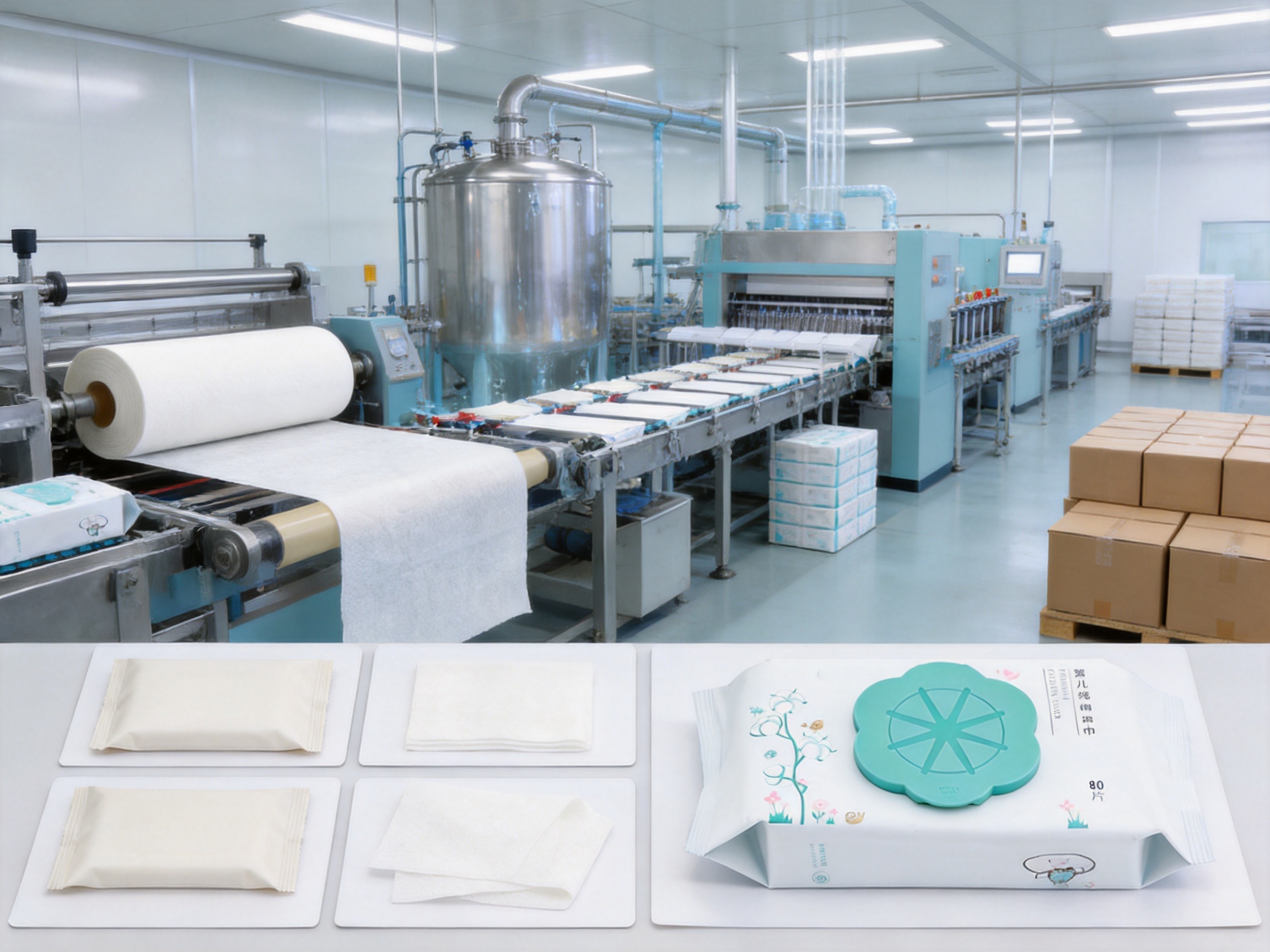
11. The Company’s Manufacturing Strengths
Zhejiang Uniquality Nursing Products Technology Co., Ltd. operates within the Kingsafe and Uniquality organization, which was founded in 1987. The company specializes in medical and hygienic nonwoven materials, nursing products, high-end clothing interlining, and finished hygiene products.
Its headquarters are located in Changxing, Huzhou, Zhejiang, within the Yangtze River Delta transportation network. The company has established production bases in several Chinese locations, including Foshan, Nantong, and Wuhan, and reports eight domestic production bases in total. An additional Vietnam factory is also planned or under development according to the supplied company information.
The company describes itself as a national high-tech enterprise with long-term experience in research and development, manufacturing, and sales. It has introduced international production equipment and technologies from Germany, France, and Italy. This international equipment base supports the production of spunlace nonwovens, spunmelt nonwovens, hot-air-through nonwovens, degradable materials, wet wipes, dry wipes, diapers, pull-ups, cleansing wipes, and related products.
Its manufacturing scope covers medical, maternal and baby, beauty, household, industrial cleaning, clothing, and other applications. The breadth of this product range reflects an ability to work with different fiber structures, converting methods, formulas, and packaging formats.
The company also reports a full industrial chain extending from nonwoven substrate development to finished hygiene products. This can be a major advantage for B2B customers that require material customization and finished-product integration. Instead of treating the wipe substrate as an anonymous purchased component, the manufacturer can consider how the material affects wetting, folding, packaging, performance, and market positioning.
In addition, the company reports 100,000-class GMP clean workshops, a purified water system based on pharmacopoeia standards, a full-function testing center, and support from more than 169 patents. Buyers should request product-specific documentation and determine which facilities, tests, and patents apply to their project. Nevertheless, these capabilities demonstrate the company’s investment in technical development and controlled production.
12. Building a Strong Product Proposition
A successful baby wipe should communicate a simple and credible value proposition. For this product, the central message can combine soft organic cotton or selected plant-based fibers, gentle daily care, flexible private label development, and responsible manufacturing.
The product can be positioned as a premium wipe for newborn care, a sustainable choice for environmentally conscious families, a fragrance-free solution for sensitive skin, or a customizable retail product for regional markets. The positioning should be matched to the actual specification. A premium claim should be supported by softness, sheet weight, packaging, formula, and quality consistency. An environmental claim should be supported by material and disposal evidence.
For B2B buyers, the manufacturing proposition is equally important. Customers receive access to an experienced nonwoven producer, multiple material options, OEM and ODM support, packaging customization, testing resources, and a broad product portfolio. These capabilities can reduce the complexity of launching a private label product.
Conclusion
Organic cotton baby wipes combine the practical convenience of disposable hygiene products with the comfort and natural positioning increasingly sought by modern parents. Their value lies in more than the word “cotton.” A successful product requires the right substrate, consistent web formation, comfortable softness, reliable moisture distribution, safe formula design, protective packaging, accurate claims, and controlled manufacturing.
The product described here offers a broad development platform. Customers can choose organic cotton, cotton, bamboo, viscose, lyocell, or selected blends according to their commercial and technical requirements. They can customize dimensions, basis weight, pattern, fragrance, fold, sheet count, formula, packaging, artwork, and cartons. This flexibility supports baby care brands, private label owners, retailers, pharmacies, importers, wholesalers, and online sellers.
The manufacturing organization behind the product contributes long-term nonwoven experience, multiple production bases, integrated material and finished-product capabilities, clean workshops, purified water systems, testing resources, international OEM and ODM experience, and a broad hygiene-product portfolio. These strengths can help buyers move from concept to sample, from sample to launch, and from initial order to stable long-term supply.
Before production, buyers should confirm the exact fiber composition, especially when choosing between the bamboo and cotton product directions described in the supplied information. They should also verify formula details, environmental claims, testing requirements, packaging language, MOQ, lead time, and destination-market compliance. With these points clearly defined, the product can become a dependable foundation for a differentiated and responsibly developed baby care range.
References
1. Product specification and customization information supplied for the organic cotton baby wipes product.
2. Company profile and manufacturing capability information supplied for Zhejiang Uniquality Nursing Products Technology Co., Ltd.
3. General principles of nonwoven fabric formation, spunlace processing, fiber selection, and hygiene-product converting.
4. General guidance on cosmetic and personal-care product safety, formula review, packaging integrity, and microbial quality control.
5. General principles of organic fiber documentation, environmental claims, biodegradability assessment, and responsible product labeling.
6. General international practices for OEM, ODM, private label manufacturing, product sampling, quality approval, and export documentation.