中文简体
 English
 日本語
 русский
 Español
Cooling wipes are designed to deliver a quick, convenient feeling of freshness whenever ordinary cleansing is not enough. Infused with suitable cooling agents and formulated for practical daily use, they can help refresh the skin after exercise, during hot weather, while traveling, at work, or whenever the user feels tired and overheated. Their compact packaging, simple application, and immediate sensory effect make them an increasingly attractive product in the personal-care and hygiene market.
As consumers look for convenient ways to maintain comfort throughout the day, cooling wipes have developed beyond a seasonal novelty. They now serve multiple usage occasions, including outdoor activities, fitness, commuting, personal care, hospitality, workplace wellness, and emergency refreshment. For manufacturers, retailers, and private label buyers, the category offers opportunities to develop differentiated products through formulation, substrate selection, package design, fragrance choices, pack sizes, and targeted marketing.
High-quality production is essential to the success of a cooling wipe. The product must combine a pleasant cooling sensation with softness, adequate wetness, structural strength, clean dispensing, packaging stability, and dependable quality control. It must also be manufactured with careful attention to skin contact, ingredient compatibility, microbiological safety, and regulatory expectations. A strong manufacturing partner can help transform a basic wipe concept into a reliable, scalable, and commercially attractive product.

Cooling Wipes
What Are Cooling Wipes?
Cooling wipes are pre-moistened personal-care wipes that contain cooling or refreshing ingredients. When the wipe is applied to the skin, the formula can create a temporary cool sensation. Depending on the intended product positioning, the sensation may be gentle and suitable for everyday use or more noticeable for post-workout, outdoor, or high-temperature applications.
The cooling experience is usually created through a combination of formulation design and evaporation at the skin surface. Certain ingredients interact with sensory receptors associated with coolness, while the moisture in the wipe evaporates and contributes to a refreshed feeling. The result is not necessarily a reduction in core body temperature. Instead, the product is intended to provide a localized, temporary sensation of cleanliness and relief from feelings of heat or fatigue.
Cooling wipes should therefore be positioned responsibly. They are personal-care products intended to refresh the skin, not medical devices or treatments for heatstroke, fever, dehydration, or other medical conditions. Clear usage directions help consumers understand the product’s purpose and use it appropriately.
A well-designed cooling wipe normally includes four essential components: the nonwoven substrate, the liquid formulation, the package, and the quality-control system behind production. Each element affects the user experience. A soft but weak substrate may tear during use. A strong wipe with an overly wet formula may feel messy. A pleasant formula in a poor package may dry out before the end of its shelf life. Effective manufacturing requires all components to work together.
Main Benefits of Cooling Wipes
Fast and Convenient Refreshment
The main benefit of cooling wipes is convenience. Users do not need water, a towel, a shower, or a separate bottle of cleansing liquid. They can open a pack, remove one wipe, and refresh the face, neck, arms, hands, or other suitable external areas. This makes cooling wipes useful in places where traditional washing facilities are unavailable or inconvenient.
The ready-to-use format also makes the product easy to carry. Individual sachets or compact multi-count packs can fit into handbags, backpacks, gym bags, work drawers, vehicle storage compartments, and travel luggage. The portable format supports spontaneous use and allows consumers to keep refreshment available throughout the day.
Suitable for Active Lifestyles
People who exercise, walk, cycle, hike, work outdoors, or travel in warm conditions may appreciate the immediate refreshing effect of a cooling wipe. After physical activity, users often want to remove sweat and regain a more comfortable feeling before they can shower. A cooling wipe offers a practical interim solution.
For sports and fitness businesses, cooling wipes can complement gym towels, exercise accessories, changing-room amenities, and post-workout care products. They may also be included in event kits, marathon packages, outdoor activity packs, and corporate wellness programs.
Useful in Warm Weather
Hot weather increases the demand for products that help people feel clean and refreshed. Cooling wipes can be used at offices, schools, festivals, transportation hubs, resorts, campsites, and outdoor workplaces. Their low water requirement is another advantage in situations where access to clean running water is limited.
Seasonality can be addressed through product positioning and packaging. A bright summer design may appeal to consumers during hot months, while a more general wellness design can support year-round use. Retailers may place cooling wipes in personal-care aisles, travel sections, sports departments, outdoor displays, or seasonal promotional areas.
Practical Personal Hygiene Support
Cooling wipes can help users remove surface sweat, light dirt, and everyday residue from suitable external skin areas. They are not a replacement for thorough bathing or handwashing when those options are available, but they can provide practical support between regular cleansing occasions.
For this reason, product communication should distinguish between refreshing, cleansing, and sanitizing claims. A standard cooling wipe should not be marketed as a disinfectant or antibacterial product unless its formula, testing, registration, and labeling support those claims. Accurate claims help protect consumers and strengthen long-term product credibility.
Positive Sensory Experience
Consumers often evaluate wipes through several senses. They notice the fragrance when opening the pack, the softness when touching the skin, the level of wetness during application, and the cooling sensation after use. A balanced formula can create a feeling of cleanliness without excessive stickiness, harshness, or residue.
Cooling intensity should be matched to the target user. A product intended for general family use may require a mild, comfortable sensation. A product designed for athletes or outdoor workers may use a stronger refreshing profile, subject to appropriate safety and regulatory review. Offering different intensity levels can help a manufacturer serve multiple market segments.
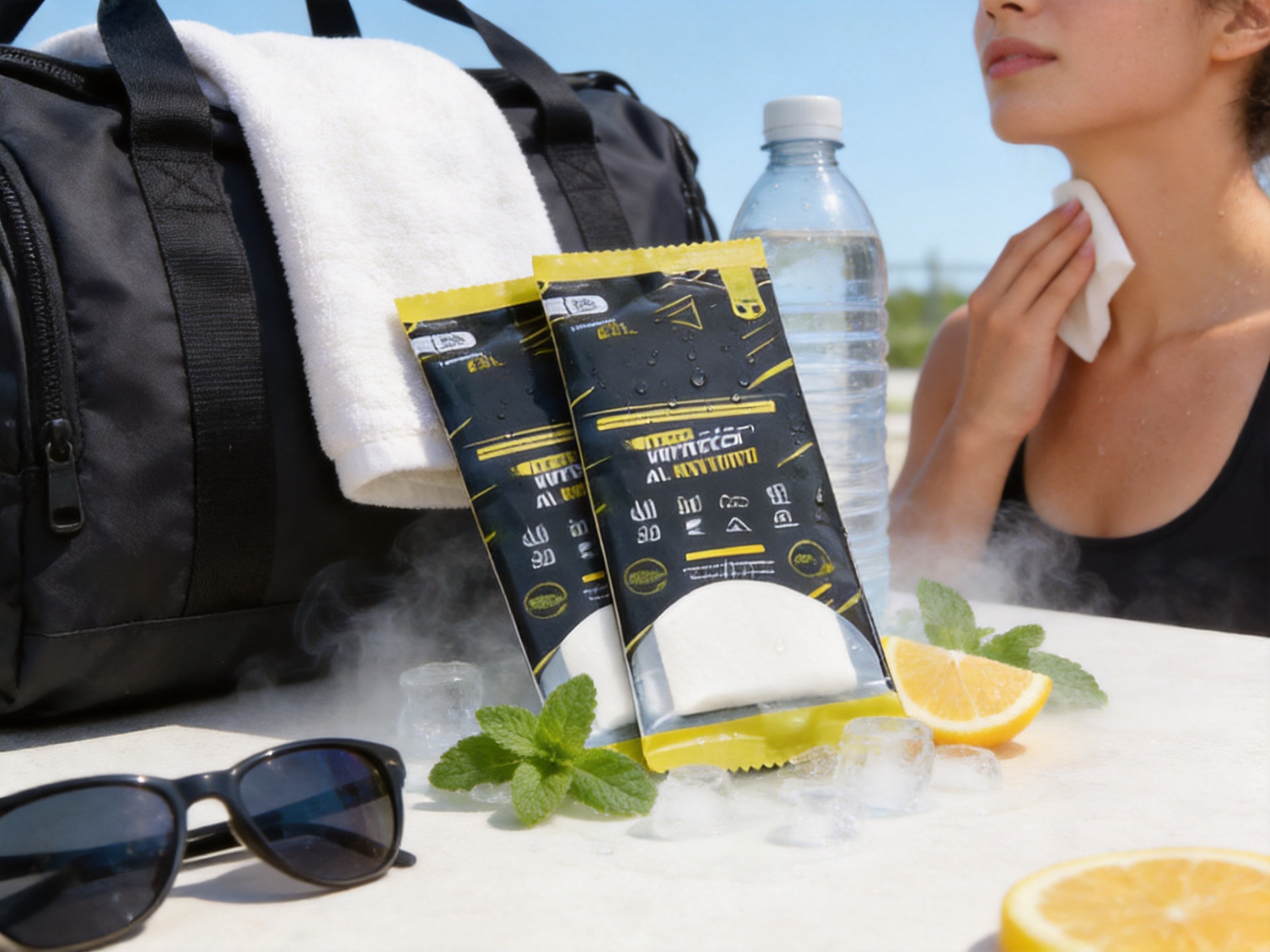
Product Features That Influence User Satisfaction
Softness and Skin Feel
The wipe substrate should feel comfortable during use, especially when applied to sensitive or frequently exposed areas. Softness depends on fiber selection, web structure, bonding method, basis weight, and finishing technology. A smooth surface can reduce friction and make the product feel more premium.
Softness should not be achieved at the expense of strength. Users expect the wipe to remain intact while being removed from the package and used on the skin. The best construction combines a gentle surface with sufficient tensile performance in both machine and cross directions.
Appropriate Moisture Level
Liquid distribution is another important factor. A wipe that is too dry may not provide effective cleansing or cooling. A wipe that is excessively saturated may drip, feel uncomfortable, or create packaging leakage risks. Consistent lotion loading helps ensure that every wipe in the pack provides a similar experience.
Production equipment must be calibrated to control liquid application accurately. The formulation should also remain evenly distributed during storage and transportation. Stability testing can help verify that the product maintains its intended wetness and performance over time.
Controlled Cooling Sensation
The cooling effect must be noticeable but manageable. Excessive cooling may be unpleasant for some users, particularly on sensitive skin or near the eyes. A well-developed product uses carefully selected ingredients and a controlled concentration range to create a refreshing sensation without unnecessary discomfort.
Cooling ingredients may include sensory agents selected by the formulator for their compatibility, stability, and intended intensity. The complete formulation should be evaluated for skin compatibility, odor, residue, pH, preservative performance, and interaction with the nonwoven substrate and package materials.
Reliable Dispensing
Packaging should allow users to remove one wipe at a time with minimal difficulty. A resealable lid, adhesive closure, or suitable sachet seal can help protect the remaining wipes from drying. The opening size and folding method also influence dispensing performance.
For multi-count packages, the folding configuration should support smooth withdrawal without pulling out several wipes together. For single-use sachets, the seal should be strong enough to prevent leakage but easy enough to open without tools. These details can significantly affect customer satisfaction.
Fresh Fragrance Options
Fragrance can reinforce the perception of freshness, but it should not dominate the product experience. Some buyers prefer clean, light, and energetic scents, while others prefer fragrance-free or low-fragrance formulations. Private label development can include several fragrance directions, such as fresh botanical, citrus, mint-inspired, aquatic, or neutral profiles.
Fragrance selection should consider the product’s target market, regulatory requirements, skin-contact expectations, and packaging presentation. A fragrance that smells attractive in a laboratory sample may perform differently after storage in the finished package, so evaluation under actual conditions is important.
Advantages Compared with Basic Refreshment Wipes
Ordinary refreshment wipes may provide moisture and cleansing, but cooling wipes add a distinct sensory benefit. The user can experience a noticeable feeling of freshness rather than simply wiping the skin. This feature creates a clearer point of differentiation on a crowded retail shelf.
Cooling wipes can also support occasion-based marketing. A general cleansing wipe may be promoted for broad everyday use, whereas a cooling wipe can be associated with exercise, heat, travel, outdoor work, festivals, commuting, and fatigue. These clear use occasions help retailers explain the product’s value to consumers.
Another advantage is the potential for product segmentation. Manufacturers can develop mild cooling wipes for daily use, stronger cooling wipes for sports, compact travel packs, premium fragrance versions, sensitive-skin options, or larger wipes for body refreshment. This flexibility allows brands and distributors to create a product range rather than relying on one standard specification.
Cooling wipes may also have stronger promotional appeal during warm seasons. Seasonal displays, event sampling, travel campaigns, and sports partnerships can communicate the product benefit quickly. The visual and sensory nature of the category makes it suitable for demonstrations and trial-based marketing.
| Product consideration | Basic refreshment wipe | Cooling wipe |
|---|---|---|
| Primary consumer benefit | Moist cleansing and general refreshment | Moist cleansing combined with a temporary cooling sensation |
| Common usage occasions | Travel, daily personal care, quick cleaning | Exercise, hot weather, outdoor use, travel, commuting, and fatigue |
| Product differentiation | Often based on softness, fragrance, or pack format | Can be differentiated through cooling intensity, formula, fragrance, and application area |
| Seasonal potential | Generally stable throughout the year | Particularly strong during warm seasons and outdoor activity periods |
| Private label opportunities | Substrate, fragrance, package, and count customization | Substrate, cooling profile, formula, fragrance, size, package, and usage positioning customization |
The comparison does not mean that one product type is universally better than another. Instead, cooling wipes provide an additional sensory benefit and a broader range of marketing angles. The appropriate choice depends on the target consumer, intended claims, price level, and distribution channel.
Advanced Nonwoven Manufacturing Capabilities
The quality of a wipe begins with its substrate. Nonwoven materials are engineered sheets made from fibers that are bonded through mechanical, thermal, chemical, or combined processes rather than woven into traditional fabric. For wipes, nonwovens can be designed to provide softness, absorbency, strength, liquid retention, and controlled surface texture.
A manufacturer with extensive nonwoven expertise can select materials according to the intended application. Spunlace nonwoven fabrics are commonly valued for their textile-like softness, drape, and strength. Spunmelt materials can support efficient, consistent production for selected applications. Hot-air-through nonwovens may offer a soft and lofty hand feel for certain product designs. Flushable or degradable material technologies may be considered when supported by appropriate product requirements and testing.
Material selection should not be based only on price. The substrate affects lotion absorption, wipe release, skin feel, tear resistance, folding, packaging behavior, and disposal characteristics. A skilled manufacturer can balance these factors while keeping the product aligned with the buyer’s cost and performance objectives.
Advanced production equipment also supports consistency. Automated lines can control web formation, cutting, folding, liquid application, sealing, coding, and packing with limited variation. Consistent equipment settings help reduce differences between production batches and improve the reliability of finished goods.
For cooling wipes, the substrate must absorb the lotion while releasing enough liquid during use. If the fibers hold too much liquid, the wipe may feel dry on the skin despite a high lotion load. If the structure releases liquid too quickly, the product may feel overly wet. Engineering the relationship between fiber structure and formulation is therefore a central part of product development.
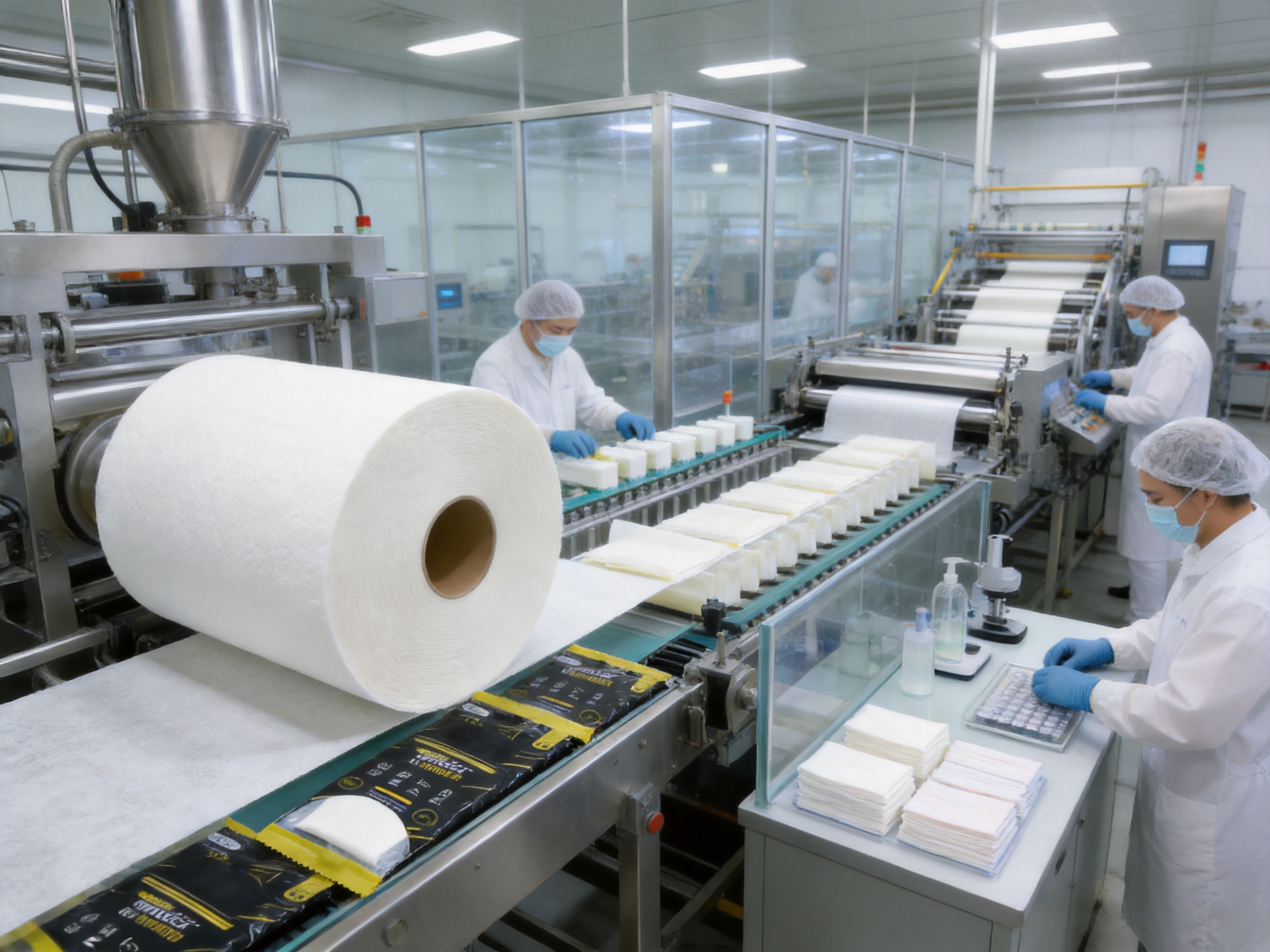
Manufacturing Process for Cooling Wipes
1. Product Specification and Formula Design
Production normally begins with a detailed product brief. The brief may define wipe dimensions, substrate type, basis weight, liquid loading, cooling intensity, fragrance, pH range, package format, number of wipes per pack, shelf-life expectation, and target market.
Formulators then develop a liquid system that supports the desired user experience. Typical considerations include purified water quality, humectants, emollients, cooling agents, fragrance, pH adjustment, preservatives, and compatibility with the substrate. Every ingredient should have a defined purpose and be selected according to applicable cosmetic or personal-care requirements.
2. Raw Material Inspection
Before production, incoming materials should be inspected and documented. Nonwoven rolls can be checked for width, weight, appearance, strength, and surface defects. Packaging films, lids, labels, cartons, and sealing components should be reviewed for dimensions, printing quality, and physical condition.
Liquid ingredients require appropriate identification, storage, and batch management. Water used in the formulation should meet the required quality standard, while ingredients should be stored under conditions that protect their stability. Traceability from incoming material to finished product is essential for effective quality management.
3. Liquid Preparation
The liquid is prepared in controlled mixing equipment. Operators or automated systems add ingredients in a defined sequence to support uniform dispersion and reduce the risk of incompatibility. Mixing time, temperature, agitation speed, and batch volume may be recorded as part of the manufacturing process.
After mixing, the liquid may undergo filtration or other treatment steps depending on its composition and the product’s quality requirements. The finished bulk liquid is evaluated for appearance, odor, pH, viscosity, and other relevant parameters before being transferred to the wipe production line.
4. Nonwoven Slitting and Folding
The selected nonwoven roll is guided into the production line, where it may be slit to the required width and folded according to the package design. Folding patterns can include interfolded, stacked, or other configurations. The objective is to create convenient dispensing while maintaining the intended wipe dimensions.
Cutting and folding accuracy matters because inconsistent dimensions can affect packaging appearance and consumer handling. Automated sensors and mechanical controls can help maintain alignment and reduce material waste.
5. Lotion Application
The liquid is applied to the folded or unfolded substrate through a controlled dosing system. The system must deliver a consistent amount across the production width and from batch to batch. In-line monitoring can help detect abnormal flow, uneven wetting, or equipment problems.
Uniform application is particularly important for cooling wipes because consumers expect a consistent sensation. If the cooling ingredients are not evenly distributed, some wipes may feel noticeably different from others within the same package.
6. Cutting and Packing
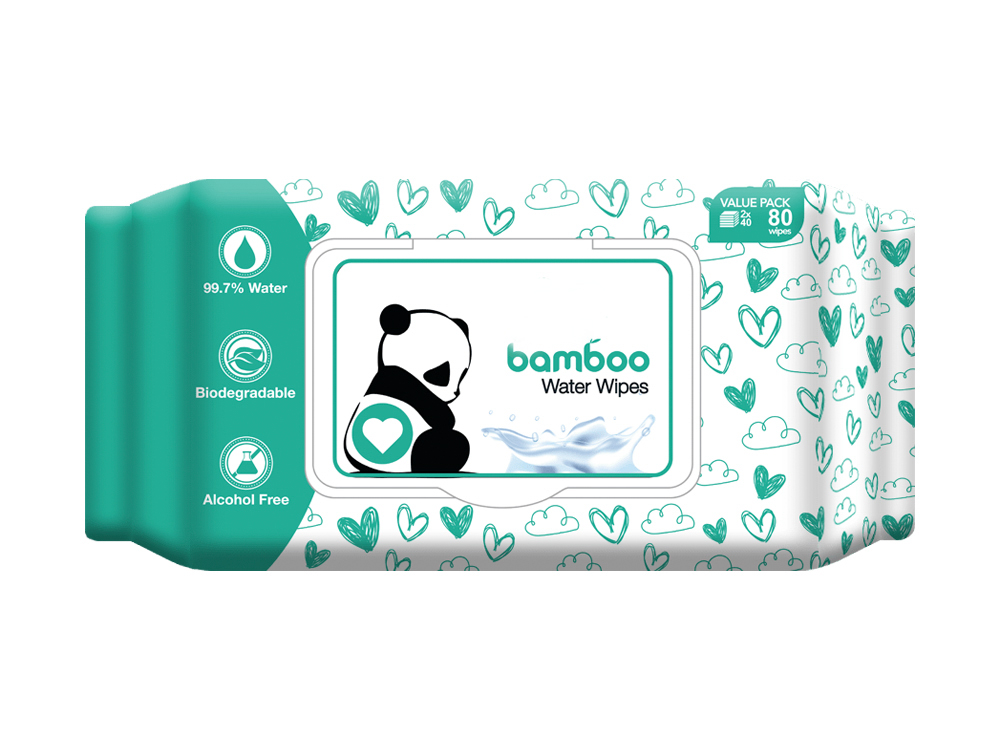
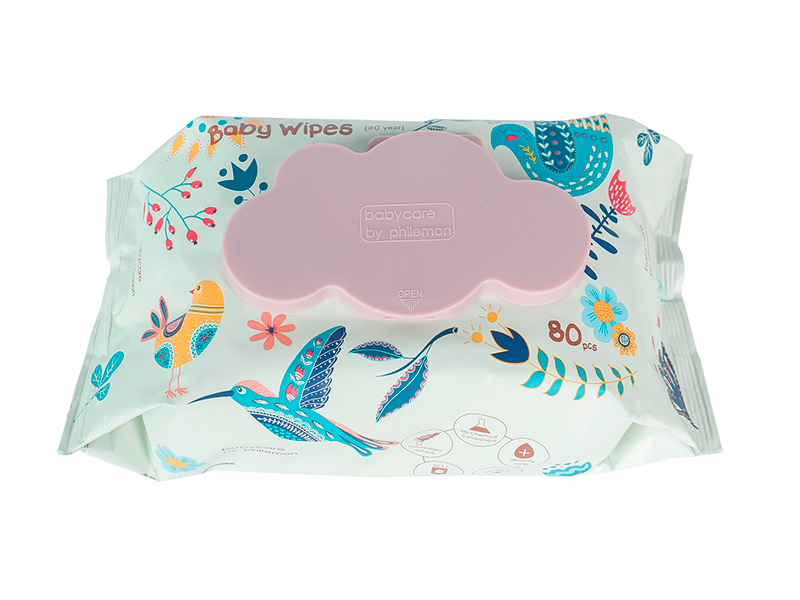
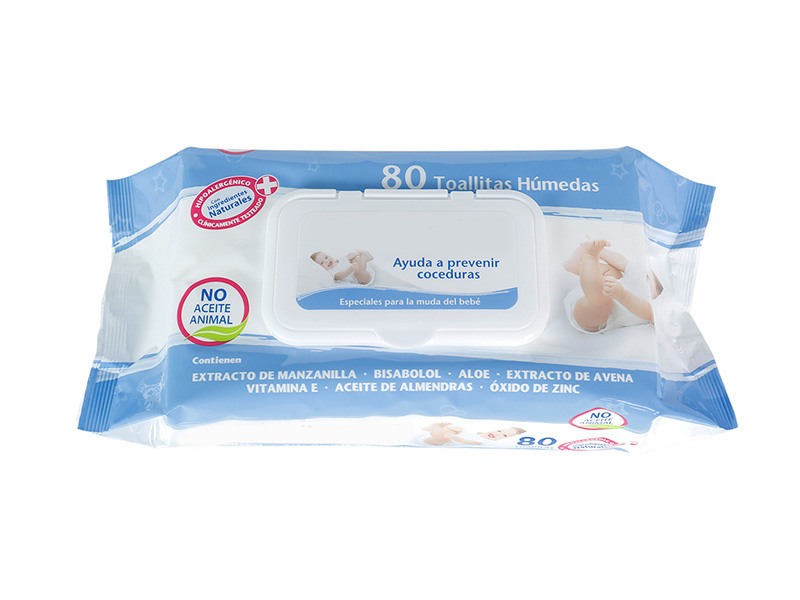
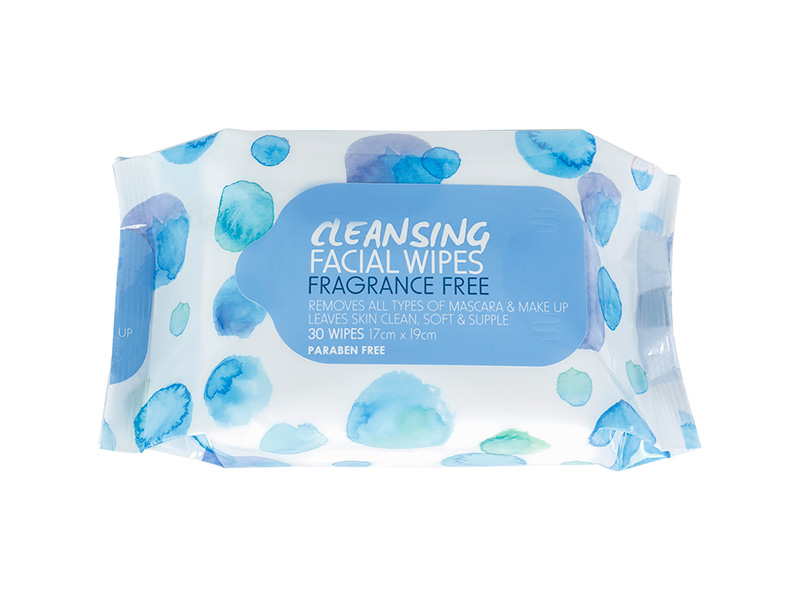
After lotion application, the material is cut into individual wipes or folded units and transferred into the selected package. Depending on the format, the product may be packed in soft packs, rigid-lid packs, travel pouches, or individual sachets.
Packaging equipment should be set to prevent product deformation, liquid loss, and seal contamination. The number of wipes per pack must be controlled accurately. Automatic counting systems can improve packing efficiency and reduce the chance of underfilled or overfilled units.
7. Sealing and Coding
Heat sealing, adhesive sealing, or other closure methods protect the contents from leakage and moisture loss. Seal strength should be sufficient for transportation and normal handling. At the same time, the package should remain practical for consumers to open.
Batch codes, production dates, expiration information, and other required markings should be clear and durable. Coding systems support traceability and help distributors manage inventory. Printed information should be checked for accuracy before the product leaves the factory.
8. Finished Product Inspection
Finished goods are reviewed for appearance, package integrity, wipe count, dimensions, moisture level, fragrance, and other defined specifications. Selected samples may undergo microbiological testing, stability evaluation, seal testing, and performance assessment.
Quality documentation should link the finished product to its raw materials, production conditions, inspection results, and release decision. This systematic approach helps protect both the buyer and the final consumer.
Quality Control and Safety Considerations
Because cooling wipes are used on the skin, safety and quality must receive careful attention. The finished product should be produced under suitable hygiene conditions, with controlled personnel practices, equipment sanitation, environmental monitoring, and documented operating procedures.
Microbiological quality is especially important for water-based wipes. The formulation and packaging system should work together to limit contamination during production and use. Preservative effectiveness, bulk-liquid handling, filling conditions, and package closure all contribute to product protection.
Skin compatibility should be evaluated according to the intended market and product claims. Testing may include irritation assessment, patch testing, stability studies, preservative challenge testing, and compatibility evaluation for the formula, substrate, ink, adhesive, and packaging materials. The exact program depends on the product specification and relevant regulatory requirements.
Cooling agents require careful control. A stronger sensation is not automatically a better sensation. The formula should avoid unnecessary discomfort and should include suitable warnings where appropriate. Directions may advise users to avoid the eyes, damaged skin, mucous membranes, or areas where irritation is present. Consumers should also be told to discontinue use if irritation occurs.
Quality control should extend beyond the factory. Transportation conditions, warehouse temperature, stock rotation, and retailer handling can affect the product. Excessive heat may influence fragrance, liquid stability, packaging performance, or cooling-agent behavior. Clear storage guidance supports product integrity through the supply chain.
Customization for Private Label Buyers
Private label customers may want a cooling wipe that matches their brand identity, price position, target consumer, and sales channel. A flexible manufacturer can support customization at several levels.
Substrate Customization
Buyers may select different nonwoven weights, textures, fiber compositions, and softness levels. A lightweight wipe can support an economical travel pack, while a larger and heavier wipe may be preferred for body refreshment or premium positioning. The chosen material should be tested with the final liquid formula rather than evaluated separately.
Size and Folding Customization
Wipe dimensions can influence perceived value and intended application. Small wipes may be convenient for the face and hands, while larger wipes can cover more of the body. Folding style affects dispensing and package dimensions. Manufacturers can help buyers compare size, performance, material consumption, and logistics efficiency.
Formula and Cooling Intensity
A private label program may offer several cooling levels, fragrance options, and skin-feel profiles. Buyers can request a gentle formula for broad daily use or a more active profile for sports and outdoor customers. Any change in formula should be assessed for stability, compatibility, safety, and claim support.
Packaging and Brand Presentation
Packaging can be customized through artwork, color selection, pack count, closure type, label design, and carton configuration. A strong package communicates the product’s main benefit quickly. Words and visual elements associated with freshness, energy, outdoor activity, or clean comfort may help consumers understand the intended use.
Packaging design should also remain practical. The pack needs to protect moisture, withstand transport, open easily, and close securely. A visually attractive package that dries out quickly can damage customer confidence, so appearance and functional performance must be developed together.
Market-Specific Documentation
Different markets may have different requirements for ingredients, labeling, claims, packaging symbols, language, testing, and product registration. Buyers should provide the destination market at the beginning of development. Early review can reduce delays and prevent costly changes after production.
Manufacturing Strengths and Industry Experience
The manufacturer described in the supplied company information was founded in 1987 and has developed extensive experience in medical and hygienic nonwoven materials, nursing products, and high-end clothing interlining. This long operating history provides a foundation for understanding fiber technologies, product development, industrial quality systems, and large-scale manufacturing.
The company operates from Changxing in Zhejiang and has established multiple production bases in China, including facilities associated with Guangdong, Jiangsu, and Hubei. A multi-base manufacturing structure can support broader production capacity, regional supply flexibility, and access to different operational resources.
The company’s product scope includes spunlace nonwoven fabrics, spunmelt nonwoven fabrics, hot-air-through nonwoven fabrics, flushable and degradable nonwoven materials, wet wipes, dry wipes, baby diapers, pull-ups, wet toilet paper, cleansing wipes, and related products. This broad portfolio is relevant to cooling-wipe development because it combines raw-material expertise with finished-product manufacturing experience.
Internationally sourced production equipment and technology from Germany, France, and Italy are also identified in the supplied information. Advanced equipment can improve web formation, cutting accuracy, liquid application, folding, packing, and process consistency. Technology alone does not guarantee quality, but it can provide a strong platform when supported by trained staff, documented procedures, preventive maintenance, and effective inspection.
The company’s experience across medical, maternal and baby, beauty, home, industrial cleaning, and clothing applications suggests familiarity with different nonwoven performance requirements. Cooling wipes belong to the personal-care category, where softness, cleanliness, formulation stability, packaging, and consumer comfort are all important. Cross-category experience can support more informed material and process decisions.
The supplied company information also states that the enterprise has ranked among leading Chinese industrial textile and nonwoven manufacturers for many years and has maintained international industry recognition. Such experience may be valuable to buyers seeking a supplier capable of supporting product development, customized specifications, volume production, and ongoing quality management.
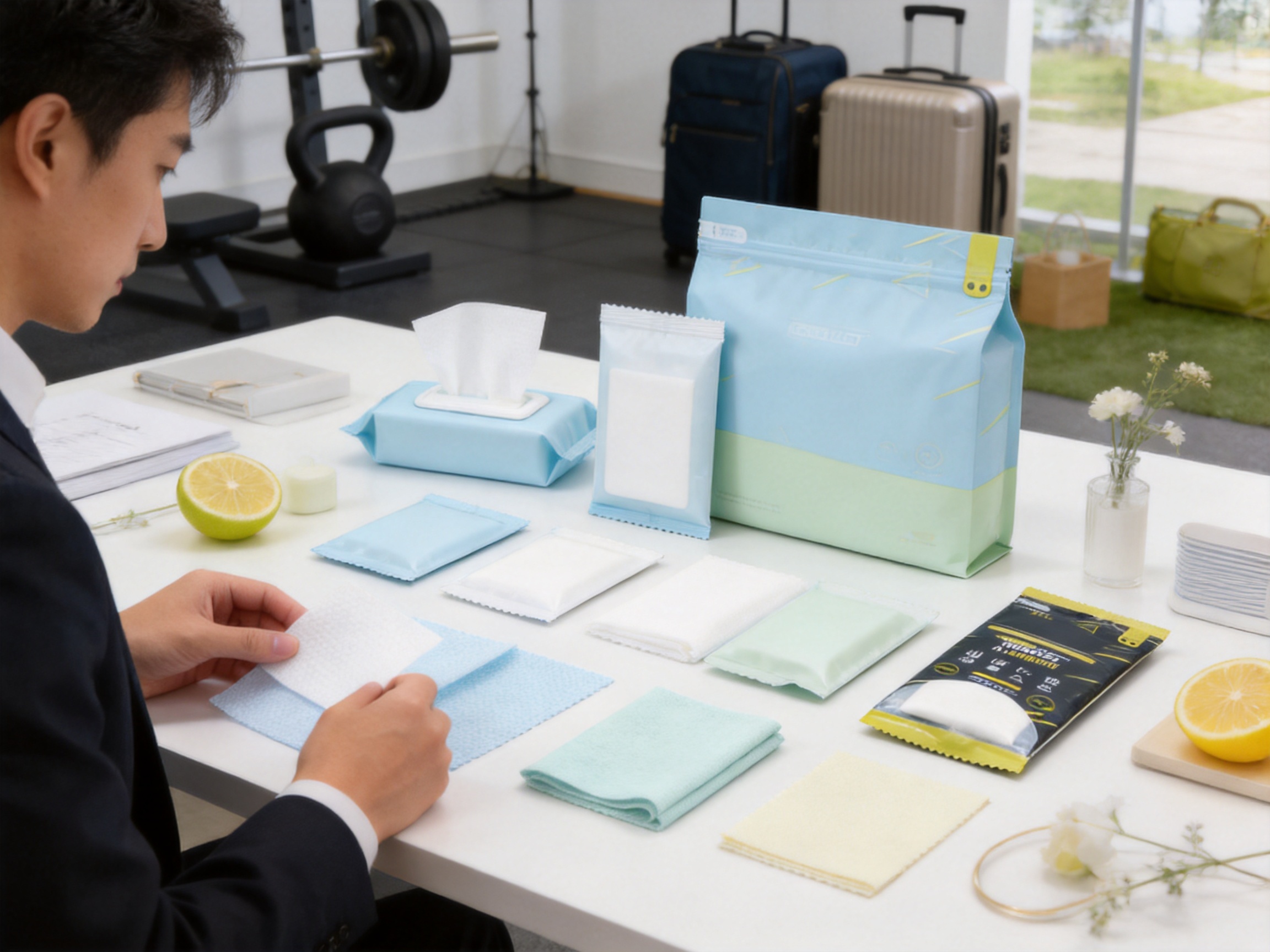
Why Manufacturing Scale Matters
Manufacturing scale can affect more than production volume. It can influence raw-material purchasing, equipment utilization, technical staffing, laboratory resources, quality systems, delivery planning, and the ability to support multiple product formats.
For a private label customer, scale may reduce the risk of depending on a small operation that can produce samples but struggles with commercial quantities. A larger and more experienced manufacturer may be better positioned to repeat the same specification across multiple orders, manage seasonal demand, and maintain supply continuity.
Scale should nevertheless be combined with flexibility. Cooling wipes may require different dimensions, formulas, fragrances, and package formats for different markets. A supplier must be able to adapt without compromising process control. The ideal partner balances industrial capacity with responsive product development and clear communication.
Supply-chain coordination is another advantage. When a manufacturer understands both nonwoven production and finished wipe assembly, it may be able to coordinate substrate selection and converting more efficiently. This can simplify technical discussions and help identify solutions when a product does not perform as expected.
Applications and Target Markets
Sports and Fitness
Cooling wipes are suitable for gyms, fitness studios, sports clubs, athletic events, and personal training services. They can be sold individually, included in welcome kits, or placed in changing rooms and vending locations. The product’s compact format suits users who want a quick refresh after exercise.
Travel and Transportation
Travelers may use cooling wipes during flights, road trips, train journeys, camping, and hotel stays. Individual sachets are particularly useful for bags and carry-on storage. Multi-count packs can serve families or longer journeys.
Outdoor Work
Workers in construction, agriculture, logistics, delivery, landscaping, event services, and other outdoor environments may appreciate convenient refreshment during breaks. The product should not be presented as protection from dangerous heat exposure, but it can support personal comfort as part of a broader workplace wellness approach.
Hospitality and Events
Hotels, resorts, restaurants, festivals, conferences, and wedding venues may provide cooling wipes as guest amenities. Packaging can be designed to match an event theme or hospitality identity. Single-use formats support hygienic distribution and easy placement at reception desks, dining areas, transportation points, or activity stations.
Everyday Personal Care
Consumers may keep cooling wipes at home, in the office, in a car, or in a school bag. General-use positioning can appeal to people who want a quick way to feel refreshed after commuting, during warm office conditions, or between daily activities.
Environmental and Material Considerations
Environmental expectations are increasingly important in the wipes industry. Buyers may ask about fiber composition, renewable materials, packaging reduction, recycled content, biodegradability, compostability, or flushability. These properties should never be assumed from general marketing language. Each claim requires appropriate material selection, testing, and market-specific substantiation.
Degradable or potentially lower-impact nonwoven options may be considered where they meet performance, safety, cost, and disposal requirements. A material change can influence softness, strength, absorbency, lotion retention, production speed, and package stability. Environmental improvements should therefore be assessed across the full product life cycle rather than judged by one material feature alone.
Packaging optimization can reduce unnecessary material use. Smaller packs, efficient folding, suitable film thickness, concentrated distribution planning, and accurate carton configuration may improve logistics efficiency. However, reducing packaging must not compromise moisture protection or shelf life.
Consumer instructions are also important. Cooling wipes should be disposed of according to local waste systems unless they have been specifically tested and approved for another disposal route. Many personal-care wipes should not be flushed. Clear labeling can help reduce misuse and support responsible disposal.
How to Evaluate a Cooling Wipe Supplier
Buyers should assess more than a sample’s fragrance or cooling sensation. A complete supplier evaluation may include factory capability, nonwoven technology, formulation support, quality systems, testing resources, production capacity, customization options, regulatory documentation, packaging capability, lead times, and communication procedures.
Sample approval should be based on a written specification. The specification may include wipe size, basis weight, material composition, liquid weight, cooling intensity, fragrance, pH, pack count, package dimensions, seal requirements, and labeling information. Written details help prevent misunderstandings during mass production.
Buyers should also review how the supplier manages changes. Any change to the substrate, cooling agent, preservative, fragrance, packaging film, equipment, or production location may affect performance. A documented change-control process helps ensure that approved products remain consistent.
Commercial discussions should address minimum order quantities, sampling charges, tooling or plate charges, payment terms, production schedules, shipping arrangements, inspection standards, and handling of nonconforming goods. Clear expectations at the beginning of a project can support a more stable business relationship.
Recommended Product Development Workflow
A practical development project can begin with a target-market brief. The buyer should identify the intended customer, usage occasions, price range, sales channel, regulatory destination, package format, desired cooling level, and estimated annual demand.
The manufacturer can then recommend suitable substrates, formulas, wipe sizes, and packaging structures. Initial samples should be evaluated for softness, wetness, cooling sensation, fragrance, wiping strength, residue, dispensing, and overall appearance.
After a preferred prototype is selected, the parties can confirm the technical specification and conduct broader testing. This may include stability testing, package compatibility, seal integrity, microbiological evaluation, sensory review, and transportation simulation.
Pre-production samples should be approved before commercial manufacturing. Artwork, barcodes, warnings, ingredient declarations, batch coding, and carton markings should be checked carefully. The production plan should identify inspection points and release criteria.
After launch, customer feedback and quality data can guide improvements. For example, a buyer may later request a softer substrate, lighter fragrance, larger wipe, improved lid, stronger cooling sensation, or more compact packaging. A manufacturer with strong technical capabilities can use this feedback to support controlled product evolution.
Consumer Guidance for Safe and Effective Use
Cooling wipes should be used only on suitable external skin areas and according to the product label. Users should avoid contact with the eyes, mouth, and mucous membranes. They should not apply the wipe to broken, irritated, or severely sensitive skin unless advised by a qualified professional.
Consumers who experience burning, rash, persistent redness, swelling, or other unexpected reactions should stop using the product and seek appropriate advice if symptoms continue. Parents and caregivers should review age guidance before allowing children to use a cooling wipe.
Cooling wipes are intended to support comfort and freshness. They should not replace drinking water, shade, rest, appropriate clothing, or medical care during hot conditions. Symptoms such as confusion, fainting, severe weakness, inability to drink, or unusually high body temperature require urgent attention rather than reliance on a personal-care wipe.
After use, the wipe should be disposed of in accordance with local waste guidance. Unless the package clearly states otherwise and the claim is properly supported, users should not flush cooling wipes down the toilet.
Frequently Asked Questions
What is the main purpose of a cooling wipe?
The main purpose is to refresh the skin and provide a temporary cooling sensation. Cooling wipes can be useful after exercise, during warm weather, while traveling, or whenever users want convenient personal refreshment.
Do cooling wipes lower body temperature?
Cooling wipes generally create a localized sensory feeling of coolness and cleanliness. They should not be treated as a method for lowering core body temperature or as a treatment for heat-related illness.
Can cooling wipes be used on the face?
They may be suitable for the face if the product label states that facial use is appropriate. Users should avoid the eyes and other sensitive areas. A face-focused product may require a milder formula and carefully selected fragrance or fragrance-free ingredients.
Are cooling wipes suitable for sensitive skin?
Suitability depends on the formula, cooling intensity, fragrance, preservatives, and individual skin response. Buyers seeking a sensitive-skin version should request a gentle formulation, appropriate testing, and clear usage guidance.
What creates the cooling sensation?
The sensation may result from approved sensory cooling ingredients, evaporation of moisture from the skin, or a combination of both. The exact effect depends on the formula, concentration, substrate, application method, and surrounding conditions.
How long does the cooling feeling last?
Duration varies according to the formulation, amount applied, skin area, humidity, temperature, activity level, and individual sensitivity. It is normally a temporary sensation rather than a permanent effect.
Can cooling wipes be customized for private label sales?
Yes. Customization may include the nonwoven material, wipe dimensions, liquid formula, cooling intensity, fragrance, pack count, package format, artwork, labeling, and carton configuration. The available options depend on the manufacturer’s equipment and development capabilities.
What substrate is commonly used for cooling wipes?
Spunlace nonwoven fabric is commonly considered because it can provide softness, strength, absorbency, and a textile-like feel. Other nonwoven technologies may be appropriate depending on the desired performance, sustainability objectives, cost, and application.
How should cooling wipes be stored?
They should generally be stored in a cool, dry place away from excessive heat, direct sunlight, and damaged packaging. Specific storage conditions should follow the product specification and label instructions.
Can cooling wipes be flushed?
They should not be flushed unless the finished product has been specifically tested, approved, and labeled for flushability in the relevant market. In most cases, used personal-care wipes should be placed in an appropriate waste container.
What quality tests are important?
Relevant tests may include appearance, dimensions, wipe count, liquid content, pH, odor, cooling performance, tensile strength, seal integrity, microbiological quality, preservative effectiveness, stability, and package compatibility. The exact testing plan depends on the formula, claims, market, and package type.
Why is nonwoven manufacturing experience important?
The substrate influences softness, strength, absorbency, lotion distribution, folding, dispensing, and overall user comfort. A supplier with nonwoven expertise can make more informed decisions when balancing performance, cost, manufacturing efficiency, and product differentiation.
Conclusion
Cooling wipes combine the convenience of a pre-moistened wipe with the added appeal of a temporary refreshing sensation. Their value is especially clear in warm weather, after exercise, during travel, at outdoor events, and in everyday situations where users want to feel clean and comfortable without taking a shower.
The strongest products are built through careful coordination of substrate engineering, formula development, cooling-agent selection, packaging design, production control, and finished-product testing. Softness alone is not enough, and a strong cooling sensation alone is not enough. Successful cooling wipes must deliver a balanced experience that is comfortable, consistent, convenient, stable, and appropriate for the intended market.
For private label buyers, product flexibility is a major opportunity. Different customer groups can be served through variations in wipe size, material, fragrance, cooling intensity, package type, and usage positioning. A manufacturing partner with long-term nonwoven experience, advanced equipment, multiple production capabilities, and a broad hygiene-product portfolio can support this process from initial concept through commercial production.
The supplied company profile describes an established Chinese high-technology enterprise founded in 1987, with expertise in medical and hygienic nonwoven materials, nursing products, wipes, diapers, and related products. Its experience in nonwoven research, production, and sales provides a relevant foundation for developing customized cooling wipes and other personal-care solutions. By combining technical capability with disciplined quality management and responsive customization, a manufacturer can help buyers create cooling wipes that stand out through both performance and reliability.
References
1. General principles of cosmetic and personal-care product safety assessment, including ingredient review, skin compatibility, labeling, and quality documentation.
2. Nonwoven fabric manufacturing and converting practices for wipes, including spunlace production, web formation, folding, cutting, liquid application, and packaging.
3. International guidance on microbiological quality management for water-based cosmetic and personal-care products.
4. Industry practices for wet-wipe package integrity, moisture retention, seal performance, product stability, and transportation testing.
5. Consumer product guidance concerning heat exposure, hydration, cooling practices, and the appropriate use of personal-care refreshment products.
6. Environmental considerations for nonwoven materials, wipe disposal, packaging optimization, degradability claims, and flushability assessment.
7. Manufacturer-provided company and product information concerning nonwoven materials, wet wipes, dry wipes, nursing products, production bases, and customized manufacturing capabilities.