中文简体
 English
 日本語
 русский
 Español
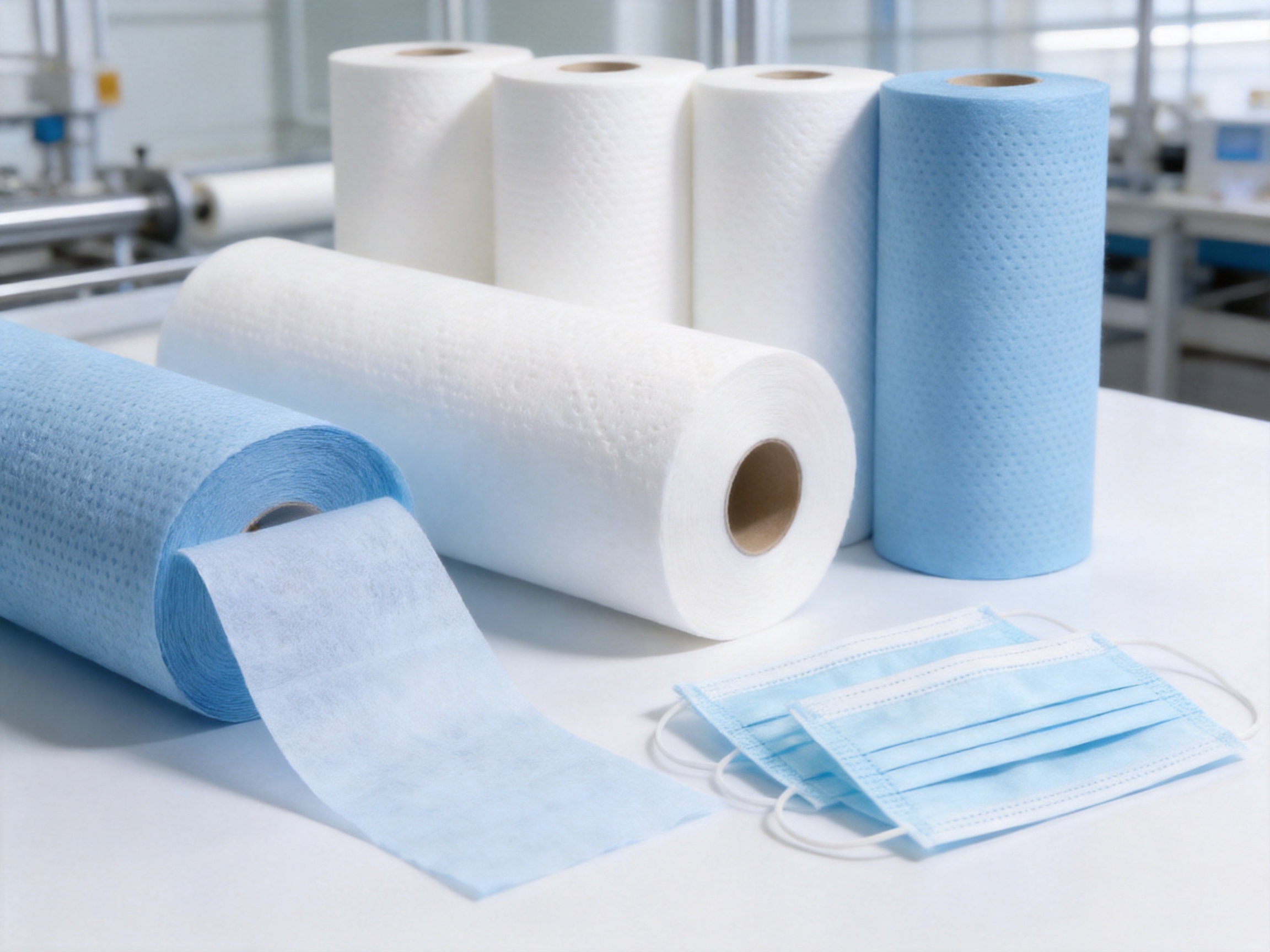
Disposable and medical face masks depend on more than filtration media alone. A well-designed mask must combine filtration performance, breathability, structural stability, comfort, hygiene, and dependable large-volume supply. The materials used for the outer and inner layers play an essential role in achieving that balance. PP spunbond nonwoven fabric is one of the most widely used materials for these layers because it offers a practical combination of lightweight construction, tensile strength, softness, processability, and cost efficiency.
PP spunbond nonwoven fabric for masks is manufactured from polypropylene and formed through a continuous filament spinning and bonding process rather than conventional yarn weaving. This construction creates a uniform, breathable sheet that can be produced in different basis weights, widths, colors, surface patterns, and functional finishes. Depending on the final mask design, the material can be supplied for the outer layer, inner layer, or other disposable hygiene applications.
For mask manufacturers, medical product factories, healthcare brands, importers, distributors, and industrial safety suppliers, material consistency is just as important as material performance. Variations in basis weight, width, winding, tensile strength, or surface treatment can affect mask appearance, sealing, comfort, and production efficiency. A reliable nonwoven supplier must therefore provide more than a basic fabric roll. It must support specification selection, process compatibility, quality control, customization, packaging, logistics, and long-term supply planning.
This article explains the characteristics, advantages, manufacturing process, customization options, applications, and purchasing considerations associated with PP spunbond nonwoven fabric for face masks. It also describes how an integrated manufacturer with advanced equipment, multiple production bases, professional testing capabilities, and OEM and ODM experience can support customers from initial material evaluation through commercial production.

PP Spunbond Nonwoven Fabric For Mask
What Is PP Spunbond Nonwoven Fabric?
PP spunbond nonwoven fabric is a sheet material made from polypropylene fibers that are extruded, stretched, laid into a web, and bonded together. Unlike woven fabric, it does not require the production of separate yarns followed by interlacing on a loom. Unlike knitted material, it does not rely on looped structures. Instead, continuous filaments are distributed across the working width and consolidated into a stable nonwoven web.
Polypropylene is widely selected for disposable mask components because it is lightweight, chemically stable in many ordinary use conditions, and suitable for high-speed melt processing. The resulting fabric can be engineered with different weights and surface characteristics according to the intended product. It may be soft and comfortable for contact with the face, sufficiently strong for converting, or treated to provide special functions such as hydrophilicity or antistatic performance.
In mask manufacturing, PP spunbond fabric is generally used as the external protective layer or the skin-contact layer. The center filtration layer of many disposable mask constructions is typically made from meltblown nonwoven fabric. The spunbond layers provide support, handling strength, shape retention, and a comfortable interface, while the central filtration material performs a different technical function.
The fabric can be produced in SS or SSS configurations. The letters refer to the number and arrangement of spunbond layers in the composite structure. A multilayer structure can improve uniformity, strength, softness, and appearance. The appropriate configuration depends on the required basis weight, production equipment, mask construction, and target market.
Key Material Specifications
Material specifications should be defined before sampling or bulk production. A mask manufacturer may require a specific fabric weight to achieve the right balance between comfort and strength. A converting line may require a precise width and roll length. A healthcare brand may need a consistent color and surface appearance across multiple production batches. A distributor may require export packaging designed for long-distance transportation.
| Specification | Available or Typical Option | Importance to Mask Production |
|---|---|---|
| Composition | Polypropylene | Provides a lightweight thermoplastic base suitable for spunbond production |
| Technology | SS, SSS, and related spunbond structures | Influences uniformity, softness, strength, and layer performance |
| Pattern | Oval dot or customized surface pattern | Supports appearance, tactile properties, and product differentiation |
| Color | White, blue, and customized colors | Allows coordination with mask designs and brand requirements |
| Basis weight | Approximately 8 to 100 gsm | Determines material density, handling, opacity, and comfort |
| Roll width | Approximately 10 to 320 cm | Allows compatibility with different converting and slitting systems |
| Finishing | Hydrophilic, antistatic, antibacterial-related, coating, and other options | Supports application-specific performance requirements |
| Application | Masks, cleaning wipes, and other disposable products | Allows one material platform to serve several product categories |
The listed specification range is broad because different customers have different product requirements. A lightweight material may be preferred for a comfortable civil mask, while a heavier or more structured material may be selected for a specialized application. The final selection should be based on the mask design, production line, expected wearing conditions, applicable standards, and required performance testing.
Why PP Spunbond Is Suitable for Mask Layers
Lightweight Construction
Face masks are worn for extended periods in many working, public, healthcare, and transportation environments. Excessive material weight can contribute to heat accumulation and discomfort. PP spunbond nonwoven fabric offers a low-density material option that can provide useful strength without adding unnecessary bulk.
The low weight of the material also helps reduce shipping volume and product cost. For manufacturers producing millions of masks, even a small reduction in material consumption can influence total procurement, warehouse, transportation, and production expenses. Careful basis-weight selection therefore supports both user comfort and manufacturing efficiency.
Breathable Structure
The nonwoven web contains a network of spaces between fibers. This structure allows air to pass through the material and helps support comfortable breathing when the complete mask is properly designed. Breathability is not determined by the spunbond layer alone. It depends on all mask layers, the filtration media, the mask shape, the ear-loop or tie system, and the quality of sealing around the edges.
A suitable spunbond material should be uniform enough to avoid unnecessarily dense areas that may restrict airflow. Consistent fiber distribution also helps create a more stable appearance and reduces variation during ultrasonic welding, folding, pleating, and cutting.
Soft Surface Feel
The inner mask layer may come into contact with the wearer’s skin. A soft and even surface helps improve perceived comfort, especially during long wearing periods. Spunbond technology can produce a fabric with a fine, uniform fiber arrangement and a controlled embossed or dot pattern.
Surface design can also be customized. An oval-dot pattern is commonly available, but customers may request other patterns or finishes depending on their converting process and product positioning. Surface treatment should be selected carefully because the objective is to improve handling and comfort without creating unwanted stiffness or excessive friction.
Stable Tensile Strength
Although a mask is a lightweight product, the fabric must withstand converting and use. During production, the web may be unwound, pleated, folded, welded, cut, stacked, and packaged at high speed. Weak or inconsistent material may tear, stretch excessively, or create irregular edges.
PP spunbond fabric provides useful tensile strength in both the machine direction and cross direction when properly engineered. Consistent strength improves production stability and helps the finished mask retain its shape during handling. It can also support more reliable performance during transportation and storage.
Water-Resistant Barrier Characteristics
Untreated polypropylene spunbond fabric can provide a degree of resistance to liquid penetration, making it useful as an external layer in many disposable mask designs. Its surface can help limit the rapid passage of larger droplets while maintaining a lightweight construction.
However, material performance must not be confused with complete medical protection. The final protective function of a mask depends on the complete construction, filtration material, fit, sealing, and applicable testing. Spunbond fabric is an important component, but it is not the only factor determining the finished mask’s performance.
Compatibility with High-Speed Converting
Disposable mask production commonly involves continuous roll-to-roll operations. The material must unwind smoothly, maintain an even edge, and pass through pleating, cutting, welding, and packaging equipment without excessive curling or breakage.
Good roll formation is particularly important. Uneven winding or telescoping can interrupt production and create material waste. Controlled winding tension, stable basis weight, and appropriate roll dimensions help improve compatibility with automated mask lines.
SS and SSS Spunbond Technology
SS and SSS are common spunbond configurations used for nonwoven products. An SS structure generally combines two spunbond layers, while an SSS structure incorporates three spunbond layers. The exact equipment arrangement and bonding conditions influence the final performance of the fabric.
Compared with a simple single-layer web, multilayer spunbond structures can provide improved uniformity and a more balanced combination of strength and softness. The additional layer arrangement may also help distribute stress during converting. For a mask manufacturer, this can translate into more stable pleating, cleaner cutting, and improved resistance to tearing around welded areas.
SSS material may be selected when a customer requires a more refined web structure, greater uniformity, or a particular hand feel. The choice between SS and SSS should not be made solely by comparing layer counts. Basis weight, filament characteristics, bonding pattern, production speed, surface treatment, and final mask design must all be considered together.
An experienced technical team can help match the material structure to a customer’s production requirements. For example, a manufacturer may need a soft inner layer with a certain basis weight and a stronger outer layer with a different surface appearance. In other cases, a single material specification may be used throughout the mask to simplify purchasing and production. The most suitable solution depends on the customer’s equipment, target market, and performance objectives.
Manufacturing Process of PP Spunbond Fabric
Polypropylene Resin Preparation
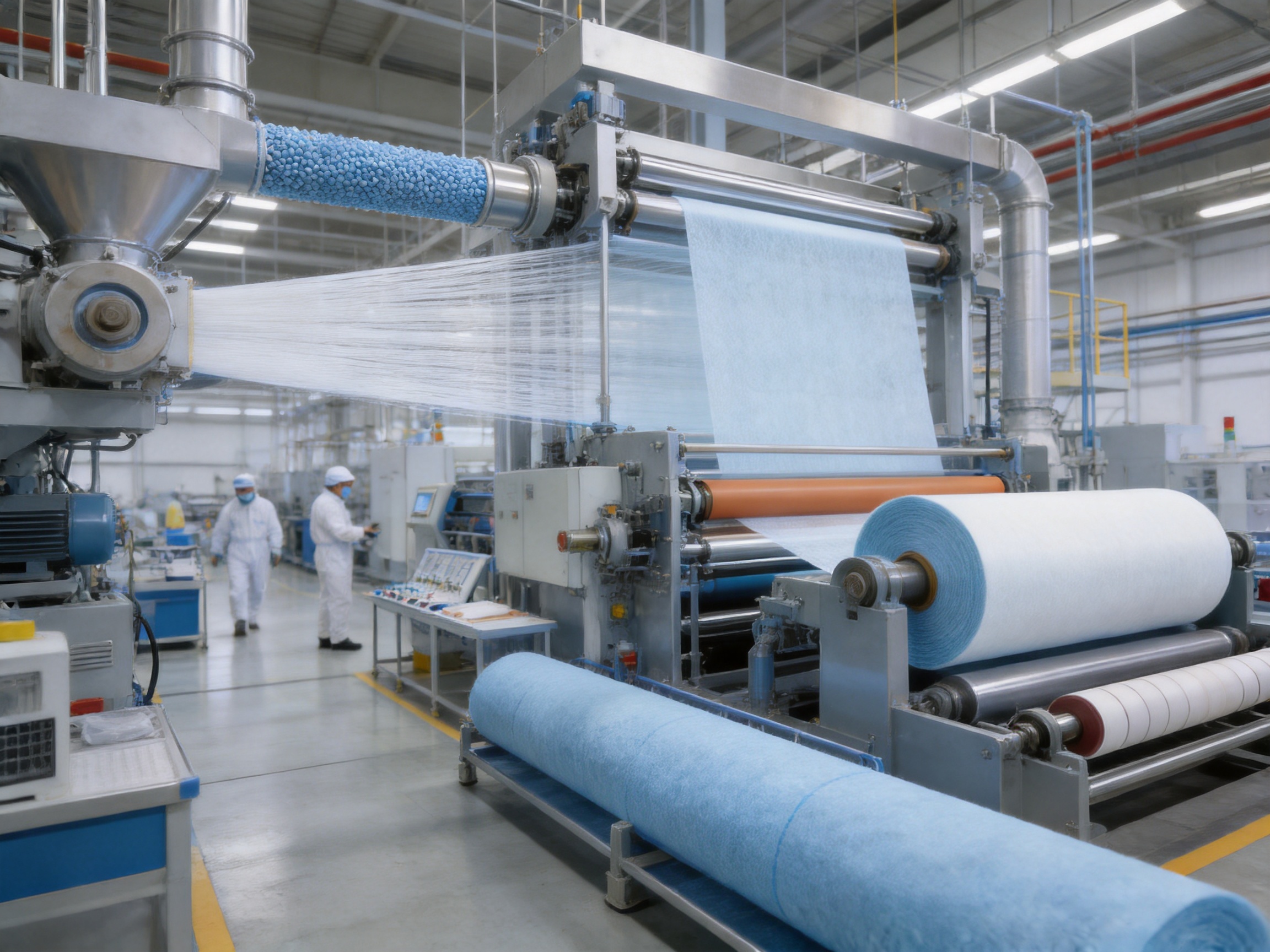
Production begins with polypropylene resin selected for spunbond processing. The resin is fed into the extrusion system under controlled conditions. Proper raw material management helps create stable melt flow and supports consistent filament formation.
Raw material quality influences many aspects of the finished fabric, including filament uniformity, tensile performance, appearance, and processing stability. An integrated manufacturer can establish controlled purchasing and incoming inspection procedures to reduce the risk of variation before production begins.
Extrusion and Melt Formation
The polypropylene is heated and melted inside an extruder. Temperature, pressure, and residence time must be carefully controlled. If the melt is not sufficiently uniform, the resulting filaments may vary in diameter or show defects. If the processing conditions are too aggressive, the polymer may be affected and the production process may become unstable.
Modern production lines use controlled equipment to maintain steady processing conditions. Operators and engineers monitor the process and adjust parameters according to resin characteristics, target basis weight, line speed, and product specification.
Filament Spinning
The molten polymer passes through spinnerets to form continuous filaments. The spinneret design and extrusion conditions influence filament size and distribution. Fine, consistent filaments are important for achieving an even web and a comfortable surface.
Unlike short-staple fiber production, spunbond manufacturing places continuous filaments directly into the web-forming process. This can provide good production efficiency and reduce the need for separate carding or fiber preparation stages.
Drawing and Web Formation
After extrusion, the filaments are cooled and drawn. Drawing helps orient the polymer molecules and can improve the mechanical properties of the filaments. The filaments are then distributed across a moving forming surface to create a web.
Uniform web formation is essential for mask applications. Variations in fiber concentration may create differences in opacity, strength, softness, and air permeability. A well-controlled line is designed to distribute the filaments evenly over the required width.
Thermal Bonding
The loose web is bonded using a thermal calender or another suitable bonding method. Heat and pressure consolidate selected points in the web while preserving the overall nonwoven structure. The bonding pattern can influence the surface appearance, strength, flexibility, and tactile properties of the fabric.
An oval-dot pattern is one available option for mask fabric. Customers may also request customized patterns where appropriate. Bonding conditions must be balanced carefully. Excessive bonding can make the fabric too stiff or reduce softness, while insufficient bonding can reduce strength and create fiber shedding or web instability.
Surface Treatment and Finishing
Depending on the intended application, the fabric may receive a finishing treatment. Options can include hydrophilic treatment, antistatic treatment, coating, antibacterial-related treatment, or other functional modifications. The availability and suitability of each treatment depend on the product specification and required testing.
Surface treatment should be selected according to the actual use case. For example, a customer may require a particular hand feel, reduced static accumulation, or improved liquid interaction. It is important to define the expected result and confirm the treatment through appropriate testing rather than selecting a finish based only on its name.
Inspection, Slitting, and Winding
After bonding and finishing, the fabric is inspected and converted into rolls. Depending on customer requirements, the master roll may be slit into narrower rolls or supplied at a wider format for use on a specific mask production line.
Width accuracy, roll hardness, edge condition, winding tension, roll length, and packaging quality are all important. A roll that meets the nominal gsm requirement but has poor winding or inconsistent width may still create problems for the customer. Comprehensive quality control must therefore include both material performance and roll presentation.
Manufacturing Strengths of an Integrated Supplier
An integrated manufacturer can provide greater coordination than a trading company that purchases material from unrelated sources. When nonwoven production, technical development, testing, packaging, and export operations are managed within one organized supply network, customers can receive more consistent communication and faster problem-solving.
Zhejiang Uniquality Nursing Products Technology Co., Ltd. operates within the Kingsafe and Uniquality industrial network, which was founded in 1987 and specializes in medical and hygienic nonwoven materials, nursing products, and clothing interlining. The company has developed production capabilities in several regions of China, including production bases associated with Zhejiang, Guangdong, Jiangsu, and Hubei.
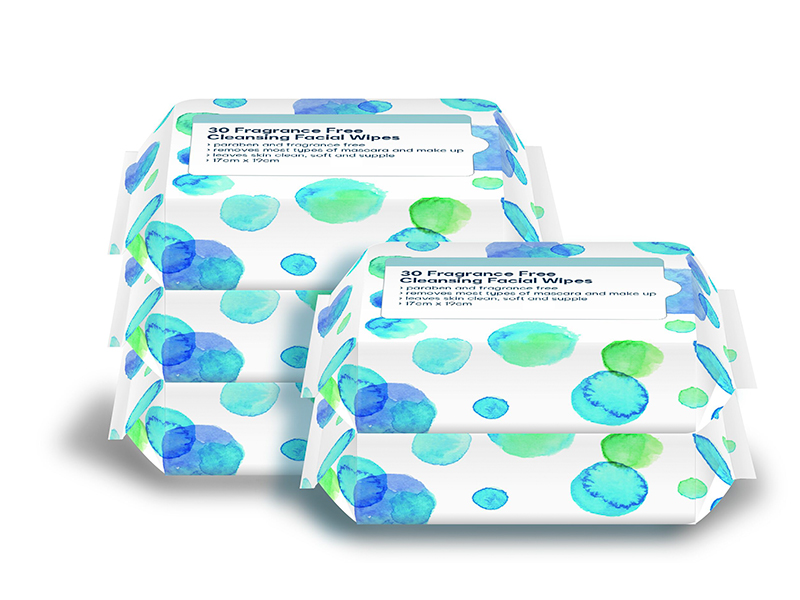
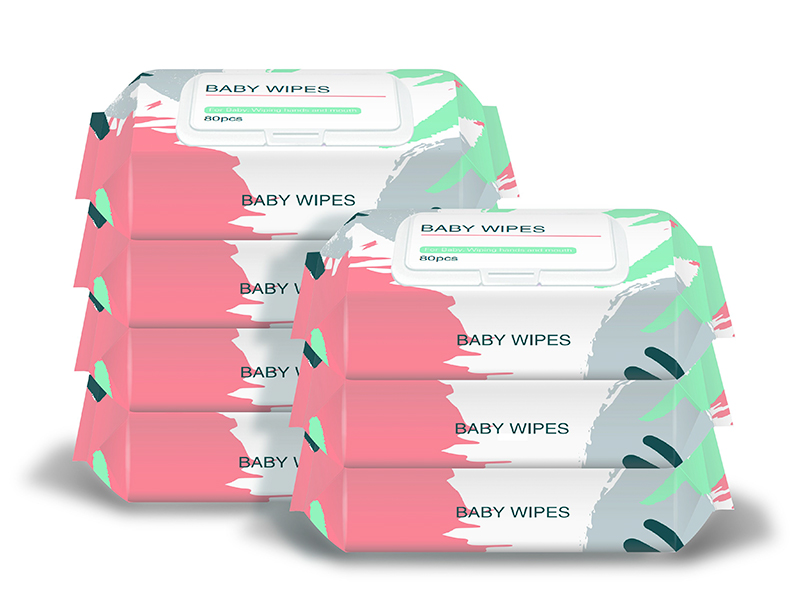
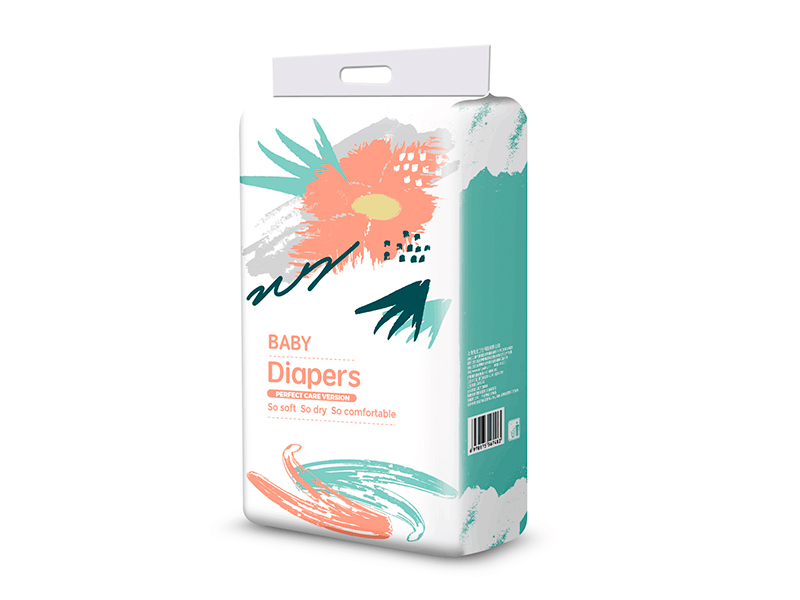
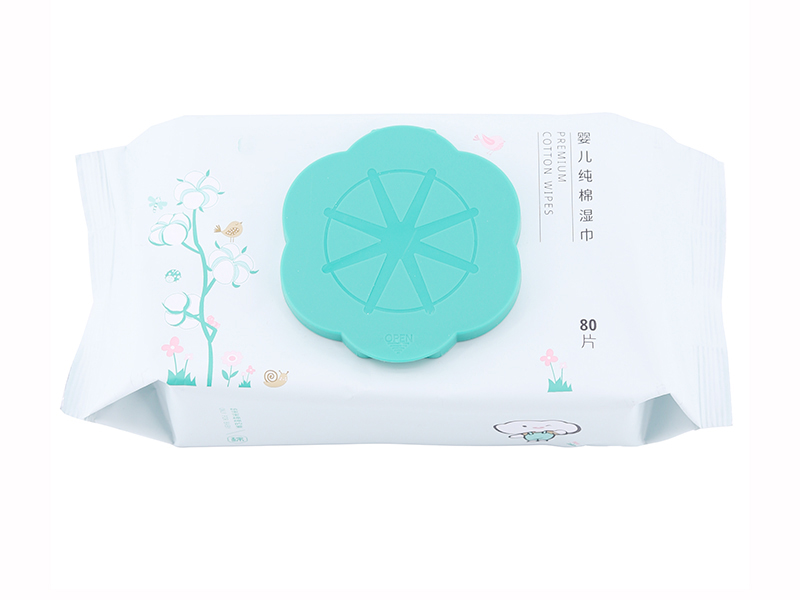
The company’s product portfolio covers spunlace nonwoven fabrics, spunmelt nonwoven fabrics, hot-air-through nonwoven materials, flushable and degradable nonwovens, wet wipes, dry wipes, baby diapers, pull-up pants, wet toilet paper, cleansing wipes, and related products. This broader experience is valuable because it provides a practical understanding of the raw materials and converting requirements used in medical, hygiene, household, maternal and baby, beauty, and industrial applications.
International equipment and process experience also support manufacturing development. The company has introduced production equipment and technology from Germany, France, and Italy. Such equipment can contribute to stable web formation, accurate process control, reliable bonding, and efficient large-volume production when properly operated and maintained.
A professional quality testing center helps connect production with measurable product requirements. Testing may be arranged according to the customer’s project and specification. Depending on the material and application, evaluation can include basis weight, width, tensile strength, appearance, surface characteristics, roll condition, and other relevant performance indicators.
Multiple production bases can also support capacity planning and supply continuity. For customers with long-term contracts or geographically distributed demand, a broader manufacturing network may provide additional flexibility. Production allocation must always be confirmed according to the actual order, specification, capacity, and logistics plan, but an established network can be an important advantage for large B2B buyers.
Advantages Compared with Ordinary or Inconsistent Supply
Better Specification Control
Some suppliers offer only a limited standard product and may not be able to adjust the fabric when a customer’s mask line requires a different width, basis weight, or finish. A manufacturer with engineering and production capabilities can work with the buyer to define a material specification that fits the converting process.
This does not mean every requested combination is automatically suitable. Instead, the technical team can review the intended application and advise whether the requested basis weight, surface pattern, treatment, and roll format are practical. This reduces the risk of purchasing a material that looks acceptable in a sample but performs poorly during mass production.
More Reliable Batch Consistency
Consistency is a major difference between professional industrial supply and irregular low-cost sourcing. Mask manufacturers need the fabric to behave similarly from roll to roll and from shipment to shipment. Stable raw material management, controlled processing, inspection, and documented specifications help reduce unwanted variation.
Consistent material can reduce machine adjustments, production stoppages, rejects, and complaints. It also helps brands maintain a uniform appearance across different product batches.
Stronger Technical Support
Material selection is often a technical decision. A buyer may know the desired mask type but not the most suitable combination of fabric weight, layer structure, surface finish, and roll width. An experienced supplier can ask the right questions and recommend a starting specification.
Technical support is particularly helpful when a customer changes mask dimensions, introduces a new folding format, moves to a different production line, or develops a product for a different market. Sample rolls and trial production can be used to confirm the material before commercial volumes are released.
Flexible OEM and ODM Services
OEM and ODM support can cover more than printing a customer name on packaging. For PP spunbond nonwoven fabric, customization may include GSM, width, color, roll length, surface pattern, treatment, winding format, core size, labeling, and export packaging.
For finished mask programs, the supplier may also coordinate material combinations, packaging concepts, private label requirements, and production schedules. This allows healthcare brands, distributors, and product developers to build a more complete supply solution rather than managing every component separately.
Better Support for Large-Volume Procurement
Industrial buyers often require scheduled deliveries, production forecasts, safety stock discussions, and repeatable specifications. A supplier focused on bulk production can design its communication and planning process around long-term cooperation rather than occasional retail orders.
Large-volume procurement also requires attention to logistics. Roll dimensions, palletization, container utilization, moisture protection, labeling, and documentation can influence landed cost and delivery reliability. Export packaging should be discussed before production so that the material arrives in usable condition.
Customization Options
Custom Basis Weight
Basis weight, expressed in grams per square meter, is one of the most important fabric parameters. Common mask-related options include 20 gsm, 25 gsm, and 30 gsm, although other weights may be produced according to the design. The selected weight influences opacity, softness, thickness, tensile behavior, and material consumption.
A heavier fabric is not automatically better. It may provide greater body or opacity, but it can also affect comfort, breathability, cost, and the behavior of the complete mask. The correct value should be selected through testing and line trials.
Color Matching
White and blue are widely used for disposable masks, but color customization is also available for customers with specific product designs or brand guidelines. Color consistency is important when the material is used as a visible outer layer.
Customers should provide a clear color reference and define acceptable variation. If a color is developed for a new product, laboratory or pilot samples should be evaluated before large-scale production. Color can appear different under different lighting conditions, so visual assessment should be supported by an agreed reference method where necessary.
Roll Width and Length
Roll width can be supplied from narrow formats to wide master rolls, with available options extending approximately from 10 cm to 320 cm. The ideal width depends on the mask machine, cutting layout, slitting plan, and material utilization target.
Roll length and roll diameter should also be considered. A very large roll may improve production efficiency but may not be compatible with the customer’s unwinding equipment. A smaller roll may be easier to handle but require more frequent changeovers. The supplier should confirm core size, maximum roll diameter, winding direction, and packaging requirements before production.
Surface Pattern
The standard oval-dot pattern can support a controlled appearance and tactile feel. A customized pattern may be considered when a customer needs product differentiation or a particular bonding arrangement. Pattern selection should be assessed together with softness, strength, thickness, and machine behavior.
Functional Finishes
Available finishing options may include hydrophilic treatment, antistatic treatment, coating, antibacterial-related treatment, and other application-specific solutions. Each finish must be defined carefully. For example, “antibacterial” may refer to a treated material that requires specific test methods and regulatory review; it should not be interpreted as an unrestricted claim for the finished mask.
Similarly, hydrophilic treatment changes the interaction between the surface and water but does not automatically determine the performance of a complete mask. Customers should identify the intended purpose of the treatment and request supporting test information appropriate to the target market.
Applications Beyond Disposable Face Masks
Although the product is widely used for mask layers, PP spunbond nonwoven fabric can serve other applications. Its lightweight structure and convertibility make it suitable for selected cleaning wipes, disposable protective products, packaging components, hygiene articles, and industrial materials.
In cleaning wipe construction, spunbond fabric may be combined with other fibers or technologies to achieve the desired absorbency, strength, softness, and cleaning performance. The exact suitability depends on whether the wipe is dry, wet, disposable, reusable, or intended for a specialized surface.
In medical and hygiene products, spunbond material may be used as a support or cover layer. It can also be considered for disposable gowns, caps, shoe covers, bed protection components, and other products where lightweight nonwoven construction is required. The applicable specification must be developed separately for each product because mask fabric requirements cannot automatically be transferred to another use.
Quality Control for Mask Fabric
Quality control should begin with a clearly documented product specification. The specification should identify composition, technology, basis weight, width, color, pattern, roll length, core size, treatment, packaging, and acceptable tolerances. It should also state any testing requirements agreed between the buyer and supplier.
Incoming raw material control helps confirm that the polypropylene resin and other production inputs meet internal requirements. During production, operators may monitor extrusion conditions, filament formation, web appearance, bonding, width, and winding. Finished-roll inspection can then verify the final product before release.
Typical checks may include:
Basis weight measurement to confirm material consumption and density.
Width measurement to verify compatibility with the mask production line.
Visual inspection for holes, streaks, contamination, wrinkles, edge damage, and uneven bonding.
Tensile testing to evaluate resistance to pulling and handling stress.
Surface and hand-feel evaluation to confirm softness and pattern consistency.
Roll inspection to check winding, telescoping, roll hardness, core condition, and labeling.
Packaging inspection to confirm protection during storage and shipment.
Additional tests may be required for specific treatments or medical-related projects. Customers should provide the intended standard, market, and final product claim so that the testing plan can be defined accurately.
How the Fabric Performs During Mask Conversion
Mask converting generally includes unwinding, layer alignment, pleating or folding, nose-strip insertion, ultrasonic welding, ear-loop attachment, cutting, inspection, and packaging. The fabric must move smoothly through each stage.
During unwinding, consistent roll tension helps prevent web wandering. During pleating, the material should fold cleanly without excessive cracking or stretching. During ultrasonic welding, the fabric should form a stable bond with the other mask layers without producing excessive deformation. During cutting, a uniform web can help create cleaner edges and reduce waste.
The final material choice should therefore be tested on the customer’s actual equipment whenever possible. Laboratory data is useful, but production trials reveal practical issues such as web tracking, static accumulation, folding behavior, welding response, and roll changeover time.
When a new fabric is introduced, the customer should record the machine settings used during the trial. This may include unwinding tension, line speed, ultrasonic energy, horn pressure, pleat dimensions, and cutting settings. Such records help establish a repeatable process for future orders.
Guidance for International Buyers
International buyers should provide as much project information as possible when requesting a quotation or sample. Important details include the mask type, intended layer, desired basis weight, required width, color, annual or monthly volume, target market, packaging requirements, and expected delivery schedule.
If the fabric will be used in a medical-related product, the buyer should identify the relevant standard or regulatory framework. A supplier can then determine whether the requested material specification and available testing support are appropriate for evaluation. Medical suitability should always be confirmed through the complete product qualification process.
Sample rolls are recommended before bulk production. A sample allows the buyer to inspect appearance, measure material properties, run the fabric on the production line, and evaluate the complete mask after assembly. If changes are required, they can be made before committing to a large order.
Buyers should also clarify whether the fabric will be supplied as master rolls or slit rolls. Master rolls may offer better material utilization for customers with slitting capability. Slit rolls may reduce internal processing requirements but require accurate width, core, and winding specifications.
Packaging should be suitable for the transportation route and storage environment. Nonwoven rolls should be protected from contamination, excessive moisture, compression, and physical damage. Labels should identify the product code, specification, batch information, roll number, quantity, and other details required for traceability.
Private Label and Long-Term Supply Programs
Healthcare brands, importers, and distributors may require private label packaging even when they purchase fabric for their own mask production or finished product programs. Private label support can include customized labels, cartons, inner packaging, outer packaging, shipping marks, and documentation.
For long-term supply contracts, buyers may establish an approved reference sample and a formal product specification. Each subsequent production batch can then be evaluated against the agreed requirements. Forecast sharing helps the manufacturer plan raw materials, production capacity, and delivery windows.
Long-term cooperation is particularly valuable when the customer needs consistent color, stable roll dimensions, repeatable finishing, or scheduled deliveries to multiple markets. A supplier with experience in OEM and ODM projects can coordinate technical, commercial, and logistical requirements in one supply process.
Sustainability and Responsible Material Selection
Material sustainability should be considered together with product function, service life, disposal conditions, and local regulations. Polypropylene is a lightweight material, and its low basis weight can help reduce the amount of raw material used in a disposable product. Efficient production and accurate converting can further reduce manufacturing waste.
At the same time, disposable masks are commonly used in situations where hygiene and contamination control are important. Any discussion of recycled content, degradability, or alternative polymers must therefore be evaluated against safety, performance, processing, and regulatory requirements.
Customers interested in flushable, degradable, or other specialized nonwoven technologies should request a separate technical assessment. A material suitable for one disposal route may not be suitable for another. Clear communication about end use and disposal conditions is essential.
Recommended Purchasing Process
The first step is to define the application. Identify whether the material is intended for the outer layer, inner layer, or another component. State whether the final mask is civil, medical-related, industrial, or designed for a specific workplace environment.
The second step is to define the basic specification. Confirm technology, basis weight, width, color, pattern, roll length, treatment, and packaging. If the buyer does not know the exact specification, the supplier’s engineering team can recommend a starting point based on the mask design and converting process.
The third step is to review samples. Inspect the material visually, measure relevant properties, and run it on the production line. Evaluate both the fabric and the completed mask.
The fourth step is to confirm testing and documentation. This may include a specification sheet, test report, certificate of analysis, batch information, packaging details, and other documents required by the buyer or target market.
The fifth step is to establish the commercial supply plan. Confirm minimum order quantity, lead time, production capacity, delivery schedule, payment terms, inspection arrangements, and shipping method.
The final step is to maintain communication during repeat orders. Changes in mask design, production equipment, market regulation, or packaging should be communicated before the next production batch. This helps preserve consistency and prevent avoidable delays.

Frequently Asked Questions
What layer of a face mask uses PP spunbond nonwoven fabric?
PP spunbond nonwoven fabric is commonly used as the outer layer and inner layer of disposable masks. The middle filtration layer is often made from meltblown nonwoven fabric. The exact construction depends on the mask design, performance requirements, and applicable standards.
Is PP spunbond the same as meltblown fabric?
No. Both materials are nonwoven, but they are produced through different process conditions and are normally used for different functions. Spunbond fabric generally provides support, strength, surface comfort, and structural stability. Meltblown fabric is commonly selected as a filtration layer because of its fine fiber structure and electrostatic treatment options.
What basis weight is commonly used for mask fabric?
Common options include 20 gsm, 25 gsm, and 30 gsm, but the available range can extend from approximately 8 gsm to 100 gsm. The correct basis weight depends on the mask construction, desired comfort, required opacity, production process, and performance target.
Can the fabric color be customized?
Yes. White and blue are common choices, while other colors may be developed according to customer requirements. A color reference and sample approval process are recommended before bulk production.
Can roll width and length be customized?
Yes. Roll width can be supplied in different formats, approximately from 10 cm to 320 cm depending on the product and production plan. Roll length, core size, outer diameter, winding format, and packaging can also be discussed according to the customer’s equipment.
Can the surface pattern be customized?
Yes. An oval-dot pattern is available, and customized patterns may be considered for suitable projects. The pattern should be assessed together with softness, bonding, strength, appearance, and machine compatibility.
Is the material suitable for medical masks?
The material can be produced for medical-related applications when the required specification, testing, and applicable standards are confirmed. The suitability of the final mask depends on the complete product construction, including filtration material, fit, sealing, production controls, and regulatory requirements.
Can the fabric receive antistatic or hydrophilic treatment?
Yes. Antistatic, hydrophilic, coating, antibacterial-related, and other finishing options may be available depending on the project. Customers should define the desired function and request appropriate testing to verify the result.
Do you provide samples?
Yes. Sample rolls can be arranged for evaluation before bulk production. Customers should test the sample on the intended mask production line whenever possible.
What customers are best suited to this product?
The product is designed for face mask manufacturers, medical product factories, disposable hygiene product manufacturers, healthcare brands, importers, distributors, OEM and ODM developers, industrial safety suppliers, government procurement projects, and wholesale distributors.
Can the supplier support private label projects?
Private label and OEM or ODM support can include customized specifications, packaging, labels, export cartons, product development assistance, and bulk production planning. The exact service scope should be confirmed according to the customer’s project.
Why work with an integrated nonwoven manufacturer?
An integrated manufacturer can coordinate material production, customization, testing, technical support, packaging, and delivery planning. This may help reduce communication gaps and improve consistency compared with sourcing separate services from unrelated suppliers.
Conclusion
PP spunbond nonwoven fabric is a practical and adaptable material for the outer and inner layers of disposable and medical-related face masks. Its lightweight construction, breathable web, stable tensile strength, soft surface, water-resistant characteristics, and compatibility with high-speed converting make it suitable for large-scale mask production.
The strongest supply solution combines material performance with manufacturing discipline. Controlled polypropylene processing, stable filament formation, uniform web distribution, reliable thermal bonding, accurate finishing, careful winding, and professional inspection all contribute to a more dependable product. Custom basis weight, width, color, pattern, roll format, and surface treatment allow the fabric to be adapted to different mask designs and production lines.
For B2B buyers, supplier capability is as important as the fabric itself. A manufacturer with multiple production bases, international equipment experience, a professional quality testing center, OEM and ODM services, and established export experience can support both immediate sampling and long-term supply cooperation.
Zhejiang Uniquality Nursing Products Technology Co., Ltd., operating within the Kingsafe and Uniquality manufacturing network, provides PP spunbond nonwoven materials and related hygiene product solutions for customers in medical, healthcare, household, industrial, and other application areas. Its integrated manufacturing approach is designed to help mask manufacturers and product companies achieve consistent quality, flexible customization, efficient production, and dependable supply.
For a successful project, buyers should provide clear application information, confirm the technical specification, evaluate samples, test the material on the intended equipment, and establish appropriate quality and logistics requirements before bulk production. With the right specification and supply partner, PP spunbond nonwoven fabric can provide a stable foundation for comfortable, efficient, and scalable mask manufacturing.
References
1. General principles of polypropylene spunbond nonwoven manufacturing and thermal bonding technology.
2. Technical guidance on nonwoven materials used in disposable and medical face mask construction.
3. Industrial practices for basis-weight measurement, tensile testing, roll inspection, and nonwoven quality control.
4. Product information and technical specifications for PP spunbond nonwoven fabric supplied for mask applications.
5. Manufacturing and application information concerning spunbond, spunmelt, spunlace, and related hygiene nonwoven technologies.
6. Internal product development and quality management practices for medical and hygienic nonwoven materials.