中文简体
 English
 日本語
 русский
 Español
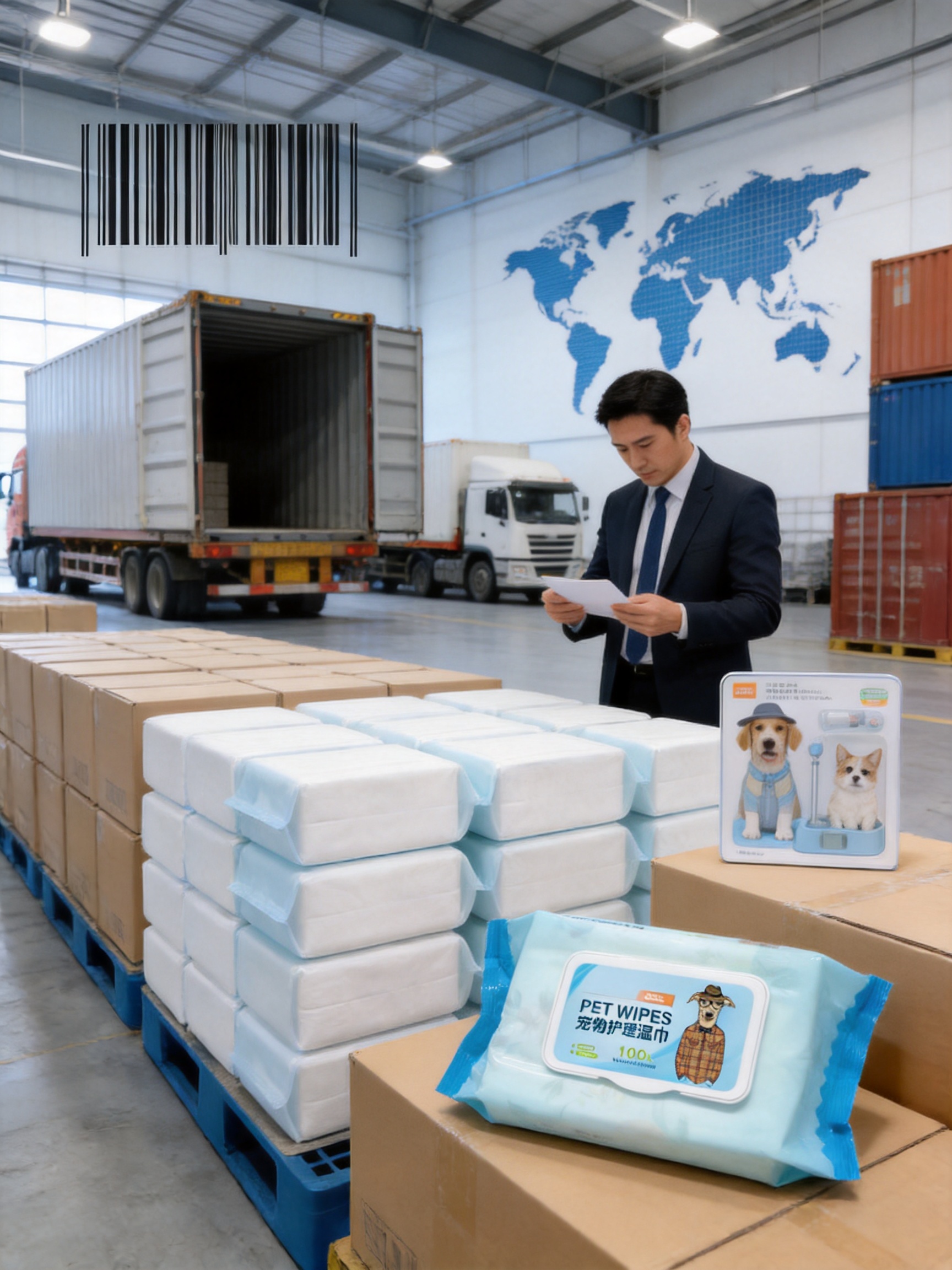
Pet owners increasingly regard cleaning and grooming as an essential part of responsible animal care. Dogs and cats regularly come into contact with outdoor dirt, dust, microorganisms, food residue, litter, and other contaminants. Their paws may collect soil from streets and parks, while their fur and body surfaces can accumulate allergens, unpleasant odors, and debris. After using the toilet, pets may also require gentle cleaning around sensitive areas. For these everyday situations, antibacterial pet wipes provide a practical alternative to a full bath or a water-based cleaning routine.
Antibacterial Pet Wipes are designed specifically for routine pet hygiene. Their liquid formula is developed for use on cats and dogs, with a pH of approximately 7, close to the natural pH environment of pet skin. The formula is described as mild, non-toxic, alcohol-free, and suitable for situations in which a pet may lick its fur or paws after cleaning. This combination of safety, convenience, and targeted functionality makes pet wipes an attractive product for pet supply brands, importers, wholesalers, retailers, and other professional buyers.
Beyond the finished product itself, the value of these wipes depends on the manufacturing system behind them. A dependable supplier must be able to control non-woven fabric selection, liquid formulation, converting, filling, sealing, packaging, testing, and supply-chain coordination. Zhejiang Uniquality Nursing Products Technology Co., Ltd., operating under the Kingsafe and Uniquality product groups, combines long-term experience in non-woven materials, hygiene products, and customized manufacturing. Its capabilities support the development of private-label pet wipes for different markets and brand strategies.
Understanding the Role of Antibacterial Pet Wipes
Antibacterial pet wipes are disposable moist wipes intended for cleaning selected areas of a pet’s body. Common applications include wiping paws after outdoor activities, cleaning the surface of the fur, removing tear stains, refreshing areas around the face, and maintaining cleanliness around private parts after toilet use. They can also be used for light daily grooming when a complete bath is unnecessary or impractical.
The product is not intended to replace veterinary treatment, professional grooming, or medical care. Instead, it is a convenient hygiene product for regular household and travel routines. Pet owners may keep packs at home, in a vehicle, near the entrance of a house, in a grooming area, or inside a travel bag. This broad range of use occasions creates opportunities for brands to position the product as an everyday care essential rather than a specialist item used only occasionally.
In comparison with ordinary household wipes, pet-specific wipes are developed with the needs of cats and dogs in mind. Pets have different skin sensitivities, grooming habits, and exposure patterns from humans. They may lick their paws or fur, and they may react negatively to strong alcohol-based ingredients, harsh fragrances, or irritating cleansers. A pet wipe should therefore prioritize a mild formula, controlled ingredients, suitable moisture, a soft substrate, and clear usage instructions.
The pH value of approximately 7 is an important product consideration. A near-neutral formula can help support a gentle cleaning experience when used as directed. It is also consistent with the goal of avoiding unnecessary irritation during repeated daily use. The formulation is alcohol-free and designed without harmful additives, helping brands present the product as a softer option for routine hygiene.
Core Product Advantages
Mild and Lick-Safe Formulation
One of the principal concerns in pet care is accidental licking. Cats and dogs naturally groom themselves, and they may lick their paws, legs, or fur shortly after cleaning. The liquid formula for Antibacterial Pet Wipes is specially developed for pets and is described as mild, non-toxic, and lick-safe when used according to the product instructions. This characteristic offers reassurance to pet owners who want to clean their animals without leaving behind aggressive or unsuitable residues.
Lick-safe positioning also gives brands a strong communication point in a competitive market. Many consumers look for pet products that acknowledge natural animal behavior instead of assuming that pets will remain completely still after application. By emphasizing mildness and responsible formulation, a brand can communicate care, practicality, and everyday usability.
Near-Neutral pH for Daily Skin Contact
The product has a pH of about 7, which is close to the stated pH environment of pet skin. A balanced pH is particularly relevant for products intended for repeated contact with the skin, paws, fur, and other external areas. While a wipe cannot replace a complete skin-care program or veterinary advice, a carefully selected pH can support a more comfortable daily cleaning routine.
For private-label buyers, pH control can become part of the product specification and quality documentation. Depending on the destination market, buyers may request testing records, product stability information, ingredient documentation, and usage guidance. A manufacturer with formulation and quality-control capabilities can help align these requirements with the intended market positioning.
Antibacterial and Deodorizing Support
The product is positioned to provide bacteriostasis and long-lasting antibacterial deodorization. This makes it suitable for situations in which pets pick up unwanted odors or surface contaminants during outdoor activities, toilet use, or normal daily life. Paw cleaning is an especially relevant application because paws often touch floors, soil, grass, pavement, and other surfaces.
Deodorizing performance can also improve the consumer experience. Pet owners are often looking for a product that does more than move dirt from one place to another. A wipe that combines surface cleaning with odor control may be perceived as more useful and more complete. For a brand, this creates opportunities to build product messaging around freshness, cleanliness, convenience, and responsible daily care.
Antibacterial claims must always be supported by appropriate testing and presented in accordance with the regulations of the target market. Product specifications, claim language, labeling, and advertising should be reviewed before commercialization. The manufacturer can assist buyers in discussing formula options and documentation requirements, but the final regulatory responsibility may depend on the importing country, product classification, and local authorities.
Soft Cleaning for Paws, Fur, and Tear Stains
The wipes are suitable for cleaning paws, tear stains, fur, and selected body surfaces. The substrate should provide sufficient softness for routine contact while maintaining enough strength to avoid tearing during use. A balanced wipe should also hold the liquid evenly, release it smoothly during wiping, and retain its structure when used on damp fur or around the paws.
Cleaning tear stains requires particular care because the eye area is sensitive. Product use should follow the label instructions, and direct contact with the eyes should be avoided unless the product has been specifically tested and approved for that application. Clear consumer guidance is important because responsible product positioning is not limited to formula development; it also includes appropriate packaging instructions and warnings.
Alcohol-Free and Non-Irritating Positioning
Many pet owners prefer alcohol-free wipes for repeated use. Alcohol may be unsuitable for some sensitive animals or for frequent cleaning of dry or irritated areas. An alcohol-free formula can help a product appeal to customers who prioritize gentleness and minimal irritation. It also supports a broader daily-care positioning for households with puppies, kittens, senior pets, or animals with sensitive skin.
The phrase “non-irritating” should be supported by relevant product assessments and used responsibly. Different animals may have different sensitivities, and no topical product can guarantee identical results for every pet. Packaging should encourage users to stop use if irritation occurs and to consult a veterinarian when a pet has a persistent skin problem, open wound, infection, or unusual reaction.
Applications in Everyday Pet Care
Post-Outdoor Paw Cleaning
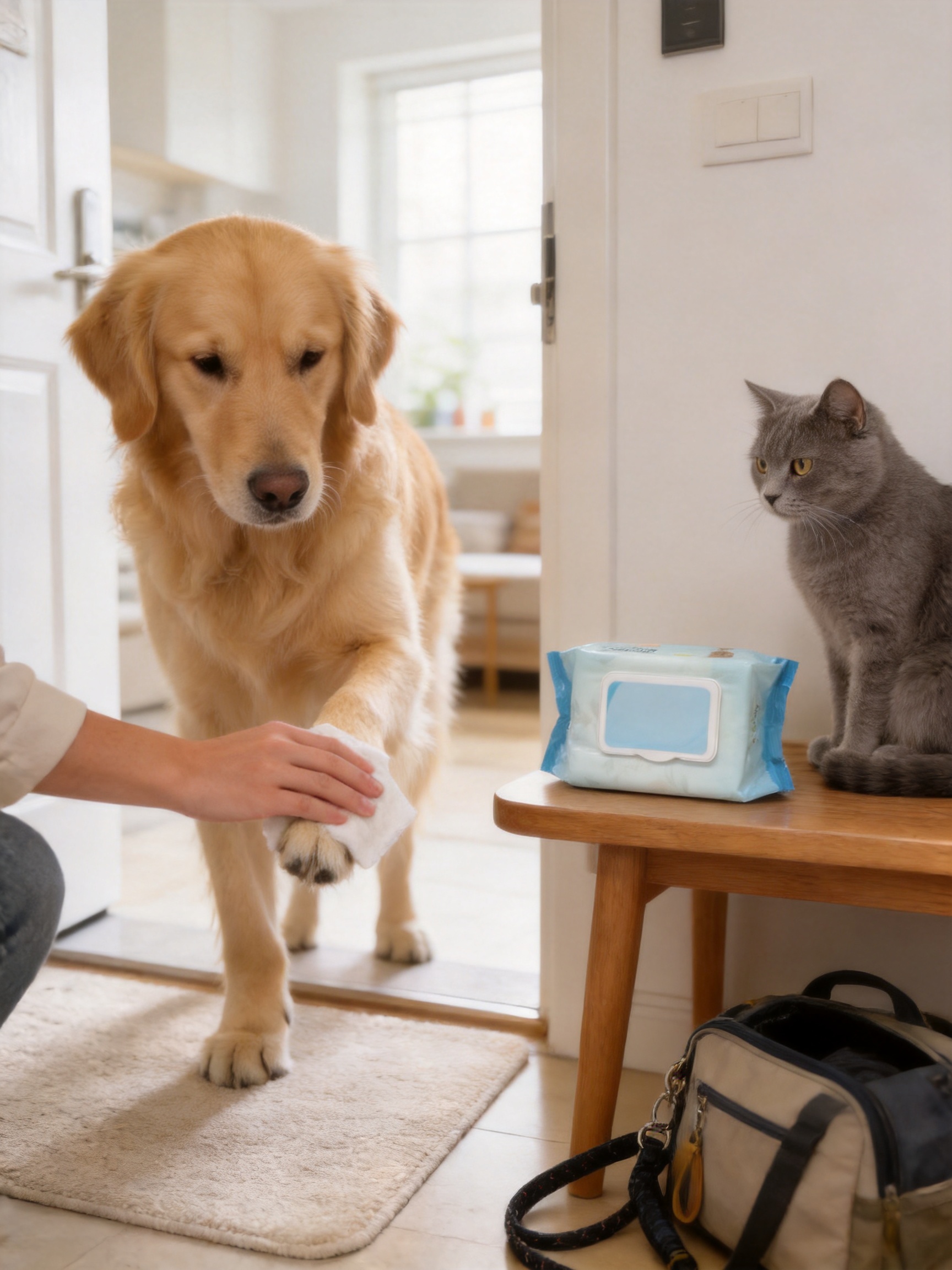
Outdoor walks are a major source of dirt on pet paws. Mud, sand, dust, grass particles, and street residue can enter the home on the underside of a dog’s feet. A pet wipe allows owners to clean the paws at the door before the animal moves through living areas. The same practice may be used after visits to parks, beaches, gardens, sidewalks, and public pet facilities.
For this application, the wipe should be soft enough for paw pads and durable enough to remove visible residue. A sheet that is too thin may tear, while one that is too dry may require excessive rubbing. A controlled moisture level can improve cleaning efficiency and make the process quicker for both the owner and the pet.
Routine Fur and Body Surface Care
Pets may need light cleaning between baths. A wipe can refresh areas of the coat that have collected dust, food particles, or outdoor residue. It may also be useful after travel, during warm weather, or when a full bathing routine is not convenient. Wiping the body surface can help owners maintain a cleaner appearance while reducing the need for frequent full bathing.
Regular grooming also contributes to a stronger relationship between pets and their owners. A simple wipe-down can become part of a daily routine, especially when introduced gradually and performed gently. Packaging and instructions should encourage owners to avoid rough rubbing and to pay attention to the pet’s comfort.
Cleaning Around Private Areas
Pets may require cleaning around private areas after using the toilet. A pet-specific wipe provides a convenient option when water and towels are not readily available. Its disposable format can help maintain household hygiene and reduce the need to handle heavily soiled reusable materials.
Because these areas can be sensitive, users should follow the product instructions carefully. The wipe should be used externally, with gentle movements, and should not be applied to broken skin or internal areas. For products sold in different countries, clear multilingual instructions may be beneficial, particularly for international pet supply brands.
Travel, Boarding, and Grooming Situations
Pet owners often need compact hygiene products when traveling by car, train, or aircraft. Wipes are easy to store and can be used without a sink, bathtub, or additional equipment. They can also be included in travel kits, grooming kits, adoption kits, pet subscription boxes, and welcome packages for new pet owners.
Professional groomers, boarding facilities, pet hotels, shelters, and veterinary reception areas may also use pet wipes for selected cleaning tasks. These professional users may have different requirements from household consumers, such as larger pack sizes, economical refill formats, stronger packaging, or clearly documented ingredients. OEM and ODM customization allows the same basic product concept to be adapted to different channels.
Why the Product Can Compete in the Market
The pet care market includes many types of cleaning products, including dry towels, ordinary wet wipes, deodorizing sprays, shampoos, foam cleansers, and grooming gloves. Antibacterial Pet Wipes compete by combining several functions in one portable format. They offer cleaning, freshness, selected antibacterial support, and daily convenience without requiring a complete bathing process.
Compared with ordinary household wipes, pet-specific wipes provide a more relevant formulation and usage concept. Household wipes may contain ingredients, fragrances, or alcohol levels that are not appropriate for animals. A dedicated pet wipe can give consumers greater confidence because the product purpose, formula direction, and application instructions are aligned with cats and dogs.
Compared with dry towels, wet wipes offer ready-to-use moisture and disposable convenience. Dry towels may require water, washing, drying, and storage. Wipes can be taken directly from the pack and discarded after use, which is useful for travel and rapid cleanup. For brands, this convenience can support higher usage frequency and repeat purchases.
Compared with full-bath products, wipes require less time and less equipment. They are not intended to replace shampoo, but they help bridge the gap between major bathing sessions. This creates a complementary product category that can be sold alongside shampoos, brushes, nail care tools, odor-control products, dental products, and other pet accessories.
| Product Consideration | Antibacterial Pet Wipes | Potential Consumer Benefit | Brand and Buyer Value |
|---|---|---|---|
| Formula direction | Mild, alcohol-free, near-neutral pH | More comfortable for routine external cleaning | Supports a gentle daily-care positioning |
| Primary users | Cats and dogs | One product can serve common household pets | Broader retail and distribution potential |
| Cleaning occasions | Paws, fur, tear stains, body surfaces, and external private areas | Useful across multiple daily scenarios | Encourages repeat use and product versatility |
| Functional positioning | Cleaning, bacteriostasis, and deodorization | Helps address visible dirt and unwanted odors | Provides multiple communication points |
| Packaging options | Single-sheet, pull-out, and customized formats | Convenient for home, travel, and professional use | Allows channel-specific product development |
| Customization | Material, size, formula, fragrance, artwork, and labeling | Can reflect local preferences and pet-care habits | Supports private-label differentiation |
Non-Woven Fabric and User Experience
The non-woven substrate is one of the most important components of a wet wipe. It affects softness, strength, liquid retention, lotion release, surface texture, and the overall feeling of the product in the user’s hand. Because the wipe contacts a pet’s skin and fur, the material must be selected with comfort and performance in mind.
Different markets may prefer different substrate characteristics. Some buyers may prioritize a soft spunlace fabric, while others may request a stronger structure for paw cleaning. Some may seek biodegradable or flushable-related material concepts for specific applications, although disposal requirements must be carefully evaluated. A manufacturer with non-woven research and production experience can help buyers compare materials according to intended use, cost targets, sustainability objectives, and regulatory requirements.
Material weight is another important variable. A lighter wipe may support cost efficiency and compact packaging, while a heavier wipe may provide a more substantial hand feel and greater cleaning strength. The ideal specification depends on sheet size, folding method, lotion loading, package type, and consumer expectations.
Embossing or textured surfaces may improve the ability to lift dust and residue from paws and fur. However, texture should not compromise softness. Product development should therefore involve practical testing, including wiping tests, wet tensile strength evaluation, lotion uniformity checks, and user feedback where appropriate.
Formula Development and Customization
A pet wipe formula must balance cleaning performance, mildness, preservation, odor control, skin compatibility, and stability. The formula should remain uniform during storage and should not separate, discolor, or develop an unpleasant odor under normal conditions. It should also work effectively with the selected non-woven material and packaging format.
Customers may request adjustments to fragrance, moisture level, added ingredients, or functional positioning. Some markets may prefer a fragrance-free option, while others may favor a light and fresh scent. Certain buyers may ask for soothing or moisturizing ingredients, provided that these ingredients are appropriate for the intended use and supported by relevant evaluation.
Formula customization should be conducted systematically. A professional development process may include an initial requirement review, ingredient screening, laboratory sample preparation, compatibility testing, stability evaluation, pilot production, packaging assessment, and final approval. The goal is to make sure that the formula performs consistently not only in a laboratory sample but also in commercial production.
Preservation is especially important in moist products because water-based formulas can support microbial growth if they are not properly controlled. Raw material quality, water treatment, filling hygiene, packaging integrity, and finished-product testing all contribute to product safety. A GMP-standard production environment and a comprehensive quality testing system can help manage these risks.
Packaging and Private-Label Development
Packaging determines how the product is protected, dispensed, transported, and presented at retail. Common formats include soft packs with resealable lids, flip-top packs, single-sheet packaging, pull-out packs, and larger professional-use formats. Each option offers different advantages in portability, cost, convenience, and shelf presentation.
A resealable opening is important because it helps limit moisture loss after the pack has been opened. Packaging must also protect the wipes from contamination during normal use. The lid, adhesive seal, film, and folding method should work together to support reliable dispensing throughout the product’s intended life.
For private-label clients, packaging customization is a central part of product development. Buyers can request brand logos, packaging graphics, color schemes, product claims, language versions, pack counts, sheet dimensions, and label information. Packaging design can be aligned with different market positions, such as premium grooming, family pet care, professional grooming, natural lifestyle, travel convenience, or value-oriented household use.
Packaging also provides an opportunity to educate consumers. Clear instructions can explain suitable applications, recommended storage, disposal methods, precautions, and the importance of avoiding direct eye contact or use on damaged skin. Responsible labeling can reduce misuse and strengthen consumer confidence.
Manufacturing Strengths and Industrial Experience
Zhejiang Uniquality Nursing Products Technology Co., Ltd. has a long history in the development and production of non-woven materials, nursing products, and hygiene products. Founded in 1987, the company has accumulated more than three decades of experience across product research, manufacturing, quality management, and sales. This background is relevant to pet wipes because the category relies on the same fundamental capabilities required for other high-quality wet and dry wipe products.
The company operates within the Kingsafe and Uniquality product groups and has established multiple production bases in China, including facilities associated with Zhejiang, Guangdong, Jiangsu, and Hubei. The multi-base structure can support production coordination, capacity planning, and supply continuity for customers with recurring or large-volume requirements.
The company’s product experience includes spunlace non-woven fabrics, spunmelt non-woven fabrics, hot-air-through non-woven fabrics, flushable and degradable non-woven materials, wet wipes, dry wipes, baby diapers, pull-ups, wet toilet paper, cleansing wipes, and other hygiene-related products. This broad portfolio gives the manufacturer a deeper understanding of substrate behavior, converting technology, moisture management, packaging, and product quality.
International equipment and production technologies introduced from Germany, France, and Italy contribute to the company’s manufacturing foundation. Advanced equipment can improve process consistency, production efficiency, material handling, folding accuracy, liquid dosing, sealing quality, and packaging appearance. For B2B buyers, these capabilities are particularly important when a product must be reproduced consistently across repeated orders.
The company also maintains professional production facilities, GMP-standard production environments, and a comprehensive quality testing system. These conditions support controlled manufacturing from raw-material inspection through finished-product release. They are valuable for buyers who need stable quality, documented processes, and dependable order execution.

Antibacterial pet wipes
From Raw Materials to Finished Pet Wipes
Raw-Material Selection
The manufacturing process begins with the selection and inspection of non-woven fabric, packaging film, labels, closure components, liquid ingredients, and other materials. Each material must match the approved product specification. Factors such as basis weight, softness, tensile strength, absorbency, appearance, chemical properties, and packaging compatibility may be evaluated.
Raw-material control is particularly important for private-label products because a change in material can affect the user experience and the final appearance of the package. A stable supply of approved materials helps ensure that the customer receives consistent products from one order to the next.
Liquid Preparation
The liquid formula is prepared under controlled conditions. Ingredients are weighed, mixed, and processed according to an established formula and production procedure. Parameters such as water quality, mixing time, temperature, pH, appearance, odor, and viscosity may be monitored as required by the product specification.
For antibacterial pet wipes, the liquid must be evenly distributed throughout the roll or stack of wipes. Uneven lotion application may create sheets that are too wet, too dry, or inconsistent in performance. Controlled dosing equipment and in-process checks help maintain uniformity.
Wipe Converting
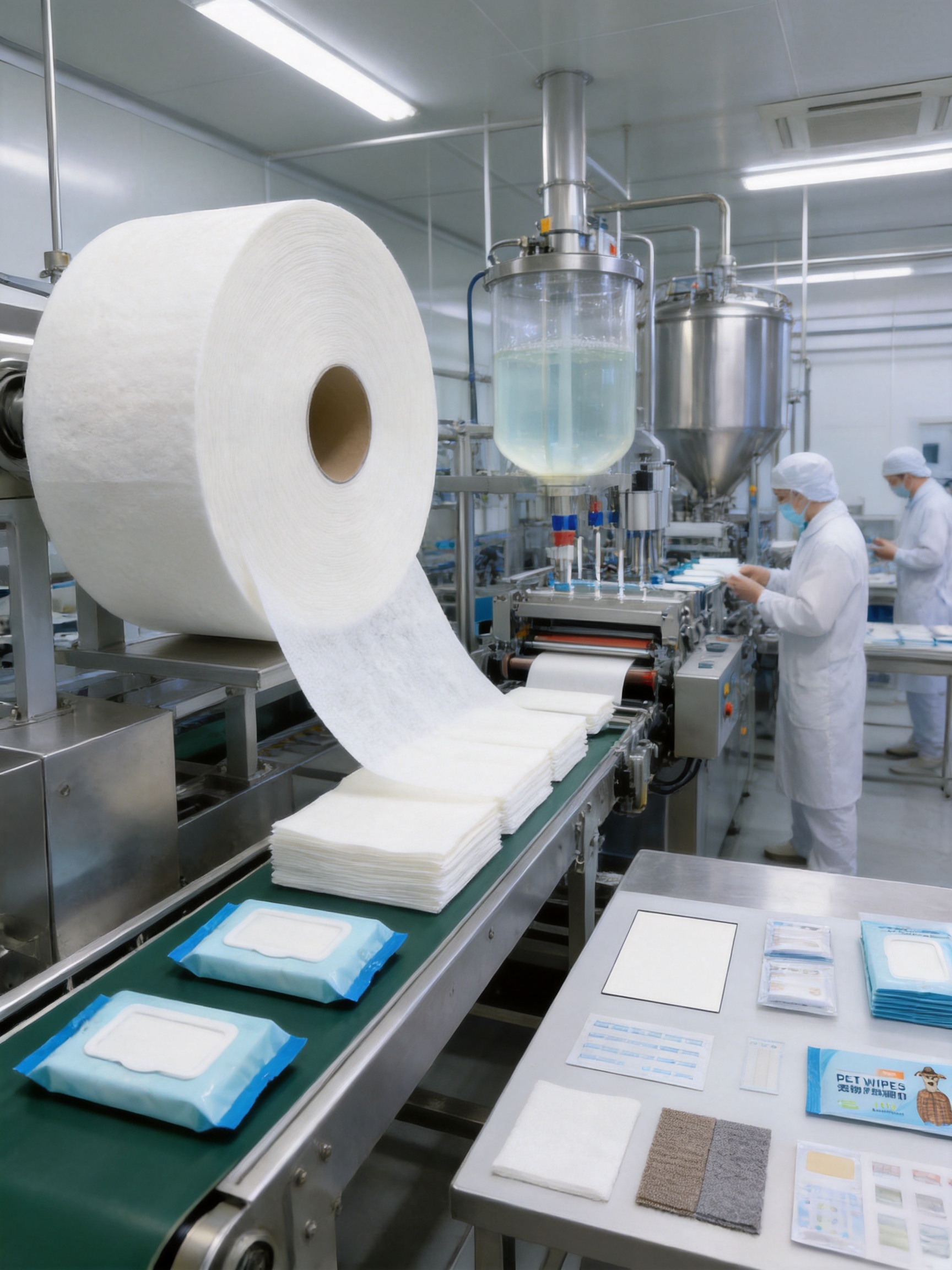
Non-woven material is unwound, cut, folded, and impregnated with the liquid formula. The converting line must maintain accurate dimensions and folding patterns. If the product is designed as a pull-out pack, the folding configuration must support reliable sheet dispensing. If it is designed as single-sheet packaging, each sheet must be correctly separated and sealed.
Line operators and quality personnel may check sheet size, folding position, wetness, appearance, strength, and package count during production. These checks help identify deviations before a large quantity of product is completed.
Sealing and Packaging
After impregnation and folding, the wipes are loaded into the selected packaging. The package is sealed to protect the contents and reduce moisture loss. Closure components are applied where required, and the finished pack is inspected for seal integrity, appearance, coding, and label accuracy.
Packaging quality is not only a visual consideration. A weak seal or defective closure can cause drying, leakage, contamination, or customer complaints. For this reason, packaging materials and finished packs should be assessed through appropriate inspections and, when necessary, transport simulation or stability testing.
Finished-Product Inspection
Finished-product inspection may include checks for appearance, odor, pH, moisture content, microbiological quality, package integrity, dimensions, count, labeling, and functional performance. The exact testing program depends on the product specification, destination market, customer requirements, and applicable regulations.
A complete quality system also includes traceability. Batch identification allows the manufacturer and buyer to connect finished products with raw materials, production records, inspection results, and shipping information. Traceability supports efficient investigation and corrective action if a quality issue is reported.
Quality Management for International Buyers
International buyers often require more than a product sample. They need confidence that the supplier can produce the approved specification at commercial scale, maintain delivery schedules, communicate clearly, and provide documentation for import and sales activities. A manufacturer’s quality system therefore becomes a major part of the purchasing decision.
Quality management may cover supplier qualification, incoming material inspection, process control, equipment maintenance, environmental hygiene, worker training, finished-product testing, packaging inspection, batch release, complaint handling, and corrective action. These elements work together to reduce variation and protect long-term customer relationships.
For pet wipes, buyers may request documents such as product specifications, ingredient information, safety data, testing reports, packaging artwork approvals, certificates of analysis, and production records. Requirements differ by market, and customers should discuss their needs at the beginning of development rather than after production has started.
The manufacturer’s experience in medical, maternal and baby, beauty, home care, industrial cleaning, and other hygiene fields can support a disciplined approach to pet product manufacturing. Although each category has different requirements, the underlying strengths of controlled production, clean environments, material expertise, and quality testing are transferable.
OEM and ODM Services for Pet Supply Brands
OEM and ODM services allow buyers to develop products under their own brand names without building a complete manufacturing facility. For Antibacterial Pet Wipes, customization can begin with a basic product concept and continue through technical development, packaging design, sample approval, mass production, and shipment.
Customers can select the wipe size and packaging form according to their sales channel. A compact pack may be suitable for travel or convenience retail, while a larger pack may be appropriate for households with multiple pets. Professional groomers and boarding facilities may require higher-count packaging or economical bulk formats.
Non-woven material can be adapted to the intended use. A buyer focused on gentle face and body cleaning may prioritize softness, while a buyer focused on paw cleaning may require a balance of texture, strength, and absorbency. The manufacturer can help compare available materials and identify a specification that fits the target price and market position.
Liquid formula adjustments may include fragrance selection, fragrance-free development, moisture level, and selected functional ingredients. Such changes should be evaluated for stability, compatibility, safety, and regulatory suitability. Formula customization is not simply a matter of adding an ingredient; it requires controlled development and approval.
Packaging graphics and brand logos can be customized to support visual differentiation. Buyers may also request localized language, usage instructions, recycling or disposal information, product claims, barcodes, batch codes, and other market-specific details. A coordinated development process helps reduce errors between the formula, label, carton, and final product.
Benefits for Different B2B Customer Groups
Pet Supply Brand Owners
Brand owners can use customized pet wipes to expand their product portfolios and create a complete hygiene range. Antibacterial pet wipes can be sold alongside shampoos, conditioners, grooming brushes, dental products, ear-care items, and odor-control solutions. A consistent packaging design across multiple products can improve shelf recognition and reinforce brand identity.
Private-label development also allows brand owners to target a specific consumer segment. The same manufacturing base can support a premium formula, a value pack, a fragrance-free sensitive-care product, or a travel-size product, depending on the customer’s strategy.
Importers and Wholesalers
Importers and wholesalers generally require stable supply, clear product specifications, competitive pricing, and reliable documentation. A manufacturer with multiple production bases and mature process management can support repeat orders and broader distribution programs.
Wholesalers may also need several packaging formats for different retail customers. OEM and ODM flexibility makes it possible to develop related products without changing suppliers, which can simplify logistics, quality management, and communication.
Retail Channel Suppliers
Retail suppliers need products that are easy to explain, visually attractive, and relevant to everyday consumer needs. Antibacterial pet wipes offer a clear value proposition: they help owners clean pets conveniently between baths and after outdoor activities.
Retail programs may require customized pack counts, shelf-ready packaging, promotional bundles, seasonal artwork, or introductory sample formats. Early communication with the manufacturer can help align production planning with launch schedules and retail requirements.
Cross-Border Pet Product Operators
Cross-border sellers must often adapt products to local language, consumer expectations, platform rules, labeling requirements, and delivery conditions. An experienced export-oriented manufacturer can provide product development, packaging customization, and supply-chain support for different regions.
Cross-border operators should confirm the required product claims and documentation before placing a mass-production order. They should also review shipping conditions, package durability, storage requirements, and customs information to reduce the risk of delays or product damage.
Sustainability and Responsible Product Development
Environmental considerations are increasingly important in the wet-wipe category. Buyers may ask about non-woven material options, packaging reduction, recycled content, biodegradable materials, production efficiency, and responsible disposal. These issues should be evaluated carefully because the environmental profile of a wipe depends on both its substrate and its packaging.
Some customers may be interested in flushable or degradable non-woven materials. However, a product should not be described as flushable or biodegradable without appropriate testing and market authorization. Disposal instructions must reflect the actual product design. In many cases, pet wipes should be disposed of in household waste rather than flushed.
Material optimization can also reduce unnecessary resource use. A suitable sheet size, controlled lotion loading, efficient folding pattern, and right-sized packaging may reduce waste while maintaining the required user experience. Sustainability decisions should be balanced with product safety, performance, transport protection, and consumer expectations.
Manufacturers with experience in multiple non-woven technologies can help buyers compare alternatives. The final choice should be based on the complete product life cycle, including raw-material sourcing, manufacturing, packaging, transportation, use, and disposal.
How Buyers Can Evaluate a Supplier
Choosing a pet wipe supplier involves more than comparing the price per pack. Buyers should examine the supplier’s experience in wet wipes, non-woven materials, pet care, quality management, customization, export support, and production capacity.
First, buyers should confirm whether the supplier can provide the requested product specification. This includes sheet size, material, lotion formula, fragrance, packaging type, pack count, labeling, and target claims. A supplier that offers broad customization may be better suited to long-term brand development.
Second, buyers should request samples and compare softness, wetness, scent, strength, dispensing, package integrity, and cleaning performance. Samples should be tested under realistic conditions, including paw cleaning, fur wiping, storage after opening, and transport simulation where applicable.
Third, buyers should discuss minimum order quantities, lead times, sample charges, tooling or plate charges, payment conditions, shipping terms, and production scheduling. Clear commercial communication helps prevent unexpected costs or delays.
Fourth, buyers should review quality-control procedures and available documentation. A supplier should be able to explain how raw materials are inspected, how formulas are controlled, how finished products are tested, and how batch traceability is maintained.
Finally, buyers should assess communication and after-sales support. Pet care products are often developed through several rounds of adjustments. Responsive technical and commercial communication can make the process more efficient and reduce the risk of misunderstanding.
| Evaluation Area | Questions for Buyers | Why It Matters |
|---|---|---|
| Product specification | Can the supplier provide the required material, size, formula, scent, and pack format? | Confirms technical suitability before sampling |
| Production capability | Can the supplier support stable mass production and repeat orders? | Reduces supply interruptions and quality variation |
| Quality control | Are raw materials, processes, finished products, and packaging inspected? | Supports consistent product performance |
| Customization | Can the supplier support private labels, artwork, formulas, and localized labels? | Enables market differentiation |
| Export experience | Can the supplier provide documentation and support for overseas markets? | Helps manage international sourcing requirements |
| Communication | Are technical, commercial, and production updates handled clearly? | Improves project efficiency and reduces misunderstandings |
Recommended Product Development Workflow
A structured workflow helps move a pet wipe project from concept to commercial production. The first stage is requirement definition. The buyer should describe the target market, pet types, intended applications, preferred claims, pack size, retail channel, expected volume, price range, and sustainability objectives.
The second stage is material and formula selection. The manufacturer can recommend substrate options and prepare liquid formula samples. The buyer should evaluate the samples for softness, moisture, fragrance, cleaning behavior, and overall suitability.
The third stage is technical confirmation. Sheet dimensions, folding method, packaging format, closure type, label content, carton configuration, and testing requirements should be finalized. Any antibacterial, deodorizing, sensitive-care, or safety claims should be reviewed before artwork approval.
The fourth stage is sample packaging and testing. The approved formula and wipe material should be placed into the intended packaging to confirm compatibility. This stage can reveal issues such as drying, leakage, difficult dispensing, weak seals, scent changes, or artwork problems.
The fifth stage is pilot or pre-production evaluation. A controlled production run allows the manufacturer and buyer to confirm that the approved sample can be reproduced at commercial scale. Adjustments should be documented and approved before mass production.
The final stage is mass production, inspection, release, and shipment. Production records, batch information, packaging checks, and finished-product testing should be maintained according to the agreed quality system. After delivery, customer feedback can support future improvements or the development of complementary pet care products.
Consumer Use and Safety Guidance
Pet wipes should be used only as directed on the product label. Users can gently wipe the intended external areas, such as paws, fur, or the body surface. Excessive rubbing should be avoided, particularly on sensitive areas or pets with dry skin.
Direct contact with the eyes should be avoided unless the product has been specifically designed and tested for that application. The wipes should not be used on open wounds, serious skin conditions, or areas requiring veterinary treatment. If redness, discomfort, swelling, or another unusual reaction occurs, use should be discontinued and professional advice should be obtained.
Wipes should be kept sealed when not in use to preserve moisture and protect the remaining sheets. They should be stored in a cool, dry location away from direct sunlight and excessive heat. Used wipes should be disposed of according to local waste-management guidance and should not be flushed unless the product is specifically approved and labeled for flushing.
These instructions help protect both the pet and the product reputation. A clear label is an important part of responsible manufacturing and brand management, especially when products are sold across different countries and consumer groups.
Q&A
Q1: What are Antibacterial Pet Wipes mainly used for?
They are mainly used for daily cleaning and grooming of cats and dogs. Common applications include wiping paws, cleaning fur and body surfaces, removing selected tear stains, refreshing pets after outdoor activities, and cleaning external private areas after toilet use.
Q2: Are the wipes suitable for both cats and dogs?
The product is designed for universal use with cats and dogs. However, every animal may have different sensitivities. Owners should follow the label instructions, avoid contact with the eyes or damaged skin, and stop use if irritation occurs.
Q3: What makes the formula suitable for routine pet care?
The formula is described as mild, non-toxic, alcohol-free, and designed with a pH of approximately 7, close to the stated pH environment of pet skin. It is also developed with pets’ natural licking behavior in mind. Product claims should always be supported by appropriate testing and used according to local regulations.
Q4: Can the wipes be used after a pet uses the toilet?
Yes. They can be used for gentle external cleaning around private areas after toilet use. They should not be applied internally, to open wounds, or to areas that require veterinary treatment.
Q5: Can the formula be customized?
Yes. OEM and ODM customers can discuss adjustments to the liquid formula, fragrance, moisture level, selected added ingredients, and product positioning. Any customization should be evaluated for safety, stability, material compatibility, and regulatory suitability.
Q6: What parts of the wipe can be customized?
Customers can customize wipe size, non-woven material, packaging form, sheet count, liquid formula, fragrance, packaging graphics, brand logo, label information, and folding method. Options may include single-sheet packaging, pull-out packs, and other formats according to market needs.
Q7: What non-woven materials are available?
Material selection depends on the intended application, target price, required softness, strength, absorbency, sustainability objectives, and packaging format. The manufacturer can help buyers compare suitable non-woven options and select a specification for the target market.
Q8: How does the manufacturer control quality?
Quality control can cover raw-material inspection, liquid preparation, production-process monitoring, packaging checks, finished-product testing, batch traceability, and release procedures. The company operates professional production facilities, GMP-standard production environments, and a comprehensive quality testing system.
Q9: Can overseas buyers receive private-label support?
Yes. The company provides OEM and ODM support for overseas buyers, including product development, material selection, formula adjustment, packaging customization, label development, and supply-chain coordination. Specific documents and services should be confirmed according to the destination market.
Q10: Is the product suitable for small retail purchases?
The manufacturing program primarily targets B2B customers, including pet supply brands, importers, wholesalers, retail channel suppliers, and cross-border pet product operators. It is focused on mass production, customization, and long-term supply partnerships rather than individual consumer purchases or very small orders.
Q11: Can the wipes replace bathing or veterinary care?
No. Pet wipes are intended for routine external cleaning and grooming. They do not replace bathing, professional grooming, treatment for skin disease, or veterinary care. Persistent odor, wounds, infection, severe itching, or other health concerns should be evaluated by a qualified professional.
Q12: What should buyers confirm before placing a bulk order?
Buyers should confirm the approved material, formula, fragrance, pH, sheet dimensions, pack count, packaging artwork, claims, testing requirements, minimum order quantity, lead time, shipping terms, and destination-market documentation. A written product specification helps ensure that samples and mass production remain consistent.
Conclusion
Antibacterial Pet Wipes provide a convenient and versatile solution for everyday cat and dog hygiene. Their mild, alcohol-free, near-neutral-pH formula, combined with antibacterial and deodorizing positioning, supports routine cleaning of paws, fur, tear stains, body surfaces, and external private areas. The disposable format makes them practical for homes, travel, grooming facilities, pet hotels, retail programs, and cross-border pet care businesses.
The product’s competitiveness depends on more than its formula. Soft and functional non-woven material, consistent moisture, secure packaging, clear instructions, reliable quality control, and flexible customization all influence market acceptance. Buyers can differentiate their products through sheet size, material selection, fragrance, packaging design, pack count, and brand positioning.
Zhejiang Uniquality Nursing Products Technology Co., Ltd., together with the Kingsafe and Uniquality product groups, brings more than thirty years of experience in non-woven materials, wet wipes, dry wipes, nursing products, and hygiene manufacturing. Its multiple production bases, international production equipment, GMP-standard environments, quality testing capabilities, and export experience provide a foundation for stable OEM and ODM cooperation.
For pet supply brands, importers, wholesalers, retail suppliers, and cross-border operators, the product offers an opportunity to build a practical and repeat-use pet care category. Through structured development, responsible claims, suitable materials, reliable manufacturing, and market-specific packaging, Antibacterial Pet Wipes can be developed into a strong private-label product that meets the needs of modern pet owners and professional distribution partners.
References
1. Product technical and application information for Antibacterial Pet Wipes, including formula positioning, intended uses, customization options, and B2B customer guidance.
2. Company information supplied by Zhejiang Uniquality Nursing Products Technology Co., Ltd. concerning manufacturing history, production bases, product categories, equipment, and quality systems.
3. General principles of wet-wipe manufacturing, including non-woven substrate selection, lotion preparation, converting, folding, packaging, sealing, and finished-product inspection.
4. General guidance for pet hygiene products, including external use, safe handling, storage, disposal, and the distinction between daily cleaning and veterinary treatment.
5. General considerations for private-label and OEM/ODM product development, including market research, specification approval, packaging customization, quality control, documentation, and supply-chain coordination.