中文简体
中文简体 English
 日本語
日本語 русский
 Español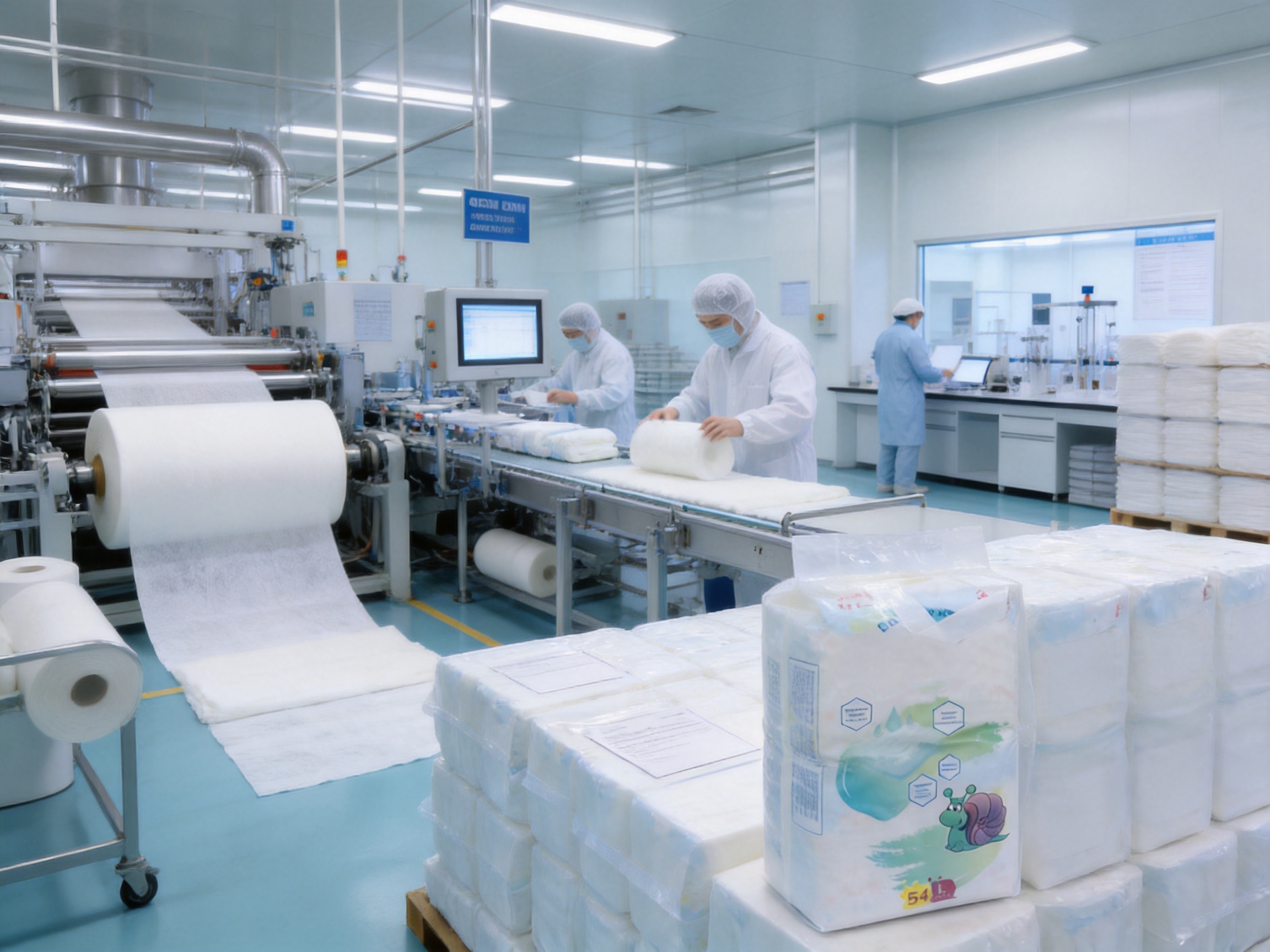
Choosing a baby diaper is an important decision for parents, retailers, healthcare-focused buyers, and baby-care brands. A diaper must do more than contain moisture. It should help keep a baby’s skin comfortable, support freedom of movement, reduce leakage risks, manage wetness efficiently, and remain soft during extended wear. For manufacturers and distributors, the product must also offer stable quality, consistent supply, flexible customization, and compliance with the requirements of different markets.
Natural baby diapers are designed around these expectations. They combine a skin-friendly surface, breathable construction, absorbent materials, protective leak guards, and a comfortable fit. The product described in this article is positioned as a regular-quality diaper with an enhanced absorbent structure. It contains a higher proportion of superabsorbent polymer, or SAP, and incorporates a functional layer between the fluff pulp and SAP to support liquid movement and absorption performance.
This construction helps the diaper absorb liquid more quickly and efficiently than a basic economic diaper. At the same time, the design is intended to remain soft and flexible, helping reduce wrinkling, bunching, and uncomfortable pressure around the baby’s waist and legs. The result is a practical balance between performance, comfort, manufacturing efficiency, and commercial value.
Manufactured by Zhejiang Uniquality Nursing Products Technology Co., Ltd., under the Kingsafe and Uniquality business group, the product is supported by extensive experience in nonwoven materials, disposable hygiene products, and integrated production. The company’s capabilities include material research, nonwoven manufacturing, diaper production, quality testing, OEM development, ODM cooperation, packaging support, and international supply services.
Understanding Natural Baby Diapers
Natural baby diapers are baby-care products developed with an emphasis on gentle materials, skin comfort, breathability, and responsible product design. The word “natural” may refer to the use of plant-based or skin-friendly material selections, the avoidance of unnecessary fluorescent substances, and a product philosophy that prioritizes a mild contact surface for sensitive skin.
Natural baby diapers are not necessarily made entirely from natural fibers. Modern disposable diapers normally require a combination of nonwoven fabrics, absorbent fibers, superabsorbent polymers, adhesives, elastics, fastening components, and barrier films. Each material has a specific function. A well-designed diaper therefore depends not only on the origin of an individual material, but also on how the complete structure is engineered.
The product structure described here includes a natural plant top sheet, a breathable back sheet, absorbent materials, a pH-balanced rash-protection concept, 3D leak guards, and an anti-backflow absorbency system. These features are designed to work together rather than operate independently. The top sheet helps manage contact with the skin, the absorbent core receives and locks away liquid, the back sheet helps limit external wetness, and the leak guards provide additional protection around the leg openings.
For newborns and young babies, comfort is especially important. Babies may remain in the same diaper for several hours, including during naps or overnight periods. A rough surface, poor liquid distribution, excessive heat, or tight elastic can cause discomfort. A balanced design helps reduce these concerns while giving parents greater confidence in everyday use.
Product Positioning and Quality Balance
Within the disposable diaper market, products are often divided into economic, regular, premium, and specialized categories. Economic diapers are generally designed to meet basic functional requirements at a low cost. Premium diapers may use more advanced material combinations, enhanced softness treatments, thinner absorbent cores, or additional fit and skin-care features.
This natural baby diaper is positioned in the regular diaper category. Its purpose is to provide a practical middle ground between basic economic diapers and higher-priced premium products. It increases the SAP content compared with a simpler economic structure and uses an additional layer between fluff pulp and SAP. This structure supports improved liquid mobility and can help liquid reach the absorbent area more quickly.
A regular-quality diaper can be attractive to a wide range of customers. Parents may want dependable daily performance without paying the highest premium price. Retailers may need a product that offers competitive shelf pricing while still presenting meaningful comfort and absorbency benefits. Importers and private-label brands may seek a stable specification that can be adapted to different packaging concepts and target markets.
The product’s value is therefore based on balance. It is not presented as a highly specialized medical product, nor is it limited to the most basic diaper category. Instead, it is designed to combine practical absorption, softness, breathability, leakage protection, and manufacturing flexibility in one commercially accessible product.
| Product Element | Primary Function | Customer Benefit |
|---|---|---|
| Natural plant top sheet | Provides a soft contact surface and supports liquid transfer | Improves skin comfort and supports a gentle wearing experience |
| Breathable back sheet | Allows greater air exchange while helping contain liquid | Helps reduce a hot or stuffy feeling during wear |
| Increased SAP content | Absorbs and retains liquid within the core | Supports stronger absorption and longer-lasting dryness |
| Intermediate liquid-distribution layer | Helps move liquid between fluff pulp and SAP | Improves absorption speed and distribution efficiency |
| 3D leak guards | Creates additional protection around the legs | Helps reduce side leakage during movement |
| Flexible diaper structure | Allows the product to follow the baby’s body movement | Helps reduce wrinkling, bunching, and uncomfortable pressure |
Absorbency Designed for Daily Baby Care
Absorbency is one of the most important performance characteristics of a diaper. A diaper must receive liquid quickly, distribute it through the core, retain it under pressure, and reduce the amount of moisture that returns to the skin. These stages are closely related. A diaper with high total absorption capacity may still perform poorly if liquid cannot move through the core efficiently.
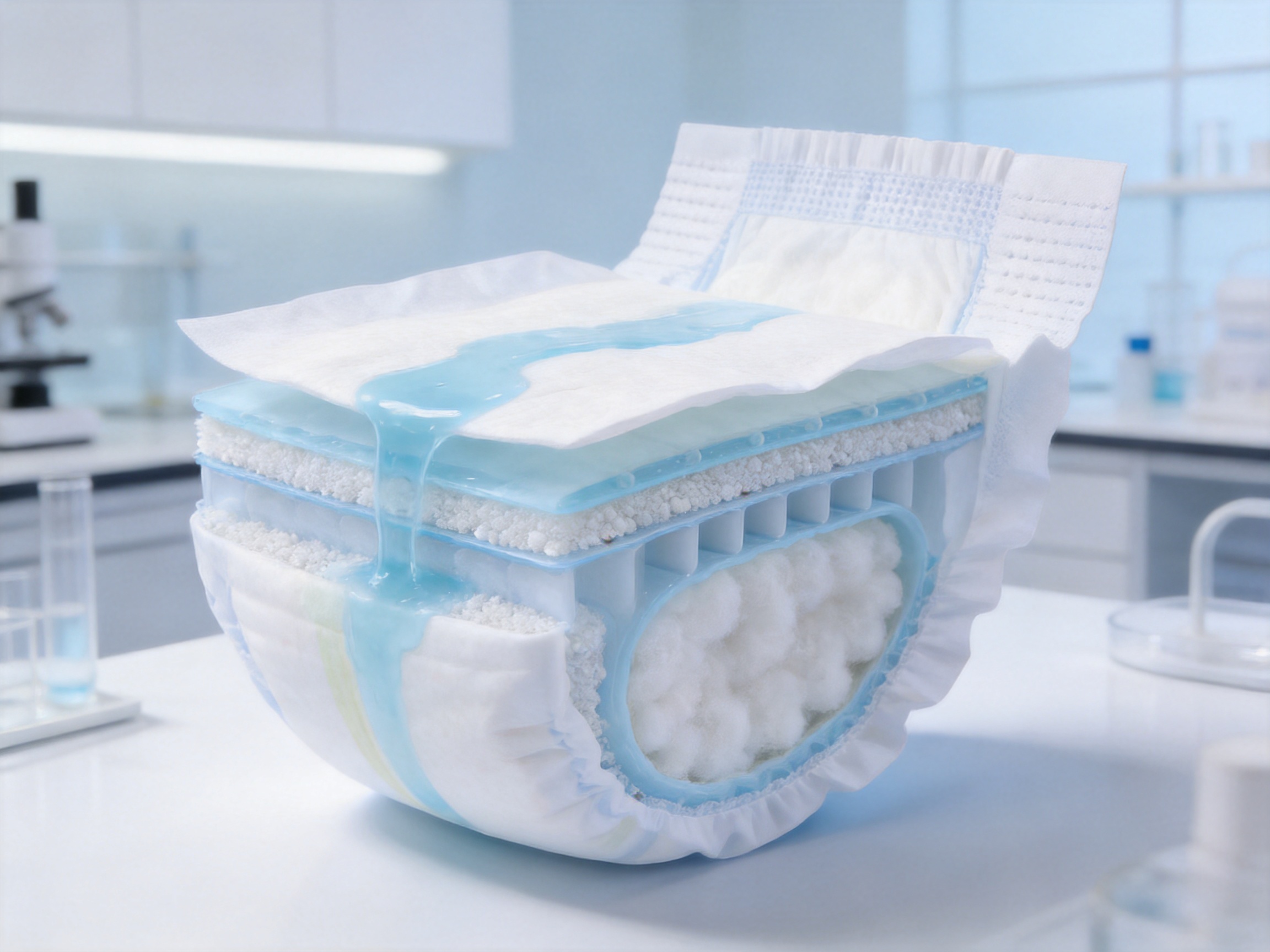
The absorbent core of a modern diaper commonly combines fluff pulp and SAP. Fluff pulp helps create a fibrous pathway for liquid movement, while SAP absorbs liquid and converts it into a gel-like form. The balance between these two materials affects absorption speed, core flexibility, thickness, liquid retention, and product cost.
This product increases the SAP content compared with an economic diaper. The additional SAP can improve the core’s liquid-retention capability when the material distribution and construction are properly controlled. It may also support a thinner or more compact structure because SAP can hold a significant quantity of liquid within a relatively small volume.
The diaper also uses a layer between the fluff pulp and SAP. This intermediate structure is intended to help liquid move more freely through the absorbent system. When liquid spreads effectively, it can reach more of the available SAP rather than remaining concentrated in one area. Better distribution can reduce local saturation and improve the utilization of the complete absorbent core.
Faster absorption is valuable during several common situations. Babies may urinate while sitting, crawling, sleeping, or being carried. Liquid can arrive in a short burst, and the diaper must manage it without allowing significant pooling on the surface. A well-designed distribution system helps the diaper receive the liquid and transfer it away from the skin contact area.
Anti-back-osmosis performance is another important consideration. Back-osmosis, often called rewet, occurs when liquid that has entered the core returns toward the top sheet under pressure. This can happen when a baby sits, rolls, crawls, or sleeps on the diaper. A properly engineered absorbent core helps retain liquid and reduce the amount available to return to the skin.
No diaper can eliminate every possible leakage or rewet situation because performance depends on the baby’s size, movement, wearing time, liquid volume, fit, and correct product selection. However, the combination of enhanced SAP content, a liquid-distribution layer, a soft top sheet, and protective side structures is designed to improve everyday performance in realistic use conditions.
Softness and Skin-Friendly Contact
A baby’s skin is delicate and can be more sensitive to friction, heat, moisture, and unsuitable substances than adult skin. For this reason, the top sheet is a key part of the diaper. It is the material that remains closest to the baby’s skin during use, so its softness, permeability, surface texture, and cleanliness all influence comfort.
The natural baby diaper uses a natural plant top sheet concept. This type of top sheet is intended to provide a gentle and comfortable contact surface while supporting the passage of liquid into the absorbent core. A suitable top sheet should feel soft, avoid unnecessary roughness, and maintain its surface integrity during wear.
The product is described as free of fluorescent substances and harmful chemicals in its intended material approach. For commercial communication, specific claims should always be confirmed through the applicable test reports, technical documentation, and regulatory requirements of the destination market. Nevertheless, the design direction is clear: reduce unnecessary irritants and provide a more reassuring product for newborn and sensitive-skin applications.
Skin comfort is influenced by more than the top sheet. If liquid remains on the surface, the skin may experience prolonged moisture. If the diaper is too tight, the leg cuffs or waist area may create pressure and friction. If the product does not fit correctly, movement can cause bunching. The complete diaper must therefore manage softness, absorption, fit, and breathability as a coordinated system.
The product’s pH-balanced rash-protection concept is intended to support a skin-friendly wearing environment. pH balance should not be understood as a medical treatment or a guarantee against diaper rash. Diaper rash can have many causes, including prolonged exposure to moisture, friction, allergies, infection, infrequent changing, or an unsuitable fit. However, a diaper that helps keep the skin drier and reduces friction can contribute to a more comfortable daily-care routine.
Breathability and Moisture Management
Breathability is an important feature in baby diapers because the diaper area is naturally warm and enclosed. A breathable back sheet can help support air exchange while still functioning as a liquid barrier. This balance is technically demanding. The material must allow an appropriate level of vapor transmission without permitting liquid leakage.
A breathable diaper may feel less stuffy during wear, especially in warm climates or during active daytime use. Better moisture management can also support a more comfortable environment between changing times. Nevertheless, regular changing remains essential. Breathability does not remove the need for parents and caregivers to check the diaper and change it when necessary.
The back sheet must also be flexible and quiet. A stiff or noisy material may affect comfort and user perception. A soft back sheet can help the diaper move naturally with the baby’s body and reduce the sensation of a rigid outer layer. For private-label brands, back-sheet selection may also influence visual appearance, printing quality, packaging presentation, and environmental positioning.
Manufacturers must evaluate breathability together with tensile strength, sealing behavior, liquid resistance, softness, and production stability. A material that performs well in one category may create challenges in another. Integrated manufacturing experience is valuable because it allows the producer to assess the complete system rather than selecting materials in isolation.
Leak Protection and Fit
Leakage can occur when the absorbent core becomes overloaded, liquid is not distributed quickly enough, the diaper is incorrectly sized, or gaps form around the waist and legs. A reliable diaper therefore requires both an effective absorbent core and a suitable fit system.
The product includes 3D leak guards. These raised structures are positioned around the leg area to help contain liquid and guide it toward the absorbent core. They can be particularly useful when a baby is moving, rolling, crawling, or lying on the side. The guards also help create a physical barrier between the liquid and the edge of the diaper.
Leg cuffs and elastic components must be carefully balanced. If they are too loose, gaps may allow leakage. If they are too tight, they may create marks or discomfort. The objective is a flexible seal that follows the baby’s body without excessive pressure. A well-designed diaper should remain secure during movement while still allowing the baby to kick and change position naturally.
The waist area is equally important. A stable waist structure helps prevent leakage from the back and supports the overall fit. For newborns, the front waist may need to accommodate the umbilical area. For larger sizes, the product must support active babies with greater movement and changing body proportions.
Correct sizing is essential. Parents and caregivers should select a size according to the manufacturer’s size guidance, the baby’s weight, body shape, and fit condition. A diaper that is too small may create pressure and leakage, while a diaper that is too large may leave gaps. OEM customers can request different size ranges and fit specifications according to their target market.
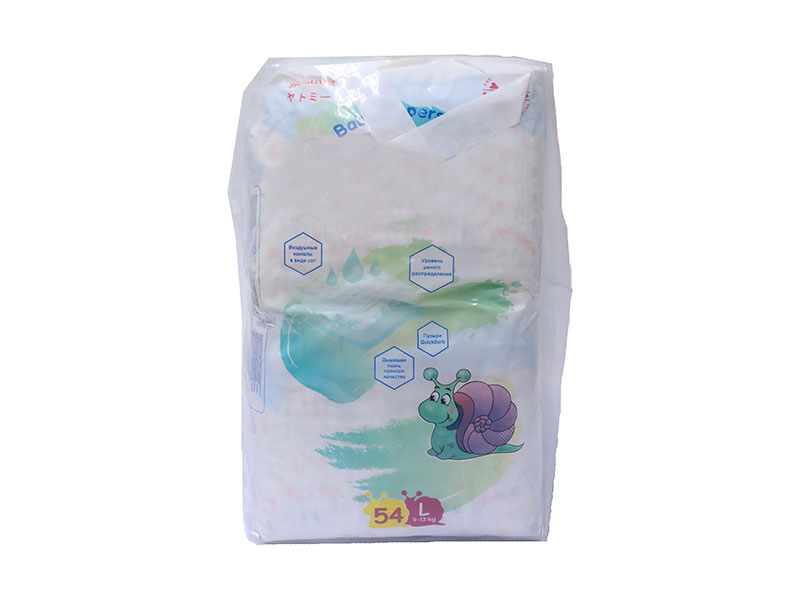
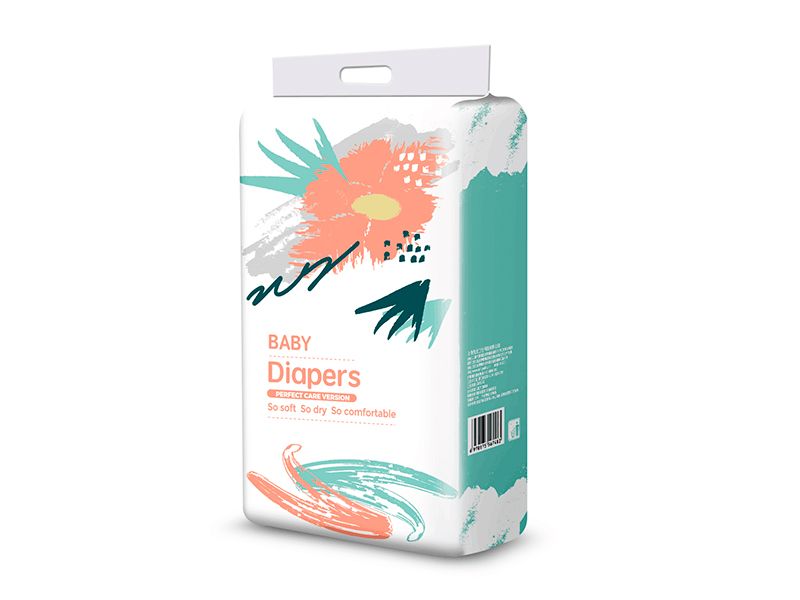
Natural baby diapers
Comfort During Movement and Extended Wear
Babies do not remain still when wearing a diaper. They stretch, kick, roll, crawl, stand, and sit. A diaper that performs well only when the baby is lying down may not provide sufficient everyday protection. The structure must remain flexible and stable as the baby moves.
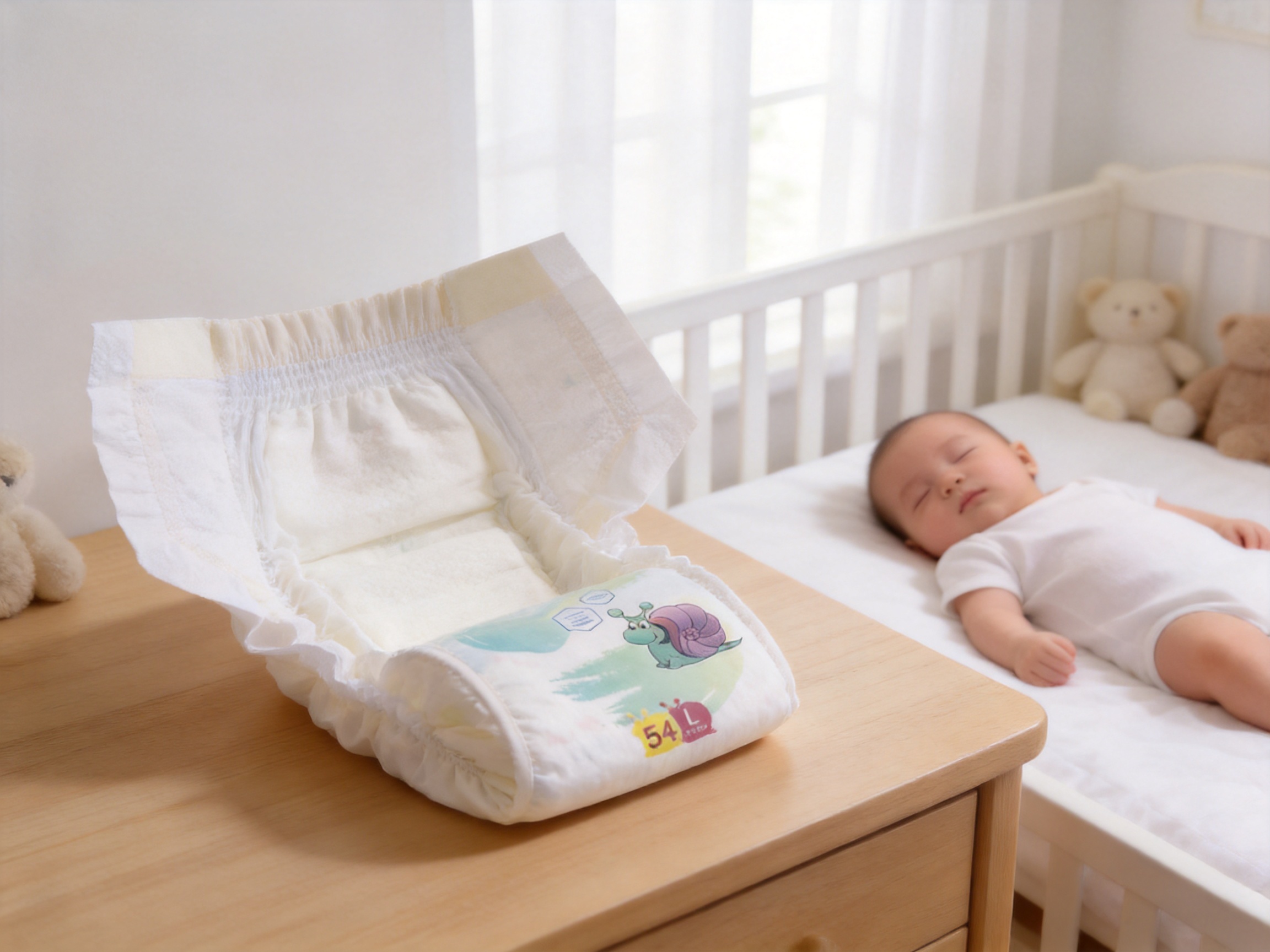
The natural baby diaper is designed to reduce wrinkling and strangling sensations around the waist and legs. This is supported by the combination of flexible nonwoven materials, elastic components, leak guards, and an absorbent core with appropriate construction. A flexible core can follow body movement more naturally than an overly stiff or bulky core.
Reduced wrinkling can also support better liquid distribution. When a diaper bunches, parts of the absorbent core may become compressed or folded. This can limit liquid access to the full core and create localized saturation. A more stable structure helps preserve the intended shape during use.
Comfort also affects sleep. Babies may wear a diaper during naps and overnight periods, when they cannot communicate discomfort clearly. A smooth top sheet, breathable outer layer, suitable absorbency, and gentle elastic can help create a more comfortable sleeping environment. Parents should still change the diaper as appropriate, particularly after bowel movements or when the product reaches its capacity.
For product developers, comfort is measurable through a combination of laboratory tests, material evaluations, fit trials, and user feedback. Surface softness, tensile strength, elasticity, core flexibility, rewet, leakage resistance, and air permeability can all provide useful information. A reliable manufacturer uses technical data and practical experience together when improving the product.
Advantages Compared with Basic Economic Diapers
The main advantage of this regular natural baby diaper over a basic economic diaper is the balance of absorbency and comfort. Economic products may use a lower quantity of SAP, a simpler core, fewer distribution features, or less advanced material combinations. Such products can satisfy basic needs, but they may be more likely to show slower liquid absorption, greater wetness, more rewet, or a bulkier wearing experience.
The increased SAP content supports greater liquid-retention potential. The intermediate layer between fluff pulp and SAP is intended to make liquid movement more efficient. Together, these features can help the diaper absorb faster and provide more consistent performance during daily use.
The natural plant top sheet and skin-friendly material direction create a stronger comfort proposition than a basic product that focuses primarily on cost. A breathable back sheet can also provide a more comfortable experience in warm conditions. The addition of 3D leak guards supports greater protection around the legs.
The product may also offer a better value proposition for retailers. It can be presented as an accessible upgrade from an economic diaper without requiring the pricing of a premium product. This can help brands reach families who want better comfort and performance but remain sensitive to price.
| Comparison Area | Basic Economic Diaper | Natural Regular Diaper |
|---|---|---|
| Absorbent structure | Basic fluff pulp and SAP arrangement | Enhanced SAP content with a liquid-distribution layer |
| Absorption speed | May be adequate for ordinary use but less optimized | Designed for faster and more efficient liquid movement |
| Skin-contact materials | Standard nonwoven surface | Natural plant top sheet concept with a softer contact focus |
| Breathability | Depends on the selected back sheet | Breathable back-sheet design is part of the product proposition |
| Leak protection | Basic barrier construction | Includes 3D leak guards and an integrated fit approach |
| Comfort positioning | Focused mainly on affordability | Balances affordability with softness, fit, and daily comfort |
| Customization potential | May be limited by standard specifications | Supports OEM and ODM adjustments for brands and markets |
These comparisons describe the intended product positioning rather than an absolute performance guarantee. Actual results depend on the final specification, raw materials, size, testing method, and usage conditions. For commercial projects, customers should approve samples and technical specifications before bulk production.
Advanced Nonwoven Material Expertise
The quality of a disposable diaper begins with its materials. Nonwoven fabrics are used in the top sheet, back sheet, acquisition layers, leg cuffs, fastening areas, and other components. Their softness, strength, liquid permeability, air permeability, elongation, and surface structure directly influence the finished product.
Kingsafe and Uniquality have developed extensive experience in medical and hygienic nonwoven materials. The company manufactures and works with spunlace nonwoven fabrics, spunmelt nonwoven fabrics, hot-air-through nonwoven fabrics, flushable materials, degradable nonwoven materials, wipes, and other disposable hygiene products.
Spunlace nonwoven fabrics can provide a soft textile-like feel and are widely used in wipes and personal-care applications. Spunmelt materials can offer controlled web structures, strength, and barrier performance. Hot-air-through nonwoven fabrics can contribute softness and bulk in selected hygiene applications. The ability to understand these different technologies helps the manufacturer select appropriate materials for different diaper structures.
Material expertise also improves communication between the raw-material stage and the finished-product stage. A diaper producer that understands nonwoven production can more effectively evaluate surface texture, fiber arrangement, basis weight, uniformity, and converting behavior. This integrated knowledge can support more stable product quality and more efficient problem solving.
For OEM and ODM customers, nonwoven expertise creates additional flexibility. A brand may request a softer surface, a different outer appearance, a specific breathability level, an alternative material composition, or a particular sustainability direction. The manufacturer can assess the technical and commercial implications of those requests before confirming the final specification.
Integrated Manufacturing Capabilities
Zhejiang Uniquality Nursing Products Technology Co., Ltd. is part of an established hygiene and nonwoven manufacturing group founded in 1987. The company has developed production bases in several regions of China and is expanding its international manufacturing presence with an upcoming factory in Vietnam. This geographic development is intended to strengthen supply capacity and support customers in different international markets.
The company’s business covers research and development, nonwoven material production, finished hygiene products, and sales. Its product range includes baby diapers, pull-ups, wet wipes, dry wipes, wet toilet paper, cleansing wipes, medical and nursing products, and other hygiene-related materials.
An integrated industrial chain can provide several advantages. First, it allows closer coordination between material research and diaper converting. Second, it can reduce dependence on unrelated external suppliers for important components. Third, it may improve production scheduling and quality communication. Fourth, it enables OEM and ODM customers to discuss the whole product with one manufacturing partner instead of coordinating multiple separate factories.
The company reports eight domestic production bases and a professional testing center supported by numerous patents. Its facilities include 100,000-class GMP clean workshops and a purified water system designed according to pharmacopoeia-related standards. These capabilities are especially relevant to medical, nursing, wipe, and hygiene products where controlled production environments and quality procedures are important.
Although a baby diaper is not a pharmaceutical product, clean production, controlled material handling, equipment maintenance, and documented testing remain important. Hygiene products are used close to the skin and must be manufactured under procedures that support cleanliness, consistency, and traceability.
Large-scale manufacturing can also support stable supply for private-label customers. A growing brand may begin with a limited order and later require regular production, multiple sizes, different packaging formats, or distribution across several countries. A manufacturer with broad production capacity is better positioned to support such development than a small facility with limited equipment and raw-material access.
Quality Control and Testing
Quality control for baby diapers should cover raw materials, in-process production, finished products, packaging, and shipment. The purpose is not simply to inspect the final product. It is to identify potential problems early and maintain consistent quality throughout the manufacturing process.
Raw-material inspection may include checks for basis weight, appearance, width, tensile strength, softness, permeability, moisture content, and other characteristics relevant to each material. SAP may be evaluated for particle size, absorption capacity, retention performance, and distribution behavior. Fluff pulp may be checked for fiber quality and processing suitability.
During production, manufacturers can monitor core formation, material alignment, adhesive application, elastic placement, cutting accuracy, sealing, and package counting. Automated equipment can improve consistency, but it must be supported by appropriate process controls, maintenance, and operator oversight.
Finished diaper testing may include absorption capacity, absorption speed, rewet, leakage resistance, tensile strength, fastening strength, dimensional accuracy, elastic performance, softness, and visual inspection. Testing methods should be selected according to the product specification, customer requirements, and destination-market regulations.
Quality control is particularly important when a product is customized. A change in SAP content, top-sheet material, back-sheet structure, core dimensions, adhesive pattern, or packaging can influence the finished diaper. Samples and pilot production should therefore be evaluated before full-scale manufacturing.
The company’s professional testing center and manufacturing experience provide a foundation for this type of quality management. For international customers, the final documentation package may include product specifications, raw-material information, test results, packaging details, batch records, and certifications applicable to the target market.
Clean Production and Responsible Manufacturing
Hygiene products require careful attention to the production environment. Clean workshops can help control airborne particles, material contamination, and general manufacturing hygiene. A controlled purified water system is valuable for product categories such as wipes and other water-containing products, while disciplined facility management supports the broader quality culture of the organization.
The company’s 100,000-class GMP clean workshops reflect an investment in controlled manufacturing environments. GMP-oriented procedures typically emphasize documented processes, sanitation, personnel management, equipment control, material traceability, and quality records. The specific requirements for a baby diaper project depend on the customer’s market and the applicable regulatory framework.
Responsible manufacturing also involves efficient use of materials, reduction of production waste, energy management, packaging optimization, and careful selection of raw materials. Customers increasingly ask for products that support environmental goals without sacrificing safety or performance. Options may include lighter packaging, responsibly selected nonwoven materials, reduced material consumption, recyclable packaging formats, or degradable material solutions where technically and legally appropriate.
Environmental claims must be specific and supported by evidence. Terms such as natural, biodegradable, compostable, eco-friendly, or sustainable can have different meanings in different markets. OEM customers should work with the manufacturer to confirm the exact material composition and any supporting test documentation before using such claims in advertising or on packaging.
OEM and ODM Product Development
Private-label baby diapers allow distributors, retailers, importers, and baby-care brands to sell products under their own identity. Instead of building a diaper factory, the brand works with an experienced manufacturer to develop the specification, packaging, and supply plan.
OEM cooperation generally means producing a diaper according to the customer’s brand and specified requirements. ODM cooperation may include greater support in product structure, material selection, technical development, and packaging concepts. The exact scope can be agreed during project planning.
Customization can begin with the target market. Different countries and regions may have different preferences regarding diaper size, absorbency, softness, packaging language, design style, certification, labeling, and environmental claims. A product created for a hot and humid climate may require different breathability and packaging considerations from a product intended for a cooler region.
The manufacturer can support adjustment of diaper size and structure. This may include newborn, small, medium, large, extra-large, and other size categories according to the brand’s market plan. Customers may also discuss waist dimensions, leg opening shape, core size, elastic strength, fastening system, and overall product thickness.
Absorbency performance can be adjusted according to the intended use. A daytime diaper may prioritize flexibility and a lighter structure, while an overnight product may require higher liquid retention and stronger leakage protection. The target specification should be confirmed through laboratory testing and practical samples rather than relying only on material descriptions.
Material selection is another important customization area. Customers may request a different top sheet, back sheet, acquisition layer, core composition, elastic material, adhesive system, or packaging substrate. Every change can influence cost, production speed, softness, breathability, strength, and regulatory suitability, so technical review is necessary.
Packaging design and private-label printing allow brands to build a recognizable market identity. Options may include bag size, package count, artwork, language, barcode placement, carton design, color scheme, instruction panels, and product claims. Packaging should accurately reflect the approved product specification and comply with the requirements of the destination market.
| OEM/ODM Development Stage | Typical Customer Input | Manufacturer Support |
|---|---|---|
| Market planning | Target country, consumer group, price positioning | Product category and specification discussion |
| Product definition | Size range, absorbency goal, softness preference | Material and construction recommendations |
| Sample development | Brand direction and performance expectations | Prototype preparation and sample adjustment |
| Testing and approval | Feedback from internal or consumer evaluation | Laboratory testing and technical refinement |
| Packaging development | Artwork, language, package count, labeling | Private-label printing and packaging coordination |
| Bulk production | Order quantity and delivery schedule | Manufacturing, inspection, packing, and shipment |
Who Can Benefit from This Product?
Baby-care product brands can use natural baby diapers as a dependable addition to their product portfolio. The regular-quality positioning allows a brand to offer an everyday diaper with a stronger comfort and absorption story than a basic economy product. The private-label format also allows the brand to control its design, packaging, pricing, and distribution strategy.
Hygiene product distributors may benefit from a product that can be adapted to regional preferences. Distributors often serve several retail channels and need products with consistent supply, flexible packaging, and clear technical information. An integrated manufacturer can support repeat orders and specification management as sales develop.
Supermarkets and retail chains may use private-label diapers to create a dedicated store brand. A retailer can select the desired price tier, package count, size range, and visual identity. A regular natural diaper can occupy a middle position between entry-level and premium products, helping the retailer serve different customer budgets.
Importers and wholesalers may seek a stable supply partner with experience in international orders. They may require documentation, export packaging, product samples, container planning, and support for market-specific requirements. The company’s production scale and broad hygiene-product range can make it suitable for customers building a wider product line.
Medical and nursing distributors may also consider the manufacturer’s broader portfolio of nonwoven and hygiene products. Although baby diapers have their own specific requirements, a supplier with experience in medical materials, wipes, nursing products, and clean production can offer useful technical knowledge for related projects.
Commercial Advantages for Global Customers
A major commercial advantage of working with an integrated manufacturer is supply coordination. When material development, diaper production, testing, and packaging are managed through connected teams, customers may experience more efficient communication and fewer handover points.
Production scale can also support more competitive cost management. Large facilities may purchase raw materials in greater volumes, optimize equipment utilization, and standardize processes across product lines. Cost competitiveness should not be evaluated only by the unit price. It should also include product consistency, delivery reliability, sampling efficiency, packaging accuracy, and the ability to manage future product changes.
International customers may need support throughout the development cycle. A professional manufacturer can help clarify technical requirements, prepare samples, recommend suitable structures, organize testing, review packaging artwork, and coordinate production. This integrated approach can reduce development time compared with managing separate material suppliers, converting factories, testing providers, and packaging companies.
The upcoming factory in Vietnam may further support supply-chain flexibility for customers seeking production options in Southeast Asia. The specific availability, capacity, certifications, and product scope of any new facility should be confirmed directly during project planning. Even so, international manufacturing expansion reflects the company’s intention to serve global customers and develop a broader supply network.
Long-term cooperation also depends on communication. Customers should provide clear information about target markets, expected specifications, order quantities, delivery schedules, packaging requirements, and certification needs. In return, the manufacturer can evaluate feasibility, recommend an appropriate product structure, and establish a clear approval process.
How to Evaluate a Sample
Before placing a bulk order, customers should evaluate samples under conditions that reflect actual use. Sample evaluation can include visual appearance, softness, odor, fit, fastening, elastic comfort, absorption speed, rewet, leakage resistance, packaging quality, and size accuracy.
Parents or test users may assess how easily the diaper opens, whether the tabs attach securely, whether the leg cuffs remain in place, and whether the product bunches during movement. For commercial customers, internal quality teams should also compare the sample with the approved technical specification.
Absorbency tests should be performed using a consistent method. The amount of liquid, application speed, waiting time, pressure, and measurement process can affect results. A manufacturer and customer should agree on the test method before comparing samples or approving a performance claim.
Fit testing should include babies of different body shapes within the target size range when possible. A diaper may fit one baby differently from another because body proportions vary. Feedback should be collected carefully and combined with laboratory information.
Packaging should also be inspected. The bag must protect the diapers from moisture, dust, compression, and handling damage. The package count, size indication, batch information, barcode, printing quality, and carton markings should be verified before production approval.
Recommended Use and Care Considerations
Parents and caregivers should select the diaper size according to the baby’s weight and body shape, while also observing the fit around the waist and legs. The diaper should sit securely without excessive tightness. The leg cuffs should be pulled outward after fastening to help create the intended leakage barrier.
Diapers should be changed regularly and promptly after bowel movements. The changing frequency depends on the baby’s age, feeding pattern, sleep routine, and individual needs. Even a highly absorbent diaper should not be treated as a replacement for regular hygiene care.
If redness, irritation, or persistent discomfort occurs, caregivers should stop using the product if necessary and seek professional medical advice. Skin problems may have multiple causes, and product suitability can vary among babies. Product descriptions should not be interpreted as medical claims.
Unused diapers should be stored in a clean, dry place away from direct sunlight, excessive heat, and high humidity. Proper storage helps protect the materials and packaging until use. Retailers and distributors should use appropriate warehouse practices and avoid placing excessive pressure on packages.
Why Manufacturing Experience Matters
Diaper production involves more than assembling layers. It requires a detailed understanding of material behavior, absorbent-core formation, adhesive application, elastic tension, high-speed converting, cutting precision, packaging, and quality testing. Small variations can affect the final product’s comfort and performance.
A manufacturer with long-term experience can identify how changes in one component influence the complete diaper. For example, increasing SAP may affect core flexibility. Changing the top sheet may influence liquid acquisition. Adjusting elastic tension may change both leakage resistance and comfort. Modifying the back sheet may affect breathability, strength, and sealing.
Kingsafe and Uniquality’s background in nonwoven materials provides a foundation for this type of integrated product development. The company’s history since 1987, multiple production bases, broad hygiene portfolio, professional testing center, and reported patent support demonstrate a manufacturing organization built around technical development and large-scale production.
The company’s experience with medical, maternal, infant, household, industrial, and eco-friendly hygiene products also provides a broad perspective on material selection and production requirements. Each category has different priorities, but the underlying disciplines of cleanliness, consistency, testing, and process management remain important.
Conclusion
Natural baby diapers are designed to meet the practical needs of modern baby care: softness, breathability, absorption, leakage protection, flexibility, and skin comfort. This regular-quality product offers an enhanced alternative to a basic economic diaper through increased SAP content and a liquid-distribution layer between fluff pulp and SAP.
The product also includes a natural plant top sheet concept, a breathable back sheet, anti-backflow absorbency, 3D leak guards, and a structure intended to reduce wrinkling and uncomfortable pressure. These features create a balanced proposition for parents, retailers, distributors, importers, wholesalers, and private-label baby-care brands.
Its commercial value is strengthened by the manufacturing capabilities of Zhejiang Uniquality Nursing Products Technology Co., Ltd. and the wider Kingsafe and Uniquality group. With extensive nonwoven expertise, multiple production bases, controlled workshops, a professional testing center, integrated hygiene-product manufacturing, and OEM/ODM support, the company can help customers develop products from concept through finished delivery.
For customers seeking a reliable everyday diaper with flexible customization options, this product provides a practical starting point. The final specification can be adapted according to market positioning, size, absorbency, materials, packaging, quantity, and regulatory requirements. Samples, testing, and technical approval should be completed before mass production so that the finished product meets the customer’s expectations and the needs of its target users.
Questions and Answers
Q1: What is a natural baby diaper?
A natural baby diaper is a disposable diaper developed with an emphasis on gentle materials, soft skin contact, breathability, and comfortable daily wear. This product uses a natural plant top sheet concept, a breathable back sheet, absorbent materials, and protective leakage-control structures.
Q2: How is this product different from an economic diaper?
The product is positioned as a regular-quality diaper rather than a basic economic diaper. It increases the SAP content and uses a layer between the fluff pulp and SAP to support faster liquid movement and improved absorption efficiency. It also focuses on softness, breathability, fit, and comfort.
Q3: Does the diaper help reduce backflow?
The product is designed with high-absorption and anti-back-osmosis features. Its absorbent core is intended to retain liquid and reduce the amount that returns toward the skin under pressure. Actual performance depends on the size, fit, liquid volume, wearing time, and final approved specification.
Q4: Is the product suitable for newborns?
The product is designed with a soft, skin-friendly structure suitable for baby care, including sensitive-skin applications. Newborn-size availability and features such as umbilical-area accommodation should be confirmed during product development and sample approval.
Q5: Can the diaper be customized with a private label?
Yes. OEM and ODM services are available, including private-label packaging, product design, material selection, absorbency adjustment, size development, structure modification, and market-specific requirements.
Q6: What diaper sizes are available?
Different baby diaper sizes can be developed according to customer requirements. The final size range may include newborn and standard size categories, depending on the target market, baby weight range, product design, and packaging plan.
Q7: Can absorbency be customized?
Yes. Absorbency performance can be adjusted by reviewing the SAP content, fluff pulp ratio, core dimensions, distribution layer, acquisition structure, and overall diaper design. Testing should be completed to confirm the final performance.
Q8: Can customers choose the top sheet and back sheet materials?
Customers can discuss material selection and surface design with the manufacturer. Options may include different nonwoven structures, softness levels, breathability characteristics, visual designs, and material compositions, subject to technical feasibility and market requirements.
Q9: Can samples be provided before bulk production?
Yes. Samples can be arranged for product evaluation before mass production. Customers should provide the target market, desired size range, absorbency expectations, packaging requirements, and other available specifications to support efficient sample development.
Q10: What markets can the products support?
The products are intended for international markets and can be adapted to different regional requirements. Customers should confirm local regulations, labeling rules, testing expectations, certification requirements, and permitted product claims before final approval.
Q11: Who can purchase this product?
The product is suitable for baby-care brands, hygiene distributors, supermarkets, retail chains, importers, wholesalers, and organizations seeking to develop or expand a private-label diaper range.
Q12: What information is needed to begin an OEM project?
Customers should normally provide the target market, brand positioning, preferred product category, size range, absorbency requirements, material preferences, package count, packaging design, estimated order quantity, delivery expectations, and certification or regulatory needs.
Q13: Does the product prevent diaper rash?
No diaper can guarantee the prevention of diaper rash. This product is designed with a soft surface, breathable structure, absorbency, anti-backflow performance, and a pH-balanced rash-protection concept to support skin comfort. Regular changing, correct sizing, gentle cleaning, and professional advice when irritation persists are also important.
Q14: How does the manufacturer support product development?
The manufacturer can support customers from product concept and material selection through sample preparation, testing, packaging development, bulk production, inspection, and delivery. Its integrated nonwoven and hygiene-product capabilities help coordinate the different stages of the project.
Q15: Why should customers work with an integrated manufacturer?
An integrated manufacturer can coordinate material development, diaper production, testing, packaging, and supply planning through connected teams. This may improve communication, reduce development complexity, support consistent quality, and provide greater flexibility for future product adjustments.
References
1. Product specification and supplied technical description for natural baby diapers.
2. General principles of disposable diaper absorbent-core design, including fluff pulp, superabsorbent polymer, acquisition layers, and liquid distribution.
3. General guidance on nonwoven materials used in personal-care and hygiene products.
4. General quality-management principles for disposable hygiene-product manufacturing.
5. Company information and manufacturing profile supplied for Zhejiang Uniquality Nursing Products Technology Co., Ltd., Kingsafe, and Uniquality.
6. General consumer-care guidance concerning diaper fit, regular changing, moisture management, and sensitive baby skin.