中文简体
中文简体 English
 日本語
日本語 русский
 Español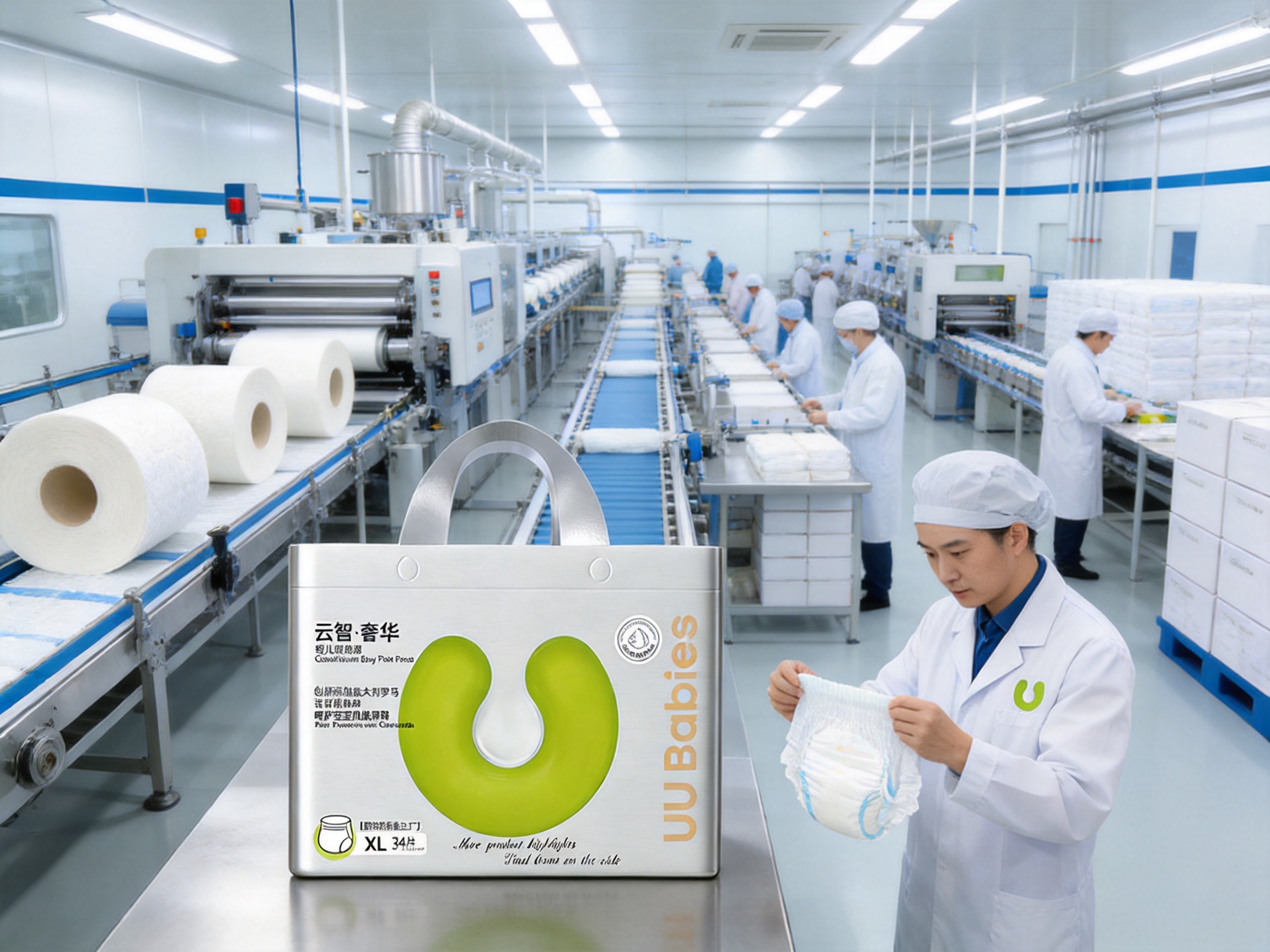
Potty Training Pull-Up Baby Diapers
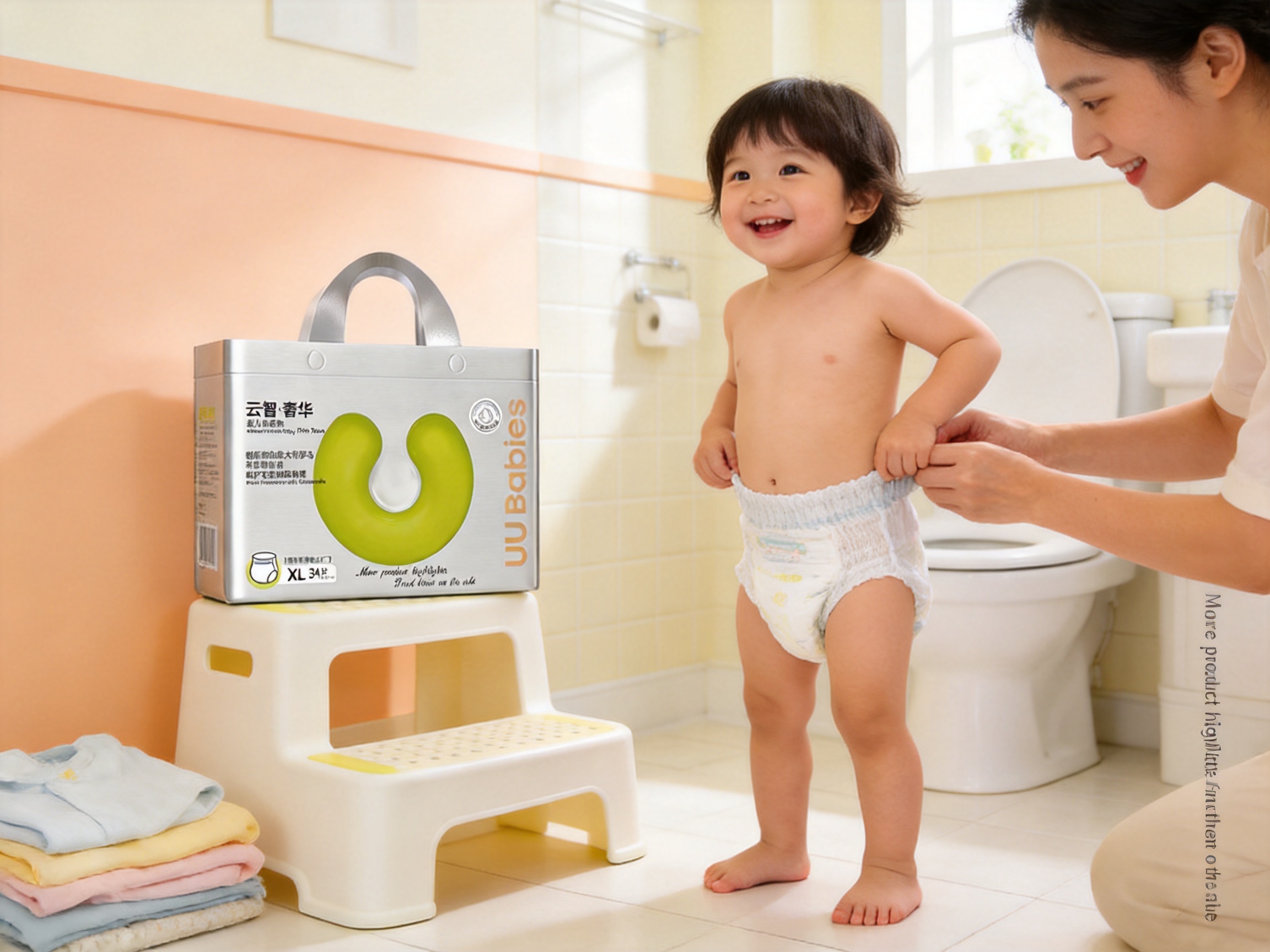
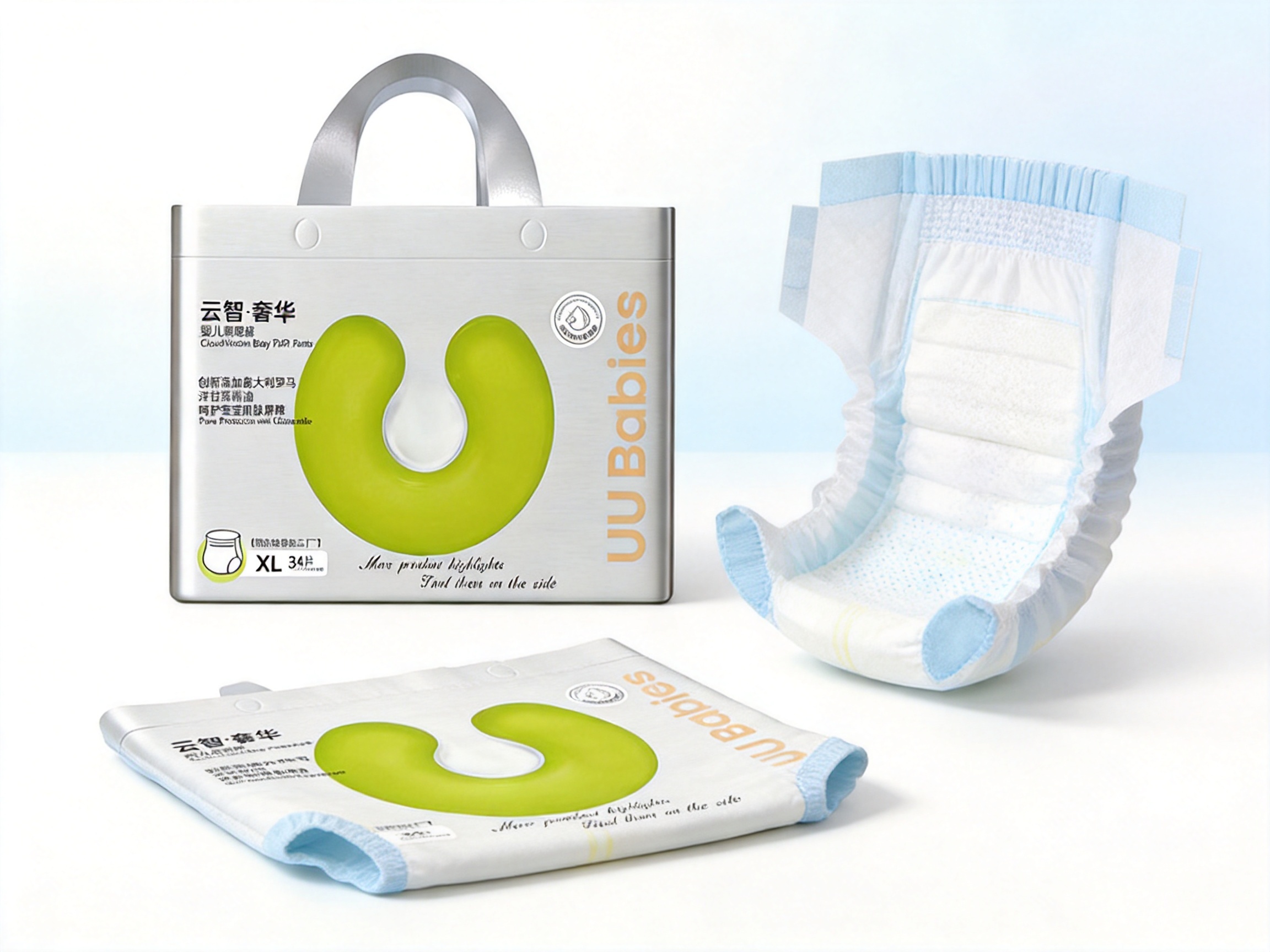
Potty training pull-up baby diapers are designed to support one of the most important transitions in early childhood: moving from traditional diaper use toward independent toileting. Unlike standard tape-style diapers, pull-up pants are worn in a manner similar to underwear. A caregiver can pull them up over the child’s legs and hips, even when the child is standing, while the sides can be torn open when a quick change is needed. This combination of underwear-like convenience, diaper-level absorbency, and flexible movement makes training pants a practical solution for toddlers, active babies, and families managing busy daily routines.
The product described in this article is a disposable training pant manufactured for professional buyers, including maternity and baby retailers, importers, private-label brands, distributors, and e-commerce sellers. It uses a non-woven outer structure and a super-absorbent polymer core to provide softness, fluid management, and protection against leakage. Its 360-degree elastic waistband helps create a secure fit, while its pull-on construction allows children to participate more naturally in dressing and toileting routines.
For buyers, product performance is only one part of the purchasing decision. Consistent manufacturing, customization capability, reliable supply, packaging flexibility, technical support, and factory experience are equally important. Zhejiang Uniquality Nursing Products Technology Co., Ltd., operating within the Kingsafe and Uniquality group, brings extensive experience in nonwoven materials, nursing products, baby diapers, pull-ups, wet wipes, and related hygiene categories. Its integrated knowledge of materials and converting processes supports the development of training pants for different markets and customer requirements.
Understanding the Role of Pull-Up Training Pants
Traditional diapers are usually secured with fastening tabs while the baby lies down. This design is highly practical for newborns and younger infants who spend much of their time lying or sitting. As children become more mobile, however, diaper changes can become increasingly difficult. Toddlers may crawl away, stand up, twist, kick, or resist remaining still during the changing process. Pull-up pants address this challenge by allowing the caregiver to change the child while standing or moving through a familiar dressing motion.
Pull-up diapers are particularly relevant from approximately six months to three years of age, although the suitable age depends on the child’s weight, body shape, development, and the specifications of the selected size. During this period, children may be learning to walk, developing awareness of wetness, showing interest in the bathroom, or beginning structured potty training. A pull-up can provide protection during this learning stage without requiring the child to return to a fully dependent changing routine.
Training pants are not merely a smaller version of ordinary underwear. A well-designed product must balance several technical requirements at once. It should be soft enough for prolonged contact with delicate skin, absorbent enough for daytime accidents and selected overnight applications, elastic enough to move with the child, and stable enough to reduce gaps around the waist and legs. It must also be easy for caregivers to put on, remove, inspect, and dispose of.
The product therefore occupies an important position between conventional diapers and washable or disposable underwear. It preserves the convenience and protective function of a diaper while introducing a more independent wearing experience. This makes it attractive not only to parents but also to retailers seeking products that serve a clearly identifiable stage of child development.
Core Product Construction
Non-Woven Fabric Outer Structure
Non-woven fabric is widely used in disposable hygiene products because it can be engineered for softness, breathability, strength, liquid handling, and comfort. In a pull-up diaper, different non-woven components may perform different roles. The topsheet is designed for skin contact and rapid fluid transfer. The backsheet helps prevent liquid from passing through to clothing. Side panels, waist areas, and leg components require flexibility and resistance to tearing during wear.
Material selection has a direct effect on the user experience. A rough or overly rigid surface may cause discomfort during movement, while insufficient strength can result in deformation when the product is pulled up or removed. A carefully balanced non-woven structure helps the pant maintain its shape while remaining light and comfortable for the child.
Manufacturing experience in nonwoven materials is a significant advantage when developing training pants. A company that understands the relationship between fiber structure, softness, air permeability, tensile strength, and liquid management can make more informed decisions than a supplier that only assembles finished components. The group’s long-term specialization in medical, nursing, maternal, baby, beauty, household, and industrial nonwoven applications provides a broad technical foundation for product development.
Super-Absorbent Polymer Core
The absorbent core is the functional center of the diaper. It typically combines absorbent pulp or related absorbent materials with super-absorbent polymer, commonly known as SAP. SAP can absorb and retain a large amount of liquid relative to its own weight. When properly distributed within the core, it helps convert liquid into a gel-like form and supports dryness during use.
Absorbency is not determined by SAP quantity alone. Core design, liquid acquisition speed, distribution, compression resistance, channel structure, and the relationship between the core and surrounding layers all influence performance. A product with a well-designed core can distribute liquid more evenly and reduce the risk of localized saturation. This is important for active toddlers who change position frequently during play, rest, or sleep.
Different markets may require different absorption levels. A lightweight daytime training pant may prioritize thinness, flexibility, and rapid changes. A nighttime version may require greater capacity and stronger leakage protection. For this reason, the final absorbency should be confirmed according to the selected product specification rather than assumed from the general category name.
Elastic Waistband and Leg Fit
A 360-degree elastic waistband is one of the main features that distinguishes pull-up pants from many traditional diaper designs. It provides stretch around the child’s waist and helps the garment remain in position as the child walks, sits, bends, runs, or climbs. The waistband must be elastic enough to accommodate movement without creating excessive pressure.
The leg openings also require careful design. Gently elasticized leg cuffs can help reduce leakage pathways while allowing freedom of movement. If the fit is too loose, liquid may escape through gaps. If the fit is too tight, the product may leave marks or cause discomfort. Size, body shape, elasticity, and product construction must be considered together.
For private-label buyers, waistband elasticity can be customized or selected from available specifications. This is commercially valuable because children in different regions may have different average body proportions, and brand owners may position their product for different age or weight ranges. Fit testing should be part of the specification-confirmation process before mass production.
Tearable Side Seams
Although pull-up pants are designed to be put on like underwear, they must also be easy to remove when soiled. Tearable side seams allow caregivers to open the product quickly without pulling a heavily soiled pant down the child’s legs. This is especially useful in childcare environments, public restrooms, travel situations, and nighttime changes.
The side seam should be secure during normal wear but easy to tear in the intended direction. A well-balanced seam reduces accidental opening while still providing a convenient removal method. This detail may appear simple, but it contributes substantially to the overall usability of the product.
Advantages Compared with Conventional Diapers
Greater Convenience for Active Children
The clearest advantage of pull-up pants is the ability to change an active child without requiring the child to lie flat. This can save time and reduce stress for caregivers. Once a child begins walking or resisting traditional changes, the pull-on format becomes especially useful. Caregivers can guide the child to step into the product, pull it upward, and adjust the waistband with minimal interruption to the child’s activity.
Conventional diapers remain highly suitable for newborns and younger babies, but they may become less convenient as mobility increases. Pull-up pants are designed specifically for this later stage. Their construction reflects the changing behavior of the child rather than treating every age group in the same way.
Support for Potty Training
Potty training involves both physical development and behavioral learning. Children need opportunities to recognize bodily signals, practice going to the bathroom, manage clothing, and understand the difference between staying dry and having an accident. Pull-up pants can support this process because they resemble underwear more closely than traditional diapers.
A child may begin learning how to pull the pant down and up with adult assistance. This can encourage participation and gradually build independence. Some products may include visual patterns, wetness indicators, or design elements selected by the brand owner to reinforce the training process, depending on the specification and target market.
Pull-ups should not be presented as a guarantee of faster toilet training. Every child develops at a different pace. Their value is that they provide a practical and protective garment while the child learns. They can reduce the consequences of accidents without completely removing the child’s opportunity to participate in toileting routines.
Freedom of Movement
Walking, crawling, climbing, dancing, and playing all place different demands on a diaper. A bulky or poorly fitting product may restrict movement or shift out of position. Pull-up pants use an elasticized design that follows the child’s body more naturally. Their low-weight construction can help the child move with less awareness of the garment.
Freedom of movement is also important for caregivers who want to maintain a child’s normal daily routine. A toddler can move from the home to a stroller, playground, daycare center, or family outing without requiring frequent adjustments caused by loose fastening tabs or displaced waist sections.
Practicality for Outings and Naps
Travel and outings often make diaper changes more demanding. A pull-up can be put on while standing and removed by tearing the sides, which is useful when changing facilities are limited. The product also provides a familiar solution for naps and rest periods when a child is still developing bladder control.
For naps and nighttime use, the appropriate absorption capacity is essential. Some pull-up specifications are intended primarily for daytime wear, while others provide increased absorbency. Buyers should match the construction to the intended use and communicate the correct usage guidance to retail customers.
Improved Retail Range Planning
For maternity and baby stores, pull-up pants complement standard tape-style diapers. Offering both categories allows retailers to serve customers through multiple developmental stages. Newborn and younger infants may use standard diapers, while older babies and toddlers may transition to pull-ups. This creates a logical product range rather than a single-product offering.
Retailers can also organize their assortment by size, absorbency, pack format, design, and price positioning. A manufacturer with OEM and ODM capability can help create different packaging or product versions for separate retail channels. This flexibility may support private-label growth and reduce the need for buyers to source every diaper category from unrelated suppliers.
Feature |
Pull-Up Training Pants |
Traditional Tape-Style Diapers |
Wearing method |
Pulls up like underwear |
Fastened with adhesive or mechanical tabs |
Best suited stage |
Walking, active, and potty-training toddlers |
Newborns, younger infants, and children who need lying-down changes |
Changing position |
Can generally be put on while standing |
Usually easiest when the child lies flat |
Removal |
Side seams can be torn open |
Fastening tabs are opened and the diaper is removed |
Movement support |
Elastic waist and pant-style fit |
Adjustable fastening structure |
Commercial role |
Complements diapers in a developmental product range |
Core product for earlier infant stages |
Product Advantages for Professional Buyers
Professional buyers evaluate more than consumer-facing features. They need confidence that the supplier can repeat the approved quality, communicate clearly, meet packaging requirements, and support the product after the initial inquiry. A training pant may perform well in a sample but still create commercial difficulties if the factory cannot maintain specifications during mass production. Manufacturing depth is therefore a major competitive advantage.
ODM and OEM Support
OEM service allows a buyer to place its own brand identity on an existing or adapted product. This may include logo application, packaging design, printed patterns, carton configuration, and product labeling. ODM service goes further by supporting product development or modification according to the buyer’s market positioning and performance requirements.
Available training pant models can provide a starting point for buyers that want to move quickly. Existing models may reduce development time and make the sample-confirmation process more efficient. At the same time, buyers that need a differentiated product can discuss adjustments to waistband elasticity, absorbency, design printing, packaging, or other specified features.
The appropriate level of customization depends on order volume, material availability, production scheduling, technical feasibility, and packaging requirements. These factors should be reviewed before final quotation and confirmed in writing before mass production.
Experience in Nonwoven and Hygiene Products
The company was founded in 1987 and has developed through research, manufacturing, and sales in medical and hygienic nonwoven materials, nursing products, and clothing interlining. This long operating history creates a broader technical background than a supplier focused only on one finished diaper model.
Its product coverage includes spunlace nonwoven fabrics, spunmelt nonwoven fabrics, hot-air-through nonwoven fabrics, flushable and degradable nonwoven materials, wet wipes, dry wipes, baby diapers, pull-ups, wet toilet paper, cleansing wipes, and other related products. Experience across these categories can support material selection and process coordination for disposable training pants.
The company reports that it has established multiple production bases in China, including facilities associated with Zhejiang, Guangdong, Jiangsu, and Hubei. A multi-base manufacturing structure may provide broader production resources and category expertise. Specific production allocation, capacity, and lead time should be confirmed for each order because they depend on the selected model, quantity, packaging, and production schedule.
Advanced International Equipment and Technology
The company has introduced production equipment and technology from Germany, France, and Italy. International equipment can contribute to process stability, converting precision, material handling, and production efficiency when properly operated and maintained. In a disposable hygiene product, precision is important because small variations in material placement, elastic tension, sealing, or cutting can affect comfort and leakage performance.
Advanced equipment alone does not guarantee a superior product. Its value depends on engineering knowledge, operator training, preventive maintenance, quality controls, and appropriate process settings. A manufacturer that combines equipment investment with long-term material expertise is better positioned to optimize the entire production system rather than relying on machinery as a substitute for technical management.
Shared Production Lines for Product Range Efficiency
The training pants are produced through shared production lines serving a broader baby diaper range, including standard diapers and pull-up pants. This type of production arrangement can offer several benefits. The factory team can work with related raw materials and product structures, while production knowledge can be transferred between diaper formats. It may also allow a supplier to support a buyer’s broader product portfolio.
For brand owners, this can simplify sourcing. A single manufacturing partner may be able to supply standard diapers for early infancy and pull-ups for later stages. Coordinated supply can support more consistent packaging quality, product documentation, and commercial communication across a brand family.
Manufacturing Process and Quality Considerations
Material Preparation
Manufacturing begins with the preparation and inspection of raw materials. Non-woven fabrics, absorbent components, SAP, elastic materials, adhesives, packaging films, and printed materials must be organized according to the approved product specification. The exact material structure varies by model and customer requirement.
Material preparation is important because the final product can only be as consistent as the components entering the line. Width, weight, softness, elasticity, moisture condition, print accuracy, and packaging dimensions may all influence production performance. Clear incoming-material procedures help identify deviations before they affect a large production batch.
Core Formation and Absorbent Assembly
During core formation, absorbent materials are arranged into a structure intended to acquire, distribute, and retain liquid. SAP must be applied consistently, and the core must be positioned correctly relative to the topsheet, backsheet, leg openings, and side panels. Depending on the design, the core may include channels or other structural features that support liquid distribution and flexibility.
Uniformity is essential. Excessive concentration in one area may produce uneven swelling, while insufficient material in another area may reduce protection. The core also needs to remain stable during handling and wear. Production controls should therefore address material feeding, positioning, compression, bonding, and alignment.
Layer Lamination and Elastic Application
After the absorbent structure is prepared, the relevant layers are joined. Adhesives or other bonding methods may be used according to the product design. Elastic strands or elastic components are introduced into the waist and leg areas to create the required stretch and recovery.
Elastic application requires careful control. If tension is too low, the waistband may not fit securely. If tension is too high, the product may feel restrictive or develop excessive gathers. The position of elastic components must also be consistent so that the finished pant sits correctly on the child’s body.
Cutting, Shaping, and Seam Formation
The continuous material structure is cut and shaped into individual training pants. Cutting accuracy affects the symmetry of the product, the shape of leg openings, and the relationship between the waist and absorbent core. Side seams are formed to create the pant structure and must balance strength with tearability.
Inspection at this stage can identify open seams, incomplete bonding, irregular cuts, displaced elastic, contamination, and other visible defects. Automated equipment may support high-speed production, while trained personnel remain important for monitoring, sampling, and responding to irregularities.
Folding and Packaging
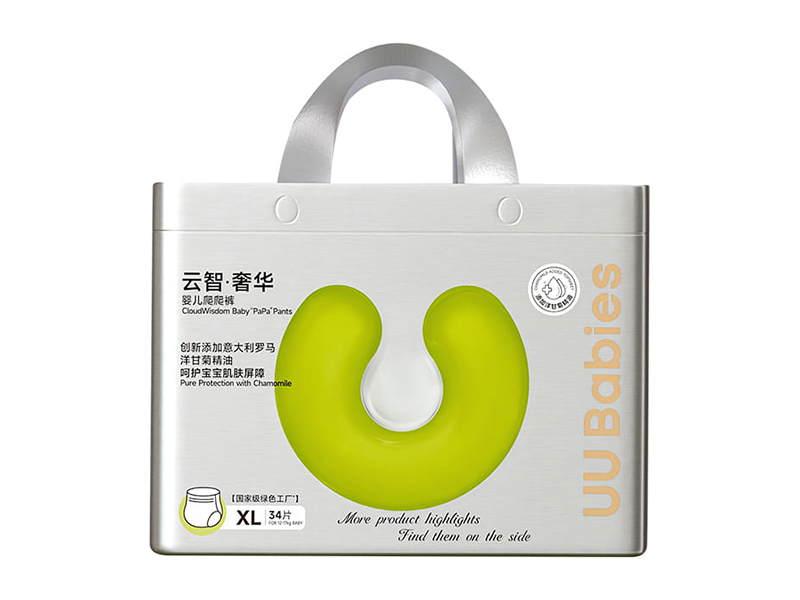
Finished pants are folded and packed according to the approved pack count and packaging design. Packaging may be customized with brand logos, product information, usage guidance, size markings, and market-specific labeling. Carton configuration can also be adapted for shipment by carton or container.
Packaging is a functional part of the product, not merely a visual element. It protects the diapers from dust, moisture, handling damage, and compression during transportation. It also communicates size, quantity, product positioning, and usage information to retailers and end users.
Inspection and Batch Consistency
Quality management should cover incoming materials, in-process production, finished products, and packaging. Typical checks may include dimensions, weight, appearance, seal integrity, elastic performance, absorbency-related testing, core alignment, odor, and packaging accuracy. The exact inspection plan should be agreed upon according to the product specification and the buyer’s quality requirements.
Batch consistency is especially important for private-label programs. A brand owner invests in customer recognition, packaging, and distribution. If the product changes noticeably between shipments, consumers may lose confidence. A stable approved sample, written specification, and documented production process help reduce this risk.
Customization Opportunities
Absorbency and Core Configuration
Buyers may request different absorption capacities for daytime, nighttime, travel, or premium product positioning. The core can be discussed in relation to the target age, size, expected wearing duration, and desired product thickness. Greater absorbency may influence cost, weight, bulk, and flexibility, so the final design should balance performance and market expectations.
Testing should be conducted using agreed methods. Laboratory absorbency results do not always represent every real-life condition, so fit evaluation and practical user feedback can also be valuable during product development.
Waistband Elasticity and Fit
Waistband elasticity can be selected to support a specific fit preference. Some brands may want a gentle, flexible waist for daytime comfort, while others may emphasize a secure fit for movement or overnight use. The waistband should be evaluated together with leg openings, core shape, and size range.
A clear size chart is essential for retailers. Product sizes may be organized by weight, age, or a combination of factors. Since children of the same age can have different body shapes, weight guidance and fit instructions are often more useful than age alone.
Pattern Printing and Visual Identity
Printed patterns can help create a recognizable product identity. Designs may be playful, minimalist, gender-neutral, educational, or aligned with a particular brand theme. Printing can also support the visual distinction between sizes or product levels.
Visual design should not compromise skin comfort, material performance, or regulatory labeling requirements in the target market. Buyers should provide approved artwork in the requested format and review proofs before production.
Packaging and Private Label Presentation
Packaging design is one of the most accessible ways for a private-label brand to differentiate its training pants. Buyers can select pack quantities, bag or box formats, carton markings, color systems, product names, and promotional claims according to their channel strategy.
Packaging should communicate the product’s actual capabilities accurately. Claims concerning absorbency, overnight use, breathability, skin friendliness, biodegradability, flushability, or other performance characteristics should be supported by the applicable specification and evidence. Accurate communication protects both the consumer and the brand owner.
Commercial Supply Model
The supplier operates as a B2B manufacturer and supports bulk supply by carton or container. It does not focus on individual retail-pack purchases. This model is appropriate for brand owners, importers, maternity and baby product distributors, large retailers, and e-commerce sellers that require recurring inventory rather than one-off consumer quantities.
Bulk purchasing can provide better planning opportunities for packaging, production scheduling, freight, and inventory management. However, buyers should evaluate forecast accuracy and storage capacity before selecting an order volume. Disposable hygiene products require clean, dry storage and careful stock rotation.
Minimum order quantity depends on the selected model, pack configuration, artwork, materials, and production plan. Buyers should request a detailed quotation that separates product specifications, packaging requirements, sampling costs if applicable, tooling or plate requirements where relevant, shipping terms, and estimated lead time.
Factory-direct cooperation can simplify communication between the brand owner and the production team. Instead of coordinating multiple intermediaries, buyers can discuss technical changes, samples, packaging, and production requirements with a manufacturer that understands the process. Clear written communication remains important, particularly when several product sizes or packaging versions are included in one program.
Recommended Cooperation Process
Step One: Initial Requirement Review
The buyer should provide the intended market, target age or weight range, estimated order volume, preferred size structure, desired absorbency, packaging concept, and expected launch timing. The more complete the initial information, the more accurately the factory can recommend an existing model or propose a customized solution.
Step Two: Model Selection or Development
The factory can identify an available model or discuss modifications. Buyers should compare the sample structure with their intended positioning. Important points include softness, thickness, waistband recovery, leg fit, side tear performance, core size, pack count, and visual appearance.
Step Three: Sample Evaluation
Samples should be assessed in practical conditions whenever possible. Evaluation may include putting the pant on a child, observing movement, checking the waistband, examining leg gaps, testing removal, and reviewing absorbency under controlled conditions. Adult handling tests are useful for construction, but child fit should be evaluated by appropriate users and under responsible supervision.
Step Four: Specification Confirmation
Before mass production, the buyer and manufacturer should confirm the product specification. This document may include size, materials, absorbency target, elastic requirements, printing, packaging, pack count, carton information, inspection requirements, and approved artwork. A retained reference sample can help both parties compare future production.
Step Five: Packaging and Artwork Approval
Packaging artwork should be reviewed for spelling, measurements, quantity, warnings, usage instructions, barcodes, importer information, and applicable market requirements. Once approved, changes may affect production timing and cost, so final approval should be controlled carefully.
Step Six: Mass Production
After specifications and packaging are confirmed, the production schedule can be arranged. The factory should manufacture according to the approved parameters and apply its internal quality procedures. The buyer may also request pre-shipment inspection or other agreed quality verification.
Step Seven: Shipment and Reorder Planning
After shipment, the buyer should monitor consumer feedback, product turnover, packaging condition, and stock levels. Reorder planning is easier when sales data is used to estimate seasonal demand and size distribution. Stable forecasting can also help the factory plan materials and production capacity more efficiently.
Sustainability and Responsible Product Communication
Disposable diapers and pull-ups are hygiene products designed for convenience and protection. Environmental considerations may influence material selection, packaging, logistics, and disposal guidance. Buyers increasingly ask about thinner designs, efficient material use, recyclable packaging, degradable components, or responsible sourcing.
Environmental claims must be specific and supported. A product should not be described as flushable, biodegradable, compostable, or environmentally harmless unless the complete product and the applicable testing or certification support that claim. A particular nonwoven layer may have one characteristic while the finished diaper has another. Clear technical communication is therefore essential.
Manufacturing efficiency can also contribute to responsible production. Stable processes may reduce material waste, defective products, and unnecessary rework. Efficient packaging and shipment planning can improve the use of transport space. These considerations should be evaluated together with hygiene performance and product safety rather than treated as isolated marketing points.
Why Manufacturing Depth Matters to Brand Owners
A pull-up diaper is a multi-layer product that requires coordinated control over materials, absorbent design, elastic components, bonding, cutting, packaging, and logistics. A supplier with experience in several related hygiene categories can often provide more complete technical support than a trading company with limited production knowledge.
The company’s long development history, nonwoven specialization, broad product portfolio, multiple manufacturing bases, and reported international equipment investment create a strong foundation for OEM and ODM cooperation. Its experience includes products for medical, maternal and baby, beauty, home, industrial cleaning, and clothing applications. This breadth suggests familiarity with different performance requirements and customer quality expectations.
For buyers, the practical advantage is the ability to discuss a product as a complete system. Material selection can be considered together with the absorbent core. Waistband elasticity can be evaluated with size and body fit. Packaging can be planned alongside production capacity. Standard diapers and pull-ups can be developed as part of one product family. This integrated approach may improve consistency and simplify long-term cooperation.
The company also maintains brand and product experience in baby and female care categories through names including Baby Engergy, Baby’s Union, Cotonage, Sweetie, U·Care, PureBest, Uniquality Kitty, and Silkpoem. Such experience can provide additional insight into consumer-oriented product presentation, although OEM buyers remain responsible for confirming the specific model and service terms required for their own projects.
Practical Guidance for Retailers and Importers
Retailers should position pull-up pants according to the child’s developmental stage. Product descriptions can explain that the pants are intended for active babies and toddlers, walking practice, potty training, outings, naps, and situations where standing changes are more convenient. Staff should also be able to explain that pull-ups and standard diapers serve different stages and may be used together within a family’s routine.
Importers should review local requirements for disposable hygiene products, labeling, packaging, chemical restrictions, product safety, and documentation. Requirements differ by market and may change over time. The manufacturer can provide product information, but the importer or brand owner should confirm the obligations that apply in the destination country.
E-commerce sellers should use accurate images, size charts, pack counts, and fit guidance. They should avoid presenting a general product description as a guarantee of performance for every child. Customer satisfaction improves when the product’s intended use, size selection, removal method, and absorbency level are explained clearly.
Brands may also consider offering several versions, such as a regular daytime training pant, a higher-absorbency option, and a premium design with enhanced softness or customized printing. Any product family should maintain a recognizable visual identity while clearly distinguishing performance and size.
Frequently Asked Questions
What are potty training pull-up baby diapers?
They are disposable training pants designed to be put on and removed like underwear. They generally include an elastic waistband, absorbent core, flexible non-woven materials, and tearable side seams. They are intended for active babies and toddlers, especially during walking and potty training stages.
How are pull-ups different from standard diapers?
Pull-ups are pulled up over the legs and hips and can usually be put on while the child is standing. Standard tape-style diapers are fastened around the child and are often easiest to change when the baby lies flat. Both products have important uses, but pull-ups are particularly convenient for mobile children.
What materials are used in the product?
The general structure uses non-woven fabric and a super-absorbent polymer core. The exact layers, elastic components, adhesives, absorbency level, and packaging depend on the specific product model and confirmed specification.
Are pull-ups suitable for overnight use?
Some specifications are designed to provide sufficient absorbency for naps or nighttime use, while others are intended mainly for daytime training. Buyers should confirm the absorption capacity and recommended usage of the selected model rather than assuming that every pull-up has the same overnight performance.
Can the waistband elasticity be customized?
Yes. Waistband elasticity is listed as a customizable feature, subject to technical feasibility, product design, order quantity, and specification confirmation. The waistband should be evaluated with the selected size, leg fit, core structure, and intended use.
Can the product carry a private label?
Yes. OEM and ODM services are supported. Customization may include brand logo, printed patterns, packaging design, pack configuration, absorbency, waistband elasticity, and other agreed product details.
Are samples available?
Free samples are available for existing models, according to the stated supply policy. Customized samples may require additional discussion depending on artwork, materials, tooling, or development requirements.
What is the minimum order quantity?
The minimum order quantity depends on the product model, size, packaging, artwork, and production arrangement. Buyers should consult the sales team with their intended specifications and estimated quantity.
Does the factory sell individual retail packs?
The supplier is a B2B manufacturer focused on bulk orders by carton or container. Individuals seeking small quantities should purchase through retail channels. The factory welcomes inquiries from brands, importers, maternity and baby retailers, distributors, and e-commerce sellers.
Can standard diapers and pull-ups be sourced together?
The production system covers both standard diapers and pull-up pants. Buyers can discuss a broader baby diaper product range with the factory, subject to model availability, production scheduling, packaging, and order requirements.
How should buyers begin a project?
A practical starting point is to provide the target market, product type, size range, absorbency expectation, packaging concept, estimated quantity, and desired delivery schedule. The factory can then recommend an existing model or discuss an ODM/OEM development path.
Conclusion
Potty training pull-up baby diapers combine the protection of disposable absorbent products with the convenience of underwear-style dressing. Their elastic waistband, tearable sides, non-woven structure, and SAP absorbent core make them suitable for active babies, walking practice, potty training, outings, naps, and modern childcare routines.
Compared with conventional tape-style diapers, pull-ups offer particular advantages when a child resists lying down for changes or needs to participate more actively in dressing and toileting. They also give retailers a natural product category for toddlers and help brands extend their baby-care range beyond early infancy.
For professional buyers, the strength of the product depends on the manufacturing system behind it. Long-term nonwoven expertise, broad hygiene-product experience, international production equipment, shared diaper and pull-up lines, OEM and ODM capability, and factory-direct bulk supply provide a substantial platform for private-label cooperation. Product success still requires careful sample evaluation, specification confirmation, quality control, compliant labeling, and realistic communication of performance.
With the correct fit, absorbency level, packaging, and market positioning, pull-up training pants can become a valuable addition to a complete maternal and infant product portfolio. They support children during a significant developmental stage while giving caregivers a more convenient, flexible, and confident way to manage everyday changes.
References
1. Company-provided product information for disposable potty training pull-up baby diapers, including materials, applications, features, customization options, and supply conditions.
2. Company-provided corporate information concerning the history, production bases, nonwoven-material expertise, hygiene product portfolio, and OEM/ODM capabilities of Zhejiang Uniquality Nursing Products Technology Co., Ltd.
3. General technical principles of disposable hygiene product construction, including non-woven layers, absorbent cores, super-absorbent polymers, elastic components, side seams, and packaging processes.
4. General product-development principles for private-label disposable hygiene products, including sample approval, specification confirmation, quality inspection, packaging review, and bulk supply planning.