中文简体
中文简体 English
 日本語
日本語 русский
 Español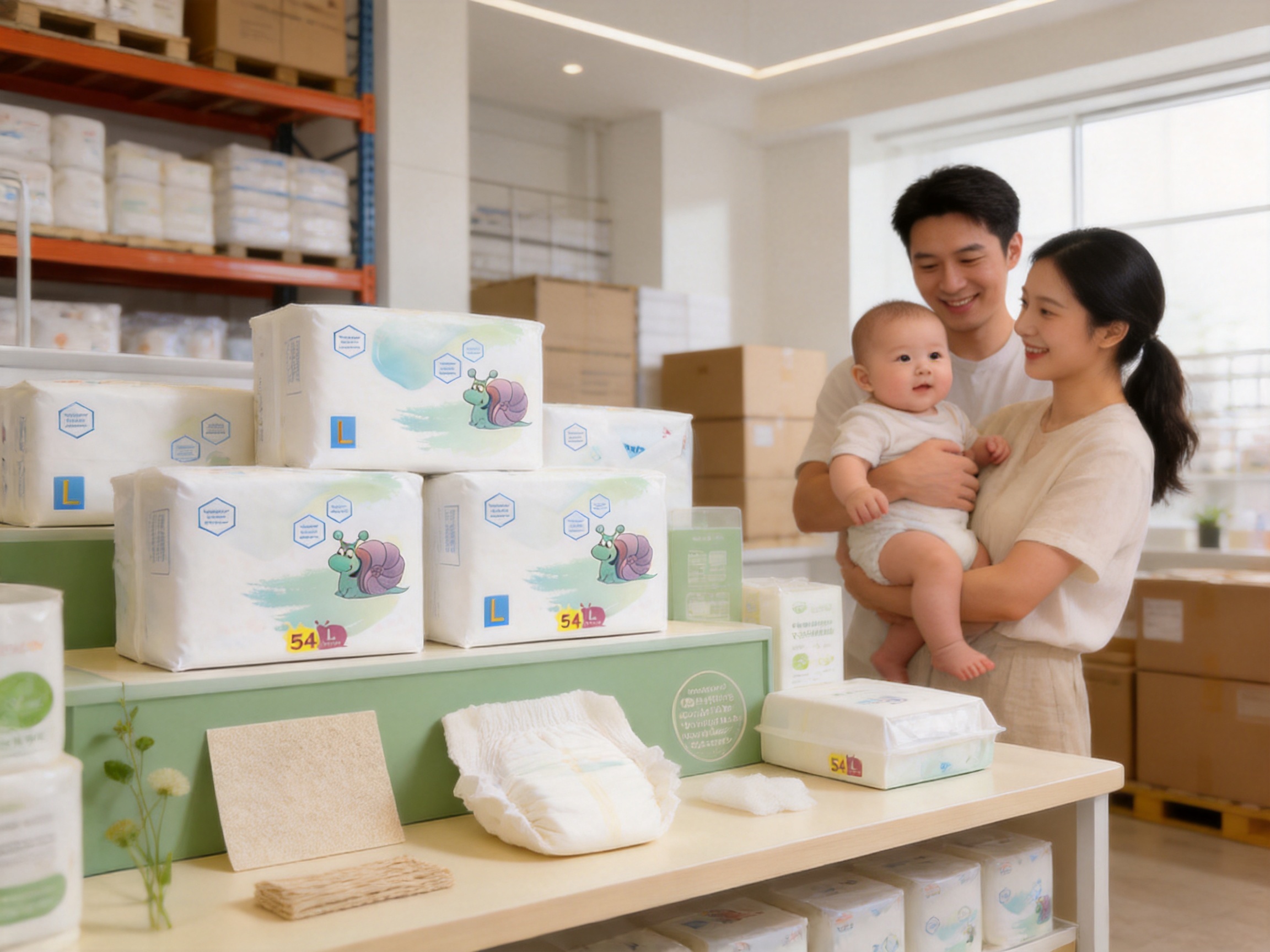
Choosing the right diaper is one of the most important decisions for parents, retailers, and baby-care brands. A baby diaper must provide reliable absorption while remaining soft, breathable, comfortable, and secure during movement. It must also help protect sensitive skin from prolonged contact with moisture. For retailers and private-label brands, the product must meet additional requirements, including consistent quality, stable supply, attractive packaging, customization flexibility, and compliance with the regulations of different markets.
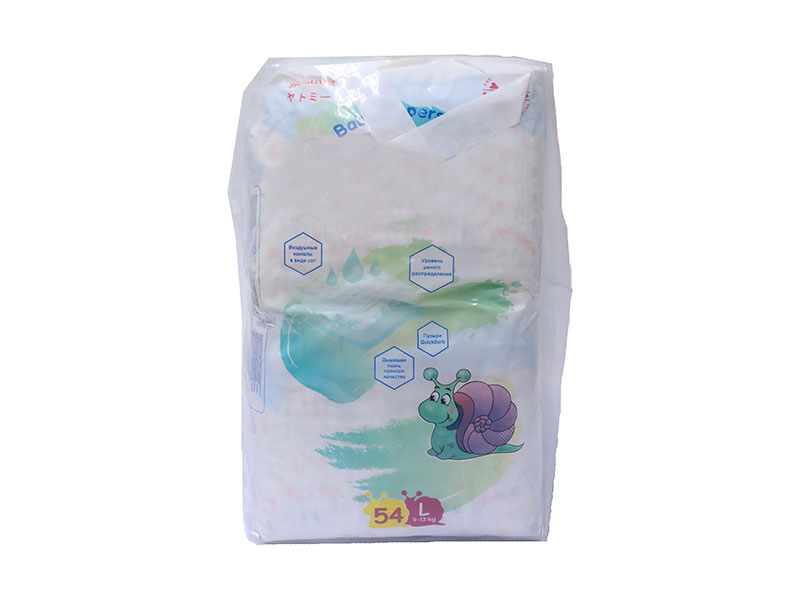
Natural baby diapers are designed to respond to these needs by combining skin-friendly materials, efficient absorbent structures, breathable components, and practical leak protection. They are positioned between basic economic diapers and premium high-performance products, offering a balanced solution for customers who want improved comfort and absorption without unnecessary complexity or excessive cost.
Manufactured by Zhejiang Uniquality Nursing Products Technology Co., Ltd., under the Kingsafe and Uniquality group, these natural baby diapers are supported by extensive experience in nonwoven materials, disposable hygiene products, research and development, and large-scale OEM and ODM production. The company’s capabilities cover material development, product design, manufacturing, testing, packaging, and global supply coordination.
This article explains the structure, performance, advantages, manufacturing strengths, customization options, and commercial applications of natural baby diapers. It is intended for baby-care brands, importers, distributors, retailers, wholesalers, and other organizations seeking a dependable diaper manufacturing partner.
Understanding Natural Baby Diapers
Natural baby diapers are baby-care products developed with an emphasis on gentle materials, comfortable contact with the skin, breathability, and efficient moisture management. The term “natural” generally refers to the product concept and material selection rather than suggesting that every component is completely biodegradable or made entirely from plant-based materials. A modern diaper still requires engineered materials to provide absorbency, structural stability, leakage prevention, and hygienic protection.
In a natural baby diaper, the components are selected and arranged to create a softer and more comfortable wearing experience. The top sheet may use a skin-friendly nonwoven material, while the absorbent core combines fluff pulp with super absorbent polymer, commonly known as SAP. A breathable back sheet can help improve air circulation and reduce the feeling of heat and humidity inside the diaper.
The product is also designed to support newborn and infant skin. Babies have delicate skin that may be more vulnerable to friction, moisture, heat, and irritating substances. For this reason, diaper design must consider not only how much liquid the product absorbs, but also how quickly the liquid is distributed, how well the surface remains dry, and how effectively the diaper maintains its shape during use.
Natural baby diapers can be suitable for everyday use, newborn care, daycare, travel, overnight use, and private-label product lines. The exact construction can be adjusted according to the required size, target market, price position, absorbency level, packaging format, and certification requirements.
Product Structure and Functional Design
A diaper is a multilayer product. Each layer has a specific purpose, and the overall performance depends on how well the layers work together. A carefully designed diaper should transfer liquid away from the baby’s skin, distribute it across the absorbent core, retain it under pressure, and prevent leakage at the legs and waist.
Skin-Friendly Top Sheet
The top sheet is the layer that comes into direct contact with the baby’s skin. Natural baby diapers can use soft nonwoven materials designed to reduce friction and improve comfort during prolonged wear. The surface should allow liquid to pass through quickly while minimizing the amount of moisture that remains in contact with the skin.
A natural plant-based top-sheet concept may be selected for brands that want to emphasize gentle materials and a more natural product identity. According to the product specification, the top sheet is designed without fluorescent substances and harmful chemicals. Material selection can be reviewed and adjusted according to the customer’s market positioning and regulatory requirements.
A comfortable top sheet should also retain its softness after contact with liquid. If the surface becomes rough, stiff, or heavily wrinkled, it may increase friction and cause discomfort. For this reason, the texture, fiber arrangement, surface treatment, and bonding method are important elements of product development.
Acquisition and Distribution Layer
The acquisition and distribution layer helps move liquid from the top sheet into the absorbent core. It can improve the speed of liquid transfer and support more even distribution across the diaper. Without effective liquid distribution, the absorbent material may become overloaded in one area while other areas remain unused.
The product structure described for this regular diaper increases the SAP content and adds a layer between the fluff pulp and SAP. This structure helps liquid move more efficiently through the absorbent core. As a result, absorption can be faster and more effective than that of a basic economic diaper, depending on the final material combination and performance specifications.
Improved distribution is particularly important when a baby changes position, sits, crawls, or sleeps. Liquid should not remain concentrated in a small area. A well-designed absorbent system helps maintain better balance across the core and can reduce the risk of localized leakage.
Absorbent Core
The absorbent core is the main liquid-management component of the diaper. It usually combines fluff pulp and SAP. Fluff pulp helps distribute and temporarily hold liquid, while SAP absorbs liquid and retains it in a gel-like form.
The balance between fluff pulp and SAP influences absorption speed, retention, flexibility, thickness, and cost. Increasing the SAP content can improve liquid retention and support a thinner product, although the entire structure must be engineered carefully. Excessive SAP without sufficient liquid distribution may reduce performance in some conditions. Therefore, the core design should be evaluated as a complete system rather than by focusing on one material alone.
For the natural baby diaper, the absorbent structure is designed to offer improved performance over an economic diaper while maintaining a practical price position. It aims to provide faster absorption, better liquid management, and more comfortable wear for babies during normal daily activities.
Breathable Back Sheet
The back sheet forms the outer layer of the diaper. It helps prevent liquid from passing through to clothing or bedding while allowing water vapor and air to move through the material where appropriate. A breathable back sheet can help reduce heat and humidity inside the diaper, contributing to a more comfortable wearing environment.
Breathability is especially valuable in warm climates, during active movement, and when a diaper is worn for an extended period. However, breathability must be balanced with waterproof performance. The back sheet must provide an effective barrier against liquid while maintaining the desired level of air permeability.
Material selection, film technology, lamination, bonding, and quality control all influence the final performance of the back sheet. The company’s experience in nonwoven material manufacturing provides a strong foundation for coordinating these components in the finished diaper.
Leg Cuffs and Leak Guards
Three-dimensional leak guards help create a barrier along the inner leg area. These raised barriers are designed to guide liquid toward the absorbent core and reduce the chance of leakage when the baby moves. Elastic elements can help the diaper follow the shape of the baby’s legs without excessive pressure.
Good leak guards should remain effective while allowing the baby to move naturally. If they are too loose, leakage may occur. If they are too tight, they may leave marks or cause discomfort. The correct combination of elastic strength, cuff height, material softness, and product sizing is therefore essential.
Waistband and Fastening System
The waistband helps keep the diaper positioned securely around the baby’s waist. It should provide a stable fit without creating unnecessary pressure. Adjustable fastening systems allow caregivers to adapt the diaper to different body shapes and stages of development.
For private-label products, the fastening arrangement, waistband design, graphic placement, and size markings can be customized. These options enable brands to create products for newborns, infants, crawlers, toddlers, and different regional sizing systems.
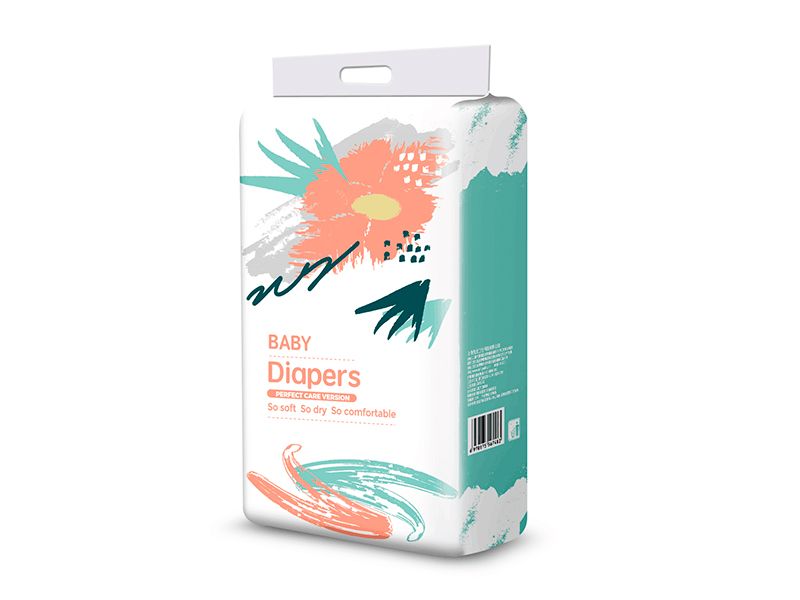
Natural baby diapers
Absorption Performance and Moisture Management
Absorption is one of the most important performance indicators for any baby diaper. However, total absorption capacity alone does not fully describe the user experience. Parents also care about absorption speed, surface dryness, rewet resistance, distribution, leakage prevention, and how the diaper feels after absorbing liquid.
Faster Liquid Transfer
The natural baby diaper uses an absorbent structure that increases the role of SAP and introduces a layer between the fluff pulp and SAP. This design supports more efficient liquid movement through the core. When liquid spreads more effectively, the SAP can be used more evenly, which may improve overall absorption behavior.
Faster liquid transfer can help reduce the time during which moisture remains near the baby’s skin. It may also reduce the risk of liquid accumulating in one concentrated area. This is important during repeated wetting, nighttime use, or periods of active movement.
Anti-Back-Osmosis Performance
Anti-back-osmosis performance refers to the ability of a diaper to reduce liquid returning to the surface after absorption. A diaper may appear to absorb liquid successfully, but if pressure causes liquid to move back toward the top sheet, the baby’s skin may still be exposed to moisture.
The product is designed with high absorption and anti-back-osmosis characteristics. The actual performance depends on the final specification, absorbent material ratio, core construction, pressure conditions, and test method. During product development, these factors can be evaluated to align the diaper with the customer’s target market and intended use.
Absorption and Comfort Balance
A diaper should not simply contain as much absorbent material as possible. A very thick or rigid core may limit flexibility and make the product less comfortable. A more effective design aims to combine absorbency with softness, thinness, flexibility, and a stable fit.
The natural baby diaper is developed as a regular-quality product with an improved absorbent structure compared with an economic diaper. This positioning creates a balance between functional performance and commercial practicality. It can be suitable for brands that want to offer customers a noticeable upgrade in comfort and absorption while keeping the product accessible to a broad consumer group.
Comfort and Protection for Sensitive Skin
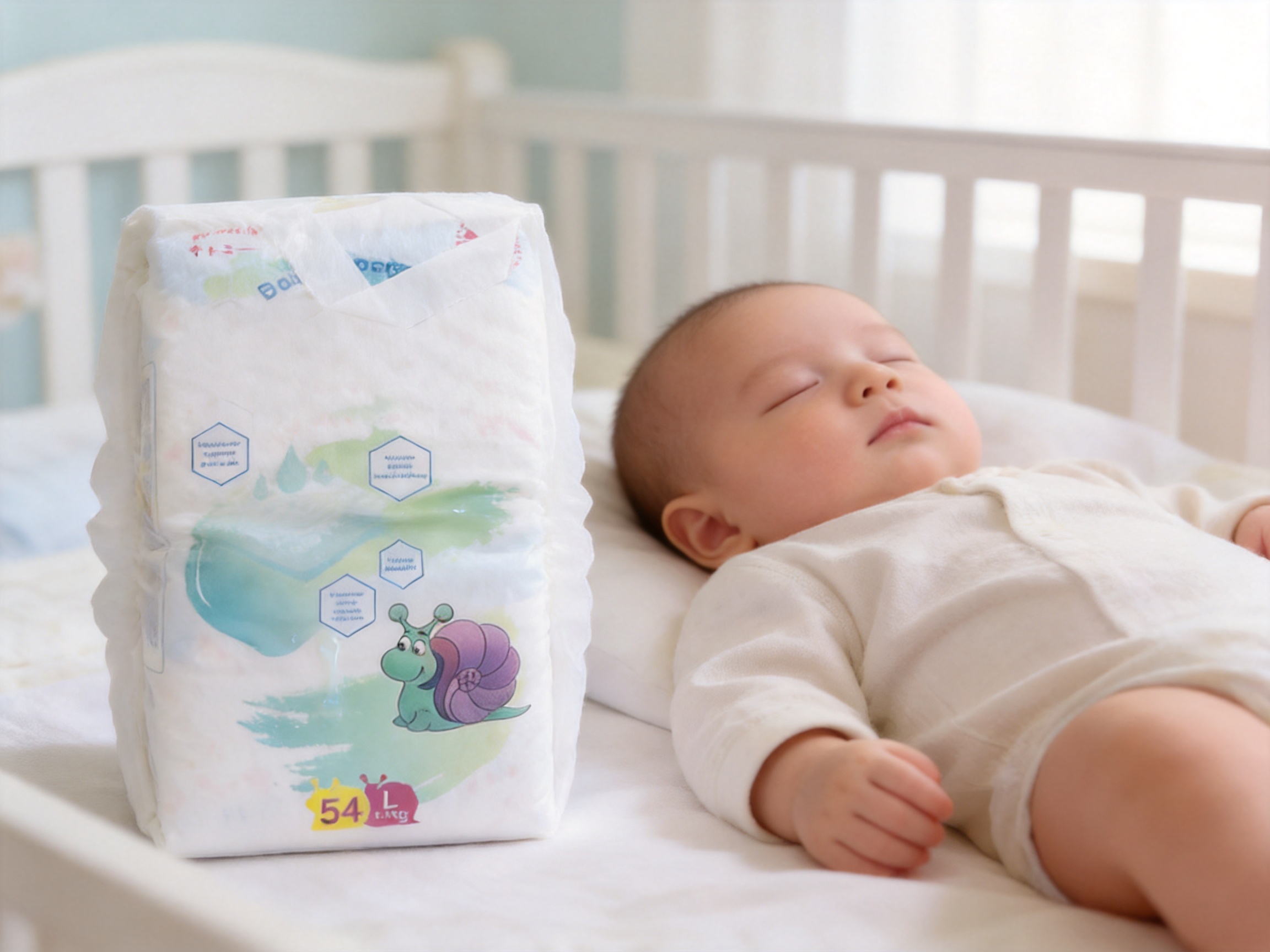
Baby skin is sensitive to friction, heat, moisture, pressure, and unsuitable chemical residues. A diaper therefore needs to be soft and comfortable throughout its entire use period. Natural baby diapers address this requirement through the combination of a gentle top sheet, breathable components, flexible construction, and moisture-management performance.
Soft Surface Contact
The top sheet should feel smooth and soft against the skin. A carefully selected nonwoven material can help reduce the rough sensation sometimes associated with low-cost diaper surfaces. Fiber type, basis weight, web structure, embossing, and bonding conditions all contribute to surface softness.
Softness is also connected to the fit of the product. Even a soft material can cause discomfort if the diaper wrinkles, bunches, or presses against the skin. The product structure is designed to help reduce wrinkling and strangling around the baby’s body, supporting a more comfortable experience during movement.
Breathability and Heat Management
A breathable diaper can help create a more comfortable microenvironment between the product and the baby’s skin. Air and water vapor movement may help reduce the feeling of excessive heat and humidity, especially in warm weather or when the diaper is worn for longer periods.
Breathability should not be treated as a substitute for regular diaper changes. Caregivers should still change diapers promptly after wetting or soiling. Nevertheless, a breathable design can support better daily comfort and may help reduce conditions associated with skin discomfort.
pH-Balanced Rash Protection Concept
The product specification includes pH-balanced rash protection. A pH-balanced design is intended to support a skin-friendly environment and help reduce the potential for irritation associated with moisture and prolonged contact. The final claim and testing approach should always follow the requirements of the destination market.
Diaper rash can have many causes, including moisture, friction, sensitivity, infection, allergies, and infrequent changes. No diaper can guarantee that rash will never occur. However, a product with a soft surface, effective absorption, reduced rewet, breathable materials, and suitable fit can contribute to a more comfortable daily care routine.
Reduced Wrinkling and Pressure
Wrinkling can concentrate pressure on specific areas of the baby’s body. It may also cause gaps between the diaper and the skin, increasing the risk of leakage. A stable core, flexible construction, suitable elastic design, and accurate sizing can help the diaper remain more evenly positioned.
The natural baby diaper is designed to be comfortable for babies to wear and less likely to wrinkle or strangle the baby. This feature is particularly relevant for active babies who crawl, stand, walk, and change position frequently.
Comparison with Economic and Premium Diapers
Product comparison should be based on the complete structure rather than on a single advertising claim. Economic diapers typically focus on affordability and basic functionality. Premium diapers may use more advanced materials, specialized core structures, enhanced graphics, and additional comfort features. Natural baby diapers are positioned as a balanced regular-quality solution with improved absorption and skin-comfort characteristics.
| Performance Area | Economic Diaper | Natural Baby Diaper | Premium Diaper |
|---|---|---|---|
| Primary Positioning | Basic daily protection and cost efficiency | Balanced comfort, absorption, and value | Enhanced comfort and specialized performance |
| Absorbent Structure | Standard fluff pulp and SAP configuration | Increased SAP content with an additional liquid-distribution layer | Advanced core design selected for high-performance requirements |
| Liquid Distribution | Functional for ordinary use | Designed for faster and more even liquid movement | May include highly specialized distribution and retention systems |
| Surface Comfort | Basic nonwoven surface | Softer, skin-friendly surface options | Premium softness and specialized surface treatments |
| Breathability | Depends on the selected specification | Breathable back-sheet options available | Advanced breathable materials may be selected |
| Leak Protection | Standard leg and waist protection | Three-dimensional leak guards and adjustable fit | Enhanced fit systems and high-performance leakage control |
| Commercial Value | Focused on the lowest purchase cost | Designed to provide improved performance at a practical price level | Higher material and development cost |
| Customization | Often limited | Size, structure, packaging, and branding can be customized | Broad customization, usually with higher development requirements |
This comparison shows why the regular natural baby diaper can be attractive to a wide range of businesses. It provides more than basic protection while remaining suitable for brands that need competitive pricing and dependable volume production. At the same time, customers can request upgraded specifications when their market requires higher absorbency, specialized materials, or premium packaging.
Advantages for Baby-Care Brands and Retailers
Natural baby diapers offer more than consumer-facing benefits. They can also provide important commercial advantages for companies developing or expanding a baby-care product range.
Balanced Market Position
Many consumers want improved quality but remain sensitive to price. A regular diaper with enhanced SAP content, better liquid mobility, skin-friendly materials, and breathable construction can serve this middle market effectively. It can be presented as an everyday product that offers dependable comfort without the high price associated with some premium products.
Private-Label Branding
Private-label diapers allow retailers, distributors, and specialist baby-care brands to offer products under their own identity. Packaging, product naming, graphics, size range, and market positioning can be developed according to the customer’s strategy.
A private-label program can help businesses build brand recognition and reduce dependence on national or international diaper brands. It also allows a company to create a consistent product family, including newborn diapers, regular baby diapers, pull-up pants, training pants, wipes, and related hygiene products.
Flexible Product Development
Different markets have different requirements. Some customers prioritize thinness, while others focus on overnight absorbency, natural materials, low cost, or colorful packaging. Through OEM and ODM services, the product can be adjusted to match the intended market and customer profile.
Customization may include diaper size, absorbency level, core structure, top-sheet material, back-sheet design, elastic strength, fastening system, packaging format, printing, and carton configuration. These options enable customers to develop a product rather than simply purchase an unchanged standard item.
Reliable Supply Planning
Large-scale manufacturing capacity is important for brands that need stable supply. Production planning must consider raw-material availability, manufacturing schedules, inspection, packaging, storage, and delivery. A supplier with an integrated industrial chain can coordinate these stages more efficiently than a company that depends entirely on external vendors.
Zhejiang Uniquality Nursing Products Technology Co., Ltd. operates within a group with extensive experience in nonwoven fabrics and disposable hygiene products. Its production capabilities cover raw-material development, nonwoven manufacturing, finished diaper production, testing, and OEM or ODM cooperation.
Advanced Manufacturing Capabilities
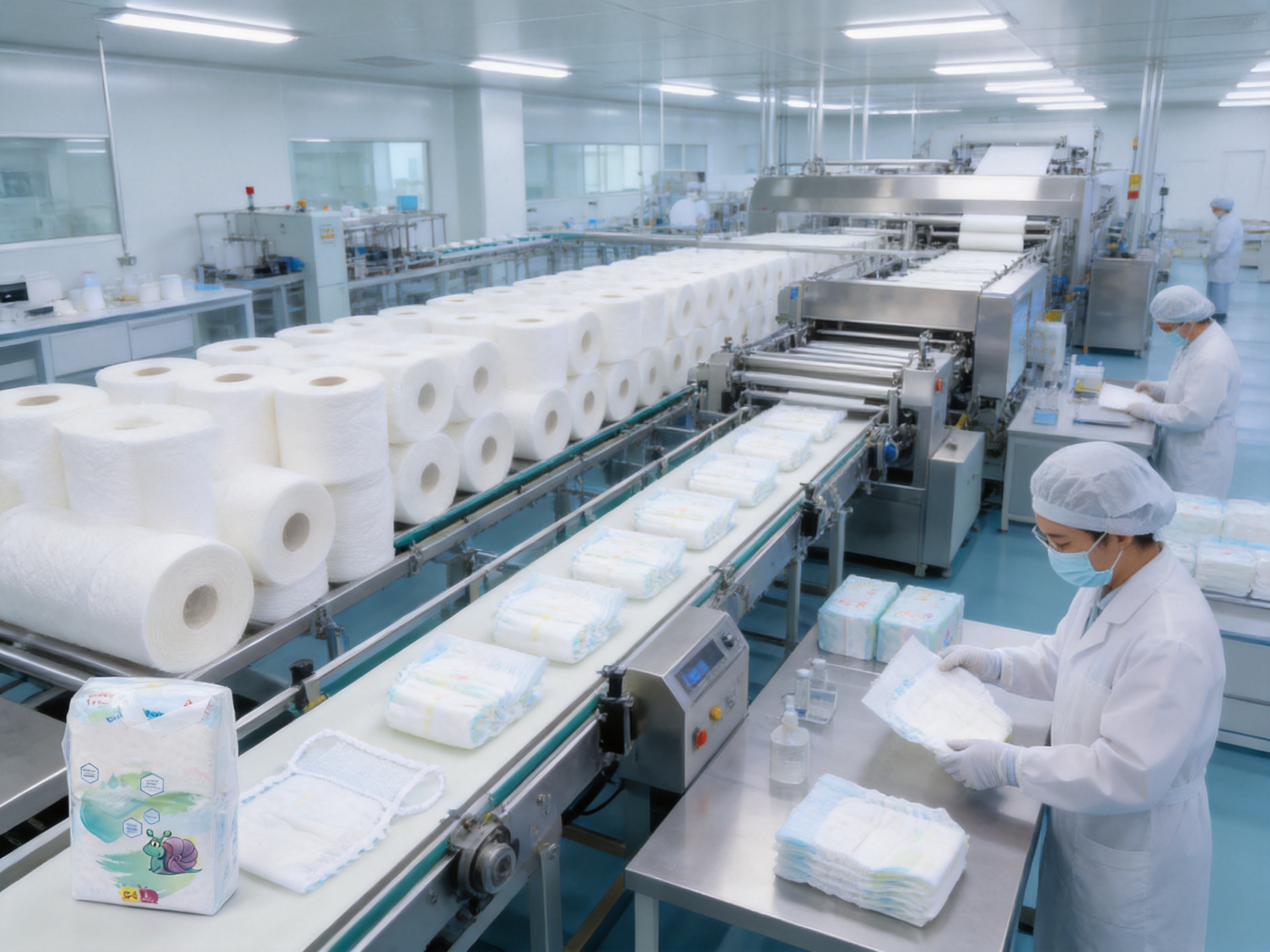
The performance of a diaper depends not only on its design but also on manufacturing consistency. A well-designed product may fail to meet expectations if material weights fluctuate, adhesive application is unstable, elastic placement is inaccurate, or packaging controls are weak. Advanced manufacturing processes help translate the product specification into a consistent finished diaper.
Integrated Industrial Chain
Kingsafe and Uniquality have developed an integrated industrial chain covering nonwoven materials, wipes, diapers, and other hygiene products. This integration supports closer control of material selection and product development. It also enables the company to coordinate different components more efficiently during OEM and ODM projects.
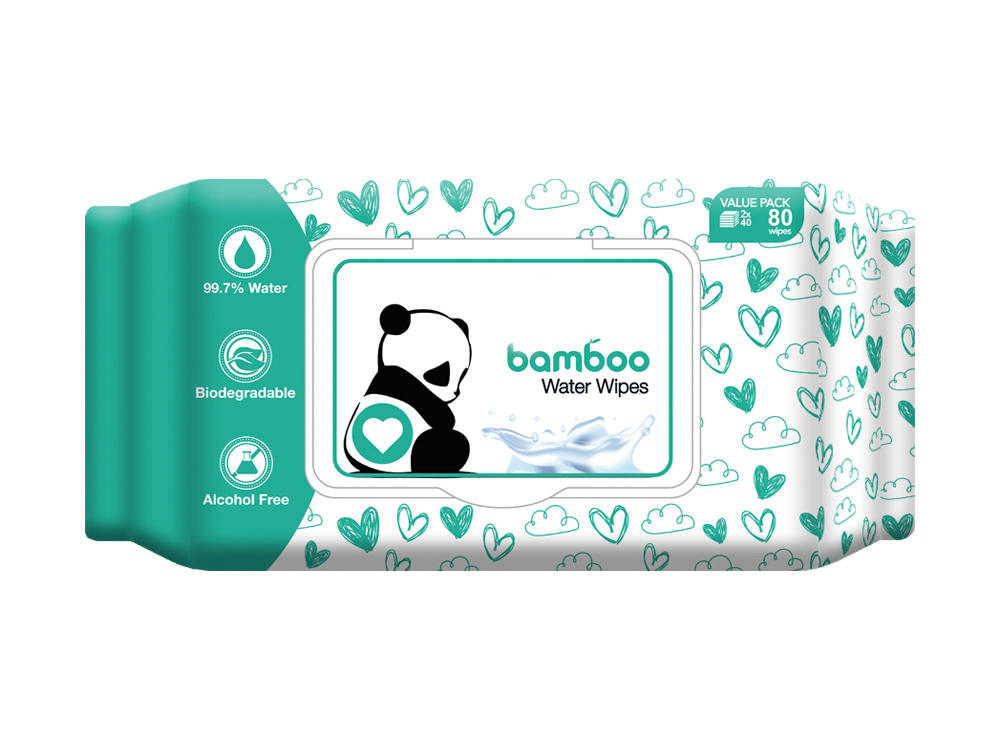
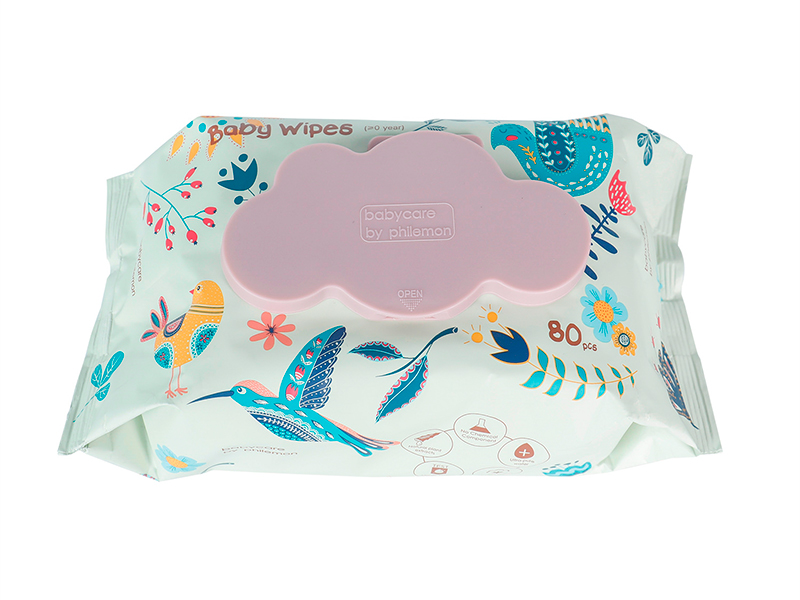
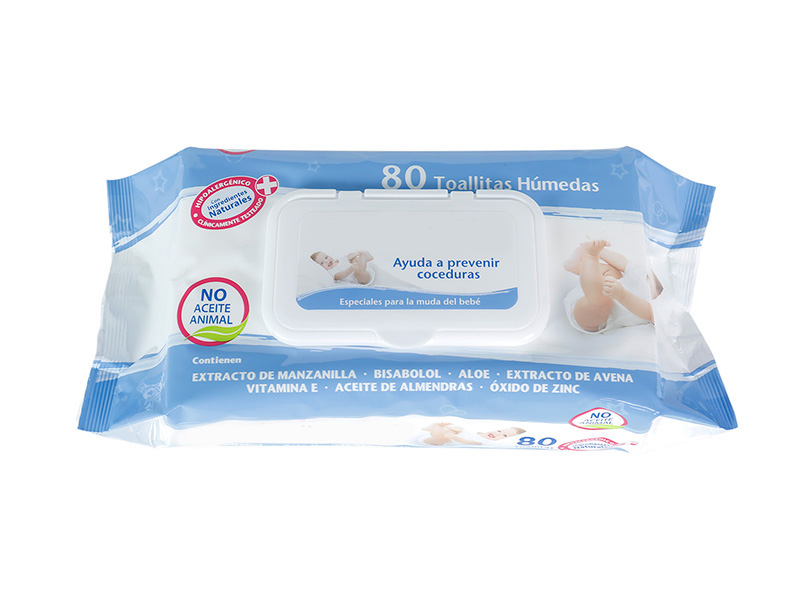
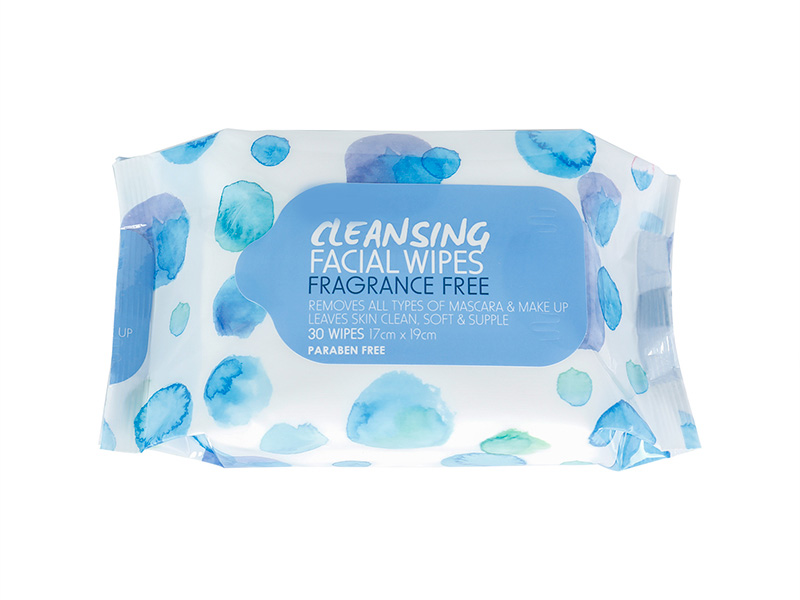
The company’s product range includes spunlace nonwoven fabrics, spunmelt nonwoven fabrics, hot-air-through nonwoven fabrics, flushable and degradable nonwoven materials, wet wipes, dry wipes, wet toilet paper, cleansing wipes, baby diapers, pull-ups, and other hygiene products.
Experience across these product categories creates opportunities for cross-category innovation. Knowledge of nonwoven fiber structures, liquid handling, softness, strength, bonding, and converting can be applied to the development of baby diapers and related products.
Multiple Production Bases
The company was founded in 1987 and has established eight domestic production bases in China, including facilities associated with Zhejiang, Guangdong, Jiangsu, and Hubei. An upcoming factory in Vietnam is intended to further support international manufacturing and supply needs.
Multiple production locations can provide advantages in capacity planning, regional supply coordination, product development, and business continuity. For international customers, a broader manufacturing network may also support more flexible project scheduling and future expansion.
Clean Manufacturing Environment
The company’s production facilities include 100,000-class GMP clean workshops. Clean production environments are important for disposable hygiene products because they help control dust, airborne particles, environmental conditions, and manufacturing hygiene.
A controlled workshop does not replace finished-product testing or good material management. Instead, it forms part of a complete quality system that includes personnel procedures, equipment maintenance, process monitoring, sanitation, storage, inspection, and documentation.
Purified Water System
The manufacturing system includes a purified water facility built to pharmacopoeia standards. Purified water is particularly relevant to wet wipes and other products that use water-based formulations. Although natural baby diapers do not use water in the same way as wet wipes, the availability of advanced water-treatment infrastructure demonstrates the company’s broader hygiene-product manufacturing capabilities.
Professional Testing Center
A professional testing center supports the evaluation of raw materials, semi-finished products, and finished goods. Product testing may cover dimensions, basis weight, absorption capacity, absorption speed, rewet, leakage, tensile strength, softness, adhesive performance, elastic performance, packaging integrity, and microbiological indicators where applicable.
The exact test program should be determined according to the product specification, customer requirements, and destination-market regulations. A structured testing process helps identify variation and confirms that the finished product remains within agreed parameters.
Research and Development
The company has developed a substantial intellectual property portfolio, supported by 169 patents. These patents reflect long-term investment in material technology, hygiene products, manufacturing methods, and related fields. Research and development capability is valuable for customers that require non-standard specifications or wish to create a differentiated product line.
During development, the technical team can assess the customer’s target market, price range, performance requirements, packaging concept, and compliance needs. The team can then recommend a suitable combination of materials and construction features.
OEM and ODM Services for Natural Baby Diapers
OEM and ODM cooperation allows a customer to launch natural baby diapers under its own brand while using the manufacturer’s technical and production resources. The degree of support can range from straightforward private-label manufacturing to complete product development.
OEM Manufacturing
In an OEM project, the customer may provide a product concept, specification, brand identity, and packaging requirements. The manufacturer then produces the diapers according to the agreed design and quality standards.
OEM manufacturing is suitable for established brands that already understand their market and want a dependable production partner. It can also be suitable for distributors and retailers that have clear requirements but do not operate their own diaper factory.
ODM Development
In an ODM project, the manufacturer contributes more directly to product design and development. The technical team can help select materials, determine the absorbent core structure, propose sizing, recommend packaging options, and prepare samples for evaluation.
ODM cooperation can shorten the development process, especially for businesses entering the baby-care market for the first time. It also enables customers to use the manufacturer’s experience in nonwoven materials, disposable hygiene products, testing, and production engineering.
Customization Options
Available customization options for natural baby diapers include:
- Diaper size and product structure adjustment
- Absorbency performance customization
- Material selection and surface design
- Top-sheet and back-sheet specifications
- Elastic waistband and leg-cuff configuration
- Packaging design and private-label printing
- Individual pack and carton quantity planning
- Product quantity planning based on project requirements
- Support for different market regulations and certification requirements
Customers may also request different graphic styles, color systems, product naming, package formats, and retail presentations. The final options depend on order quantity, material availability, production planning, and technical feasibility.
From Concept to Finished Delivery
A professional OEM or ODM project usually follows several stages. First, the customer defines the target market, product position, desired sizes, absorbency level, packaging concept, and expected order volume. Second, the manufacturer reviews the requirements and proposes a technical solution. Third, samples are produced for evaluation.
After sample approval, the parties confirm the final specification, packaging artwork, quality standards, testing requirements, commercial terms, and delivery schedule. Bulk production then begins under controlled manufacturing conditions. Finished products are inspected, packed, stored, and prepared for shipment.
This integrated process helps reduce communication gaps between product design, material procurement, production, and packaging. It also gives customers a clearer path from an initial idea to a market-ready product.
Quality Control Throughout Production
Quality control should begin before production rather than only at the final inspection stage. For a baby diaper, every major component can influence comfort, absorption, fit, and safety. A systematic quality program therefore needs to address raw materials, manufacturing processes, finished products, and packaging.
Raw-Material Inspection
Raw materials may include nonwoven fabrics, fluff pulp, SAP, breathable films, elastic components, adhesives, fastening materials, acquisition layers, release paper, and packaging materials. Inspection can confirm material identity, specifications, appearance, weight, strength, and other agreed indicators.
Material documentation and supplier management are also important. Stable raw-material sources help reduce variation and support more consistent production. If a customer requires particular fibers, plant-based materials, fragrance-free options, or other specifications, these requirements should be confirmed during the development stage.
Process Monitoring
During production, process monitoring can cover material feeding, core forming, SAP distribution, cutting, bonding, elastic placement, folding, fastening, and packaging. Automated equipment can help improve precision and production speed, while trained personnel monitor the line and respond to abnormalities.
Consistent SAP distribution is particularly important. Uneven distribution may cause differences in absorption performance, thickness, or flexibility. Core alignment must also remain stable so that the product provides appropriate protection in the front, center, and rear areas.
Finished-Product Testing
Finished diapers can be evaluated against the customer’s agreed specification. Potential test items include product dimensions, absorbency, rewet, leakage, surface condition, tensile strength, elastic recovery, odor, appearance, packaging, and cleanliness.
Testing methods should be selected according to the customer’s target market and the applicable standards. Results can be recorded and used to confirm batch consistency. If the product is intended for a specific country or region, local regulatory and labeling requirements should be reviewed before commercial production.
Packaging Inspection
Packaging protects the diapers during transportation and storage while also communicating essential information to consumers. Packaging inspection can confirm print quality, color consistency, sealing, quantity, barcode accuracy, product information, size labeling, and carton strength.
Private-label customers should carefully review packaging artwork before production. Important information may include size, quantity, usage instructions, material descriptions, manufacturer details, warnings, disposal information, and required regulatory statements.
Environmental and Natural-Product Considerations
Consumers increasingly want baby-care products that are gentle for babies and more responsible toward the environment. Natural baby diapers can support this market direction through material selection, responsible production practices, efficient packaging, and transparent communication.
It is important to describe environmental features accurately. A diaper may include a plant-based top sheet or selected biodegradable components while still containing synthetic polymers required for absorbency, waterproofing, and structural performance. Brands should avoid broad environmental claims unless they are supported by appropriate documentation and testing.
The company’s product portfolio includes flushable and degradable nonwoven materials, in addition to conventional nonwoven fabrics and hygiene products. This experience can help customers explore different material strategies for future product lines. The feasibility of any eco-friendly specification should be assessed based on performance, local regulations, disposal infrastructure, supply stability, and cost.
Green production practices may also include efficient use of raw materials, reduced production waste, energy management, responsible packaging selection, and improved manufacturing efficiency. Customers interested in environmental positioning can discuss these priorities during product development.
Applications and Target Customers
Natural baby diapers can serve a broad range of commercial customers. Their balanced performance and flexible customization make them suitable for both established and emerging baby-care businesses.
Baby-Care Product Brands
Baby-care brands can use natural baby diapers as part of an everyday diaper range or as a mid-level product between economic and premium lines. The product can be aligned with a brand identity focused on softness, sensitive skin, plant-based materials, breathable comfort, or practical value.
Hygiene Product Distributors
Distributors may use private-label manufacturing to expand their product portfolio. Instead of selling only third-party brands, they can develop their own diaper line and create stronger relationships with retailers and regional customers.
Supermarkets and Retail Chains
Retail chains often need products that offer consistent supply, competitive pricing, clear packaging, and recognizable quality. A customized natural baby diaper can be developed for a specific retail channel, geographic region, or consumer group.
Importers and Wholesalers
Importers and wholesalers can request product specifications that match local demand. They may need particular sizes, package quantities, language versions, carton configurations, or compliance documents. OEM and ODM services can simplify the process of sourcing a product that is more closely adapted to their market.
Online and Specialty Retailers
Online retailers and specialty baby stores often differentiate themselves through product story and targeted positioning. A natural baby diaper with a soft surface, breathable design, plant-based top-sheet concept, and private-label packaging can be presented as a focused solution for parents seeking gentle daily care.
Product Development Process
Developing a successful diaper requires cooperation between the customer and manufacturer. Clear communication at the beginning can reduce delays and prevent misunderstandings later in the project.
Step One: Define the Market Position
The customer should identify whether the product will be positioned as economic, regular, natural, premium, sensitive-skin, overnight, or another category. The desired market position influences the material selection, absorbency target, package appearance, and expected cost.
Step Two: Confirm Product Requirements
Important requirements include diaper sizes, baby weight ranges, absorbency expectations, thickness, softness, breathability, leakage protection, fastening design, package quantity, and target order volume. Customers should also specify whether they require fragrance-free materials, plant-based components, special certifications, or particular labeling standards.
Step Three: Select the Structure
The technical team can recommend an absorbent-core structure and outer materials based on the required performance. The product may be adjusted by changing SAP content, fluff-pulp ratio, acquisition layer, top-sheet material, back-sheet film, elastic strength, and core dimensions.
Step Four: Produce and Evaluate Samples
Samples allow the customer to assess softness, fit, appearance, absorption, packaging, and overall user experience. Sample evaluation should include different sizes and, where relevant, practical tests under simulated use conditions.
Step Five: Confirm Artwork and Specifications
Once the product sample is approved, the customer and manufacturer confirm the technical specification, packaging artwork, product claims, labeling, inspection requirements, and order details. This step is essential for maintaining consistency between the approved sample and the bulk product.
Step Six: Begin Bulk Production
Bulk production is organized according to the confirmed schedule and material plan. Quality checks are performed throughout the process, and finished goods are prepared for shipment according to the customer’s packaging and logistics requirements.
Why Manufacturing Experience Matters
Baby diapers combine multiple materials and require precise converting technology. A manufacturer with experience in only one part of the process may have limited ability to optimize the complete product. By contrast, a company with expertise in nonwoven fabrics, wipes, diapers, medical products, and other hygiene categories can approach product development from a broader technical perspective.
Kingsafe and Uniquality have operated in the industrial textile and hygiene-product sector for more than 30 years. The company was founded in 1987 and has grown into a national high-tech enterprise focused on research and development, production, and sales of medical and hygienic nonwoven materials, nursing products, and high-end clothing interlining.
The company has introduced international production equipment and technology from Germany, France, and Italy. Its experience and production network support differentiated, functional, and customized products for customers in China and international markets.
The company has also maintained long-term cooperative relationships with many recognized domestic and international brands. Its business covers medical care, maternal and infant care, beauty, household use, industrial cleaning, clothing, and other fields. This broad customer experience can help inform packaging, product positioning, quality expectations, and supply coordination.
Brand and Supply Development
A diaper is often the central product in a baby-care brand’s portfolio. Once a private-label diaper gains consumer acceptance, the brand may expand into wipes, pull-ups, training pants, cleansing products, and other hygiene categories. Working with a manufacturer that already produces multiple related products can make this expansion more efficient.
The company has developed and produced baby and female-care product brands, including Baby Engergy, Baby’s Union, World Brand of Cotonage, Sweetie, U·Care, PureBest, Uniquality Kitty, and Silkpoem. These brand experiences reflect familiarity with consumer hygiene products and market-oriented product development.
For a new private-label customer, the first project may begin with a standard natural baby diaper and a limited number of sizes. As market demand develops, the product range can be expanded through additional sizes, improved absorbency, pull-up designs, wipes, and other complementary products.
Long-term supply cooperation may also support improved forecasting, more efficient packaging planning, and better coordination of repeat orders. Stable communication between the customer and factory is particularly valuable when product specifications or market requirements change.
Storage, Handling, and Use Recommendations
Disposable diapers should be stored in a clean, dry, and well-ventilated environment. Packages should be protected from direct sunlight, excessive humidity, strong odors, heat sources, and sharp objects. Proper storage helps preserve the condition of the nonwoven materials, elastic components, absorbent core, and packaging.
Caregivers should select the appropriate diaper size according to the baby’s weight, body shape, and fit. A diaper that is too small may cause pressure and leakage, while one that is too large may leave gaps around the legs and waist.
Diapers should be changed regularly and promptly after soiling. If redness, irritation, or persistent discomfort occurs, caregivers should discontinue use and consult a qualified healthcare professional. The diaper should not be stretched excessively during application, and fastening tabs should be adjusted to provide a secure but comfortable fit.
Frequently Asked Questions
Q1: Can natural baby diapers be customized with our own brand?
Yes. Private-label and OEM services are available for natural baby diapers. Customers can request customized packaging, product design, specifications, sizes, and other agreed features. The final customization options depend on the project requirements, order quantity, material availability, and production feasibility.
Q2: What sizes of natural baby diapers are available?
Different baby diaper sizes can be provided. The specific size range can be customized according to the customer’s target market, preferred baby weight ranges, local sizing practices, and product positioning.
Q3: Can samples be provided before bulk production?
Yes. Samples can be arranged for product evaluation before mass production. Customers can assess the diaper’s appearance, softness, fit, absorbency, leakage protection, packaging concept, and other agreed characteristics.
Q4: How are natural baby diapers different from economic diapers?
Natural baby diapers are designed with a more advanced balance of comfort and absorption. The described structure increases the SAP content and adds a layer between the fluff pulp and SAP to support more efficient liquid movement. The product may also use softer nonwoven materials, breathable back sheets, skin-friendly components, and three-dimensional leak guards.
Q5: Are natural baby diapers the same as fully biodegradable diapers?
No. The term natural baby diaper generally describes a product developed with gentle materials and a natural-oriented product concept. It does not automatically mean that every component is biodegradable. If a customer requires biodegradable, compostable, or other environmental claims, the materials, testing, certifications, and labeling should be reviewed separately.
Q6: Can the absorbency level be adjusted?
Yes. Absorbency performance can be customized. Adjustments may involve SAP content, fluff-pulp ratio, core dimensions, acquisition and distribution layers, and other structural features. The final design should balance absorbency with thickness, flexibility, comfort, and target cost.
Q7: Can the top sheet and back sheet be customized?
Yes. Material selection and surface design can be discussed during product development. Customers may request different softness levels, breathable properties, surface textures, plant-based material concepts, colors, or other technical characteristics, subject to availability and testing.
Q8: What markets do these baby diapers support?
The products are intended for international markets and can be adapted to different regional requirements. Customers should provide information about the destination country or region so that product specifications, packaging language, labeling, testing, and certification needs can be reviewed.
Q9: What information is needed for a customized diaper project?
Customers usually need to provide the target market, expected product position, preferred sizes, absorbency requirements, packaging details, brand information, expected order quantity, delivery expectations, and any required certifications or regulatory standards.
Q10: Can the company supply products other than baby diapers?
Yes. The company’s product categories include nonwoven fabrics, wet wipes, dry wipes, pull-ups, wet toilet paper, cleansing wipes, medical hygiene products, household products, industrial cleaning products, and other disposable hygiene items. This allows customers to explore broader product-development and supply opportunities.
Q11: How does the company support product quality?
Quality support includes raw-material control, production-process monitoring, clean manufacturing workshops, professional testing capabilities, product inspection, packaging inspection, and technical coordination. The exact quality-control plan can be agreed according to the customer’s specification and market requirements.
Q12: What makes this manufacturer suitable for OEM and ODM cooperation?
The company combines long-term industry experience, multiple production bases, nonwoven-material expertise, finished hygiene-product manufacturing, research and development capabilities, testing resources, and private-label support. This integrated structure can help customers move from product concept to finished delivery through one coordinated manufacturing partner.
Conclusion
Natural baby diapers provide a balanced solution for parents and businesses seeking softness, breathable comfort, efficient absorption, and practical value. The product is designed with a skin-friendly surface, natural plant top-sheet concept, pH-balanced rash-protection approach, high absorbency, anti-back-osmosis performance, and three-dimensional leak guards.
Its absorbent structure increases SAP content and includes a layer between the fluff pulp and SAP to improve liquid mobility. Compared with a basic economic diaper, this design can support faster absorption, more effective liquid distribution, improved comfort, and reduced wrinkling. At the same time, the product remains flexible enough to be customized for different market positions and commercial requirements.
Zhejiang Uniquality Nursing Products Technology Co., Ltd., supported by the Kingsafe and Uniquality manufacturing group, offers more than finished diapers. The company provides integrated capabilities in nonwoven materials, product research and development, clean manufacturing, testing, packaging, OEM, and ODM cooperation. With eight domestic production bases, an upcoming Vietnam facility, GMP clean workshops, purified water infrastructure, international production technology, and a professional testing center supported by 169 patents, the company is equipped to serve customers seeking reliable global hygiene-product supply.
For baby-care brands, distributors, supermarkets, importers, wholesalers, and retailers, a customized natural baby diaper program can support brand development, product differentiation, and supply efficiency. By combining an appropriate product structure with professional manufacturing and clear quality requirements, customers can develop a dependable diaper range suited to their target consumers and markets.
References
1. Product specification and technical description for natural baby diapers, supplied by the manufacturer.
2. Company information concerning Kingsafe and Uniquality manufacturing capabilities, production bases, product categories, and research and development resources.
3. General principles of disposable baby diaper construction, including top sheets, acquisition layers, absorbent cores, SAP, breathable back sheets, waistbands, and leak guards.
4. General guidance on infant skin comfort, moisture management, diaper fit, and regular diaper-changing practices.
5. General quality-control considerations for nonwoven materials and disposable hygiene products.