中文简体
中文简体 English
 日本語
日本語 русский
 Español
Baby wipes are among the most frequently used hygiene products in modern households. They support parents and caregivers during diaper changes, feeding, travel, childcare, and everyday skin cleaning. Because they are used so often and discarded so quickly, their material composition, lotion formulation, manufacturing quality, and disposal characteristics have become increasingly important. Buyers are no longer evaluating wipes solely by softness or price. They are also considering skin compatibility, absorbency, fiber origin, production consistency, packaging flexibility, and environmental impact.
Alcohol-free baby wipes made with 100% viscose offer a practical response to these changing expectations. They combine a soft plant-derived nonwoven substrate with a skin-conscious formulation that avoids ethanol and harsh chemical solvents. At the same time, their compostable fiber structure can help brands reduce dependence on petroleum-based synthetic materials in high-volume disposable hygiene applications. For retailers, distributors, and private-label buyers, this creates an opportunity to develop a baby-wipe product that balances comfort, functional reliability, and sustainability.
The featured product is manufactured by Zhejiang Uniquality Nursing Products Technology Co., Ltd., part of the Kingsafe and Uniquality enterprise group. With a history dating back to 1987, the company has developed extensive capabilities in nonwoven materials, wet wipes, dry wipes, baby diapers, training pants, and related nursing products. Its experience in fiber processing, spunlace production, product development, and large-scale hygiene manufacturing provides a strong foundation for customized baby-wipe programs.
This article examines the product from a technical, commercial, and procurement perspective. It explains how 100% viscose supports softness and liquid management, why an alcohol-free formulation is appropriate for sensitive baby skin, how lapping technologies affect wipe integrity, and why flexible specifications are important for private-label customers. It also compares the product with conventional synthetic-fiber wipes and outlines the company’s manufacturing strengths, quality approach, customization options, and sustainability value.
Alcohol free baby wipes compostable
1. Why Baby-Wipe Materials Matter
A baby wipe is a relatively small product, but its performance depends on several interconnected components. The nonwoven substrate must hold lotion effectively, remain soft against delicate skin, resist tearing during use, and maintain a stable shape when wet. The liquid formulation must support cleaning without creating unnecessary irritation. Packaging must protect the wipes from drying out, while manufacturing controls must help ensure microbiological quality and batch consistency.
The substrate is particularly important because it forms the physical interface between the wipe and the child’s skin. Traditional wipes may use polyester, polypropylene, or other synthetic fibers because these materials can offer strength and low production cost. However, petroleum-derived fibers do not readily biodegrade under ordinary environmental conditions. As discarded wipes accumulate, the long-term persistence of synthetic components becomes a concern for waste management and microplastic pollution.
Viscose provides a different material pathway. It is produced from regenerated cellulose, a polymer derived from plant-based sources. When used as a 100% viscose substrate, the wipe avoids the inclusion of polyester or other synthetic fibers in its primary nonwoven structure. The resulting material can provide a soft hand feel, good wettability, and a more favorable biodegradation profile when handled under suitable composting or waste-treatment conditions.
Material selection should not be viewed as a single-issue decision. A biodegradable fiber is valuable only when it also performs reliably during use. Parents expect a wipe to clean effectively without breaking apart, while manufacturers need a substrate that runs smoothly on converting and packing equipment. The product therefore has to balance sustainability with tensile strength, dimensional stability, lotion retention, and consumer comfort.
The featured alcohol-free baby wipes are designed around that balance. They use a viscose-based substrate for a soft and absorbent structure, while the selected production technologies help reinforce the material. The result is a wipe intended for frequent use on sensitive skin and for commercial production across multiple pack formats.
2. The Core Advantages of 100% Viscose
2.1 Plant-Derived Cellulose Content
Viscose is a regenerated cellulose fiber. Cellulose is a naturally occurring structural material found in plants, and the fiber is manufactured by dissolving and regenerating cellulose into a controlled filament or staple-fiber form. In a 100% viscose wipe, the substrate is based on this regenerated plant-derived material rather than a blend dominated by petrochemical fibers.
For buyers developing environmentally focused hygiene products, this composition offers a clear product-positioning advantage. Packaging and marketing teams can emphasize plant-derived fiber content and reduced reliance on conventional synthetic substrates. Procurement teams can also use the material as part of a broader sustainability strategy covering raw materials, packaging, energy use, and end-of-life management.
It is important, however, to communicate the material accurately. Plant-derived does not automatically mean that every product component will compost under every condition. The lotion, packaging, printing inks, labels, and other accessories must also be assessed separately. Compostability claims should be supported by appropriate testing and should specify the relevant environment, such as industrial composting, where applicable.
2.2 Softness for Sensitive Skin
Baby skin is delicate and can be more vulnerable to friction, dryness, and irritation than adult skin. A wipe that feels rough or stiff may create discomfort, particularly when used repeatedly during diaper changes. Viscose fibers are naturally known for a smooth, soft hand feel, making them suitable for products intended to touch sensitive skin.
Softness is influenced by more than fiber type. Fiber fineness, web formation, embossing pattern, basis weight, lotion level, and finishing conditions all affect the final tactile experience. The product’s available weight range of 30 to 100 grams per square meter allows manufacturers to select a balance between lightness, softness, liquid capacity, and cost.
Surface geometry can further modify the user experience. Plain surfaces offer a smooth and simple appearance, while mesh, dot-embossed, flower, or star patterns can provide additional texture. These patterns may improve wiping efficiency by increasing contact points and can also support visual differentiation in a retail product line.
2.3 High Moisture Regain and Absorption
Viscose has a relatively high moisture regain compared with many synthetic fibers. The supplied product information identifies a moisture regain of approximately 13 percent. This characteristic reflects the fiber’s ability to interact with moisture and contributes to a comfortable, hydrophilic substrate.
For wet wipes, hydrophilicity is important because the substrate must accept and distribute the lotion evenly. A highly absorbent wipe can hold a useful quantity of liquid while releasing enough moisture during wiping. Even lotion distribution can also help prevent sections of the wipe from becoming excessively dry or saturated.
Absorption performance depends on fiber structure, web density, basis weight, embossing, and lotion viscosity. A heavier wipe may provide greater liquid capacity, while a lighter wipe may be more economical for high-volume applications. By offering multiple basis weights and sizes, the manufacturer can help buyers select specifications appropriate to their target market.
2.4 Lower Static Generation
Synthetic fibers can generate static electricity during processing, dispensing, folding, and use. Natural or regenerated cellulosic fibers generally have a more moisture-responsive structure, which can reduce the unpleasant static sensation sometimes associated with dry synthetic materials. In a wet wipe, this contributes to a more comfortable tactile experience during rapid dispensing and cleaning.
Antistatic behavior is not usually the primary purchase criterion for baby wipes, but it can support overall product quality. It may also help during high-speed converting and packaging, where excessive static can affect folding, stacking, or automated handling. Actual performance depends on humidity, equipment, packaging materials, and production conditions, so commercial validation remains important.
3. Alcohol-Free Formulation for Baby Care
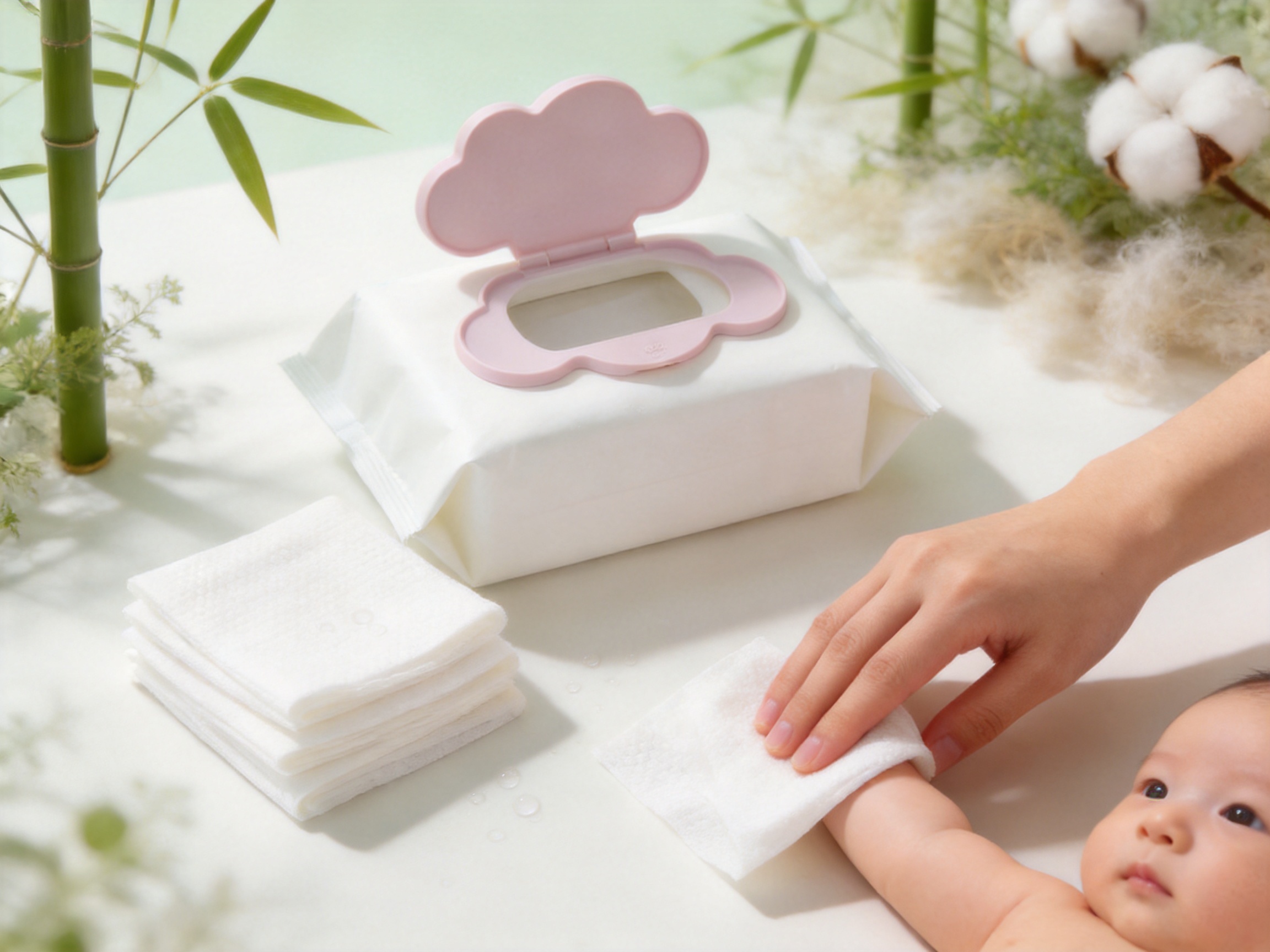
The term alcohol-free is commercially meaningful because many parents and caregivers prefer formulations that avoid ethanol and other alcohol-based solvents. Alcohol can provide fast evaporation and a clean sensory impression in some personal-care products, but it may also be unsuitable for repeated use on dry, sensitive, or compromised skin. An alcohol-free baby wipe is designed to clean while helping preserve the skin’s natural comfort.
The featured product excludes ethanol and harsh chemical solvents. This formulation direction is consistent with the requirements of baby-care applications, where mildness and repeated-use compatibility are central considerations. The wipe substrate is also described as pH-balanced and compatible with hypoallergenic lotions, allowing private-label customers to develop formulations suited to their intended market positioning.
A pH-balanced product is designed to remain within a skin-compatible range rather than causing a strongly acidic or alkaline sensation. This does not mean that every user will respond identically, and no cosmetic product can guarantee that irritation will never occur. Nevertheless, pH control, alcohol exclusion, fragrance selection, preservative management, and dermatological evaluation can collectively support a more suitable product for sensitive skin.
3.1 Fragrance and Lotion Options
Different markets have different expectations regarding fragrance. Some consumers prefer unscented wipes because they want the simplest possible product for newborns or sensitive skin. Other consumers may prefer a light fragrance that creates a fresh sensory experience. Available options include unscented, fresh, lavender, lemon, lotus, fruit, coconut, cucumber, and other fragrance directions.
Fragrance selection should be made according to the target market, regulatory requirements, consumer research, and brand positioning. An unscented version may be appropriate for newborn-focused products, hospital-related supply, or sensitive-skin ranges. A lightly scented version may be more appropriate for family-care, travel, or general personal-hygiene products.
Private-label buyers can also select different lotion concepts. A basic water-based formulation may focus on simplicity and cost control. A premium formulation may include carefully selected skin-conditioning ingredients, provided that the final formula satisfies applicable regulatory and safety requirements. Any botanical, moisturizing, or soothing claims should be supported by ingredient documentation and relevant testing.
3.2 Repeated-Use Comfort
Baby wipes are often used several times a day. During a single diaper change, multiple wipes may be required, and the same product may be used throughout infancy and toddlerhood. This makes cumulative skin comfort more important than a one-time sensory impression.
An alcohol-free wipe can help avoid the drying sensation associated with volatile solvents. Combined with a soft viscose substrate and suitable lotion, it supports a gentle cleaning routine. The product is intended to remove ordinary surface soil while reducing the need for aggressive rubbing. This is especially valuable when caring for areas that are already exposed to moisture, friction, or diaper contact.
Parents should still follow ordinary skin-care practices, including changing diapers regularly, allowing the skin to dry when appropriate, and consulting a healthcare professional if persistent redness or irritation develops. Product suitability depends on the individual child, the formulation, and the conditions of use.
4. Compostability and Sustainability Considerations
The environmental discussion surrounding wet wipes has become more complex as consumption has increased. Many conventional wipes contain synthetic fibers that can persist for long periods after disposal. Even when such products are used responsibly, their fiber composition can contribute to long-term waste-management challenges.
A 100% viscose substrate offers a more favorable starting point for biodegradation because regenerated cellulose can break down more readily than many petroleum-based polymers under suitable biological conditions. The featured wipes are designed as compostable baby wipes and are intended to biodegrade in appropriate composting environments, particularly industrial composting systems where temperature, moisture, oxygen, and microbial activity are managed.
Compostability should not be confused with flushability. A product may be compostable under controlled conditions but still be unsuitable for toilets and sewer systems. Unless a wipe has been specifically tested and certified for flushing, consumers should dispose of it in accordance with local solid-waste guidance. For baby wipes, disposal in a designated waste bin is commonly the safest option.
Industrial composting is also different from home composting. Industrial facilities can maintain conditions that accelerate biodegradation, while domestic compost bins vary widely in temperature, moisture, oxygen, and microbial activity. Buyers should use precise claims that match available testing and certification evidence.
4.1 Sustainability Beyond the Fiber
Changing the substrate is an important step, but it is only one part of a sustainable product strategy. A complete evaluation should consider the origin and processing of cellulose, chemical use during fiber production, energy consumption, water management, lotion ingredients, packaging materials, transportation, and end-of-life handling.
Private-label customers can improve the total environmental profile of a product by using right-sized packaging, reducing unnecessary secondary materials, selecting recyclable packaging where practical, optimizing carton loading, and minimizing production waste. They can also avoid overclaiming by distinguishing between “plant-derived,” “biodegradable,” and “compostable,” since these terms describe different attributes.
The company’s experience in both nonwoven materials and finished hygiene products gives buyers an advantage when they want to coordinate substrate development, wipe converting, packaging, and related nursing products through one manufacturing partner. This integrated capability can simplify communication and support more consistent product specifications.
5. Manufacturing Technology and Nonwoven Structure
The physical quality of a wipe depends heavily on how fibers are formed into a web. The supplied product information identifies Parallel and Semi-cross technologies for the featured wipes. These lapping methods are used to arrange fibers in a controlled structure before bonding and finishing.
5.1 Parallel Lapping
Parallel lapping generally places a greater proportion of fibers in a primary machine-direction orientation. This can contribute to directional tensile strength and support efficient processing on converting lines. For wipes, the objective is not simply to maximize strength in one direction, but to achieve a balanced structure that can tolerate folding, pulling, wetting, and dispensing.
A controlled parallel structure can be useful when a product requires stable dimensions and smooth web formation. It may also support consistent basis weight across the roll, which is important for predictable lotion uptake and cutting performance.
5.2 Semi-Cross Lapping
Semi-cross lapping introduces fibers at an angle or across the primary direction. This helps distribute strength more evenly through the web and can improve cross-direction integrity. A wipe that is strong only in one direction may tear unexpectedly when pulled diagonally or when used around curved surfaces.
By combining parallel and semi-cross approaches, the manufacturer can tailor the balance between machine-direction strength, cross-direction strength, softness, absorbency, and processability. The precise configuration can be adjusted according to fiber type, basis weight, wipe dimensions, embossing pattern, and end-use requirements.
5.3 Tensile Strength and Wet Integrity
Wipes must perform under wet conditions, when fibers and bonds may behave differently from their dry state. A strong wet wipe should remain intact while being removed from the package, unfolded, applied to the skin, and discarded. Excessive weakness can create a poor consumer experience and may increase the number of wipes used for a single task.
The described manufacturing approach is intended to improve tensile strength and dimensional stability in both machine and cross directions. This supports resistance to tearing and deformation during frequent use. Performance should be verified through appropriate testing, such as dry tensile strength, wet tensile strength, elongation, absorbency, liquid retention, and delamination or burst resistance.
6. Product Specifications and Customization Range
One of the product’s commercial strengths is its broad specification range. The available piece count is approximately 1 to 200 pieces per package, allowing the same basic wipe platform to serve small travel packs, standard household packs, bulk family packs, and institutional formats.
| Specification | Available Options | Commercial Relevance |
|---|---|---|
| Substrate focus | 100% viscose for the featured compostable version | Plant-derived positioning and cellulose-based biodegradation potential |
| Alternative material capability | Polyester, viscose, bamboo, lyocell, cotton | Supports different price, softness, strength, and sustainability targets |
| Piece count | 1–200 pieces | Suitable for travel, retail, family, and institutional packs |
| Technology | Parallel and semi-cross lapping | Supports strength and dimensional stability |
| Basis weight | 30–100 gsm | Allows adjustment of softness, thickness, absorbency, and cost |
| Width | 12–22 cm | Supports compact and standard wipe formats |
| Length | 12–30 cm | Allows different cleaning-area and pack-size configurations |
| Surface patterns | Plain, mesh, dot embossed, flower, stars | Creates different tactile and visual product identities |
| Fragrance options | Unscented, fresh, lavender, lemon, lotus, fruit, coconut, cucumber, and others | Supports sensitive-skin and mainstream consumer positioning |
This range is valuable for private-label buyers because it allows a product family to be developed around one manufacturing platform. A brand could launch an unscented newborn wipe in a smaller pack, a standard family pack with a mild fragrance, and a premium heavier-weight wipe with a textured surface. Each product can maintain a coherent brand identity while serving different channels.
6.1 Basis Weight Selection
A 30 gsm wipe may be appropriate where lightweight construction, cost efficiency, and compact packaging are priorities. A higher basis weight approaching 100 gsm can offer a more substantial hand feel, higher liquid capacity, and stronger premium positioning. The correct choice depends on the wipe dimensions, lotion level, folding format, packaging machinery, and expected consumer use.
Higher basis weight does not automatically guarantee better performance. A well-engineered lighter wipe may absorb efficiently and feel comfortable, while an excessively heavy wipe may increase cost, package volume, and material consumption. Product development should therefore evaluate the complete combination of basis weight, fiber structure, lotion, and dimensions.
6.2 Dimensions and Folding
Widths from 12 to 22 centimeters and lengths from 12 to 30 centimeters provide flexibility for different applications. Smaller formats can support travel packs, facial cleaning, or compact diaper bags. Larger formats may be preferred for diaper changes, body cleaning, or institutional care.
Dimensions also influence dispensing performance. A wipe that is too large for its package may fold tightly and resist removal. A wipe that is too small may require several sheets for effective cleaning. The manufacturer can work with buyers to match size, fold, pack count, lid design, and opening configuration.
7. Surface Patterns and Functional Differentiation
Surface design is not only a decorative decision. It can influence friction, lotion distribution, liquid retention, and the perception of cleaning effectiveness. Plain surfaces provide a smooth contact area and a minimalist appearance. Mesh structures may offer a more open visual character and increased surface texture.
Dot embossing can create small raised areas that improve tactile interest and may help lift ordinary residue from the skin. Flower and star patterns can create recognizable visual differentiation for children’s and family-oriented brands. The pattern should be selected carefully so that it does not make the wipe feel harsh or compromise substrate integrity.
For premium products, surface geometry can support a clear value proposition. For example, a thicker viscose wipe with a soft embossed pattern may be positioned as a high-comfort product. A lightweight plain wipe may focus on everyday convenience and value. A mesh wipe may be selected for consumers who associate texture with cleaning performance.
All claims should be supported by practical testing. The most attractive pattern is not necessarily the one that offers the best lotion retention or wet strength. Development teams should compare patterns using standardized evaluations and user feedback before finalizing a commercial specification.
8. Manufacturing Strengths of the Supplier
Zhejiang Uniquality Nursing Products Technology Co., Ltd. operates within a broader enterprise founded in 1987 and focused on medical and hygienic nonwoven materials, nursing products, and high-end clothing interlining. This long operating history is relevant to buyers because nonwoven manufacturing requires process knowledge that is built over time through equipment investment, quality improvement, and experience with diverse customer requirements.
The group has developed production bases in several Chinese manufacturing regions, including Zhejiang, Guangdong, Jiangsu, and Hubei. This broader operational footprint supports manufacturing scale and access to established industrial supply chains. The company also reports experience serving medical, maternal and baby, beauty, household, industrial cleaning, and apparel-related markets.
Its product portfolio includes spunlace nonwoven fabrics, spunmelt nonwoven fabrics, hot-air-through nonwoven fabrics, flushable and degradable nonwoven materials, wet wipes, dry wipes, baby diapers, pull-ups, wet toilet paper, and cleansing wipes. This breadth allows technical knowledge to move between material development and finished-product manufacturing.
8.1 Equipment and Process Development
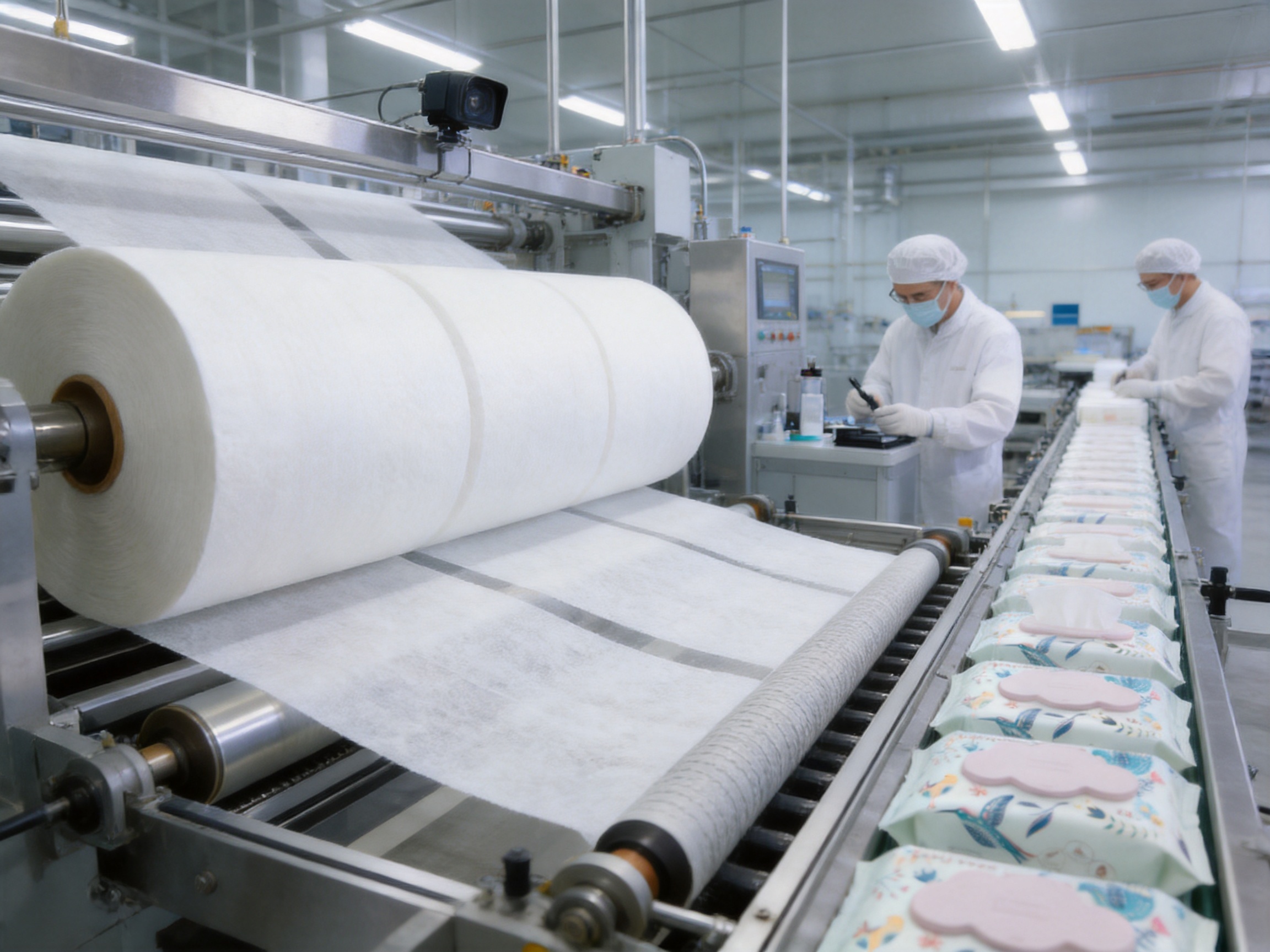
The company has introduced production equipment and technologies from Germany, France, and Italy. International equipment can support precise web formation, stable production speeds, controlled bonding, and repeatable product quality when operated under appropriate process controls.
Equipment alone does not determine quality. The effectiveness of a production line depends on engineering, maintenance, raw-material management, operator training, laboratory testing, and documented procedures. The supplier’s long-term focus on nonwoven products provides an important foundation for managing these factors.
8.2 Integrated Product Capabilities
Buyers often prefer suppliers that can support more than one product category. A retailer or distributor may need baby wipes, dry wipes, diapers, pull-ups, cleansing wipes, or other maternal-care products. Working with a manufacturer that understands the broader hygiene system can reduce the time required to coordinate specifications, packaging, quality documents, and production schedules.
For a private-label project, integrated capabilities may also make it easier to develop matching product families. The same visual identity, fragrance direction, color palette, packaging concept, and sustainability message can be applied across wipes and diaper products while maintaining appropriate technical specifications for each category.
8.3 International Customer Orientation
The company reports long-term cooperation with recognized domestic and international brands. This experience is valuable because export-oriented customers typically require detailed specifications, stable quality, traceability, packaging compliance, documentation, and communication across multiple time zones and regulatory environments.
International buyers should still define their requirements clearly. The supplier and buyer should agree on product standards, acceptable tolerances, testing methods, packaging artwork, labeling rules, sampling procedures, and shipment documentation before mass production begins.
9. Quality and Hygiene Controls
Baby wipes require particular attention to microbiological quality because the product contains water and is intended for frequent contact with sensitive skin. Manufacturing conditions, raw-material hygiene, water quality, preservative effectiveness, equipment sanitation, packaging integrity, and storage conditions all affect finished-product safety.
The product information states that materials are processed under ISO-compliant cleanroom conditions to support microbiological purity and international quality standards. In practice, buyers should request the specific standards, certifications, test reports, and scope of application that apply to the relevant facility and product. A general reference to cleanroom processing should be supplemented by documented quality procedures.
Typical quality-control areas for wet wipes may include substrate basis weight, roll width, tensile strength, absorbency, lotion add-on, pH, appearance, odor, package seal integrity, piece count, microbial limits, and preservative performance. The exact testing plan should reflect the destination market and the final formulation.
9.1 Raw-Material Control
Raw-material control begins with fiber identification and supplier qualification. For a 100% viscose product, incoming material should be verified against the agreed fiber specification. Any additional components, such as packaging films, labels, adhesives, lotions, fragrances, or preservatives, should also be controlled through approved supplier documentation.
Consistent raw materials help maintain a stable hand feel and absorbency profile. Variations in fiber length, fiber fineness, moisture content, or contamination can affect web formation and finished-product performance. Clear incoming inspection procedures reduce the risk of unexpected variation.
9.2 In-Process Inspection
In-process inspection can identify issues before a full production batch is completed. Operators and quality personnel may monitor web appearance, basis weight, dimensions, bonding, embossing, lotion application, folding, cutting, and package sealing. Automated equipment can support repeatability, while manual inspection remains useful for detecting unusual defects.
Statistical sampling should be based on product risk, order size, customer requirements, and applicable quality systems. The objective is to confirm that the product remains within specification rather than relying solely on final inspection.
9.3 Finished-Product Verification
Finished-product verification should confirm that the packaged wipes match the approved sample. Important checks include piece count, wipe dimensions, surface pattern, fragrance, moisture level, seal quality, label information, carton markings, and overall appearance. Laboratory testing may also evaluate pH, microbial limits, and physical performance.
For sustainability claims, the buyer should request relevant biodegradation or compostability evidence and ensure that the claim wording is consistent with the test conditions. This helps avoid misleading environmental communication and supports responsible product registration and marketing.
10. Advantages Compared with Conventional Synthetic-Fiber Wipes
The main competitive advantage of the featured product is the combination of a 100% viscose substrate, alcohol-free formulation, flexible customization, and established manufacturing experience. Conventional synthetic-fiber wipes may provide strength and low cost, but they can be less attractive to consumers and brands seeking plant-derived or compostable alternatives.
| Evaluation Area | 100% Viscose Alcohol-Free Wipes | Conventional Synthetic-Fiber Wipes |
|---|---|---|
| Primary fiber origin | Regenerated cellulose from plant-derived sources | Often petroleum-derived synthetic polymers |
| Skin feel | Soft, moisture-responsive, and suitable for sensitive-skin positioning | Can be soft, but performance varies by fiber and finishing |
| Hydrophilicity | Naturally hydrophilic and suitable for liquid absorption | May require blending or finishing to improve wetting |
| Environmental positioning | Supports cellulose-based biodegradable and compostable product concepts | May persist longer after disposal when synthetic fibers are present |
| Formulation | Alcohol-free and compatible with mild lotion concepts | Depends on the specific product formula |
| Customization | Multiple weights, sizes, patterns, fragrances, and piece counts | Customization varies by supplier and substrate type |
| Wet-use expectations | Designed for strength and dimensional stability through controlled web formation | Strength may be high, but biodegradability and skin feel may be less favorable |
This comparison should be interpreted as a product-development framework rather than a universal statement about every competing wipe. Synthetic substrates can perform well in certain applications, and some blended products may deliver excellent strength. The advantage of the viscose product is that it addresses several growing market requirements at the same time: softness, absorbency, alcohol-free care, and reduced dependence on synthetic fibers.
Another advantage is the ability to present a clear story to consumers. A brand can explain that the wipe uses a plant-derived cellulose substrate, avoids alcohol, and is engineered for sensitive baby skin. When supported by appropriate testing, this combination can help distinguish the product from basic commodity wipes.
11. Private-Label and OEM/ODM Opportunities
The supplier’s capabilities are well suited to private-label customers that need more than a standard off-the-shelf wipe. OEM and ODM projects can cover material selection, dimensions, basis weight, surface pattern, lotion, fragrance, piece count, folding style, packaging, and carton configuration.
A private-label customer may begin with a technical brief describing its intended market. For example, a newborn line may require an unscented, alcohol-free wipe with a soft plain surface and moderate basis weight. A premium family-care line may use a heavier wipe with a textured pattern and a mild botanical fragrance. A travel line may require a compact pack with a low piece count and smaller dimensions.
The development process should include sample evaluation, laboratory testing, packaging trials, artwork approval, pilot production, and final pre-shipment inspection. Early agreement on the critical quality attributes helps prevent changes late in the project.
11.1 Product Positioning Options
Several product-positioning routes are available:
First, the product may be positioned as a sensitive-skin baby wipe. The key messages can focus on alcohol-free formulation, soft viscose fibers, pH balance, and unscented or low-fragrance options.
Second, it may be positioned as a sustainable baby wipe. The emphasis can be placed on the 100% viscose substrate, plant-derived cellulose, compostability under specified conditions, and responsible packaging.
Third, it may be positioned as a premium performance wipe. In this case, the brand can emphasize a heavier basis weight, high liquid capacity, textured surface, strong wet integrity, and a refined lotion system.
Fourth, it may be developed as a value-oriented everyday wipe. A lighter basis weight, standard size, simple surface, and efficient packaging can help control cost while retaining the core alcohol-free and viscose-based concept.
11.2 Packaging Considerations
Packaging must preserve moisture and protect the wipes during transportation, storage, and consumer use. Resealable closures, lids, flexible film structures, and pack geometry all affect product performance. The selected packaging should also be evaluated for compatibility with the lotion and fragrance.
Packaging design is an important part of sustainability communication. Brands should avoid suggesting that a wipe package is compostable unless the complete package has been evaluated and certified accordingly. In many cases, the wipe substrate and the package will have different disposal instructions, which should be communicated clearly.
12. Procurement Guidance for Buyers
Buyers considering this product should evaluate both the physical wipe and the supplier’s ability to support long-term supply. A competitive quotation is important, but it should be considered together with quality consistency, development support, documentation, production capacity, lead time, packaging capability, and after-sales communication.
The following questions can help organize a procurement review:
What percentage of the substrate is viscose in the proposed product? Are any synthetic fibers, binders, or nonwoven additives included?
What compostability or biodegradation tests support the intended environmental claims? Do the test conditions match the target market’s requirements?
What is the proposed lotion formula, and does it exclude alcohol, harsh solvents, and unnecessary irritants?
What pH range, microbial limits, preservative system, and shelf-life data are available?
Which basis weight, dimensions, surface patterns, fragrances, and piece counts are possible at the expected order quantity?
How are parallel and semi-cross lapping parameters controlled during production?
What wet tensile, absorbency, liquid retention, and package-integrity tests are performed?
What certifications, audits, factory records, and quality documents can be provided?
How are batch numbers, raw materials, production records, and retained samples managed?
What are the minimum order quantity, sample lead time, mass-production lead time, and shipping terms?
Clear answers to these questions help buyers compare suppliers on total value rather than unit price alone. For a product used on babies, reliability and documentation are essential parts of the purchasing decision.
13. Storage, Handling, and Consumer Use
Wet wipes should be stored in a clean, dry environment away from excessive heat and direct sunlight. High temperatures may affect lotion stability, fragrance, packaging materials, and preservative performance. Packages should remain sealed when not in use to prevent moisture loss and contamination.
Consumers should inspect the package before use and discontinue use if the product has an unusual odor, visible contamination, damaged packaging, or a significant change in appearance. Although the product is designed for baby care, individual sensitivity can vary. A small-area test may be appropriate for children with a history of skin sensitivity.
Disposal instructions should be followed carefully. Compostable claims generally refer to specified composting conditions and do not mean that wipes should be flushed. Used baby wipes should normally be placed in a waste receptacle unless the product has separately passed recognized flushability testing and local wastewater guidance permits flushing.
14. Frequently Asked Questions
What makes these baby wipes alcohol-free?
The formulation is designed without ethanol and harsh chemical solvents. This supports a mild cleaning concept intended for repeated use on sensitive baby skin. The final ingredient list should be reviewed in the product specification and regulatory documentation.
Are the wipes made from 100% viscose?
The featured compostable version is based on a 100% viscose substrate. The manufacturer also has the capability to produce products using other materials, including polyester, bamboo, lyocell, and cotton, depending on the customer’s requirements. Buyers should confirm the exact substrate composition for each purchase order.
Are 100% viscose wipes fully compostable?
The viscose substrate is designed to biodegrade more readily than many synthetic fibers under suitable composting conditions. However, the complete product must be evaluated, including lotion, packaging, inks, labels, and other components. Compostability claims should identify the applicable environment and be supported by relevant testing.
Can these wipes be flushed down the toilet?
Not necessarily. Compostability and flushability are different characteristics. Unless the product has been specifically tested and certified for flushing, it should not be flushed. Disposal should follow local solid-waste and wastewater guidance.
Are the wipes suitable for newborns?
The alcohol-free formulation, soft viscose substrate, and available unscented option are suitable for a newborn-focused product concept. Individual skin responses differ, so brands should complete appropriate safety and dermatological evaluations before making specific claims.
What sizes are available?
The listed options include widths of approximately 12 to 22 centimeters and lengths of approximately 12 to 30 centimeters. Final dimensions can be selected according to the intended use, packaging format, and customer specification.
How many wipes can be included in one package?
Piece counts from approximately 1 to 200 pieces are available. This supports single-use travel packs, standard retail packs, family packs, and larger institutional formats.
Which surface patterns can be selected?
Available patterns include plain, mesh, dot embossed, flower, and star designs. Pattern selection can influence tactile feel, visual identity, friction, and perceived cleaning performance.
Can the wipes be scented?
Yes. Options include unscented, fresh, lavender, lemon, lotus, fruit, coconut, cucumber, and other fragrance directions. Unscented products are often preferred for sensitive-skin or newborn positioning, while light fragrances may suit general family-care products.
What is the available basis-weight range?
The listed range is approximately 30 to 100 grams per square meter. Lower weights may support cost and compact packaging, while higher weights may provide a more substantial feel and increased liquid capacity.
How do Parallel and Semi-cross technologies improve the wipe?
These lapping technologies help organize fibers within the nonwoven web. Parallel lapping can contribute to directional strength, while semi-cross lapping helps distribute strength across the web. Together, they support tensile strength and dimensional stability in both machine and cross directions.
Can the manufacturer support private-label projects?
Yes. The company provides OEM and ODM capabilities for wet wipes, dry wipes, diapers, training pants, and related hygiene products. Private-label projects can involve substrate selection, lotion, fragrance, size, pattern, piece count, packaging, and carton design.
What should buyers request before placing a large order?
Buyers should request representative samples, a full technical specification, ingredient information, quality-control procedures, relevant test reports, packaging details, shelf-life data, minimum order quantities, production lead times, and documentation supporting any environmental claims.
15. Conclusion
Alcohol-free baby wipes made with 100% viscose address several important demands in the modern hygiene market. They provide a soft, hydrophilic, plant-derived substrate for sensitive-skin applications while offering a more favorable sustainability profile than wipes based entirely on conventional synthetic fibers. Their compostable positioning can help brands participate in the transition toward lower-impact disposable products, provided that claims are supported by appropriate testing and communicated with precision.
The product also offers practical manufacturing flexibility. A broad range of basis weights, dimensions, piece counts, surface patterns, and fragrance options enables private-label buyers to develop products for newborn care, everyday family use, travel, premium retail, and institutional channels. Parallel and semi-cross lapping technologies support the tensile strength and dimensional stability needed for reliable wet-wipe performance.
The manufacturing background of Zhejiang Uniquality Nursing Products Technology Co., Ltd. and the wider Kingsafe and Uniquality group adds further value. Decades of experience in nonwoven materials, nursing products, and hygiene manufacturing, together with multiple production bases and international equipment, provide a strong platform for customized supply programs.
For procurement teams, the most important advantage is the combination of material innovation and manufacturing depth. The product is not simply a disposable wipe with a biodegradable fiber. It is a configurable hygiene platform that can combine 100% viscose, alcohol-free formulation, controlled nonwoven structure, flexible packaging formats, and private-label development support. With responsible testing, accurate claims, and disciplined quality management, it can help brands meet evolving expectations for baby safety, product performance, and environmental responsibility.
References
1. General technical literature on regenerated cellulose fibers, moisture regain, hydrophilicity, and nonwoven applications.
2. International guidance concerning the testing and communication of biodegradability and compostability claims.
3. Technical references on spunlace nonwoven production, fiber lapping, web formation, tensile strength, and wet integrity.
4. Cosmetic and personal-care safety literature concerning pH balance, fragrance selection, preservative systems, and sensitive-skin formulations.
5. Quality-management guidance for wet wipes, baby-care products, microbiological control, packaging integrity, and shelf-life evaluation.
6. Product and manufacturing information supplied for the alcohol-free 100% viscose compostable baby wipes.