中文简体
 English
 日本語
 русский
 Español
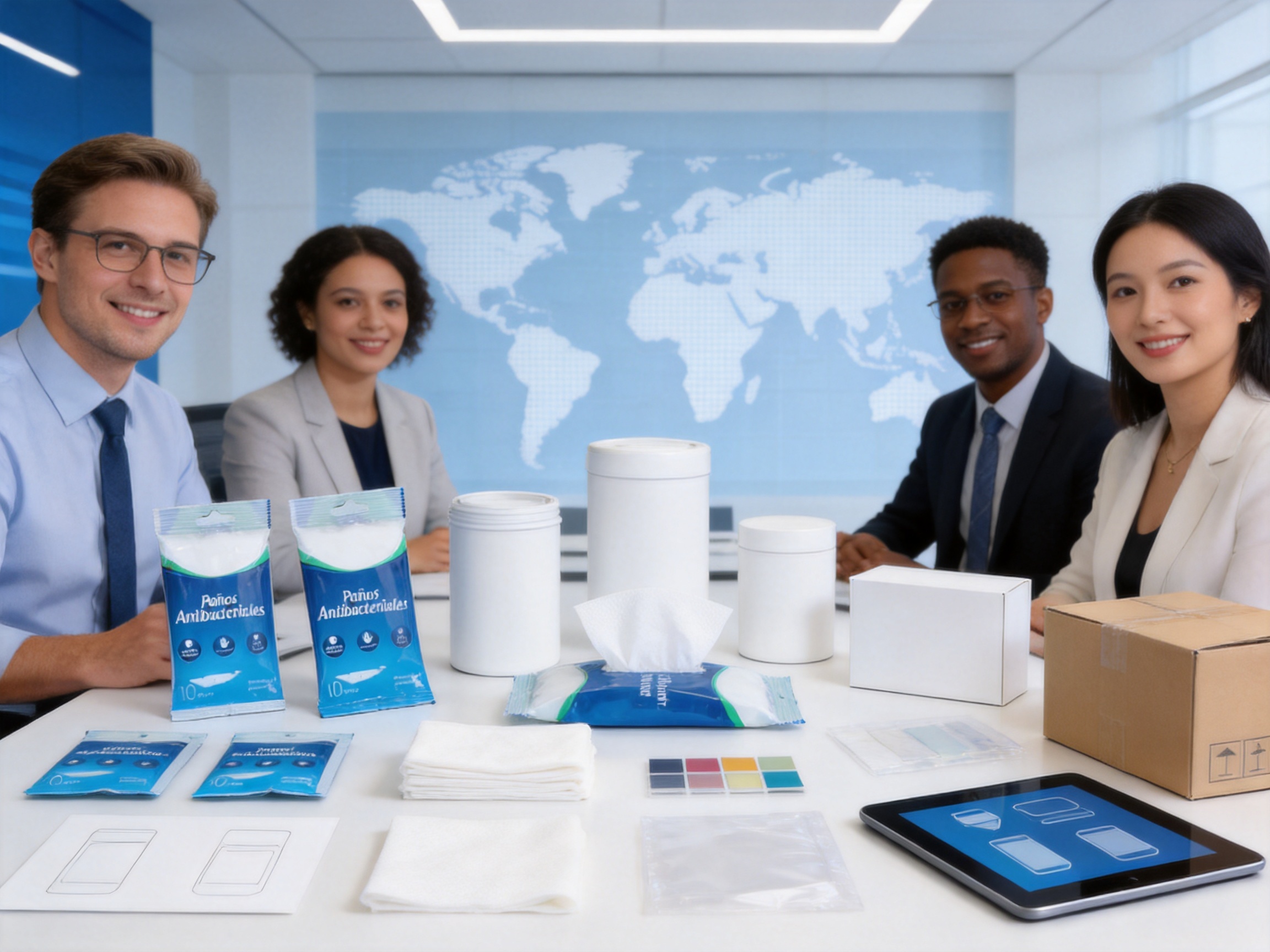
Medical antibacterial wipes have become an essential part of modern hygiene management. In hospitals, nursing facilities, clinics, laboratories, pharmacies, workplaces, hospitality environments, and homes, users need a convenient way to reduce microbial contamination on appropriate skin and equipment surfaces. Unlike traditional cleaning methods that require separate cloths, liquid disinfectants, measuring tools, and drying procedures, pre-moistened medical wipes combine a prepared substrate with a controlled liquid formulation in one ready-to-use format.
Medical Antibacterial Wipes are designed for professional purchasing programs rather than occasional individual purchases. Their value lies not only in their convenience, but also in consistent manufacturing, controlled formulation, adaptable packaging, efficient logistics, and the ability to support private-label and OEM/ODM product development. For brand owners, importers, wholesalers, hospitals, and retail suppliers, the right supplier must provide more than a basic wet wipe. The supplier must be capable of delivering reliable quality, scalable production, documentation support, and product variations suited to different markets.
What Are Medical Antibacterial Wipes?
Medical Antibacterial Wipes are pre-moistened nonwoven wipes formulated for hygienic cleaning and antibacterial or disinfecting applications, depending on the product specification and approved use. They are intended to provide a practical alternative to separate liquid disinfectants and reusable cloths. Each wipe can be dispensed directly from its package, helping users perform cleaning or disinfection procedures without additional equipment.
The product is positioned around several core characteristics: medical-grade manufacturing expectations, broad-spectrum microbial-control performance, a high claimed sterilization rate of up to 99.999% under applicable test conditions, a neutral and non-corrosive formula, bleach-free composition, and potential dual use for skin and equipment when the final formulation and regulatory approvals support those applications.
These characteristics make the wipes suitable for a wide range of professional hygiene programs. Potential application areas include the cleaning of tables, workstations, carts, bedside surfaces, selected equipment exteriors, utensils, and other compatible hard surfaces. Some customized formulations may also be developed for skin cleansing or wound-adjacent use, but the precise application must always follow the product label, test data, and regulations of the target market.
Why Ready-to-Use Wipes Are Important in Healthcare Hygiene
Healthcare hygiene often requires quick action. A contaminated surface may need to be cleaned between procedures, after contact with bodily fluids, before a medical device is handled, or during routine environmental maintenance. A ready-to-use wipe simplifies the process by bringing the cleaning substrate and liquid into a sealed package.
This format provides several operational advantages. First, it reduces preparation time because staff do not need to dilute a concentrate or locate a separate cloth. Second, it helps provide a consistent amount of liquid on every wipe when the product is manufactured and packaged under controlled conditions. Third, individually packed or controlled-dispensing formats can reduce the risk of cross-contamination associated with repeatedly dipping a reusable cloth into a shared container.
Convenience is especially valuable in environments where space is limited or where staff must move between rooms. A pouch or canister can be placed on a treatment cart, in a nursing station, inside a first-aid cabinet, or near a cleaning area. The lightweight format also supports mobile healthcare teams, emergency response kits, workplace hygiene stations, and transportation-related sanitation programs.
Ready-to-use wipes can also help standardize routine procedures. When the wipe, liquid formula, package, and instructions are developed as one system, purchasing organizations can establish consistent usage protocols. This does not replace staff training or infection-control procedures, but it can make routine cleaning steps easier to follow.
Key Product Advantages
Broad-Spectrum Antibacterial Positioning
The product information presents Medical Antibacterial Wipes as capable of addressing bacteria, viruses, and fungi under relevant testing conditions. Broad-spectrum performance is important because healthcare and institutional environments may encounter multiple classes of microorganisms. A product designed around a wider range of target organisms can be more versatile than a wipe intended for only one limited application.
However, broad-spectrum claims must be supported by appropriate laboratory testing and must be interpreted according to the market-specific product registration or regulatory classification. The actual organisms, contact time, concentration, and surface type should be clearly stated in technical documents and on the final label. A professional supplier should be prepared to provide the test information needed by importers, distributors, and brand owners during product approval and purchasing evaluation.
High Claimed Sterilization Rate
The product is described as offering a 99.999% high sterilization rate. This level of performance represents a strong product-positioning advantage when it is demonstrated through validated testing. For professional buyers, the important question is not only the percentage stated in promotional material, but also the test method, organisms evaluated, exposure time, substrate, and conditions under which the result was obtained.
A responsible purchasing process should therefore connect the performance claim with supporting documentation. Depending on the target country and intended use, this may include microbiological efficacy reports, material safety information, stability data, batch records, and product specifications. Clear documentation helps buyers compare products on meaningful criteria rather than on marketing statements alone.
Neutral, Non-Corrosive, and Bleach-Free Formulation
A neutral, non-corrosive, bleach-free formulation can be valuable in environments where users need effective hygiene support without unnecessarily aggressive chemistry. Bleach-based products may create odor, discoloration, material compatibility concerns, or handling challenges in some applications. A bleach-free alternative may be more suitable for routine cleaning of compatible surfaces and equipment exteriors.
Neutrality and non-corrosiveness should still be verified for each intended surface. Medical equipment may contain plastics, coated metals, rubber components, optical surfaces, adhesives, or electronic housings that respond differently to chemical exposure. The final product should include clear compatibility guidance, and facilities should follow equipment manufacturers’ instructions before applying any disinfectant wipe.
For brand owners, a neutral formulation may also support a more comfortable user experience. Reduced odor and a milder sensory profile can be important in clinics, nursing homes, pharmacies, and patient-care areas where strong chemical smells may be undesirable.
Potential Dual Use for Skin and Equipment
The product information identifies dual use for skin and equipment as a key feature and describes the formulation as gentle on wounds. This positioning can be attractive to professional buyers seeking to simplify their product range. A product capable of serving more than one approved purpose may reduce the number of stock-keeping units required across a facility.
Nevertheless, skin use and equipment use are separate technical and regulatory considerations. A formulation suitable for skin may not be appropriate for every surface, while a surface disinfectant may not be approved for direct skin contact. Any dual-use product must be validated for both applications, with instructions, warnings, contact times, and approved claims tailored to the regulations of the destination market.
For procurement teams, the best practice is to review the final label, safety documentation, efficacy reports, and intended-use statement together. This ensures that the product is used correctly and prevents a general promotional description from being interpreted more broadly than the approved product claims.
Convenient Use Without Additional Equipment
Medical Antibacterial Wipes are designed to be used without additional dispensing equipment, mixing containers, spray bottles, or reusable cleaning cloths. This can improve workflow efficiency in locations where staff require fast access to a hygiene product.
Convenience also supports better product placement. Wipes can be located close to high-touch surfaces, procedure areas, reception desks, patient rooms, laboratories, or transportation equipment. When a hygiene product is easy to find and simple to use, it is more likely to be incorporated into routine cleaning practices.
Comparison with Conventional Cleaning and Disinfection Methods
Medical wipes compete with several alternative formats, including liquid disinfectants, spray products, dry wipes used with separately purchased chemicals, reusable cloths, and lower-specification consumer wet wipes. Each format may be useful in a particular situation, but pre-moistened medical wipes offer a combination of portability, standardization, and controlled application.
| Evaluation factor | Medical Antibacterial Wipes | Liquid disinfectant with reusable cloth | Consumer cleaning wipes |
|---|---|---|---|
| Preparation | Ready to use | May require measuring, dilution, or separate cloth preparation | Generally ready to use |
| Portability | High; suitable for mobile and point-of-care use | Lower when bottles and cloths must be transported | High |
| Formula control | Controlled liquid-to-substrate ratio during manufacturing | Can vary with dilution and cloth saturation | Depends on product specification |
| Professional customization | Supports material, formula, size, package, and branding adjustments | Customization may involve separate components | Usually limited |
| Documentation potential | Can be developed with technical files and market-specific support | Documentation applies to separate liquid and cloth components | May focus on general household use |
| Waste considerations | Single-use format; packaging and substrate choices can be optimized | Reusable cloths may reduce some waste but require laundering and control | Varies by product |
The comparison shows why professional buyers often evaluate more than price per pack. A lower-cost wipe may not offer the required microbial efficacy, substrate strength, liquid stability, packaging integrity, or export documentation. Conversely, a liquid-and-cloth system may have a lower unit cost in certain high-volume operations but require more labor, storage, training, and maintenance.
Medical Antibacterial Wipes are particularly competitive when ease of deployment and procedural consistency are important. They can also be more practical for institutions with multiple sites, mobile teams, or varied user groups because the same controlled product format can be distributed across locations.
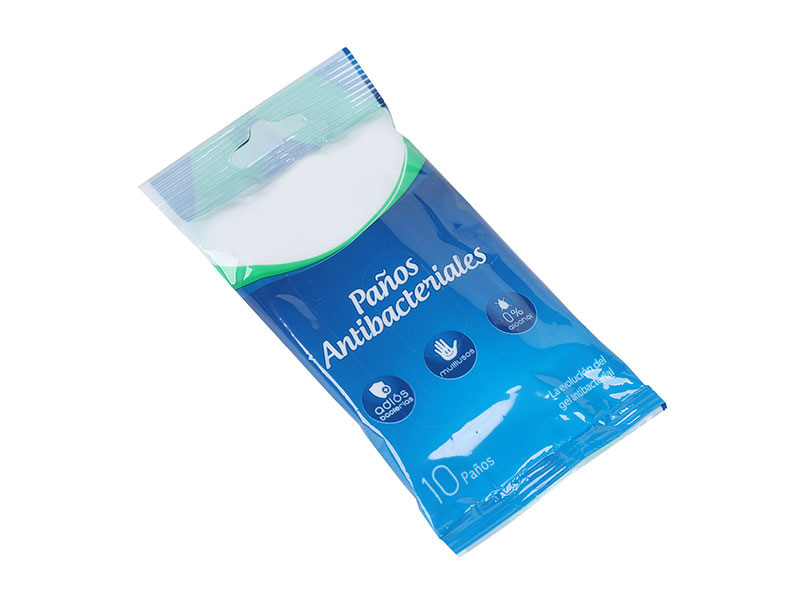
Medical antibacterial wipes
Nonwoven Substrate Technology
The substrate is one of the most important components of a medical wipe. It influences strength, softness, absorbency, lint release, liquid retention, surface coverage, and user comfort. The supplier’s background in nonwoven materials provides a significant advantage because the substrate can be developed together with the liquid formulation and packaging system.
Possible nonwoven structures include spunlace, spunmelt, hot-air-through materials, flushable materials, and degradable nonwoven options. Not every material is appropriate for every medical wipe application. The correct selection depends on intended use, required wet strength, softness, absorbency, biodegradability goals, production cost, and compatibility with the active solution.
Spunlace substrates are often valued for their textile-like feel, flexibility, and ability to absorb liquid. A well-designed spunlace wipe may conform to irregular surfaces while maintaining sufficient integrity during wiping. Spunmelt structures may offer different strength and filtration characteristics, while other materials may be selected for specific softness, sustainability, or processing requirements.
Substrate selection should be based on measurable performance rather than appearance alone. Professional testing may evaluate tensile strength in wet and dry conditions, elongation, absorbency rate, liquid retention, linting, basis weight, thickness, and dimensional stability. These results help determine whether a wipe is suitable for light surface wiping, heavy-duty cleaning, skin contact, or specialized healthcare procedures.
The company’s integrated capability, extending from nonwoven research and development to finished wet wipes, enables better coordination between these variables. If the substrate and liquid are sourced and developed as disconnected components, problems may arise, such as uneven saturation, excessive dripping, poor dispensing, insufficient strength, or premature drying. An integrated process can help reduce those risks.
Liquid Formulation and Product Performance
The liquid solution is the second major component of the product. It must deliver the intended hygiene performance while remaining stable inside the package and compatible with the selected substrate. It should also provide an acceptable user experience, including appropriate wetness, odor, skin feel, and drying behavior.
Formulation development may consider active ingredients, pH, preservatives, solvents, surfactants, humectants, purified water quality, and compatibility with the packaging film. The balance is complex. Too little liquid may reduce surface coverage and make the wipe feel dry. Too much liquid may cause dripping, leakage, or difficulty handling. An unsuitable formula may weaken the substrate, damage packaging seals, or cause unacceptable odor.
The stated neutral and non-corrosive positioning suggests that the formulation is designed to provide hygiene performance without relying on a bleach-based system. For professional applications, this can support a broader range of surface-use scenarios, subject to compatibility testing. The formulation may also be adjusted for different national markets, since regulatory requirements and customer expectations vary.
Purified water is another important quality factor. The company describes the use of pharmacopoeia-standard purified water systems. High-quality water helps control impurities and supports consistency from batch to batch. Water quality should be monitored through an established testing program, with suitable records maintained as part of the manufacturing quality system.
Formulation stability should be evaluated over the intended shelf life. Testing may include appearance, odor, pH, active content, microbiological quality, package integrity, and wipe wetness. Accelerated and real-time stability programs can provide information about performance under different storage conditions. Export buyers should also consider temperature and humidity exposure during transportation and warehousing.
Advanced Manufacturing Environment
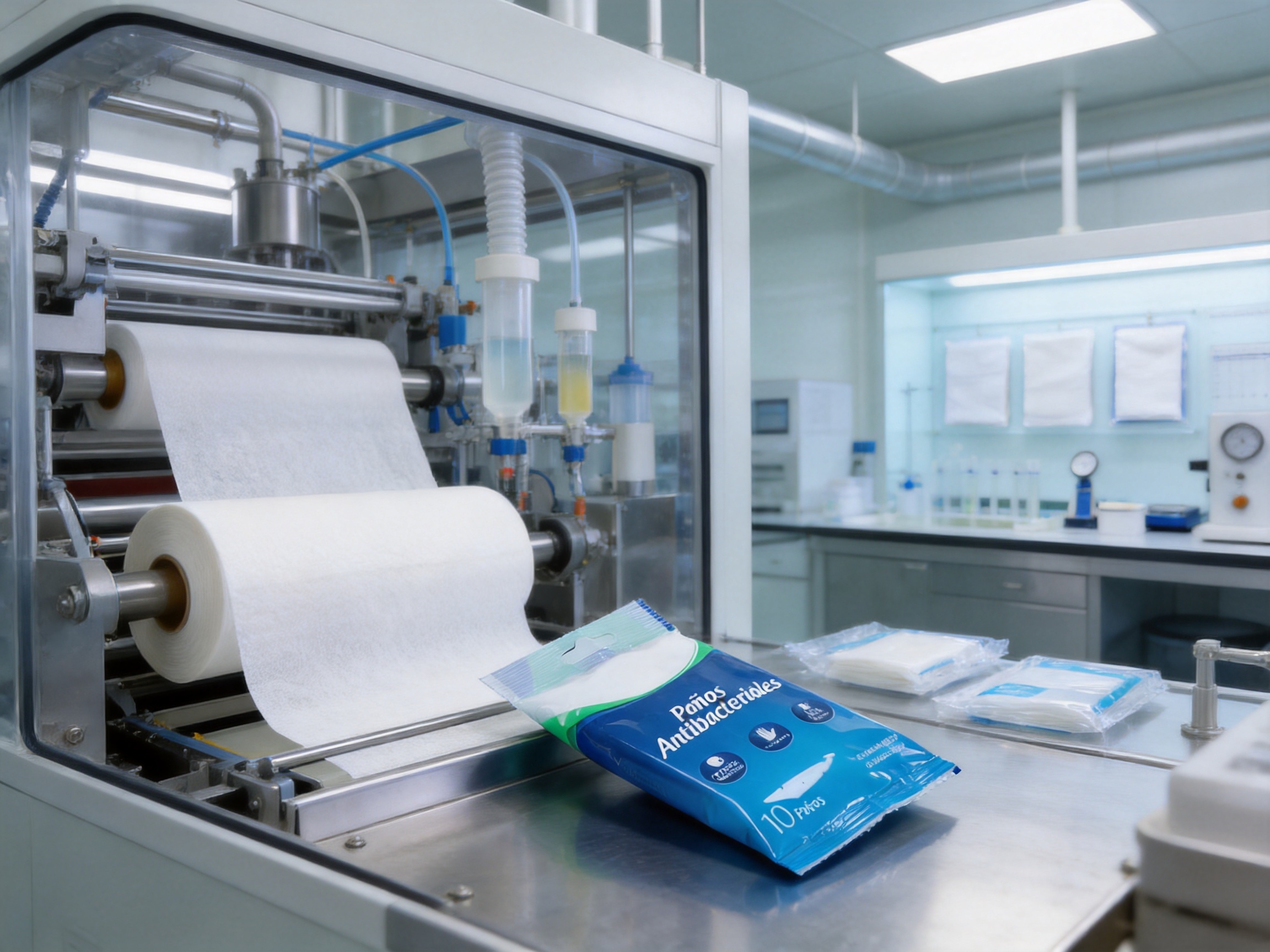
Medical and hygiene products require disciplined production controls. The supplier describes GMP-standard cleanrooms, purified water systems, and a comprehensive testing system. These capabilities are important because a wet wipe is a complex finished product in which the substrate, liquid, package, sealing process, and storage conditions all influence quality.
GMP-Oriented Cleanroom Production
Cleanroom production helps control airborne particles, environmental contamination, personnel practices, and process hygiene. The exact cleanroom classification required depends on the product and applicable regulations, but controlled environments generally provide a stronger foundation for medical and hygiene manufacturing than ordinary industrial spaces.
Cleanroom operations typically involve controlled entry procedures, protective clothing, scheduled sanitation, environmental monitoring, equipment maintenance, and documented cleaning routines. Operators must be trained to follow procedures consistently. These measures reduce avoidable contamination risks during liquid preparation, substrate conversion, filling, folding, and packaging.
Purified Water Management
Because wet wipes contain a high proportion of liquid, water-system management is central to product quality. A pharmacopoeia-standard purified water system may include filtration, purification, storage, circulation, and routine monitoring. Depending on the system design, quality checks may address conductivity, total organic carbon, microbial limits, and other relevant parameters.
Consistent water quality supports formulation reproducibility. It can also reduce variation in odor, appearance, stability, and microbial background. For customers developing private-label products, the water system is an important part of supplier qualification because it demonstrates that quality control extends beyond the final packaging line.
Comprehensive Testing
A comprehensive testing system may cover incoming materials, in-process controls, finished-product inspections, microbiological testing, package integrity, and stability. Typical quality checkpoints can include substrate basis weight, dimensions, tensile strength, liquid loading, pH, active ingredient concentration, microbial limits, seal strength, and visual appearance.
Finished products should be evaluated against agreed specifications. A batch-release process helps ensure that goods are not shipped until required tests and documentation have been completed. For large buyers, batch traceability is particularly important because it makes it possible to identify production dates, raw materials, packaging components, and distribution records if a quality question arises.
Integrated Industrial Chain
The company reports an integrated industrial chain covering independent nonwoven research and development, raw-material production, wet-wipe conversion, and finished-product manufacturing. This structure can offer several advantages over a supplier that only purchases generic nonwoven rolls and performs final packing.
Integration can improve control over material availability, specifications, lead times, and product modification. It can also make it easier to coordinate a change in basis weight, softness, liquid capacity, or package size. When a customer requests a new product configuration, the supplier can evaluate the complete system rather than adjusting only one isolated component.
For global customers, integrated production may also help support continuity of supply. The company has established multiple domestic production bases and plans for overseas production, creating a foundation for capacity expansion and broader supply-chain coverage. Buyers should confirm the exact manufacturing site, applicable certifications, production capacity, and export documentation for each project.
Company Manufacturing Strengths
Zhejiang Uniquality Nursing Products Technology Co., Ltd., together with the Kingsafe and Uniquality operations, has a long history in medical and hygienic nonwoven materials, nursing products, and related textile technologies. Founded in 1987, the company has developed production bases in several Chinese locations, including Changxing, Foshan, Nantong, and Wuhan.
The company reports more than 30 years of development and describes itself as a national high-tech enterprise. Its manufacturing scope includes spunlace nonwoven fabrics, spunmelt nonwoven fabrics, hot-air-through nonwoven fabrics, flushable and degradable nonwoven materials, wet wipes, dry wipes, baby diapers, training pants, wet toilet paper, cleansing wipes, and other hygiene products.
This product breadth is relevant to Medical Antibacterial Wipes because it demonstrates experience across different nonwoven technologies and finished-product categories. A supplier familiar with medical, maternal and baby, beauty, household, industrial cleaning, and clothing applications may be better positioned to select a substrate and production process suited to a customer’s precise requirements.
The company also reports the use of advanced production equipment and technology introduced from Germany, France, and Italy. International equipment investment can support automation, material consistency, high-speed conversion, folding accuracy, liquid dosing, sealing, and inspection. The practical value depends on equipment maintenance, operator training, process validation, and quality management, but modern machinery can provide an important foundation for large-volume production.
Multiple production bases can provide additional flexibility. Different sites may be assigned according to product type, available capacity, material requirements, or customer delivery plans. For professional buyers, production-site transparency remains essential. Each order should identify the manufacturing facility and confirm that the relevant quality system, certifications, and approved specifications apply to that location.
Customization and OEM/ODM Development
Medical Antibacterial Wipes are offered with OEM/ODM support, covering product design, material selection, formulation, packaging design, specification adjustment, and mass production. This is important for companies that want to build a differentiated product rather than resell a standard catalog item.
Customized Nonwoven Materials
Customers may request changes in softness, thickness, strength, absorbency, texture, basis weight, or environmental profile. A hospital supply company may need a durable wipe for equipment surfaces, while a skin-care-oriented brand may prioritize softness and low lint. A distributor targeting environmentally conscious buyers may request a degradable or lower-impact material, subject to technical feasibility and applicable claims.
Customized Liquid Formulas
Formula development can be adjusted to meet the intended application, local regulations, fragrance preferences, skin-feel expectations, or surface-compatibility requirements. Some markets may prefer a fragrance-free product, while others may accept a light scent. A professional formulation project should define the permitted claims, target microorganisms, contact time, packaging compatibility, shelf life, and required test standards before mass production begins.
Customized Sizes and Fold Patterns
Wipe dimensions influence coverage, handling, cost, and consumption. Common professional requirements may include compact wipes for personal cleansing, larger wipes for surfaces, or specialty formats for medical carts and equipment. Fold patterns can also affect dispensing and user convenience.
Size customization helps brand owners create product families for different channels. A small travel pack may be appropriate for field workers, while a large canister may be better for high-frequency use in hospitals or clinics. Buyers should evaluate the relationship between wipe size, liquid loading, package count, carton dimensions, and shipping efficiency.
Customized Packaging
Packaging can be developed in individual sachets, soft packs, resealable pouches, canisters, or other suitable formats. The choice depends on usage frequency, portability, moisture retention, infection-control preferences, retail presentation, and cost.
Packaging design must preserve the liquid and protect the wipes throughout transportation and storage. Seal integrity, material barrier properties, closure performance, label adhesion, print quality, and opening convenience all require evaluation. For export projects, packaging should also be adapted to the language, measurement units, regulatory marks, disposal instructions, and cultural expectations of the destination market.
Private-Label Brand Development
Private-label customers can use OEM/ODM services to create products under their own brand identity. Support may include logo application, package artwork, color systems, product naming, carton design, and coordinated product-family development. A strong private-label project should preserve the distinction between brand presentation and technical compliance. Attractive packaging cannot replace accurate claims, proper warnings, validated efficacy, and traceable production.
Quality Management from Development to Delivery
Reliable medical wipe production begins before the first commercial batch. Product development should establish a technical specification covering the substrate, liquid, dimensions, packaging, microbiological requirements, shelf life, and labeling. Samples should then be evaluated through a structured approval process.
During scale-up, the supplier should confirm that laboratory or pilot results can be reproduced on commercial equipment. Mixing speed, liquid temperature, filling volume, line speed, folding tension, seal temperature, and packaging material can all influence the final product. Process validation helps identify the acceptable operating range for these parameters.
Incoming raw materials should be checked against approved specifications. Nonwoven rolls may be evaluated for appearance, width, basis weight, strength, and moisture. Packaging films may be checked for thickness, print quality, barrier properties, and seal performance. Ingredients should be verified for identity and documentation before entering production.
In-process controls help identify problems before an entire batch is completed. Operators may inspect wipe dimensions, folding, liquid saturation, pouch or lid sealing, coding, count accuracy, and package appearance. Automated equipment can improve consistency, but human inspection and documented procedures remain important.
Finished-product testing provides the final verification before release. Depending on the product and market, testing may include microbial limits, antibacterial efficacy, active content, pH, package leakage, seal strength, wipe weight, dimensions, and visual quality. Retention samples can be stored for future reference and stability monitoring.
Traceability is especially important for export and institutional supply. A batch code should allow the manufacturer to connect the finished goods with raw materials, production records, laboratory results, operators, equipment, and shipment information. This supports customer service, complaint investigation, and continuous improvement.
Applications Across Professional Markets
Hospitals and Clinics
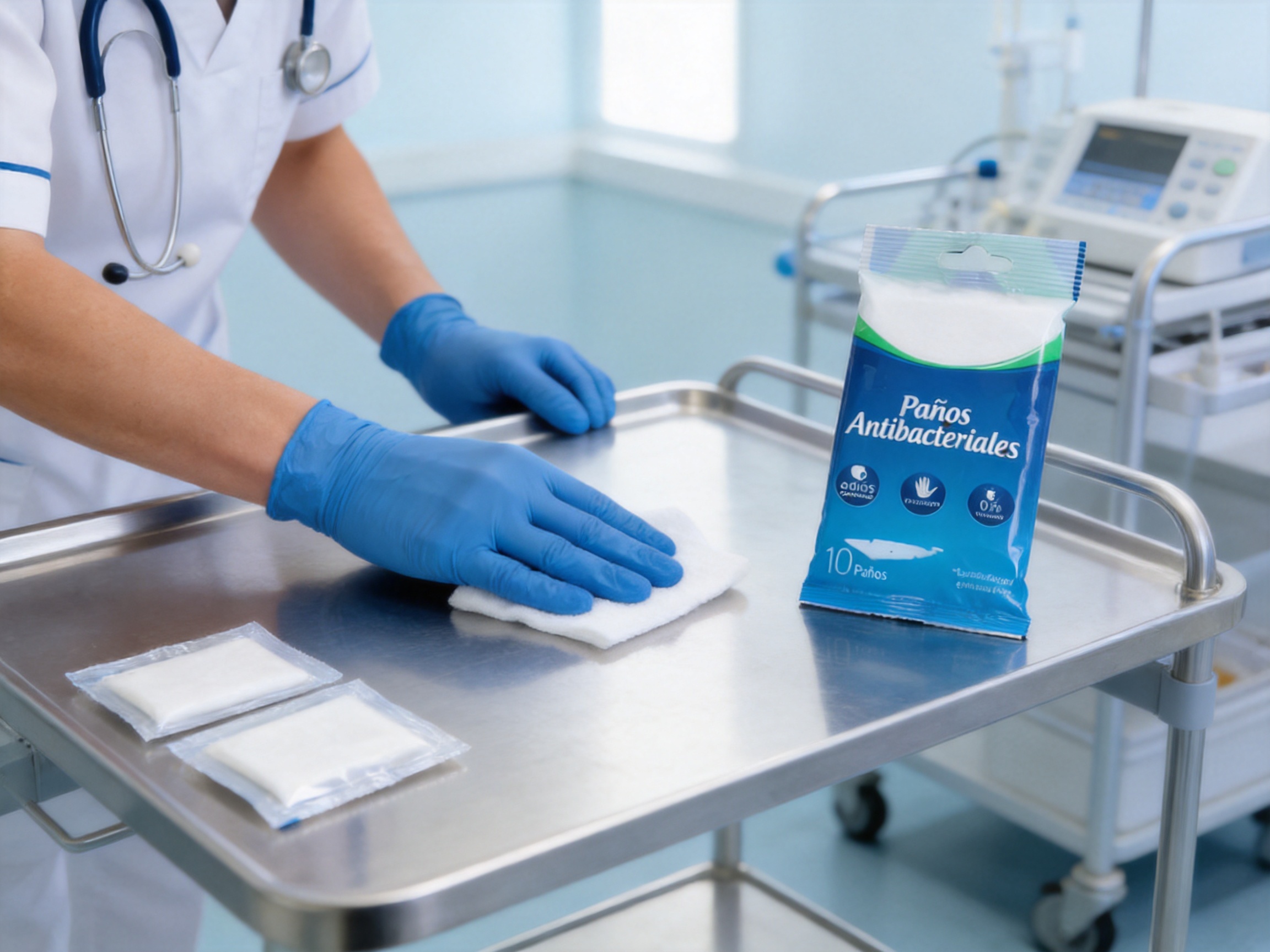
Hospitals and clinics may use medical antibacterial wipes for routine cleaning of compatible surfaces, treatment areas, carts, workstations, and selected equipment exteriors. Different departments may require different wipe sizes, package formats, and instructions. Procurement teams should establish approved-use lists to prevent inappropriate application to sensitive materials or devices.
Nursing and Elder-Care Facilities
Nursing homes and elder-care facilities require practical products that staff can use frequently and efficiently. A mild, low-odor, ready-to-use format may support routine hygiene in resident rooms, common areas, care stations, and mobility equipment. Packaging should be easy for staff to open while remaining secure during storage.
Laboratories and Research Environments
Laboratories often manage multiple work surfaces and instruments. Wipes can support routine cleaning between tasks when the surface manufacturer allows the selected formulation. Laboratory customers may request higher technical documentation, lot traceability, and specific information about residue, material compatibility, and contact time.
Medical Supply Distributors
Distributors need products that can serve multiple downstream customers. A standardized core product with flexible packaging and labeling options can help distributors build a differentiated portfolio. The supplier’s capacity to provide documentation, samples, product images, packaging files, and stable replenishment is an important part of the distributor relationship.
Retail and Supermarket Channels
Retail buyers may focus on pack appearance, shelf dimensions, consumer instructions, barcode requirements, product claims, and price positioning. Medical Antibacterial Wipes can be adapted for retail presentation while preserving the underlying manufacturing and quality requirements. Retail packaging should use language that is accurate and understandable, especially where antibacterial or disinfectant claims are regulated.
Industrial and Workplace Hygiene
Offices, factories, warehouses, transportation companies, and service businesses may use wipes for high-touch surfaces, shared tools, counters, and equipment exteriors. These customers may value bulk pack formats, durable substrates, convenient dispensers, and long-term supply agreements.
Export Readiness and International Market Support
Exporting medical or hygiene wipes requires careful preparation. Regulations differ between countries, and the same formulation may be classified differently depending on its intended use and claims. A product described as a general hygiene wipe may face different requirements from a product marketed as a medical device accessory, surface disinfectant, antiseptic, or wound-care product.
The supplier provides export support and relevant product information according to market demand. For each target country, the buyer and manufacturer should confirm the responsible regulatory pathway, required efficacy tests, language requirements, labeling rules, packaging symbols, safety documentation, and import conditions.
Export projects should also consider logistics. Wet wipes are heavier than dry wipes because they contain liquid, and the liquid may be sensitive to extreme temperatures. Carton configuration, palletization, container loading, storage temperature, humidity, and transit time should be evaluated before the commercial order is finalized.
Documentation may include product specifications, ingredient information, certificates of analysis, safety data, microbiological reports, stability information, packaging specifications, manufacturing certifications, and declarations relevant to the intended market. The precise document package depends on customer requirements and local law.
A capable export supplier should communicate clearly about lead time, minimum order quantity, sample approval, artwork approval, production scheduling, inspection procedures, shipping marks, and after-sales support. These factors can be just as important as the product formula when a buyer is building a long-term supply program.
Sustainability Considerations
Disposable hygiene products must be evaluated responsibly because their use creates substrate and packaging waste. Sustainability does not mean making unsupported environmental claims. Instead, it involves examining material selection, production efficiency, packaging reduction, responsible disposal, and the full product life cycle.
The company’s product portfolio includes flushable and degradable nonwoven materials, which may support the development of lower-impact options when technically and legally appropriate. Flushability is a highly specific claim and should only be used when the product has passed relevant tests and is approved for the applicable disposal system. A wipe should never be flushed solely because it appears dispersible.
Customers may also explore thinner but sufficiently strong substrates, recycled or responsibly sourced packaging components, optimized carton sizes, reduced secondary packaging, and efficient production planning. Any change must preserve hygiene performance, package integrity, user safety, and regulatory compliance.
Production efficiency can contribute to sustainability by reducing material loss, improving liquid dosing accuracy, lowering reject rates, and optimizing energy and water use. The company’s integrated manufacturing model may help identify such improvements across the substrate, conversion, and packaging stages.
How Buyers Should Evaluate a Supplier
Professional buyers should assess Medical Antibacterial Wipes through a structured supplier-qualification process. The following areas deserve attention:
- Manufacturing history and experience with medical or hygiene products.
- Nonwoven research, development, and production capabilities.
- Cleanroom and purified-water management.
- Laboratory testing and batch-release procedures.
- Available certifications and market-specific documentation.
- Substrate, liquid, packaging, and size customization.
- Production capacity and backup supply arrangements.
- Sample-development and approval procedures.
- Traceability, complaint handling, and corrective-action systems.
- Export experience and communication capabilities.
Buyers should request representative samples and evaluate wet strength, surface coverage, odor, wetness, lint, dispensing, packaging durability, and user comfort. If the product is intended for equipment, compatibility testing should be performed on representative materials. If it is intended for skin, relevant safety and tolerability assessments should be reviewed.
Price comparisons should be based on total delivered value rather than unit cost alone. A product with better saturation consistency, fewer rejected packs, more stable shelf life, stronger documentation, and better delivery reliability may offer a lower total operating cost even if its initial unit price is higher.
Recommended Procurement Workflow
A practical procurement workflow begins with a clearly defined product brief. The brief should state the intended users, application surfaces, target microorganisms, required claims, wipe dimensions, package type, order volume, destination market, expected shelf life, and preferred delivery schedule.
The next step is technical consultation. The manufacturer can recommend a suitable nonwoven substrate, liquid system, package format, and production route. Samples should be produced for internal evaluation and, when needed, third-party testing or regulatory review.
After sample approval, the customer and supplier should confirm the commercial specification. This should include the exact material, liquid formula or formula code, dimensions, count, package artwork, carton configuration, tolerances, inspection standard, and documentation requirements.
A pilot or first production order can then be monitored closely. Buyers may appoint a quality inspector or request pre-shipment inspection records. After delivery, customer feedback should be collected and reviewed before expanding the program to additional markets or product variants.
This staged process reduces the risk of making large commitments before technical and regulatory details have been resolved. It also helps transform a general catalog product into a reliable private-label solution.
Frequently Asked Questions
Are Medical Antibacterial Wipes suitable for hospitals?
They can be suitable for hospitals and other healthcare environments when the product’s approved claims, efficacy data, surface compatibility, and usage instructions meet the facility’s requirements. Hospitals should evaluate the final technical documentation and confirm that the wipe is appropriate for each intended application.
Do the wipes kill bacteria, viruses, and fungi?
The product information describes broad-spectrum elimination of bacteria, viruses, and fungi. Actual performance depends on the tested organisms, contact time, formula, and application conditions. Buyers should request supporting test reports and follow the final label instructions.
What does the 99.999% sterilization claim mean?
The 99.999% claim refers to a high level of microbial reduction under specified test conditions. It should be reviewed together with the test method, target organisms, exposure time, and regulatory classification. It should not be interpreted as an unlimited guarantee for every organism or every surface.
Are the wipes bleach-free?
Yes, the product information describes the formula as bleach-free. The final ingredient and safety documentation should be reviewed for each customized version, especially if the customer requests a formula modification.
Can the wipes be used on skin?
The product is positioned for dual use on skin and equipment, and the information describes it as gentle on wounds. Skin use must follow the approved product label and applicable regulations. Buyers should confirm that the exact formulation has been evaluated and approved for the intended skin application.
Can the wipes be used on medical equipment?
They may be used on compatible equipment surfaces when the equipment manufacturer permits the formulation. Users should check compatibility before applying the wipe to sensitive plastics, coated metals, optical components, electronics, or other specialized materials.
Can we sell the product under our own brand?
Yes. OEM/ODM services are available for private-label projects. Support may include packaging design, brand presentation, size adjustment, material selection, formula development, and mass production.
Can the wipe size and package format be customized?
Yes. Customers can discuss wipe dimensions, folding, individual sachets, resealable packs, canisters, count per pack, carton configuration, and outer packaging design according to intended use and market needs.
What types of companies typically purchase these wipes?
Typical professional buyers include medical supply brand owners, importers, hygiene product wholesalers, hospital supply-chain companies, supermarket and retail suppliers, nursing-care distributors, and businesses developing their own branded products.
Are these wipes intended for individual one-time purchases?
The product is primarily intended for professional and bulk purchasing programs. Individual consumers may encounter the product through retail channels, but the strongest value is for organizations that require recurring supply, private-label development, or large-volume procurement.
Can the product be exported worldwide?
The wipes can be developed for different international markets, but export suitability depends on the regulations of the destination country. Product claims, labels, ingredients, testing, packaging, and import documents must be reviewed for each market.
What is the minimum order quantity?
The minimum order quantity depends on the selected substrate, formula, packaging, printing requirements, and product specifications. Buyers should discuss forecast volume and packaging complexity with the supplier during the quotation stage.
How should buyers confirm product quality?
Buyers should review samples, specifications, efficacy reports, safety documents, stability information, packaging tests, manufacturing certifications, and batch-release procedures. A pre-shipment inspection and clearly defined quality agreement may also be appropriate for larger orders.
Can the product be made fragrance-free?
Fragrance preferences can be discussed during formula development. A fragrance-free option may be appropriate for healthcare, sensitive-skin, or professional environments, subject to formulation feasibility and the requirements of the target market.
Conclusion
Medical Antibacterial Wipes combine convenience, controlled formulation, nonwoven technology, and professional manufacturing into a practical hygiene solution. Their main advantages include ready-to-use application, broad-spectrum antibacterial positioning, a claimed 99.999% high sterilization rate under applicable testing conditions, a neutral and bleach-free formulation, potential skin-and-equipment versatility, and flexible OEM/ODM development.
The company behind the product brings long-term experience in nonwoven materials, nursing products, wet wipes, dry wipes, and other hygiene categories. Its integrated industrial chain, multiple production bases, GMP-oriented cleanrooms, purified-water systems, international production equipment, and comprehensive testing capabilities provide a strong foundation for stable supply.
For professional customers, the greatest opportunity lies in customization. Medical supply brands, importers, wholesalers, hospitals, retail suppliers, and private-label companies can adjust the wipe material, formula, size, package, design, and documentation according to market needs. This makes the product suitable not only as a standard wipe, but also as the foundation for a differentiated hygiene product line.
As with all medical and disinfecting products, final claims and applications must be supported by appropriate testing, labeling, and regulatory review. When technical requirements are clearly defined and the supplier’s manufacturing capabilities are properly evaluated, Medical Antibacterial Wipes can support efficient, consistent, and scalable hygiene programs across domestic and international markets.
References
1. World Health Organization. Guidelines on Hand Hygiene in Health Care.
2. World Health Organization. Infection Prevention and Control in Health-Care Facilities.
3. United States Pharmacopeia. General Chapters Related to Purified Water and Microbiological Quality.
4. Good Manufacturing Practice principles for pharmaceutical, medical, and hygiene product manufacturing.
5. International standards and national regulations concerning disinfectant efficacy, antibacterial claims, surface compatibility, and product labeling.
6. Technical documentation and product information supplied for Medical Antibacterial Wipes.
7. Manufacturing and company information supplied by Zhejiang Uniquality Nursing Products Technology Co., Ltd.
8. General industry guidance concerning nonwoven substrates, wet-wipe conversion, packaging integrity, stability testing, and quality management.