中文简体
 English
 日本語
 русский
 Español
Introduction
Clean glass is one of the clearest signs of a well-maintained home, office, vehicle, hotel, retail store, or public facility. Windows, mirrors, glass tables, display cases, shower screens, doors, and other transparent surfaces quickly reveal dust, fingerprints, water marks, grease, and airborne particles. Even a small amount of residue can reduce clarity and make an otherwise clean environment look neglected. Traditional cleaning methods can remove visible dirt, but they may also leave behind streaks, lint, excess moisture, or chemical residue.
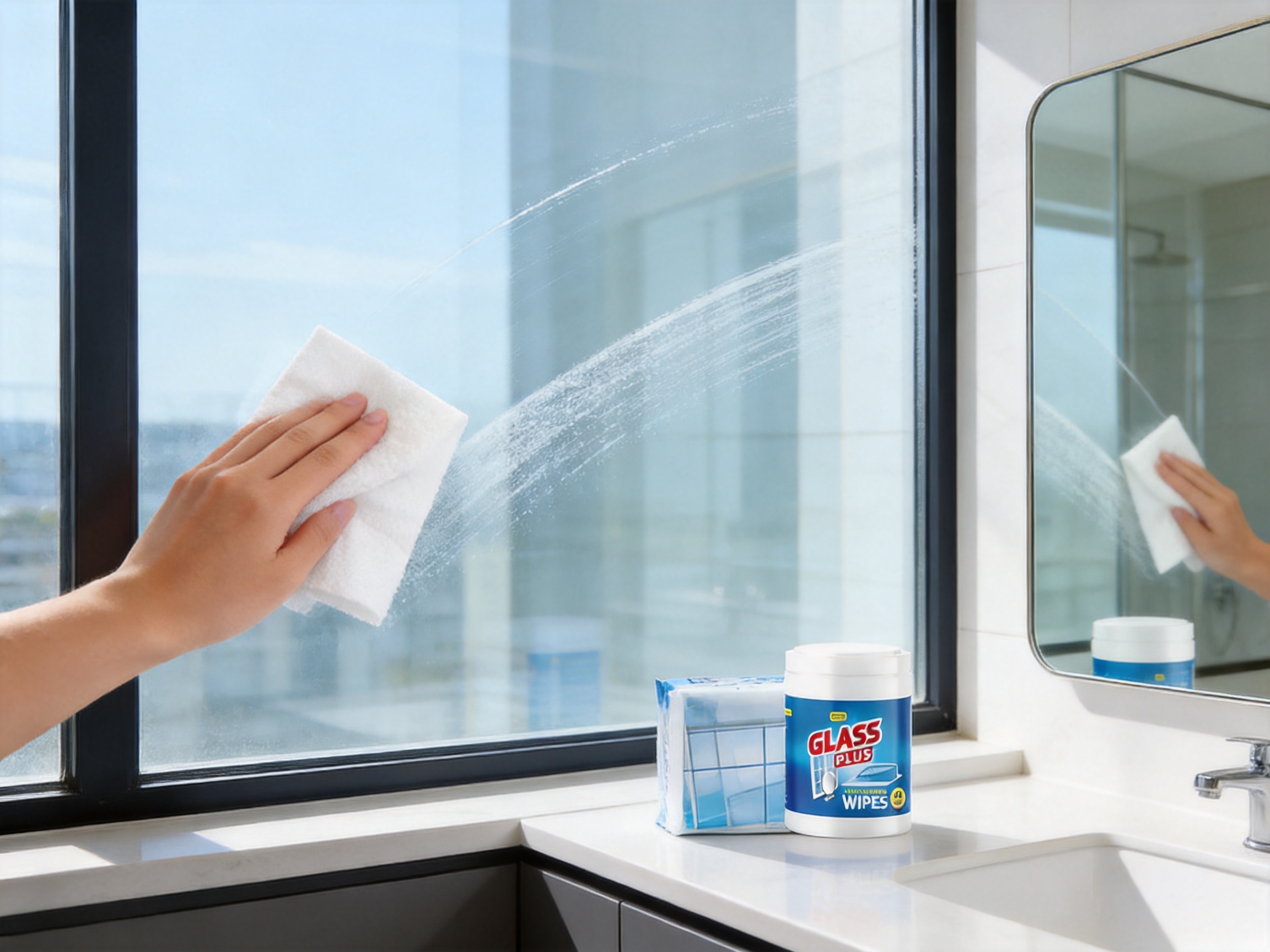
Glass cleaning wipes provide a convenient solution for routine surface care. Designed to clean glass and mirrors while helping leave them shiny and spotless, these ready-to-use wipes simplify the cleaning process and reduce the need for additional tools. Their quick-evaporation performance helps minimize wet residue and can eliminate the need for a second wipe in many everyday cleaning situations. For consumers, this means faster results with less effort. For commercial users, it can mean improved productivity, more consistent presentation, and easier supply management.
The product range described here also includes stainless steel wipes. These wipes are intended for stainless steel appliances, kitchenware, fixtures, and other smooth metal surfaces. They help remove dirt while supporting a clean, polished appearance and helping resist visible fingerprints. Together, glass cleaning wipes and stainless steel wipes form a practical surface-care solution for kitchens, bathrooms, offices, hospitality environments, retail spaces, and industrial settings.
Behind a dependable wipe is more than a liquid formula and a sheet of nonwoven material. Product quality depends on substrate selection, liquid application, converting accuracy, packaging integrity, cleanliness controls, equipment reliability, and the manufacturer’s ability to adapt the product to different markets. Zhejiang Uniquality Nursing Products Technology Co., Ltd., operating together with the Kingsafe and Uniquality organization, brings extensive nonwoven manufacturing experience, research and development capability, production capacity, and private-label service to this product category.

Glass Cleaning Wipes
What Are Glass Cleaning Wipes?
Glass cleaning wipes are pre-moistened cleaning sheets developed for smooth, nonporous surfaces such as windows, mirrors, glass doors, glass tables, display panels, and similar materials. Each wipe combines a soft nonwoven substrate with a cleaning solution designed to loosen and remove common surface contaminants. The objective is not only to clean but also to support a clear, bright finish without obvious streaking.
Unlike a conventional spray-and-cloth process, a pre-moistened wipe integrates the application and wiping steps into one product. Users do not need to locate a spray bottle, measure a solution, prepare a cloth, or wash the cloth after use. The wipe can be taken from its package and applied directly to the surface. This makes it suitable for quick maintenance, spot cleaning, scheduled housekeeping, and situations where speed and portability are important.
A well-designed glass wipe must balance several performance factors. It should contain enough moisture to loosen dirt and distribute the cleaning solution evenly. At the same time, it should not leave excessive liquid that could run down a vertical surface or create additional marks. The sheet should be strong enough to withstand wiping, yet soft enough to reduce the risk of scratching or surface damage when used correctly. The liquid should support cleaning and quick drying without producing a heavy residue.
These requirements make substrate engineering especially important. Nonwoven technology allows manufacturers to select and process fibers according to the intended application. Fiber composition, web structure, basis weight, softness, absorbency, tensile strength, and embossing or bonding methods can all influence the user experience. A wipe that feels smooth, unfolds easily, and remains intact during use can contribute to better cleaning performance and stronger customer satisfaction.
Core Product Advantages
Streak-Free Cleaning Support
The main expectation for a glass cleaning wipe is a clean and transparent finish. Glass and mirrors reflect light, which makes streaks and cloudy residues easy to see. A cleaning wipe designed for this purpose helps lift dust, fingerprints, smudges, and everyday dirt while distributing moisture across the surface. When the wipe is properly formulated and used according to instructions, the result can be a visibly clearer and more polished surface.
Streak control depends on the relationship between the solution, substrate, and drying behavior. A wipe that releases liquid unevenly may create wet patches, while a substrate that sheds fibers may leave visible particles behind. Product development therefore needs to consider how the wipe absorbs, retains, and releases the cleaning liquid. Consistent manufacturing helps ensure that individual wipes in the same package provide a similar experience.
Fast Evaporation
Quick evaporation is another important advantage. Excess moisture on glass can create water trails, especially on mirrors and vertical surfaces. A product that dries efficiently helps users complete the task more quickly and can reduce the need for a follow-up wipe. This feature is valuable in high-traffic environments where surfaces must be restored quickly, such as hotel bathrooms, office reception areas, retail counters, elevators, and restaurant dining spaces.
Fast evaporation also supports convenience during mobile cleaning. Users may need to clean a small mirror, a glass tabletop, a vehicle window, or a display panel without carrying multiple tools. A wipe that cleans and dries within a short period can make routine maintenance more practical in homes, workplaces, vehicles, and public facilities.
Convenient Ready-to-Use Format
Pre-moistened wipes are easy to store, open, carry, and dispose of after use. They are suitable for consumers who want a simple cleaning routine and for professional teams that need supplies available at multiple points throughout a facility. A compact package can be kept in a kitchen cabinet, janitorial cart, bathroom supply room, office drawer, car compartment, or retail service area.
The ready-to-use format also reduces preparation time. There is no need to dilute a concentrate, spray a cloth, or handle a bucket for small cleaning jobs. This can be especially useful for spot cleaning, daily touch-up work, and environments where frequent surface maintenance is necessary.
Soft and Practical Nonwoven Substrate
The nonwoven sheet is the part of the product that directly contacts the surface. A suitable substrate should provide a balanced combination of softness, strength, absorbency, and controlled liquid release. It should remain intact during wiping and should not easily tear when users clean corners, edges, handles, or broad areas.
Advanced nonwoven production allows manufacturers to produce materials for different cleaning requirements. Spunlace nonwoven fabrics, for example, can offer a textile-like hand feel and useful strength characteristics. Other nonwoven technologies may be selected when a specific combination of wet strength, absorbency, smoothness, or cost efficiency is required. By controlling the material structure, manufacturers can support different product positioning, from everyday household wipes to higher-performance professional cleaning formats.
Broad Surface Compatibility
Glass cleaning wipes are primarily intended for glass and mirrors, but the same cleaning concept can be useful for many smooth, nonporous surfaces. Depending on the final formula and product instructions, potential applications may include glass doors, shower screens, display cases, office partitions, windows, and polished surfaces. Users should always follow the product label and test an inconspicuous area when applying a wipe to a new or sensitive material.
The product’s broad usefulness makes it attractive for both household and institutional users. One package may support routine maintenance in several rooms, reducing the need for multiple specialized cleaning tools. For private-label customers, this versatility can also help create a clear product proposition for supermarkets, e-commerce stores, cleaning supply distributors, hospitality suppliers, and facility management companies.
Efficient Use of Time and Labor
Cleaning performance has a direct relationship with labor efficiency. A wipe that removes common marks quickly and dries without requiring repeated passes can reduce the time spent on each task. In commercial environments, even small time savings can become meaningful when multiplied across many windows, mirrors, rooms, counters, or fixtures.
For professional cleaning staff, a ready-to-use wipe may be useful for touch-up work between full cleaning cycles. For consumers, it can simplify everyday maintenance and encourage more frequent cleaning of frequently touched or highly visible surfaces. The combination of convenience and visible results is one of the key reasons wipes have become an important category within household and institutional cleaning.
Stainless Steel Wipes for Modern Kitchens and Facilities
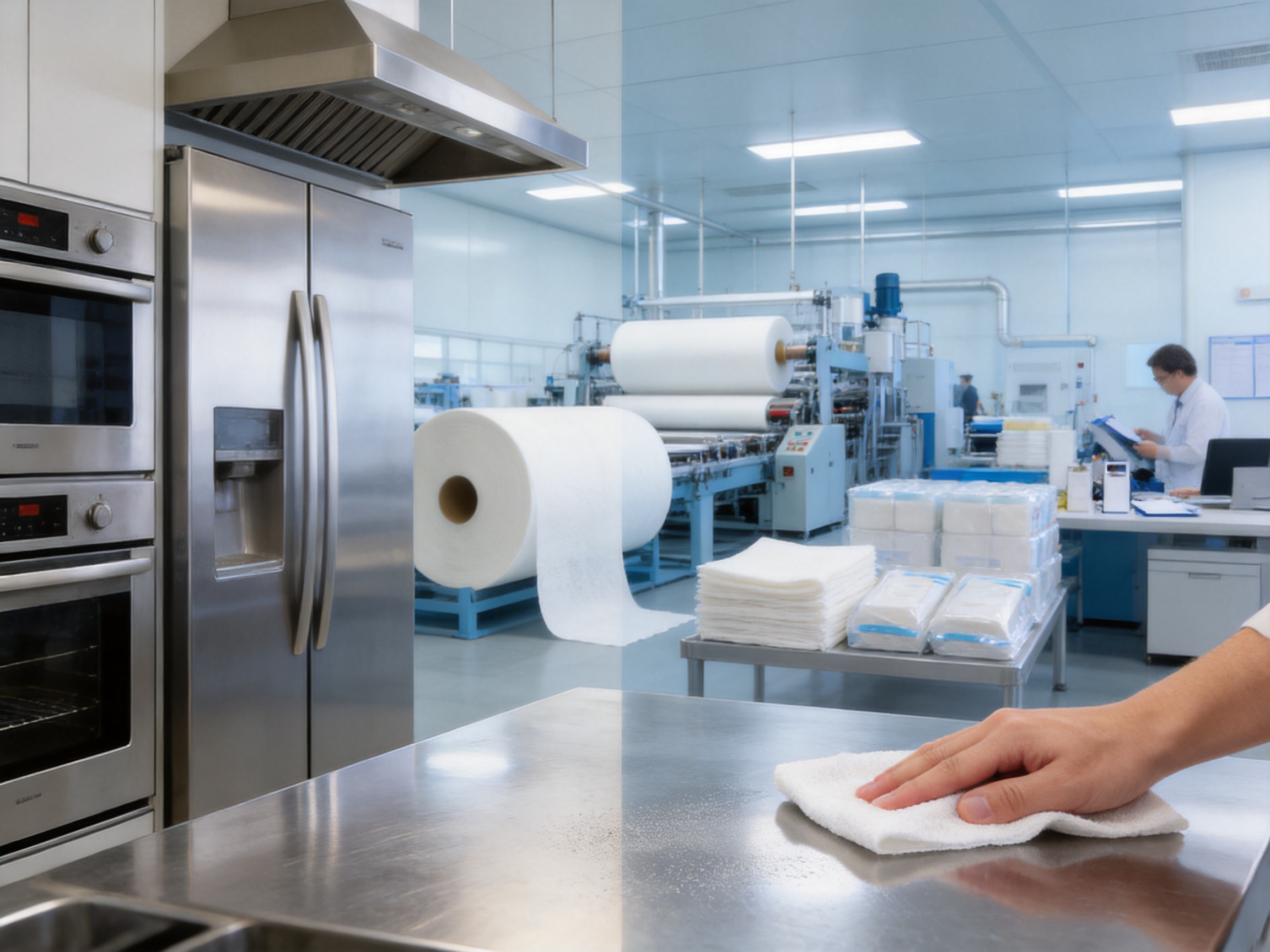
Stainless steel surfaces have a distinctive appearance, but they also show fingerprints, grease, water spots, and smudges easily. Refrigerators, ovens, range hoods, dishwashers, sinks, preparation tables, elevator panels, and decorative fixtures may require frequent attention to preserve a clean appearance. Stainless steel wipes are designed to address this need by helping remove everyday dirt and supporting a bright, well-maintained finish.
Stainless steel cleaning has different requirements from glass cleaning. Metal surfaces may have a visible grain or brushed pattern, and wiping direction can influence the final appearance. A suitable wipe should spread its cleaning solution evenly and help lift surface contamination without leaving excessive residue. Users should follow the product directions and wipe in the direction of the grain when applicable.
The ability to help resist visible fingerprints adds practical value. In kitchens and public areas, repeated contact can quickly make stainless steel look dull or untidy. Regular use of a suitable wipe can help restore a more uniform appearance, making appliances and fixtures look newer and better cared for. This is particularly important in hospitality, food service, healthcare, retail, and office environments where cleanliness is closely associated with service quality.
Offering glass cleaning wipes and stainless steel wipes within one broader product portfolio can benefit distributors and private-label customers. Both products address smooth-surface care, but each serves a distinct consumer need. They can be sold separately, bundled into a kitchen cleaning range, or included in a wider household maintenance program.
Comparison with Conventional Cleaning Methods
| Cleaning approach | Convenience | Typical advantages | Potential limitations |
|---|---|---|---|
| Glass cleaning wipes | High | Ready to use, portable, quick application, no separate cloth required | Single-use format requires responsible disposal and suitable packaging |
| Spray cleaner and reusable cloth | Moderate | Flexible quantity of liquid and reusable wiping tool | Requires several items, laundering, and possible over-application |
| Paper towel and cleaning solution | Moderate | Widely available and easy to use | May tear, shed fibers, or require repeated sheets |
| Water and household cloth | Moderate | Low initial cost and simple preparation | May not remove grease effectively and can leave water marks |
| Professional cleaning system | Variable | Suitable for large facilities and scheduled operations | Can require equipment, training, storage, and maintenance |
Glass cleaning wipes do not replace every cleaning method. Large commercial windows, heavily soiled surfaces, and specialized industrial applications may require dedicated equipment or professional chemicals. However, wipes are highly practical for routine care, spot cleaning, and rapid maintenance. Their main competitive advantage is the combination of convenience, controlled application, portability, and consistent format.
Compared with a spray bottle and cloth, a wipe reduces the number of items a user must handle. Compared with ordinary paper towels, a purpose-designed nonwoven substrate can provide a more controlled wiping experience. Compared with water alone, a formulated cleaning solution can be developed to support better removal of common surface marks. These benefits make the product especially attractive for users who value speed and ease of use.
Manufacturing Strengths Behind the Product
More Than Three Decades of Industry Experience
Zhejiang Uniquality Nursing Products Technology Co., Ltd. was founded in 1987 and has developed extensive experience in nonwoven materials, nursing products, wipes, and related hygienic products. Its long operating history provides a foundation for understanding raw materials, production control, product development, packaging requirements, and the expectations of domestic and international customers.
Experience is particularly valuable in the wipes industry because product performance depends on many connected variables. A change in fiber structure can affect absorbency. A change in liquid loading can influence drying time. A change in folding or packaging can affect dispensing. Long-term manufacturing experience helps a supplier identify these relationships and develop more stable production procedures.
Advanced Nonwoven Technology
The company specializes in research, development, production, and sales related to medical and hygienic nonwoven materials, nursing products, and high-end clothing interlining. Its product portfolio includes spunlace nonwoven fabrics, spunmelt nonwoven fabrics, hot-air-through nonwoven fabrics, flushable and degradable nonwoven fabrics, wet wipes, dry wipes, wet toilet paper, cleansing wipes, baby diapers, and pull-ups.
This breadth of material experience is relevant to glass cleaning wipes because the substrate is central to product performance. A manufacturer familiar with multiple nonwoven technologies can evaluate different fiber structures and production methods according to the desired end use. This can support development of wipes with suitable softness, strength, absorbency, wet integrity, and cost positioning.
The company has introduced advanced production equipment and technology from Germany, France, and Italy. Internationally sourced equipment can support precise web formation, controlled bonding, high-speed converting, consistent folding, and reliable packaging. Equipment alone does not guarantee product quality, but modern machinery combined with trained personnel and controlled processes can improve repeatability and manufacturing efficiency.
Integrated Production Capability
An integrated manufacturing organization can coordinate several stages of product development and production. These stages may include material selection, nonwoven fabrication, liquid preparation, wetting, folding, cutting, packaging, inspection, and shipment coordination. When these functions are managed within a connected production system, it becomes easier to align the final product with customer requirements.
Integrated capability is especially important for private-label programs. Brand owners may require specific sheet sizes, pack counts, folding formats, fragrances or fragrance-free options, packaging structures, label designs, carton configurations, or market-specific documentation. A capable manufacturer can communicate across technical, production, quality, and commercial teams to turn a product brief into a manufacturable solution.
Multiple Production Bases
After more than 30 years of development, the company has established eight production bases in China, including locations in Changxing, Foshan, Nantong, and Wuhan. A multi-base manufacturing network can provide broader production resources, regional support, and the ability to coordinate different product categories. It may also help the organization serve customers with varied volume requirements and product schedules.
For international buyers, production scale can be an important consideration. A supplier with substantial facilities and a broad product portfolio may be better positioned to support both established brands and developing private-label programs. Buyers can discuss production capacity, lead times, packaging requirements, and quality procedures directly with the manufacturer during project planning.
Research and Development Orientation
Research and development is important because the cleaning wipes market continues to evolve. Customers may seek lower-lint substrates, improved drying, stronger wet integrity, more convenient packaging, reduced environmental impact, or specialized solutions for different surfaces. A manufacturer with its own R&D focus can evaluate these needs rather than relying only on fixed, standardized products.
Development work may involve comparing fiber types, adjusting nonwoven weight, changing liquid loading, evaluating sheet dimensions, improving folding methods, and testing package performance. It may also include evaluating new materials and designing products for different price levels or market channels. This ability to refine the product helps private-label customers create more differentiated offerings.
Quality and Process Control
Consistent quality is essential for surface cleaning wipes. A consumer expects each wipe in a package to be usable, sufficiently moist, and structurally sound. A commercial buyer expects stable performance from one production lot to another. Quality management therefore needs to cover raw materials, manufacturing parameters, liquid application, packaging, storage, and finished goods inspection.
Raw material control begins with the selection of suitable nonwoven substrates and packaging components. Important considerations may include fiber characteristics, sheet weight, appearance, strength, absorbency, cleanliness, and compatibility with the cleaning liquid. Packaging materials must also provide appropriate protection against evaporation, contamination, and damage during transportation.
During production, process controls can help maintain consistent sheet dimensions, folding, cutting, wetting, and pack counts. Accurate liquid application is particularly important. Too little liquid may reduce cleaning convenience, while too much can create leakage, slow drying, or package instability. Controlled equipment and inspection procedures help reduce variation.
Finished-product checks may include visual appearance, package sealing, dimensions, count, moisture distribution, wipe integrity, odor, and product labeling. Additional performance testing can be selected according to customer requirements and product positioning. Private-label buyers should discuss the applicable specifications and testing plan before mass production begins.
Packaging Integrity
Packaging is not simply a method of presenting the product. It protects the wipes from drying, contamination, and physical damage. A package must be easy to open and close while maintaining an effective seal during normal use. For larger commercial packs, dispensing design can also influence how efficiently staff use the product.
Packaging options may vary according to market needs. Flexible soft packs can be lightweight and suitable for household retail. Resealable closures can help protect remaining wipes after opening. Canisters may support controlled dispensing in certain professional settings. Carton packaging can improve shipping organization and shelf presentation. The best format depends on the target user, sales channel, pack count, cost objectives, and transportation conditions.
Private-Label and OEM/ODM Opportunities
Private-label wipes allow retailers, distributors, cleaning companies, hospitality groups, and emerging brands to offer products under their own names. Instead of building a manufacturing facility, the brand owner works with an experienced producer to develop, manufacture, package, and supply the product. This approach can shorten the path from concept to market while allowing the customer to focus on branding, distribution, and customer relationships.
Zhejiang Uniquality Nursing Products Technology Co., Ltd. provides OEM and ODM services for wet and dry wipes, diapers, growing training pants, and other related products. Its experience across household, personal care, maternal and baby, medical, beauty, industrial cleaning, and clothing applications gives private-label customers access to a broad technical platform.
Product Customization
Customization can begin with the basic product specification. Customers may discuss the intended surface, target market, sheet dimensions, folding format, pack count, packaging type, fragrance preference, liquid characteristics, and desired price range. For a glass cleaning wipe, the development objective may emphasize fast drying and low visible residue. For a stainless steel wipe, the objective may emphasize dirt removal, shine, and fingerprint resistance.
Sheet size is another important consideration. Smaller wipes may be convenient for quick touch-ups, while larger sheets may be better suited to mirrors, windows, appliances, and professional cleaning tasks. Folded formats can influence dispensing and package dimensions. A manufacturer with flexible converting capability can help identify a practical format for the customer’s sales channel.
Brand and Packaging Development
Private-label customers can create packaging that communicates the product’s intended benefits clearly. A front panel may highlight glass, mirror, or stainless steel applications, while back-panel instructions can explain correct use, storage, disposal, and surface precautions. Clear communication helps consumers select the right product and use it appropriately.
Packaging design should also reflect the target market. A household product may emphasize convenience and a spotless finish. A professional product may emphasize pack count, efficiency, and suitability for routine facility maintenance. A premium product may use refined graphics and material choices to communicate a higher-end positioning.
Support for Different Market Channels
Glass cleaning wipes can be distributed through supermarkets, convenience stores, home improvement retailers, e-commerce platforms, janitorial suppliers, hospitality distributors, automotive retailers, and institutional procurement systems. Each channel may have different requirements related to packaging, carton dimensions, barcode information, palletization, product claims, and documentation.
An experienced OEM supplier can help coordinate production details for different channels. The customer should provide market-specific requirements as early as possible, particularly when products will be sold in multiple countries. Labeling, language, ingredient disclosure, safety statements, packaging symbols, and disposal information may differ by destination.
Applications Across Different Environments
Households
In the home, glass cleaning wipes can be used for mirrors, windows, glass doors, tables, cabinets, shower screens, and other smooth surfaces. They are useful for removing fingerprints after family use, cleaning marks around handles, refreshing bathroom mirrors, or preparing glass surfaces before guests arrive. Their compact format makes them easy to keep in several rooms.
Stainless steel wipes can support routine care for refrigerators, ovens, sinks, range hoods, and other kitchen fixtures. Because kitchens often combine glass and stainless steel surfaces, a household may benefit from keeping both products available. Users should select the appropriate wipe for the intended material and follow the instructions on the package.
Offices and Commercial Buildings
Office environments contain many visible smooth surfaces, including meeting-room glass, reception counters, interior windows, partitions, elevator panels, and display cabinets. Fingerprints and smudges can accumulate quickly in areas with frequent visitor traffic. Glass cleaning wipes allow staff or cleaning teams to address these marks without bringing a full spray-and-cloth system to every location.
In commercial buildings, presentation contributes to the perception of cleanliness and professionalism. A clear reception window, polished glass door, and clean mirror can improve the appearance of a facility. Wipes can be used as part of a broader cleaning schedule, particularly for daily touch-ups and high-contact areas.
Hotels and Restaurants
Hospitality businesses have demanding cleaning routines. Guest-room mirrors, bathroom glass, lobby surfaces, restaurant display cases, and decorative fixtures may require frequent maintenance. Ready-to-use wipes can help housekeeping staff complete small tasks efficiently between larger cleaning procedures.
Restaurants and food-service areas often use stainless steel equipment and fixtures. Stainless steel wipes may help maintain the appearance of refrigerators, counters, service panels, and other non-food-contact surfaces when used according to applicable instructions. Cleaning procedures must always follow the facility’s hygiene program and any requirements for food-contact surfaces.
Retail and Showrooms
Retail stores rely on clean displays to present products effectively. Glass shelves, showcases, doors, counters, and mirrors can become marked through normal customer interaction. A wipe that is easy to store and quickly apply can help staff maintain a neat presentation throughout the day.
In appliance, furniture, automotive, and electronics showrooms, stainless steel and glass surfaces are often part of the product presentation. Removing fingerprints and smudges helps customers view the products more clearly and can support a more professional sales environment.
Healthcare and Care Facilities
Healthcare and care environments require carefully managed cleaning procedures. Glass cleaning wipes may be considered for appropriate noncritical surfaces as part of an approved cleaning program. Facility managers should verify that the product’s formulation, labeling, and intended use meet their internal requirements and applicable regulations.
The convenience of wipes can be valuable in areas where staff must respond quickly to visible marks. However, surface cleaning wipes should not automatically be treated as disinfectants. If disinfection is required, the facility must use a product specifically validated and labeled for that purpose.
Responsible Product Use
Users should read the package instructions before use. The wipe should be applied to the intended surface, and the surface should be checked for compatibility when the material is unfamiliar, coated, painted, tinted, or especially sensitive. Testing a small, inconspicuous area can help identify potential compatibility concerns.
Glass cleaning wipes are intended for glass and similar surfaces identified by the manufacturer. They should not be assumed to be suitable for screens, optical lenses, untreated wood, leather, porous stone, or delicate coatings unless the instructions specifically state otherwise. Stainless steel wipes should be used according to the recommended direction and handling instructions.
Wipes should not be flushed unless the package clearly states that they are designed and approved for flushing. Even then, local wastewater guidance should be followed. Used wipes should be disposed of responsibly, and packages should be kept closed when not in use to help preserve moisture.
Environmental and Efficiency Considerations
Product developers and buyers are increasingly evaluating the environmental profile of cleaning wipes. Considerations may include fiber selection, packaging material, manufacturing efficiency, transport weight, product concentration, and end-of-life disposal. The appropriate solution depends on the intended application and the requirements of the target market.
The company’s broader product portfolio includes flushable and degradable nonwoven materials, demonstrating experience with material innovation and changing market expectations. For a particular glass or stainless steel wipe program, customers can discuss available substrate options and packaging approaches with the manufacturer. Any environmental claim should be supported by appropriate testing, documentation, and market-specific compliance review.
Efficiency also has an environmental dimension. A wipe that cleans effectively on the first pass may reduce repeated use and unnecessary consumption. Correct sheet sizing, controlled liquid loading, and suitable packaging can help balance product performance with material use. Private-label customers should evaluate the complete product system rather than focusing on one material characteristic alone.

Why Choose an Experienced Manufacturing Partner?
Selecting a supplier is a strategic decision for any wipes program. Product quality, delivery reliability, development speed, technical communication, and documentation can all affect the success of a private-label launch. An experienced partner can help identify realistic specifications and avoid problems that may occur when a product is developed without sufficient knowledge of nonwoven materials or wet-wipe production.
The organization behind the product has more than 30 years of development experience, multiple production bases, international production equipment, and a broad technical portfolio. It has served fields including medical care, maternal and baby products, beauty, household cleaning, industrial cleaning, and clothing. This cross-category experience can support a more comprehensive understanding of materials, hygiene, packaging, and consumer expectations.
The company reports that it has ranked among the leading enterprises in China’s nonwoven industry and among the top global nonwoven manufacturers for multiple consecutive years. Such industry scale can provide confidence in manufacturing resources, although customers should still confirm project-specific specifications, quality standards, testing arrangements, and delivery terms before placing an order.
Another advantage is the ability to develop related products through one supplier. A customer starting with glass cleaning wipes may later require stainless steel wipes, multipurpose wipes, dry wipes, baby care products, or other nonwoven solutions. A broad supplier relationship can simplify communication and support coordinated purchasing across product categories.
How to Evaluate a Glass Cleaning Wipe Supplier
Confirm Product Specifications
Buyers should define the intended surface, target user, sheet size, pack count, packaging format, cleaning objectives, and expected level of performance. Clear specifications allow the manufacturer to recommend a suitable substrate and liquid system. Vague requirements can lead to misunderstandings during sampling and mass production.
Review Sample Performance
Samples should be tested on the actual surfaces and under realistic conditions. Evaluation may include streaking, drying time, cleaning ability, lint, sheet strength, ease of dispensing, odor, packaging closure, and appearance after storage. Tests should be repeated across multiple wipes and, where possible, multiple production samples.
Discuss Quality Documentation
Customers should ask which raw material controls, in-process inspections, finished-product checks, and product records are available. Depending on the market, buyers may also need documentation related to ingredients, packaging materials, safety information, labeling, transportation, and regulatory compliance.
Assess Production and Delivery Capability
Production capacity, minimum order quantity, lead time, sampling time, carton configuration, and shipping arrangements should be discussed in advance. A supplier may offer several product formats, but not every format will have the same production schedule or minimum quantity. Early planning helps align the product concept with commercial objectives.
Evaluate Communication and Development Support
Successful OEM and ODM projects require clear communication. The supplier should be able to explain technical choices, identify practical limitations, provide sample feedback, and coordinate artwork and packaging details. Responsive communication can reduce delays and improve the likelihood that the final product meets the customer’s expectations.
Frequently Asked Questions
What surfaces are glass cleaning wipes designed for?
They are primarily designed for glass and mirrors, including windows, glass doors, display panels, glass tables, and similar smooth surfaces. Users should read the label and test an inconspicuous area before applying the product to unfamiliar or delicate materials.
Do glass cleaning wipes leave streaks?
The product is designed to clean glass and mirrors without streaks. Actual results depend on the surface condition, amount of soil, wiping technique, storage, and correct use. Excessively dirty surfaces may require more than one wipe or a preliminary cleaning step.
Why is quick evaporation important?
Quick evaporation helps reduce wet residue and water trails. It can allow the user to complete the cleaning task faster and may eliminate the need for a second wipe on many everyday surfaces.
Can these wipes be used on stainless steel?
The product range includes stainless steel wipes specifically intended for stainless steel surfaces. Glass cleaning wipes should not automatically be used on stainless steel unless the product instructions confirm compatibility. Using the dedicated stainless steel format can provide a more suitable cleaning and finishing experience.
Do stainless steel wipes remove fingerprints?
Stainless steel wipes are designed to remove dirt and help resist visible fingerprints. Results may vary depending on the condition, finish, grain, and level of contamination on the surface. Wiping in the direction of the stainless steel grain is generally recommended when applicable.
Are the wipes disinfectants?
Glass cleaning wipes and stainless steel wipes should not be considered disinfectants unless the packaging specifically identifies them as such and provides the required validated claims. Cleaning and disinfection are different functions, and facilities should use an approved disinfecting product when disinfection is required.
Can the product be customized for a private-label brand?
Yes. OEM and ODM programs can be developed around specifications such as sheet size, pack count, folding format, packaging, branding, and product positioning. Customers should provide their target market and performance requirements so the manufacturer can recommend a suitable configuration.
What types of packaging are available?
Depending on the project, packaging may include resealable soft packs, canisters, or other formats. The appropriate choice depends on the intended user, sales channel, pack size, moisture protection requirements, and budget.
How should the wipes be stored?
Wipes should be stored in their original sealed package, away from excessive heat, direct sunlight, and conditions that may damage the packaging or cause moisture loss. After opening, the package should be closed securely between uses.
Can the wipes be flushed?
They should not be flushed unless the product packaging specifically states that they are designed and approved for flushing. Most general cleaning wipes should be disposed of according to local waste-management guidance.
What makes an experienced nonwoven manufacturer valuable?
An experienced manufacturer can connect substrate engineering, liquid application, converting, packaging, quality control, and private-label development. This integrated knowledge helps create a more consistent product and can make it easier to adjust the product for different markets and customer requirements.
What information should a buyer provide when requesting a quotation?
A buyer should provide the intended application, target country or market, product type, sheet dimensions, pack count, packaging preference, estimated order volume, branding requirements, desired delivery schedule, and any quality or regulatory expectations. Detailed information helps the manufacturer prepare a more accurate proposal.
Conclusion
Glass cleaning wipes offer a practical and efficient way to maintain glass and mirror surfaces. Their ready-to-use format, convenient portability, controlled moisture, soft nonwoven substrate, and quick-evaporation performance can help users achieve a clean and polished appearance with less effort. Stainless steel wipes extend the product concept to appliances, fixtures, and kitchenware, helping remove dirt and reduce the visual impact of fingerprints.
The product’s advantages are supported by the manufacturing capabilities behind it. With roots extending back to 1987, Zhejiang Uniquality Nursing Products Technology Co., Ltd. has developed broad experience in nonwoven materials, wet wipes, dry wipes, nursing products, and related hygienic solutions. Its production bases, international equipment, research and development orientation, and OEM/ODM capabilities provide a strong platform for private-label customers seeking dependable surface-care products.
For brands, retailers, distributors, hospitality suppliers, and professional cleaning organizations, the product can be developed as part of a focused glass-care range, a kitchen-care program, or a wider household and institutional cleaning portfolio. By combining appropriate substrate technology, controlled liquid application, protective packaging, and clear product instructions, manufacturers and brand owners can create wipes that meet the practical needs of modern users.
Customers considering a new product program should evaluate samples carefully, define specifications clearly, confirm quality documentation, and discuss packaging and market requirements at the beginning of development. With the right manufacturing partner, glass cleaning wipes can become a convenient, competitive, and scalable product for both domestic and international markets.
References
1. Company-provided product information for glass cleaning wipes and stainless steel wipes.
2. Company-provided corporate information for Zhejiang Uniquality Nursing Products Technology Co., Ltd. and the Kingsafe and Uniquality organization.
3. General principles of nonwoven fabric manufacturing, wet-wipe converting, and surface-cleaning product development.
4. General guidance on household surface cleaning, product labeling, responsible disposal, and material compatibility.
5. General industry practices for OEM, ODM, private-label product development, packaging control, and finished-goods inspection.