中文简体
中文简体 English
 日本語
日本語 русский
 Español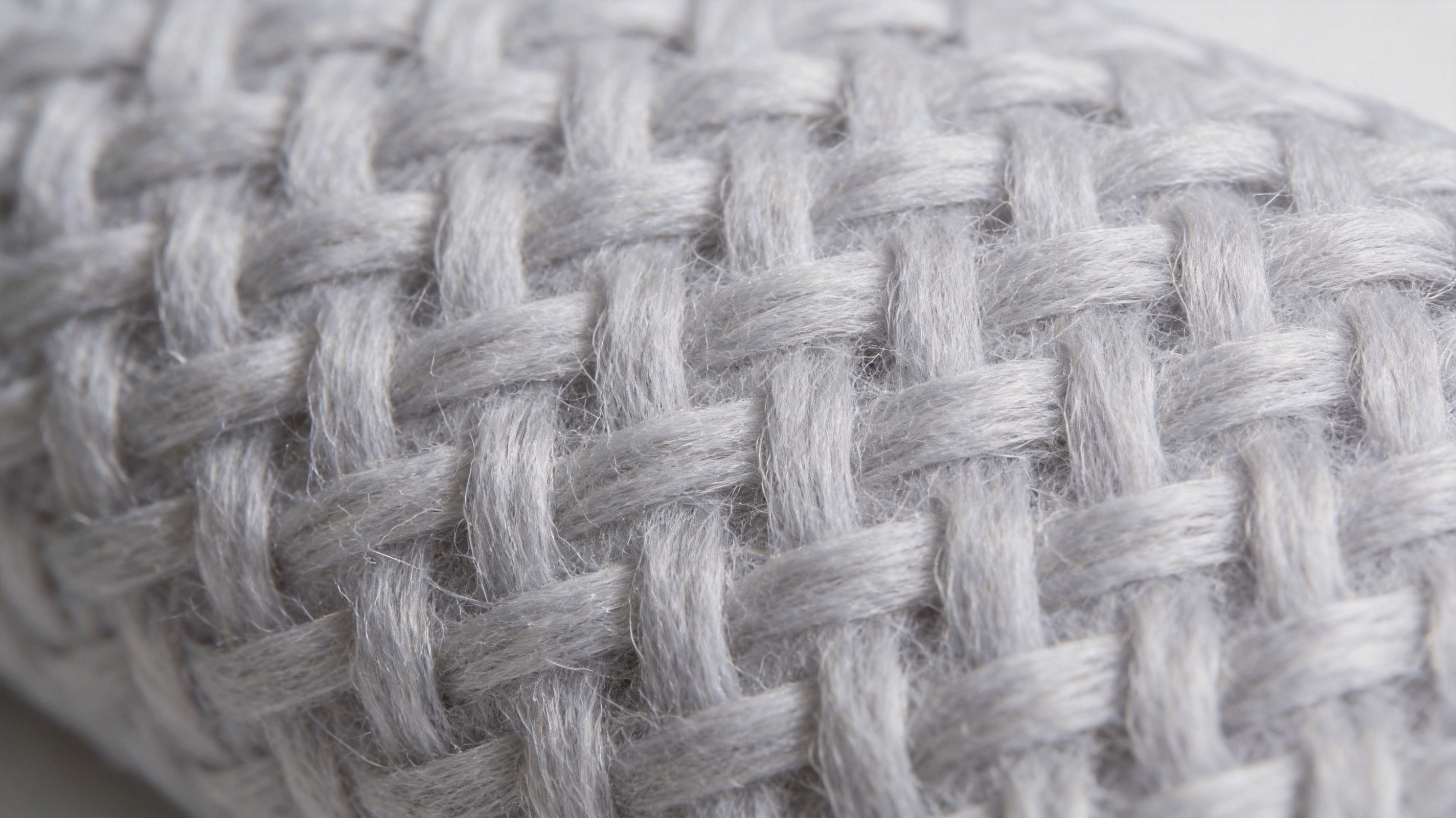
Industrial workplaces require cleaning materials that can perform reliably under demanding conditions. Factories, workshops, maintenance areas, warehouses, laboratories, service stations, and production lines often deal with oil, grease, water, dust, metal particles, chemical residues, and other difficult contaminants. Ordinary household tissues or low-quality wiping cloths may tear, leave lint behind, become saturated too quickly, or create additional waste. For these applications, an industrial cleansing nonwoven cloth offers a more practical and dependable solution.
Industrial cleansing nonwoven cloth is made from thickened, durable nonwoven fabric engineered for effective oil and water absorption. Its lint-free and pill-resistant structure helps provide a cleaner wiping experience, while its straightforward packaging makes it convenient for daily use in professional environments. The product is designed to combine strength, absorbency, handling comfort, and production efficiency in one cleaning material.
Manufactured by Zhejiang Uniquality Nursing Products Technology Co., Ltd., under the Kingsafe and Uniquality business operations, this industrial cleaning product benefits from decades of experience in nonwoven materials, hygiene products, and functional textile manufacturing. The company has developed capabilities covering research and development, fiber processing, nonwoven production, converting, packaging, and customized manufacturing. These strengths allow the product to serve both routine cleaning needs and more specialized industrial requirements.
Why Industrial Cleaning Requires a Specialized Wiping Material
Cleaning in an industrial environment is different from cleaning in a home or office. Professional users often need to remove heavy contamination quickly while avoiding damage to machinery, tools, surfaces, or finished products. A wiping cloth may need to absorb liquid spills, pick up grease, remove dust, polish a surface, or wipe away residue without leaving fibers behind.
These requirements place several demands on the wiping material. It must have adequate tensile strength so that it does not tear during use. It should absorb liquids quickly and retain those liquids rather than spreading them across a surface. It should resist pilling and lint release, especially when used around equipment, precision components, painted surfaces, or clean production areas. It should also be easy to dispense, carry, store, and dispose of after use.
Traditional woven rags can provide strength, but their performance may vary considerably depending on the source textile. Recycled cloth may contain seams, loose threads, inconsistent thickness, or hidden contaminants. Paper towels can be convenient, but they may disintegrate when exposed to water, oil, or friction. Lightweight nonwoven wipes may be economical, but they are not always suitable for intensive industrial cleaning.
A thickened industrial cleansing nonwoven cloth is designed to address these limitations. The nonwoven structure can be engineered for uniformity, controlled basis weight, consistent absorbency, and stable dimensions. Instead of relying on random scrap textiles, manufacturers can create a purpose-built material with repeatable characteristics from roll to roll and batch to batch.
Core Product Characteristics
Thickened and Durable Construction
The product uses thickened nonwoven fabric to improve durability during demanding wiping tasks. A thicker structure generally provides better hand feel, greater coverage per sheet, and improved resistance to tearing when the user applies pressure. This is particularly useful when removing grease from tools, wiping down machine parts, or cleaning rough and uneven surfaces.
Durability also affects overall operating efficiency. A cloth that remains intact during use can complete a task without requiring immediate replacement. Workers can spend less time reaching for additional wipes, and maintenance teams can reduce interruptions during cleaning procedures. In environments where cleaning is performed repeatedly throughout a shift, this practical benefit can contribute to smoother workflow.
Durability does not mean that the cloth is intended to be reused indefinitely. Rather, it means the material is strong enough to perform its intended cleaning function without premature breakdown. After use, the cloth can be handled and disposed of according to the workplace’s waste management procedures and the substances it has absorbed.
Strong Oil Absorption
Oil and grease are common contaminants in mechanical workshops, automotive service areas, industrial production lines, and equipment maintenance departments. These substances can be difficult to remove because they spread easily and may leave a slippery film on a surface. A suitable industrial wipe must absorb oil efficiently rather than merely push it from one location to another.
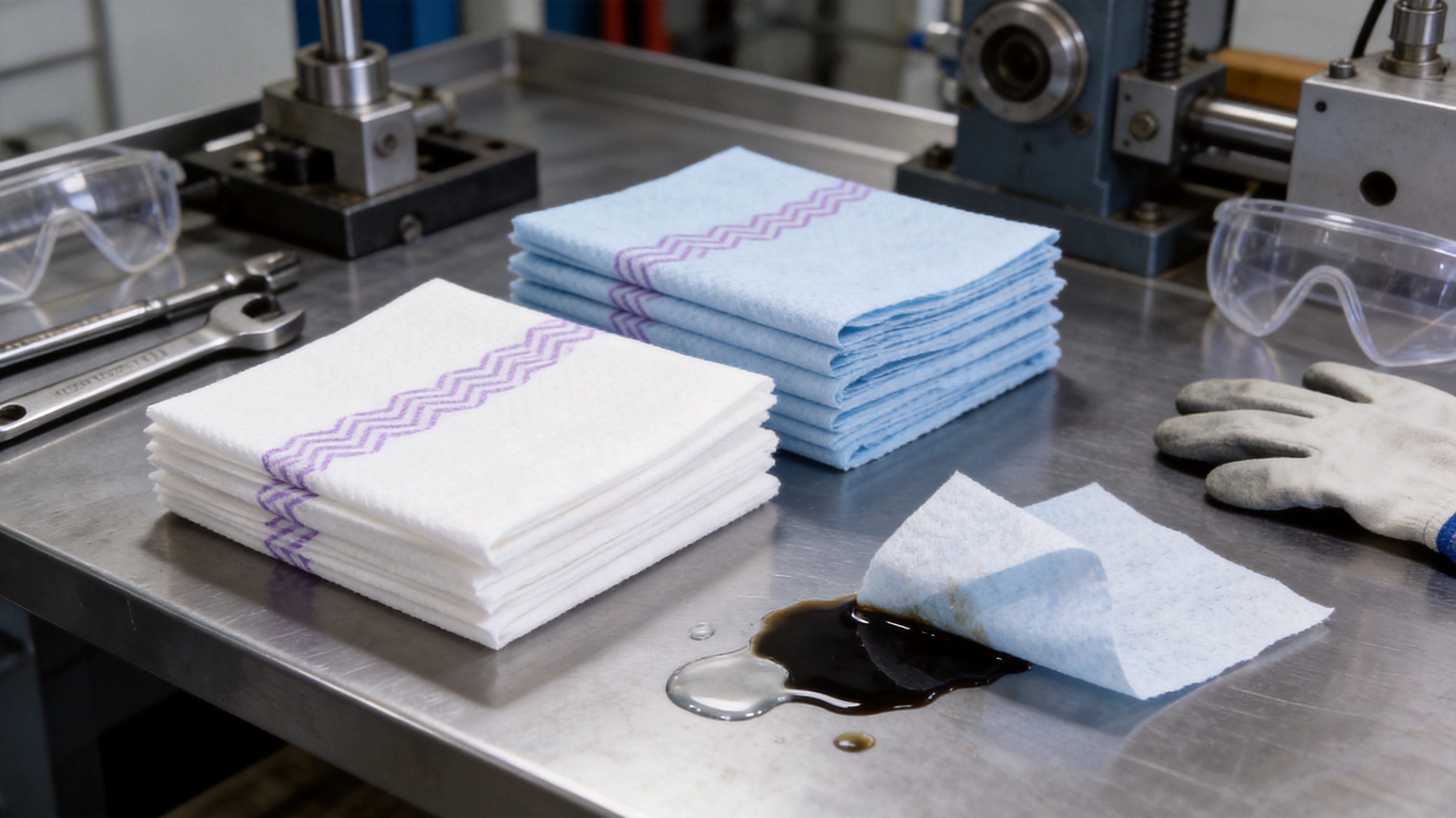
The nonwoven cloth is designed with strong oil absorption to support the removal of lubricants, grease, and oily residues. Its thickened construction gives the user enough material to collect contamination while maintaining control during wiping. This is valuable for cleaning workbenches, machine housings, hand tools, production equipment, and maintenance components.
When oil is absorbed efficiently, fewer wiping motions may be needed to achieve a satisfactory result. This can help reduce labor consumption and limit the amount of material used for each task. It can also improve workplace cleanliness by reducing the chance that oil will be spread across handles, floors, storage areas, or adjacent equipment.
Strong Water Absorption
Industrial cleaning is not limited to oily contamination. Water, coolant, cleaning solutions, condensation, and accidental spills are also common. A wipe with strong water absorption can help workers respond quickly to spills and remove moisture from surfaces before it creates slipping hazards, corrosion risks, or process interruptions.
The cloth is suitable for absorbing water and other compatible liquids during routine cleaning and maintenance. Its nonwoven structure provides a broad surface area for liquid uptake, while the thickened material allows the wipe to hold a useful volume of moisture during handling. This makes it practical for wiping tables, equipment panels, floors in localized areas, containers, and work surfaces.
For chemical liquids or hazardous substances, users should always review the relevant safety data, confirm material compatibility, and follow workplace procedures. The cloth’s absorbency is an important functional advantage, but the appropriate protective equipment, containment method, and disposal process must be selected according to the substance being cleaned.
Lint-Free Performance
Lint can be a serious problem in industrial cleaning. Loose fibers may remain on polished metal, glass, painted surfaces, electronic housings, optical components, tools, or finished products. In some applications, lint can interfere with inspection, coating, assembly, or quality control.
The industrial cleansing nonwoven cloth is designed to be lint-free during normal use. This characteristic helps users achieve a cleaner surface and reduces the need for a second cleaning step. It is especially useful when wiping equipment that must remain visually clean or when preparing surfaces before inspection, packaging, assembly, or maintenance.
Lint-free performance also contributes to a more professional workplace. Workers can clean without leaving visible fibers on machinery or products, and quality teams can reduce the risk of confusing textile residue with production contamination. Although no wiping material should be treated as automatically suitable for every controlled environment, the product’s low-lint design provides an important advantage over many ordinary rags and low-grade paper products.
Pill-Resistant Structure
Pilling occurs when loose fibers form small balls on the surface of a textile. During wiping, these pills can detach and remain on the cleaned surface. They can also reduce the smoothness of the cloth and make it less comfortable to use.
The product is designed to resist pilling, helping maintain a more stable surface throughout the cleaning process. This feature supports consistent wiping performance when the cloth is rubbed against equipment, tools, counters, and other industrial surfaces. Pill resistance is particularly valuable in applications where cleanliness and appearance are important.
By combining lint-free and pill-resistant performance, the cloth can offer a cleaner alternative to many discarded textile rags. Users can benefit from a more uniform material that behaves consistently rather than from a mixture of unknown fabrics with unpredictable fiber release.
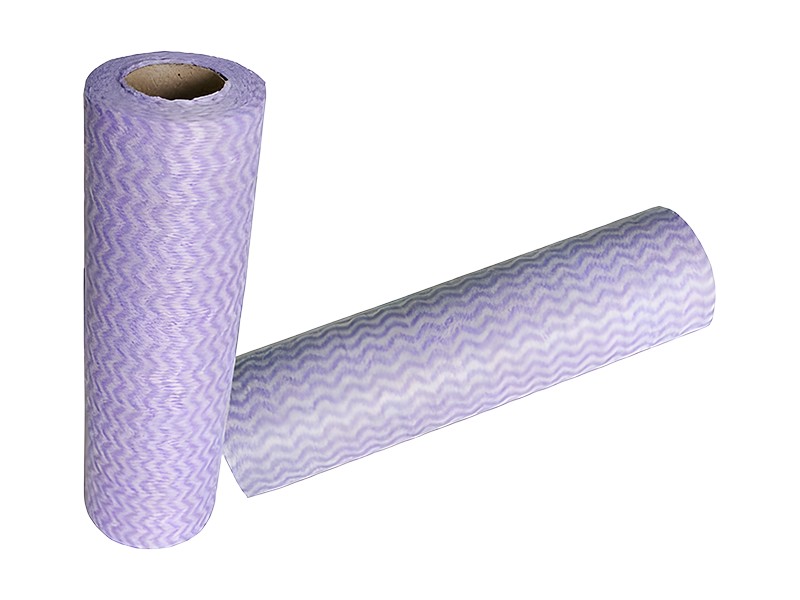
Industrial Cleansing Nonwoven Cloth
Advantages Over Conventional Cleaning Cloths
More Consistent Than Recycled Textile Rags
Recycled textile rags are widely used in industrial maintenance, but their quality can vary. One rag may be made from a soft cotton fabric, while another may contain synthetic fibers, seams, buttons, labels, or loose threads. Different materials can have different absorbency levels and different reactions to oils, cleaning solutions, and friction.
A manufactured nonwoven cloth is produced according to defined specifications. Thickness, width, roll or sheet dimensions, and packaging format can be controlled more consistently. This helps purchasing departments standardize their cleaning supplies and helps workers understand how the material will perform before they begin a task.
Uniformity is also beneficial for inventory management. When the same type of wipe is used across multiple departments, procurement teams can simplify product selection, storage, and replenishment. Training becomes easier because workers do not have to adapt to a different material each time a new carton of rags arrives.
Stronger and More Practical Than Ordinary Paper Towels
Paper towels are useful for light-duty wiping, but they may tear when used with oil, water, friction, or rough surfaces. Saturated paper can break apart and leave fragments behind. Multiple layers may be required for heavy cleaning, increasing material use and disposal volume.
The thickened nonwoven cloth is intended for more demanding work. It provides a stronger wiping surface and is less likely to disintegrate during normal industrial use. This can help reduce the number of sheets required for a task and make cleaning more efficient, particularly when users need to apply pressure or wipe away thick contamination.
The product is not intended to replace every type of paper towel. Light hand drying and very short-duration cleaning may still be served by other products. Its advantage is that it provides a more suitable combination of strength, absorbency, and cleanliness for industrial maintenance and workshop applications.
Cleaner Handling Than Loose Fabric Scraps
Loose fabric scraps can be difficult to store and dispense. They may arrive in compressed bundles, have inconsistent sizes, or become mixed with dirt before use. Workers may need to sort through the material to find a suitable piece, which can slow down cleaning tasks.
Simple and practical packaging gives the industrial cleansing nonwoven cloth a more organized format. The product can be stored near workstations, placed in maintenance cabinets, or distributed to cleaning teams according to daily requirements. Easy access encourages workers to clean spills and equipment promptly instead of waiting for a suitable cloth to become available.
More Suitable for Brand and Application Customization
Industrial users do not always have identical requirements. A factory may prefer large sheets for equipment maintenance, while a service business may need compact wipes for mobile technicians. Some distributors may require private-label packaging, while others may want a standardized industrial presentation.
As an experienced OEM and ODM manufacturer, Zhejiang Uniquality Nursing Products Technology Co., Ltd. can support customized product development and packaging solutions. Depending on the project, customization may involve dimensions, material weight, folding style, packing quantity, carton configuration, labeling, and private-label presentation. Specifications should be confirmed with the manufacturer according to the intended application and order volume.
Suitable Industrial Applications
Factories and Production Lines
Production lines need regular cleaning to keep equipment, fixtures, worktables, and nearby surfaces in good condition. The cloth can be used for removing dust, water, oil, light grease, and process residues from production areas. Its low-lint design is useful when cleaning around finished goods or components that must remain free from loose fibers.
Workers can use the wipes during scheduled maintenance, shift changes, product changeovers, and spill response. The material can also support housekeeping programs in which operators clean their work area at defined intervals. Consistent wiping materials help make these procedures easier to standardize across production teams.
Mechanical Workshops
Mechanical workshops commonly handle lubricants, coolants, grease, metal dust, and dirty tools. A durable wipe is needed because cleaning may involve friction and pressure. The thickened nonwoven cloth can help technicians wipe down spanners, components, benches, machine housings, and hands when appropriate.
Its oil and water absorption makes it suitable for general maintenance work. Technicians can use it to collect residue after servicing equipment, clean around fittings, and remove excess lubricant before inspection. The cloth’s tear resistance and practical format can help keep the work area organized throughout a busy day.
Automotive Service and Repair
Automotive service environments require frequent cleaning of engines, tools, workbenches, vehicle components, and service areas. Oil, coolant, brake dust, and water may be present at the same time. An industrial cleansing wipe can support both routine wipe-downs and quick response to accidental spills.
For sensitive automotive surfaces, users should first test the cloth and any cleaning chemical in an inconspicuous area. The correct wiping technique and compatible solvent should always be selected according to the surface material and the nature of the contamination.
Equipment Maintenance
Maintenance teams need cleaning materials that can be carried to different areas of a facility. A practical nonwoven cloth is useful for wiping control cabinets externally, machine covers, handles, tools, inspection points, and replacement parts. It can be incorporated into maintenance kits or stored alongside commonly used tools and lubricants.
Because the product is designed for durability and absorbency, it can support both preventive and corrective maintenance. During preventive maintenance, workers can clean inspection areas before checking for leaks, wear, or damage. During corrective maintenance, the cloth can help remove contamination before parts are repaired or replaced.
Warehouses and Logistics Areas
Warehouses may encounter water from condensation, dust from packaging materials, oil from equipment, and dirt brought in by vehicles or handling systems. Wipes placed near loading areas, pallet equipment, and packing stations can help employees respond quickly to localized contamination.
Clean and dry surfaces are important for safe handling and professional presentation. The cloth can be used to clean worktables, handles, containers, carts, and selected equipment surfaces. It can also assist with preparing packages or products for inspection before shipment.
Industrial Cleaning Contractors
Professional cleaning contractors often need a versatile product that can be used across multiple customer sites. A standardized nonwoven cloth simplifies training and allows workers to carry one dependable wiping material for a broad range of general industrial tasks.
Contractors may also benefit from customized packaging or larger-volume supply programs. Private-label options can support a service company’s own product identity, while consistent technical specifications can help maintain service quality across different locations.
Manufacturing Expertise Behind the Product
The performance of an industrial wipe depends not only on the final package but also on the quality systems and manufacturing capabilities behind it. Zhejiang Uniquality Nursing Products Technology Co., Ltd. was founded in 1987 and has developed long-term experience in medical, hygienic, nonwoven, nursing, and functional textile products.
The company operates as part of the Kingsafe and Uniquality business organization and has positioned itself as a high-technology enterprise focused on research and development, production, and sales. Its product portfolio includes spunlace nonwoven fabrics, spunmelt nonwoven fabrics, through-air hot nonwoven fabrics, flushable and degradable nonwoven materials, wet wipes, dry wipes, baby diapers, pull-ups, wet toilet paper, cleansing wipes, and related products.
This broad portfolio creates valuable technical connections. Knowledge gained from hygienic wipes can support absorbency and softness development. Experience with medical and nursing materials can contribute to cleanliness and process control. Expertise in industrial textiles can support strength, durability, and functional performance. The result is a manufacturing foundation capable of addressing different end-use requirements rather than producing only one narrow category of wipes.
Research and Development Capability
Industrial cleansing products must balance several properties that can sometimes compete with one another. A thicker cloth may improve durability, but it must still remain easy to fold and handle. Higher absorbency is useful, but the material must not release excessive lint. A strong structure is desirable, but the wipe should remain flexible enough to conform to different surfaces.
Research and development helps manufacturers study these relationships and adjust the material design. Fiber selection, web formation, bonding method, basis weight, thickness, surface texture, and converting format can all affect final performance. Through systematic development, the manufacturer can create products for different levels of cleaning intensity and different customer preferences.
For OEM and ODM projects, development capability is especially important. Customers may have a target price, a required package size, a preferred sheet dimension, or a specific application. A capable manufacturer can evaluate the requirements and recommend an appropriate material structure and production format.
Advanced Nonwoven Production
Nonwoven manufacturing uses engineered fiber webs rather than traditional yarn weaving or knitting. This allows manufacturers to design materials with specific combinations of strength, absorbency, softness, bulk, and surface characteristics. Different technologies can be selected for different applications.
The company has introduced advanced production equipment and international technologies from Germany, France, and Italy. Such equipment supports the production of nonwoven materials with controlled processing conditions and stable output. Modern production lines can improve web uniformity, bonding consistency, dimensional control, and production efficiency.
For industrial cleansing cloth, stable processing is essential. If one part of a sheet is noticeably thinner than another, absorbency and strength may become inconsistent. Controlled production helps minimize such variation and supports a more predictable user experience across the package.
Multiple Production Bases
The company has established eight production bases in China, including locations in Foshan, Guangdong, Nantong, Jiangsu, and Wuhan, Hubei, in addition to its headquarters in Changxing, Huzhou, Zhejiang. A multi-base production structure can provide broader manufacturing capacity and support supply to customers in different regions.
Multiple facilities may also help the company organize production according to product category, technical process, or customer demand. For international customers, production scale and manufacturing coordination are important considerations when planning recurring orders, seasonal programs, or multi-market launches.
Large-scale production experience can support more than volume. It can also contribute to process learning, raw material management, equipment maintenance, product testing, and supply chain coordination. These factors are important when customers require stable quality over repeated shipments.
Experience Across Medical, Hygiene, and Industrial Textiles
The company’s experience extends across medical and hygienic nonwoven materials, nursing products, and high-end clothing interlining. Each field has different performance priorities. Medical and hygiene applications emphasize cleanliness, comfort, absorbency, and controlled manufacturing. Industrial textiles may place greater emphasis on strength, durability, resistance to handling stress, and functional performance.
Experience in several sectors allows the manufacturer to apply cross-category knowledge. For example, absorbent material development used in hygiene products can contribute to liquid handling in cleaning wipes. Industrial textile expertise can help improve durability. Quality practices from medical-related production can encourage disciplined process management.
This combination is valuable for customers seeking an industrial wipe that is not merely inexpensive but also consistent, practical, and suitable for professional use.
Production Process for an Industrial Cleansing Nonwoven Cloth
Raw Material Selection
The manufacturing process begins with the selection of suitable fibers and supporting materials. The appropriate choice depends on the target performance, including strength, absorbency, softness, lint control, and compatibility with the intended application.
Raw material specifications should be evaluated before production begins. Fiber quality, cleanliness, moisture condition, and consistency can affect the final nonwoven web. Reliable incoming material control helps reduce variation and supports stable production.
Web Formation
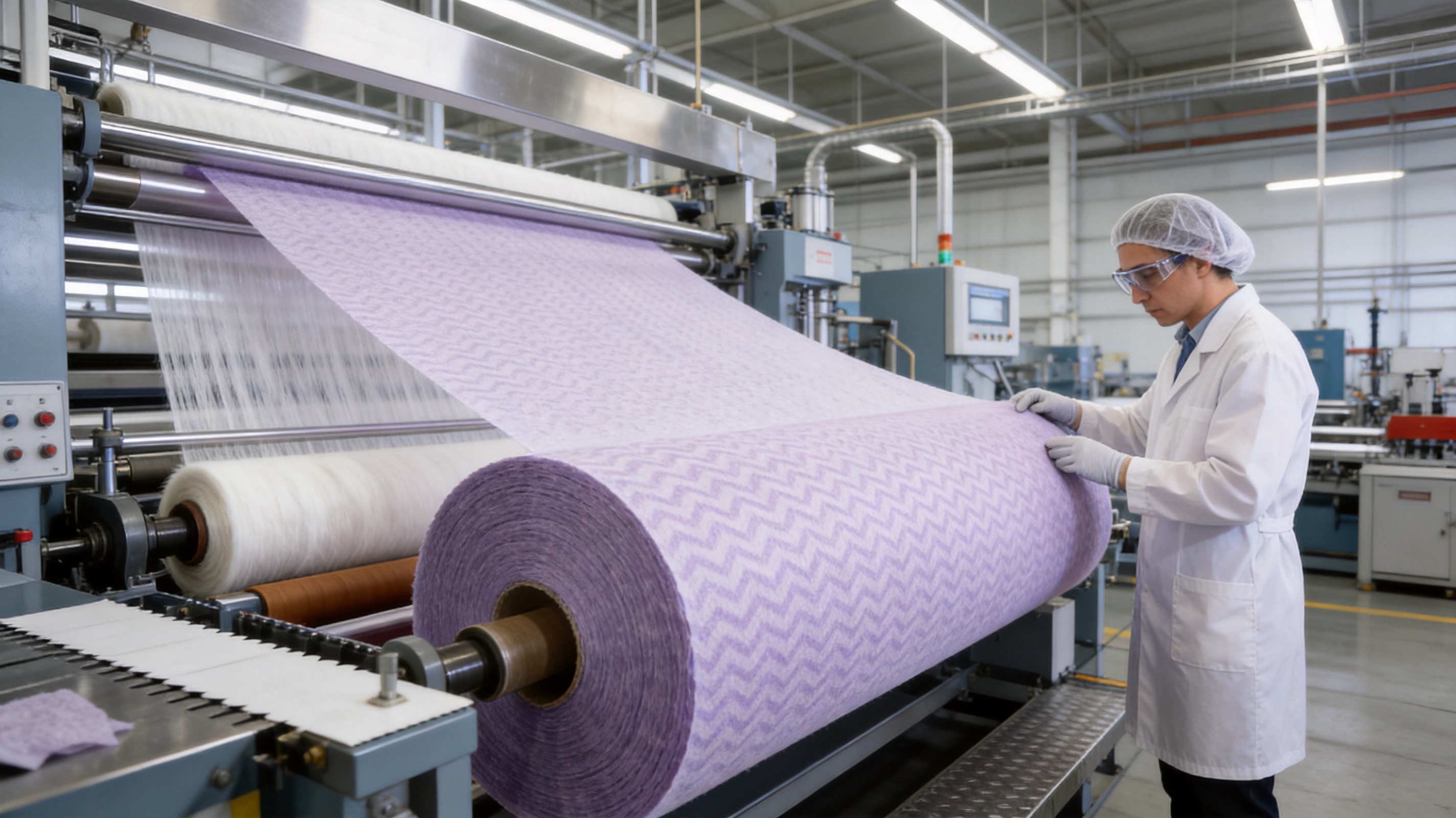
During web formation, fibers are distributed into a web with a defined basis weight and structure. The arrangement of fibers influences the cloth’s appearance, thickness, strength, and liquid uptake. Uniform distribution is important because users expect each section of the wipe to perform consistently.
Modern equipment can help control web formation and production speed. Process technicians monitor operating parameters to maintain the desired material structure. The exact process depends on the selected nonwoven technology and the product specification.
Fiber Bonding
The fiber web must be bonded so that it can withstand handling and wiping. Bonding may use mechanical, hydraulic, thermal, or other approved methods depending on the material design. The bonding method affects the balance between strength, flexibility, surface texture, and lint resistance.
For an industrial cleaning cloth, bonding must be strong enough to reduce fiber shedding and prevent premature breakdown. At the same time, the material should remain flexible and easy to use. Careful process control is therefore required to achieve a practical balance.
Thickening and Performance Adjustment
The material can be engineered to achieve a thicker hand feel and greater wiping capacity. Thickness may be adjusted through fiber selection, web structure, bonding conditions, or layered construction. The goal is to provide a cloth that feels substantial without becoming unnecessarily difficult to fold, dispense, or store.
Performance adjustment may also include changes to sheet dimensions, surface texture, absorbency, and packaging. Different industrial users can require different formats, so product development should begin with a clear understanding of the cleaning task and expected usage conditions.
Converting and Cutting
After the nonwoven material is produced, it is converted into the required form. Converting may include slitting, cutting, folding, stacking, or roll formation. Accurate converting helps ensure that sheets are easy to separate and that the dimensions remain consistent.
Sheet size influences both cleaning coverage and material consumption. Larger sheets may be convenient for equipment maintenance, while smaller sheets may be preferable for detail cleaning or mobile service kits. Packaging quantity can also be adjusted according to the user’s daily consumption and storage space.
Inspection and Packaging
Finished wipes are inspected for appearance, dimensions, cleanliness, packaging integrity, and other agreed specifications. Depending on the project, customers may request additional testing for absorbency, tensile strength, lint release, basis weight, thickness, or liquid retention.
Packaging protects the product during transportation and storage. Simple and practical packaging makes the cloth easier to handle at the point of use. Clear labeling can identify the product type, quantity, batch information, and customer-specific details when required.
Quality and Supply Advantages for Professional Buyers
Stable Product Specifications
Industrial buyers often need to order the same product repeatedly. Stable specifications allow purchasing teams to compare consumption, evaluate cleaning performance, and plan budgets more accurately. A consistent wipe also reduces the need for workers to adjust their procedures from one shipment to the next.
Manufacturing experience, process control, and defined inspection procedures help support this stability. For OEM customers, product specifications can be documented and reviewed before mass production. Samples and trial orders may be used to confirm the material and packaging before a long-term supply program begins.
Scalable Manufacturing
Large production capacity is important when a customer’s demand grows. A supplier should be able to support initial testing as well as larger recurring orders. The company’s multiple production bases and broad nonwoven manufacturing experience provide a foundation for scalable supply.
Scalability is also useful for distributors serving different markets. A distributor may begin with one standard industrial wipe and later add multiple sizes, packing quantities, or private-label versions. A manufacturer with broad production resources can help coordinate such product expansion.
OEM and ODM Support
OEM manufacturing allows a customer to order a product under its own brand or packaging identity. ODM support can go further by helping develop the material, format, or presentation based on the customer’s application and market requirements.
For industrial cleansing cloth, possible project considerations include sheet size, thickness, basis weight, folding method, roll format, number of pieces per package, carton quantity, packaging material, printed information, and private-label design. Not every option is suitable for every order, so the final specification should be confirmed through technical discussion and sampling.
International Market Experience
The company has developed products for medical, maternal and baby, beauty, household, industrial cleaning, and clothing markets. This broad market exposure can help it understand different expectations regarding product documentation, packaging presentation, supply coordination, and customization.
International customers may also benefit from communication regarding product specifications, production schedules, packing details, and shipping preparation. A professional manufacturing partner should provide clear information so that buyers can evaluate the product and plan their own distribution activities.
How to Select the Right Industrial Wipe
Before placing an order, buyers should define the primary cleaning tasks. Important questions include whether the wipe will be used mainly for oil, water, dust, grease, or general surface cleaning. The level of friction, the roughness of the surface, the required cleanliness standard, and the expected usage frequency should also be considered.
Sheet dimensions are another important factor. A large sheet may reduce the need to combine several pieces for broad surfaces, while a smaller sheet may minimize waste during short cleaning tasks. Folded products can be convenient for dispensers and storage, whereas rolls may be suitable for high-consumption areas.
Packaging should match the workplace. A maintenance department may prefer bulk cartons, while mobile technicians may need compact packs. Buyers should also consider whether the package must be moisture-protected, resealable, stackable, or suitable for private-label distribution.
For specialized applications, performance testing is recommended. A sample can be evaluated for absorbency, tear resistance, lint release, surface compatibility, ease of dispensing, and overall user acceptance. Testing the product under real working conditions often provides more useful information than relying solely on general product descriptions.
Recommended Use Practices
Store the cloth in a clean, dry area away from excessive heat, moisture, and direct contamination. Keep packages closed until the product is needed. In a busy workshop, placing wipes in a protected dispenser or cabinet can help prevent unused material from collecting dust or absorbing unintended liquids.
Use a fresh section of the cloth when moving from a heavily contaminated area to a cleaner area. This helps prevent the transfer of oil, dust, or residue. When cleaning sensitive surfaces, test the wiping method and any chemical cleaner on a small, inconspicuous area first.
Do not use a contaminated wipe for tasks that require a higher cleanliness level. Once the cloth is saturated, heavily soiled, damaged, or no longer effective, replace it according to the workplace procedure. Dispose of used wipes based on the materials they have absorbed. Oil-soaked, solvent-contaminated, or chemically exposed wipes may require special handling and should not be treated as ordinary general waste unless permitted by local regulations.
Workers should follow the relevant safety instructions, including the use of gloves, eye protection, ventilation, spill containment, and chemical handling procedures. The wipe is a cleaning tool and does not replace proper industrial safety controls.
Environmental and Operational Considerations
Efficient material use is an important part of responsible industrial housekeeping. A durable, absorbent wipe may help reduce repeated wiping and unnecessary replacement during a task. Standardized sheet sizes can also make consumption easier to monitor and control.
Environmental performance should be evaluated across the complete product life cycle. Buyers may consider the fiber composition, packaging material, transport efficiency, product durability, and disposal requirements. The correct disposal route depends on whether the wipe has absorbed oil, chemicals, biological materials, or other regulated substances.
Manufacturers and buyers can work together to review packaging efficiency and product specifications. For example, a packaging format that protects the wipes while reducing unnecessary secondary materials may improve storage and transport efficiency. The best solution depends on the customer’s application, market requirements, and local waste management system.
Comparison of Key Features
| Evaluation Area | Industrial Cleansing Nonwoven Cloth | Ordinary Paper Towel | Unsorted Textile Rag |
|---|---|---|---|
| Material consistency | Manufactured to defined specifications | Generally consistent but designed mainly for light-duty use | Can vary widely by source and fabric type |
| Oil absorption | Designed for strong oil absorption | May become saturated or break down quickly | Varies according to textile composition |
| Water absorption | Designed for strong water absorption | Suitable for light spills but may tear when saturated | Can be effective but performance is inconsistent |
| Lint and pilling control | Lint-free and pill-resistant design | May release paper fibers during wet or abrasive wiping | Loose threads and lint may be present |
| Durability | Thickened, durable nonwoven structure | Usually intended for short-duration wiping | May be strong, but quality differs between pieces |
| Packaging options | Simple packaging with potential OEM customization | Usually sold in standardized formats | Often supplied in loose bundles or mixed packs |
| Industrial suitability | Designed for factories, workshops, and maintenance sites | Best for light cleaning and quick spills | Suitable for some tasks but less predictable |
Why Choose an Experienced Nonwoven Manufacturer
Choosing an industrial wipe is not only a matter of comparing price per package. The total value depends on how reliably the product performs, how much material is required for each cleaning task, how easily it can be stored and dispensed, and how consistently it can be supplied.
An experienced nonwoven manufacturer can support these concerns through material knowledge, production infrastructure, quality management, and customization capability. Zhejiang Uniquality Nursing Products Technology Co., Ltd. has operated since 1987 and has developed extensive experience in nonwoven materials and nursing products. Its technical scope covers multiple nonwoven technologies and a wide range of hygiene and textile applications.
The company’s manufacturing network, international equipment base, research and development capability, and OEM/ODM experience provide a strong platform for industrial cleansing cloth production. Customers can discuss standard products or develop specifications suited to their own distribution channels and end users.
The company’s long-term position in the nonwoven industry also supports continuous improvement. As cleaning requirements evolve, manufacturers must respond to new expectations for absorbency, low lint, durability, packaging efficiency, and customized supply. A supplier with broad technical experience is better positioned to evaluate these requirements and translate them into a manufacturable product.
Frequently Asked Questions
What is industrial cleansing nonwoven cloth?
Industrial cleansing nonwoven cloth is a manufactured wiping material made from engineered nonwoven fibers. It is designed for professional cleaning tasks and is characterized by a thickened, durable structure with strong oil and water absorption. The product is also designed to be lint-free and pill-resistant.
Where can this product be used?
It can be used in factories, mechanical workshops, automotive service areas, equipment maintenance departments, warehouses, production lines, logistics facilities, and industrial cleaning operations. It is suitable for general wiping, spill response, oil removal, water absorption, and surface maintenance.
Is the cloth suitable for removing oil and grease?
Yes. The product is designed for strong oil absorption and can be used for wiping lubricants, grease, oily residue, and similar contamination from compatible industrial surfaces. Users should select the appropriate safety controls and disposal method for oil-contaminated materials.
Does the product leave lint behind?
The cloth is designed to be lint-free and pill-resistant during normal use. This helps reduce loose fibers and small textile particles on cleaned surfaces. For highly controlled applications, users should conduct their own suitability testing before approving the product for production use.
Is it stronger than a standard paper towel?
The thickened nonwoven structure is designed for greater durability and more demanding wiping than ordinary paper towels. It is less likely to break down during routine industrial cleaning involving water, oil, friction, or pressure. Actual performance depends on the specific task and contamination level.
Can the product be customized?
OEM and ODM options may be available for dimensions, thickness, basis weight, folding style, roll or sheet format, packaging quantity, carton configuration, labeling, and private-label presentation. Customers should discuss their target application and order requirements with the manufacturer before confirming specifications.
Can the cloth be used with cleaning chemicals?
It may be used with compatible cleaning chemicals, but users should verify material compatibility and follow the chemical manufacturer’s safety instructions. A small-area test is recommended before use on sensitive surfaces. Proper ventilation, protective equipment, and disposal procedures must be observed.
Is the cloth reusable?
The product is designed to be durable during its intended wiping task, but it should not automatically be treated as a reusable cloth. Reuse depends on the type of contamination, workplace hygiene requirements, and safety procedures. Heavily soiled or chemically contaminated wipes should be handled and disposed of according to applicable regulations.
How should buyers evaluate product quality?
Buyers can request samples and assess thickness, absorbency, tear resistance, lint release, pilling, sheet dimensions, packaging, and performance on representative surfaces. Testing the wipe in the actual workplace is recommended because cleaning requirements vary between industries.
What makes the manufacturer suitable for international customers?
The company has decades of experience in nonwoven materials and hygiene products, multiple production bases in China, advanced equipment and technology, a broad product portfolio, and OEM/ODM capabilities. These resources can support standard supply, customized development, and long-term purchasing programs.
Conclusion
Industrial cleansing nonwoven cloth provides a reliable solution for factories, workshops, maintenance teams, warehouses, and professional cleaning operations. Its thickened and durable construction supports demanding wiping tasks, while strong oil and water absorption helps remove common industrial contaminants efficiently. Lint-free and pill-resistant performance contributes to cleaner surfaces and a more professional working environment.
Compared with inconsistent textile scraps and fragile paper towels, a purpose-built nonwoven cloth offers greater uniformity, predictable handling, practical packaging, and the potential for customized supply. These advantages can help organizations improve cleaning efficiency, standardize workplace procedures, and manage consumable usage more effectively.
Behind the product is a manufacturing platform built on long-term nonwoven expertise. Founded in 1987, Zhejiang Uniquality Nursing Products Technology Co., Ltd. has developed capabilities in research and development, advanced nonwoven production, converting, packaging, and OEM/ODM service. Its experience across medical, hygienic, nursing, industrial textile, and cleaning applications supports the development of functional products for a wide range of customers.
For buyers seeking a dependable industrial wiping material, the most important considerations are performance, consistency, supply capacity, customization, and application suitability. By combining engineered nonwoven technology with practical packaging and professional manufacturing support, this industrial cleansing cloth can serve as an efficient and adaptable choice for modern industrial cleaning.
References
1. International Organization for Standardization. General principles for textile testing and nonwoven material evaluation.
2. Association of the Nonwoven Fabrics Industry. Technical guidance on nonwoven fabric structures, properties, and applications.
3. Occupational safety guidance for industrial cleaning, chemical handling, contaminated wiping materials, and workplace housekeeping.
4. Textile engineering references covering fiber selection, web formation, bonding technology, absorbency, tensile strength, and lint control.
5. Manufacturer-provided product information for industrial cleansing nonwoven cloth, nonwoven materials, hygiene products, and OEM/ODM manufacturing capabilities.