中文简体
中文简体 English
 日本語
日本語 русский
 Español
Baby diapers and diaper pants are essential hygiene products for modern families, childcare institutions, retailers, and professional procurement organizations. As babies grow from newborns into active toddlers, their needs change quickly. A product that works well for a sleeping newborn may not provide the mobility, fit, or convenience required by a crawling or walking child. For this reason, a complete baby care product range should include both traditional taped diapers and pull-up diaper pants in multiple sizes and absorbency levels.
The product range described in this article includes baby diapers in NB, S, M, L, and XL sizes, together with diaper pants in M, L, XL, and XXL sizes. Designed around softness, fast absorption, liquid retention, breathability, and ease of use, these products are suitable for OEM and private label programs serving international markets. They are manufactured by Zhejiang Uniquality Nursing Products Technology Co., Ltd., a company supported by the broader Kingsafe and Uniquality manufacturing organization and its extensive nonwoven materials expertise.
Unlike ordinary disposable diapers that may focus on only one performance feature, this product range is developed as a balanced hygiene solution. It combines a soft surface, a breathable backsheet, a fast-absorbing core, long-lasting liquid lock, an anti-wet outer layer, a three-dimensional leak guard, and a practical pant-style structure. These features work together to improve comfort and protection during sleep, crawling, walking, travel, daycare, and toilet-training periods.
Understanding the Product Range
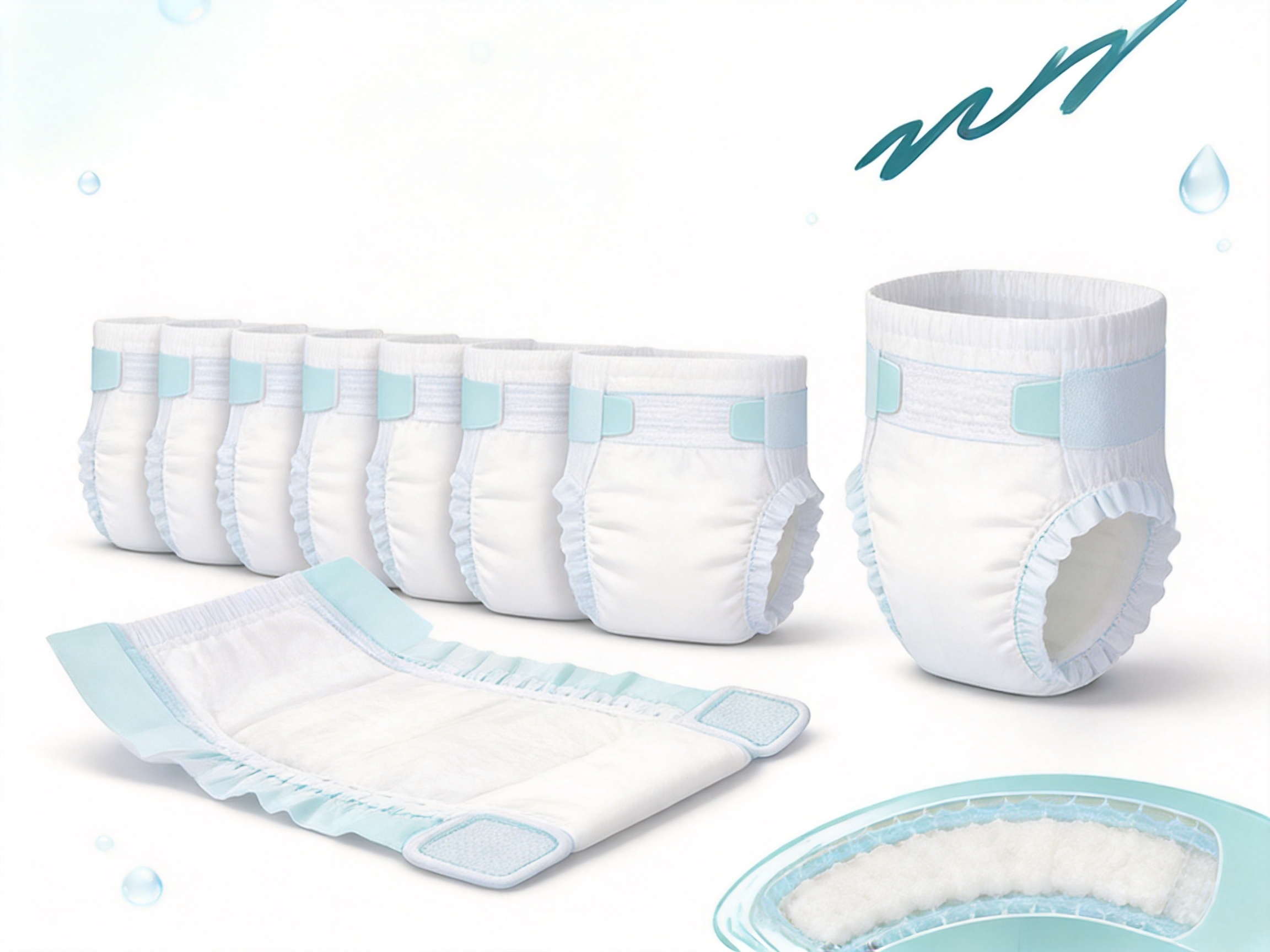
Baby diapers are disposable absorbent products intended to collect and retain urine and other bodily fluids while helping protect a baby’s skin, clothing, bedding, and surrounding surfaces. Traditional taped diapers use adjustable fastening tabs and are especially useful for newborns and younger babies who spend much of their time lying down. Their structure allows caregivers to open the diaper fully and adjust the fit around the waist and legs.
Baby diaper pants, also known as pull-up diapers or training pants, are designed to be worn more like underwear. They feature an elastic waistband and flexible side areas that allow the child or caregiver to pull the product up and down. This format is particularly convenient for active babies and toddlers who are learning to crawl, stand, walk, or use the toilet.
The combination of taped diapers and pants enables importers, distributors, baby care brands, and retailers to offer a complete progression of products. Newborn sizes can support early-stage care, while larger taped diapers and pull-up pants can serve children with increasing activity levels. This product architecture also gives private label customers the flexibility to create a broader product portfolio under one brand.
| Product Type | Available Sizes | Typical Application | Main Benefit |
|---|---|---|---|
| Baby Diapers | NB, S, M, L, XL | Newborns and babies requiring adjustable fastening | Flexible fit and convenient caregiver adjustment |
| Diaper Pants | M, L, XL, XXL | Crawling, walking, active, and toilet-training children | Easy pull-on and pull-off use |
| Customized Products | Discussed according to market requirements | OEM, ODM, and private label programs | Adaptable specifications, packaging, and branding |
The available sizes can be adjusted according to the needs of a target market. Different regions may use different weight ranges, body proportions, labeling systems, or consumer expectations. A professional manufacturer can support the development of size specifications, absorbency levels, packaging quantities, and labeling formats so that the final product is better suited to the intended sales channel.
Core Product Advantages
Super-Soft Materials for Everyday Comfort
Softness is one of the most important factors in baby diaper performance because the product remains in close contact with delicate skin for extended periods. Rough, stiff, or poorly finished materials may cause discomfort and can contribute to friction during movement. The product range is designed with soft nonwoven materials that provide a gentle touch against the baby’s body.
The softness of a diaper depends on more than the surface sheet alone. It is influenced by fiber selection, web formation, bonding methods, finishing, product thickness, elastic components, and the way each layer is assembled. An integrated manufacturer with experience in nonwoven materials can coordinate these elements more effectively than a company that simply purchases finished components from unrelated suppliers.
For diaper pants, softness is especially important around the waistband, leg cuffs, side panels, and areas that move repeatedly during crawling or walking. A soft construction allows the product to follow the child’s body while reducing the feeling of stiffness. This can improve acceptance among children who are transitioning from conventional diapers to pull-up products.
Fast Absorption and Long-Lasting Liquid Lock
Absorption performance has two major dimensions: how quickly liquid is taken away from the surface and how effectively it remains locked inside the absorbent core. A product that absorbs slowly may leave the surface feeling wet. A product that absorbs quickly but cannot retain liquid may become heavy, leak, or release moisture when compressed.
These diapers commonly use a combination of fluff pulp and super absorbent polymer, often referred to as SAP. Fluff pulp helps distribute liquid through the absorbent structure, while SAP can absorb and retain a significant amount of fluid relative to its own weight. The balance between these materials affects absorption speed, retention, flexibility, and overall product thickness.
The absorbent core must be engineered so that liquid can move away from the acquisition area and spread through the available absorbent material. If liquid remains concentrated in one location, the diaper may become saturated unevenly. A well-designed core supports more efficient utilization of the absorbent capacity and can help maintain comfort during longer wearing periods.
Long-lasting liquid lock is particularly important during overnight use, travel, naps, and situations where an immediate diaper change is not possible. It also supports the needs of childcare centers and institutional buyers that require dependable products for multiple children throughout the day.
Breathable Backsheet and Anti-Wet Protection
The backsheet is the outer layer of the diaper. It helps prevent liquid from passing through to clothing or bedding while also contributing to the product’s breathability and appearance. A breathable backsheet can allow water vapor and heat to move away from the skin area, helping create a more comfortable microenvironment inside the diaper.
Breathability should be considered together with leakage protection. A diaper should not simply allow air to pass while compromising liquid resistance. The backsheet must be engineered to balance vapor permeability, softness, strength, noise level, and fluid barrier performance. This balance is a major area where material selection and manufacturing control influence the final result.
The anti-wet back feature is intended to reduce the possibility of moisture transferring to clothing, bedding, or other external surfaces. When combined with an absorbent core, leg cuffs, and leak guards, it creates a more complete protection system. This is valuable for parents who want fewer clothing changes and for professional users who need to maintain hygiene and operational efficiency.
Three-Dimensional Leak Guards
Leakage can occur through several routes, including the back, front, sides, or leg openings. A three-dimensional leak guard is designed to create a raised barrier near the leg area. It helps guide liquid toward the absorbent core and limits the chance that fluid will move laterally beyond the product’s protected zone.
The effectiveness of a leak guard depends on its height, elasticity, placement, softness, bonding, and relationship with the inner and outer layers. If it is too loose, it may not create an effective barrier. If it is too tight or made from unsuitable materials, it may reduce comfort. Professional product development must therefore consider leak prevention and skin-friendly fit at the same time.
For active children, leak guards are especially important because body movement can create temporary gaps between the diaper and the legs. A well-constructed barrier helps the product remain functional while the child crawls, bends, squats, stands, or walks. This is one of the key advantages of a purpose-designed diaper pant over a basic absorbent pad or poorly fitted disposable product.
Pant-Style Convenience
Diaper pants can be pulled on like underwear, which makes them convenient for caregivers and suitable for children who are becoming more independent. The design simplifies diaper changes when a child is standing or moving. It can also reduce the struggle that sometimes occurs when an active toddler needs to lie still for a taped-diaper change.
The pull-up structure supports several everyday situations. Parents can use diaper pants during travel, playtime, shopping, daycare, and toilet-training practice. Caregivers can quickly replace a used product without fully undressing the child. When necessary, the pants can be taken off by tearing or opening the side areas, depending on the final design specification.
Convenience does not mean that protection should be sacrificed. A high-quality pant-style diaper must maintain an appropriate waist fit, flexible side construction, reliable leg elastics, and enough absorbent capacity for the intended use. It must also recover its shape after movement so that the waistband and leg openings continue to fit securely.
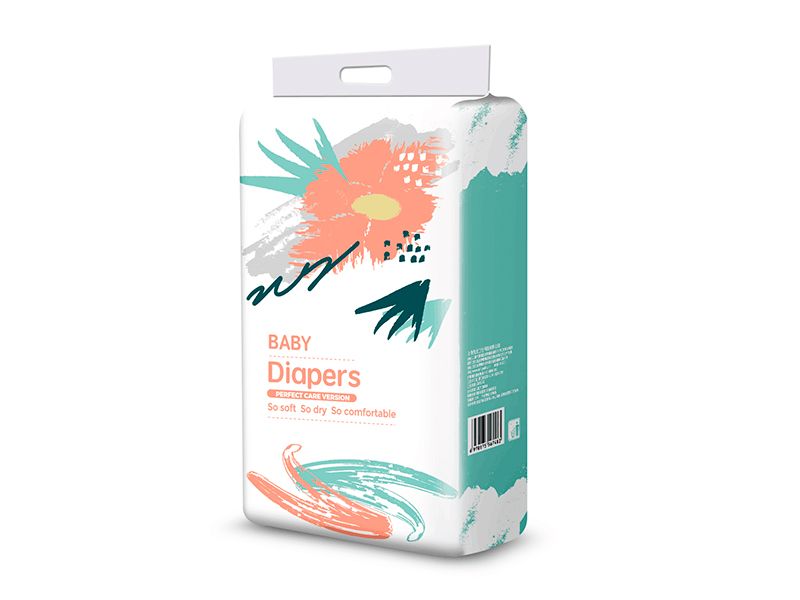
Baby Diapers/ Pants
Product Construction and Material Engineering
A disposable diaper is a multilayer hygiene product. Although the finished item may appear simple, its performance comes from the interaction of multiple materials. Typical components include a topsheet, acquisition and distribution layers, absorbent core, transfer or tissue layers, backsheet, elastic systems, fastening components for taped diapers, and packaging materials.
Soft Nonwoven Topsheet
The topsheet is the layer that contacts the baby’s skin. It must feel soft, permit liquid to pass through quickly, resist excessive wetness at the surface, and remain stable during movement. Nonwoven fabrics are widely used because they can be engineered for softness, porosity, strength, uniformity, and processing compatibility.
Nonwoven production methods influence the final characteristics of the fabric. Spunlace, spunmelt, and hot-air-through nonwoven technologies can be used for different applications and performance requirements. The right material depends on the desired touch, liquid handling, tensile strength, cost target, and market positioning.
Absorbent Core
The absorbent core is the functional center of the diaper. It must accept liquid, distribute it, retain it under pressure, and remain sufficiently flexible for comfortable movement. The combination of fluff pulp and SAP can be adjusted for different size ranges and absorbency targets.
Newborn products may require a smaller, thinner core designed around a small body and frequent changes. Larger diapers and pants may require more capacity for higher liquid volumes or longer wearing times. Customization can involve the amount and distribution of absorbent materials, the shape of the core, the placement of channels, and the relationship between absorbency and product thickness.
Core design also affects the product’s environmental footprint and shipping efficiency. A thinner product may reduce material usage and packaging volume when it can maintain appropriate performance. However, thinness alone should never be treated as proof of quality. The core must be evaluated through absorption, rewet, retention, leakage, compression, and fit testing.
Elastic Components
Elastic elements are used around the waist and legs to support a close but comfortable fit. In diaper pants, the waistband must stretch sufficiently for easy pull-on use while recovering its shape after wearing. Leg elastics help create a seal around the thighs without excessive pressure.
Elastic performance depends on stretch ratio, spacing, attachment strength, softness, and positioning. A product designed for a narrow size range may use a different elastic configuration from one intended for a broader weight range. Custom specifications can therefore help brands create a more consistent fit for their preferred consumer segment.
Packaging and Product Presentation
Packaging protects the diapers during transportation and storage while communicating important information to buyers. Private label packaging may include the customer’s logo, product name, size, quantity, usage information, absorbency claims, manufacturing details, and regional compliance information.
Packaging quantity and carton design can be customized according to the sales channel. A supermarket may prefer visually attractive retail bags with clear size communication. A distributor may need efficient master cartons for warehouse handling. An e-commerce brand may require packaging that can withstand parcel delivery and support product presentation in online listings.
Packaging design should also consider language, labeling requirements, recycling information, safety instructions, barcode systems, and market-specific documentation. The manufacturer’s support in these areas can reduce communication gaps between product development, regulatory review, printing, and mass production.
Manufacturing Strength and Integrated Production
The manufacturer behind this product range has developed from a company focused on nonwoven materials into an integrated producer of medical, hygiene, nursing, and textile-related products. Founded in 1987, the organization has more than three decades of experience in research, production, and sales. Its headquarters are located in Changxing, Huzhou, Zhejiang, within the economically developed Yangtze River Delta region.
The company has established eight domestic production bases, including facilities in areas such as Foshan, Nantong, and Wuhan. This multi-base structure provides broader production resources and supports supply planning for different product categories. It also creates a foundation for serving both domestic and overseas customers with larger and more flexible manufacturing capacity.
The company’s product portfolio covers spunlace nonwoven fabrics, spunmelt nonwoven fabrics, hot-air-through nonwoven fabrics, flushable and degradable nonwoven materials, wet wipes, dry wipes, wet toilet paper, cleansing wipes, baby diapers, pull-ups, and other nursing products. This broad range is strategically important because diapers are not isolated from material technology. They depend on expertise in nonwoven formation, fluid management, softness, bonding, converting, hygiene control, and packaging.
Control Across the Industrial Chain
One of the strongest competitive advantages is the ability to manage a substantial portion of the industrial chain internally. The company develops nonwoven substrates and converts them into finished hygiene products. This integrated approach can improve coordination between material development and product performance.
When a finished-product manufacturer relies entirely on unrelated external material suppliers, it may have limited influence over fiber selection, web structure, surface treatment, production consistency, or lead times. An integrated organization can investigate the relationship between the raw material and the final product more directly. It can also respond more efficiently when a customer requests changes in softness, thickness, absorption, strength, or appearance.
Vertical integration does not eliminate the need for qualified suppliers, but it gives the manufacturer greater control over critical processes. It may also support more consistent quality across product batches, provided that internal systems are properly documented, monitored, and audited.
Modern Equipment and International Technology
The company has introduced advanced production equipment and technology from Germany, France, and Italy. International equipment can provide benefits in web uniformity, production speed, tension control, automatic inspection, converting accuracy, and process repeatability. These factors are important for disposable hygiene products, where small inconsistencies can affect fit, leakage, packaging, or customer satisfaction.
High-speed production equipment must be supported by appropriate process controls. Operators and engineers need to monitor material feeding, adhesive application, elastic placement, core positioning, cutting, folding, sealing, and package formation. Automation can increase efficiency, but the quality of the final product also depends on preventive maintenance, calibration, production records, and trained technical staff.
Clean Manufacturing Environment
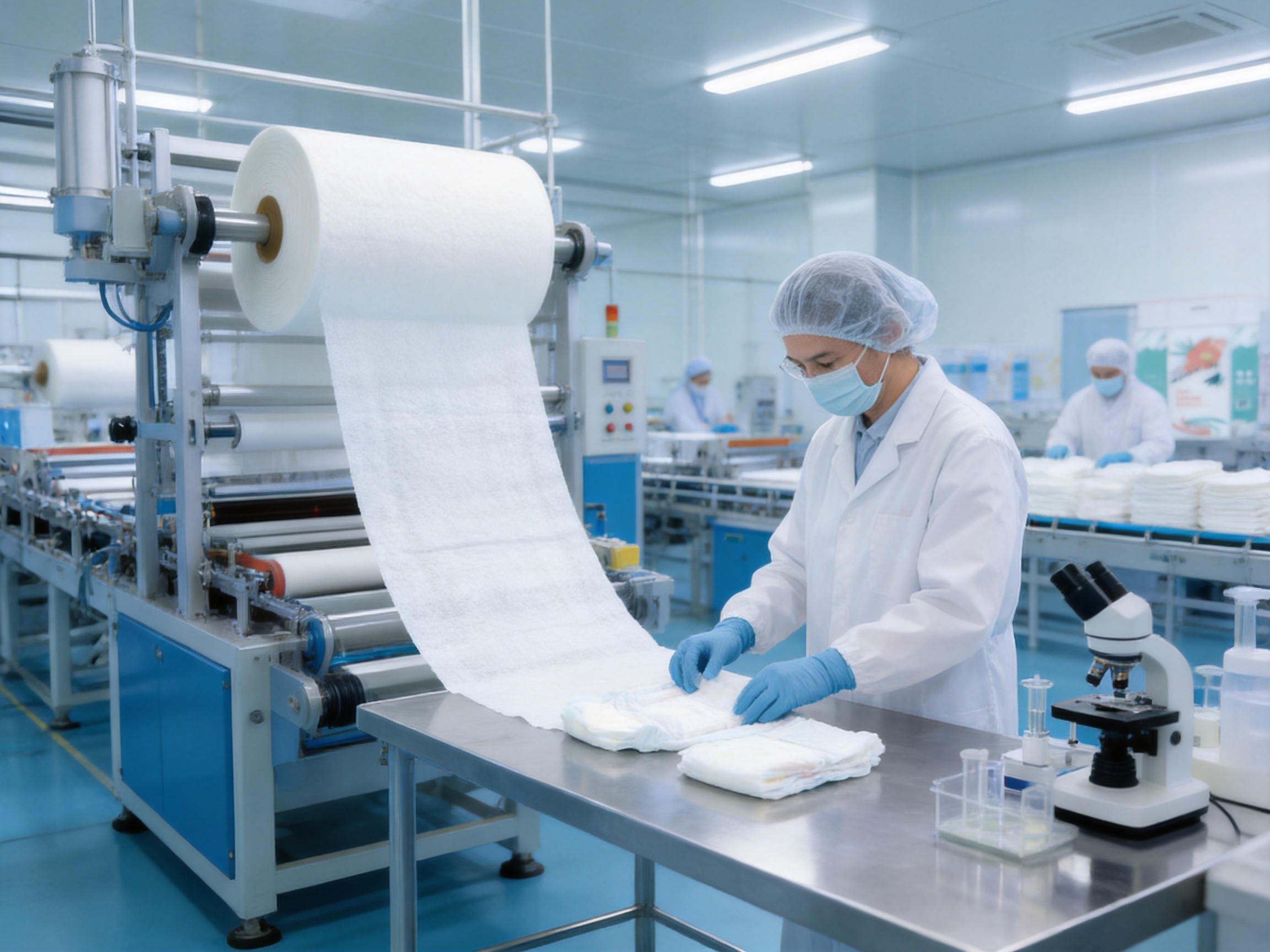
Hygiene products intended for babies require a controlled manufacturing environment. The company operates 100,000-class GMP clean workshops and uses a purified water system based on pharmacopoeia standards for relevant production activities. These facilities support improved control over environmental cleanliness, process hygiene, and product handling.
Clean manufacturing is not a substitute for product testing, but it is a critical part of risk management. Controls may include personnel hygiene, protective clothing, material movement, equipment sanitation, pest prevention, air management, water quality, and cleaning documentation. A systematic approach helps reduce the possibility of contamination and supports reliable production at scale.
For international buyers, manufacturing environment information is an important part of supplier evaluation. Importers and brand owners may need to review factory certifications, production procedures, inspection records, traceability systems, and corrective action processes before approving a supplier.
Testing and Technical Development
The company operates a full-function testing center and reports support from 169 patents. Testing and intellectual property resources can strengthen the development process by allowing product teams to evaluate materials and finished products more systematically.
Testing for baby diapers may include absorption speed, total absorption capacity, rewet, leakage resistance, tensile strength, elastic performance, peel strength, dimensional accuracy, surface softness, odor, packaging integrity, and aging stability. The precise testing program should be selected according to product type, customer requirements, destination market, and applicable standards.
Laboratory testing should be connected with production-line quality control. A sample that performs well in a laboratory may not represent every product batch unless manufacturing conditions are controlled. Statistical sampling, in-line inspection, finished-product inspection, and traceability help bridge the gap between development performance and commercial consistency.
Advantages Compared with Basic or Less Integrated Competitors
More Complete Product Development Capability
A basic diaper supplier may offer a standard product with limited options for size, absorbency, material selection, printing, or packaging. By contrast, an integrated manufacturer with nonwoven research and finished-product production capabilities can offer a broader development pathway. Customers can discuss the intended market, target price, performance requirements, and branding goals before selecting the final construction.
This is particularly valuable for new brands. A startup may not know whether it needs a slim daytime diaper, a high-capacity overnight product, a premium soft-touch diaper, or an economical supermarket option. A capable manufacturer can provide samples and technical guidance so that the customer can compare alternatives before committing to mass production.
Better Coordination Between Materials and Finished Products
Diaper quality is determined by the entire system rather than one isolated material. A very soft topsheet may have poor liquid acquisition. A highly absorbent core may be too bulky. Strong elastics may cause discomfort. A breathable backsheet may not provide sufficient liquid resistance if not properly matched with the rest of the product.
Manufacturers with experience across nonwoven materials and hygiene products are better positioned to consider these trade-offs together. They can evaluate how a material change affects converting, bonding, product stability, packaging, and cost. This integrated decision-making can produce a more balanced diaper than one developed through disconnected purchasing decisions.
Greater Customization Flexibility
OEM and ODM customers may require different levels of customization. Some may need only a logo and new packaging. Others may need a completely revised product with different absorbency, materials, sizes, elastic configurations, and printed backsheets. The available customization options include product dimensions, absorbency, printed backsheet designs, private label packaging, packaging quantity, carton design, material selection, regional labeling, and production volume flexibility.
This range of options allows a customer to position products at different market levels. A premium brand may emphasize softness, breathability, advanced packaging, and a refined appearance. A value brand may focus on dependable absorption, efficient packaging, and competitive unit economics. A childcare procurement project may prioritize standardized sizing, reliable supply, easy storage, and documented quality controls.
Support for Different Order Volumes
Customer order volumes vary widely. An established supermarket group may need large recurring shipments, while a new e-commerce brand may begin with sampling and a smaller launch order. Flexible production planning can help customers scale gradually instead of changing suppliers as their business develops.
Minimum order quantity depends on product specifications, packaging design, printing requirements, and customization level. These factors should be discussed at the beginning of a project. Early clarification helps avoid unexpected costs associated with cylinders, printing plates, packaging materials, special components, or production changeovers.
Broader International Supply Experience
The company supplies products to international markets including Europe, North America, South America, the Middle East, Southeast Asia, Africa, and other regions. International experience can help a manufacturer understand that customers in different markets may have different expectations for labeling, packaging, product dimensions, absorbency claims, and documentation.
Regional compliance support may include assistance with required labels, materials declarations, product descriptions, packaging language, testing documents, and shipment-related paperwork. The buyer remains responsible for confirming the legal requirements of the destination country, but an experienced supplier can make the preparation process more organized.
OEM and ODM Services for Baby Care Brands
OEM manufacturing enables a customer to sell a product under its own brand while the manufacturing partner produces the diapers according to agreed specifications. Private label programs are commonly used by importers, wholesalers, supermarkets, distributors, online brands, and established baby care companies that want to expand their product range without building a dedicated factory.
ODM manufacturing can involve a deeper level of cooperation. The manufacturer may contribute product concepts, construction recommendations, material combinations, packaging suggestions, and performance targets. This is useful for customers that have a market opportunity but need technical support to convert the concept into a commercially viable diaper.
Typical Development Process
The process normally begins with a discussion of the target market and customer requirements. Important questions include the intended age or weight range, diaper type, daytime or overnight use, preferred product thickness, desired softness, absorbency expectations, packaging quantity, target price, sales channel, and anticipated annual volume.
After the requirements are reviewed, the manufacturer can recommend a preliminary specification. This may include the topsheet material, absorbent core structure, backsheet, elastic components, leak guard design, fastening format, package size, and labeling information. A preliminary quotation can then be prepared based on the selected design and order assumptions.
Samples are provided for material evaluation, performance testing, fit assessment, and packaging confirmation. Buyers may test samples internally or use independent laboratories. Feedback from the sample stage can lead to changes in size, softness, core capacity, waist elasticity, leg fit, package artwork, or product claims.
Once the sample and packaging are approved, the manufacturer prepares production materials and confirms the final technical file. A pilot run or pre-production approval may be used for complex projects. Mass production then proceeds according to the approved specifications, with inspection and quality records maintained throughout the process.
After production, products are packed into cartons and prepared for shipment. Export documentation, loading plans, and delivery schedules should be confirmed in advance. For recurring programs, the buyer and manufacturer can establish forecasts, reorder procedures, quality feedback channels, and continuous improvement plans.
Customization Options
- Custom diaper and pants sizes for specific weight ranges or market standards.
- Different absorbency levels for daytime, nighttime, travel, or institutional use.
- Printed backsheet patterns, characters, colors, and visual identity elements.
- Private label packaging with customer logos, brand information, and product instructions.
- Customized package quantities for retail, wholesale, club, or e-commerce channels.
- Carton design adapted to warehouse storage, palletization, and transport requirements.
- Material selection based on softness, breathability, strength, environmental goals, and price positioning.
- Regional compliance and labeling assistance for international markets.
- Flexible production planning for different order volumes and business stages.
Customization should be managed through written specifications rather than informal descriptions. Terms such as “premium,” “extra dry,” or “super absorbent” can mean different things to different buyers. A technical specification should define measurable requirements where possible, including dimensions, material basis weights, absorbent capacity, packaging quantity, tolerances, and inspection criteria.
Who Should Purchase These Products?
The products are intended for business customers rather than individual retail consumers. Baby care brands can use them to launch or expand a diaper product line. Importers and distributors can select standardized products or develop exclusive private label versions for their regions. Wholesalers can purchase finished products for resale to supermarkets, pharmacies, childcare businesses, and local retailers.
Supermarket purchasing teams may benefit from a coordinated range that includes newborn diapers, taped diapers, and larger diaper pants. E-commerce brands can use custom packaging and product positioning to build a distinctive online identity. Government procurement projects may require dependable supply, product documentation, standardized packaging, and clear quality procedures.
Hospitals, maternity facilities, and childcare institutions may need dependable disposable products for routine care. Their purchasing criteria can include softness, absorbency, leakage control, packaging hygiene, storage efficiency, and consistent availability. Institutional customers should define usage conditions carefully because requirements may differ from those of household consumers.
The manufacturer does not provide retail sales or individual consumer orders. Business buyers should contact the sales team to discuss specifications, samples, minimum order quantities, packaging requirements, and delivery arrangements.
Quality, Safety, and Compliance Considerations
Baby diapers are products used in close contact with sensitive skin, so quality evaluation should be comprehensive. Buyers should consider the safety and suitability of all materials, including nonwoven fabrics, adhesives, elastics, inks, SAP, fluff pulp, packaging films, and fastening components. Materials should be sourced and controlled according to applicable customer and destination-market requirements.
Quality assurance begins with incoming material inspection. Nonwoven fabrics may be checked for basis weight, width, appearance, softness, strength, and uniformity. Absorbent materials may be checked for moisture, particle characteristics, and conformity with the approved specification. Packaging materials should be inspected for dimensions, printing accuracy, sealing performance, and artwork version.
During production, in-line controls can monitor product dimensions, core placement, elastic position, cutting accuracy, adhesive application, surface appearance, and package count. Automatic inspection equipment may detect certain defects, while trained operators and quality personnel perform additional visual and functional checks.
Finished-product inspection may include sampling according to an agreed quality plan. Tests can assess absorbency, leakage, rewet, tensile strength, waistband stretch, leg cuff performance, package integrity, and appearance. Results should be recorded and connected to production batches so that any issue can be investigated efficiently.
Traceability is important for both quality management and customer confidence. A traceable system can connect raw materials, production dates, equipment lines, operators, inspection records, packaging batches, and shipment information. If a concern occurs after delivery, this information can help identify the affected products and support corrective action.
Destination-market compliance should be confirmed before the product is sold. Different countries may regulate disposable hygiene products through different standards, consumer product rules, labeling requirements, chemical restrictions, packaging regulations, or import documentation. The buyer and manufacturer should agree on responsibility for testing, registration, claims review, and label approval.
Performance Selection for Different Stages
Newborn and Early-Stage Care
Newborn diapers require a gentle fit and careful attention to softness. The NB and S sizes should be selected according to the baby’s body weight and shape rather than age alone. Caregivers should check the waist and leg fit regularly because newborns grow quickly and may require a larger size before the package is finished.
A newborn product may also need design considerations around the umbilical area, depending on the customer’s requirements and destination-market preferences. These details should be addressed during product development rather than assumed from a standard specification.
Crawling and Active Movement
As babies begin to crawl, roll, stand, and walk, the diaper must accommodate more movement. Flexible materials, secure elastic zones, and effective leak guards become increasingly important. Taped diapers remain useful, but diaper pants offer added convenience for quick changes and active children.
The M, L, and XL pants sizes provide a progression for growing children. The correct size should fit securely without excessive tightness. A product that is too large may create gaps around the legs, while one that is too small may restrict movement or cause pressure at the waist.
Toilet-Training Period
During toilet training, children may need a product that can be pulled down and up with limited assistance. Diaper pants support this learning process by resembling underwear more closely than taped diapers. They can also help caregivers manage accidents while maintaining a child’s confidence and mobility.
The XXL size can serve larger toddlers or children who need additional room during the later stage of diaper use. Size availability is commercially valuable because children do not all develop at the same pace. A broad size range allows brands to support more families and reduce the need for customers to switch to another product line.
Storage, Handling, and Supply Planning
Disposable diapers should be stored in a clean, dry, and well-ventilated environment. Cartons should be protected from direct sunlight, water, excessive humidity, heat, and strong odors. Heavy objects should not be placed on top of packages in a way that could deform the products or damage the packaging.
Warehouse planning should consider carton dimensions, pallet configuration, stock rotation, and expected order frequency. Products should generally be managed using a first-in, first-out approach unless specific shelf-life instructions state otherwise. Packaging artwork and product specifications should be checked carefully when different versions are stored in the same facility.
For international buyers, supply planning should include production lead time, packaging material preparation, sample approval, testing, booking, customs documentation, port schedules, and possible seasonal demand changes. Baby hygiene products often have stable demand, but promotions, holidays, weather conditions, and new retail listings can produce significant increases in order volume.
A forecast-based relationship can help reduce urgent orders and improve production efficiency. Buyers should provide estimated demand where possible, while the manufacturer should communicate capacity, raw material availability, and expected lead times. Regular communication is especially important for customized products with printed packaging or special materials.
How to Evaluate a Private Label Diaper Supplier
Price is only one part of supplier selection. Buyers should also evaluate product quality, factory capability, technical support, customization options, quality documentation, order flexibility, communication, delivery performance, and after-sales service. A low initial price may not be economical if the product has inconsistent sizing, weak packaging, leakage complaints, or unreliable delivery.
Factory experience in nonwoven materials is a valuable consideration. Since nonwovens influence softness, liquid passage, strength, breathability, and overall product feel, a supplier with direct material expertise may be better equipped to solve technical problems.
Buyers should request product samples and compare them under realistic conditions. Evaluation may include surface softness, fit, absorbency speed, rewet, leakage resistance, waistband comfort, leg seal, package quality, odor, and ease of use. If possible, the samples should be compared with leading products in the intended market.
Documentation should be reviewed before mass production. This may include technical specifications, material declarations, testing reports, quality certificates, factory certifications, packaging artwork approvals, and inspection procedures. Buyers should also clarify the process for handling complaints, nonconforming goods, corrective actions, and future specification changes.
A supplier’s ability to support product development is another important differentiator. Brands often need more than a finished catalog item. They may require advice on product positioning, size architecture, absorbency, package quantities, claims, and cost structure. A manufacturer that can participate in these discussions can become a long-term development partner rather than only a transactional vendor.
Q&A: Frequently Asked Questions
What sizes are available?
Baby diapers are available in NB, S, M, L, and XL. Diaper pants are available in M, L, XL, and XXL. Customized sizing can also be discussed according to the target market, expected weight ranges, and customer specifications.
Are these products suitable for private label brands?
Yes. The manufacturer provides OEM and ODM services, including brand logo printing, private label packaging, product specification development, printed backsheets, customized package quantities, and carton design.
Can the absorbency be customized?
Yes. Absorbency can be adjusted according to the intended use, product size, target price, daytime or nighttime positioning, and customer requirements. The final specification should be confirmed through samples and performance testing.
What materials are commonly used?
Common materials include soft nonwoven fabric, breathable backsheet materials, fluff pulp, and super absorbent polymer. The material combination can be adjusted according to softness, absorption, strength, breathability, environmental goals, and market requirements.
Can the backsheet be printed with a customer’s design?
Printed backsheet designs can be discussed as part of an OEM or ODM project. Artwork, colors, printing methods, repeat patterns, and technical limitations should be reviewed and approved before mass production.
What is the minimum order quantity?
MOQ depends on the product specification, packaging format, printing requirements, material selection, and customization level. The sales team should provide a detailed quotation after reviewing the project requirements.
Are samples available before mass production?
Yes. Samples can be provided for material evaluation, product performance testing, fit assessment, packaging confirmation, and customer approval. Sample requirements should be defined clearly so that the samples represent the proposed mass-production specification.
Which markets can the products serve?
The products are supplied to international customers in Europe, North America, South America, the Middle East, Southeast Asia, Africa, and other regions. Buyers should confirm the specific compliance and labeling requirements of their destination market before placing a commercial order.
Can a new brand receive development support?
Yes. A new brand can receive support from sampling through mass production. The development process may include product selection, material recommendations, absorbency planning, size design, packaging, artwork review, testing, and production preparation.
Does the company sell directly to consumers?
No. The product program is intended for business customers such as brands, importers, wholesalers, distributors, supermarkets, e-commerce companies, institutions, and procurement projects. Individual consumer orders are not provided.
Conclusion
Baby diapers and diaper pants must deliver more than basic absorbency. They need to combine softness, breathability, secure fit, fast absorption, long-lasting liquid lock, leak resistance, and practical convenience. Taped diapers serve newborns and younger babies who need adjustable fastening, while pull-up pants support active children who are crawling, walking, or learning to use the toilet.
The product range offers NB through XL taped diapers and M through XXL diaper pants, creating a flexible platform for baby care brands and professional buyers. Its main product advantages include a super-soft construction, breathable backsheet, fast absorption, anti-wet protection, three-dimensional leak guards, and an easy-wear pant structure.
The manufacturing foundation adds further value. More than three decades of experience, eight domestic production bases, nonwoven material expertise, international production equipment, GMP clean workshops, purified water systems, a full-function testing center, and patent-supported technical development provide a strong basis for OEM and ODM cooperation.
For importers, distributors, retailers, and private label brands, the most important advantage is the ability to work with one integrated partner from product concept and material selection to sampling, packaging, mass production, and international delivery. By combining flexible customization with controlled manufacturing processes, the company can support both new market entry and the expansion of established baby care product lines.
Businesses seeking a customized diaper program should prepare clear information about their target market, product type, size range, absorbency expectations, packaging, order volume, compliance requirements, and delivery schedule. With these details, the development process can move more efficiently from initial discussion to approved samples and reliable commercial production.
References
1. Product specification information supplied for baby diapers and diaper pants, including sizes, product features, customization options, and business customer applications.
2. Manufacturing profile information supplied for Zhejiang Uniquality Nursing Products Technology Co., Ltd. and the Kingsafe and Uniquality production organization.
3. General technical principles of disposable absorbent hygiene products, including topsheet, absorbent core, super absorbent polymer, fluff pulp, backsheet, elastic systems, and leak guard construction.
4. General quality management practices for disposable baby hygiene products, including incoming material inspection, in-process control, finished-product testing, traceability, and packaging inspection.
5. General OEM and ODM product development practices for private label baby care products, including sampling, specification approval, packaging development, regional labeling, and mass production planning.