中文简体
中文简体 English
 日本語
日本語 русский
 Español
In modern hygiene products, the topsheet is one of the most important material components. It is the layer that comes into direct contact with the wearer’s skin, while also controlling how quickly liquid passes into the absorbent core. A well-designed topsheet must therefore balance softness, liquid acquisition, dryness, breathability, strength, processability, and cost. If any one of these characteristics is inadequate, the final diaper or pull-up may feel uncomfortable, leak more easily, or fail to deliver a reliable user experience.
Hydrophilic super-soft PP spunbond nonwoven fabric is developed to meet these demanding requirements. Made primarily from polypropylene and produced through advanced SS, SSS, or SSSS spunbond technology, this material is suitable for baby diapers, pull-up pants, adult incontinence products, and other absorbent hygiene applications. Its hydrophilic treatment promotes rapid liquid penetration, while its soft surface helps reduce friction against delicate skin.
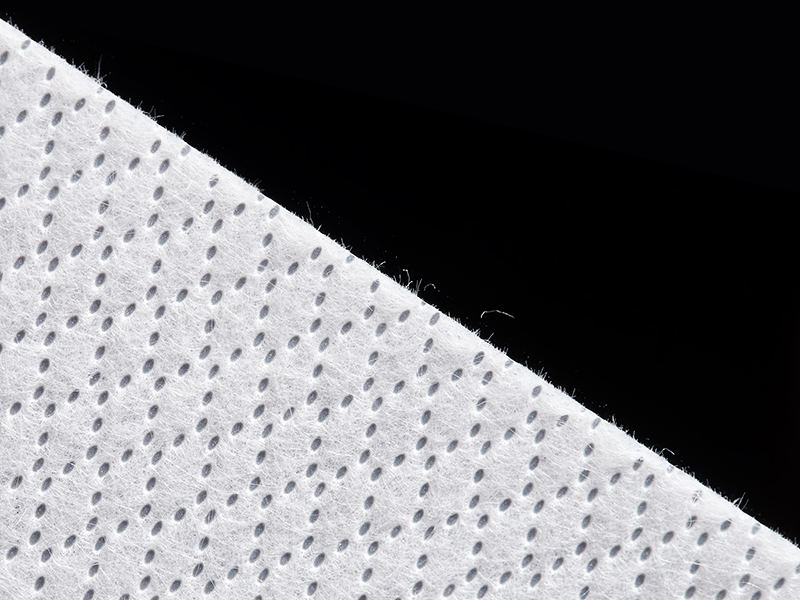
The product described in this article uses a distinctive diamond dot surface pattern. Compared with ordinary rice dot spunbond material, the diamond dot structure can reduce the effective melting area created at rolling points during embossing or bonding. This helps the fabric retain a fuller, softer, and more attractive surface. The pattern can also provide a differentiated visual appearance for manufacturers and private-label brands seeking a refined topsheet design.
For industrial buyers, the material is more than a basic nonwoven roll. It is a configurable component that can be adjusted according to diaper construction, production line requirements, target market, and end-user expectations. Basis weight, width, color, softness, hydrophilic performance, embossing pattern, roll length, and packaging can be customized for volume orders and OEM or ODM projects.
Hydrophilic Super Soft PP Spunbond Nonwoven Fabric For The Topsheet Of Diaper Or Pull Ups
Why Topsheet Material Matters in Modern Hygiene Products
A diaper or pull-up contains several functional layers. These commonly include a topsheet, acquisition and distribution layer, absorbent core, backsheet, leg cuffs, elastic elements, fastening components, and packaging materials. Although the topsheet is thin compared with the absorbent core, it has a direct influence on the consumer’s first impression of the product.
The topsheet must feel smooth and comfortable when it touches the skin. It should not be rough, stiff, or excessively abrasive. It must also allow urine or other bodily fluids to pass through quickly rather than remaining on the surface. A topsheet that delays liquid transfer can contribute to wetness, discomfort, leakage, and increased exposure of the skin to moisture.
At the same time, the material must be compatible with high-speed converting equipment. Diaper production lines may operate continuously at high speed, placing demands on tensile strength, roll consistency, width accuracy, unwinding stability, and resistance to tearing. A material that feels soft but cannot run reliably may create waste and reduce overall production efficiency.
Hydrophilic PP spunbond nonwoven fabric is designed to address these combined requirements. Polypropylene provides a lightweight and versatile substrate, while spunbond processing creates a continuous filament web with useful mechanical properties. Through multi-beam SS, SSS, or SSSS configurations, the manufacturer can produce a more uniform web with a soft hand feel and controlled basis weight.
Product Overview
This material is a hydrophilic, super-soft polypropylene spunbond nonwoven fabric intended primarily for the topsheet of baby diapers, adult diapers, and pull-up pants. It may also be considered for selected hygiene and medical applications where skin contact, liquid transfer, and surface comfort are important.
| Item | Specification |
|---|---|
| Primary composition | Polypropylene |
| Production technology | SS, SSS, or SSSS spunbond |
| Surface pattern | Diamond dot; other patterns may be customized |
| Color options | White, pink, and other customized colors |
| Basis weight | Approximately 8 to 100 g/m², subject to project requirements |
| Roll width | Approximately 10 to 320 cm, subject to equipment and order requirements |
| Functional finishing | Super-soft treatment, hydrophilic treatment, and optional functional finishes |
| Typical application | Diaper, pull-up, and incontinence-product topsheets |
The specifications above provide a broad customization range. The appropriate combination depends on the structure of the final product. For example, a newborn diaper may require an especially soft and lightweight topsheet, while an adult incontinence product may prioritize a different combination of width, strength, acquisition speed, and roll configuration.
Before mass production, buyers can evaluate samples and conduct production trials. Testing can include liquid strike-through, rewet, softness, tensile strength, elongation, air permeability, basis weight, thickness, color consistency, and compatibility with the customer’s converting line.
Advanced SS, SSS, and SSSS Spunbond Technology
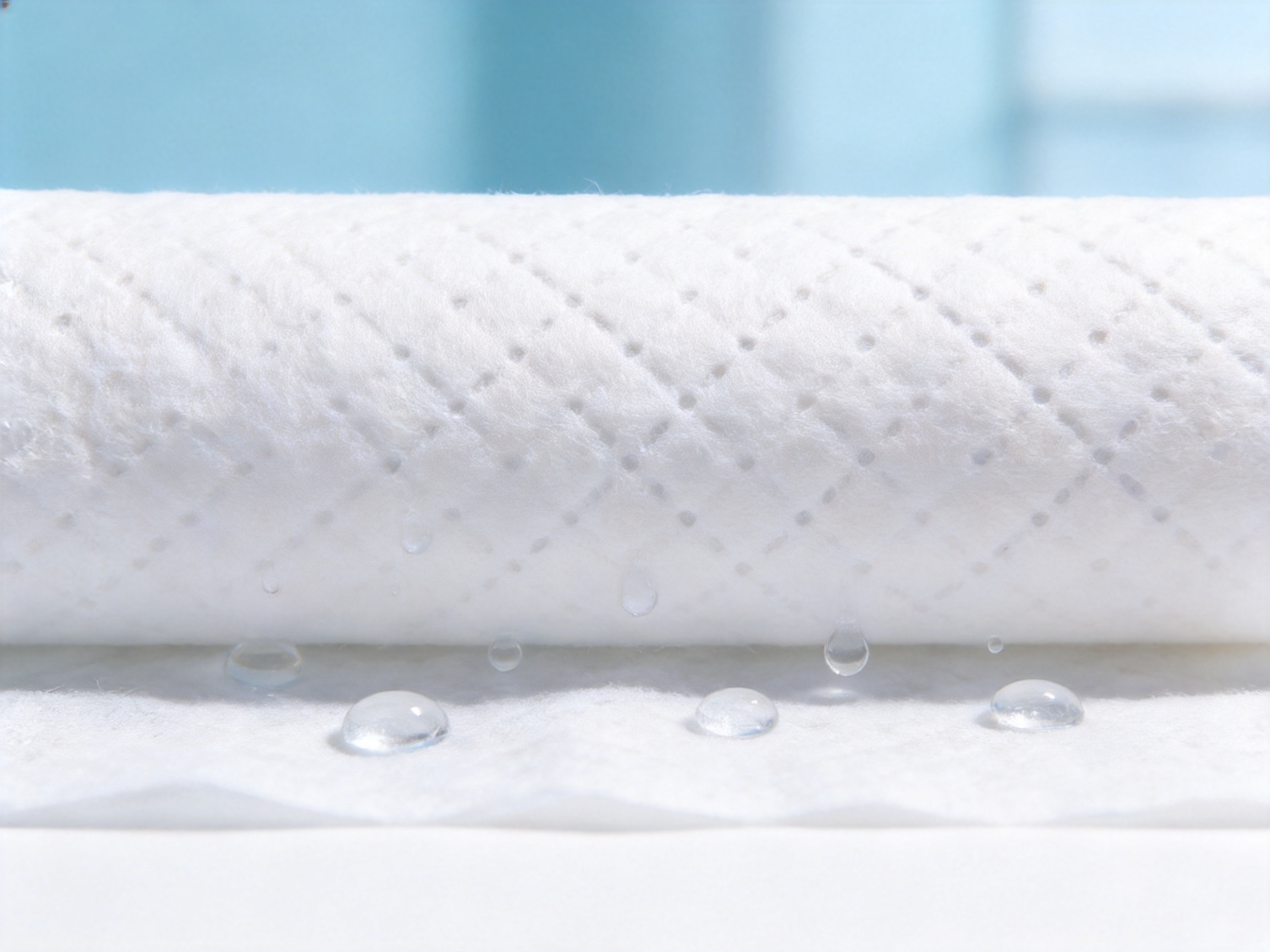
Spunbond nonwoven production begins with thermoplastic polymer resin, commonly polypropylene in this application. The polymer is melted and extruded through fine openings to form continuous filaments. These filaments are stretched, distributed into a web, and bonded through controlled heat and pressure. The resulting web is then wound into rolls for further processing or shipment.
In an SS structure, two spunbond layers are combined. SSS technology uses three spunbond beams or layers, while SSSS technology uses four. Multi-beam systems enable the manufacturer to control the distribution of filaments and improve the uniformity of the finished web. Depending on the production design, different layers may contribute to softness, strength, bulk, or surface appearance.
Compared with a simple single-layer structure, a multi-layer spunbond design can provide a more balanced performance profile. The fabric may achieve improved coverage and more consistent basis weight while maintaining a light and flexible structure. These characteristics are especially important for diaper topsheets, where excessive thickness can affect product design, but insufficient coverage may reduce comfort and visual quality.
Process control is essential. Polymer temperature, extrusion stability, filament drawing, web formation, bonding conditions, line speed, and winding tension all affect final performance. Small variations in these parameters can influence thickness, softness, tensile strength, pore structure, and liquid transport behavior. Advanced manufacturing therefore depends on both modern equipment and experienced technical personnel.
The use of multiple production bases provides additional capacity and manufacturing flexibility. A broad production network can help support different specifications, seasonal demand, repeat orders, and international supply requirements. For buyers of hygiene materials, stable capacity is often as important as the initial sample quality because changing suppliers or materials can require new validation work.
Diamond Dot Surface Design
The diamond dot pattern is a notable feature of this product. Surface embossing and bonding patterns influence both appearance and tactile performance. In a conventional rice dot design, repeated bonding points may create a relatively high proportion of visibly compressed or melted areas. Depending on the process, these areas can make portions of the fabric feel flatter or firmer.
The diamond dot design changes the geometry of the bonding pattern. By effectively reducing the melting area at rolling points, it can help preserve a fuller and softer surface. The resulting fabric may appear more three-dimensional and feel more pleasant against the skin. The pattern also gives the topsheet a distinctive visual identity that can support product differentiation.
For manufacturers, design differentiation has practical commercial value. Many disposable hygiene products use similar white or pastel materials, and a refined surface pattern can help a product appear more premium. A recognizable texture may also support private-label branding without requiring a completely different production platform.
Surface pattern selection should nevertheless be evaluated together with the complete diaper construction. The best design depends on the absorbent core, acquisition layer, adhesive application, production speed, and intended product category. A customer may choose diamond dot, plain, rice dot, or another embossing pattern depending on the desired tactile effect and appearance.
Pattern customization is available for projects requiring a particular visual style or converting specification. Customers may submit reference samples, drawings, or technical requirements for development review. The engineering team can then assess whether the requested pattern is suitable for the target basis weight, width, and processing conditions.
Hydrophilic Performance and Fast Liquid Diversion
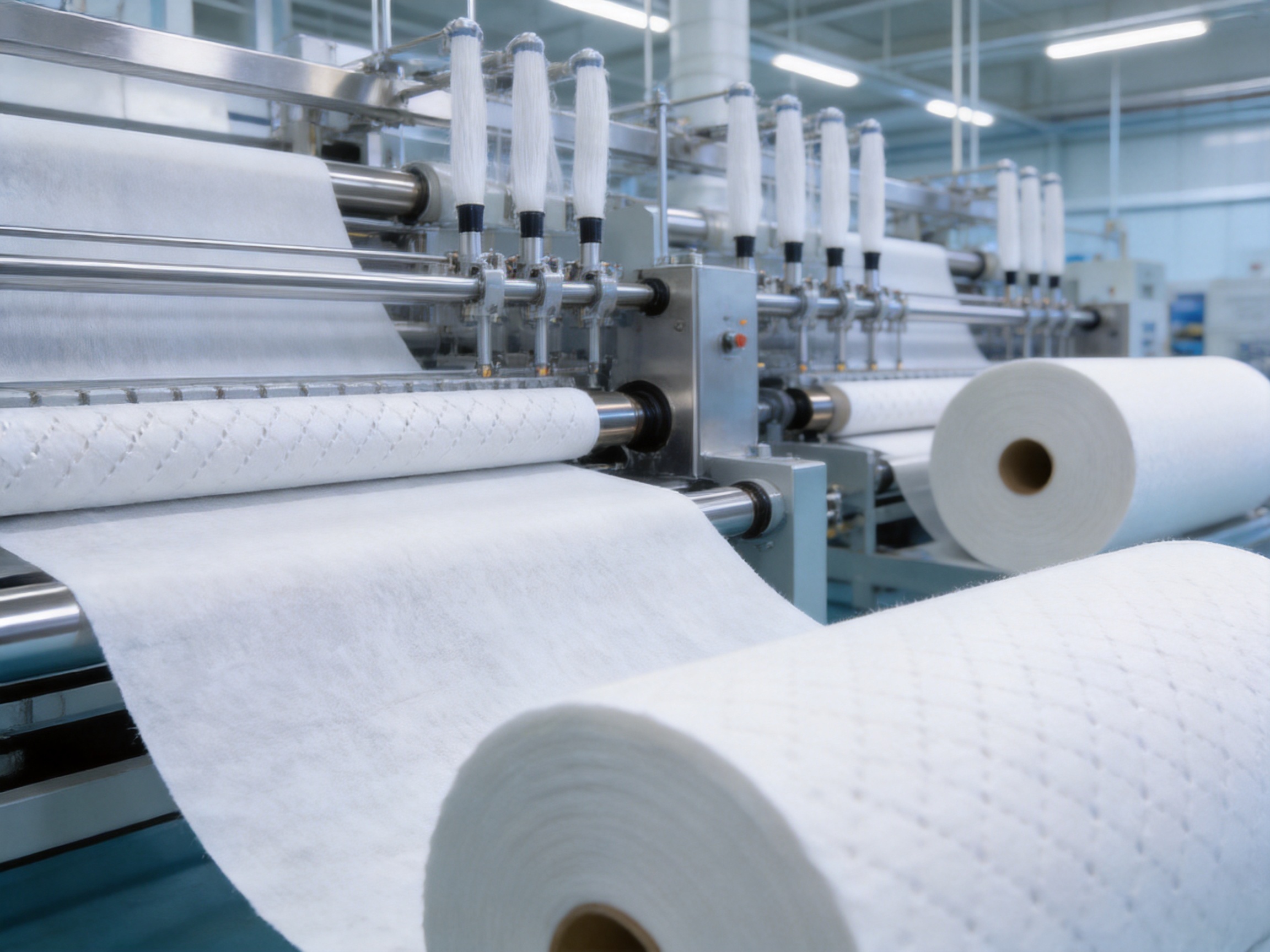
Polypropylene is naturally hydrophobic, which means untreated PP fibers tend to resist water. For a diaper topsheet, this natural characteristic must be modified because the material needs to allow liquid to pass through efficiently. Hydrophilic treatment changes the surface behavior of the fibers and supports faster wetting and penetration.
When liquid reaches a hydrophilic topsheet, it can spread and move through the web more readily. This helps the liquid reach the absorbent core instead of remaining on the surface. Rapid liquid diversion is especially important for products used during sleep, extended wearing periods, or high-mobility activities.
A topsheet’s performance is not determined by hydrophilic treatment alone. Fiber arrangement, basis weight, thickness, pore structure, embossing, pressure, and the design of the underlying acquisition layer all contribute to liquid transfer. For this reason, the topsheet should be evaluated as part of the entire absorbent system rather than as an isolated material.
Important laboratory and production-trial measurements may include strike-through time, repeated strike-through, rewet, liquid spreading, and fluid distribution. Strike-through indicates how quickly a measured amount of liquid passes through the topsheet. Rewet evaluates how much liquid returns toward the surface under pressure. These tests help buyers compare material options under controlled conditions.
For high-performance diaper designs, the goal is usually a combination of rapid acquisition and low surface wetness. Liquid should pass through quickly, while the absorbent core and distribution structure retain it away from the skin. Hydrophilic super-soft spunbond fabric can support this objective when selected and integrated correctly.
Super-Soft Skin Contact Performance
Softness is a central requirement for baby diapers and other products worn close to the body. Infants have delicate skin, and adult incontinence users may also experience increased sensitivity due to prolonged contact, limited mobility, or medical conditions. A material that feels smooth and gentle can improve perceived comfort and product acceptance.
The softness of nonwoven fabric is influenced by polymer characteristics, filament fineness, web structure, bonding conditions, basis weight, embossing pattern, and finishing treatment. Excessive heat or compression can create rigid bonding points. A carefully controlled process helps balance fabric integrity with a soft hand feel.
The diamond dot structure is designed to reduce the concentration of hard or heavily melted areas associated with some bonding patterns. This can contribute to a more fluffy and flexible surface. The material is also described as having a smooth, burr-free surface, which is important for reducing unpleasant friction during movement.
Softness should be assessed through both instrumental testing and human sensory evaluation. Instrumental methods can provide comparative values, while trained panel assessments help identify differences in smoothness, flexibility, bulk, and surface feel. Customer trials using the fabric in actual diaper constructions are particularly valuable because adhesive placement and product tension can change the perceived softness.
Different product categories may require different softness levels. A premium newborn diaper may use a very soft surface with a delicate pattern. A training pant may require a balance of softness and stretch-related process compatibility. An adult incontinence product may need a comfortable topsheet that also withstands larger dimensions and longer wearing cycles.
Breathability and Moisture Comfort
Nonwoven fabrics are porous materials, and their web structure can support air exchange. Breathability helps reduce the feeling of heat and dampness inside a diaper or pull-up. It is particularly relevant for products intended to be worn for long periods or used in warm climates.
Breathability must be considered alongside liquid resistance, leakage protection, and total product construction. The topsheet itself is designed to support liquid transfer, while the backsheet and other components provide additional barriers and containment. The final comfort profile depends on the interaction of all layers.
A breathable topsheet with fast liquid diversion can help reduce the time that moisture remains near the skin. This may contribute to improved wearing comfort and help manufacturers develop products focused on skin-friendly performance. However, no topsheet should be represented as independently preventing skin irritation. Diaper rash can have multiple causes, including moisture, friction, biological factors, product fit, wearing time, and individual sensitivity.
Manufacturers can adjust the fabric specification according to their product objectives. Basis weight, thickness, hydrophilic performance, and pattern may be selected to achieve a specific balance of softness, liquid acquisition, and air permeability. These decisions are best made through controlled trials using the actual absorbent core and production equipment.
Advantages Compared with Ordinary Topsheet Materials
More distinctive surface appearance
The diamond dot pattern gives the material a differentiated appearance compared with common rice dot or plain spunbond fabrics. This can help brands create a more recognizable product design while retaining the practicality of a roll-fed nonwoven material.
Potentially fuller and softer tactile effect
By reducing the effective melting area at bonding points, the diamond dot construction can help maintain a more open and fluffy surface. This supports a softer tactile experience, especially when combined with suitable filament formation and softening treatment.
Rapid liquid penetration
Hydrophilic finishing allows liquid to wet and pass through the PP web more efficiently than untreated polypropylene. This is a critical advantage for topsheet applications, where quick liquid acquisition helps reduce surface wetness.
Broad customization range
The fabric can be produced in a wide range of basis weights and widths. Customers can also request different colors, softness levels, hydrophilic performance, roll lengths, packaging formats, and patterns. This provides greater flexibility than using a single standard specification for every diaper design.
Compatibility with multiple hygiene products
The same material platform can support baby diapers, pull-up pants, adult diapers, and other incontinence products. This allows manufacturers to simplify sourcing while developing product-specific grades.
Support for OEM and ODM development
Industrial buyers may require more than a catalog item. They may need a new basis weight, a specific surface pattern, a particular roll width, or a material matched to a customer sample. Technical cooperation from material selection through mass production can reduce development uncertainty and improve repeatability.
Stable industrial supply capability
Large-scale production resources, multiple manufacturing bases, quality-testing facilities, and international supply experience can help support regular deliveries. This is important for diaper factories and private-label brands that must maintain uninterrupted production.
Manufacturing Process and Quality Control
Consistent quality begins with raw material control. Polypropylene resin must be selected and handled according to the desired processing characteristics and finished-product requirements. Resin storage, feeding, and blending conditions can influence extrusion stability and filament formation.
During extrusion, the polymer is heated to a controlled temperature and pushed through spinnerets. The equipment must maintain uniform output across the working width. Irregular output may cause variations in filament diameter, basis weight, thickness, and surface coverage.
The filaments are then drawn and laid into a web. Airflow, web-forming conditions, and line speed influence the distribution of fibers. A stable web structure is important for both mechanical performance and liquid transfer. Uneven areas may create weak points or inconsistent topsheet behavior.
Thermal bonding consolidates the web. Bonding temperature, pressure, roller design, and residence time affect the balance between strength and softness. For diamond dot fabric, embossing rollers are designed to create the selected pattern while controlling the size and distribution of bonding areas.
Hydrophilic treatment is applied under controlled conditions. Treatment uniformity is important because localized differences may cause inconsistent liquid acquisition across the roll. The material may also receive a super-soft finish or another functional treatment according to the customer’s specification.
After finishing, the fabric is inspected, slit or rewound as required, and packed for shipment. Winding tension must be controlled to avoid telescoping, wrinkles, edge damage, or difficulty during unwinding. Roll identification and production records help support traceability and repeat orders.
| Manufacturing stage | Main control focus | Importance for topsheet performance |
|---|---|---|
| Polymer preparation | Resin consistency, storage, and feeding | Supports stable filament formation |
| Extrusion | Temperature, pressure, and output uniformity | Influences web consistency and strength |
| Filament drawing | Drawing conditions and filament distribution | Affects softness, coverage, and mechanical properties |
| Web formation | Airflow, line speed, and fiber placement | Supports uniform basis weight and liquid transfer |
| Thermal bonding | Roll temperature, pressure, and pattern | Balances softness and tensile strength |
| Hydrophilic finishing | Treatment dosage and uniformity | Promotes fast liquid penetration |
| Winding and packing | Tension, roll edges, labeling, and protection | Improves converting efficiency and delivery condition |
| Final inspection | Physical, functional, and appearance testing | Confirms compliance with agreed specifications |
Testing and Validation for Industrial Buyers
Buyers should establish clear acceptance criteria before ordering large quantities. A product specification may include basis weight tolerance, roll width tolerance, color standard, pattern appearance, moisture content, tensile strength, elongation, thickness, softness, hydrophilic performance, and packaging requirements.
Basis weight testing confirms the mass of fabric per unit area. Width and roll-length verification helps ensure that the material matches the customer’s converting equipment. Thickness and bulk measurements can provide information about the fabric’s structure and potential effect on finished-product dimensions.
Tensile strength and elongation testing evaluate the material’s resistance to machine-direction and cross-direction forces. These properties matter during unwinding, cutting, folding, elastic application, and high-speed assembly. The required values depend on the line design and the final product structure.
Liquid testing should be conducted using a method appropriate for the intended application. Strike-through and rewet results can vary according to test liquid, pressure, temperature, sample preparation, and test equipment. Buyers and suppliers should agree on test methods so that results are comparable.
Softness evaluation may combine laboratory measurements with subjective panel testing. Surface friction, bending resistance, compressibility, and drape can all contribute to perceived softness. Product trials are recommended because fabric performance may change after lamination, adhesive application, or mechanical stretching.
For international supply, buyers may also review factory quality systems, production records, regulatory documentation, chemical information, packaging controls, and shipment procedures. Depending on the target market and product application, additional certifications or declarations may be required. These requirements should be confirmed before commercial production.
Customization for Diaper and Pull-Up Manufacturers
Every hygiene-product manufacturer has a different product architecture. A high-absorbency adult brief may use a wider topsheet and different liquid-distribution requirements than a small baby diaper. A pull-up pant may need a material that performs reliably during continuous high-speed assembly. Customization allows the topsheet to be matched to these product differences.
Basis weight is one of the most important adjustment options. Lower basis weights can support lightweight product designs and material savings, while higher basis weights may provide greater coverage, bulk, or mechanical stability. The selected basis weight must be evaluated with the absorbent core and converting process to ensure that the complete product remains comfortable and efficient.
Width can be produced according to the customer’s equipment and cutting layout. A suitable roll width can reduce edge trim, improve material utilization, and simplify line integration. Width selection should consider machine specifications, slitting requirements, roll diameter, and shipping limitations.
Hydrophilic performance can be adjusted for different product targets. Some designs may require very rapid liquid penetration, while others may need a more controlled wetting profile due to the structure of the acquisition layer. The appropriate finish should be selected through comparative trials rather than by relying on a general specification alone.
Softness can also be tailored. The supplier may develop different grades according to the intended user group, product positioning, and price range. Premium baby products may emphasize an exceptionally soft hand feel, while industrial or institutional products may prioritize a broader balance of performance and cost.
Surface appearance is another area for development. Diamond dot, plain, rice dot, and other patterns may be considered. Colors can include white, pink, or other shades, subject to material requirements and customer approval. Packaging and labeling can be customized for private-label and export programs.
For a new project, customers may provide technical drawings, reference samples, target values, production-line information, and expected annual demand. The engineering and sales teams can use these details to recommend a suitable structure and prepare samples for evaluation.
Applications Across Hygiene Markets
Baby diapers
Baby diapers require a topsheet that feels gentle and supports fast liquid transfer. The diamond dot surface can contribute to a premium appearance, while hydrophilic treatment helps move liquid away from the surface. Customers may select lightweight grades for newborn products and more robust grades for larger sizes.
Pull-up pants
Pull-up pants are designed for active movement and may be produced on high-speed lines with complex elastic and side-panel systems. The topsheet must unwind smoothly and maintain consistent performance throughout production. A customized width, roll length, and basis weight can support line efficiency.
Adult incontinence products
Adult diapers and pull-ups may be worn for extended periods and may require larger dimensions and high absorbency. Comfort, liquid acquisition, breathability, and low rewet are important considerations. The topsheet can be developed for different product formats, including briefs, underwear-style products, and pads.
Medical and hygiene supplies
Selected grades of soft spunbond nonwoven fabric may also be considered for medical or hygiene products that require a clean, uniform, and skin-contact-friendly material. The exact suitability depends on the product design, applicable regulations, sterilization requirements, and customer validation.
Private-label and contract manufacturing
Private-label brands often need a reliable supply partner capable of matching a product brief rather than simply selling a standard roll. Customized color, pattern, packaging, documentation, and repeat production support can help brand owners launch and maintain differentiated hygiene products.
Integrated Manufacturing Strengths
The manufacturer behind this material has a long history in nonwoven and hygiene-product production. Founded in 1987, the organization has developed capabilities in medical and hygienic nonwoven materials, nursing products, and clothing interlining. Its headquarters are located in Changxing, Huzhou, Zhejiang, within the Yangtze River Delta transportation network.
Over more than three decades, the company has established multiple production bases in China, including facilities associated with Guangdong, Jiangsu, and Hubei. It also has an expanding manufacturing presence in Vietnam. This network supports production capacity, regional flexibility, and international supply planning.
The company’s product portfolio covers spunlace nonwoven fabrics, spunmelt nonwoven fabrics, through-air hot-air nonwoven materials, flushable and degradable nonwovens, wet wipes, dry wipes, baby diapers, pull-ups, wet toilet paper, cleansing wipes, and related products. This broad portfolio allows the company to understand both raw-material manufacturing and finished hygiene-product production.
That integrated experience can be valuable to industrial buyers. A supplier that understands the finished diaper structure may be better positioned to discuss topsheet performance in relation to the absorbent core, acquisition layer, adhesives, backsheet, elastics, and converting process. It can also help identify potential issues before a material reaches mass production.
Manufacturing is supported by clean workshops, quality-testing facilities, international production equipment, and technical teams. The company states that it has introduced advanced equipment and technology from Germany, France, and Italy. Such equipment can support controlled spunmelt production, stable web formation, precision embossing, and consistent finishing.
Quality testing is an important part of the production system. A comprehensive testing center can be used to evaluate physical properties, functional performance, appearance, and batch consistency. Testing arrangements should be aligned with customer specifications and the requirements of the destination market.
OEM and ODM Cooperation
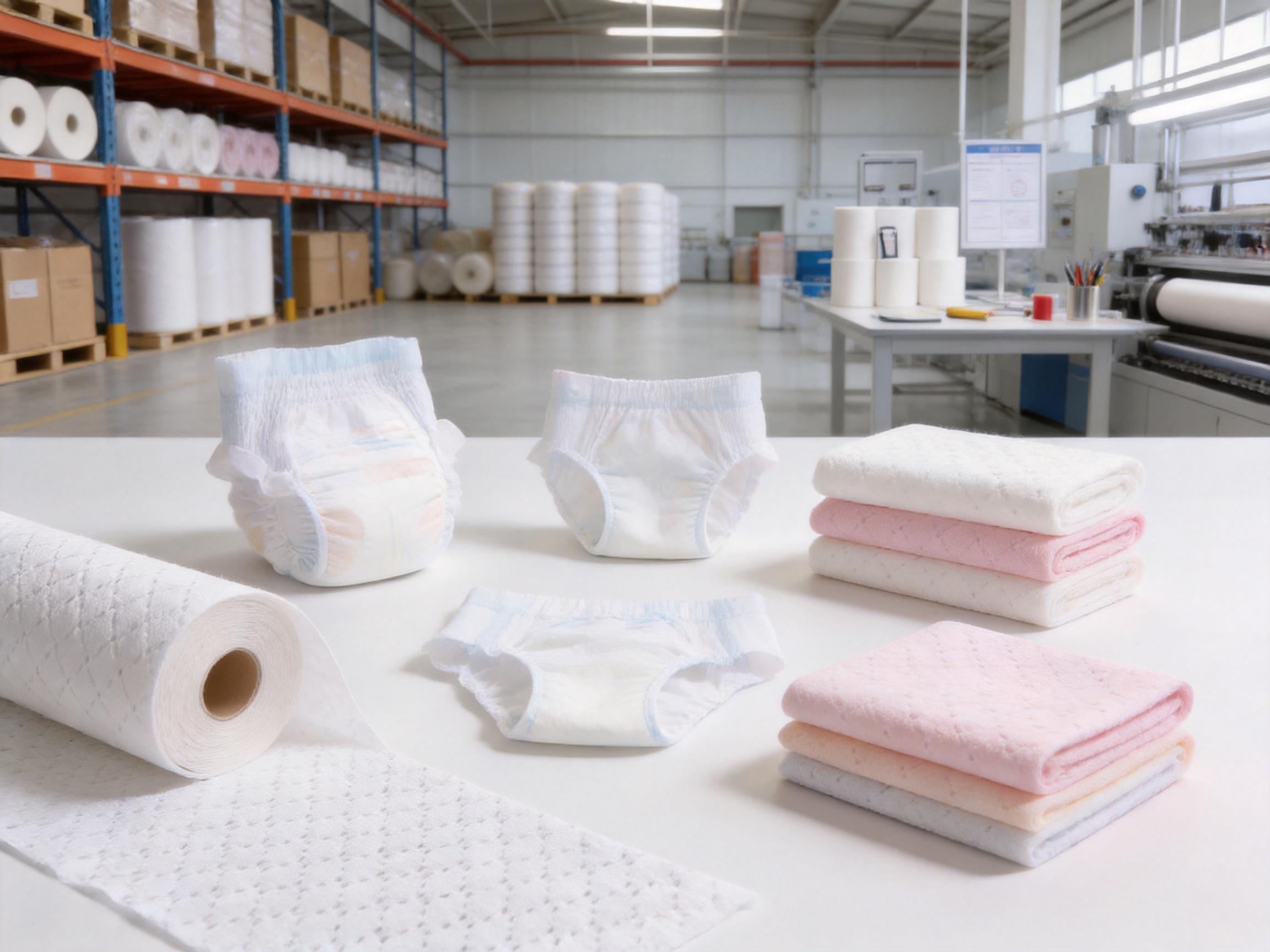
OEM cooperation is suitable for customers that already have a defined product specification and need a dependable manufacturer to produce it. The supplier can manufacture the material according to agreed values for basis weight, width, color, pattern, hydrophilic performance, softness, roll configuration, and packaging.
ODM cooperation is suitable for customers that need technical support during product development. The supplier may help evaluate a reference sample, propose material structures, prepare trial rolls, adjust finishing conditions, and support the transition from laboratory testing to mass production.
A typical development process begins with requirement collection. The customer provides information about the final product, target market, machine type, desired performance, annual demand, and packaging or labeling requirements. The supplier then reviews the information and recommends one or more material options.
Samples are prepared for customer evaluation. The customer may test the fabric independently or incorporate it into a complete diaper or pull-up. Feedback can concern softness, strike-through, rewet, visual appearance, line performance, roll handling, or cost. Adjustments are then made before approval.
Once the specification is confirmed, pilot production or a trial order can be arranged. Production data is reviewed to verify that the approved material can be manufactured consistently at commercial scale. After approval, quality standards and inspection procedures are documented for repeat orders.
Long-term cooperation can provide benefits in planning and consistency. Regular customers may establish forecast schedules, safety-stock arrangements, standard packaging, and repeat quality benchmarks. These systems can help reduce supply interruptions and simplify purchasing administration.
Benefits for Industrial Procurement Teams
For procurement teams, the value of a topsheet supplier includes more than unit price. Total sourcing performance also includes quality consistency, minimum-order flexibility, communication speed, technical support, delivery reliability, documentation, and the ability to respond to changes in demand.
A customized PP spunbond topsheet can reduce the need to redesign the complete diaper around a limited standard material. Buyers can request a width that better matches the cutting layout or a basis weight that aligns with the intended product positioning. These adjustments may improve material utilization and reduce unnecessary conversion losses.
A supplier with both nonwoven and finished-product experience can also help customers compare alternative constructions. For example, a customer may evaluate whether a softer diamond dot topsheet can improve product perception without substantially increasing total material consumption. Such decisions should be based on testing and cost analysis, but technical discussion at the sourcing stage is useful.
International buyers may benefit from established export experience and a global supply network. Shipment planning, documentation, packaging protection, and communication standards are all important when rolls must travel long distances. Clear specifications and pre-shipment inspection procedures can further reduce risk.
Private-label companies may also use customization to create a consistent product identity. A chosen color, surface pattern, softness grade, and packaging format can be applied across a product family. This supports brand recognition while using an established industrial manufacturing platform.
Recommended Purchasing and Technical Checklist
Before placing a commercial order, buyers should define the intended application clearly. Important questions include whether the fabric will be used for a baby diaper, pull-up, adult brief, pad, or another hygiene product. The age group, wearing time, absorbency target, product size range, and converting-line speed may influence the recommended specification.
The buyer should confirm the following material information:
- Polymer composition and any additives or finishing agents
- Target basis weight and acceptable tolerance
- Roll width, roll diameter, and roll length
- Machine-direction and cross-direction tensile requirements
- Softness target and evaluation method
- Hydrophilic performance and testing method
- Preferred surface pattern and visual standard
- Color requirement and color-approval process
- Packaging format, labeling, and pallet requirements
- Production lead time and shipment schedule
- Sample approval and mass-production validation procedure
It is also recommended that customers provide information about their equipment. Unwinding direction, core diameter, maximum roll weight, web tension, cutting method, adhesive system, and embossing conditions may affect material compatibility. A fabric that performs well on one production line may require adjustment for another line.
Samples should be tested in the actual product whenever possible. Laboratory data is useful, but complete-product trials reveal how the topsheet interacts with the acquisition layer, absorbent core, adhesives, and backsheet. Production trials can also identify issues involving wrinkles, static, edge stability, roll telescoping, or line stoppage.
Environmental and Regulatory Considerations
Polypropylene spunbond fabric is a lightweight synthetic material, and its environmental profile depends on resin selection, production efficiency, product design, waste management, and end-of-life conditions. Buyers should consider the requirements of their target market and communicate any sustainability expectations at the beginning of development.
Potential areas of discussion include downgauging, efficient basis-weight selection, production waste reduction, packaging optimization, recycled-content options where technically and legally appropriate, and compatibility with local disposal systems. Any environmental claim should be supported by appropriate documentation and should not be assumed solely from the use of a nonwoven structure.
Hygiene products may also be subject to chemical, safety, labeling, and market-entry requirements. Customers should confirm which regulations apply in the destination country. The supplier and buyer can cooperate on technical files, product declarations, test reports, and other documentation required for commercial distribution.
Optional functional treatments, including antibacterial finishes, must be evaluated carefully. Their use may require additional regulatory review, efficacy testing, labeling controls, and restrictions depending on the market. Functional treatment should therefore be selected only when it is necessary for the product concept and supported by appropriate validation.
How This Material Supports Product Differentiation
Competition in the hygiene market is increasingly based on comfort, performance, appearance, and reliability. A topsheet is a practical area for differentiation because consumers can often feel and see it when using the product. The diamond dot surface creates a distinctive tactile and visual element without changing the basic role of the topsheet.
Brands may position the final product around softness, rapid liquid transfer, breathable comfort, premium surface design, or skin-friendly construction. The nonwoven material can support these claims when the complete product has been tested and the claims are expressed according to applicable regulations.
Manufacturers can also use different grades across a product range. A value-oriented product may use an economical basis weight and standard white surface. A premium product may use a softer grade, a customized color, a diamond dot pattern, or a more advanced liquid-transfer specification. This approach allows one supplier relationship to support multiple market segments.
For contract manufacturers, customization can make it easier to satisfy different brand briefs. One customer may want a plain white topsheet, while another may request pink material with a specific embossing pattern. A flexible production system can accommodate these differences while maintaining controlled processes and documented quality standards.
Conclusion
Hydrophilic super-soft PP spunbond nonwoven fabric is a practical and highly adaptable material for diaper and pull-up topsheets. Its polypropylene substrate provides a lightweight base, while SS, SSS, and SSSS spunbond technology supports uniform web formation, flexibility, and mechanical performance.
The diamond dot design distinguishes the material from ordinary rice dot fabrics. By reducing the effective melting area at rolling points, the pattern can help create a fuller, softer, and more attractive surface. Hydrophilic treatment promotes fast liquid diversion, while the smooth structure and optional softness adjustment support skin-contact comfort.
For industrial buyers, the product’s principal advantage is its combination of performance and customization. Basis weight, roll width, color, pattern, softness, hydrophilic performance, roll length, and packaging can be developed around specific production requirements. This makes the material suitable for baby diapers, pull-up pants, adult incontinence products, hygiene converters, private-label brands, importers, and distributors.
The manufacturer’s long-term experience, multi-site production network, international equipment, quality-testing capabilities, clean manufacturing workshops, and integrated understanding of nonwoven and finished hygiene products provide additional support for OEM and ODM cooperation. Customers can request samples, conduct production trials, and work with technical teams from material selection through mass production.
When properly matched to the absorbent core and converting process, this fabric can help manufacturers develop topsheets that combine softness, rapid liquid acquisition, breathability, appearance, and stable production performance. For companies seeking a reliable and customizable nonwoven solution, it offers a strong foundation for differentiated hygiene products and long-term supply cooperation.
Questions and Answers
1. What is the main purpose of this hydrophilic PP spunbond fabric?
Its main purpose is to serve as the topsheet or skin-contact layer of baby diapers, pull-up pants, adult diapers, and related absorbent hygiene products. It is designed to feel soft against the skin and allow liquid to pass quickly into the absorbent core.
2. Why is hydrophilic treatment necessary for polypropylene fabric?
Untreated polypropylene naturally tends to repel water. Hydrophilic treatment improves the wetting behavior of the fibers, helping liquid penetrate the topsheet more rapidly and reducing the time that moisture remains on the surface.
3. What is the difference between SS, SSS, and SSSS spunbond technology?
SS generally refers to a two-layer or two-beam spunbond structure, SSS to a three-layer or three-beam structure, and SSSS to a four-layer or four-beam structure. Multi-beam production allows greater control over web uniformity, softness, coverage, and mechanical performance.
4. What is the advantage of the diamond dot pattern?
The diamond dot pattern provides a distinctive surface appearance and can reduce the effective melting area at rolling points. This helps the fabric retain a fuller and softer feel compared with some ordinary rice dot structures.
5. Can the surface pattern be changed?
Yes. Diamond dot is one available option, but plain, rice dot, and other customized patterns may also be discussed. The final pattern should be selected according to product design, basis weight, converting equipment, and customer requirements.
6. Is the material suitable for both baby and adult incontinence products?
Yes. The material can be used for baby diapers, pull-up pants, adult diapers, and other incontinence products. The most suitable grade may differ according to product size, wearing time, absorbency, softness target, and production-line requirements.
7. What basis weights are available?
The stated range is approximately 8 to 100 g/m². The appropriate basis weight depends on the final product structure, required coverage, softness, strength, liquid-transfer behavior, and production process.
8. What roll widths can be supplied?
Roll widths can generally range from approximately 10 to 320 centimeters, subject to the customer’s requirements, production capabilities, slitting arrangement, and converting-line specifications.
9. Can color be customized?
Yes. White and pink are common options, and other colors may be considered. Color approval should be based on a confirmed sample or agreed color standard before mass production.
10. Can the hydrophilic performance be adjusted?
Yes. Hydrophilic performance can be developed according to the liquid-acquisition requirements of the finished hygiene product. Customers should conduct strike-through and rewet testing using their own product construction before approval.
11. Can different softness levels be supplied?
Yes. Different softness levels may be developed through adjustments to the web structure, bonding conditions, basis weight, embossing, and finishing treatment. Product trials are recommended because softness is influenced by the complete diaper construction.
12. Are samples available before a bulk order?
Yes. Samples can be provided for quality evaluation, laboratory testing, and production-line trials before mass production. Customers should provide their intended application and technical requirements to support appropriate sample selection.
13. Does the supplier provide OEM and ODM services?
Yes. OEM services are available for customers with established specifications, while ODM cooperation can support customers that need assistance with material development, pattern selection, performance adjustment, and production validation.
14. What quality tests should buyers perform?
Recommended evaluations may include basis weight, thickness, width, tensile strength, elongation, softness, air permeability, liquid strike-through, rewet, pattern appearance, color consistency, winding quality, and converting-line performance.
15. Can the material be used for products marketed as antibacterial?
An antibacterial finish may be available as an optional functional treatment, but any antibacterial claim must be supported by appropriate efficacy testing and comply with the regulations of the target market. Buyers should confirm the specific treatment and documentation before making product claims.
16. How can customers begin a customized project?
Customers can provide the intended application, desired basis weight, roll width, pattern, color, softness target, hydrophilic requirements, annual demand, equipment information, and any reference sample or drawing. The supplier can then recommend a suitable specification and arrange sampling.
References
1. International Organization for Standardization. Nonwovens and Textile Testing Principles.
2. Association of the Nonwoven Fabrics Industry. Technical Guidance for Nonwoven Fabric Manufacturing and Evaluation.
3. Standard methods for testing absorbent hygiene products, including liquid strike-through and rewet evaluation.
4. Polypropylene Fiber and Spunbond Nonwoven Manufacturing: Materials, Web Formation, and Thermal Bonding Principles.
5. Technical literature on hydrophilic surface modification of polyolefin fibers.
6. Textile and hygiene-product quality-control practices for basis weight, tensile strength, softness, air permeability, and roll inspection.