中文简体
中文简体 English
 日本語
日本語 русский
 Español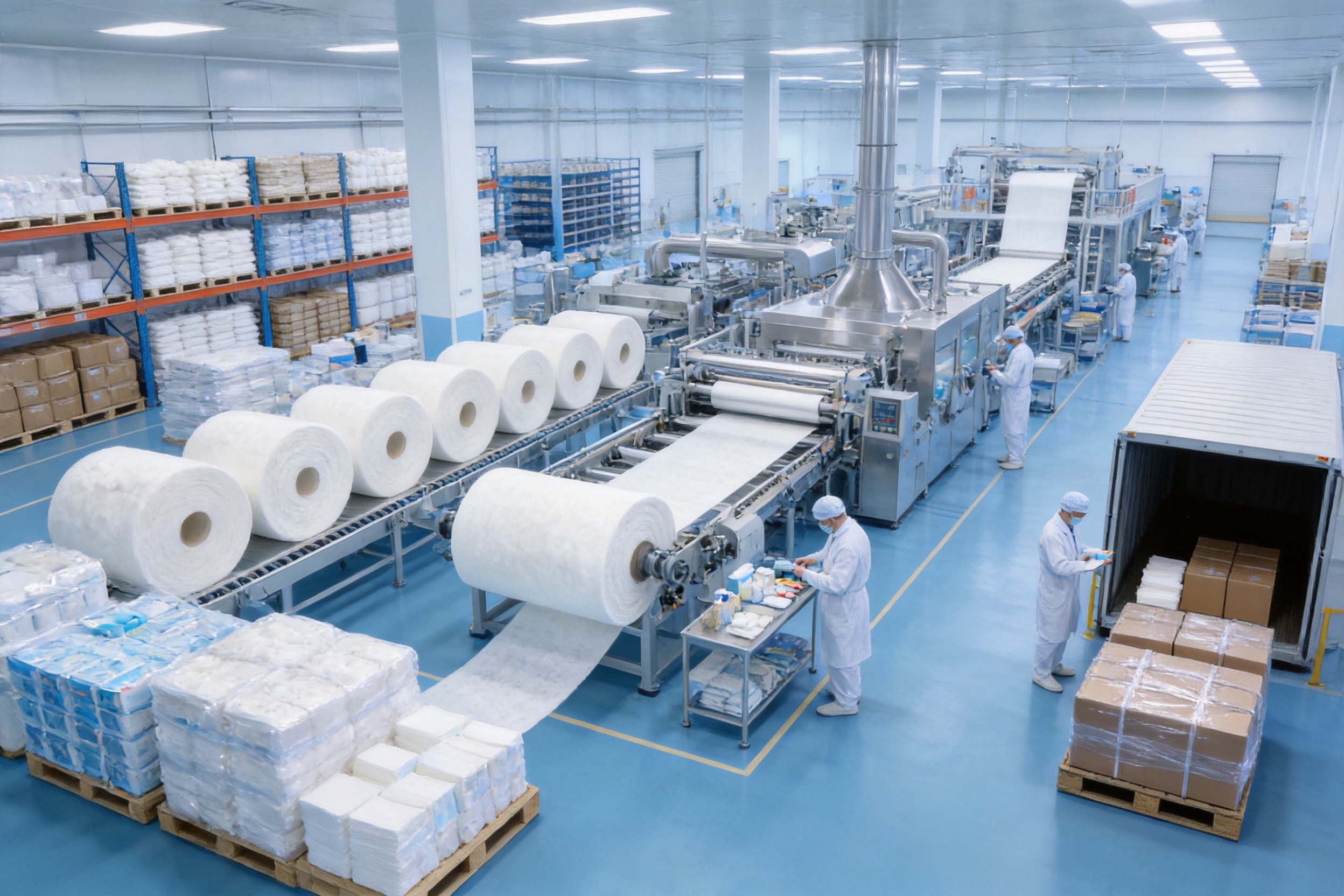
Absorbent cotton is one of the most important natural materials used in medical care, personal hygiene, cosmetic applications, nonwoven manufacturing, and many industrial processes. Although it may appear simple, high-quality absorbent cotton requires careful raw-material selection, controlled purification, professional processing, reliable quality management, and stable production capacity. The difference between ordinary cotton fiber and properly processed absorbent cotton can affect softness, cleanliness, absorbency, processing efficiency, product safety, and the consistency of finished goods.
Modern manufacturers and converters increasingly require absorbent cotton that can perform consistently from one production batch to the next. They also need a supplier that understands the requirements of downstream applications, including cotton nonwoven fabrics, cotton rolls, medical products, wipes, hygiene products, and other absorbent articles. A professional manufacturer must therefore provide more than a raw material. It must offer process expertise, dependable supply, flexible customization, and the technical foundation necessary for long-term cooperation.
This article explains the characteristics, manufacturing process, applications, advantages, quality considerations, and purchasing value of absorbent cotton. It also examines how an experienced producer with advanced nonwoven and hygiene-product capabilities can create additional value for customers seeking dependable materials and integrated manufacturing support.
What Is Absorbent Cotton?
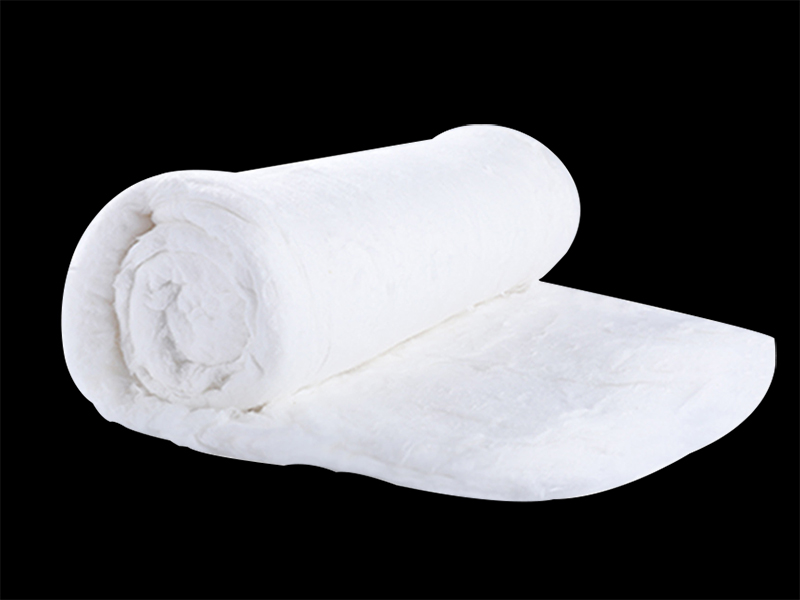
Absorbent cotton is cotton fiber that has undergone purification and degreasing treatment to remove natural substances and foreign matter that may reduce absorbency or interfere with subsequent processing. Raw cotton naturally contains cellulose, waxes, proteins, fats, pectins, mineral residues, seed fragments, dust, and other impurities. These components are part of the natural structure of the plant, but they are not desirable in applications that require high cleanliness, rapid liquid uptake, soft touch, or stable processing behavior.
Through a controlled treatment process, the cotton fibers are cleaned and prepared for use in medical, hygiene, nonwoven, cosmetic, and industrial products. The treatment reduces hydrophobic substances such as natural waxes and oils while helping preserve the favorable characteristics of cotton cellulose. The resulting material is soft, lightweight, breathable, and capable of absorbing and retaining liquids.
The term “absorbent” is especially important. Untreated cotton may resist water initially because of its natural wax content. Once the fiber has been properly purified, liquid can spread more easily across and into the fiber structure. This makes the material more suitable for products that require contact with water, saline solutions, cleansing fluids, cosmetic formulations, or other liquids.
Absorbent cotton can be supplied in different forms according to customer requirements. It may be delivered as loose fiber, cotton sheets, cotton rolls, pads, or a semi-finished material for further conversion. The appropriate form depends on the intended application, equipment, packaging requirements, and desired performance characteristics.
Why Cotton Purification Is Essential
Natural cotton fibers contain many substances that are not suitable for direct use in sensitive applications. Wax and oil can make the fiber less receptive to water. Protein and pectin residues may affect cleanliness, odor, color, and processing stability. Dust, plant fragments, and other impurities can reduce the visual quality of the material and increase the risk of defects in finished products.
Purification improves the functional value of the cotton in several ways. First, it increases wetting performance. Liquid can enter the fiber network more quickly and spread more evenly. Second, it improves cleanliness by removing a substantial proportion of unwanted natural residues. Third, it supports a softer and more uniform hand feel. Fourth, it creates a more stable raw material for carding, web formation, lamination, needling, and other downstream operations.
Effective treatment must be carefully balanced. Excessive chemical exposure, high temperatures, or unsuitable mechanical handling can weaken the fiber, reduce its length, create excessive lint, or negatively affect softness. A professional manufacturer therefore needs to control the relationship between purification efficiency and fiber preservation.
The best results come from a process designed around the final application. Cotton intended for a high-absorbency medical material may require a different balance of cleanliness, whiteness, fiber structure, and moisture content from cotton intended for a cosmetic pad or a nonwoven substrate. Application-oriented manufacturing helps ensure that the material is suitable for the customer’s converting equipment and product specifications.
Absorbent Cotton
Key Characteristics of High-Quality Absorbent Cotton
High Absorbency
The primary performance advantage of absorbent cotton is its capacity to take up and retain liquid. Properly purified fibers allow water and aqueous solutions to penetrate the fiber network rather than remaining on the surface. This characteristic is valuable in medical dressings, cleansing products, cosmetic pads, and absorbent nonwoven materials.
Absorbency is influenced by several factors, including fiber maturity, fiber length, degree of purification, fiber orientation, density, moisture content, and final product structure. A material with good intrinsic absorbency may still perform poorly if it is compressed excessively or formed into a dense structure that limits liquid penetration. For this reason, the manufacturer must consider both fiber quality and the intended conversion method.
Soft and Skin-Friendly Touch
Cotton is a natural cellulose fiber with a comfortable hand feel. It is widely recognized for its softness and suitability for products that come into contact with the skin. In baby care, feminine care, medical care, and beauty applications, softness can have a direct impact on user comfort and perceived product quality.
A professional purification and opening process helps maintain the natural softness of the fiber. Careful handling also reduces harshness caused by excessive chemical residues, fiber damage, or uneven treatment. When absorbent cotton is incorporated into a finished product, its softness can contribute to a gentle contact surface and a more pleasant user experience.
Clean Appearance
High-quality absorbent cotton generally has a clean, uniform appearance with limited visible foreign matter. A consistent appearance is important for medical and cosmetic products, where customers often associate brightness, cleanliness, and uniformity with quality. It is also valuable in nonwoven production because irregular contamination can create weak spots, visible defects, or interruptions during processing.
Appearance should not be considered separately from functional performance. A bright material that lacks absorbency or contains residues is not necessarily a high-quality material. The strongest products combine visual cleanliness with appropriate absorbency, softness, strength, and processing stability.
Good Processing Compatibility
Absorbent cotton can serve as a raw material for cotton nonwoven fabrics and other fiber-based products. To perform well in manufacturing, the fiber should open evenly, distribute consistently, and form a stable web. Excessive clumping, irregular moisture, or uncontrolled fiber length can make carding and web formation more difficult.
Processing compatibility is particularly important for high-speed production lines. A stable material can reduce line stoppages, minimize waste, and support more uniform product weight. Customers benefit not only from the quality of the incoming cotton but also from improved productivity and more predictable production planning.
Natural and Renewable Material Attributes
Cotton is a natural cellulose fiber and is widely valued for its renewable biological origin. It can support product concepts focused on natural materials, skin comfort, and environmental responsibility. While the environmental profile of a final product depends on the complete supply chain, formulation, packaging, and disposal method, cotton can be an attractive component for customers seeking alternatives to entirely synthetic materials.
Its natural origin also provides marketing value when accurately communicated. Product developers may highlight cotton content, softness, comfort, and traditional consumer familiarity, provided that all claims are supported by appropriate testing and comply with applicable regulations.
Manufacturing Process of Absorbent Cotton
Raw Cotton Selection
Production begins with the selection of suitable raw cotton. Important considerations include fiber maturity, staple length, color, moisture level, cleanliness, and the presence of foreign matter. Raw material inspection helps the manufacturer determine whether the cotton is appropriate for the intended product category.
Different applications may require different raw-material characteristics. A customer producing soft cosmetic pads may prioritize whiteness, uniformity, and a smooth touch. A customer producing absorbent nonwoven materials may place greater emphasis on fiber opening, liquid uptake, web-forming behavior, and strength retention. Understanding these priorities allows the manufacturer to select and process the cotton more effectively.
Opening and Preliminary Cleaning
Before chemical purification, the cotton is opened and loosened to expose the fiber surface. Mechanical opening helps separate compressed tufts and facilitates the removal of loose dust, seed fragments, and other coarse impurities. The equipment and operating conditions must be adjusted to avoid excessive fiber breakage.
Preliminary cleaning is important because it reduces the burden on subsequent treatment stages. Removing coarse matter at the beginning can improve chemical efficiency, reduce contamination in processing equipment, and support a more uniform final product.
Degreasing and Scouring
The central stage of absorbent cotton production is degreasing or scouring. During this stage, natural waxes, oils, pectins, proteins, and other impurities are reduced or removed. The treatment improves the fiber’s ability to accept water and helps create a cleaner, more hydrophilic surface.
Process parameters may include treatment temperature, time, chemical concentration, liquor ratio, agitation, and rinsing conditions. These parameters must be controlled carefully. Insufficient treatment may leave residues that limit absorbency, while excessive treatment may reduce fiber strength or affect the hand feel.
Professional manufacturers use established operating procedures and process monitoring to maintain consistency. Batch records, equipment control, and sampling procedures help identify variations before they influence large quantities of finished material. Where continuous production is used, real-time monitoring and standardized settings can further improve stability.
Rinsing and Neutralization
After scouring, the cotton must be rinsed adequately to remove loosened impurities and residual processing agents. Depending on the process design, neutralization may also be required to bring the material into an appropriate chemical condition.
Rinsing is not a minor step. Residual chemicals can affect odor, skin compatibility, color, absorbency, and the performance of subsequent treatments. Thorough washing helps ensure that the material is suitable for conversion into products that may be used directly on the skin.
Whitening or Brightness Adjustment
Some absorbent cotton applications require a clean white appearance. A controlled whitening or brightness-adjustment stage may be used when appropriate. The objective is to improve visual uniformity while protecting fiber integrity and avoiding undesirable residues.
Customers should distinguish between visual whiteness and actual cleanliness. Product evaluation should consider a complete group of indicators, including absorbency, softness, foreign matter, odor, moisture, and chemical safety. A responsible supplier should provide information that reflects the complete product profile rather than relying on appearance alone.
Drying and Moisture Control
Following wet processing, the cotton is dried under controlled conditions. Drying must remove excess moisture without overheating the fiber or causing unnecessary yellowing, brittleness, or loss of softness. Final moisture content is important because it affects weight accuracy, storage stability, microbial control, and processing behavior.
Uniform drying is especially important for large-volume production. Variations in moisture can lead to differences in product weight and density. They may also influence how the cotton opens and forms a web during downstream processing. Controlled drying and appropriate storage conditions help maintain stable quality until delivery.
Opening, Carding, and Forming
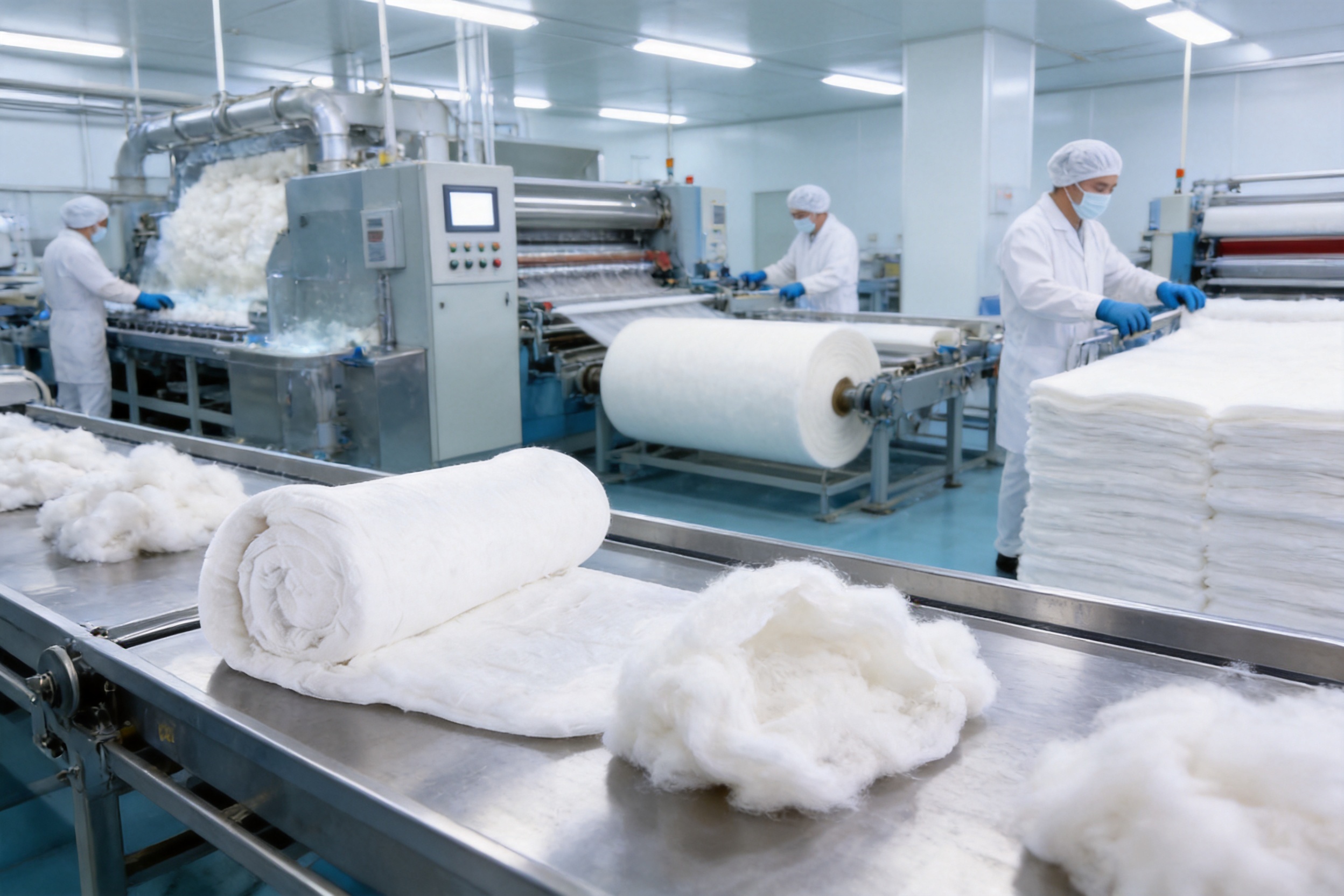
Once purified and dried, the cotton may be opened again and processed through carding or related fiber-preparation equipment. Carding separates and aligns fibers while helping create a more uniform structure. Depending on the final product, the material may be formed into a batt, sheet, roll, pad, or other format.
Equipment settings should be matched to the fiber characteristics and product design. Excessive mechanical action can create short fibers and lint, while insufficient opening may cause uneven distribution. An experienced producer understands how raw-material selection, treatment conditions, and mechanical processing interact.
Inspection, Packaging, and Storage
Finished absorbent cotton is inspected before packaging. Inspection may include appearance, cleanliness, absorbency, moisture, weight, dimensions, odor, and other customer-specific requirements. The product is then packed in a manner that protects it from dust, moisture, compression damage, and cross-contamination.
Storage areas should be clean, dry, and organized. Materials should be protected from direct sunlight, excessive humidity, strong odors, and contact with unsuitable substances. Proper stock rotation supports freshness and reduces the risk of long-term storage damage.
Quality Control from Fiber to Finished Material
Quality control should begin before production rather than at the final inspection stage. Incoming raw cotton must be assessed, production parameters must be documented, and finished material must be tested against defined specifications. A comprehensive system reduces variation and creates greater confidence for customers placing repeat orders.
Important quality-control areas may include:
- Raw cotton cleanliness and fiber characteristics.
- Moisture content before and after processing.
- Absorbency and wetting performance.
- Visual uniformity and whiteness.
- Fiber opening and distribution.
- Residual processing substances.
- Odor and overall cleanliness.
- Weight, dimensions, and packaging integrity.
- Microbiological requirements where applicable.
- Traceability between raw materials, production batches, and shipments.
Testing requirements depend on the application and regulatory market. Cotton used in a general industrial absorbent may have different specifications from cotton incorporated into medical or personal-care products. Buyers should clearly communicate the intended use, product format, contact requirements, and target market before finalizing a specification.
Traceability is another important strength. When a supplier can identify the raw-material source, production date, processing parameters, inspection results, and packaging details, it becomes easier to investigate concerns and maintain consistent quality. Traceability also supports customer audits, internal quality management, and long-term product development.
Advantages Compared with Less Specialized Alternatives
More Reliable Absorbency
Untreated or inadequately processed cotton may initially repel water because of its natural waxes and oils. This can create uneven wetting, slow liquid uptake, and inconsistent performance. Properly purified absorbent cotton is designed to overcome this limitation, making it more dependable for products where liquid handling is essential.
Compared with mixed or poorly controlled fiber sources, specialized absorbent cotton offers greater consistency. Uniform processing helps customers achieve more predictable product performance and reduces the need to compensate for raw-material variation during converting.
Improved Cleanliness
Specialized manufacturing removes unwanted natural substances and foreign matter more effectively than basic mechanical cleaning alone. This is particularly valuable in products that are applied to the skin, used for cleansing, or incorporated into medical and hygiene materials.
Improved cleanliness can also reduce production problems. Foreign particles may cause visible defects, equipment contamination, or customer complaints. A cleaner input material supports a cleaner factory environment and a more stable final product.
Better Softness and User Comfort
Natural cotton already has a strong comfort advantage, but processing quality determines whether that advantage is preserved. Gentle opening, balanced purification, controlled drying, and appropriate packaging help maintain a soft touch. This can distinguish a premium product from a rough or inconsistent alternative.
Stronger Downstream Compatibility
A specialized supplier understands how absorbent cotton behaves in nonwoven and hygiene manufacturing. The material can be prepared to support carding, web formation, lamination, cutting, folding, and packaging. This application knowledge can be more valuable than a simple low purchase price because it helps customers reduce waste and improve operational efficiency.
Natural-Fiber Positioning
Many consumers and product developers are interested in natural materials, especially in baby care, personal care, beauty, and household applications. Absorbent cotton provides a familiar natural-fiber component that can support product differentiation when used appropriately and described accurately.
More Stable Supply
Availability is a major consideration for manufacturers. A supplier with substantial annual production capacity and an established industrial network can offer better support for scheduled production than a small source with irregular output. Stable supply helps customers avoid emergency purchases, production interruptions, and frequent reformulation.
Manufacturing Strength and Industrial Capability
A supplier’s value is closely related to its overall manufacturing foundation. An experienced enterprise specializing in medical and hygienic nonwoven materials, nursing products, and clothing interlining can apply knowledge from multiple product categories to absorbent cotton production.
The company described in the supplied materials has operated since 1987 and has developed more than three decades of experience in research, production, and sales. Its headquarters are located in Changxing, Huzhou, Zhejiang, an area with convenient transportation connections in the Yangtze River Delta. The company has also established multiple production bases in different regions of China, including facilities in Guangdong, Jiangsu, and Hubei.
This geographic and industrial structure can provide several practical advantages. Multiple production bases may support broader manufacturing resources, regional logistics, production coordination, and business continuity. A large organization can also invest more effectively in technical personnel, equipment maintenance, process improvement, quality systems, and customer service.
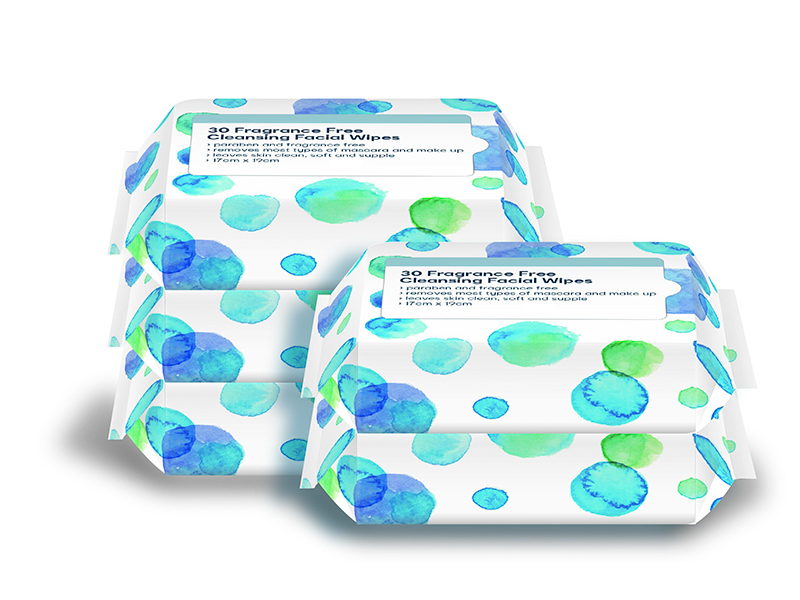
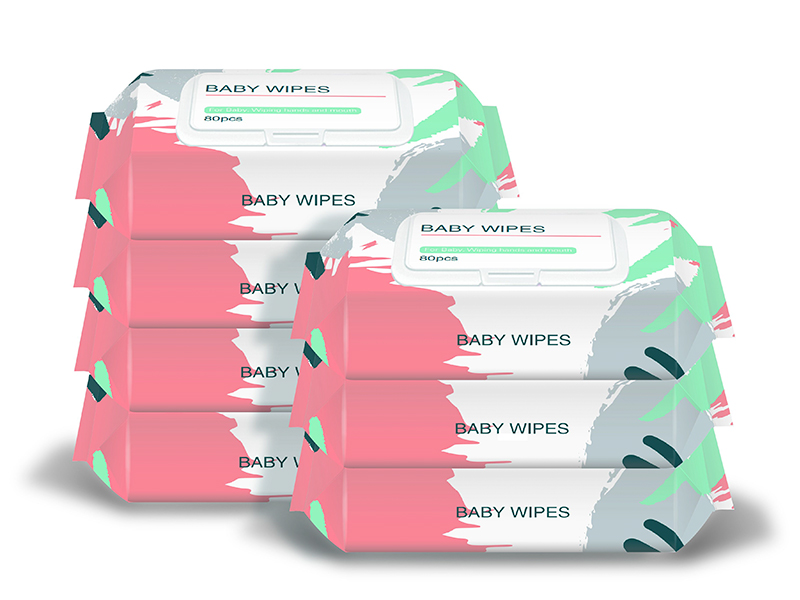
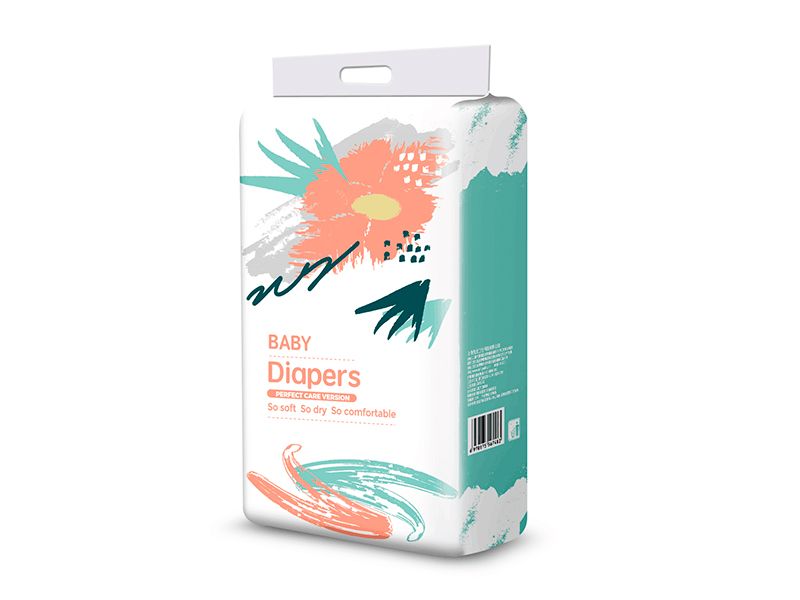
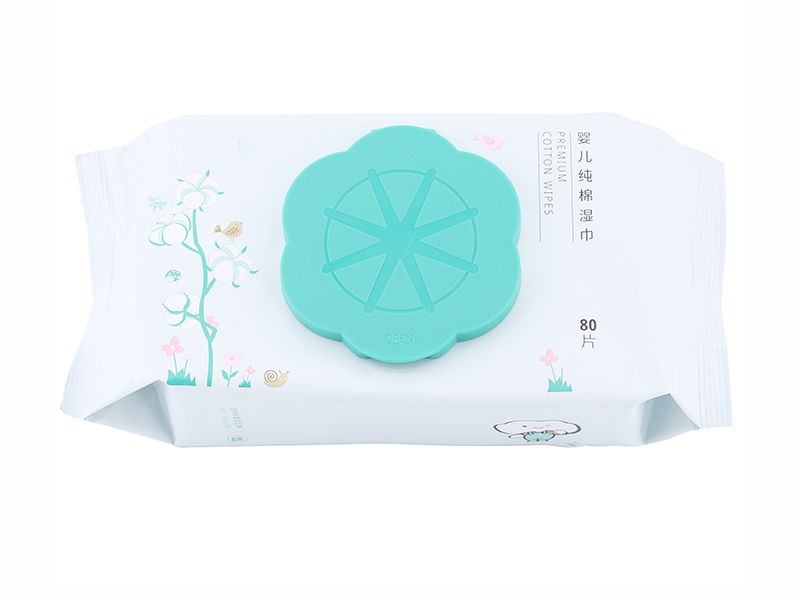
The company’s broader product portfolio includes spunlace nonwoven fabrics, spunmelt nonwoven fabrics, hot-air-through nonwoven fabrics, flushable and degradable nonwoven materials, wet wipes, dry wipes, baby diapers, pull-ups, wet toilet paper, cleansing wipes, and related products. This experience is relevant to absorbent cotton because many of these products require careful control of fiber properties, liquid management, softness, cleanliness, web structure, and high-speed converting.
Experience across medical, maternal and baby, beauty, home, industrial cleaning, and clothing applications also helps the manufacturer understand different customer priorities. A medical customer may focus on cleanliness and absorbency. A baby-care customer may prioritize softness and skin comfort. A cosmetic customer may need a smooth surface and consistent shape. An industrial customer may focus on liquid capacity, strength, and cost efficiency. A flexible manufacturer can adapt its technical approach to these differences.
Internationally introduced production equipment and technology from Germany, France, and Italy further demonstrate a commitment to industrial modernization. Advanced equipment alone does not guarantee quality, but it can provide the precision, automation, speed, and repeatability needed for large-scale production when combined with trained personnel and disciplined process management.
The company’s reported position among leading Chinese industrial textile enterprises and its long-term development in the nonwoven sector indicate substantial industry experience. For customers, this experience can reduce supplier risk. It suggests that the manufacturer has worked with demanding production environments, understands the importance of delivery schedules, and has the organizational structure to support ongoing cooperation.
Capacity, Customization, and Supply Security
The company can produce approximately 6,000 tons of absorbent cotton products annually. This capacity is important for customers that require regular supply, private-label manufacturing support, or large-volume production. A reliable annual output enables better planning for raw-material purchasing, production scheduling, inventory management, and shipment coordination.
Capacity should not be viewed only as a measure of size. It also affects a supplier’s ability to handle seasonal demand, product launches, repeat orders, and unexpected increases in volume. Customers can benefit from a production partner that is capable of scaling orders while maintaining agreed specifications.
At the same time, customization remains important. Customers may require different fiber forms, roll widths, weights, packaging styles, dimensions, moisture levels, or end-use properties. The final specification should be developed through communication between the buyer and the manufacturer. The supplier may be able to adjust processing and packing according to the customer’s equipment, market, and product design.
Customization can include:
- Product weight and roll or sheet dimensions.
- Packaging format and carton configuration.
- Private-label or contract manufacturing support.
- Material combinations for nonwoven conversion.
- Different levels of softness, density, and absorbency.
- Application-specific inspection and documentation.
- Production scheduling for recurring orders.
Customization should always be confirmed through samples and technical specifications. A sample approval process helps align expectations regarding appearance, hand feel, absorbency, fiber structure, packaging, and processing performance before full-scale production begins.
| Customer Requirement | Relevant Absorbent Cotton Feature | Manufacturing Consideration |
|---|---|---|
| Rapid liquid uptake | Hydrophilic, properly purified fiber surface | Controlled degreasing, rinsing, and absorbency testing |
| Soft skin contact | Natural cellulose comfort and gentle fiber handling | Balanced treatment, careful opening, and controlled drying |
| Uniform nonwoven production | Consistent fiber opening and distribution | Stable raw materials, carding control, and batch monitoring |
| Clean visual appearance | Reduced foreign matter and uniform brightness | Raw-material inspection, purification, and final inspection |
| Large-volume supply | High annual production capability | Planned scheduling, inventory coordination, and logistics support |
| Private-label product development | Flexible product format and packaging options | Sample approval, specification confirmation, and coordinated production |
Applications of Absorbent Cotton
Medical and Nursing Products
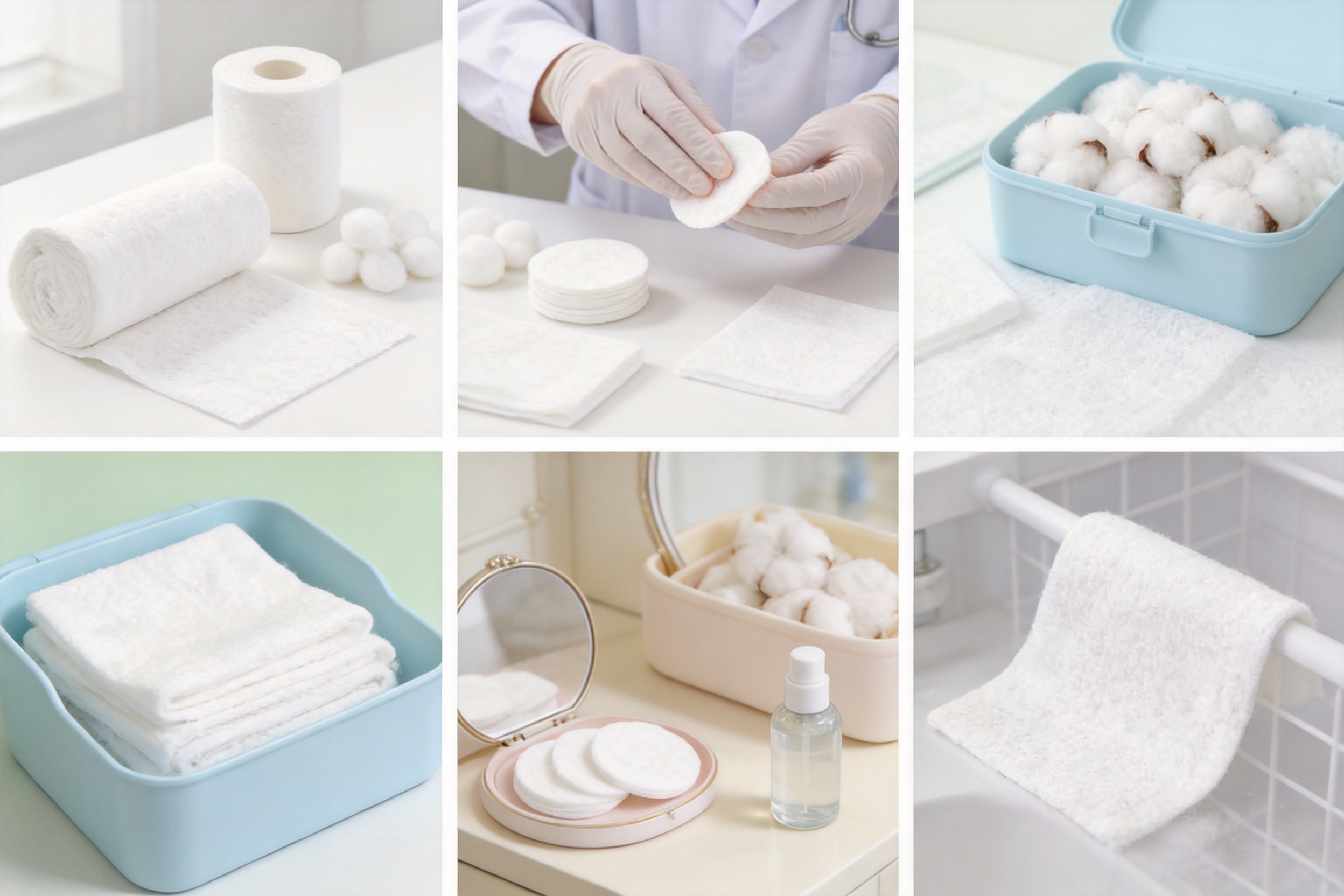
Absorbent cotton is widely used in medical and nursing materials because it is soft, light, and capable of taking up liquids. It may be incorporated into cotton balls, cotton rolls, pads, swabs, dressings, cleansing materials, and other absorbent articles. The exact product design and regulatory requirements depend on the intended use and market.
Medical applications require particular attention to cleanliness, packaging, traceability, and compliance. Buyers should confirm whether the product must meet medical-device requirements, pharmacopoeial standards, sterilization requirements, or other national and regional regulations. A material suitable for general nursing use may not automatically be suitable for a regulated sterile product.
Baby-Care Products
Baby-care products require soft materials that are comfortable and suitable for delicate skin. Absorbent cotton can be used in dry wipes, cleansing pads, cotton products, and other nursing articles. Its natural cellulose structure and soft touch make it an attractive component in products designed for gentle care.
For baby applications, customers should pay attention to softness, odor, cleanliness, lint level, and the safety of any processing residues. The final product should be evaluated as a complete system, including additives, lotions, packaging, and intended use conditions.
Beauty and Cosmetic Products
Cosmetic pads and cleansing products often require a smooth surface, stable dimensions, good liquid uptake, and a pleasant skin feel. Absorbent cotton can help distribute toners, cleansing liquids, makeup removers, and other cosmetic formulations across the skin.
Different cosmetic applications may require different structures. A dense pad may be suitable for controlled application, while a more open structure may be preferred for rapid absorption. Customization of weight, thickness, surface texture, and shape can help brands create products for specific consumer preferences.
Wet and Dry Wipes
Absorbent cotton and cotton-based materials can contribute to both dry and wet wipe products. In dry wipes, softness and low lint may be important. In wet wipes, the material must absorb and retain the lotion while releasing it appropriately during use. The balance between liquid capacity, wet strength, softness, and dispersibility depends on the product category.
A manufacturer experienced in wipe production can offer useful technical insight into how absorbent fibers interact with binders, lotions, folding structures, and packaging. This integrated knowledge may help customers move more efficiently from a raw material concept to a finished private-label product.
Nonwoven Fabrics
Absorbent cotton is an important raw material for cotton nonwoven fabrics. It can be processed into fiber webs and combined with mechanical, thermal, or chemical bonding methods according to the required product structure. Nonwoven materials may be used in medical, hygiene, cosmetic, household, and industrial applications.
The performance of the final nonwoven depends on fiber distribution, basis weight, bonding, density, tensile strength, absorbency, and surface characteristics. Close cooperation between the cotton supplier and nonwoven converter can help achieve better results, particularly when the product requires a precise balance of softness and strength.
Industrial Cleaning
Industrial cleaning products require dependable liquid absorption and practical handling. Cotton-based absorbent materials may be used for wiping, polishing, spill management, equipment cleaning, and maintenance tasks. Depending on the application, customers may prioritize high absorption, low lint, tear resistance, or economical bulk packaging.
Industrial users often purchase in large quantities and need predictable supply. A high-capacity manufacturer can support regular delivery programs and help customers maintain production or maintenance inventories.
Role in Private-Label and OEM/ODM Manufacturing
Absorbent cotton can serve as a component in a wider private-label product program. Customers may not want to purchase raw material separately from one supplier and finished wipes, diapers, or training pants from another. Working with a manufacturer that has expertise across nonwoven materials and nursing products can simplify product development and supply-chain coordination.
The company’s supplied profile states that it provides OEM and ODM services for wet and dry wipes, diapers, and growing training pants. This capability can benefit customers that want to develop a coordinated product range. For example, a brand may require cotton-related cleansing products together with baby-care articles or personal-care wipes. An integrated manufacturer can help coordinate materials, packaging, product specifications, and production schedules.
OEM manufacturing generally requires the supplier to produce according to the customer’s established design and specifications. ODM cooperation may include broader support in product structure, material selection, packaging, and development. In both cases, successful cooperation depends on clear communication, sample approval, quality agreements, artwork control, and delivery planning.
Private-label customers should evaluate more than the initial quotation. Important questions include whether the supplier can maintain the same material quality across repeat orders, whether it can support regulatory documentation, whether it has sufficient capacity, and whether it understands the customer’s target market. A supplier with a broad technical background may provide stronger long-term value than a source focused only on one low-cost item.
How to Select the Right Absorbent Cotton Supplier
Evaluate Technical Experience
The supplier should understand cotton purification, absorbency, fiber processing, and the customer’s downstream application. Ask how the material is processed, how consistency is maintained, and which tests are performed. A supplier should be able to explain the relationship between raw-material selection, treatment conditions, and final performance.
Confirm Production Capacity
Capacity must match the customer’s expected order volume and growth plan. Buyers should consider current demand, seasonal peaks, future product launches, and emergency replenishment needs. A supplier with approximately 6,000 tons of annual absorbent cotton capacity may be suitable for customers seeking a stable source for medium- to large-scale production, subject to detailed confirmation of available schedules and specifications.
Request Samples
Samples allow customers to evaluate softness, absorbency, appearance, odor, lint, density, and processing behavior. Samples should be tested under conditions similar to actual production. For example, a nonwoven converter should run the material through representative carding and web-forming equipment rather than relying only on visual inspection.
Review Quality Documentation
Customers should request appropriate product specifications, test reports, safety information, and quality-control documentation. The required documents depend on the product category and destination market. For regulated medical or hygiene applications, buyers should also confirm the manufacturer’s quality systems, audit procedures, and compliance capabilities.
Assess Communication and Service
Good communication reduces errors in specifications, packaging, labeling, and delivery. A capable supplier should respond clearly to technical questions and provide practical guidance when customers are developing a new product. Communication is especially important for OEM and ODM projects, where several departments may be involved.
Consider Total Cost
The lowest material price does not always produce the lowest total cost. Poor absorbency, excessive lint, inconsistent weight, line stoppages, high waste, and late delivery can create expenses that are not visible in the quotation. Buyers should consider conversion efficiency, defect rates, inventory requirements, logistics, and customer complaints when comparing suppliers.
Storage and Handling Recommendations
Absorbent cotton should be stored in a clean, dry, and well-ventilated environment. Packaging should remain sealed until the material is ready for production. Exposure to humidity can change the material’s weight and processing behavior, while dust and strong odors can compromise cleanliness.
Products should be kept away from chemicals, oils, dyes, and materials with strong odors. Pallets and cartons should be arranged to prevent direct contact with damp floors or walls. Excessive compression should also be avoided because it may make the cotton more difficult to open and process.
Warehouse personnel should follow a first-in, first-out inventory system unless a different system is required by the customer’s quality procedures. Lot numbers and production dates should remain visible throughout storage and distribution. Any damaged or opened packaging should be inspected before release to production.
Environmental and Product-Development Considerations
Cotton’s natural cellulose origin makes it relevant to product-development discussions about renewable fibers and material transparency. However, responsible communication requires consideration of the entire product life cycle. Cultivation, processing chemicals, energy consumption, transportation, packaging, consumer use, and disposal all influence environmental performance.
Customers may explore cotton-based materials as part of broader sustainability strategies, including reduced synthetic content, lightweight product design, efficient packaging, responsible sourcing, and improved manufacturing yields. Cotton should not be described as environmentally superior in every situation without supporting evidence. Instead, brands should communicate specific, verifiable attributes such as cotton content, material origin, processing standards, or packaging improvements.
The company’s wider product portfolio includes flushable and degradable nonwoven materials, demonstrating experience with differentiated and function-oriented material development. Such experience can be useful for customers investigating new product concepts. Nevertheless, flushability, biodegradability, and compostability are technical claims that require appropriate testing and must not be inferred simply from the presence of cotton.
Why an Integrated Manufacturer Can Add Value
An integrated manufacturer can connect raw-material production with finished-product development. This is particularly useful when the customer needs absorbent cotton for wipes, pads, diapers, training pants, or other nursing products. Instead of treating each stage as an isolated purchase, the supplier can help evaluate how the material performs inside the finished product.
For example, absorbency must be considered together with liquid distribution, wet strength, softness, and retention. A cotton fiber that absorbs liquid quickly may not provide the desired performance if the final product lacks structural integrity. Similarly, a very soft material may require reinforcement when used in a product exposed to repeated handling. Experience with complete product systems allows the manufacturer to address these trade-offs more effectively.
Integrated production can also improve coordination. Material development, testing, packaging, quality control, and shipment planning may be handled through one supplier relationship. This can reduce communication gaps, shorten development cycles, and make it easier to scale a successful product from sample quantities to regular commercial orders.
The company’s long operating history, multiple production bases, advanced imported equipment, broad nonwoven portfolio, and stated annual absorbent cotton capacity provide a foundation for this type of cooperation. Its experience serving medical, maternal and baby, beauty, household, industrial cleaning, and clothing markets also supports a broad understanding of customer needs.
Frequently Asked Questions
What makes absorbent cotton different from ordinary raw cotton?
Absorbent cotton has been purified and degreased to remove natural waxes, oils, proteins, pectins, dust, and other impurities. This treatment improves wetting and liquid uptake, creates a cleaner material, and makes the cotton more suitable for medical, hygiene, cosmetic, and nonwoven applications.
Is absorbent cotton suitable for direct skin contact?
It can be suitable for skin-contact products when it is manufactured, tested, packaged, and used according to the requirements of the specific application. Buyers should confirm the relevant safety, cleanliness, microbiological, and regulatory requirements for the destination market and product category.
Can absorbent cotton be used in nonwoven fabrics?
Yes. Absorbent cotton is a major raw material for cotton nonwoven fabrics. Its suitability depends on fiber properties, purification quality, opening behavior, basis weight, bonding method, and the performance requirements of the final nonwoven product.
What industries use absorbent cotton?
Common applications include medical care, nursing products, baby care, feminine care, beauty, cosmetics, wet and dry wipes, household cleaning, industrial cleaning, and cotton-based nonwoven manufacturing.
Can the product be customized?
Customization may be possible for dimensions, weight, density, roll or sheet format, packaging, labeling, and application-specific performance. The exact options should be confirmed through technical discussions, samples, and a written product specification.
What annual production capacity is available?
The supplied company information states an annual absorbent cotton production capacity of approximately 6,000 tons. Actual availability depends on customer specifications, production schedules, order quantities, and confirmed delivery plans.
How should customers test absorbent cotton?
Testing may include visual appearance, softness, absorbency, moisture, odor, foreign matter, lint, weight, dimensions, and application-specific performance. Customers should test samples under conditions that represent their actual converting process and finished-product requirements.
What should be confirmed before placing a bulk order?
Buyers should confirm the technical specification, sample approval, packaging, labeling, inspection method, documentation, minimum order quantity, lead time, payment terms, shipping arrangements, and procedures for handling quality concerns. Clear written confirmation helps prevent misunderstandings.
Can one manufacturer supply both materials and finished hygiene products?
An experienced nonwoven and nursing-products manufacturer may be able to supply absorbent materials as well as finished products such as wipes, diapers, and training pants. This can simplify OEM or ODM cooperation, although each product still requires its own specification, testing, and regulatory review.
Does natural cotton automatically mean biodegradable or flushable?
No. Natural cotton is a cellulose fiber, but the biodegradability and disposal behavior of a finished product depend on the complete composition, bonding system, additives, packaging, and environmental conditions. Flushability and similar claims require specific testing and should not be assumed.
Conclusion
Absorbent cotton is a high-value natural fiber material whose performance depends on careful purification, controlled processing, quality inspection, and appropriate storage. By removing natural waxes, oils, proteins, dust, and other impurities, the material becomes more hydrophilic, cleaner, softer, and more compatible with downstream manufacturing.
Its advantages include high absorbency, natural cellulose comfort, broad application potential, good nonwoven compatibility, and suitability for medical, baby-care, beauty, household, and industrial products. Compared with untreated or inconsistently processed cotton, professionally manufactured absorbent cotton offers more reliable performance and better production stability.
The manufacturer presented in the supplied information combines long-term industry experience with a broad nonwoven and hygiene-product portfolio. Founded in 1987, it has developed multiple production bases, introduced advanced equipment and technology from Europe, served diverse application fields, and established an annual absorbent cotton capacity of approximately 6,000 tons. These capabilities can support customers that require stable supply, customization, OEM or ODM cooperation, and technical assistance across the product-development process.
For buyers, the most important decision is not simply selecting a cotton material with an attractive appearance or low price. The right supplier should demonstrate process control, stable capacity, application knowledge, documentation, responsive communication, and the ability to maintain consistent quality over time. When these factors are combined, absorbent cotton can become a dependable foundation for high-performance medical, hygiene, cosmetic, nonwoven, and private-label products.
References
1. International Organization for Standardization. Textiles—Cotton Fibres—General Principles for Testing and Evaluation.
2. International Organization for Standardization. Nonwovens—Definitions and Classification of Related Textile Materials.
3. United States Pharmacopeia. General Chapters Relating to Absorbent Cotton and Cotton-Based Medical Materials.
4. European Pharmacopoeia. Monographs and General Requirements for Cotton and Medical Absorbent Materials.
5. Textile Institute. Fundamentals of Cotton Fiber Properties and Processing Technology.
6. Association of the Nonwoven Fabrics Industry. Technical Principles of Nonwoven Web Formation and Performance.
7. World Health Organization. General Principles for the Quality, Safety, and Handling of Medical and Hygiene Materials.
8. Manufacturer-supplied corporate and product information concerning absorbent cotton, nonwoven materials, nursing products, production capacity, and manufacturing experience.