中文简体
中文简体 English
 日本語
日本語 русский
 Español
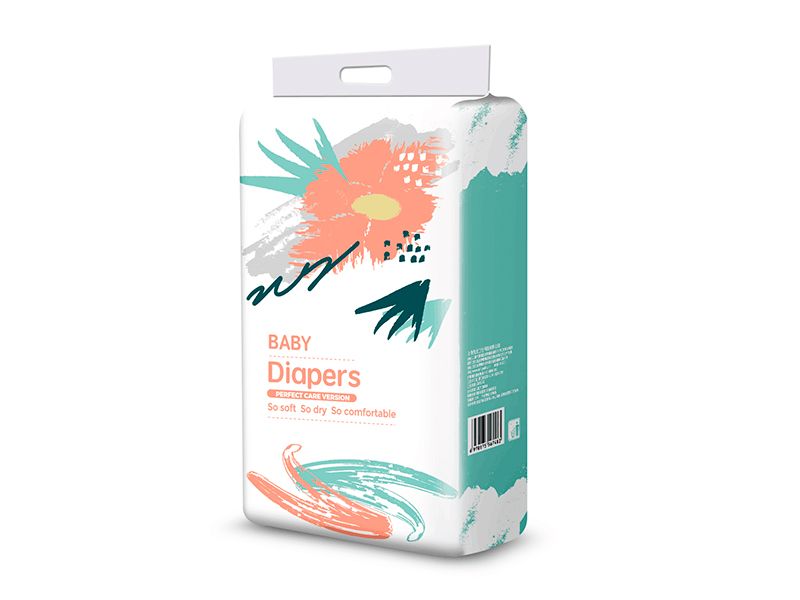
Baby diapers are among the most important daily care products for newborns and infants because they directly affect comfort, sleep quality, skin health, and caregiver confidence. A well-designed tape diaper should do more than absorb liquid; it should fit gently, protect delicate skin, reduce leakage, support free movement, and remain breathable through long wearing periods. The Baby Diapers described here are developed for newborns and infants who need dependable protection with a soft touch and adjustable comfort. With adhesive tapes on both sides, double leak-proof barriers, an elastic waistband, a breathable back sheet, and an advanced SAP absorbent core, this diaper combines practical usability with modern hygiene technology.
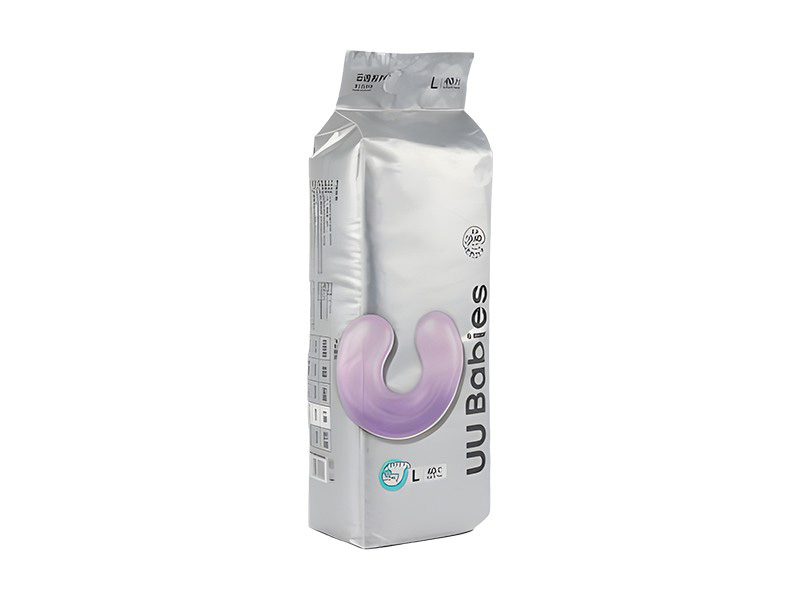
Product Overview: A Tape Diaper Designed for Infant Comfort
This baby diaper is a tape-style diaper intended for newborns and infants. Unlike pull-up pants, tape diapers allow parents and caregivers to adjust the waist fit while the baby is lying down. This design is especially useful for young infants who are changed frequently, have delicate skin, and need a secure yet flexible fit. The adjustable adhesive tapes on both sides of the waist help caregivers customize the diaper according to the baby’s body shape, reducing the risk of excessive tightness, waist marks, or gaping gaps.
The product is constructed with soft, skin-friendly materials to reduce friction against the baby’s skin. Because newborn skin is thinner and more sensitive than adult skin, surface softness is not a minor feature; it is central to daily comfort and rash prevention. The diaper also uses double leak-proof barriers to help contain urine and loose stool, which are common concerns during early infancy. These barriers work together with the elastic waistband and absorbent core to create reliable all-around protection.
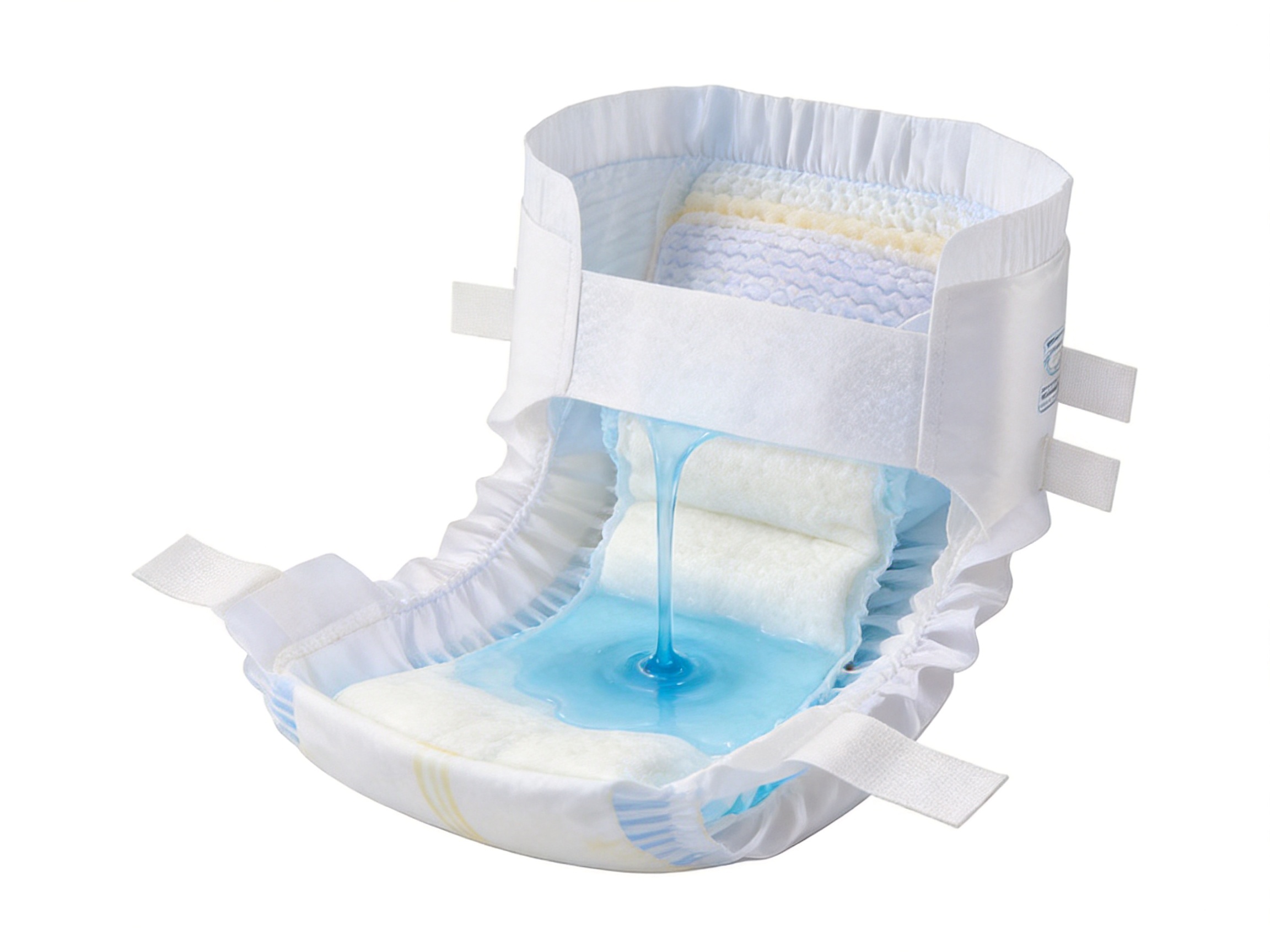
One of the most important elements in this diaper is the advanced SAP core. SAP, or super absorbent polymer, is used to absorb and lock in liquid quickly. A high-performing SAP core helps move moisture away from the surface, keeping the topsheet drier for longer periods. This is important because prolonged wetness can increase the risk of skin irritation. By combining rapid absorption with liquid-locking performance, the diaper supports a dry and comfortable wearing experience for hours.
Why Fit Matters in Newborn and Infant Diapers
Newborns and infants grow quickly, and their waist, thigh, and hip shapes vary significantly. A diaper that fits one baby well may not fit another baby of the same age. For this reason, adjustable tape diapers remain a preferred choice for early-stage care. The side adhesive tapes make it possible to fasten the diaper more loosely or more snugly based on the baby’s size and movement. This helps create a customized fit instead of forcing the baby into a fixed waistband structure.
A proper fit reduces leakage and improves comfort. If a diaper is too loose, liquid may escape from the waist or leg openings. If it is too tight, the baby may experience red marks, pressure, or discomfort during sleep and movement. The elastic waistband of this diaper helps maintain a close fit without harsh pressure. It supports the natural shape of the baby’s body, helping the diaper stay in position while the baby kicks, stretches, or rolls.
Compared with many basic diapers that rely only on a flat waistband and simple tape fastening, this product provides a more balanced fit system. The elastic waistband helps prevent gaping at the back, while the adhesive tapes allow caregivers to fine-tune the front closure. This combination is particularly valuable during nighttime use, when babies may sleep for longer periods and caregivers need stronger leakage protection without compromising comfort.
Skin-Friendly Materials for Delicate Infant Skin
Infant skin requires gentle materials because it is more vulnerable to moisture, friction, and irritation. The diaper’s soft, skin-friendly surface is designed to reduce rubbing while maintaining a comfortable contact layer. A smooth topsheet can make a major difference during repeated diaper changes, especially when the baby wears diapers day and night. Parents often notice discomfort when a diaper feels rough, becomes stiff after wetting, or clings to the skin. This product is designed to address those concerns through softness and dryness.
The breathable back sheet is another important skin-care feature. Breathability allows moisture vapor and heat to escape more quickly, helping reduce the humid microclimate inside the diaper. A hot and damp environment can contribute to diaper rash, particularly when the diaper is worn for long periods. By releasing moisture and heat more efficiently, the breathable back sheet supports a fresher wearing experience and helps maintain healthier skin conditions.
Compared with lower-grade diapers that may focus only on absorption, this diaper emphasizes a complete comfort system. Absorption alone is not enough if the surface remains wet or if the back sheet traps heat. The combination of soft materials, breathable structure, fast liquid absorption, and an elastic fit gives this product a competitive advantage in daily infant hygiene care.
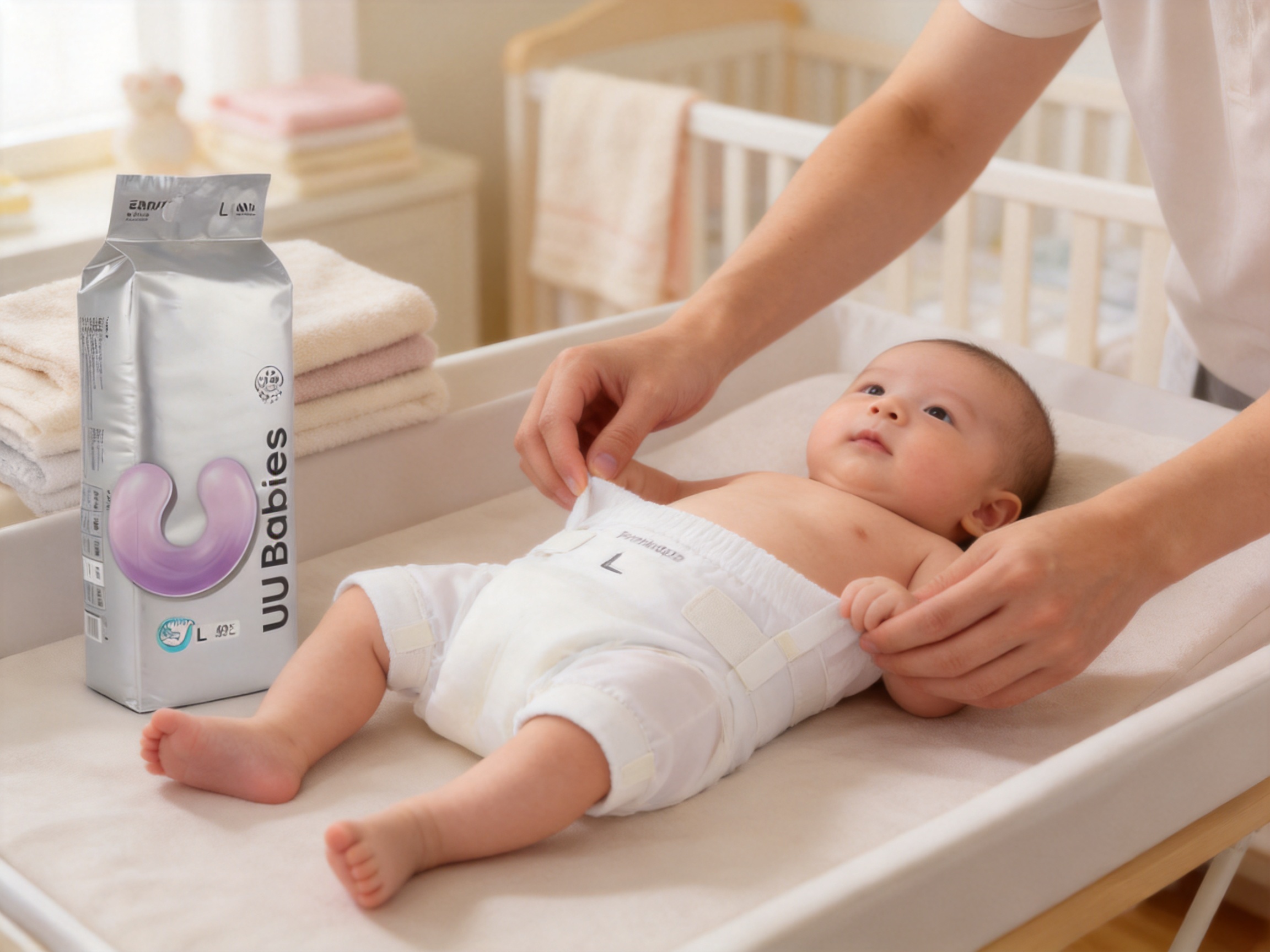
Double Leak-Proof Barriers for More Reliable Protection
Leakage is one of the most common frustrations for parents and caregivers. It can disturb sleep, soil clothing and bedding, and increase laundry workload. The double leak-proof barriers in this diaper are designed to reduce side leakage by forming protective channels along the leg area. These barriers help contain liquid and stool within the absorbent zone, especially when babies move actively or lie in different positions.
The effectiveness of leak protection depends on both structure and fit. Barriers must stand properly, the leg cuffs must sit comfortably, and the waist must remain secure. This diaper’s barrier system works with the adjustable tapes and elastic waistband to improve containment. When fastened correctly, the diaper can better conform to the baby’s body and reduce leakage paths around the thighs and waist.
In comparison with ordinary diapers that use single or weak side guards, double barriers provide an added layer of security. This is particularly useful for newborns and younger infants whose stools may be softer and more fluid. Stronger containment helps caregivers feel more confident during naps, travel, feeding times, and overnight use.
Advanced SAP Core for Rapid Absorption and Long-Lasting Dryness
The absorbent core is the performance center of any diaper. This product uses an advanced SAP core that quickly absorbs liquid and locks it away from the surface. SAP particles can retain many times their weight in liquid, transforming fluid into a gel-like form and reducing rewet. When the core is properly designed, liquid spreads efficiently through the absorbent area instead of pooling in one spot.
Fast absorption helps protect the baby from prolonged surface wetness. When urine remains on the topsheet, it can increase friction and expose the skin to irritants. A high-quality SAP core helps pull urine downward and secure it inside the diaper. This keeps the contact surface drier and more comfortable. For parents, this means fewer interruptions, better sleep support, and greater confidence during longer wearing intervals.
The core must also be stable and comfortable. Some diapers absorb liquid but become bulky, uneven, or hard after wetting. A well-engineered absorbent core should maintain shape while distributing liquid effectively. This product is positioned as a practical solution for daily infant use because it balances absorbency, dryness, comfort, and leakage control.
Competitive Advantages Over Standard Diapers
This baby diaper offers several advantages when compared with many conventional infant diapers. First, the adjustable side tapes provide a customized fit, which is essential for newborns and infants with different body shapes. Second, the elastic waistband improves waist sealing and reduces back leakage. Third, the soft, skin-friendly materials help reduce irritation caused by friction. Fourth, the breathable back sheet supports moisture release and helps prevent a hot, damp diaper environment.
Another advantage is the double leak-proof barrier system. Many basic diapers rely heavily on the absorbent core but do not provide enough side containment. This product combines absorbency with physical leakage prevention, creating a more complete protection system. The advanced SAP core also contributes to long-lasting dryness by rapidly absorbing and locking in liquid.
For distributors, retailers, and private-label buyers, the diaper’s advantage is not limited to product performance. It is supported by a manufacturer with long-term experience in hygienic nonwoven materials, nursing products, and large-scale production. This means the product can be developed, customized, and supplied with professional manufacturing capabilities rather than simple assembly.
Feature and Benefit Summary
| Feature | Function | Benefit for Baby and Caregiver |
|---|---|---|
| Adjustable adhesive tapes | Allow customized waist fastening | Improves fit, comfort, and ease of changing |
| Elastic waistband | Supports a snug waist seal | Reduces gaping and helps prevent back leakage |
| Soft skin-friendly surface | Creates gentle contact with infant skin | Helps reduce friction and discomfort |
| Double leak-proof barriers | Contain liquid and stool along the leg area | Improves leakage protection during movement and sleep |
| Breathable back sheet | Releases moisture vapor and heat | Helps maintain a fresher diaper environment |
| Advanced SAP core | Absorbs and locks in liquid quickly | Keeps the surface drier for longer wearing comfort |
Manufacturing Strength Behind the Product
The diaper is supported by Zhejiang Uniquality Nursing Products Technology Co., Ltd., a company connected with Kingsafe & Uniquality, an enterprise with decades of experience in medical and hygienic nonwoven materials, nursing products, and related industrial textile fields. Founded in 1987, the company has grown into a significant player in the nonwovens and hygiene products industry. Its background gives the diaper a strong technical foundation because diaper quality depends heavily on material science, process control, absorbent core design, and hygiene management.
The company’s manufacturing strength comes from its broad experience across spunlace non-woven fabrics, spunmelt non-woven fabrics, hot-air-through non-woven fabrics, flushable and degradable non-woven fabrics, wet wipes, dry wipes, baby diapers, pull-ups, wet toilet paper, and cleansing wipes. This broad material and product portfolio gives the manufacturer an advantage over companies that focus only on finished diaper assembly. By understanding nonwoven fabric performance at the material level, the company can better control softness, breathability, tensile strength, surface feel, and product stability.
The company has established multiple production bases in China, including locations in Guangdong, Jiangsu, Hubei, and Zhejiang. This production network supports large-scale capacity, flexible supply, and stable delivery. For international customers, reliable production capacity is essential because baby diapers are fast-moving consumer goods that require consistent replenishment. A supplier with multiple production bases and decades of experience can better support volume orders, seasonal demand, and customized private-label programs.
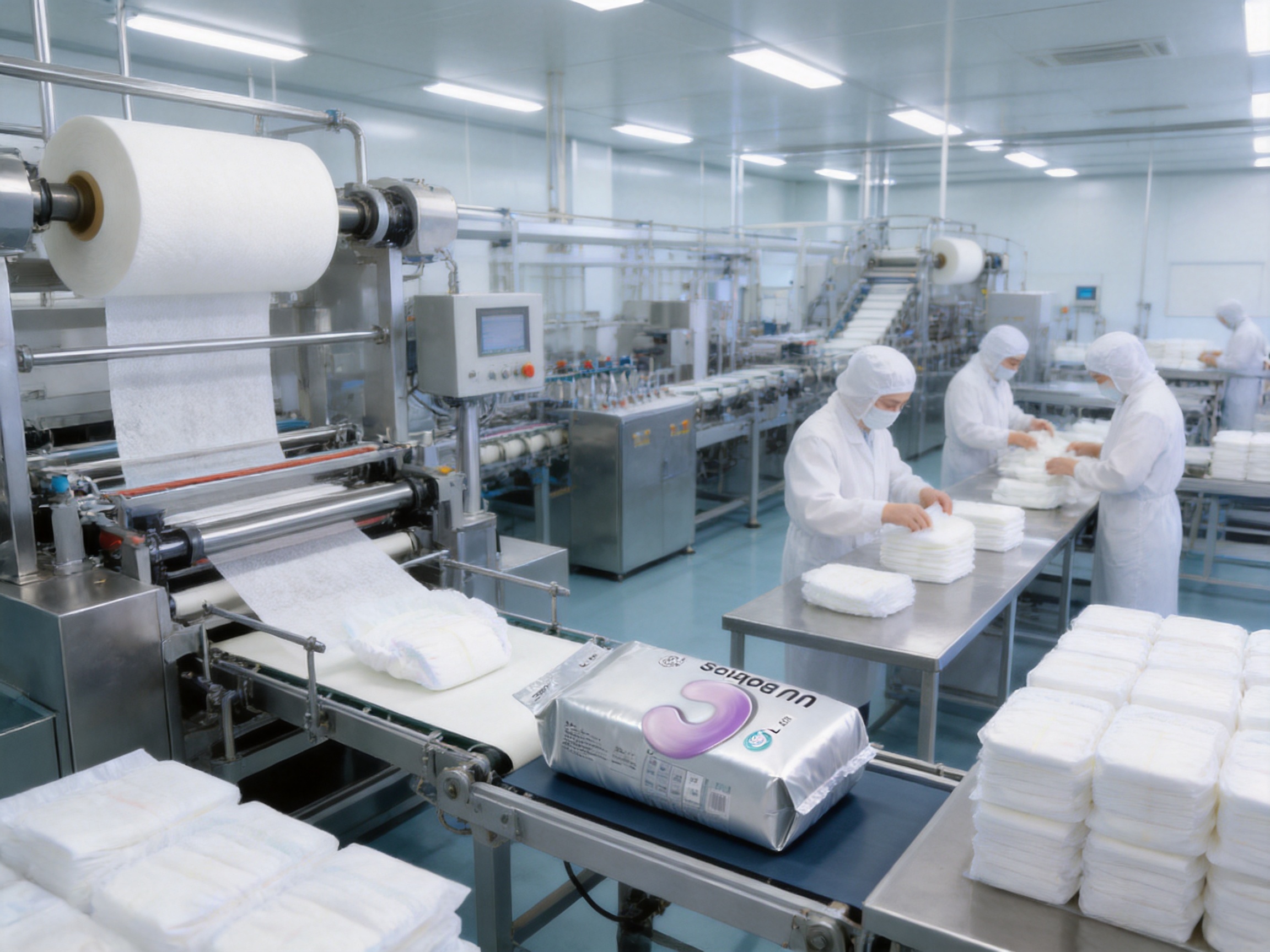
Advanced Equipment and Process Capability
High-quality diapers require precise manufacturing equipment and strict process control. The company has introduced advanced production equipment and technology from countries including Germany, France, and Italy. Internationally advanced equipment can improve consistency in material bonding, core formation, cutting, elastic application, tape placement, and packaging. In diaper production, small deviations can affect fit, leakage protection, absorbency, and appearance, so equipment precision is directly related to final product quality.
The manufacturing process begins with careful material selection. Nonwoven topsheets, acquisition layers, absorbent core materials, SAP, back sheets, elastics, tapes, and packaging materials must be evaluated for safety and performance. The diaper’s softness, breathability, absorption speed, and leakage protection depend on the compatibility of these materials. Advanced process engineering ensures that each layer is placed correctly and bonded securely without compromising comfort.
Core formation is especially important. The SAP and fluff pulp or other absorbent components must be distributed in a controlled way to achieve rapid absorption and liquid retention. Uneven distribution can cause clumping, leakage, or poor dryness. With advanced production technology, the absorbent core can be designed to support fast intake, liquid diffusion, and stable wearing comfort.
Quality Control for Consistent Diaper Performance
Reliable baby diapers must perform consistently across every batch. Parents may forgive a minor packaging difference, but they will not accept leakage, roughness, weak tapes, or poor absorption. Quality control therefore plays a central role in manufacturing. Key tests may include absorbency capacity, absorption speed, rewet performance, tape strength, elastic recovery, barrier integrity, product dimensions, appearance inspection, and hygiene control.
In a professional manufacturing environment, quality control is not limited to finished product inspection. It begins with incoming raw material checks, continues through in-process monitoring, and ends with final product evaluation. This layered approach reduces the risk of defects and ensures that each diaper meets required specifications. For OEM and private-label customers, such control supports brand reputation because product consistency directly affects consumer trust.
The company’s long history in medical and hygienic nonwoven materials is an important quality advantage. Hygiene products require clean production awareness, material traceability, and safety-oriented management. The experience gained from medical and hygiene applications can be applied to baby diaper production, where skin contact and cleanliness are critical.
OEM and Private Label Advantages
The company is positioned as an OEM and ODM supplier for wet and dry wipes, diapers, and growing training pants. For customers seeking private-label baby diapers, this capability is highly valuable. OEM manufacturing allows customers to build their own diaper brands while relying on an experienced manufacturer for product development and production. ODM services can also support design improvement, material selection, packaging development, and market-specific product positioning.
Private-label buyers often need flexibility. Different markets may prefer different diaper thicknesses, absorbency levels, packaging counts, price points, or design styles. A capable manufacturer can adjust product specifications according to customer requirements while maintaining quality and safety. The described baby diaper, with adjustable tapes, soft materials, breathable back sheet, double barriers, and SAP core, provides a strong base product that can be adapted for various retail and distribution channels.
Compared with small suppliers that may offer limited customization, a company with strong R&D, large-scale manufacturing, and diverse nonwoven material experience can support more complete private-label solutions. This includes product concept development, performance benchmarking, trial production, packaging coordination, and stable mass production. These strengths make the diaper suitable not only for consumer brands but also for wholesalers, regional distributors, maternity product retailers, and institutional buyers.
Research and Development as a Product Advantage
Diaper innovation depends on continuous research and development. Babies’ needs may be simple from the outside—stay dry, stay comfortable, avoid leakage—but achieving these goals requires technical understanding. R&D teams must evaluate how liquid enters the diaper, how it spreads, how the surface feels after wetting, how the waist stretches, how tapes adhere, and how the diaper performs during movement. Each detail contributes to the final user experience.
The company’s position as a national high-tech enterprise reflects its focus on technical development and innovation. This background supports improvements in material selection, structure design, and product functionality. For example, breathability must be balanced with leakage prevention. A diaper should allow vapor release but not permit liquid seepage. Similarly, softness must be balanced with strength, because the topsheet should feel gentle while remaining durable during wear.
R&D also supports differentiation for customers. A private-label buyer may want a premium soft diaper, an economical daily-use diaper, an ultra-thin diaper, or a nighttime absorbency version. With strong technical development capability, the manufacturer can help adjust the product structure to meet different market demands. This creates a competitive advantage in a crowded diaper market where consumers increasingly compare comfort, dryness, leakage protection, and value.
Breathability and Diaper Rash Prevention
Diaper rash is a common concern for parents. It can be caused by prolonged wetness, friction, heat, stool enzymes, and sensitivity to materials. While no diaper can replace proper changing routines and skin care, a well-designed diaper can help reduce risk factors. This product’s breathable back sheet helps release moisture and heat, supporting a less humid diaper environment. The soft topsheet helps reduce friction, while the SAP core helps keep the surface dry.
The elastic waistband also plays a role in rash prevention by improving fit without excessive tightness. A diaper that shifts too much can rub against the skin, while one that is too tight can cause pressure marks. The adjustable tape system allows caregivers to choose the right fastening position and modify it as the baby grows. This flexibility supports both comfort and skin protection.
Compared with diapers that focus mainly on low cost, this product is designed around the full wearing experience. It recognizes that baby skin comfort depends on absorption, breathability, softness, fit, and leakage protection working together. This integrated design is one of the product’s strongest selling points.
Ease of Use for Parents and Caregivers
A diaper must be easy to use, especially during late-night changes or when caring for a restless infant. The tape design allows caregivers to open, position, and fasten the diaper while the baby is lying down. The adjustable adhesive tapes make fastening straightforward and allow repositioning for a better fit. This is practical for newborn care, where diaper changes may happen many times a day.
The secure waistband and leak-proof barriers also help reduce caregiver stress. Parents want a diaper that works reliably without constant checking. When a diaper absorbs quickly, stays dry, and prevents leakage, caregivers can focus more on feeding, bonding, and rest. Reliable diaper performance improves the overall care routine and supports a more comfortable daily rhythm for families.
For hospitals, maternity centers, childcare facilities, and distributors serving new parents, ease of use is a major selling point. A diaper that is intuitive, comfortable, and dependable is more likely to earn repeat purchases and positive recommendations.
Application Scenarios
This baby diaper is suitable for daily newborn and infant care, including daytime use, naps, nighttime sleep, travel, clinic visits, and post-bath changing routines. Its adjustable tapes make it especially suitable for younger babies who are changed while lying down. The double leak-proof barriers support active movement, while the breathable back sheet and dry surface help maintain comfort during longer wearing periods.
For nighttime use, the advanced SAP core and snug waistband provide important advantages. Longer sleep periods require stronger liquid locking and leakage prevention. The diaper’s structure helps reduce the chance of wet bedding or clothing. For daytime use, softness and flexibility support frequent movement and comfortable handling during multiple changes.
For private-label markets, the product can serve as a core infant diaper line. It has the essential features that modern parents expect: softness, dryness, breathability, leakage protection, and secure fit. These qualities make it suitable for both value-conscious and quality-focused product ranges, depending on final customization and packaging strategy.
Supply Chain and Production Scale
Stable supply is a critical factor in the diaper industry. Retailers and distributors need products available continuously because baby diapers are daily necessities. The company’s multiple production bases and long-standing manufacturing experience provide a strong supply foundation. Large-scale production capability helps support consistent order fulfillment and reduces the risk of shortages.
The company is headquartered in Changxing, Huzhou, Zhejiang, within the economically active Yangtze River Delta region. This location offers convenient transportation advantages for domestic and international logistics. Efficient logistics support raw material procurement, production coordination, and finished product shipment. For global buyers, supplier location and logistics capability can significantly affect lead times and inventory planning.
Strong supply chain management also supports OEM and ODM programs. Private-label customers often require coordination among product specifications, packaging materials, carton design, documentation, and shipping schedules. A manufacturer with broad operational experience can manage these requirements more smoothly, helping customers bring products to market with fewer delays.
Sustainability and Material Development
Modern hygiene product buyers increasingly consider sustainability, material efficiency, and responsible manufacturing. The company’s experience with flushable and degradable nonwoven fabrics shows that it is engaged in material development beyond conventional hygiene products. While baby diapers require strict performance standards, especially for absorption and leakage control, sustainability-oriented research can influence future product improvements in packaging, material selection, and production efficiency.
Diaper sustainability is complex because products must remain safe, hygienic, absorbent, and affordable. However, manufacturers with strong R&D capabilities are better positioned to explore thinner cores, efficient absorbent systems, optimized packaging, and more responsible material choices. This can help brands respond to consumer expectations while maintaining product performance.
For buyers, working with a manufacturer experienced in various nonwoven technologies can create opportunities for future product upgrades. As market demand evolves, the diaper can be refined for different sustainability goals, regional regulations, and consumer preferences.
Why This Diaper Is a Strong Choice for Competitive Markets
The baby diaper market is highly competitive, and consumers often compare products based on leakage, softness, dryness, price, and trust. This product is well positioned because it addresses the most important pain points. It helps prevent leakage through double barriers and a snug fit. It supports dryness through an advanced SAP core. It improves skin comfort through soft materials and breathability. It offers caregiver convenience through adjustable adhesive tapes.
Its manufacturing background further strengthens its competitiveness. A product supported by a company with decades of experience, advanced imported equipment, multiple production bases, and strong R&D capability can offer more than basic commodity supply. It can support consistent quality, customization, large orders, and long-term cooperation. These factors are especially important for brands seeking to build consumer loyalty in the baby care category.
Compared with many competitors that may emphasize only one selling point, such as softness or absorbency, this diaper presents a balanced performance profile. It is not just soft; it is also absorbent. It is not just absorbent; it is also breathable. It is not just secure; it is also adjustable. This balance makes it practical for real-world infant care.
Q&A Section
Q1: What type of baby is this diaper designed for?
This diaper is designed for newborns and infants. Its tape-style structure is especially suitable for babies who are changed while lying down and need an adjustable waist fit.
Q2: How does the adjustable tape system help caregivers?
The adhesive tapes on both sides allow caregivers to customize the waist fit according to the baby’s body shape. This helps reduce gaping, tightness, and discomfort while improving leakage protection.
Q3: What makes this diaper comfortable for delicate skin?
The diaper uses soft, skin-friendly materials, a breathable back sheet, and a fast-absorbing SAP core. These features help reduce friction, moisture buildup, and prolonged surface wetness.
Q4: How does the diaper help prevent leakage?
It combines double leak-proof barriers, an elastic waistband, adjustable tapes, and a high-performance absorbent core. These elements work together to contain liquid and maintain a secure fit.
Q5: Why is the breathable back sheet important?
The breathable back sheet helps release moisture vapor and heat, reducing the humid environment inside the diaper. This can help support skin comfort and reduce the risk factors associated with diaper rash.
Q6: What is the role of the SAP core?
The SAP core absorbs liquid quickly and locks it away from the surface. This helps keep the topsheet dry and supports longer-lasting comfort.
Q7: Is this product suitable for private-label business?
Yes. The manufacturer provides OEM and ODM support for diapers and related hygiene products, making the diaper suitable for private-label brands, distributors, and retailers.
Q8: What manufacturing strengths support this product?
The product is supported by decades of experience in hygienic nonwoven materials, advanced production equipment and technology, multiple production bases, and strong R&D capability.
Q9: How does this diaper compare with ordinary low-cost diapers?
It offers a more complete comfort and protection system, including adjustable tapes, an elastic waistband, double leak-proof barriers, breathable materials, soft skin contact, and rapid absorption.
Q10: Can the diaper be customized for different markets?
Yes. Through OEM and ODM services, specifications such as absorbency, packaging, product positioning, and design details can be adjusted according to customer requirements.
Conclusion
A high-quality baby diaper must protect, comfort, and support both babies and caregivers. This tape-style baby diaper achieves those goals through adjustable adhesive tapes, a soft skin-friendly surface, double leak-proof barriers, an elastic waistband, a breathable back sheet, and an advanced SAP absorbent core. These features create a balanced product that addresses the real concerns of infant care: leakage, wetness, irritation, fit, and ease of use.
The product’s advantages are strengthened by the manufacturing background behind it. With decades of industry experience, advanced production equipment, broad nonwoven material expertise, multiple production bases, and OEM/ODM capability, Zhejiang Uniquality Nursing Products Technology Co., Ltd. provides strong support for stable quality and market customization. For parents, the diaper offers gentle and dependable protection. For business customers, it offers a competitive product platform backed by professional manufacturing strength.
In a market where consumers expect softness, dryness, breathability, and reliability, this baby diaper stands out as a practical and well-engineered solution. It combines infant-centered comfort with industrial-scale manufacturing expertise, making it a strong choice for daily baby care and private-label development.
References
1. World Health Organization. Newborn Health and Essential Care Guidelines.
2. American Academy of Pediatrics. Caring for Your Baby and Young Child: Birth to Age 5.
3. Odio, M., and Friedlander, S. F. Diaper Dermatitis and Advances in Diaper Technology. Pediatric Dermatology.
4. Kosemund, K., et al. Safety Evaluation of Superabsorbent Baby Diapers. Regulatory Toxicology and Pharmacology.
5. EDANA. Guidelines for Hygiene Product Performance and Nonwoven Material Applications.
6. China Nonwovens and Industrial Textiles Association. Industry Reports on Nonwoven Materials and Hygiene Products.