中文简体
中文简体 English
 日本語
日本語 русский
 Español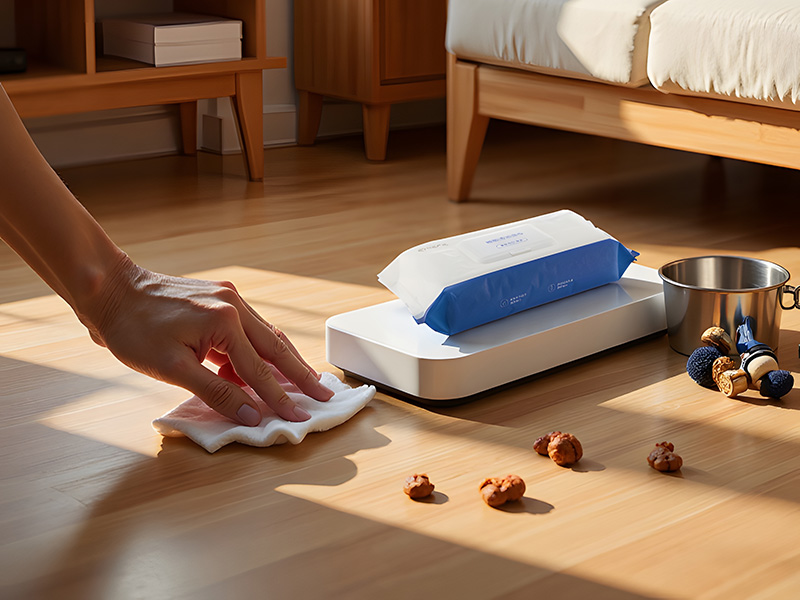
Introduction: A Smarter Way to Clean Modern Floors
Floor care has become a daily priority for homes, offices, hotels, schools, healthcare-adjacent spaces, retail stores, and many other environments where cleanliness affects comfort, appearance, and user confidence. Traditional mopping methods can still be effective, but they often require water, buckets, detergents, rinsing, wringing, drying time, and repeated tool maintenance. Floor wipes offer a more convenient and controlled approach. Designed for use with flat mops, these wipes help users clean different floor surfaces quickly while reducing streaks, mess, and unnecessary preparation.
Floor wipes are pre-moistened with cleaning agents and engineered to deliver consistent surface coverage. Instead of guessing how much liquid to use, users can attach a wipe to a compatible flat mop and begin cleaning immediately. This ready-to-use format makes them especially valuable in fast-paced settings where cleaning must be efficient, repeatable, and easy for different users to perform. Their convenience also makes them suitable for household use, where consumers increasingly prefer simple cleaning solutions that save time without sacrificing visible results.
The product discussed here belongs to the household cleaning wipes category and is developed for effortless mopping across a range of floor types. Its core value is simple: it helps clean floors without leaving obvious streaks and without requiring complicated preparation. Behind that simplicity, however, is a combination of material selection, nonwoven technology, liquid formulation control, converting precision, packaging protection, and quality management. These factors separate a reliable floor wipe from an ordinary disposable sheet.
In a competitive market, not all floor wipes perform equally. Some low-cost wipes dry too quickly, tear during use, leave lint behind, or distribute cleaning liquid unevenly. Others may be overly wet, which can create residue, slipping concerns, or streaking on glossy surfaces. A high-quality floor wipe must balance liquid capacity, release rate, wet strength, softness, texture, cleaning efficiency, and compatibility with common mop heads. It must also be manufactured under controlled conditions to support consistent quality from batch to batch.
Zhejiang Uniquality Nursing Products Technology Co., Ltd., associated with Kingsafe and Uniquality, brings extensive nonwoven manufacturing expertise to this product area. Founded in 1987, the company has developed broad capabilities in nonwoven materials, wet wipes, dry wipes, hygiene products, and customized OEM and ODM production. With decades of industrial experience, multiple production bases, advanced imported equipment, and a strong focus on research and development, the company is positioned to support private label floor wipe projects that require stable quality, scalable capacity, and product differentiation.
Product Overview: What Floor Wipes Are Designed to Do
Floor wipes are disposable cleaning sheets intended to be attached to flat mop systems. Once installed, they function as a ready-to-use cleaning pad that glides across the floor, collecting dirt, dust, footprints, light stains, and everyday surface soils. Because they are infused with cleaning agents, users do not need to separately mix detergent or spray large areas before mopping. The wipe itself carries the cleaning solution and releases it as it moves across the surface.
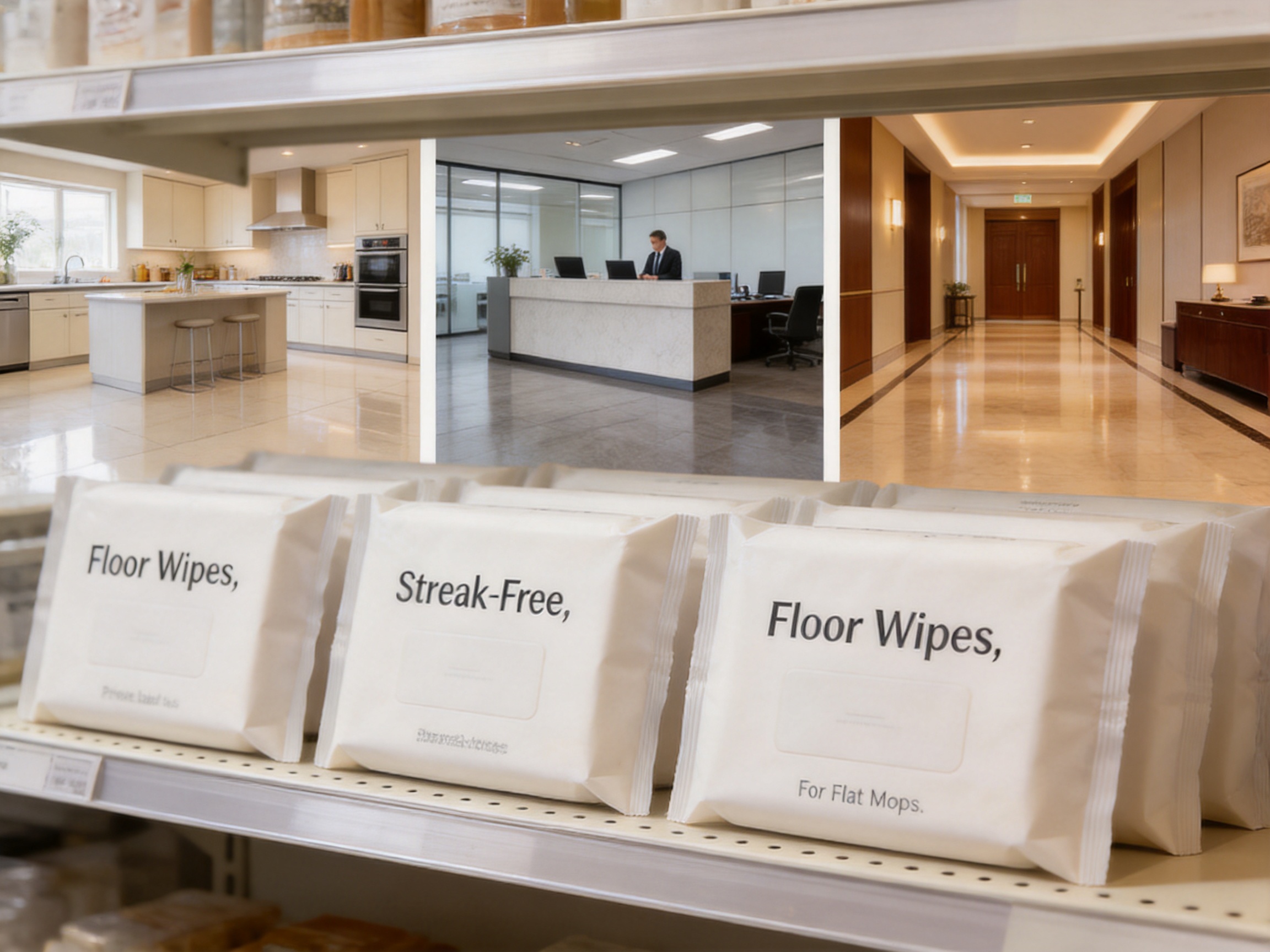
This type of product is especially useful for routine maintenance cleaning. In a home, floor wipes can be used in kitchens, bathrooms, living rooms, bedrooms, entryways, and corridors. In commercial environments, they can support quick cleaning in reception areas, office spaces, meeting rooms, guest rooms, retail aisles, restrooms, and other areas where rapid surface refreshment is needed. They are not intended to replace deep scrubbing for extreme contamination, but they are highly effective for daily or frequent maintenance tasks.
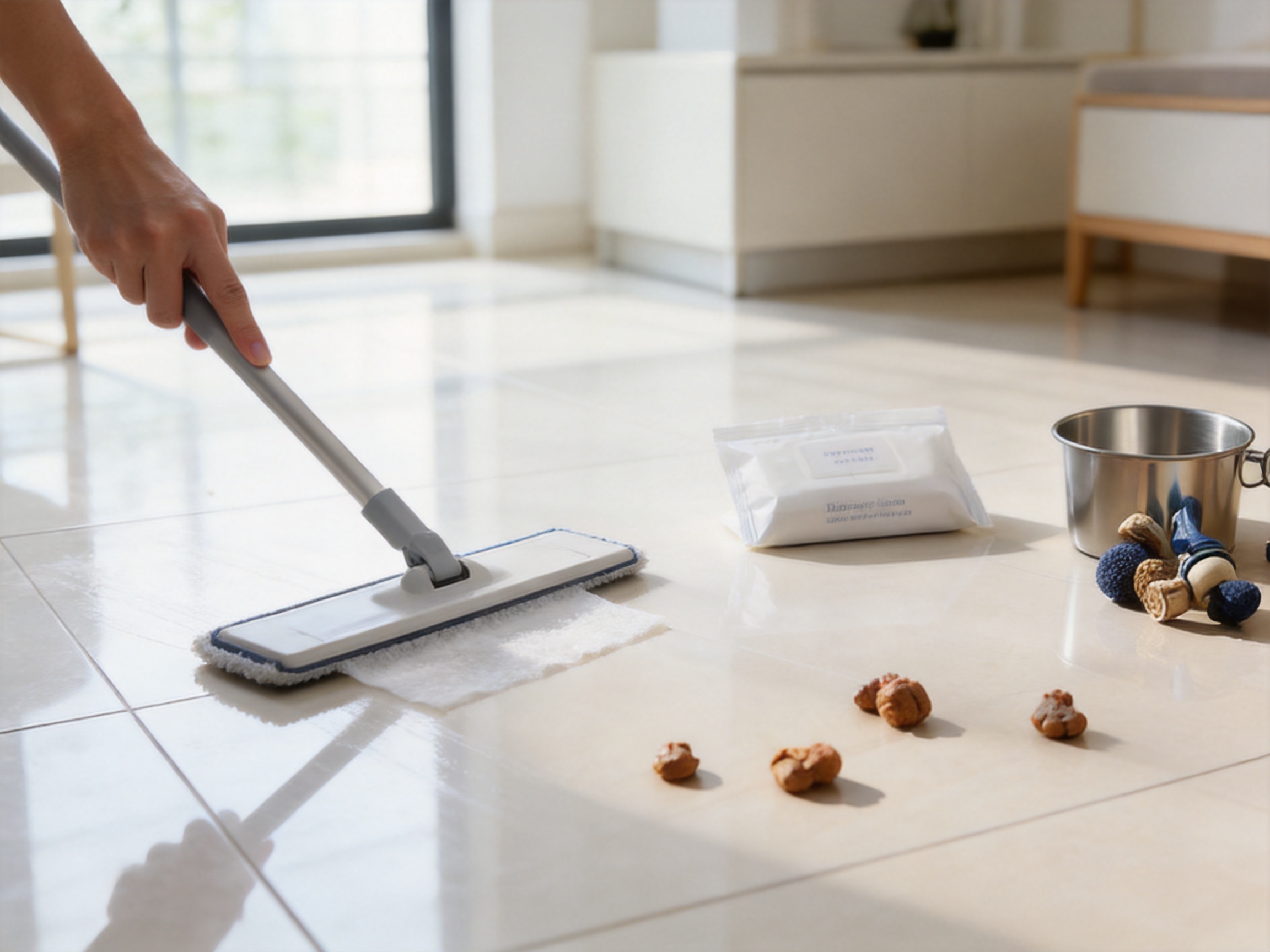
One of the primary benefits of floor wipes is their compatibility with flat mops. Flat mop systems are popular because they are lightweight, easy to maneuver, and capable of reaching under furniture or into narrow spaces. A properly sized wipe can be secured around the mop head, allowing the user to clean a broad floor area while standing upright. This improves ergonomics compared with hand wiping and reduces the need to kneel or bend repeatedly.
The wipes are also designed to clean various floor types without leaving streaks. This characteristic is important because modern interiors often include glossy tiles, laminate floors, sealed wood, vinyl, stone-look surfaces, and other finishes that can reveal residue easily. A streaky floor may look unclean even after effort has been spent on cleaning. A well-formulated floor wipe helps avoid visible residue by balancing cleaning agents, moisture level, and evaporation profile.
Another important feature is convenience. Because each wipe is disposable, users can reduce the time spent washing dirty mop pads or dealing with contaminated water. After use, the wipe can be removed and discarded according to local waste practices. This can improve hygiene perception and reduce cross-contamination risk, especially when users clean different rooms or areas and replace wipes as needed.
Key Product Advantages Over Conventional Cleaning Methods
Ready-to-Use Convenience
Compared with traditional mop-and-bucket cleaning, floor wipes eliminate several steps. There is no need to fill a bucket, measure detergent, dip a mop, wring excess water, or pour dirty water away afterward. This saves time and makes cleaning more accessible for busy families, elderly users, office staff, hotel housekeeping teams, and anyone who wants a faster routine. The wipe is already prepared with the right amount of cleaning liquid, allowing immediate use.
This convenience also improves consistency. In traditional cleaning, one user may use too much detergent, while another may use too little. One may leave the mop too wet, while another may wring it too dry. With pre-moistened floor wipes, liquid loading can be controlled during manufacturing, helping ensure that each wipe delivers a more predictable cleaning experience.
Streak Reduction
Streaking is one of the most common complaints in floor cleaning. It can result from excessive detergent, uneven liquid distribution, dirty mop water, low-quality surfactants, or slow drying. Floor wipes help address these problems by delivering a controlled formulation from a clean sheet. Since each wipe begins fresh, users avoid repeatedly spreading dirty water across the floor.
A well-designed wipe can provide enough wetness to loosen soil while still drying cleanly. This is particularly important for smooth floor surfaces that show marks easily. The goal is not merely to wet the floor, but to clean it and leave it looking refreshed. Good floor wipes support a clean visual finish with less effort and less rework.
Improved Hygiene Compared with Reused Dirty Mop Water
Traditional mopping often involves rinsing a mop in water that becomes progressively dirtier during cleaning. As the task continues, that water may redeposit soil or residue onto the floor. Floor wipes offer a more hygienic workflow because the cleaning surface can be replaced whenever necessary. Users can start with a fresh wipe for a new room, a new area, or a visibly dirty zone.
This disposable approach is especially useful in households with pets, children, or high foot traffic. It is also valuable in light commercial environments where cleaning must be quick but still presentable. By changing wipes during the process, users can maintain cleaning performance and reduce the chance of spreading dirt from one area to another.
Compatibility with Multiple Floor Types
Modern buildings often contain several floor materials in one space. A home may include tile in the kitchen, laminate in the living room, vinyl in the bathroom, and sealed wood in the bedroom. A practical floor wipe must be versatile enough for everyday use across common sealed floor types. The product’s intended compatibility with various floors makes it convenient for users who do not want separate cleaning products for every room.
Of course, users should always follow flooring manufacturer recommendations, especially for specialty surfaces, unsealed wood, waxed floors, or delicate natural materials. However, for many sealed and water-tolerant floors, a well-balanced floor wipe provides a simple maintenance solution.
Controlled Moisture and Reduced Over-Wetting
Over-wetting can be a problem with buckets, spray bottles, or poorly controlled cleaning systems. Too much moisture may extend drying time, contribute to streaks, or be unsuitable for certain floor types. Floor wipes can be manufactured with controlled liquid content, helping reduce the risk of excessive wetness when used properly. The sheet holds and releases liquid gradually as it moves across the floor.
This controlled moisture profile is an important competitive advantage. It helps users achieve visible cleaning without flooding the surface. For households and businesses that need quick drying and minimal disruption, this feature can be especially valuable.
Low-Lint, Durable Nonwoven Structure
A floor wipe must withstand friction against the floor while attached to a mop. If it tears, pills, sheds fibers, or loses shape, cleaning becomes frustrating. High-quality nonwoven material is therefore essential. A durable structure improves wipe integrity, while low-lint performance helps leave the floor free from visible fibers. This is an area where advanced nonwoven manufacturing experience provides a significant advantage over generic low-grade wipes.
The nonwoven substrate can be engineered for softness, tensile strength, absorption, liquid release, and surface contact. These characteristics help determine how effectively the wipe collects dust and soil while maintaining its shape during mopping.
Why Nonwoven Expertise Matters in Floor Wipe Performance
At first glance, a floor wipe may seem like a simple sheet. In reality, its performance depends heavily on the nonwoven material beneath the cleaning liquid. Nonwoven fabrics are engineered materials made by bonding fibers through mechanical, thermal, or chemical methods rather than weaving or knitting. Their structure can be adjusted to suit many applications, from medical and hygiene products to household cleaning and industrial wiping.
For floor wipes, the nonwoven substrate must perform several jobs at once. It must absorb enough liquid during production, retain that liquid during storage, release it during use, provide adequate friction against soil, resist tearing, conform to the mop head, and remain comfortable to handle. These requirements demand more than basic paper-like material. They require thoughtful fiber selection, web formation, bonding technology, and quality control.
Zhejiang Uniquality Nursing Products Technology Co., Ltd. has long experience in nonwoven materials and finished wipe products. The company’s background includes spunlace nonwoven fabrics, spunmelt nonwoven fabrics, hot air through nonwoven fabrics, flushable and degradable nonwoven fabrics, wet wipes, dry wipes, wet toilet paper, cleansing wipes, baby diapers, pull-ups, and other hygiene-related products. This broad foundation enables the company to understand both raw material behavior and finished product requirements.
Spunlace nonwoven technology is particularly relevant to many wiping products because it can create soft, strong, and absorbent materials through high-pressure water entanglement. The resulting fabric can deliver good wet strength without relying solely on heavy binders. For cleaning wipes, this can support a balance of durability and surface softness. Depending on the desired product positioning, the substrate can be customized for thickness, texture, embossing, absorbency, and cleaning feel.
The company’s manufacturing knowledge also supports customization. For private label customers, product differentiation may involve sheet size, fold type, fragrance option, cleaning formulation, packaging count, moisture level, substrate texture, or target use scenario. A manufacturer with both material and converting expertise can help customers create floor wipes that align with different market segments, such as value packs, premium household cleaning, pet household cleaning, office maintenance, hotel use, or eco-conscious product lines.
Advanced Manufacturing Strengths Behind the Product
Decades of Industrial Development
Founded in 1987, the company has developed through more than three decades of growth in the nonwoven and hygiene products industry. This long operating history matters because manufacturing floor wipes at scale requires stable systems, experienced technical teams, reliable supply chains, and continuous process improvement. Companies with deep industrial foundations are better positioned to maintain consistent quality and respond to changing customer requirements.
Over time, the company has grown into a leading enterprise in China’s industrial textile industry. It has ranked among the top enterprises in China’s nonwovens industry for many consecutive years and has been recognized among major global nonwoven manufacturers. These achievements reflect production scale, technical capability, and sustained competitiveness in a demanding sector.
Multiple Production Bases and Scalable Capacity
The company is headquartered in Changxing, Huzhou, in the Yangtze River Delta region, an area known for convenient land, sea, and air transportation. It has also established multiple production bases in locations such as Guangdong, Jiangsu, and Hubei. This network supports production flexibility, logistics efficiency, and the ability to serve customers with varying volume needs.
For private label floor wipes, capacity is a critical consideration. Retailers, distributors, and brand owners need a supplier that can support trial orders, regular replenishment, seasonal promotions, and large-scale launches. Multiple production bases and established manufacturing systems can reduce supply risk and improve responsiveness.
Advanced International Equipment
The company has introduced advanced production equipment and technology internationally from countries such as Germany, France, and Italy. Advanced equipment supports precision, efficiency, and consistency. In wipe manufacturing, this can influence substrate uniformity, liquid dosing accuracy, folding quality, cutting precision, packaging sealing, and overall production stability.
Modern production lines can help reduce variation between wipes. This matters because users expect every wipe in a pack to perform similarly. A wipe that is too dry may fail to clean effectively, while a wipe that is too wet may leave residue. Accurate liquid addition and reliable packaging are therefore essential to product success.
Research and Development Capability
As a national high-tech enterprise, the company emphasizes research and development. In the floor wipe category, R&D can address formulation optimization, material compatibility, cleaning efficiency, fragrance stability, skin contact considerations during handling, preservation systems, packaging performance, and environmental trends. R&D also helps customers develop differentiated products rather than relying on standard commodity options.
For example, one customer may want a neutral-scented wipe for broad household use, while another may want a fresh fragrance for retail appeal. A commercial customer may prefer a larger wipe with higher wet strength, while a value brand may prioritize cost efficiency. R&D capability allows the manufacturer to help balance performance, cost, market positioning, and regulatory expectations.
OEM and ODM Flexibility
The company provides OEM and ODM services for wet and dry wipes, diapers, training pants, and related hygiene products. For floor wipes, this means customers can work with the manufacturer to build private label products that fit their brand strategy. OEM services can support production based on a customer’s established specifications, while ODM services can help develop new specifications from concept to finished product.
Private label customers may require customized packaging design, pack counts, language versions, scent profiles, sheet dimensions, substrate weights, or cleaning solution characteristics. A capable OEM and ODM partner can manage these variables while maintaining manufacturing discipline. This reduces development burden for brand owners and speeds time to market.
Product Performance Factors That Create Market Advantage
| Performance Factor | Why It Matters | Competitive Advantage |
|---|---|---|
| Flat mop compatibility | Allows easy attachment to common mop systems for upright cleaning. | Improves convenience and expands household and commercial usability. |
| Controlled liquid loading | Provides consistent wetness from wipe to wipe. | Reduces streaking, over-wetting, and inconsistent cleaning results. |
| Durable nonwoven substrate | Helps the wipe resist tearing during floor contact. | Outperforms thin wipes that break apart or roll up during use. |
| Low-lint structure | Helps prevent fibers from being left on the floor. | Supports a cleaner finished appearance on smooth surfaces. |
| Cleaning agent infusion | Removes routine soil without separate detergent preparation. | Saves time compared with bucket mopping or separate spray cleaning. |
| Disposable format | Allows users to replace wipes as needed between areas. | Reduces the use of dirty mop water and improves hygiene perception. |
| Customizable specifications | Enables different sizes, scents, packaging counts, and formulations. | Supports private label differentiation for multiple market segments. |
Cleaning Experience: From Attachment to Final Finish
The user experience begins when the pack is opened. A well-packaged floor wipe should retain moisture throughout its shelf life and allow convenient dispensing. The wipe should unfold easily, feel evenly moist, and remain intact as it is attached to the mop head. If the wipe is too thin, too dry, or difficult to separate, the user may form a negative impression before cleaning even begins.
Once attached to a flat mop, the wipe should maintain contact with the floor. Good contact allows the cleaning agents and nonwoven texture to work together. The liquid helps loosen surface soil, while the wipe collects and holds dirt. The sheet should glide smoothly without bunching excessively, yet it should have enough texture to provide cleaning action.
During cleaning, moisture release is one of the most important qualities. A wipe that releases all liquid too quickly may leave the first part of the floor too wet and the later part too dry. A wipe that releases liquid too slowly may feel ineffective. The ideal balance provides steady cleaning coverage over the expected use area.
After cleaning, the floor should dry with a fresh appearance and minimal visible streaks. The user should not need to repeatedly wipe the same area to remove residue. The wipe should be easy to remove from the mop and discard. This simple workflow is what makes floor wipes attractive to consumers and professional users alike.
Applications Across Household and Light Commercial Environments
Homes and Apartments
In residential settings, floor wipes are ideal for daily maintenance and quick cleanups. Kitchens often collect cooking residue, crumbs, spills, and footprints. Entryways accumulate dust, outdoor particles, and moisture marks. Bathrooms require frequent cleaning due to water spots and personal care product residue. Floor wipes help users address these messes quickly without preparing a full mop bucket.
They are also useful for households with children and pets. Small spills, paw prints, tracked-in dirt, and everyday messes can be handled promptly. Because the wipe is disposable, users can clean localized messes without contaminating a reusable mop pad or storing a wet cloth afterward.
Offices and Workspaces
Office environments need to look clean throughout the day, especially in reception areas, corridors, meeting rooms, and break rooms. Floor wipes support quick touch-ups between scheduled cleaning services. Staff can address small messes without interrupting business operations or bringing out large cleaning equipment.
For offices with hard floors, a flat mop and floor wipe combination can be stored compactly and used when needed. This makes it practical for facility teams and small businesses that need efficient cleaning solutions.
Hospitality and Guest Services
Hotels, serviced apartments, and guest facilities require consistent cleaning results across many rooms. Floor wipes can support housekeeping teams by simplifying routine floor refreshment. They can be especially helpful for spot cleaning, bathroom floors, entry areas, and guest room maintenance where speed and presentation matter.
Because each wipe is pre-moistened, training can be simpler. Staff do not need to mix cleaning liquids for every quick task, and results can be more consistent across users. This supports operational efficiency and guest satisfaction.
Retail and Public-Facing Spaces
Retail stores, showrooms, salons, and public-facing businesses must maintain clean floors to protect brand image. A visible footprint or spill can affect customer perception. Floor wipes enable rapid response to light messes. Their ease of use helps staff maintain appearance without waiting for specialized cleaning personnel.
Private Label Opportunities in the Floor Wipe Category
The household cleaning market continues to favor products that are convenient, hygienic, and easy to store. Floor wipes fit these preferences well. For retailers and brand owners, private label floor wipes offer an opportunity to build customer loyalty through practical everyday products. A well-designed private label wipe can compete with established brands by delivering comparable or superior performance at an attractive value.
Private label success depends on more than packaging. The product must perform reliably. Consumers quickly notice if wipes are too dry, too small, weak, poorly scented, or ineffective. Repeat purchase depends on cleaning satisfaction. This makes manufacturing partnership essential. A supplier with nonwoven expertise, formulation experience, and quality systems can help create a product that meets consumer expectations.
Customization can also help brands target specific audiences. A family-focused product may emphasize everyday kitchen and bathroom use. A premium line may highlight larger sheets, enhanced durability, and a refined fragrance. A commercial line may focus on higher sheet count and efficient cleaning for offices or hospitality. An environmentally oriented line may explore material choices, packaging reduction, or degradable nonwoven technologies where appropriate and validated.
Zhejiang Uniquality Nursing Products Technology Co., Ltd. has experience in OEM and ODM production across wet wipes, dry wipes, hygiene products, and related categories. This makes it suitable for customers seeking product development support, stable manufacturing, and flexible specifications. The company’s long history and broad production capabilities can help private label partners move from concept to finished product with greater confidence.
Quality Control: The Foundation of Consistent Floor Wipes
Quality control is essential in wet wipe manufacturing because small variations can affect user satisfaction. Important parameters may include wipe dimensions, substrate weight, wet strength, liquid content, pH range, fragrance consistency, microbial control, packaging seal integrity, and dispensing performance. These factors must be monitored carefully to ensure that each pack meets expectations.
Liquid content is especially important. If a wipe contains too little liquid, it may dry out before cleaning an adequate area. If it contains too much, it may leave streaks or make floors overly wet. Manufacturing systems must therefore dose liquid accurately and maintain even distribution throughout the stack or roll. Packaging must then protect the wipes from moisture loss during storage and transportation.
Substrate quality also requires control. Nonwoven thickness, uniformity, tensile strength, and texture influence cleaning performance. A wipe that is inconsistent in density may release liquid unevenly or tear during use. Strong production process management helps prevent such issues.
Packaging is another critical area. A floor wipe pack must resist leakage, preserve moisture, and allow repeated opening and closing. Labels, lids, seals, and film materials must work together to protect the product. For private label customers, packaging quality also affects shelf appeal and brand perception.
Manufacturing Process Overview
Material Selection
The process begins with selecting suitable nonwoven materials. Depending on the product specification, the substrate may be chosen for strength, softness, absorbency, texture, or cost efficiency. The selected material must match the intended cleaning formulation and packaging format. If the wipe is designed for a larger mop head or heavier-duty use, greater wet strength may be needed.
Substrate Converting
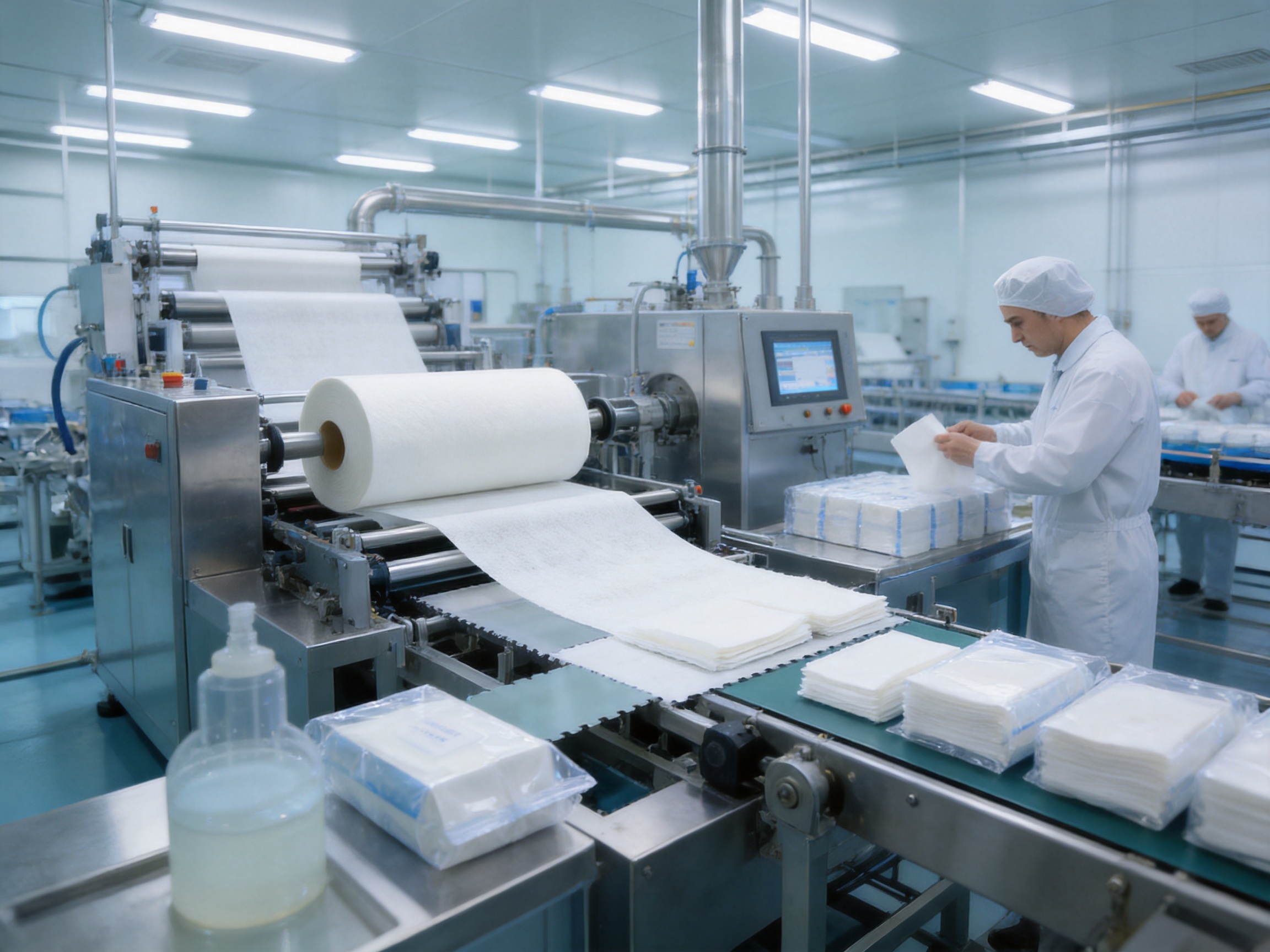
After material selection, the nonwoven is converted into the required size and format. This can involve unwinding, slitting, cutting, folding, stacking, or rolling. Precision matters because wipes must fit common flat mops and dispense properly from the package. Inconsistent dimensions can make attachment difficult or reduce cleaning coverage.
Cleaning Solution Preparation
The cleaning solution is prepared according to the product specification. It may include water, surfactants, solvents suitable for household cleaning, fragrance components, preservatives, and other functional ingredients depending on the intended claim and regulatory requirements. The formulation must be compatible with the nonwoven material and packaging.
Liquid Impregnation
The cleaning liquid is applied to the wipes in a controlled manner. The goal is even saturation without excessive dripping. Advanced production equipment helps manage liquid dosing and distribution. This step is central to cleaning performance because it determines how the wipe feels, how long it remains usable, and how evenly it cleans.
Packaging and Sealing
Once impregnated, the wipes are packed in moisture-protective packaging. The package must be sealed properly to prevent leakage and drying. For consumer convenience, resealable labels or lids may be used. Packaging count, format, and artwork can be customized for private label requirements.
Inspection and Release
Before shipment, finished products should undergo inspection based on agreed standards. Checks may include appearance, count, weight, moisture level, seal integrity, labeling accuracy, and other quality parameters. Reliable inspection supports customer trust and reduces the risk of market complaints.
Sustainability Considerations and Responsible Product Development
Consumers and businesses increasingly consider sustainability when choosing cleaning products. Floor wipes are valued for convenience, but manufacturers and brand owners must also think carefully about material selection, packaging efficiency, responsible disposal guidance, and potential environmental improvements. The company’s experience with degradable and flushable nonwoven materials may support development discussions for customers seeking more responsible product options, although floor wipes should be disposed of according to their specific labeling and local waste rules.
Responsible product development may include optimizing sheet size to reduce unnecessary material use, improving liquid efficiency, reducing packaging weight, exploring recyclable packaging structures where feasible, or developing formulations that meet customer expectations for safety and environmental profile. These decisions must balance performance, cost, regulatory compliance, and real-world disposal behavior.
It is important not to confuse product categories. Floor wipes are generally not intended to be flushed unless specifically designed and tested for that purpose. Clear labeling helps consumers use and dispose of products correctly. A responsible manufacturer can help private label customers create accurate claims and avoid misleading communication.
How Floor Wipes Stand Out in a Crowded Market
The household cleaning aisle is filled with sprays, detergents, reusable pads, disposable pads, microfiber cloths, steam mops, and robotic cleaning systems. Floor wipes stand out because they combine simplicity, portability, and controlled cleaning chemistry. They do not require power, charging, buckets, complicated assembly, or laundering. They are ready when needed and can be stored easily in a cabinet, cleaning cart, or utility room.
Compared with spray-and-pad systems, pre-moistened floor wipes reduce the need for separate liquid application. This can make cleaning faster and more uniform. Compared with reusable mop pads, disposable wipes reduce post-cleaning laundry and avoid storing damp textiles. Compared with cheap disposable sheets, high-quality nonwoven floor wipes offer better strength, liquid balance, and cleaning consistency.
The strongest market advantage comes from combining good product design with credible manufacturing. A floor wipe can only win repeat customers if it performs reliably in everyday use. The company’s nonwoven expertise, production scale, advanced equipment, and OEM and ODM capability help create that reliability. For brand owners, this means a stronger foundation for competing against established products.
Best Practices for Using Floor Wipes
To achieve the best results, users should begin by removing larger debris such as crumbs, grit, or hair with a broom, vacuum, or dry dusting tool. Floor wipes are excellent for wet maintenance cleaning, but large abrasive particles may reduce cleaning efficiency or scratch delicate surfaces if dragged across the floor.
The wipe should be attached securely to a compatible flat mop. Users should ensure that the moist side contacts the floor evenly. Cleaning should begin in one corner and proceed in overlapping passes. For larger rooms, replacing the wipe when it becomes visibly dirty or begins to dry will help maintain performance.
For glossy surfaces, users should avoid overworking the same area after the wipe has become dirty. A fresh wipe can help maintain a streak-free appearance. Floors should be allowed to air dry before heavy foot traffic resumes. As with all cleaning products, the package instructions and flooring manufacturer guidance should be followed.
Why Choose an Experienced Manufacturer for Floor Wipe Projects
For distributors, retailers, and private label buyers, choosing the right manufacturing partner is one of the most important decisions in product development. A low-cost supplier may appear attractive initially, but poor wipe performance can lead to complaints, returns, weak repeat sales, and brand damage. An experienced manufacturer can help reduce these risks through better materials, process control, formulation support, and quality assurance.
Zhejiang Uniquality Nursing Products Technology Co., Ltd. offers several strengths relevant to floor wipe projects. Its history since 1987 demonstrates long-term industry participation. Its national high-tech enterprise status reflects technical development capability. Its broad nonwoven product portfolio shows material expertise across many applications. Its multiple production bases support scale and supply continuity. Its use of advanced international equipment supports production precision. Its OEM and ODM experience helps customers build private label products with customized specifications.
These strengths are especially valuable in a category where user experience depends on small details. Sheet feel, moisture level, cleaning power, fragrance impression, package resealability, and mop compatibility all influence satisfaction. A strong manufacturer can help optimize these details and deliver them consistently.
Frequently Asked Questions
What are floor wipes used for?
Floor wipes are used for routine wet cleaning of hard floor surfaces. They are typically attached to a flat mop and used to remove dust, footprints, light spills, and everyday soil. They are convenient for homes, offices, hospitality spaces, retail areas, and other environments that need quick floor maintenance.
Are these floor wipes compatible with flat mops?
Yes. The product is designed to be compatible with flat mops, allowing users to attach the wipe to the mop head and clean floors while standing upright. Proper sizing and secure attachment help improve cleaning efficiency and user comfort.
Do floor wipes leave streaks?
High-quality floor wipes are formulated and manufactured to reduce streaking. Controlled liquid loading, balanced cleaning agents, and suitable nonwoven materials help the floor dry with a clean appearance. Results may vary depending on floor type, existing residue, and correct use.
What floor types can be cleaned with floor wipes?
Floor wipes can be used on many common sealed hard floors, such as tile, vinyl, laminate, and other water-tolerant surfaces. Users should check the floor manufacturer’s instructions before use, especially for unsealed wood, waxed surfaces, or delicate natural materials.
How are floor wipes better than traditional mopping?
Floor wipes reduce preparation and cleanup time. They do not require a bucket, detergent measuring, wringing, or disposal of dirty mop water. Each wipe provides controlled moisture and can be replaced when dirty, helping improve convenience and hygiene perception.
Can floor wipes be customized for private label brands?
Yes. OEM and ODM customization can include wipe size, substrate type, sheet count, packaging format, fragrance, moisture level, and cleaning formulation. This allows retailers and brand owners to create products for different market positions, from value-focused household wipes to premium cleaning solutions.
Why is nonwoven material important?
The nonwoven substrate determines much of the wipe’s strength, absorbency, liquid release, texture, and lint performance. A strong and well-designed substrate helps the wipe clean effectively without tearing, rolling, or leaving fibers behind.
Are floor wipes suitable for commercial use?
They are suitable for light commercial maintenance cleaning in offices, hotels, retail spaces, and similar environments. They are especially useful for quick touch-ups and routine cleaning. For heavy industrial soil or specialized sanitation requirements, users should choose products designed for those specific tasks.
How should used floor wipes be disposed of?
Used floor wipes should be discarded according to product labeling and local waste regulations. They should not be flushed unless the product is specifically designed, tested, and labeled as flushable.
What makes this manufacturer a strong partner for floor wipe production?
The manufacturer has decades of experience, advanced nonwoven technology, multiple production bases, imported production equipment, R&D capability, and OEM and ODM service experience. These strengths support consistent quality, customization, and scalable production for private label customers.
Conclusion: A Practical Product Backed by Advanced Manufacturing
Floor wipes provide a modern answer to everyday floor cleaning needs. They are convenient, easy to use, compatible with flat mops, and designed to clean various floor types without leaving obvious streaks. By combining pre-moistened cleaning agents with durable nonwoven substrates, they simplify mopping and help users achieve a fresh floor appearance with less preparation and less cleanup.
The product’s advantages are especially clear when compared with traditional mop-and-bucket methods, inconsistent spray cleaning, and low-quality disposable sheets. Controlled moisture, fresh wipe replacement, low-lint material, and reliable mop compatibility all contribute to a better user experience. These details matter in both household and light commercial environments.
Behind the product is the manufacturing strength of Zhejiang Uniquality Nursing Products Technology Co., Ltd., connected with Kingsafe and Uniquality. With roots dating back to 1987, broad nonwoven expertise, multiple production bases, advanced international equipment, and strong OEM and ODM capabilities, the company offers a dependable foundation for private label floor wipe development. Its experience across wet wipes, dry wipes, hygiene products, and nonwoven materials enables it to support product performance, customization, and scalable supply.
For brand owners, distributors, and retailers, floor wipes represent a practical and marketable cleaning product. When produced by an experienced manufacturer, they can deliver the consistency, convenience, and visible cleaning results that consumers expect. In a competitive cleaning market, the difference between an ordinary wipe and a successful floor wipe lies in material engineering, formulation balance, manufacturing control, and a clear understanding of real user needs.
References
1. Russell, S. J. Handbook of Nonwovens. Woodhead Publishing.
2. Kissa, E. Wetting and Wicking. Textile Research and Surface Science Publications.
3. Bhat, G. S. Structure and Properties of High-Performance Nonwoven Fabrics. Textile Progress.
4. Flick, E. W. Advanced Cleaning Product Formulations. Noyes Publications.
5. ASTM International. Standard Terminology Relating to Nonwoven Fabrics.
6. World of Wipes Industry Guidelines. Cleaning Wipe Manufacturing and Performance Considerations.