中文简体
中文简体 English
 日本語
日本語 русский
 Español
Face drying towels have become an important category in modern personal care. Consumers are increasingly aware that traditional reusable towels can retain moisture, collect residue, and require frequent washing and drying. A disposable or single-use facial towel provides a practical alternative for people who want a cleaner, more convenient, and more controlled facial-care routine.
The Face Drying Towel described in this article is developed for personal care brands, beauty companies, hotel supply distributors, medical hygiene suppliers, retailers, importers, wholesalers, and private-label businesses. It combines absorbency, softness, strength, low lint performance, and flexible customization in one nonwoven facial-care product.
Unlike ordinary paper towels or basic disposable wipes, this product is designed specifically for facial drying and related skincare applications. Its thickened sheet structure offers a comfortable hand feel, while its plant-fiber-based material supports a more environmentally responsible product positioning. The two-sided design can combine a smooth, gentle surface with an embossed surface that provides additional friction for cleansing or facial care.
Manufactured by Zhejiang Uniquality Nursing Products Technology Co., Ltd., under the Kingsafe and Uniquality business system, the product benefits from an integrated nonwoven and hygiene-products supply chain. The manufacturer provides OEM and ODM support, allowing professional buyers to adjust materials, dimensions, weight, embossing, folding, packaging, printing, and export cartons according to market requirements.
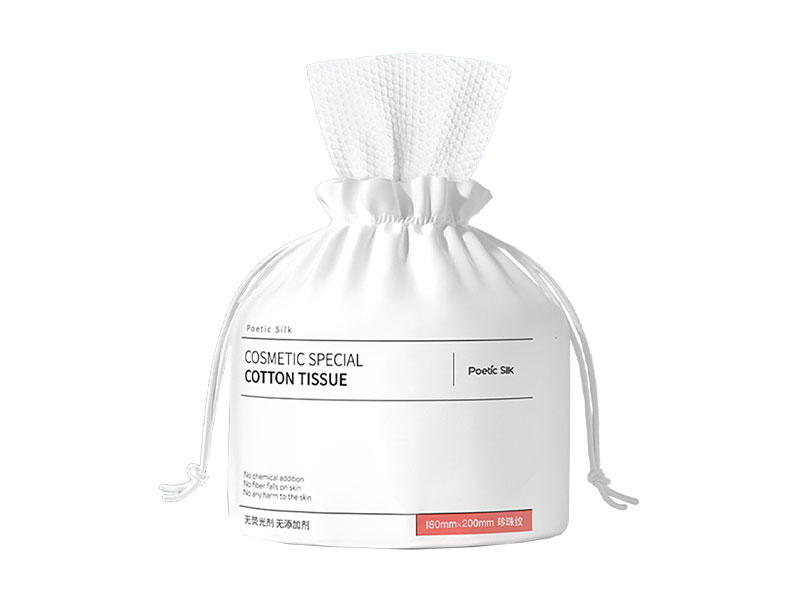
Face drying towel
What Is a Face Drying Towel?
A Face Drying Towel is a disposable facial-care sheet made from nonwoven material. It is used after washing the face, cleansing, applying skincare products, removing makeup, or completing other personal-care routines. Depending on the selected material and configuration, the sheet may be used dry or slightly moistened with water or a suitable cleansing solution.
The main purpose of the product is to provide a clean, soft, and absorbent surface for facial drying. Compared with a reusable towel, a disposable facial towel reduces the need for repeated laundering and helps users avoid repeatedly applying the same damp fabric to the skin.
The product can be supplied in large sheets with a thickened structure. This format gives the user enough material to dry the face comfortably without the sheet immediately becoming saturated or tearing during use. The final size, basis weight, folding method, and packaging format can be adjusted for different consumer segments and sales channels.
For brands, the product is more than a simple drying sheet. It can become part of a broader facial-care range, a skincare accessory collection, a hotel amenity program, a beauty-service package, or a private-label hygiene portfolio.
Core Product Advantages
Dual-Sided Functional Design
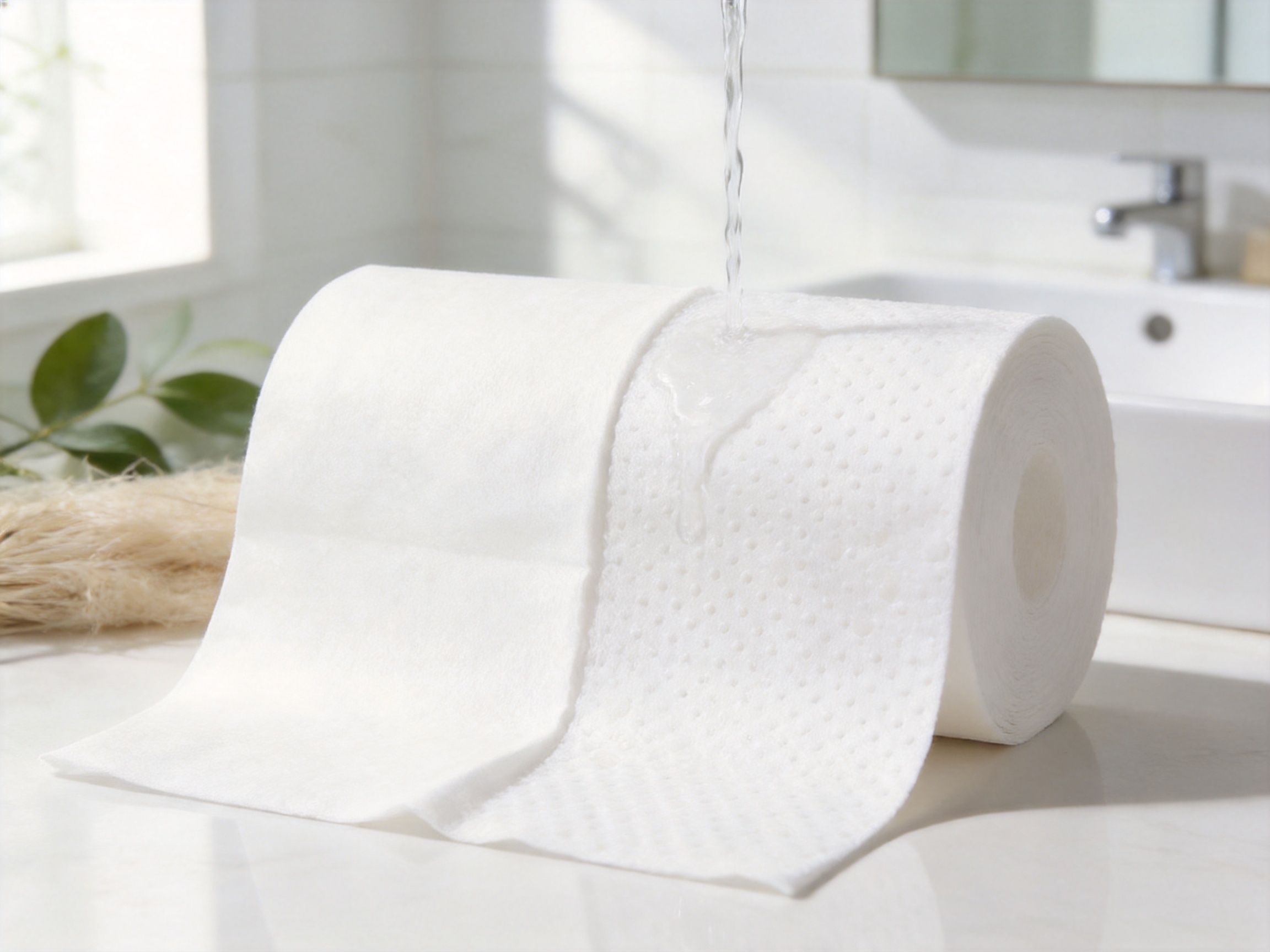
One of the most distinctive features of the Face Drying Towel is its potential dual-sided construction. Side A can be produced with a plain, soft, and skin-friendly surface. This side is suitable for gentle facial drying, especially when the user has sensitive skin or prefers a smooth touch.
Side B can be produced with embossed dots or another textured pattern. The embossed structure increases surface friction and can help remove residual moisture, cleansing product, cosmetic residue, or light surface impurities. The textured side also gives the product a more premium and functional appearance than a completely flat disposable sheet.
The two surfaces allow one product to serve more than one purpose. Users can select the smooth side for delicate drying and the textured side for a more effective wiping action. For brands, this creates an opportunity to explain a clear product benefit on the package without adding multiple products to the range.
High Absorbency for Rapid Facial Drying
Facial skin should generally be dried with a clean and absorbent material rather than a rough or heavily used fabric. The Face Drying Towel is designed to absorb water efficiently after face washing, helping users complete their routine quickly.
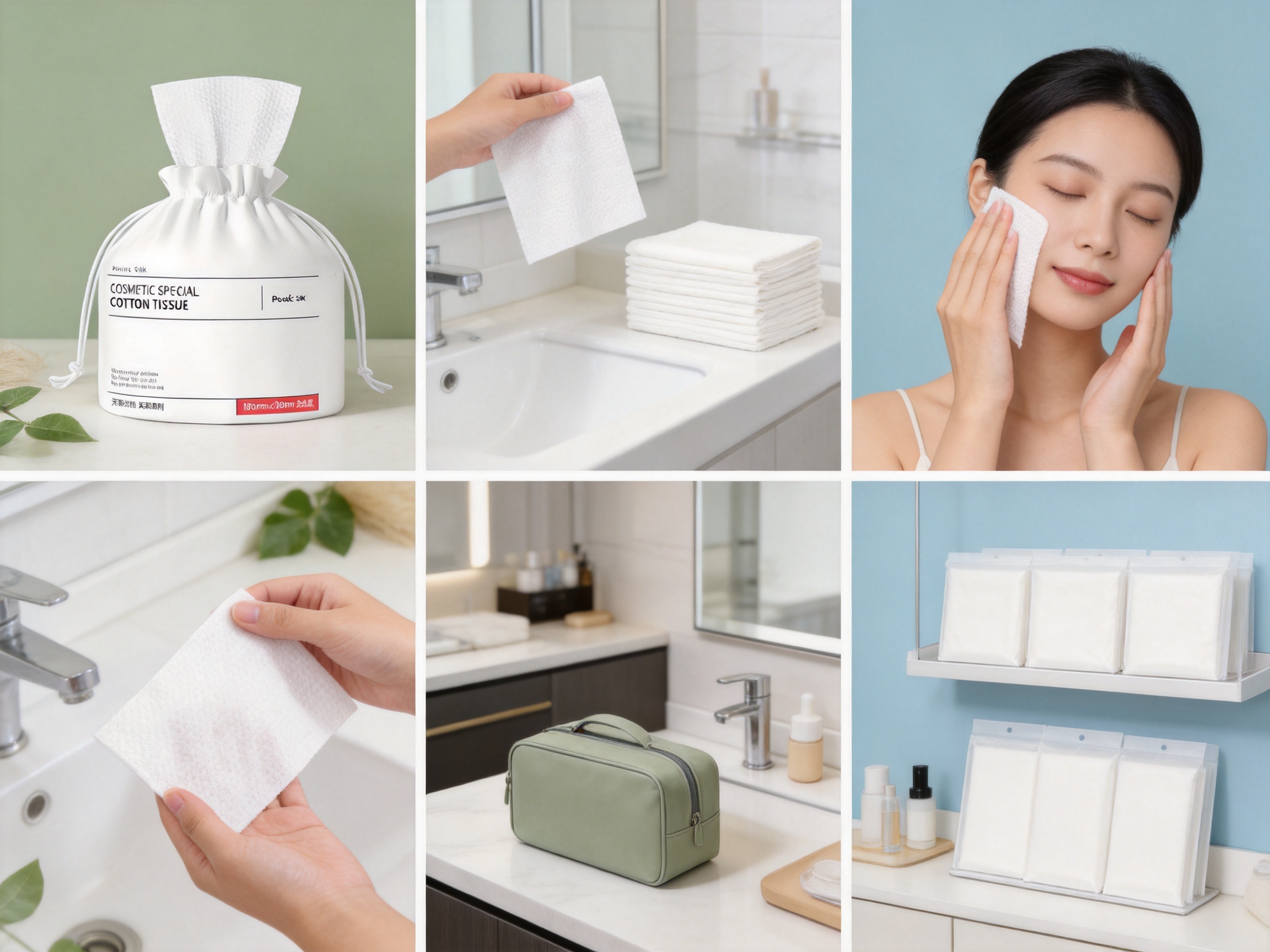
High absorbency is particularly valuable in busy environments. At home, the towel can be used after morning and evening cleansing. In hotels, gyms, beauty salons, spas, clinics, and travel settings, it offers a convenient solution where users may not want to share or reuse conventional towels.
The absorbency performance depends on the selected nonwoven material, fiber composition, basis weight, embossing design, and manufacturing parameters. During product development, buyers can work with the manufacturer to balance softness, thickness, absorbency, strength, and target cost.
Dry and Wet Dual Use
The Face Drying Towel can be designed for both dry and wet use. In dry use, it functions primarily as a facial drying sheet. In wet use, it can support makeup removal, cleansing, facial compress care, or the application of a compatible skincare liquid.
This flexibility makes the product attractive to skincare brands that want to offer a multifunctional facial-care accessory. The same sheet format can be positioned for everyday cleansing, post-workout refreshment, travel use, beauty treatments, or professional facial services.
For wet applications, the formula, liquid loading, preservation system, packaging, and compatibility requirements should be evaluated separately. The manufacturer can support buyers in selecting an appropriate substrate and packaging structure for the intended application.
Soft and Comfortable Skin Contact
Facial skin is more sensitive than many other areas of the body. A suitable facial towel should therefore provide a soft touch and avoid unnecessary roughness. The plain side of this product is designed to provide a gentle contact surface for routine drying and facial care.
Softness is influenced by fiber selection, web formation, hydroentanglement or other bonding methods, finishing processes, basis weight, and embossing. A well-controlled nonwoven structure can deliver a balance between softness and strength rather than relying only on a thin, fragile sheet.
The product can be developed for general facial use or positioned toward sensitive-skin consumers, depending on the final specifications and testing requirements. Buyers should define their intended market, claims, and regulatory obligations before printing final packaging statements.
Low-Lint and Fluorescent-Free Positioning
Lint can be inconvenient during facial drying because loose fibers may remain on the skin or become visible around the eyes, eyebrows, and hairline. The Face Drying Towel is described as lint-free or designed for low-lint performance, supporting a cleaner and more comfortable user experience.
The product is also described as fluorescent-free. This feature can be important for brands that want to communicate a simpler and more carefully controlled facial-care material. Final claims should be supported by appropriate testing and documentation for the destination market.
Low-lint performance and fluorescent-free positioning help distinguish the product from ordinary household paper products, low-grade disposable cloths, and poorly finished nonwoven sheets. They also support use in professional skincare environments where appearance and cleanliness are especially important.
Thickened Large-Sheet Format
A thickened large sheet gives the user better coverage and a more substantial hand feel. The sheet can be folded for packaging and unfolded before use. Its larger size helps users dry the entire face without repeatedly handling a small piece of material.
Large-sheet construction can also improve the product experience in professional settings. A beauty salon, spa, hotel, or clinic can use the towel as part of a standardized service procedure. Brands may choose a larger sheet for premium positioning or a smaller format for travel packs and lower-cost retail channels.
Size and weight are adjustable. Buyers can specify the target unfolded dimensions, folded dimensions, basis weight, sheet count, and package volume. These decisions influence product performance, shipping efficiency, shelf presentation, and the final retail price.
Plant-Fiber-Based and Biodegradable Options
The raw material can be selected from plant-fiber-based options that provide a soft, comfortable, and environmentally conscious product profile. Plant-based fibers may be attractive to brands that are developing eco-friendly personal-care lines or responding to consumer demand for more responsible material choices.
The product is described as biodegradable. However, biodegradability can depend on the complete product structure, including fibers, binders, coatings, packaging, and disposal conditions. Buyers should request relevant technical documentation and conduct destination-market assessments before using specific environmental claims.
Compared with conventional reusable towels, a disposable product also changes the resource profile of the user experience. Reusable towels require water, detergent, energy, storage, and regular replacement. A disposable facial towel eliminates laundering after each use, although responsible disposal and appropriate packaging design remain important.
Comparison with Conventional Facial Towels and Basic Disposable Products
The market includes cotton face towels, paper towels, wet wipes, cosmetic pads, and generic nonwoven cloths. Each format has its own benefits, but the Face Drying Towel is designed to combine several desirable characteristics in one sheet.
| Product characteristic | Face Drying Towel | Traditional reusable towel | Basic paper towel | Generic disposable cloth |
|---|---|---|---|---|
| Primary facial-drying use | Designed specifically for facial care and drying | May be used for the face but also requires laundering | Usually designed for general absorption | Depends on material and product design |
| Surface options | Soft plain side and optional embossed side | Usually one woven surface | Commonly flat or lightly textured | May be flat or textured |
| Dry and wet use | Suitable for dry use and selected wet-care applications | Usually reusable after washing | Primarily dry use | Depends on strength and formulation |
| Absorbency | Developed for quick facial drying | Can be absorbent but performance varies with washing and condition | May absorb quickly but can tear or leave residue | Varies by substrate |
| Lint-control positioning | Designed for low-lint facial contact | May shed fibers over time | May leave paper particles | Depends on nonwoven quality |
| Customization | Material, size, weight, embossing, folding, and packaging | Limited after production | Usually limited for buyers | Depends on supplier capability |
| Brand development | Suitable for OEM and ODM private-label projects | Usually purchased as a finished textile | Often sold as a general household product | May be available as a private-label item |
This comparison does not mean that every alternative performs the same way. Product performance depends on specifications and manufacturing quality. The key advantage of the Face Drying Towel is its balanced design: it is purpose-built for facial care while offering the flexibility of nonwoven customization.
Advantages for Professional Buyers
Private-Label Development
Private-label brands can use the Face Drying Towel to expand their existing skincare, beauty, hygiene, or personal-care portfolios. The product can be produced with customized packaging and brand identity, allowing buyers to create a consistent appearance across facial cleansers, masks, wipes, cotton products, and other accessories.
Private-label development is especially useful for distributors and retailers that want a product with an established application but a differentiated market presentation. Buyers can choose a standard configuration for faster development or collaborate with the manufacturer on material, surface pattern, folding, and pack-size adjustments.
OEM Production
For OEM projects, the buyer provides the brand requirements, product specifications, packaging artwork, and commercial expectations. The manufacturer then produces the product according to the confirmed details.
OEM production is suitable for companies that already understand their target customers and have a clear product brief. A typical brief may include the required material, unfolded size, sheet weight, embossing pattern, number of sheets per pack, package dimensions, carton quantity, printing colors, and expected annual volume.
The manufacturer can assist with technical review before mass production. This may include checking whether the requested material is suitable for the intended use, whether the folding method fits the package, and whether the carton configuration is efficient for export shipping.
ODM Product Development
For ODM projects, the manufacturer provides more extensive development support. The buyer may begin with a target market, price level, product concept, or consumer profile rather than a finalized specification.
The ODM team can support material selection, sheet structure, embossing design, packaging solutions, production development, and product positioning. This is useful for new brands, distributors entering the skincare category, hotel suppliers, and companies that want to launch an eco-friendly facial-care product without building an internal nonwoven engineering team.
ODM cooperation can reduce development complexity because the material supplier and finished-product manufacturer work within an integrated production system. It can also help buyers evaluate trade-offs between softness, strength, absorbency, thickness, appearance, sustainability, and cost.
Manufacturing and Quality-Control Strengths
Integrated Nonwoven and Hygiene-Product Capabilities
Zhejiang Uniquality Nursing Products Technology Co., Ltd. operates within a business group focused on medical and hygienic nonwoven materials, nursing products, and related textile applications. The product portfolio includes spunlace nonwoven fabrics, spunmelt nonwoven fabrics, hot-air-through nonwoven fabrics, flushable and degradable materials, wet wipes, dry wipes, baby diapers, training pants, wet toilet paper, cleansing wipes, and other hygiene products.
This product breadth is important because the performance of a finished facial towel begins with the selection and control of its substrate. A manufacturer that understands different nonwoven technologies can compare material structures and recommend a solution based on the customer’s intended use rather than offering only one standard fabric.
The company’s integrated supply-chain approach covers stages from nonwoven substrate development to finished hygiene-product manufacturing. This can simplify communication, reduce the number of external suppliers involved in the project, and support more consistent control from raw material to packed product.
Experienced Production Organization
The company was founded in 1987 and has developed for more than three decades in the hygiene and industrial textile sector. The supplied product information also describes 13 years of experience in China’s nonwoven industry for the current integrated manufacturing operation.
During its development, the company established multiple production bases in China, including facilities associated with Zhejiang, Guangdong, Jiangsu, and Hubei. The company also identifies an upcoming factory project in Vietnam. A multi-base manufacturing organization can support production capacity, supply continuity, regional planning, and export-oriented operations.
For professional buyers, manufacturing experience is valuable because facial-care products require more than a visually attractive package. The supplier must understand web formation, bonding, embossing, cutting, folding, packing, carton loading, quality inspection, and production scheduling.
Modern Equipment and International Technology
The company has introduced production equipment and technology from Germany, France, and Italy. International equipment can support stable web formation, precise processing, controlled embossing, and repeatable production parameters when properly operated and maintained.
Equipment alone does not guarantee product quality. Its value depends on engineering expertise, preventive maintenance, process control, operator training, and inspection procedures. The combination of modern production technology and experienced personnel helps the manufacturer develop nonwoven products for medical, maternal and baby, beauty, household, industrial-cleaning, and clothing-related applications.
GMP Clean Workshops and Purified Water Systems
The manufacturing information describes GMP clean workshops and purified water systems. These facilities are particularly relevant when producing hygiene products and wet-use facial-care products. Controlled workshop conditions can help reduce avoidable contamination risks, while purified water systems support appropriate production processes for products that may contact the skin.
Specific cleanroom classifications, water standards, and production controls should be confirmed for each project. Buyers should also review the quality documents and testing requirements applicable to their destination market and intended product claims.
Professional Testing Capabilities
Product testing supports consistent manufacturing and helps buyers evaluate whether the final product matches the approved sample. Depending on the specification, testing may include dimensions, basis weight, tensile strength, absorbency, moisture content, appearance, odor, lint performance, microbial requirements, packaging integrity, and other relevant characteristics.
For customized products, a clear quality agreement is recommended. The agreement can define acceptable tolerances, inspection methods, sampling procedures, packaging standards, labeling requirements, and procedures for handling nonconforming goods.
Testing should be matched to the actual product. A dry facial towel, a wet facial wipe, and a cosmetic-treatment sheet may require different evaluations. The manufacturer can help buyers identify suitable checks during the development stage.
Production Process from Material Selection to Shipment
1. Requirement Confirmation
The production process begins with a technical and commercial discussion. The buyer should provide the target application, preferred material, sheet dimensions, basis weight, surface design, folding method, packaging format, estimated order quantity, destination market, and expected delivery schedule.
At this stage, the manufacturer can identify possible conflicts between performance requirements and cost objectives. For example, a very soft and thick sheet may require more material, while a highly embossed surface may affect absorbency, strength, and package volume.
2. Substrate Selection
The manufacturer evaluates suitable nonwoven materials based on softness, strength, absorbency, drape, surface appearance, environmental positioning, and processing compatibility. Plant-fiber-based materials may be selected for a more natural product profile, while other nonwoven structures may be considered when higher strength or a different hand feel is required.
Material selection should also consider whether the product will be sold dry or wet, whether it will carry cosmetic liquid, whether it will be folded into a compact package, and whether it will be used by consumers or professionals.
3. Web Formation and Bonding
Nonwoven web formation arranges fibers into a sheet structure. Bonding then gives the web sufficient integrity for cutting, folding, packaging, and use. Different technologies can produce different combinations of softness, strength, absorbency, and surface texture.
For a facial towel, the bonding method should preserve a comfortable surface while ensuring that the sheet does not easily tear during normal handling. The product must be strong enough for drying and wiping but not so rigid that it feels uncomfortable against the skin.
4. Embossing and Surface Development
If the buyer selects a dual-sided design, the surface structure is developed during processing. One side may remain smooth and plain, while the other side receives embossed dots or another texture. The pattern can be adjusted according to the desired friction, visual identity, and tactile experience.
Embossing must be controlled carefully. Excessive pressure or an unsuitable pattern may reduce softness or weaken the sheet. A balanced design provides useful texture without creating an abrasive feeling.
5. Cutting and Folding
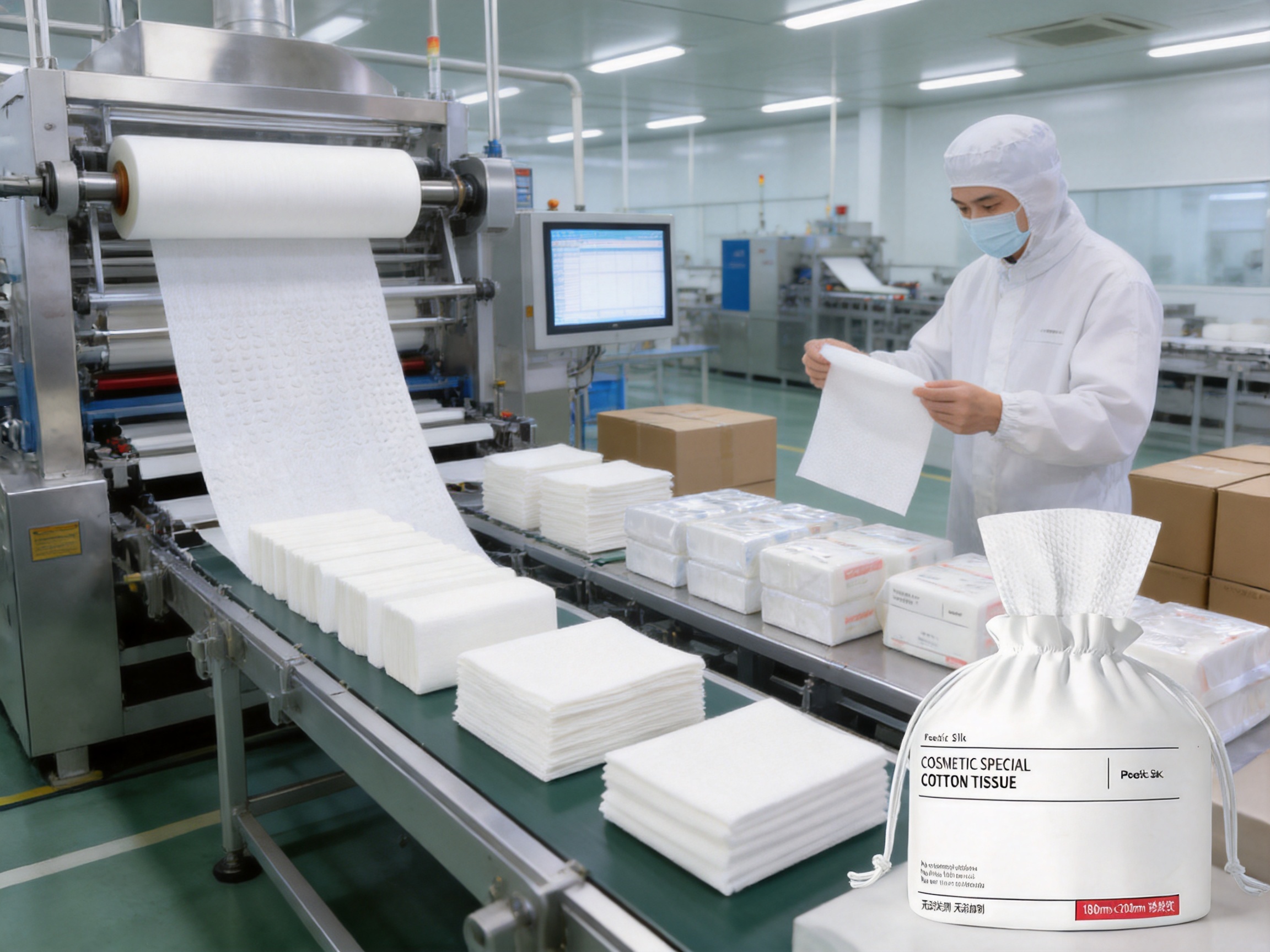
After the material and surface are confirmed, the continuous web is cut into individual sheets. The sheets are then folded according to the selected package format. Folding affects user convenience, package size, automation efficiency, and the visual presentation when the package is opened.
Possible formats include individually packed sheets, stacked sheets in a resealable bag, box-packed sheets, travel packs, and larger professional-use packages. The best option depends on the sales channel and expected consumption frequency.
6. Packaging and Printing
Packaging protects the product during transportation and communicates the brand’s positioning. Buyers can select individual or retail packaging, printed bags, cartons, boxes, labels, and export cartons. Brand logos, usage instructions, material information, and market-specific compliance details can be incorporated into the design.
Packaging should be matched to the product’s intended use. A premium skincare brand may prefer an elegant compact pack, while a hotel distributor may prioritize efficient case packing and easy storage. A wholesale buyer may require larger multi-pack cartons to reduce handling and logistics costs.
7. Inspection and Shipment
Finished products are inspected according to the agreed quality requirements. Checks may cover sheet count, dimensions, folding, package sealing, printing, appearance, carton quantity, and product integrity.
After approval, the products are prepared for shipment. Export packaging can be customized for the destination market, shipping method, warehouse conditions, and buyer’s logistics system. The supplier’s export experience can support documentation coordination and delivery planning.
Customization Options
The Face Drying Towel can be customized across multiple dimensions. The following options allow buyers to create a product that matches their brand strategy and distribution model.
| Customization area | Possible choices | Commercial purpose |
|---|---|---|
| Material | Different nonwoven and plant-fiber-based structures | Balance softness, strength, absorbency, sustainability, and cost |
| Size | Custom unfolded and folded dimensions | Adapt the product to facial coverage, travel packs, or professional use |
| Weight | Adjusted basis weight and sheet thickness | Create economy, standard, or premium product levels |
| Surface | Plain, embossed dots, or other approved patterns | Improve tactile appeal and functional differentiation |
| Folding | Various folding methods and pack arrangements | Optimize convenience, package size, and dispensing |
| Packaging | Individual, retail, multipack, box, bag, or bulk packaging | Match supermarkets, e-commerce, hotels, salons, or wholesalers |
| Printing | Brand logo, product information, and market-specific artwork | Build recognition and support private-label positioning |
| Carton | Customized export cartons and case quantities | Improve shipping efficiency and warehouse handling |
Customization should be finalized through samples and technical confirmation. A production sample allows the buyer to assess softness, thickness, absorbency, surface texture, package appearance, and overall user experience before approving mass production.
Applications and Target Markets
Personal Care Brands
Personal-care brands can add the Face Drying Towel to facial cleansers, skincare kits, travel sets, and daily-care collections. It can be sold as a standalone product or included as an accessory with other facial-care items.
Beauty and Skincare Companies
Beauty companies can use the towel in facial-treatment procedures, cleansing services, makeup removal, and skincare demonstrations. The two-sided design provides an easy explanation for professional users: the smooth side supports gentle contact, while the textured side can be used when additional wiping friction is desired.
Hotels, Spas, and Salons
Hospitality and beauty-service businesses need convenient, hygienic, and presentable personal-care supplies. Individually packed facial towels can be placed in guest rooms, treatment rooms, changing areas, travel kits, or welcome packages.
Medical and Hygiene Suppliers
Medical hygiene suppliers may consider the product for non-sterile facial-care, patient comfort, personal-cleaning, or institutional supply applications where a disposable sheet is appropriate. Any medical, clinical, or regulated claim must be reviewed separately according to the relevant market requirements.
Supermarket and Retail Suppliers
Retail suppliers can develop different pack sizes and price points. A compact pack may suit travel and convenience channels, while a larger family pack may be appropriate for household facial care. Eco-friendly materials and low-lint positioning can help the product stand out on a crowded personal-care shelf.
Importers, Wholesalers, and Distributors
Importers and wholesalers can use OEM or standard configurations to supply regional distributors. The manufacturer’s broad production capabilities allow buyers to discuss the Face Drying Towel alongside wipes, diapers, training pants, cleansing products, and other hygiene categories.
How to Build a Successful Product Specification
A clear product specification reduces development delays and helps the factory provide an accurate quotation. Buyers should begin by defining the target user and sales channel. A premium skincare brand may prioritize softness, packaging appearance, and plant-based materials, while a hotel distributor may prioritize sheet count, packing efficiency, and stable delivery.
The next step is to define the required sheet size and weight. Larger sheets offer greater facial coverage, but they require more material and may increase packaging volume. A thicker sheet can deliver a more premium feel, but it may affect cost and shipping efficiency.
Buyers should also state whether the product will be used dry, wet, or for both purposes. If wet use is planned, the liquid type, loading level, package format, shelf-life expectation, and preservation requirements should be discussed early.
Surface design is another important decision. A plain surface may be appropriate for sensitive-skin positioning, while a dotted embossed side may support cleansing and functional differentiation. The final design should be evaluated for comfort, friction, absorbency, strength, and appearance.
Finally, the buyer should provide the estimated order quantity and destination market. Order volume affects production planning, material purchasing, packaging costs, and quotation structure. Destination-market information helps the supplier review labeling, documentation, export packaging, and applicable certification requirements.
Quality and Compliance Considerations
Professional buyers should request samples and relevant technical documents before placing a large order. The sample should represent the proposed material, sheet weight, surface pattern, folding method, and packaging structure.
Important evaluation points may include softness, absorbency speed, wet strength, dry strength, lint performance, fluorescent-agent status, odor, sheet dimensions, package sealing, and print quality. If the product is described as biodegradable or plant-fiber-based, the buyer should request evidence that supports the intended environmental communication.
Claims such as “for sensitive skin,” “fluorescent-free,” “biodegradable,” or “suitable for wet use” should be reviewed against the regulations and advertising standards of the target country. The manufacturer can provide production and testing support, but the brand owner remains responsible for ensuring that final claims are accurate and legally appropriate in the market where the product is sold.
For repeated orders, buyers should establish a quality-control agreement. This agreement may define approved samples, inspection standards, tolerances, defect classifications, packaging requirements, and procedures for changes to raw materials or production processes.
Why Integrated Manufacturing Matters
An integrated manufacturer can provide advantages over a trading company that purchases finished goods from unrelated factories. When nonwoven material development, converting, packaging, testing, and export coordination are managed within one production organization, communication may be more direct and technical adjustments may be easier to implement.
Integrated manufacturing also supports product consistency. The same organization can monitor the relationship between raw material characteristics and finished-sheet performance. If the buyer requests a change in softness, thickness, embossing, or absorbency, the engineering team can assess how the adjustment may influence other parts of the product.
For global buyers, supply-chain depth can reduce risk. Zhejiang Uniquality Nursing Products Technology Co., Ltd. has experience across several nonwoven and hygiene categories, multiple production bases in China, professional testing capabilities, clean workshop facilities, and export-oriented production support.
The company’s broader group background includes long-term activity in medical and hygienic nonwoven materials, nursing products, and industrial textiles. This gives the Face Drying Towel access to knowledge developed through multiple product applications rather than a single narrow category.
Sustainability and Responsible Product Development
Sustainability is increasingly important in facial-care purchasing decisions. The Face Drying Towel can support a more responsible product concept through plant-fiber-based material choices, biodegradable options, efficient sheet design, and packaging optimization.
Responsible development requires a complete view of the product life cycle. Buyers should consider raw materials, production energy, water use, packaging volume, transportation efficiency, consumer use, and disposal conditions. A smaller package may reduce shipping volume, while a larger sheet may reduce the number of sheets needed per use.
Environmental communication should be specific and supported by evidence. Instead of relying on vague terms, brands should clearly explain the selected material, the applicable disposal guidance, and the conditions under which biodegradation or compostability claims apply.
The manufacturer can help buyers compare different material solutions and select a structure that balances environmental objectives with softness, absorbency, strength, and price. The most appropriate solution depends on the target market and the buyer’s commercial priorities.
Frequently Asked Questions
Q1: Can the Face Drying Towel be produced under a private label?
Yes. Private-label production is available, including customized packaging, logo printing, product specifications, folding methods, and carton solutions. Buyers should provide their brand requirements and confirm the final technical details before mass production.
Q2: What materials can be used?
Different nonwoven materials can be evaluated according to softness, strength, absorbency, thickness, environmental positioning, and target cost. Plant-fiber-based options may be considered for brands seeking a more natural or biodegradable product profile.
Q3: Is the towel suitable for sensitive skin?
The plain side is designed to provide a soft and comfortable facial-contact surface. Buyers targeting sensitive-skin consumers should confirm the final material, finishing process, testing requirements, and claims applicable to their destination market.
Q4: Can one side be smooth and the other side embossed?
Yes. The product can be developed with a plain, soft side and an embossed side. Embossed dots or another approved pattern can increase surface friction and provide functional and visual differentiation.
Q5: Can the product be used wet?
The product can be designed for dry and wet dual use. For wet applications, the buyer should confirm the intended liquid, loading level, package type, shelf-life requirements, and applicable testing before production.
Q6: Can the size and sheet weight be customized?
Yes. The unfolded size, folded size, basis weight, thickness, sheet count, and package dimensions can be adjusted according to the customer’s requirements and target market.
Q7: What packaging formats are available?
Possible formats include individual packs, retail bags, resealable packs, boxes, multipacks, professional-use packages, and customized export cartons. The final choice depends on the sales channel, consumption pattern, and logistics plan.
Q8: What information is needed for a quotation?
Buyers should provide the desired material, sheet size, weight, surface design, folding method, packaging requirements, estimated order quantity, destination market, and any required certifications or documents.
Q9: Does the manufacturer support overseas orders?
Yes. The company serves international buyers and can support export documentation, customized cartons, production coordination, and destination-market requirements based on the confirmed project details.
Q10: Can the manufacturer support ODM development?
Yes. ODM support can include product structure design, material selection, embossing, packaging solutions, and production development. This is suitable for buyers who have a market concept but need assistance converting it into a manufacturable product.
Q11: Is the product suitable for hotels and salons?
Yes. The product can be developed for hotel supplies, spas, salons, beauty clinics, and other professional settings. Buyers can select individual packaging or bulk formats depending on hygiene procedures and service requirements.
Q12: How can buyers confirm product quality before mass production?
Buyers should request samples and review the material, softness, absorbency, strength, lint performance, surface texture, folding, packaging, and labeling. A written quality specification and approved reference sample should be established before mass production.
Conclusion
The Face Drying Towel is a versatile facial-care product designed to meet the changing expectations of consumers and professional buyers. Its key advantages include high absorbency, dry and wet dual use, a soft facial-contact surface, an optional embossed side, low-lint positioning, fluorescent-free positioning, thickened large-sheet construction, and plant-fiber-based biodegradable options.
Compared with traditional reusable towels, ordinary paper towels, and basic disposable cloths, it offers a more specialized combination of facial-care functionality, hygiene convenience, and customization potential. Its dual-sided structure gives brands a clear product story, while the adjustable material, size, weight, folding, and packaging formats support different price levels and sales channels.
The manufacturing strength behind the product is equally important. Zhejiang Uniquality Nursing Products Technology Co., Ltd. provides access to nonwoven material development, finished hygiene-product production, GMP clean workshops, purified water systems, testing capabilities, multiple production bases, international production technology, and OEM and ODM services.
For personal-care brands, beauty companies, hotel suppliers, medical hygiene distributors, supermarkets, retailers, importers, and wholesalers, this product can serve as a reliable foundation for a customized facial-care program. With clear specifications, appropriate testing, responsible environmental communication, and coordinated packaging development, the Face Drying Towel can be adapted for international markets and long-term bulk supply.
References
1. Product information and technical description supplied for the Face Drying Towel.
2. Manufacturing and company information supplied by Zhejiang Uniquality Nursing Products Technology Co., Ltd.
3. General principles of nonwoven material selection, web formation, bonding, embossing, and converting for hygiene products.
4. General quality-control practices for disposable facial-care and nonwoven hygiene products.
5. General considerations for private-label, OEM, and ODM development in personal-care manufacturing.
6. General sustainability considerations for plant-fiber-based and biodegradable nonwoven products.