中文简体
中文简体 English
 日本語
日本語 русский
 Español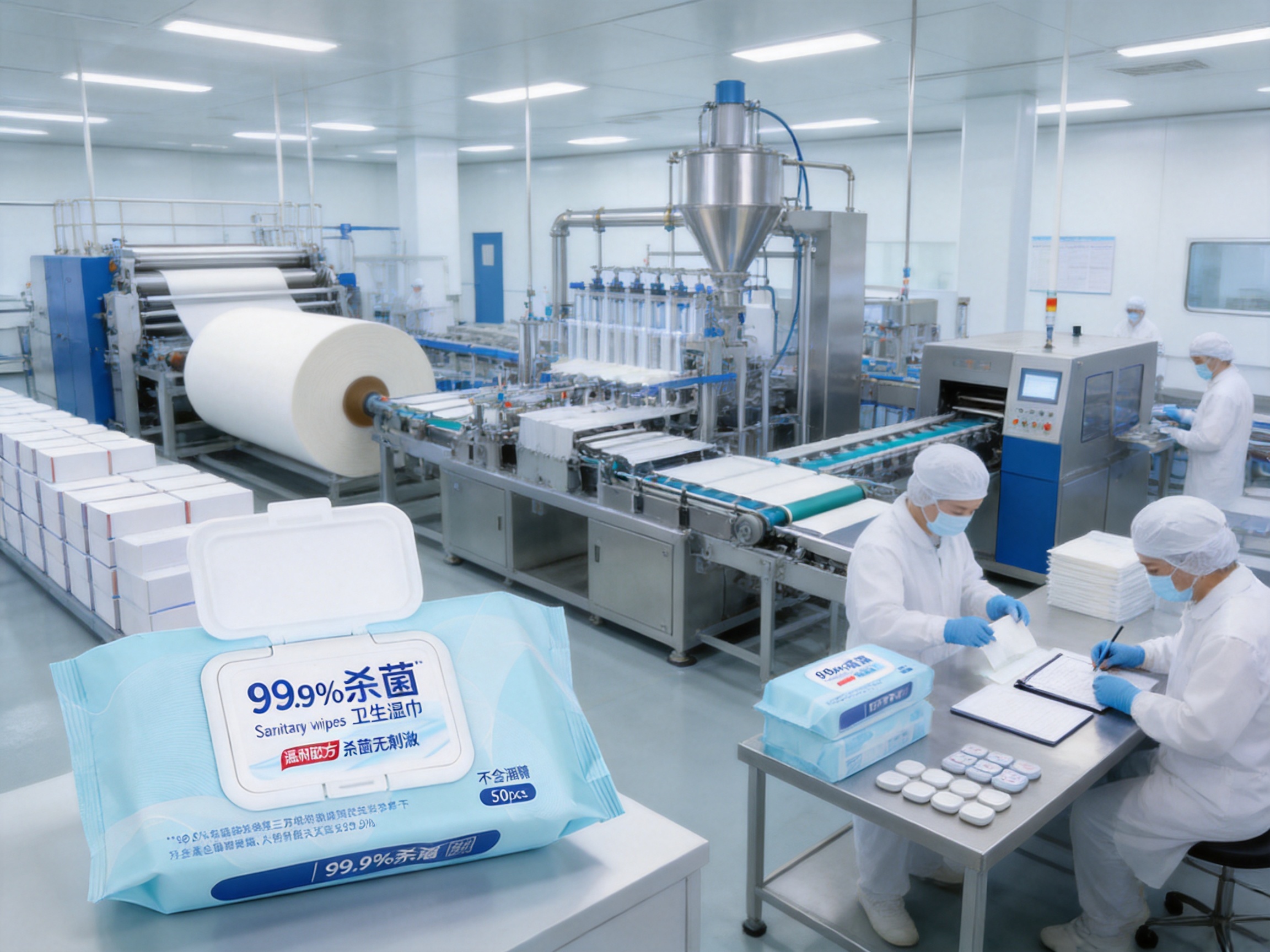
Antibacterial disposable wipes have become an essential part of modern hygiene management. They provide a practical way to clean hands, equipment, work surfaces, medical assistive devices, hospitality facilities, and other high-touch areas without requiring a separate spray bottle, bucket, cloth, or water source. For professional buyers, however, selecting the right wipes involves much more than choosing a convenient package. Product performance, substrate quality, liquid formulation, packaging integrity, manufacturing standards, customization capability, supply reliability, and regulatory suitability all influence the success of a private-label or institutional hygiene program.
Antibacterial Wipes are designed as ready-to-use cleaning wipes pre-saturated with an antibacterial formula. They combine a soft nonwoven substrate with a prepared solution intended to help remove dirt and reduce harmful bacteria from suitable surfaces. Depending on the formulation and applicable test standards, the product can be developed for personal care, household cleaning, commercial hygiene, medical support environments, hospitality applications, fitness facilities, and industrial or institutional use.
For businesses purchasing in bulk, the key advantage is operational simplicity. A user can open the pack, remove one wipe, unfold it, and clean a target surface using an even motion. The wipes are available in multiple sizes, materials, textures, fragrances, packaging formats, and liquid systems. This flexibility makes them suitable for both standardized hygiene programs and differentiated private-label product lines.
What Are Antibacterial Disposable Wipes?
Antibacterial disposable wipes are pre-moistened sheets made from tissue, paper, or nonwoven fabric and infused with a cleaning or antibacterial solution. The substrate holds and distributes the liquid while providing enough strength for wiping, light friction, and controlled handling. After use, the wipe is discarded according to the requirements applicable to the product category and the location where it has been used.
The product described in this article is positioned primarily for B2B bulk purchasing rather than individual retail sales. It can be supplied to private-label brands, importers, distributors, supermarket groups, medical supply companies, janitorial suppliers, hotels, institutional buyers, government procurement agencies, wholesale traders, and e-commerce brand owners.
A finished antibacterial wipe is not simply a piece of fabric soaked in liquid. It is the result of coordinated decisions involving fiber selection, web formation, bonding, embossing, liquid loading, folding, cutting, sealing, labeling, quality inspection, carton packing, and logistics. A supplier with integrated capabilities can manage these stages more effectively than a trading company that purchases generic wipes from multiple unrelated sources.
Why Antibacterial Wipes Are Increasingly Important
Hygiene expectations have changed significantly in offices, hotels, public facilities, transport environments, healthcare settings, gyms, schools, retail stores, and manufacturing sites. Users now expect cleaning products to be available close to the point of use. A convenient wipe can support more frequent cleaning of high-touch surfaces such as door handles, desks, elevator buttons, shared tools, fitness equipment, counters, armrests, and medical support devices.
Traditional cleaning methods often require several separate items. A worker may need a spray bottle, a reusable cloth, water, gloves, and a waste-management procedure. Each additional step can reduce compliance and increase the time required for routine cleaning. Pre-saturated wipes simplify the workflow by combining the substrate and liquid in one controlled package.
Wipes can also help organizations standardize their cleaning procedures. Each pack can contain a defined number of sheets with a consistent size, liquid level, and folding format. Training becomes easier because workers can follow a straightforward sequence: open the pack, remove a sheet, wipe the target area evenly, discard the used wipe, and close the package.
The product is particularly useful where water is unavailable or where carrying liquid containers is inconvenient. Travel packs can support mobile workers, hotel guests, fitness users, transport staff, and field service teams. Larger soft packs, flow packs, and canisters can serve offices, hospitals, hotels, schools, warehouses, and commercial cleaning operations.
Core Product Advantages
Ready-to-Use Convenience
The most immediate benefit is that the wipes are ready for use. No additional dilution, spraying, soaking, or cloth preparation is necessary. This can improve cleaning efficiency and reduce the possibility of incorrect dilution caused by users mixing concentrates at the point of use.
Ready-to-use packaging is also valuable for decentralized operations. A hotel housekeeping team, retail employee, medical assistant, or gym attendant can access the product wherever cleaning is required. The format supports quick response to spills, visible contamination, routine touch-point cleaning, and scheduled hygiene maintenance.
Controlled Liquid Distribution
Industrial production allows the liquid solution to be applied according to a defined loading target. Consistent saturation helps ensure that the wipes are neither excessively dry nor unnecessarily wet. A well-balanced wipe should release enough liquid during use while remaining comfortable to handle and resistant to leakage through the package.
Controlled liquid distribution can improve user perception and reduce waste. If a wipe is too dry, users may need several sheets to complete one task. If it is oversaturated, the product may drip, feel uncomfortable, or require additional drying. A suitable balance depends on the substrate, application, package type, wipe size, formulation, and target market.
Softness Combined with Practical Strength
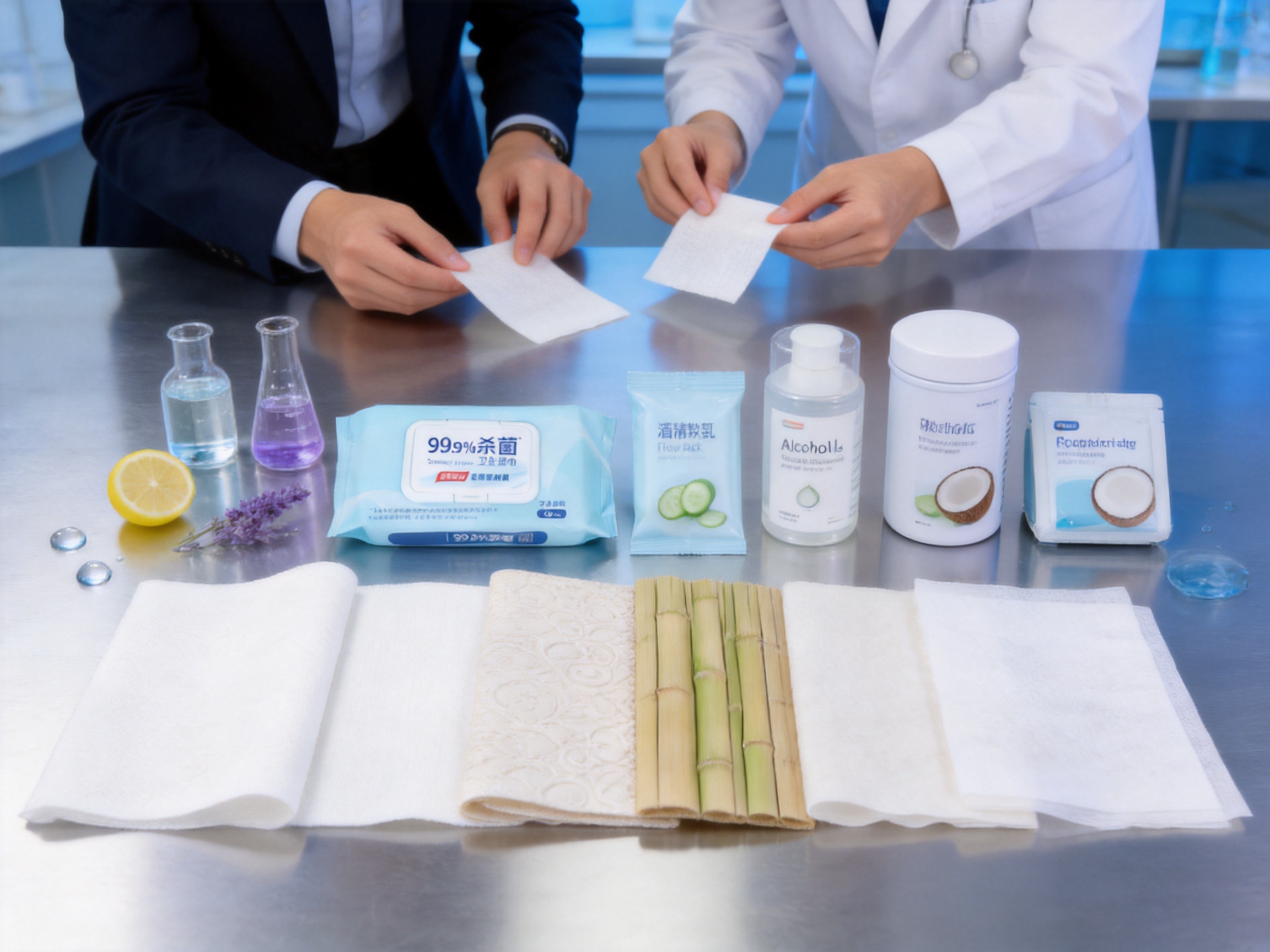
The available material options include polyester, viscose, bamboo, lyocell, cotton, tissue, paper, and other nonwoven constructions. Each material offers a different balance of softness, absorbency, tensile strength, lint performance, surface feel, and sustainability characteristics.
For personal-care applications, a smooth and soft substrate may be preferred. For equipment and surface cleaning, buyers may prioritize strength, controlled friction, low lint, and effective liquid release. A supplier able to adjust the substrate and web structure can create a product that is better matched to its intended use instead of relying on a single generic fabric for every market.
Broad Application Range
Antibacterial wipes can be developed for a wide range of applications, including hands, office supplies, fitness equipment, medical assistive devices, hotel facilities, public-area touch points, household surfaces, and commercial cleaning programs.
Different applications require different product decisions. A hand wipe should emphasize skin comfort and an appropriate cosmetic or personal-care formulation. A surface wipe may require stronger cleaning performance, a different active system, or a substrate with greater friction. A medical-support wipe may require more detailed validation, labeling, and use instructions. The product should therefore be specified according to its intended market and regulatory classification.
Flexible Packaging Options
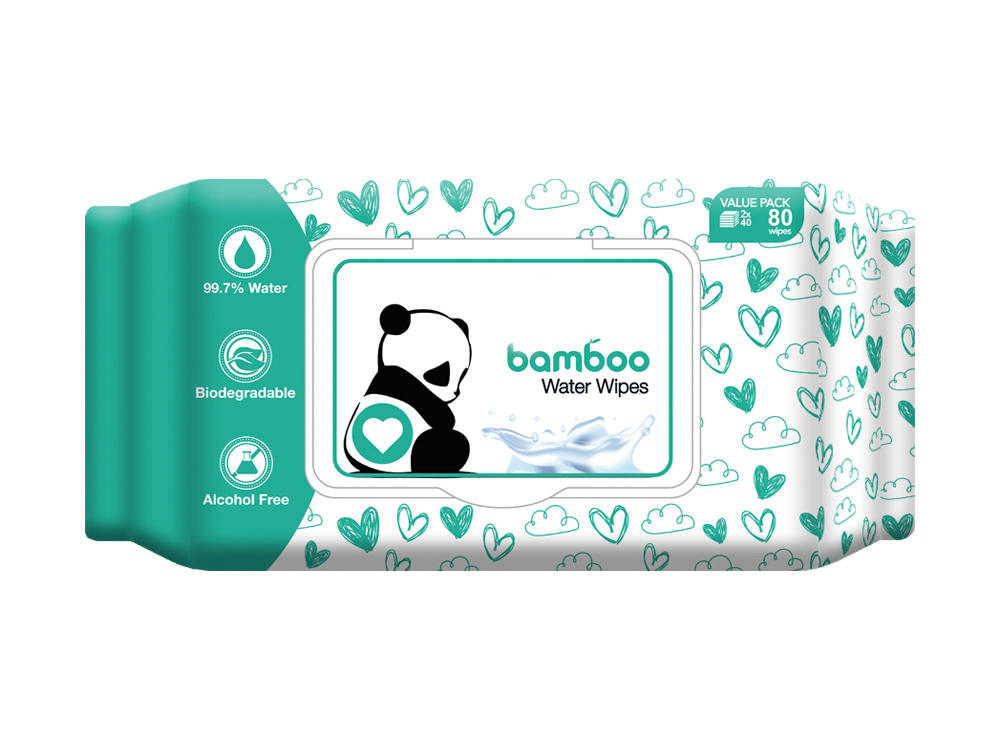
Available packaging formats include flow packs, soft packs, canisters, travel packs, and other customized structures. A soft pack may be suitable for high-volume household or institutional use. A canister can support one-at-a-time dispensing in a workplace, hotel, clinic, or gym. A travel pack is useful when portability and compact dimensions are important.
Packaging can be customized with a private-label logo, brand colors, multilingual instructions, product claims, usage guidance, warning statements, barcode information, and carton markings. A properly designed package protects the wipes from evaporation, contamination, and damage during storage and transportation.
Product Specification Options
The product range supports substantial customization. Buyers can define the number of pieces per pack, wipe dimensions, material, fabric weight, texture, fragrance, liquid formula, packaging style, and carton configuration. These choices influence product positioning, production cost, shipping efficiency, and consumer experience.
| Specification | Available Options | Commercial Considerations |
|---|---|---|
| Pieces per pack | Approximately 1 to 200 pieces | Small packs support portability; larger packs support institutional and household use |
| Material | Polyester, viscose, bamboo, lyocell, cotton, tissue, paper, and other nonwoven options | Material affects softness, absorbency, strength, sustainability, and cost |
| Fabric weight | Approximately 30 to 100 grams per square meter | Higher weights can provide a more substantial feel and greater liquid-holding capacity |
| Wipe size | Width approximately 12 to 22 centimeters; length approximately 12 to 30 centimeters | Size should match the intended use, package dimensions, and consumption pattern |
| Technology | Parallel and semi-cross structures | Web structure influences strength, texture, absorbency, and appearance |
| Pattern | Plain, mesh, dot embossed, flower, and star patterns | Pattern can improve tactile performance, liquid distribution, and visual differentiation |
| Fragrance | Unscented, fresh, lavender, lemon, lotus, fruit, coconut, cucumber, and other options | Fragrance selection should match consumer preferences and target-market requirements |
| Formula | Alcohol-based or alcohol-free systems, with selected additional ingredients | Formula selection depends on application, claims, skin contact, materials, and regulations |
| Packaging | Flow pack, soft pack, canister, travel pack, and customized formats | Packaging influences dispensing, shelf life, portability, branding, and logistics |
Material Selection and Substrate Engineering
The substrate is one of the most important components of a disposable wipe. It determines how the sheet feels in the hand, how effectively it absorbs and releases liquid, how it performs under friction, and how much lint it may generate. The substrate also contributes to the environmental profile, production cost, and compatibility with the selected solution.
Polyester
Polyester fibers can provide strength, dimensional stability, and resistance to tearing during wiping. They may be suitable for applications where the wipe must withstand repeated passes over a surface or handle moderate friction. Polyester can also be combined with other fibers to balance strength and softness.
Viscose
Viscose is valued for its softness and absorbency. It can help create a comfortable wipe with good liquid uptake. Depending on the construction and blend ratio, viscose-based substrates may be used in personal-care, household, and general cleaning products.
Bamboo and Lyocell
Bamboo and lyocell are often selected by buyers seeking a softer or more sustainability-oriented product concept. Their suitability depends on the specific fiber source, processing method, blend, and claims permitted in the target market. They can be combined with other fibers to achieve the required strength and wet performance.
Cotton
Cotton-based substrates provide a familiar natural-fiber positioning and a soft hand feel. They may be attractive for personal-care products, premium wipes, and brands that emphasize a natural-material story. However, cotton selection should be evaluated alongside absorbency, lint performance, liquid compatibility, and cost.
Fabric Weight and Web Structure
Fabric weight is commonly expressed in grams per square meter. A lighter fabric may be suitable for compact travel packs or cost-sensitive applications, while a heavier fabric can offer a more substantial feel and greater capacity for liquid. The correct weight depends on the cleaning task and the desired balance between performance, pack size, and price.
Parallel and semi-cross web structures provide additional opportunities for performance adjustment. The orientation and bonding of fibers influence tensile strength, elongation, surface texture, and resistance to deformation. Patterned surfaces such as mesh or dot embossing may create additional contact points, support cleaning action, and improve product differentiation.
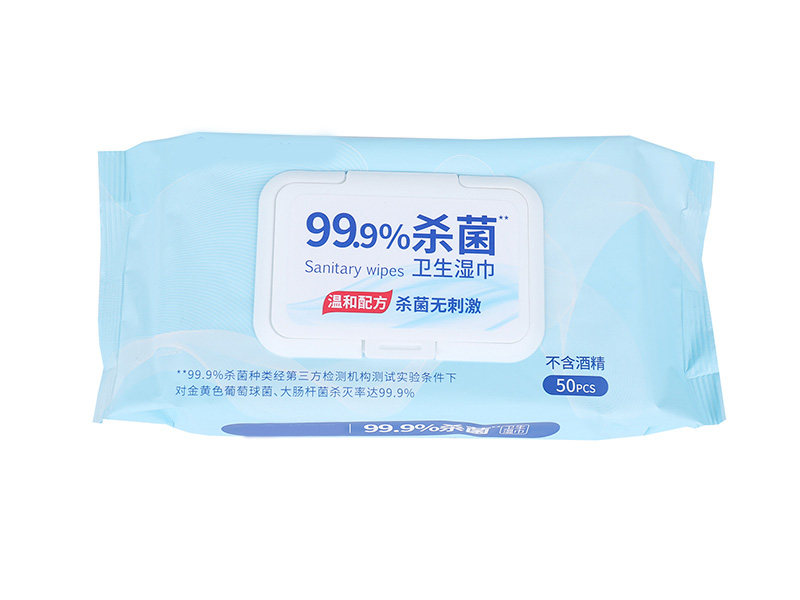
Antibacterial disposable wipes
Antibacterial Formula and Skin-Comfort Considerations
The liquid formula is central to the product’s performance. It may include water, cleaning agents, moisturizing ingredients, preservatives, fragrance, and antibacterial active ingredients, depending on the intended use and legal classification. Buyers should determine whether the product is intended for hands, skin, surfaces, equipment, or a combination of applications before selecting the formula.
Alcohol-based and alcohol-free options are available. Alcohol-based systems may be selected for certain surface or hand-hygiene concepts, subject to the appropriate formulation, packaging, flammability controls, and regulatory requirements. Alcohol-free systems may be preferred where a different skin feel, odor profile, or application requirement is desired.
For personal wipes, the formula should be developed with skin compatibility in mind. The supplied product information describes a weak-acid affinity concept intended to provide a pH closer to delicate skin. A skin-friendly direction may help reduce discomfort, but every finished formula should be properly evaluated through relevant safety, stability, compatibility, and regulatory procedures.
Moisturizing ingredients can improve the after-feel of a wipe used on skin. Fragrance can provide a fresh sensory experience, although unscented versions may be preferred by sensitive users, healthcare customers, institutional buyers, or markets with fragrance restrictions.
Antibacterial performance claims must be supported by appropriate testing and must comply with the requirements of the destination market. A statement such as “kills 99.9% of bacteria” should not be treated as universally applicable without identifying the tested organisms, contact time, test method, product concentration, use conditions, and regulatory basis. The manufacturer and buyer should agree on the exact wording of any antibacterial, disinfecting, sanitizing, or antimicrobial claim before commercial production.
Recommended Use Procedure
Correct use is important for obtaining the intended cleaning result. The following procedure is based on the product instructions provided for the antibacterial wipes.
Step One: Open the Package
Open the outer cover and uncover the opening sticker. Remove one wipe from the pack. If the product will not be used continuously, return the sticker to its original position and close the outer cover. This helps reduce exposure to air and supports moisture retention during storage.
Step Two: Unfold and Wipe Evenly
Unfold the wipe and clean the surface evenly using an S-shaped route for approximately two minutes, or according to the validated instructions for the specific formula and application. An even wiping pattern helps improve coverage and reduces the possibility of missing sections of the target surface.
If there are obvious stains, dirt, or blood stains on the surface, clean the visible contamination first using an appropriate method. The antibacterial wipe should then be used according to the product instructions. Heavy organic contamination can interfere with the performance of some antibacterial or disinfecting systems, which is why pre-cleaning may be necessary.
Step Three: Dispose of the Used Wipe
Place the used wipe in a suitable waste container. Where the wipe has been used in a healthcare or controlled institutional environment, collection and disposal should follow the relevant medical-waste or local waste-management requirements. Wipes should not be flushed unless they are specifically designed, tested, labeled, and approved for flushable use.
Advantages Over Traditional Sprays and Reusable Cloths
Antibacterial wipes offer several practical advantages compared with traditional sprays or reusable cloths. First, they combine the cleaning liquid and wiping material in one controlled unit. This reduces the need to transport and maintain separate equipment.
Second, disposable wipes can support improved hygiene separation. A fresh wipe can be used for each task or area, helping reduce the risk of transferring contamination that may occur when one reusable cloth is used across multiple surfaces without adequate laundering or disinfection.
Third, wipes can improve speed. In busy commercial environments, workers can access a pack quickly and complete a small cleaning task without preparing a larger cleaning system. This is useful for frequent touch-point cleaning and short maintenance intervals.
Fourth, the product can improve consistency. A factory-produced wipe has a defined size, material, liquid content, and package count. By contrast, a reusable cloth may vary in moisture, cleanliness, size, and condition from one use to the next.
Fifth, wipes can support branding and customer communication. Packaging can display clear instructions, a private-label identity, safety information, fragrance positioning, sustainability information where substantiated, and application guidance.
These advantages do not mean that disposable wipes are appropriate for every cleaning task. Large spills, heavy industrial contamination, and applications requiring reusable specialist equipment may need other methods. A responsible product specification considers the complete cleaning process, including pre-cleaning, contact time, surface compatibility, personal protective equipment, and waste disposal.
Advanced Manufacturing Capabilities
The manufacturer behind the product has operated since 1987 and specializes in medical and hygienic nonwoven materials, nursing products, and clothing interlining. Its capabilities cover research and development, production, and sales. This broad experience is important because antibacterial wipes require coordination between nonwoven engineering, liquid formulation, converting, packaging, quality control, and supply-chain management.
The group operates multiple production bases in China and has developed a large industrial network. The supplied company information describes eight domestic production bases and an upcoming production facility in Vietnam. A distributed manufacturing structure can support capacity planning, regional supply, and production continuity when properly coordinated through standardized quality systems.
The manufacturer is described as a leading participant in the Chinese nonwoven industry, with extensive experience in spunlace nonwoven fabrics, spunmelt materials, through-air hot-air nonwovens, flushable and degradable fabrics, wet wipes, dry wipes, baby diapers, training pants, wet toilet paper, cleansing wipes, and related hygiene products.
This product breadth is a significant advantage for OEM and ODM customers. A buyer may begin with antibacterial wipes and later expand into dry wipes, cleansing wipes, baby-care products, training pants, or other hygiene categories. Working with a supplier that understands multiple substrate and converting technologies can simplify new-product development.
Integrated Nonwoven Production
An integrated supply chain can provide greater control over the substrate used in finished wipes. The company describes capabilities ranging from self-developed nonwoven materials to finished hygiene products. Such integration can improve communication between the fabric-development team and the finished-product team.
When the substrate and finished wipe are developed separately, problems may arise in liquid absorption, folding, sealing, lint, tensile strength, or dispensing. Integrated development allows the supplier to adjust the fabric structure according to the selected formula and package format.
Clean Manufacturing Environment
The supplied information states that the manufacturer uses 100,000-class GMP clean workshops and a purified-water system designed according to pharmacopoeia-related standards. A controlled production environment is important for hygiene products because it supports disciplined handling of materials, solutions, packaging components, and finished goods.
Clean production does not replace product-specific testing or regulatory approval. Instead, it forms part of a broader quality system. Buyers should review the applicable certificates, audit records, product specifications, stability data, microbiological controls, and destination-market requirements before placing an order.
Testing and Technical Development
The company reports a full-function testing center supported by numerous patents. Testing capability can help evaluate substrate performance, liquid characteristics, packaging integrity, microbial quality, physical strength, absorbency, fragrance stability, and other product attributes.
For private-label development, internal testing can shorten communication cycles. Instead of sending every adjustment to an unrelated outside laboratory, the supplier can conduct preliminary development work and then coordinate formal third-party or regulatory testing where required.
Large-Scale Capacity
Large annual capacity in nonwoven fabrics, wet and dry wipes, and diapers can benefit buyers that require stable supply. Capacity is particularly important for supermarket chains, national distributors, institutional procurement projects, and brands planning a major launch.
Scale can also support more efficient procurement of fibers, packaging materials, cartons, and other components. However, large capacity should be combined with clear production scheduling, batch traceability, quality-release procedures, and communication regarding minimum order quantities.
OEM and ODM Private-Label Services
Private-label buyers increasingly seek products that are differentiated rather than generic. The manufacturer provides OEM and ODM services that can support product development from initial concept through finished shipment.
OEM production generally involves manufacturing a product according to the buyer’s specifications, brand identity, packaging design, and formula requirements. ODM services may involve a more collaborative approach in which the supplier contributes product-development knowledge, substrate recommendations, formula options, packaging concepts, and manufacturing solutions.
Customization options include alcohol-based or alcohol-free formulations, fragrance selection, skin-feel characteristics, additional ingredients, packaging specifications, visual design, private-label logos, labeling, multilingual instructions, outer-carton packaging, and shipping solutions.
For a successful project, the buyer should define the intended application, target market, consumer group, product claims, wipe size, material, fabric weight, liquid preference, pieces per pack, packaging format, estimated order quantity, and destination country. These details allow the manufacturer to prepare a more accurate technical proposal and quotation.
Private-label development should also include a review of intellectual property, artwork ownership, regulatory responsibility, product registration, claim substantiation, packaging translation, carton labeling, and post-launch quality procedures. A clear technical agreement reduces the possibility of misunderstandings during mass production.
Packaging Engineering and Product Protection
Packaging performs several functions at the same time. It holds the wipes, preserves moisture, protects the contents from contamination, communicates the brand message, supports dispensing, and withstands transportation and storage. A package that looks attractive but does not maintain an effective seal can cause evaporation, drying, leakage, or customer complaints.
Flow Packs
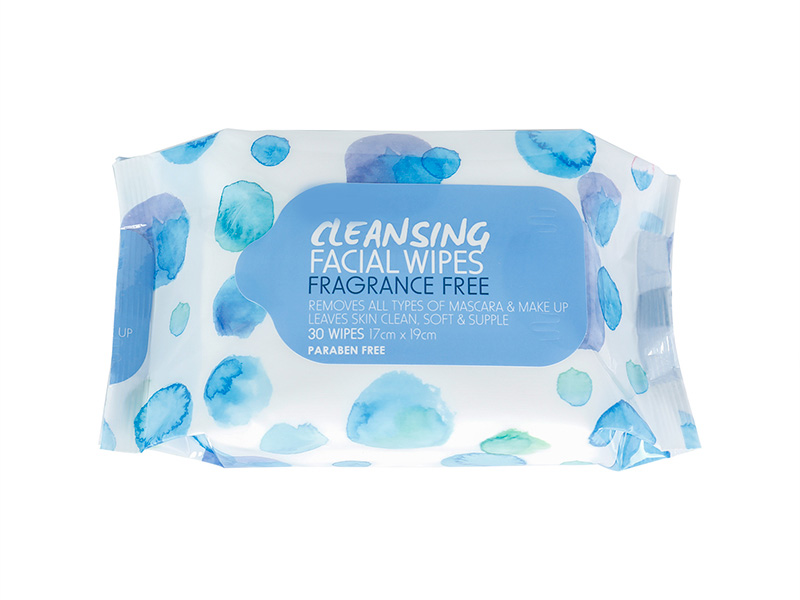
Flow packs are widely used for wipes because they can provide a compact structure with a resealable opening. They are suitable for household packs, commercial cleaning products, travel packs, and private-label programs. Artwork can be printed across a broad surface area, allowing strong shelf visibility and clear instructions.
Soft Packs
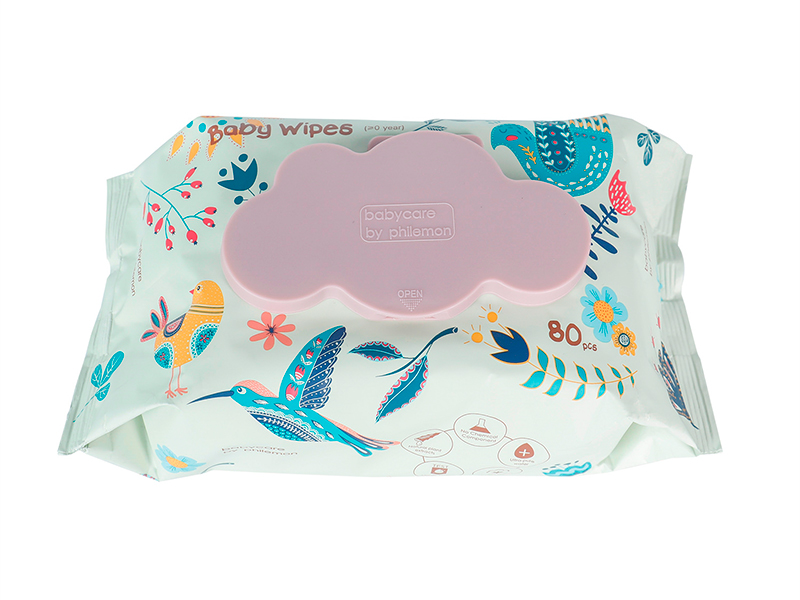
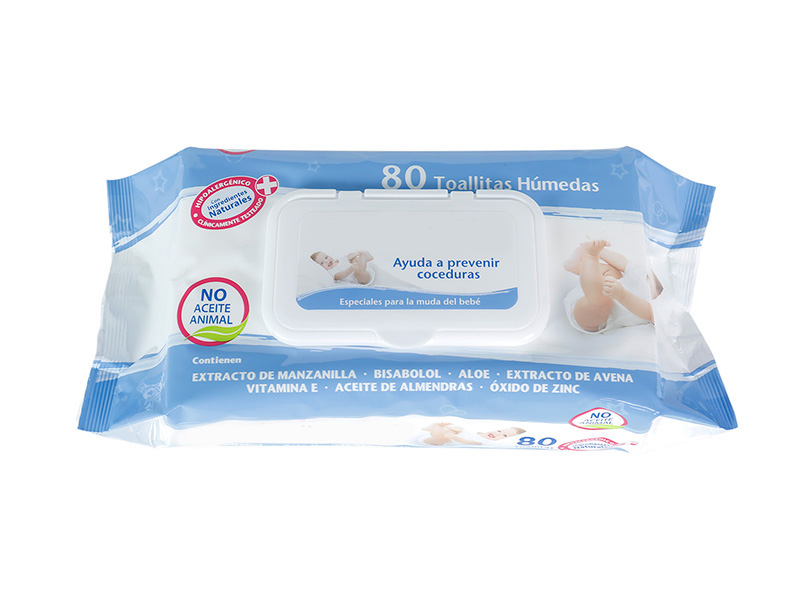
Soft packs can accommodate various sheet counts and are often suitable for high-consumption environments. The opening should be designed for convenient one-at-a-time removal while helping preserve the moisture level of the remaining wipes. The outer cover and adhesive sticker should be evaluated for repeated use.
Canisters
Canisters can be useful in workplaces, clinics, gyms, hotels, workshops, and other locations where a rigid container is convenient. They can support vertical dispensing and provide a stable base on a counter or shelf. Canister compatibility with the liquid formula should be confirmed to prevent deformation, stress cracking, or seal problems.
Travel Packs
Travel packs are compact and portable. They can be offered in small sheet counts for personal bags, hotel amenities, vehicle storage, events, and mobile service teams. Their small format can also be used as a promotional or sampling package.
Quality Control from Raw Material to Finished Pack
A reliable antibacterial wipe program requires quality control at multiple stages. Raw-material inspection may cover fiber type, fabric weight, roll width, appearance, odor, tensile properties, and packaging-material specifications. During production, operators can monitor liquid loading, folding, cutting, sealing, coding, and pack counts.
Finished-product inspection may include visual appearance, sheet dimensions, moisture distribution, seal integrity, dispensing performance, package weight, odor, microbial limits, and labeling accuracy. Depending on the product classification and destination market, additional testing may be required for antibacterial efficacy, skin compatibility, preservative effectiveness, stability, flammability, or chemical composition.
Batch traceability is another important element. Each production batch should be identifiable through records covering raw materials, formulation, equipment, operators, production date, inspection results, packaging components, and release status. Traceability allows a manufacturer and buyer to investigate complaints and implement corrective action more efficiently.
Quality control is particularly important for customized products because different formulas, substrates, fragrances, and packaging structures may behave differently. A formula that performs well on one fabric may not have the same wet strength, release profile, or shelf stability on another. Therefore, each new combination should be evaluated as a complete finished product.
How the Product Compares with Generic Competitors
Many low-cost wipes on the market compete primarily on price. Although price is important in B2B purchasing, a product with an incomplete specification can create hidden costs. Poor sealing may cause dried wipes. Weak fabric may tear during use. Uneven liquid distribution may reduce user satisfaction. Excessive lint may affect sensitive equipment. Inconsistent fragrance may produce complaints. Unclear claims may create regulatory risk.
The product described here is differentiated by the combination of material options, liquid customization, pattern choices, packaging flexibility, OEM and ODM support, large manufacturing capacity, and integrated nonwoven expertise. This combination allows buyers to optimize the product for their own market instead of accepting a single standard configuration.
Another competitive advantage is the ability to develop both conventional and sustainability-oriented substrates. Buyers may request biodegradable nonwoven fabrics, cotton-based materials, or other options that align with their environmental objectives. Any environmental claim must be supported by accurate material data, appropriate testing, and legally acceptable wording.
The manufacturer’s experience across medical, baby, household, industrial, beauty, and clothing-related nonwoven applications also supports cross-category innovation. A buyer may benefit from knowledge developed in one segment when creating a product for another segment, particularly in areas such as softness, absorbency, fabric strength, folding, and packaging.
Sustainability and Responsible Disposal
Sustainability is becoming an important part of wipe purchasing decisions. Buyers may ask for biodegradable fibers, plastic-free constructions, cotton-based materials, reduced packaging, lighter cartons, or more efficient shipping configurations. The most suitable option depends on the target market, product performance, disposal infrastructure, and applicable environmental standards.
Biodegradable does not automatically mean flushable, and plastic-free does not automatically mean suitable for every sewer system. Unless a wipe is specifically designed, tested, and labeled for flushing, it should be disposed of in a waste container. Used antibacterial wipes may contain cleaning agents, biological contamination, or other residues that require careful handling.
Manufacturers and buyers should also consider production efficiency. Optimized roll widths, accurate cutting, suitable folding patterns, reduced packaging waste, and efficient carton loading can help lower material consumption and transportation impact. Green production initiatives are most credible when supported by measurable manufacturing practices and clear documentation.
Applications in Different B2B Markets
Medical and Healthcare Supply
Medical supply companies may require wipes for cleaning suitable non-critical surfaces, assistive devices, waiting-area touch points, or general facility hygiene. Product claims and intended uses must be carefully defined because medical and disinfecting regulations vary by market. Packaging should include clear instructions, warnings, contact times, and disposal guidance where required.
Hotels and Hospitality
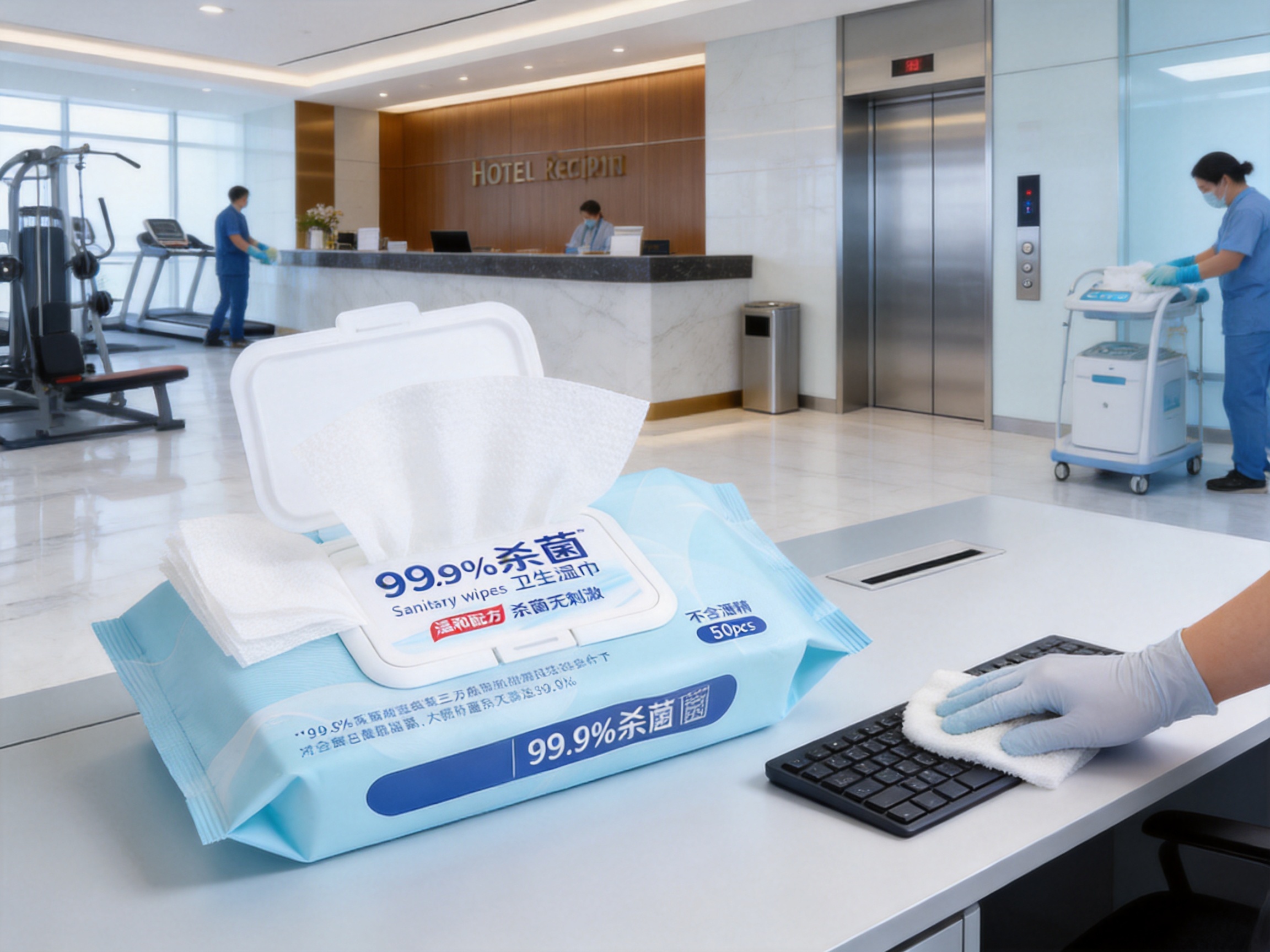
Hotels can use wipes for front desks, elevators, fitness rooms, room-service equipment, shared amenities, and housekeeping operations. Fragrance, packaging appearance, and convenient dispensing may be especially important in hospitality environments. Travel-size versions can also support guest amenities or conference facilities.
Fitness and Sports Facilities
Gyms and sports centers have frequent contact with exercise machines, benches, handles, lockers, counters, and shared accessories. Wipes placed near equipment can encourage users and staff to clean surfaces immediately after use. A strong substrate and quick, convenient dispensing format are valuable in this environment.
Office and Commercial Buildings
Offices can use wipes for desks, meeting-room equipment, keyboards where appropriate, shared devices, door handles, reception counters, and break-room surfaces. Compact packs can be distributed across departments, while larger packs can support janitorial teams.
Retail and Supermarket Operations
Retailers may purchase antibacterial wipes for store maintenance, checkout areas, shopping-cart handles, staff rooms, and customer service points. Supermarket chains may also develop their own private-label wipes for sale to consumers, subject to product registration, packaging requirements, and claim compliance.
Industrial and Janitorial Supply
Industrial cleaning distributors may require stronger wipes with higher fabric weights, larger dimensions, or textured surfaces. The correct formula and substrate should be selected according to the type of contamination and surface compatibility. Industrial users should not assume that a general-purpose wipe is suitable for sensitive machinery, electrical components, or specialized coatings.
Product Development Process for Buyers
A structured development process can reduce delays and improve the final result. The first stage is application definition. Buyers should state whether the product is intended for hands, skin, surfaces, equipment, hospitality, healthcare support, industrial cleaning, or multiple applications.
The second stage is technical specification. This includes sheet dimensions, fabric weight, substrate composition, texture, pattern, liquid loading, formula type, fragrance, sheet count, folding method, packaging format, and carton configuration.
The third stage is regulatory review. The buyer and manufacturer should identify the legal category in each destination market and determine which ingredients, claims, labeling elements, tests, registrations, and safety documents are required.
The fourth stage is sampling. Samples should be assessed for softness, wet strength, absorbency, wiping feel, odor, moisture level, dispensing, package opening, seal performance, and visual appearance. If the product is designed for a specific surface, compatibility testing should also be considered.
The fifth stage is pilot production and validation. A pilot batch can reveal issues that may not appear in laboratory samples, including variations in liquid distribution, folding, sealing, or carton handling. After approval, mass production should follow an agreed specification and quality standard.
The final stage is ongoing supply management. Buyers should establish forecast procedures, reorder points, quality complaint channels, artwork-control procedures, and change-notification requirements. Long-term cooperation is easier when both parties maintain accurate product records.
Frequently Asked Questions
Can antibacterial wipes be manufactured under a private label?
Yes. OEM and private-label manufacturing services can include customized formulas, packaging, logos, carton designs, labels, and multilingual instructions. Buyers should provide their intended application, target market, product claims, pack size, estimated order quantity, and destination information.
Can the antibacterial formula be customized?
Yes. Alcohol-based and alcohol-free systems can be considered, along with fragrance, skin-feel characteristics, moisturizing ingredients, and other selected additives. The final formula must be compatible with the substrate and packaging and must comply with the regulatory requirements of the destination market.
Are the wipes suitable for hands and surfaces?
Some wipe concepts can be developed for personal use, while others are designed specifically for surfaces or equipment. These applications should not be treated as interchangeable. Buyers should select a formula, claim set, label, and testing program that match the intended use.
What wipe materials are available?
Available options include polyester, viscose, bamboo, lyocell, cotton, tissue, paper, biodegradable nonwoven fabrics, and blended constructions. The best material depends on the required softness, strength, absorbency, lint performance, sustainability profile, and cost target.
What packaging formats can be supplied?
Flow packs, soft packs, canisters, travel packs, and other customized packaging formats are available. The selection should consider sheet count, dispensing method, portability, shelf life, brand presentation, shipping conditions, and intended location of use.
Can biodegradable or plastic-free wipes be produced?
Biodegradable nonwoven fabrics, cotton-based materials, and other sustainability-oriented substrates can be considered. The exact construction should be evaluated for wet strength, liquid compatibility, shelf stability, disposal route, and required environmental claims.
What information is required for a quotation?
An accurate quotation normally requires the wipe size, material, fabric weight, liquid formula preference, fragrance, pieces per pack, folding method, packaging type, artwork requirements, estimated order quantity, carton requirements, and destination market. Shipping terms and delivery expectations may also affect the quotation.
How long should the surface remain wet?
The product instructions provided for this wipe recommend wiping evenly along an S-shaped route for approximately two minutes. The validated contact time may vary according to the final formula, application, test method, and regulatory claim. Buyers should use the approved instructions for the specific finished product.
Can the wipes be used on visibly dirty surfaces?
When there are obvious stains, heavy dirt, or blood stains, the surface should be cleaned first using an appropriate procedure. The antibacterial wipe can then be applied according to the approved instructions. Pre-cleaning helps remove organic material that may interfere with some antibacterial or disinfecting systems.
Are used antibacterial wipes flushable?
They should not be flushed unless the specific product has been designed, tested, and labeled for flushability. Standard antibacterial wipes should be placed in a suitable waste container. Disposal in healthcare or institutional environments should follow applicable local regulations.
Are these products intended for individual retail purchases?
The product is primarily designed for B2B bulk purchasing. It is suitable for brands, importers, distributors, supermarket chains, medical supply companies, janitorial suppliers, hotels, institutions, government procurement agencies, e-commerce businesses, and wholesale traders. Small-quantity individual purchases may not be suitable for this supply model.
What makes an integrated manufacturer valuable?
An integrated manufacturer can coordinate nonwoven development, formula selection, converting, packaging, testing, and logistics. This can simplify communication, support consistent quality, and enable more effective customization than sourcing each component from unrelated suppliers.
How to Select the Right Configuration
Buyers should begin with the cleaning task rather than the package appearance. If the product is intended for hands, softness, skin compatibility, fragrance, and appropriate personal-care labeling may be priorities. If it is intended for equipment, buyers may focus on strength, low lint, controlled friction, surface compatibility, and residue management.
The wipe size should match the area being cleaned. A small wipe may be economical for spot cleaning, while a larger wipe can cover a broader surface and reduce the number of sheets used per task. Sheet count should be selected according to expected consumption and storage conditions.
Fabric weight should be balanced against cost and performance. A heavier fabric may feel more premium and hold more liquid, but it may also increase package size and shipping weight. A lighter fabric may be suitable for simple cleaning tasks or compact packs.
Fragrance should be chosen based on the target customer. Unscented products can support sensitive-use positioning, while fresh, lavender, lemon, lotus, fruit, coconut, cucumber, and other fragrances can provide stronger sensory differentiation. Fragrance stability and consumer preferences should be evaluated during sampling.
Finally, packaging should support the way the product will be used. A canister may be convenient for a fixed cleaning station. A soft pack may provide efficient storage for high-volume operations. A travel pack may be appropriate for mobile users. The package should protect the liquid, enable easy dispensing, and communicate the product’s approved claims clearly.
Conclusion
Antibacterial disposable wipes provide a convenient and adaptable solution for modern hygiene management. Their main advantages include ready-to-use operation, controlled liquid distribution, disposable one-task handling, flexible material choices, multiple package formats, and suitability for a wide range of commercial and institutional applications.
The product can be differentiated through substrate selection, fabric weight, texture, pattern, fragrance, liquid formulation, packaging, private-label design, and multilingual instructions. This flexibility is particularly valuable for B2B buyers that need a product aligned with a specific market, customer group, cleaning environment, or brand identity.
The manufacturing partner described in the supplied materials brings more than three decades of experience in nonwoven and hygiene products, multiple production bases, integrated material and finished-product capabilities, clean manufacturing workshops, purified-water systems, testing resources, large production capacity, and OEM and ODM services. These strengths can help buyers move from an initial product concept to a stable, scalable, private-label supply program.
Successful purchasing still requires careful technical definition. Formula claims, skin-contact suitability, antibacterial efficacy, packaging performance, environmental statements, disposal guidance, and regulatory compliance must all be verified for the finished product and destination market. When these factors are managed systematically, antibacterial wipes can provide an efficient, professional, and highly customizable addition to commercial hygiene portfolios.
References
1. Product specification and usage instructions supplied for Antibacterial Disposable Wipes.
2. Technical information supplied by the manufacturer regarding nonwoven materials, production bases, clean workshops, testing capabilities, and OEM and ODM services.
3. General principles of nonwoven fabric engineering, including substrate weight, fiber selection, web structure, absorbency, tensile strength, and surface texture.
4. General guidance on antimicrobial product development, contact time, product claims, formulation compatibility, and destination-market regulatory review.
5. General guidance on hygiene-product packaging, moisture retention, seal integrity, batch traceability, storage, transportation, and waste management.