中文简体
中文简体 English
 日本語
日本語 русский
 Español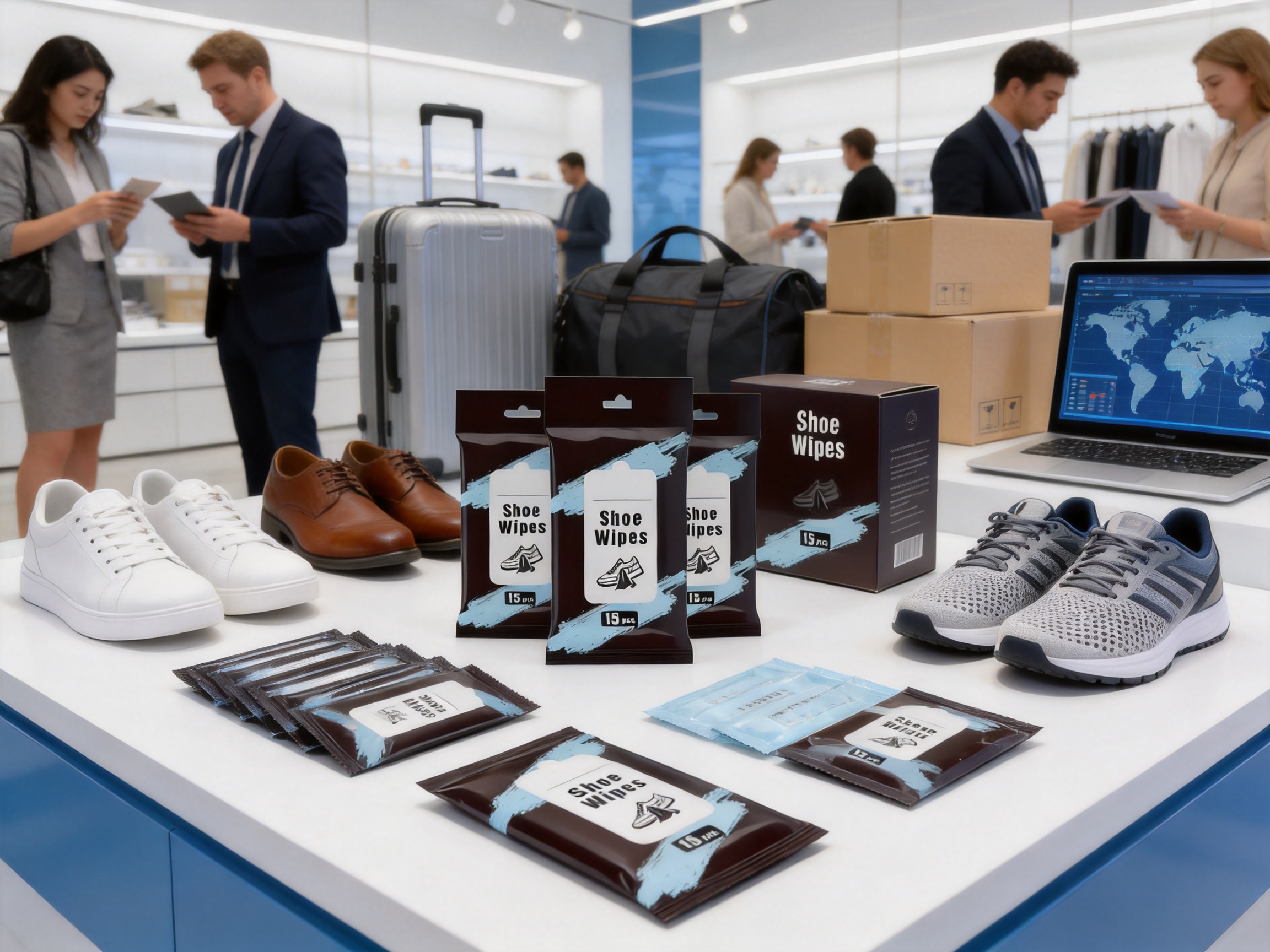
Shoe cleansing wipes are becoming an increasingly important product in the footwear care category. Consumers want a fast and convenient way to remove dust, mud, everyday marks and surface stains without washing an entire pair of shoes. Retailers, footwear brands, distributors and cleaning product companies are responding to this demand by adding portable shoe care products to their private label portfolios.
Designed especially for white and light-colored footwear, shoe cleansing wipes provide a practical solution for maintaining a fresh appearance between deeper cleaning sessions. A properly developed wipe can lift common surface dirt, brighten the visible upper, reduce the appearance of yellow oxidation and dry quickly after use. The product is compact, easy to carry and suitable for travel, sports activities, commuting and daily household use.
For business buyers, the value of shoe cleansing wipes extends beyond their consumer convenience. The product combines a manageable package size, straightforward usage instructions, flexible branding opportunities and broad distribution potential. It can be sold through footwear stores, supermarkets, convenience stores, e-commerce platforms, travel retailers, sports shops, cleaning product channels and professional shoe care outlets.
Produced through an integrated nonwoven and hygiene manufacturing system, customized shoe cleansing wipes can be developed according to material preferences, cleaning performance, fragrance requirements, moisture level, packaging structure, market regulations and expected order volume. This makes the category suitable for both established footwear care brands and companies launching a new private label product line.
Understanding the Role of Shoe Cleansing Wipes
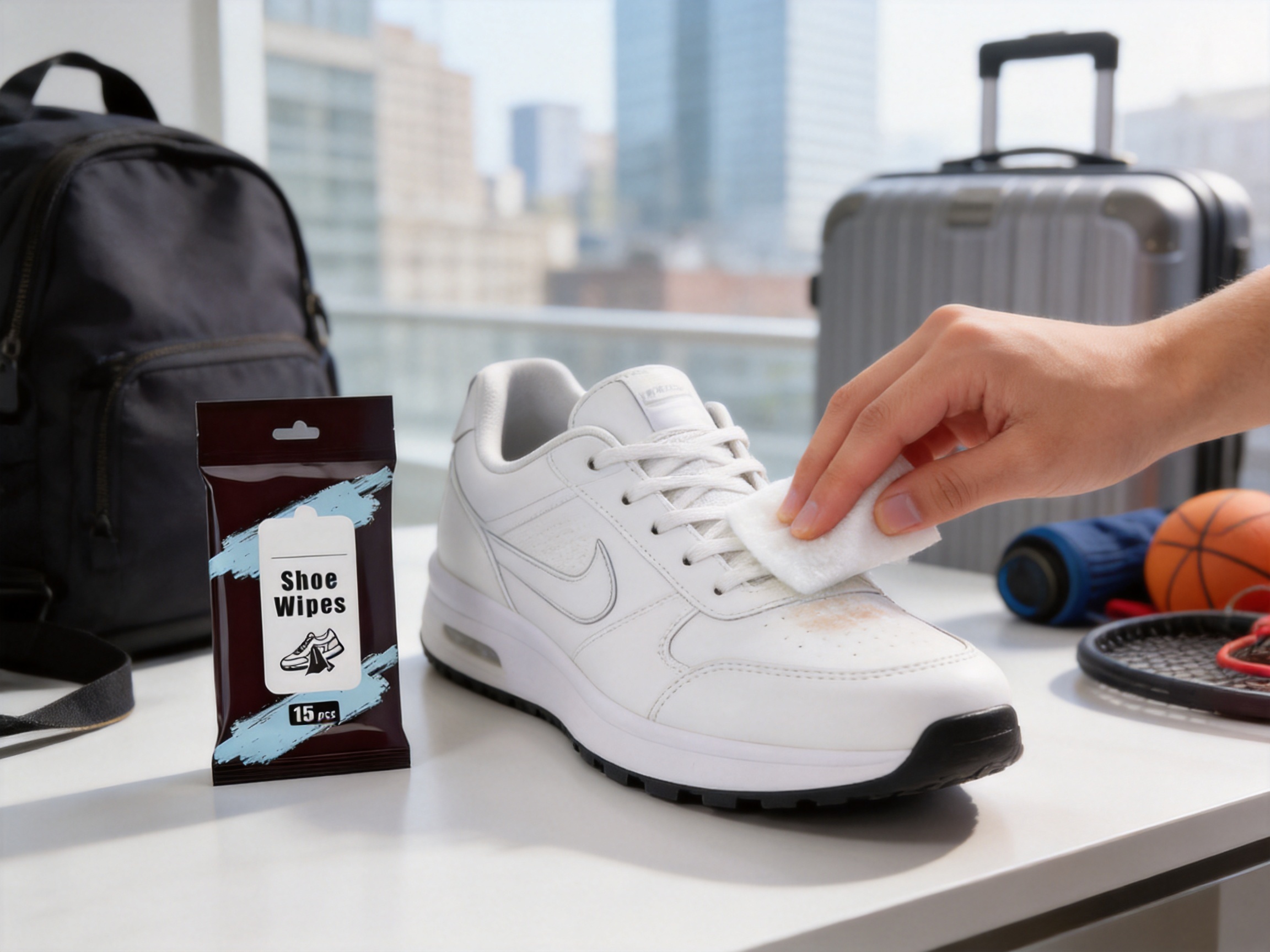
Shoe cleansing wipes are pre-moistened nonwoven cleaning sheets formulated for the rapid maintenance of footwear. Unlike traditional liquid cleaners that require a separate cloth, brush, bowl or drying period, a wipe combines the substrate and cleaning solution in one ready-to-use format. The user opens the package, wipes the affected area and disposes of the sheet after use.
The primary purpose of the product is routine surface maintenance rather than intensive restoration. It is intended to help remove dust, light mud, marks caused by ordinary contact and other common surface contamination. On white shoes, this simple maintenance step can make a noticeable difference because light-colored uppers show dirt more quickly than darker materials.
The wipes are particularly relevant for sneakers and casual footwear made with materials such as smooth leather, coated leather, synthetic leather, textile uppers and mesh. However, because footwear materials vary considerably, product instructions should encourage users to test the wipe on a small inconspicuous area before treating the entire shoe.
A balanced shoe cleansing wipe must provide sufficient cleaning action without creating an unnecessarily aggressive experience. The substrate should pick up loosened dirt efficiently, while the formula should provide appropriate wetness and drying behavior. Excessive liquid may create a messy experience or prolong drying, whereas insufficient moisture may reduce cleaning efficiency and cause the user to apply excessive pressure.
Why the Product Is Attractive to Modern Consumers
Convenience is the most visible advantage of shoe cleansing wipes. Consumers often notice dirty shoes while away from home, before work, during travel or after outdoor activities. Carrying a bottle of cleaner and a reusable cloth is inconvenient in these situations. A small pack of wipes can be stored in a handbag, backpack, luggage case, vehicle, desk drawer or sports bag.
The product also supports frequent, low-effort maintenance. Regular light cleaning can help footwear retain a well-kept appearance and may reduce the need for aggressive cleaning later. For consumers who own white sneakers, a few minutes of maintenance can be more practical than placing the shoes in a washing machine or soaking them in water.
Another advantage is controlled application. Because the cleaning solution is pre-dosed into the wipe, the user does not need to estimate how much liquid to pour onto the shoe. This reduces preparation time and simplifies the experience for first-time users. The disposable format also avoids the need to wash a contaminated cloth after use.
Portability makes the product suitable for many usage occasions. It can be used after walking through muddy areas, before entering a professional setting, after sports practice, during a business trip or before taking photographs. This wide range of occasions gives brands multiple opportunities for product positioning and promotional communication.
Advantages Over Conventional Shoe Cleaning Methods
Traditional shoe cleaning methods remain useful for heavily soiled footwear, but they are not always convenient for routine care. Washing shoes may require water, detergent, brushes and a long drying period. A liquid shoe cleaner may provide strong performance but usually requires an additional applicator. A dry cloth can remove loose dust but often cannot handle adhered marks or fine dirt.
Shoe cleansing wipes occupy a practical middle ground between dry dusting and deep cleaning. They are faster than a full washing process and more complete than a dry cloth. They are also easier to use than a multi-step cleaning kit, especially for consumers who want immediate results rather than a detailed restoration process.
Compared with ordinary household wet wipes, specialized shoe cleansing wipes can be developed with a substrate, wetness level and cleaning formula selected for footwear maintenance. This product-specific approach allows manufacturers to consider the needs of smooth surfaces, mesh uppers, synthetic materials and white footwear. Ordinary wipes may not provide the same positioning, instructions or category-specific performance.
Compared with reusable cloths, disposable wipes offer more consistent cleanliness during use. A reusable cloth may spread removed dirt if it is not washed frequently. A fresh wipe presents a clean working surface for each application, helping users manage small cleaning tasks with less preparation.
Compared with bulky shoe care kits, individual wipes provide a smaller and more accessible entry point. A brand can offer single sachets for trial or impulse purchase, multi-piece packs for household use and larger packs for frequent consumers. This packaging flexibility supports different price points and retail channels.
Key Product Benefits for White Footwear
Fast Removal of Dust and Light Mud
The nonwoven sheet is designed to contact the shoe surface evenly and help collect loosened dust and light mud. A suitable texture can provide enough friction to support cleaning while remaining comfortable to handle. The wipe should be moist enough to soften ordinary surface contamination without leaving excessive liquid behind.
Improved Visual Brightness
White footwear can look dull when fine dust accumulates on the upper. Routine wiping helps restore a cleaner visual appearance. A suitable formulation may also help reduce the visible effect of certain surface discolorations. Product communication should use responsible wording and distinguish between ordinary surface dirt and deep material damage.
Support for Yellow Oxidation Maintenance
Yellowing can occur on some white or light-colored footwear because of oxidation, aging, environmental exposure or changes in the material. Shoe cleansing wipes may help reduce the appearance of certain superficial yellow discoloration, depending on the substrate and formula. They should not be presented as a universal solution for permanent chemical changes, deep staining or material degradation.
Quick-Drying Use
Quick drying is important because users generally want to wear or store their shoes shortly after cleaning. A controlled moisture level and suitable formula can help limit the amount of residual liquid. The drying experience may vary according to the shoe material, surrounding temperature, humidity and the amount of solution applied during use.
Compatibility with Multiple Upper Materials
A carefully developed wipe may be suitable for leather, synthetic leather, mesh and textile uppers. Material compatibility depends on the formula, substrate, dye, coating and finish of the footwear. For this reason, manufacturers should evaluate representative materials and provide clear usage guidance rather than claiming unlimited compatibility.
Convenient Disposal
After cleaning, the used sheet can generally be discarded with ordinary household waste in accordance with local waste management requirements. Shoe cleansing wipes are not automatically flushable products. Packaging and instructions should clearly discourage disposal in toilets unless the product has specifically been designed, tested and legally marketed for flushing.
Shoe Cleansing Wipes
Nonwoven Substrate Selection
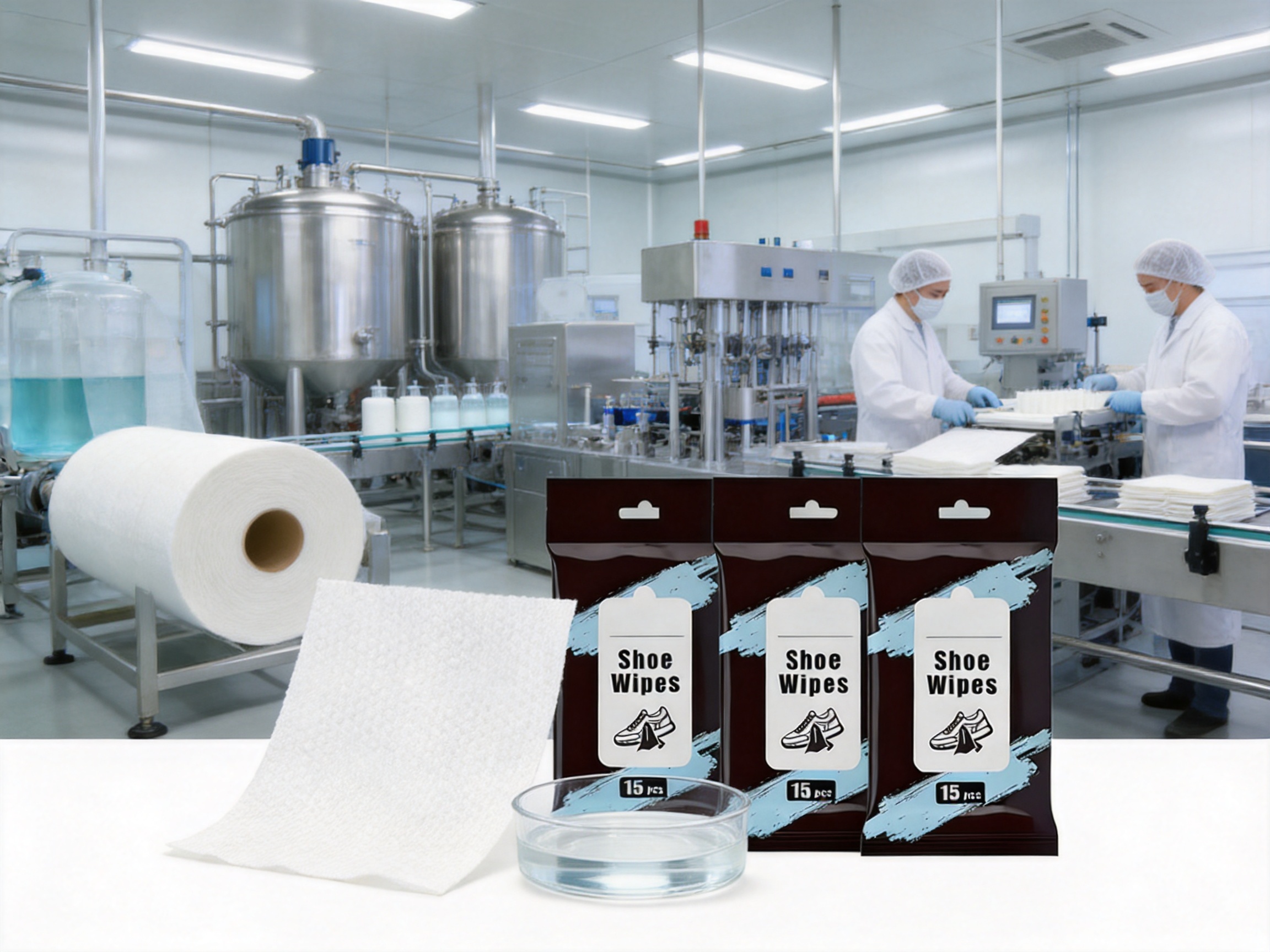
The substrate is one of the most important components of a shoe cleansing wipe. It carries the cleaning solution, determines the hand feel and influences how the wipe interacts with the footwear surface. Spunlace nonwoven is a common option because it can offer softness, absorbency, flexibility and a comfortable wiping experience.
Spunlace technology uses high-pressure water jets to entangle fibers into a cohesive nonwoven sheet. The resulting material can be engineered with different fiber compositions, basis weights, thicknesses, textures and strengths. These variables allow the manufacturer to create a wipe that balances absorbency with durability.
For shoe cleansing applications, the substrate should remain intact during wiping and should not release excessive fibers onto the shoe. It should also be easy to fold, package and dispense. A sheet that tears too readily may reduce consumer confidence, while a sheet that is unnecessarily thick may increase material cost and package size.
Substrate selection can be adjusted according to the product’s market position. An economical wipe may use a lighter basis weight and a simple pack format. A premium sneaker care wipe may use a thicker or textured substrate designed to provide a more substantial hand feel. A travel product may prioritize compactness, flexible folding and individual sachet packaging.
Texture is another important consideration. A smooth surface may be appropriate for delicate or polished areas, while a lightly embossed or textured surface may assist with lifting dust and small particles from a fabric or mesh upper. The texture must be controlled carefully so that it does not create an abrasive sensation or damage sensitive finishes.
The manufacturer’s ability to develop and produce nonwoven substrates internally provides greater control over consistency, customization and supply planning. Instead of relying entirely on externally sourced materials, an integrated manufacturer can connect substrate development with solution application, converting, packaging and finished-product inspection.
Cleaning Formula Development
The cleaning solution is developed to support the removal of common footwear contamination while maintaining a practical user experience. Important considerations may include cleaning efficiency, fragrance, pH, wetness, drying time, material compatibility, preservation and regulatory requirements in the target market.
Formula development should begin with a clear product position. A wipe intended for general white sneakers may require a different performance profile from a wipe positioned for premium leather footwear, sports shoes or travel use. The desired formula should be selected together with the substrate and packaging rather than treated as an isolated component.
Moisture level has a direct effect on usability. A wetter wipe may help soften dried marks, but excessive moisture may create dripping or require additional drying. A drier wipe may be more convenient for quick touch-ups, but it may not provide enough liquid to loosen dirt. Testing can help identify a suitable balance for the intended application.
Fragrance can be customized according to brand positioning and regional preference. Some buyers may prefer a fresh and clean scent, while others may request a low-fragrance or fragrance-free option. Fragrance selection should be evaluated for stability, consumer acceptability and compatibility with the intended packaging period.
Preservation and microbiological control are essential for pre-moistened products. The product must be manufactured and filled under controlled conditions, with appropriate water quality, sanitation, environmental monitoring and finished-product testing. The exact testing plan should reflect the formula, packaging format, market requirements and product claims.
Formula customization may include adjustments to cleaning strength, fragrance, moisture, skin-contact considerations and the desired finish after wiping. Any special claim should be supported by suitable evaluation. Responsible product development avoids unsupported statements and aligns the packaging language with verified performance.
Integrated Manufacturing Strengths
Zhejiang Uniquality Nursing Products Technology Co., Ltd. operates within the Kingsafe and Uniquality manufacturing system, which has extensive experience in nonwoven materials, hygiene products and nursing products. The business has more than 13 years of experience in the relevant nonwoven industry according to the supplied product information, while the broader corporate history extends back to 1987.
The company’s production network includes eight domestic production bases in China and an upcoming factory in Vietnam. A multi-site structure can support capacity planning, regional supply strategies and continuity of production for international customers. It also provides a foundation for serving different order sizes and market schedules.
The organization covers a broad section of the supply chain, from self-developed nonwoven substrates to finished wipes and other hygiene products. This integrated capability can reduce dependence on multiple unrelated suppliers and simplify communication during product development. Buyers can work with one manufacturing partner for material selection, formula coordination, converting, packaging and delivery preparation.
Manufacturing facilities include GMP-standard clean workshops, purified water systems and professional testing capabilities. These resources are particularly relevant to pre-moistened wipes because cleanliness, water quality, controlled production and product stability all contribute to finished-product reliability.
The company also reports support from 169 patents and experience across medical, baby, household, industrial and eco-friendly flushable categories. Experience across several product groups can strengthen technical problem-solving because different wipe applications require knowledge of absorbency, strength, liquid management, packaging and quality control.
Advanced equipment and technology introduced from Germany, France and Italy are part of the company’s broader manufacturing background. The organization produces spunlace nonwoven fabrics, spunmelt nonwoven fabrics, hot-air-through nonwovens, flushable and degradable nonwovens, wet wipes, dry wipes, baby diapers, training pants, wet toilet paper and cleansing wipes.
For footwear care buyers, this breadth is valuable because a shoe cleansing wipe is not merely a printed packet. It is a coordinated product consisting of a nonwoven sheet, cleaning solution, folding method, seal structure, label information and quality system. An experienced manufacturer can evaluate how these elements affect one another.
Quality Control from Raw Material to Finished Pack
Quality control begins with incoming materials. Nonwoven rolls should be checked for appearance, width, basis weight, strength, absorbency and other relevant specifications. Packaging films, labels, sachets, lids and cartons should also be inspected for dimensional accuracy, print quality, sealing suitability and traceability.
Water used in the formula should be treated through an appropriate purification system. The formula can then be prepared according to controlled procedures covering weighing, mixing, storage and transfer. Batch records help document the materials used, processing conditions and production results.
During wipe conversion, operators and quality personnel can monitor sheet dimensions, folding accuracy, liquid add-on, package alignment, seal quality and appearance. These checks help ensure that the consumer receives a consistently saturated wipe in a package that opens correctly and protects the contents during storage.
Finished-product inspection may include package integrity testing, liquid content verification, visual examination, odor assessment, microbiological evaluation, stability observation and performance testing on representative shoe materials. The exact tests depend on the product specification and the destination market.
Traceability is an important advantage for B2B customers. A traceable product system allows the manufacturer to identify relevant raw material batches, production dates, processing records and inspection results. This information supports customer service, quality investigations and efficient management of future orders.
Quality control should also consider transportation and storage. Heat, cold, humidity and extended storage can affect packaging, moisture distribution, fragrance and formula stability. Stability studies and packaging evaluations help determine suitable storage conditions and support more reliable international distribution.
OEM and ODM Development Support
OEM and ODM services allow customers to create shoe cleansing wipes under their own brand or develop a differentiated product with technical support from the manufacturer. The process can begin with a basic concept, such as “portable wipes for white sneakers,” and progress toward a defined specification for mass production.
At the product concept stage, the buyer and manufacturer can discuss target consumers, sales channels, shoe materials, pack size, price position, performance expectations and regional requirements. These decisions influence the selection of the substrate, solution, packaging and testing plan.
Material selection may involve comparing different spunlace constructions, weights, textures and fiber compositions. The customer may request a soft premium wipe, a stronger textured sheet, a compact travel wipe or a more economical format for high-volume retail distribution.
Formula development can address cleaning performance, fragrance, moisture, drying characteristics and market-specific requirements. Samples can be prepared for internal evaluation, customer review and comparative testing. Adjustments can then be made before the final specification is approved.
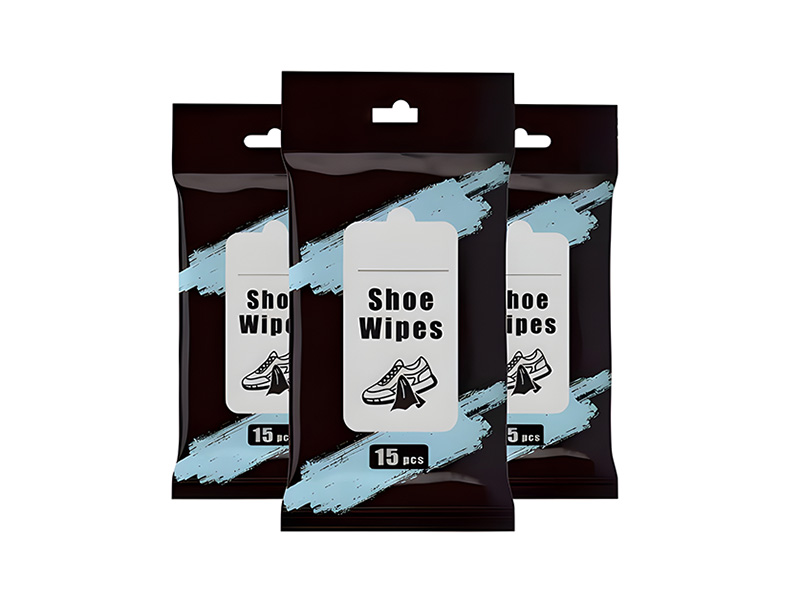
Packaging design is another major part of private label development. Options can include individually wrapped sachets, small multi-piece pouches, resealable packs, canister formats or larger household packs. The choice depends on the sales channel, expected usage frequency, desired shelf presence and logistics considerations.
ODM cooperation may be appropriate for customers seeking a ready-developed product platform that can be adapted with their branding and packaging. OEM cooperation may be more suitable for customers with an established formula, material specification or product concept. Both approaches can be supported through sample confirmation and production planning.
Packaging Options for Different Sales Channels
| Sales channel | Suitable format | Commercial purpose | Important considerations |
|---|---|---|---|
| Footwear stores | Single sachets or small packs | Impulse purchase and add-on sales | Compact display, clear usage message and attractive retail graphics |
| Sports retailers | Multi-piece resealable packs | Regular maintenance after training or outdoor activity | Durability, portability and strong product positioning |
| Travel retailers | Individually wrapped wipes | Carry-on convenience and emergency cleaning | Small package size, leak resistance and easy opening |
| E-commerce | Multipacks or subscription cartons | Household replenishment and online volume sales | Efficient shipping, secondary packaging and product education |
| Professional distributors | Bulk cartons or commercial packs | Supply to retailers, cleaning companies and service businesses | Stable specifications, carton efficiency and order continuity |
| Private label brands | Customized retail packaging | Brand differentiation and category expansion | Artwork control, regulatory text and consistent quality |
Individual sachets are especially useful for sampling, checkout displays, travel kits and promotional campaigns. They protect each wipe from premature drying and allow brands to sell a low-cost entry product. Multi-piece packs are more appropriate for consumers who clean their shoes regularly and want a better per-unit value.
Resealable packaging should be assessed for closure performance, moisture retention and user convenience. A package that does not reseal effectively may allow the remaining wipes to dry out. Packaging material selection should therefore be considered together with the product’s expected shelf life and distribution conditions.
Retail packaging can communicate the core benefits of the product through concise language such as quick cleaning, portable care, white-shoe maintenance and no-wash convenience. It should also provide suitable warnings, instructions, disposal guidance and material compatibility information.
Applications Across Footwear Care Markets
Sneaker Cleaning Products
Sneaker consumers often want to preserve a clean appearance between major cleaning sessions. White sneakers, fashion sneakers and lifestyle footwear can benefit from a product that is simple enough for everyday use. The category can be positioned toward young consumers, collectors, commuters, students and families.
Leather Shoe Care
Leather footwear requires careful product positioning because finishes and coatings vary. A wipe developed for compatible smooth leather can support quick surface maintenance, but users should follow the instructions and perform a small-area test. Premium leather-focused packaging may emphasize controlled cleaning, portability and preservation of a polished appearance.
Travel Shoe Cleaning Kits
Travel kits can combine shoe cleansing wipes with other compact accessories, such as a folding cloth, small brush or storage pouch. The wipe itself is attractive for travel because it does not require a separate bottle of liquid and can be disposed of after use.
Sports and Outdoor Footwear Maintenance
Sports and outdoor shoes are exposed to dust, soil, grass marks and changing weather conditions. Wipes can be included in gym bags, hiking kits, event merchandise and outdoor equipment packages. For these applications, packaging durability and reliable sealing are particularly important.
Shoe Care Retail Products
Retailers can use shoe cleansing wipes as an entry-level shoe care product alongside brushes, protectors, cleaners, deodorizing products and replacement laces. Because the wipe is easy to understand, it can help attract consumers who may not yet own a complete footwear care system.
Advantages for Brands, Importers and Distributors
Private label shoe cleansing wipes allow brands to enter or expand within the footwear care market without building their own nonwoven or wet wipe production facilities. The manufacturer supplies technical knowledge, production infrastructure and development support, while the customer focuses on market strategy, branding, distribution and customer relationships.
A customized product can be adapted to the brand’s target price and positioning. An entry-level product may use simple packaging and a standard formula, while a premium product may use a larger, softer wipe, specialized packaging and a more refined fragrance profile. This flexibility helps brands serve multiple consumer segments without changing the fundamental product category.
For importers and distributors, stable production capacity is a major consideration. A supplier with multiple production bases, integrated material capabilities and experience in international business can support more predictable procurement planning. Capacity should still be confirmed according to the specific order quantity, specification and delivery schedule.
For retailers, branded shoe wipes can create additional revenue near footwear displays or at checkout counters. The compact format supports merchandising in small areas. Retailers may also use the product as part of promotional bundles with white sneakers, sports shoes, leather footwear or travel accessories.
For professional cleaning product companies, the wipe can become a complementary product in a broader maintenance program. It may be sold to hotels, uniform suppliers, shoe repair businesses, sports clubs, event organizers or corporate procurement departments, depending on the final specification and intended use.
Responsible Product Positioning
Effective product communication should explain what shoe cleansing wipes are designed to do and what they are not designed to do. The product is suitable for routine surface cleaning and quick maintenance. It should not automatically be described as a complete substitute for professional restoration, deep washing or material repair.
Claims such as “safe for leather and mesh” should be supported by testing on representative materials and accompanied by appropriate instructions. Leather may include unfinished, finished, suede, nubuck, coated and synthetic varieties, each with different sensitivities. A general-purpose wipe may not be suitable for every leather type.
Similarly, “removes yellow oxidation” should be used carefully. Surface discoloration may respond to cleaning, while deep oxidation or aging-related material changes may require a specialized treatment. Clear claim management protects consumers and helps international buyers reduce the risk of misleading packaging statements.
Instructions should recommend removing loose dirt before wiping, using gentle pressure, treating a small hidden area first and allowing the footwear to dry naturally. Users should be advised to avoid direct contact with eyes, keep the product away from children unless intended for supervised use and dispose of used wipes responsibly.
Responsible communication is also valuable from a commercial perspective. Consumers are more likely to trust a product when the instructions are practical and realistic. Clear directions can reduce misuse, improve satisfaction and support repeat purchasing.
Environmental and Material Considerations
Environmental expectations are influencing the development of disposable wipes. Buyers may request more responsible substrate options, reduced packaging material, recyclable outer packaging or plant-based fibers. Such choices must be evaluated in relation to performance, stability, cost, production feasibility and local regulations.
Not every biodegradable or plant-based material is suitable for every shoe cleansing application. The substrate must still provide adequate strength, absorbency, liquid retention and compatibility with the formula. Environmental claims should be supported by appropriate evidence and should clearly define the conditions under which a material may degrade.
Packaging optimization can reduce unnecessary material use and transportation volume. A compact fold, efficient sachet design and suitable carton configuration may improve logistics efficiency. At the same time, packaging must maintain seal integrity and protect the wipe from drying or contamination.
Customers interested in eco-friendly positioning can discuss material alternatives with the manufacturer during the development stage. The most appropriate solution may involve a combination of substrate improvement, packaging reduction, responsible sourcing and accurate consumer communication rather than a single material change.
Recommended Development Process
Stage One: Define the Market Position
The customer identifies the target market, consumer group, sales channel, intended footwear materials, preferred pack size and expected price range. This information gives the manufacturer a practical starting point for recommendations.
Stage Two: Select the Substrate
Different nonwoven samples can be reviewed for softness, strength, texture, thickness and absorbency. The customer can compare the tactile experience and cleaning behavior before selecting the preferred substrate.
Stage Three: Develop or Select the Formula
The solution is matched to the substrate and intended footwear application. Fragrance, moisture, cleaning characteristics and other requirements can be adjusted. The manufacturer can advise on production feasibility and testing needs.
Stage Four: Produce Samples
Samples are prepared for evaluation. The customer may test the wipes on white sneakers, smooth leather, synthetic leather, mesh and other representative materials. Feedback can cover cleaning performance, wetness, scent, drying time, sheet strength and package convenience.
Stage Five: Confirm Packaging and Artwork
Once the product specification is accepted, the packaging format and printed artwork are finalized. This stage should include confirmation of dimensions, materials, opening method, labeling text, storage information and any required regulatory statements.
Stage Six: Conduct Pre-Production Checks
Pre-production checks confirm that the approved sample specification can be transferred to mass production. Material availability, equipment settings, formula batches, packaging components and inspection standards are reviewed before the production order begins.
Stage Seven: Manufacture and Inspect
The product is manufactured under controlled conditions. Quality inspections are conducted during production and on finished goods. Any agreed documentation, samples or inspection records can be prepared for the customer according to the project requirements.
Stage Eight: Arrange Delivery and Replenishment
Finished goods are packed for shipment according to the destination and order plan. For repeat customers, production data and feedback can be used to improve future replenishment planning, packaging efficiency and product consistency.
How Shoe Cleansing Wipes Compare with Other Product Formats
| Product format | Main strength | Limitation | Best use occasion |
|---|---|---|---|
| Shoe cleansing wipes | Ready-to-use, portable and quick | Primarily intended for light or routine cleaning | Daily maintenance, travel and emergency touch-ups |
| Liquid shoe cleaner | Flexible dosage and potentially stronger cleaning | Requires a cloth, brush or additional applicator | Home cleaning and more intensive care |
| Dry cloth | Simple and reusable | Limited performance on adhered or damp dirt | Dusting and final polishing |
| Brush and detergent kit | Suitable for detailed cleaning | More equipment, preparation and drying time | Deep cleaning and restoration routines |
| Foam cleaner | Can provide visible cleaning action | Requires controlled application and removal | Home use and specialized care |
The comparison shows why wipes remain attractive even when other cleaning formats offer different strengths. Shoe cleansing wipes do not need to replace every other care product. Instead, they can function as a convenient first-line maintenance solution and as an entry product that introduces consumers to a brand’s wider footwear care range.
Operational Benefits of an Integrated Supplier
Working with an integrated manufacturer can reduce the number of separate communication points in a private label project. The customer can discuss nonwoven selection, liquid formulation, packaging, production and inspection with one coordinated technical team. This may shorten decision-making cycles and reduce the risk of mismatched specifications.
Integrated production also supports faster troubleshooting. If a customer observes that a wipe is too wet, too dry, too smooth or insufficiently strong, the manufacturer can consider changes to the substrate, formula or converting process together. A supplier focused only on packaging or only on liquid filling may have fewer options for solving the complete product issue.
Experience across medical, maternal and baby, beauty, household, industrial and flushable categories provides a broad understanding of hygiene manufacturing requirements. Although shoe cleansing wipes are a household product, they still benefit from disciplined process control, clean production environments and professional testing.
Global production planning can be valuable for customers serving multiple regions. Domestic Chinese production bases provide an established manufacturing foundation, while an upcoming Vietnam factory may support future supply chain strategies. Specific production location, capacity and delivery arrangements should be confirmed for each project.
Frequently Asked Questions
Q1: What materials are used for shoe cleansing wipes?
A: Shoe cleansing wipes are commonly produced with soft nonwoven fabrics such as spunlace nonwoven. Spunlace can provide absorbency, flexibility, strength and a comfortable wiping experience. Material options can be adjusted according to the target footwear, desired hand feel, cost position and environmental objectives.
Q2: Can the cleaning formula be customized?
A: Yes. The cleaning solution, fragrance, moisture level and functional requirements can be customized according to the customer’s application needs and target market regulations. Formula changes should be evaluated together with the selected substrate and packaging.
Q3: Are the wipes suitable for all types of leather?
A: Suitability depends on the specific leather finish and formula. A wipe may be developed for compatible smooth leather or synthetic leather, but suede, nubuck, unfinished leather and specialty coatings may require different care. Users should test the product on a small inconspicuous area first and follow the final instructions.
Q4: Can the wipes be used on mesh sneakers?
A: Wipes can be developed for use on many mesh and textile uppers. The final result depends on the mesh construction, dye, coating and type of contamination. Testing on representative materials is recommended before making broad compatibility claims.
Q5: Do the wipes remove deep stains?
A: They are primarily designed for dust, light mud, everyday marks and routine surface maintenance. Some stains may require repeated treatment or a more intensive cleaning method. Deep contamination, permanent discoloration and material damage may not be removable with a general shoe cleansing wipe.
Q6: Can the product help with yellow oxidation?
A: The formula may help reduce the appearance of certain superficial yellow discoloration, depending on the footwear material and the cause of the discoloration. Deep oxidation, aging and chemical changes within the material may require specialized treatment and should not be represented as universally removable.
Q7: Do the shoes need to be washed after using the wipes?
A: The product is designed for quick cleaning without a full washing process. Users should wipe away loosened dirt and allow the footwear to dry naturally. Whether further treatment is needed depends on the shoe material, the amount of soil and the desired result.
Q8: Do you provide private label packaging?
A: Yes. Customized packaging can include individual packs, multi-piece packages, resealable pouches and branded retail packaging. Packaging design, dimensions, materials, artwork and labeling should be confirmed according to the product specification and destination market.
Q9: Can you support OEM and ODM projects?
A: Yes. OEM and ODM support can cover product concept development, nonwoven material selection, cleaning formula development, packaging design, sample preparation, mass production, quality inspection and finished-product delivery.
Q10: What information is needed to begin an OEM or ODM project?
A: Customers normally provide the target market, product positioning, footwear materials, expected specifications, preferred pack format, packaging requirements, order quantity and delivery expectations. Any existing formula, artwork or performance standard should also be shared.
Q11: Can samples be provided before bulk production?
A: Yes. Samples can be arranged for product evaluation and confirmation before mass production. Customers may use the samples to assess cleaning performance, scent, moisture, drying time, sheet strength, packaging convenience and material compatibility.
Q12: What types of businesses purchase shoe cleansing wipes?
A: The product is suitable for footwear brands, shoe care companies, wholesalers, retailers, importers, professional distributors, sports retailers, travel product suppliers and businesses developing their own cleaning product lines.
Q13: Can the product be supplied in different pack sizes?
A: Yes. Individual sachets, small multi-piece packs, resealable pouches and larger household or commercial packs can be considered. The final format depends on the sales channel, usage frequency, shipping requirements and brand strategy.
Q14: How should the finished product be stored?
A: Finished packs should generally be stored in a cool, dry and clean environment away from direct sunlight and excessive heat. The final storage guidance should be based on stability evaluation, packaging performance and the requirements of the destination market.
Q15: Are shoe cleansing wipes flushable?
A: Standard shoe cleansing wipes should not be flushed. They should be disposed of with appropriate household waste. Flushability is a separate product design category requiring specialized materials, testing and regulatory evaluation.
Procurement Checklist for International Buyers
Before placing a bulk order, buyers should confirm the intended footwear materials, cleaning expectations, product claims, substrate specification, liquid formulation, fragrance, moisture level, sheet dimensions, folding method, packaging type and carton configuration.
Buyers should also request information about minimum order quantity, sample procedure, lead time, production location, quality inspection, shelf-life expectations, storage conditions and export documentation. These details help align commercial planning with actual manufacturing requirements.
Artwork should be reviewed carefully before printing. The package should include product identification, instructions, warnings, storage guidance, disposal information, quantity, batch information and any legally required details. Claims should match the product’s verified performance and the rules of the destination country.
A clear approval process can prevent costly changes later. It is useful to identify one approved master sample and one approved packaging proof. Any change to the material, formula, fragrance, package or supplier should then be evaluated before implementation.
Why This Product Has Long-Term Market Potential
Shoe cleansing wipes benefit from the continued popularity of casual footwear, white sneakers, sports shoes and portable personal care products. They meet a recognizable consumer problem with a simple solution. The product is easy to demonstrate, easy to explain and adaptable to many retail environments.
The category also supports repeat purchasing. Consumers who use wipes after commuting, exercise, travel or outdoor activities may replenish them regularly. Multi-piece packs and subscription-oriented e-commerce models can encourage ongoing demand, while single sachets can attract new users.
For footwear brands, a private label wipe can strengthen the after-sales care proposition. It can be included in a shoe package, sold as an accessory or offered as part of a loyalty program. For cleaning companies and distributors, it adds a specialized item to an existing household or footwear maintenance portfolio.
The product’s flexibility is another source of potential. A core wipe platform can be adapted for different fragrances, pack sizes, materials, consumer segments and regions. With suitable testing and documentation, a manufacturer can help customers create differentiated products without rebuilding the entire supply chain for every market.
Conclusion
Shoe cleansing wipes offer a convenient and commercially flexible approach to footwear maintenance. They help consumers remove dust, light mud and everyday surface marks from white and light-colored shoes without the preparation, water and drying time associated with full washing. Their portable format makes them suitable for home use, travel, sports, commuting, retail and professional distribution.
The strongest products are built through coordination between the nonwoven substrate, cleaning formula, packaging and quality system. Spunlace nonwoven can provide a soft, absorbent and durable foundation, while customized liquid development allows the product to be adapted to cleaning expectations, fragrance preferences, moisture requirements and regional regulations.
For international brands, distributors, importers and retailers, OEM and ODM cooperation provides a practical route to private label development. Zhejiang Uniquality Nursing Products Technology Co., Ltd., operating within the Kingsafe and Uniquality manufacturing system, offers experience in nonwoven materials and hygiene product production, integrated supply chain capabilities, GMP-standard clean workshops, purified water systems, professional testing support, multiple production bases and broad product expertise.
By combining material development, formula customization, packaging support, quality inspection and mass production, an integrated supplier can help buyers move from product concept to finished delivery with fewer supply chain complications. With responsible claims, suitable testing and a clearly defined market position, shoe cleansing wipes can become a valuable addition to modern footwear care portfolios.
References
1. Internal product specification for Shoe Cleansing Wipes, including intended applications, material options, cleaning functions and OEM/ODM development services.
2. Company manufacturing information for Zhejiang Uniquality Nursing Products Technology Co., Ltd., Kingsafe and Uniquality, including production bases, product categories and supply chain capabilities.
3. General technical principles for spunlace nonwoven substrates used in wet wipes and hygiene products.
4. General quality management principles for pre-moistened wipes, including purified water, controlled production, package integrity and microbiological evaluation.
5. General footwear care guidance for smooth leather, synthetic leather, mesh, textile and white shoe materials.
6. General private label product development practices covering sample approval, packaging customization, production inspection and international procurement.