中文简体
中文简体 English
 日本語
日本語 русский
 Español
Deodorant wipes are a practical personal-care solution for people who want to feel clean and refreshed when a shower is not immediately available. Designed for use after exercise, during travel, on hot summer days, at work, or as part of a daily hygiene routine, these wipes help remove sweat, surface impurities, and unwanted body odor. Their compact format makes them convenient to carry, while their ready-to-use design eliminates the need for water, towels, or additional cleansing products.
The deodorant wipes described in this article belong to the adult wipes category and are developed for flexible daily use. They are intended to provide a fast and discreet way to refresh the body, especially in situations where heat, physical activity, commuting, or long working hours may cause discomfort. Infused with antibacterial ingredients, the wipes are designed to support a clean and fresh feeling while helping users manage odor-producing impurities on the skin.
Behind an effective deodorant wipe is more than a simple piece of wet nonwoven material. Product performance depends on the selection of fibers, the structure of the substrate, the quality of the lotion, the folding method, package protection, manufacturing hygiene, and the ability to maintain consistency from batch to batch. Zhejiang Uniquality Nursing Products Technology Co., Ltd., operating through the Kingsafe and Uniquality product platforms, combines nonwoven material expertise with experience in wet wipes, dry wipes, diapers, and other personal-care products.
This combination allows the product to be positioned not only as a convenient consumer wipe, but also as an adaptable private-label and OEM/ODM solution for distributors, retailers, hospitality providers, fitness businesses, personal-care brands, and other customers seeking customized adult hygiene products.
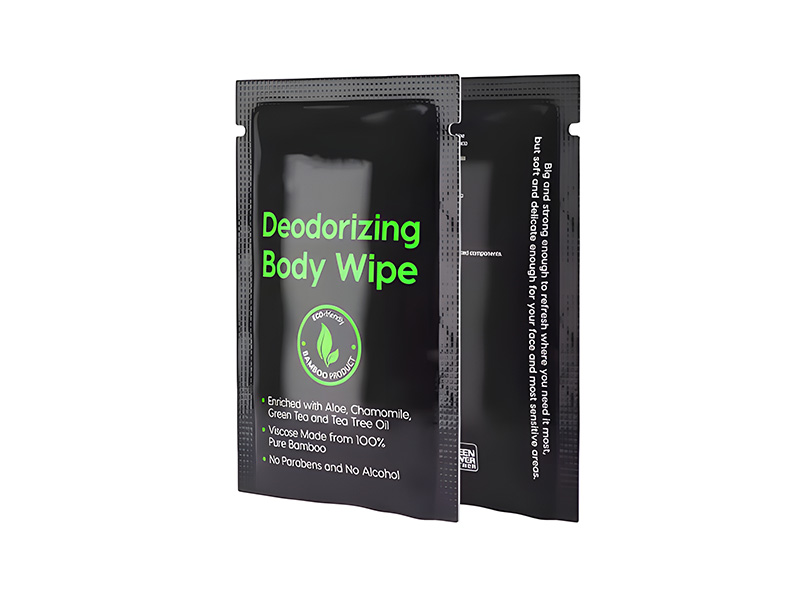
Deodorant Wipes
What Are Deodorant Wipes?
Deodorant wipes are pre-moistened personal-care wipes formulated to refresh the skin and reduce the sensation of body odor. They are commonly used on areas that may become sweaty during the day, including the underarms, neck, chest, back, arms, legs, and other external skin areas. Their purpose is not to replace regular bathing, but to provide an additional hygiene step between showers or whenever a quick refresh is needed.
The product combines three essential elements: a skin-contact substrate, a cleansing or refreshing lotion, and protective packaging. The substrate is usually made from a soft nonwoven material selected for absorbency, strength, texture, and comfort. The lotion may contain water, humectants, cleansing agents, skin-conditioning components, fragrance, and antibacterial ingredients, depending on the product specification and applicable market requirements.
Unlike traditional deodorant sprays or roll-on products, wipes physically lift and remove sweat, oil, odor-related residue, and surface contaminants. This makes them particularly useful after exercise or outdoor activities, when odor may be accompanied by perspiration and a sticky feeling. A wipe can provide an immediate sense of cleanliness without leaving the same type of aerosol mist or wet roll-on residue associated with some conventional deodorant formats.
Deodorant wipes also offer practical advantages for consumers who are frequently away from home. A single sachet or a small pack can fit into a handbag, backpack, gym bag, desk drawer, luggage compartment, or vehicle. This portability supports use during commuting, business travel, festivals, outdoor recreation, long-distance transportation, and other situations where access to a complete washing facility may be limited.
Why Consumers Choose Deodorant Wipes
Fast Freshness Without Water
The most immediate advantage of deodorant wipes is convenience. Users can open the package, wipe the desired external skin area, and dispose of the used wipe. No sink, shower, soap, or towel is required. This makes the product suitable for fast personal care before a meeting, after a workout, during a shift, or while traveling.
The waterless format is also useful in workplaces, public transportation environments, outdoor locations, and temporary accommodation. Although wipes should not be considered a substitute for thorough bathing, they can help bridge the gap between full cleansing routines. This practical role gives deodorant wipes a clear position within modern personal-care habits.
Useful After Exercise
Physical activity increases perspiration and can leave the skin feeling warm, damp, or uncomfortable. Deodorant wipes can help remove sweat and surface residue after running, cycling, strength training, sports practice, hiking, or other activities. They are particularly useful when a gym or sports facility does not provide enough shower capacity, or when the user must continue with work or travel immediately after exercising.
The compact package also makes it easier for athletes and active consumers to carry a personal-care product without transporting a full bottle of liquid. A wipe can be stored in a gym bag or locker and used as part of a post-workout routine.
Suitable for Hot Weather
High temperatures can increase sweating and create a greater need for daytime refreshment. Deodorant wipes provide a simple option for people who spend time outdoors, work in warm environments, or commute in humid conditions. The wiping action can remove moisture and impurities from the surface of the skin, helping the user feel more comfortable and presentable.
For retailers, hot-weather demand creates opportunities to position deodorant wipes as a seasonal product. They may be displayed alongside sunscreen, travel-size toiletries, sports-care items, personal-care products, and summer essentials. Their small size and straightforward use also support impulse purchases.
Convenient for Travel
Travel often creates situations in which access to personal washing facilities is delayed. Deodorant wipes can be used at airports, train stations, hotels, campsites, offices, and during long journeys. Single-use packaging can provide an additional level of convenience and help reduce the need to carry large liquid containers.
For travel retailers and hospitality suppliers, wipes can be offered in guest-care kits, amenity packs, wellness packages, emergency hygiene kits, and branded travel sets. Their flexible application makes them suitable for many consumer groups without requiring complex instructions.
Discreet Daily Use
Some consumers prefer a low-profile method of managing body odor. A wipe can be used quickly and discreetly in a restroom or private space. It does not require the application of a visible spray cloud, and it can be packed in a purse, briefcase, or personal-care pouch. This discreet format can be especially valuable in professional environments, educational settings, customer-facing occupations, and shared workplaces.
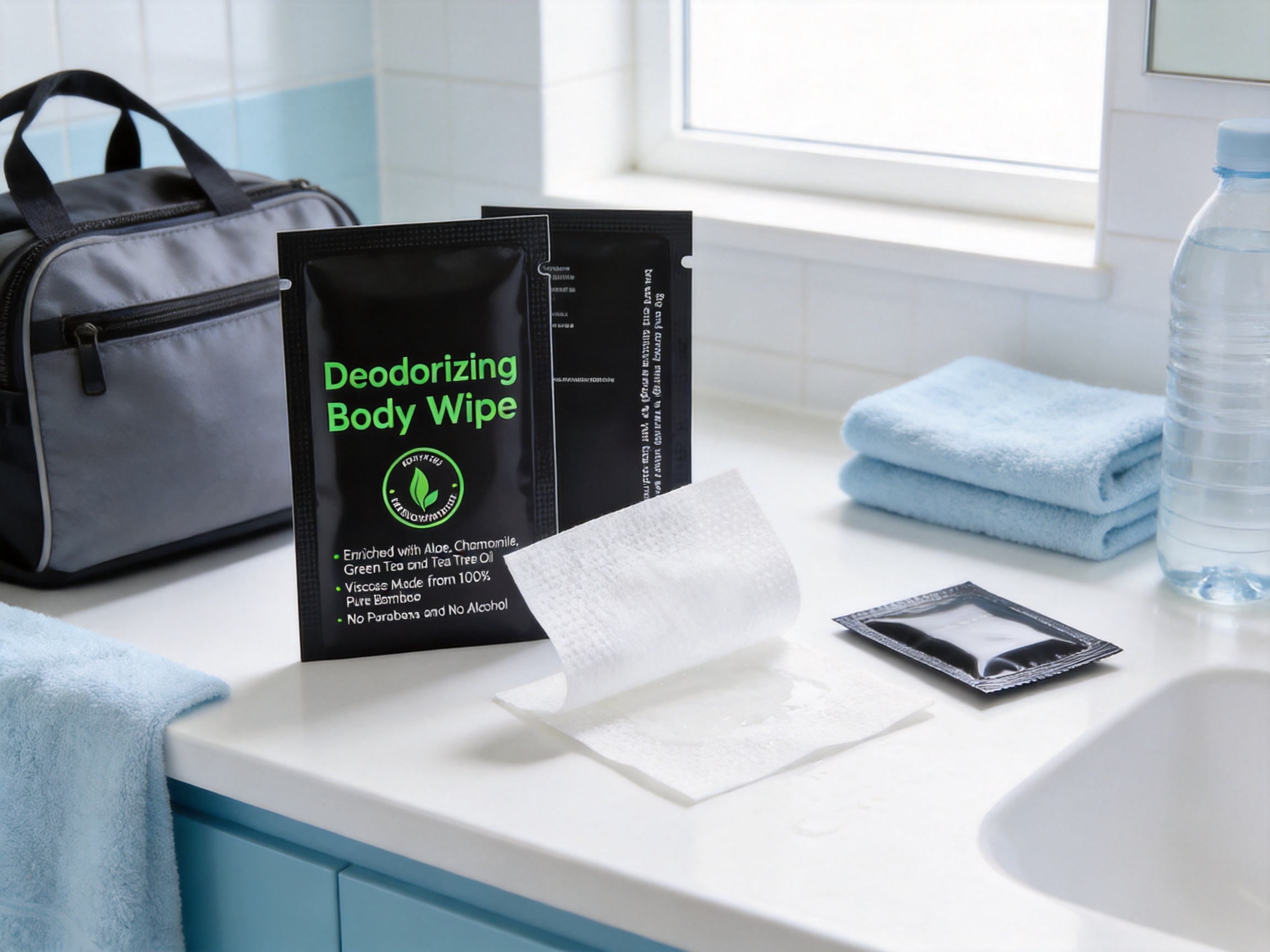
Product Advantages Compared with Conventional Deodorant Formats
Deodorant wipes compete with sprays, roll-ons, sticks, powders, liquid cleansers, and ordinary wet wipes. Each format has its own role, but deodorant wipes combine cleansing and refreshing convenience in a way that can address several everyday needs at once.
| Product format | Main function | Typical convenience benefit | Potential limitation |
|---|---|---|---|
| Deodorant wipes | Refreshes the skin and removes surface sweat and odor-related residue | Ready to use, portable, waterless, and discreet | Normally intended for external use and not a replacement for bathing |
| Deodorant spray | Provides odor-control ingredients or fragrance | Fast application over a broad area | May create airborne mist and does not physically remove surface residue |
| Roll-on deodorant | Applies a liquid deodorant formulation | Compact and familiar daily format | May leave wetness and requires direct contact with the skin |
| Deodorant stick | Applies a solid deodorant layer | Easy to store and use repeatedly | Does not cleanse sweat or remove existing surface impurities |
| Ordinary wet wipes | General cleansing | Useful for basic wiping and personal care | May not be formulated specifically for odor-refreshing needs |
The strongest competitive distinction of deodorant wipes is the combination of physical wiping and formula-based freshness. A spray or stick may mask or control odor, but a wipe also helps remove the material that contributes to an uncomfortable feeling. Compared with a general-purpose wet wipe, a deodorant wipe can be developed around the specific needs of adult body refreshment, including a suitable lotion profile, substrate texture, package size, and fragrance direction.
Another advantage is format flexibility. The product can be manufactured as individually wrapped wipes for maximum portability or as multi-count packs for home, office, fitness, and family use. Packaging can be adapted to different retail channels and consumer preferences. This flexibility is especially important for private-label customers that need a product aligned with a specific brand identity or market position.
Substrate Design and Skin Contact Comfort
The nonwoven substrate is a major factor in the performance of any wipe. It must be soft enough for comfortable contact, strong enough to resist tearing during use, and absorbent enough to distribute lotion across the surface. It should also have a texture that supports effective wiping without feeling excessively rough or abrasive.
As a specialist in medical and hygienic nonwoven materials, Zhejiang Uniquality Nursing Products Technology Co., Ltd. has experience with several categories of nonwoven technology, including spunlace nonwoven fabrics, spunmelt nonwoven fabrics, hot-air-through nonwoven fabrics, and flushable or degradable nonwoven materials. This broad material background supports more informed substrate selection for different wipe applications.
Spunlace materials are often valued for their textile-like feel and flexible structure. Water jets entangle fibers to form a cohesive web, allowing manufacturers to develop soft and drapable substrates with suitable strength. For a deodorant wipe, substrate design may be adjusted according to the intended use, desired thickness, lotion loading, texture, and package format.
Material choice also affects the perceived quality of the finished product. A wipe that feels too thin may be perceived as less effective, while a wipe that is too heavy may increase packaging volume and shipping costs. A balanced substrate can provide sufficient coverage and handling comfort while supporting efficient production and practical pack sizes.
For customers seeking a premium positioning, substrate selection may focus on a more textile-like hand feel, greater thickness, refined embossing, or a larger wipe size. For value-oriented channels, the focus may be on cost-efficient construction, reliable strength, and appropriate lotion distribution. The ability to adjust these factors is one of the most important differences between a standardized commodity wipe and a professionally developed OEM product.
Texture and Wiping Efficiency
Surface texture influences both the tactile experience and the practical wiping process. A lightly textured surface may help lift perspiration and residue, while a smooth surface can provide a gentle feeling on sensitive areas. The most suitable structure depends on the intended skin area, consumer expectations, and formula characteristics.
Embossing and folding can also affect the amount of usable surface presented to the user. A well-designed wipe should unfold easily, remain intact during application, and provide enough coverage to avoid excessive handling. These details may appear minor, but they strongly influence repeat purchase and customer satisfaction.
Refreshing Lotion and Formula Considerations
The lotion is the second major performance element after the substrate. It determines the wipe’s wetness, cleansing sensation, fragrance, skin feel, and storage stability. For deodorant wipes, the formula must support freshness while remaining suitable for the intended external-use application.
The supplied product description identifies antibacterial ingredients as part of the deodorant wipe concept. Such ingredients can help support a hygienic and refreshing product profile, subject to the formulation, regulatory requirements, and claims permitted in the target market. Product claims should always be reviewed according to local cosmetic, personal-care, or biocidal regulations before commercial release.
A well-balanced lotion can help remove sweat and surface impurities without leaving an excessively sticky or oily residue. Humectants and skin-conditioning ingredients may be considered to improve after-use comfort. Fragrance can be selected to create a clean, fresh, mild, sporty, botanical, or neutral consumer experience. For fragrance-sensitive markets, an unscented or low-fragrance option may also be developed.
Formula development must consider compatibility with the nonwoven substrate. The lotion should distribute evenly across the wipe and remain stable during storage. It should not cause excessive linting, substrate weakening, discoloration, package leakage, or undesirable changes in scent. Compatibility testing is therefore an important step before mass production.
Freshness Without Overwhelming Sensation
Some consumers prefer a noticeable cooling or fragrance effect, while others want a mild and natural-feeling wipe. A successful product range can address these preferences through multiple variants. For example, a customer may request a fresh sport version, a gentle daily version, a fragrance-free version, or a premium botanical version.
Product developers must balance freshness with comfort. Excessively strong fragrance may be unsuitable for workplaces or sensitive users, while insufficient freshness may not meet the expectations of consumers purchasing a deodorant-specific product. The appropriate balance depends on the target market, price point, brand identity, and intended use occasions.
External-Use Positioning
Deodorant wipes should be clearly positioned for external skin use. Packaging and instructions should identify appropriate use areas and provide any necessary cautions. The product should not be presented as a medical treatment or as a substitute for professional care unless the formulation and regulatory status support such claims.
Clear communication helps consumers use the product responsibly. Instructions may include opening guidance, wiping directions, disposal information, storage recommendations, and advice to stop use if irritation occurs. These details also help private-label customers create a consistent and trustworthy market presentation.
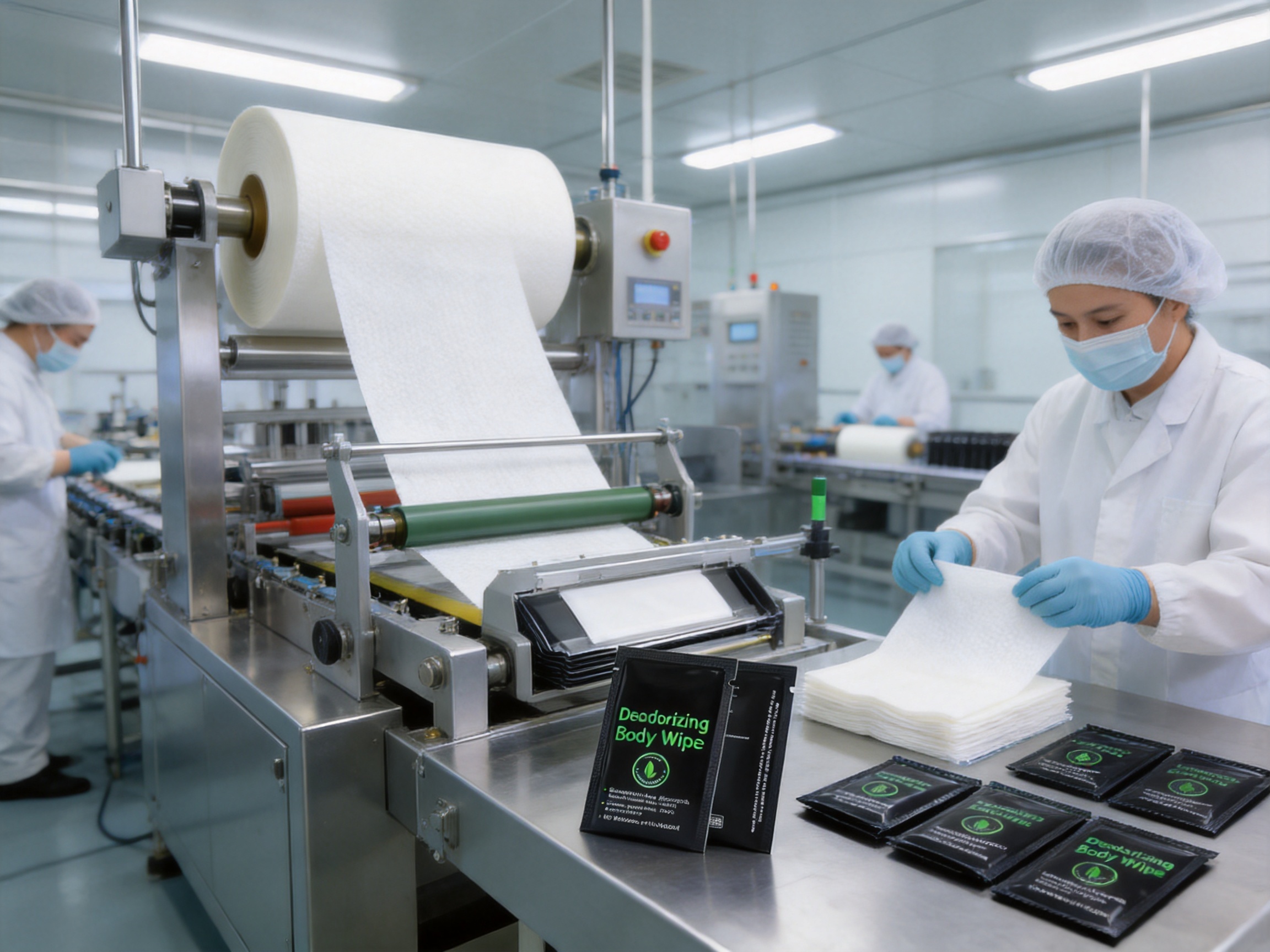
Advanced Manufacturing Capabilities
Manufacturing quality is central to the value of a deodorant wipe. A strong concept can fail if the wipe is inconsistently wet, difficult to unfold, weak during use, poorly sealed, or unstable during storage. For this reason, customers should evaluate not only the final product but also the manufacturer’s material expertise, production systems, quality practices, and customization capabilities.
Founded in 1987, Zhejiang Uniquality Nursing Products Technology Co., Ltd. has developed experience in the research, production, and sales of medical and hygienic nonwoven materials, nursing products, and high-end clothing interlining. Its business scope includes spunlace nonwoven fabrics, spunmelt nonwoven fabrics, hot-air-through nonwoven fabrics, flushable and degradable nonwoven fabrics, wet wipes, dry wipes, wet toilet paper, cleansing wipes, baby diapers, pull-ups, and related products.
This integrated product background is relevant to deodorant wipes because the manufacturer understands both the raw material side and the finished-goods side of wipe production. Instead of treating the substrate as an unrelated purchased component, the company can evaluate how nonwoven structure, lotion loading, folding, sealing, and packaging work together as a complete system.
The company has introduced advanced production equipment and technology from Germany, France, and Italy. Internationally sourced equipment can support more controlled web formation, converting, folding, wetting, packing, and sealing processes. The exact production configuration depends on the product specification, but the broader manufacturing foundation enables the development of different wipe sizes, materials, packaging formats, and functional requirements.
Material Research and Product Development
Material research is an important source of competitive differentiation. The same lotion may perform differently on different nonwoven substrates, and the same substrate may feel different depending on fiber composition, basis weight, bonding method, and embossing. A manufacturer with expertise in nonwoven materials is better positioned to make deliberate adjustments instead of relying only on standard catalog options.
For a deodorant wipe, development may involve evaluating softness, wet strength, absorbency, liquid retention, release during wiping, lint control, and compatibility with the selected lotion. The appropriate balance can be different for a single-use sachet, a multi-count canister, a travel pack, or a premium personal-care box.
Product development may also address degradable or flushable material directions where appropriate. These options require careful technical and regulatory evaluation because disposal performance depends on the substrate, product construction, local wastewater conditions, and applicable standards. A material should not be marketed as flushable or biodegradable solely because it contains a particular fiber; the complete product must be assessed.
Production Integration
Integrated manufacturing can improve communication between material development, formulation, converting, and packaging teams. This can reduce the risk of disconnects that occur when different suppliers handle each stage without a unified technical process. It also gives OEM and ODM customers a clearer route from initial concept to commercial production.
Production integration is particularly useful when customers need a customized product. A request for a larger wipe, a softer substrate, a different wetness level, a special fragrance, or a new package format may affect several production stages at once. Coordinated development helps ensure that the final product remains practical to manufacture and stable in distribution.
Process Control
Consistency is one of the most important quality advantages in a professional wipe factory. Each production batch should aim to maintain consistent wipe dimensions, fold pattern, lotion distribution, package sealing, appearance, and basic handling performance. Process controls may be applied to raw materials, lotion preparation, line operation, packaging, and finished products.
Typical quality considerations for deodorant wipes include substrate weight, wipe size, moisture level, visual cleanliness, odor profile, seal integrity, package appearance, and resistance to tearing during normal use. Customers may also establish their own acceptance criteria based on market requirements, brand positioning, or retail standards.
Quality control is not limited to the final inspection. Preventive controls during production can help identify deviations earlier. Monitoring the wetting system, folding equipment, sealing temperature, packaging alignment, and production environment can contribute to more reliable output.
Private-Label and OEM/ODM Opportunities
The product is suitable for private-label customers that want to sell deodorant wipes under their own brand. Private-label development allows distributors, retailers, and established personal-care companies to select the product characteristics that best fit their market rather than selling an identical standard item used by many competitors.
Customization may include wipe dimensions, substrate type, thickness, embossing, lotion profile, fragrance, package count, sachet design, carton artwork, labeling language, and retail presentation. Depending on the project, a customer may request a basic product for mass retail or a premium version for hotels, airlines, gyms, beauty brands, or wellness channels.
OEM and ODM cooperation can follow different development paths. In an OEM project, the customer may provide a detailed specification while the manufacturer produces according to agreed requirements. In an ODM project, the manufacturer may contribute more actively to product structure, material selection, formula direction, packaging recommendations, and production feasibility.
A structured development process helps reduce avoidable delays. The customer and manufacturer can first define the target consumer, intended use, market region, price range, preferred package format, desired claims, and anticipated order volume. These decisions guide the selection of materials and formula options before samples are prepared.
Packaging Formats
Deodorant wipes can be packaged in several formats. Individually wrapped sachets are highly portable and suitable for travel, hospitality, promotional distribution, emergency kits, and point-of-sale displays. Small multi-count packs can serve consumers who want to keep wipes in a bag or desk drawer. Larger packs may be appropriate for households, gyms, workplaces, and institutional use.
Packaging design should protect the wipe from moisture loss, contamination, and damage during handling and transportation. Seal quality is especially important for individually wrapped products because a weak seal can lead to drying or leakage. Multi-count packs require a reliable opening and reclosing structure when repeated use is expected.
Private-label customers can use the package to communicate product positioning. A clean minimal design may emphasize professional freshness, while a bright athletic design may target sports users. A travel-oriented package can focus on portability, and a premium design can highlight material quality, fragrance character, or customized care features.
Brand Differentiation
The adult wipe market includes many similar-looking products, so differentiation is important. A private-label deodorant wipe can stand out through a more comfortable substrate, a distinct fragrance, a larger wipe size, a travel-friendly package, a fragrance-free option, a sports-focused concept, or a carefully developed sustainability message.
However, differentiation should be supported by actual product performance. Claims should accurately reflect the formulation, material, package, and testing available for the product. Transparent communication is more sustainable than exaggerated promises and can help build long-term consumer trust.
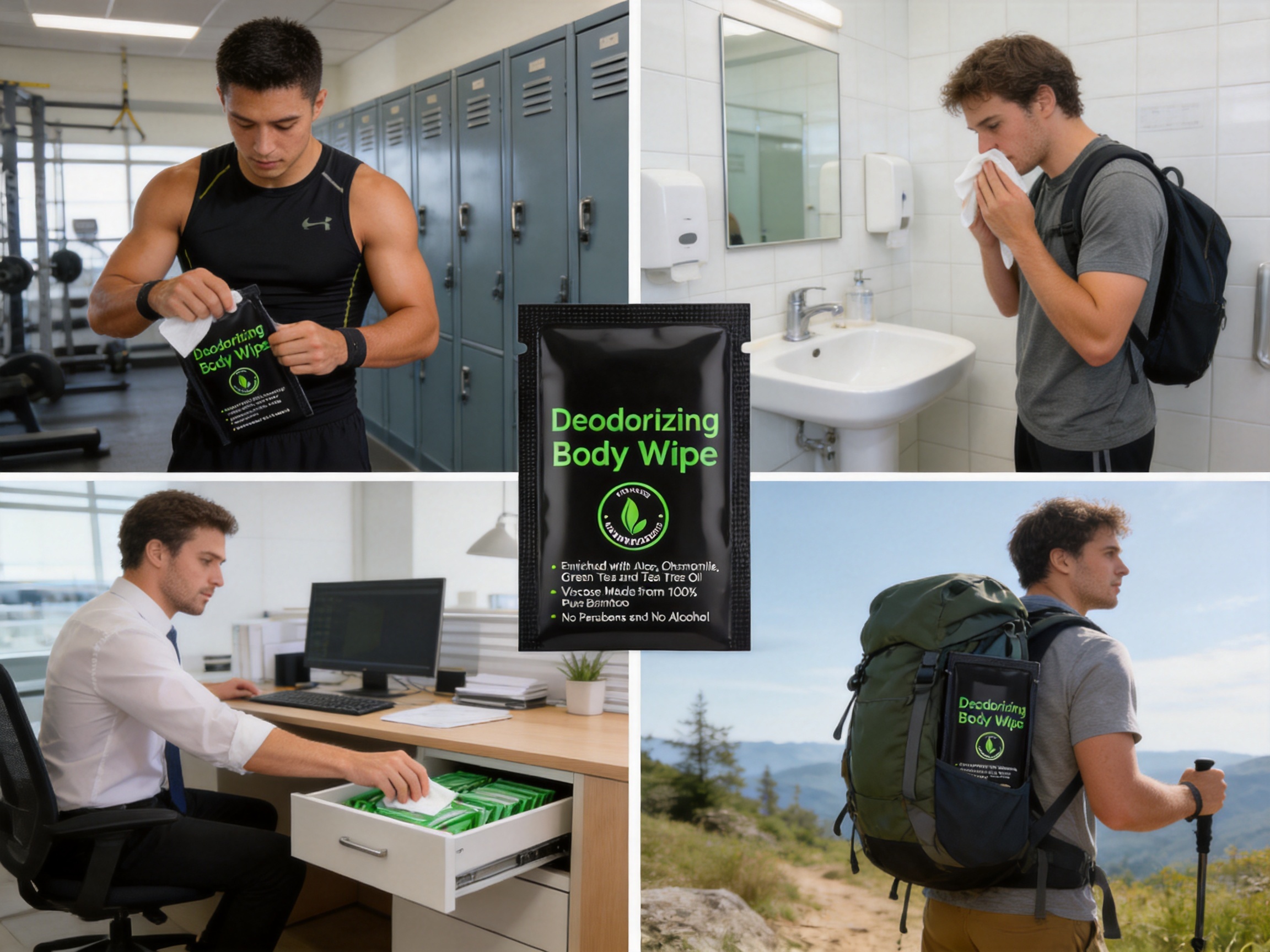
Manufacturing Strengths of the Supplier
Zhejiang Uniquality Nursing Products Technology Co., Ltd. is part of a broader manufacturing organization associated with Kingsafe and Uniquality. Founded in 1987, the organization has more than three decades of development experience in nonwoven materials and hygiene-related products. This history provides a foundation for technical learning, product diversification, and long-term customer cooperation.
The company is described as a national high-tech enterprise specializing in the research and development, production, and sales of medical and hygienic nonwoven materials, nursing products, and high-end clothing interlining. Its product coverage extends across medical care, maternal and baby care, beauty, household cleaning, industrial cleaning, clothing, and other fields.
The company has established eight production bases in China, including locations in Foshan, Guangdong; Nantong, Jiangsu; and Wuhan, Hubei, in addition to its headquarters in Changxing, Huzhou, Zhejiang. A multi-base manufacturing structure can support broader production resources and product categories, although customers should confirm the specific facility, capacity, and production arrangement for each deodorant wipe project.
The organization has ranked among the leading enterprises in China’s industrial textile sector and among the major nonwoven manufacturers in China and globally for multiple consecutive years, according to the company’s supplied information. These industry credentials reflect the scale and experience of the broader business and help explain its ability to serve different product categories and customer requirements.
For deodorant wipe buyers, the most relevant strength is the connection between nonwoven technology and finished hygiene products. The supplier is not limited to trading finished wipes. Its product portfolio includes the materials and converting knowledge needed to develop wipes with different performance characteristics. This can be valuable when a customer wants a product that is not available as a simple standard item.
Experience Across Hygiene Categories
Experience in baby diapers, pull-ups, wet wipes, dry wipes, wet toilet paper, cleansing wipes, and other nursing products gives the supplier exposure to different requirements for softness, absorbency, liquid management, packaging, and consumer safety. Although deodorant wipes have a different use case from baby-care products, the underlying manufacturing disciplines overlap in important ways.
These disciplines include control of nonwoven materials, clean production practices, converting accuracy, lotion application, package protection, and consistent finished-product inspection. A supplier with experience across multiple hygiene categories may also be better prepared to support customers that plan to develop a wider personal-care portfolio.
Customization for Different Markets
Markets differ in consumer preferences, packaging conventions, fragrance expectations, languages, price levels, and regulatory requirements. A deodorant wipe intended for a fitness retailer may require a different design from a wipe sold through a pharmacy, hotel supplier, online marketplace, or mass retailer.
The supplier’s experience with domestic and international brand cooperation supports a customer-oriented approach to these differences. Product details can be discussed according to the target market rather than assuming that one universal specification will work everywhere. Customers should provide complete information about the destination market so that formula, claims, labeling, packaging, and documentation can be evaluated appropriately.
Recommended Applications
Fitness and Sports Facilities
Gyms, sports clubs, yoga studios, swimming facilities, and outdoor training providers can use deodorant wipes as part of member amenities or retail offerings. The product is easy to place in reception areas, lockers, changing rooms, vending systems, or welcome kits. A sports-specific version may emphasize a fresh scent, efficient wipe size, durable substrate, and compact packaging.
Travel and Hospitality
Hotels, airlines, railway operators, tour companies, and travel retailers can include deodorant wipes in personal-care kits. The single-use format is particularly suitable for guest amenities and travel packs. Customized packaging can help hospitality providers reinforce their identity while offering a practical item that guests can use during transit or outdoor excursions.
Workplaces and Professional Use
Businesses may provide deodorant wipes in employee wellness kits, emergency hygiene supplies, staff facilities, or event materials. They can be useful for employees who work outdoors, commute long distances, perform physical tasks, or have limited access to shower facilities during working hours.
Outdoor Recreation
Camping, hiking, cycling, fishing, festivals, and other outdoor activities can create strong demand for waterless personal-care products. Deodorant wipes are lightweight and easy to store, making them suitable for outdoor retailers and activity-based subscription boxes.
Daily Personal Care
Consumers may also use deodorant wipes at home or keep them available for unexpected situations. A multi-count package can be placed in a bathroom, bedroom, office, vehicle, or travel bag. The product’s broad use potential supports distribution through supermarkets, drugstores, beauty shops, convenience stores, e-commerce platforms, and personal-care specialty retailers.
Quality, Storage, and Consumer Guidance
Deodorant wipes should be stored in a cool, dry location away from direct sunlight and excessive heat. High temperatures may affect moisture retention, fragrance, packaging materials, or formula stability. Customers should follow the storage instructions established for the final product and packaging configuration.
Users should inspect the package before opening. A damaged, leaking, or visibly compromised package should not be used. After opening, the wipe should be used according to the product instructions. If the product causes persistent discomfort, redness, or irritation, use should be discontinued and professional advice should be sought when appropriate.
Because deodorant wipes are designed for external use, consumers should avoid contact with the eyes and should not use them on broken or severely irritated skin unless specifically directed by a qualified professional. Product packaging should provide clear instructions and warnings suitable for the formulation and target market.
Disposal guidance should also be clear. Unless the product has been specifically tested, certified, and labeled for flushing, used wipes should be placed in a waste bin rather than flushed down a toilet. Responsible disposal messaging is important for both consumers and brands, especially as awareness of wastewater and solid-waste issues continues to grow.
How to Develop a Competitive Deodorant Wipe
Step One: Define the Target User
The development process should begin with a clear target user. Possible audiences include athletes, office workers, travelers, outdoor enthusiasts, students, hospitality guests, commuters, or general adult consumers. Each group may prioritize different benefits such as portability, mildness, fragrance, wipe size, price, or package appearance.
Step Two: Select the Product Position
The product position may be value, mainstream, premium, professional, sport, travel, natural-inspired, fragrance-free, or sustainability-oriented. This decision influences the substrate, lotion, package, communication style, and expected retail price.
Step Three: Establish the Technical Specification
The technical specification should address wipe dimensions, material type, thickness, embossing, lotion weight, fragrance direction, package count, sealing method, and folding style. The customer may also specify color, printing requirements, carton dimensions, and shipping configuration.
Step Four: Develop Samples
Samples allow the customer to evaluate softness, wetness, wipe strength, fragrance, package handling, and overall appearance. Several versions may be compared before selecting the preferred combination. Sample evaluation should consider both immediate user experience and practical manufacturing feasibility.
Step Five: Review Claims and Compliance
Claims such as antibacterial, hygienic, refreshing, moisturizing, biodegradable, flushable, or sensitive-skin suitable must be reviewed carefully. The appropriate evidence and regulatory pathway depend on the target country and the exact formulation. A responsible manufacturer should help identify technical questions, while the brand owner remains responsible for ensuring that final claims and labels meet applicable requirements.
Step Six: Confirm Mass Production Details
Before production, the customer and manufacturer should confirm the final artwork, approved sample, raw materials, packaging specifications, quality standards, order quantity, delivery schedule, inspection method, and documentation requirements. Clear approval procedures help minimize misunderstandings and protect consistency across future orders.
Why Manufacturing Expertise Matters to Buyers
Buyers of deodorant wipes are not simply purchasing a finished article. They are selecting a supply partner that must help protect the brand’s reputation. A product that dries out prematurely, tears during use, smells different from the approved sample, or arrives with poorly sealed packaging can create customer complaints and retail losses.
Manufacturing expertise reduces these risks by connecting product design with production reality. A supplier with knowledge of nonwoven materials can recommend a suitable substrate. A supplier with wet wipe experience can address lotion distribution and package integrity. A supplier with multiple hygiene categories can help coordinate related product development if the customer plans to expand its range.
Scale can also matter. Larger manufacturing organizations may have greater access to production equipment, technical personnel, material options, and quality systems. At the same time, customers should evaluate each project individually and confirm the actual capabilities, lead times, minimum order quantities, and documentation available for the chosen product.
The goal is not merely to produce a wipe at the lowest possible cost. The goal is to create a reliable product that delivers a consistent user experience, fits the intended channel, supports appropriate claims, and can be supplied over the long term.
Frequently Asked Questions
What are deodorant wipes used for?
Deodorant wipes are used to refresh external skin areas and help remove sweat, surface impurities, and odor-related residue. They are suitable for use after exercise, during travel, in hot weather, at work, or whenever a quick refresh is needed.
Can deodorant wipes replace a shower?
No. Deodorant wipes are designed as a convenient supplementary hygiene product. They can help users feel cleaner between showers, but they do not replace thorough bathing or regular personal-care routines.
Are these wipes suitable for use after workouts?
Yes. The product is designed for situations such as post-workout use, summer refreshment, and daily personal care. Users should follow the final package instructions and apply the wipe only to suitable external skin areas.
What makes deodorant wipes different from ordinary wet wipes?
Deodorant wipes are developed specifically around adult body-refreshing needs. In addition to the physical wiping action, the lotion may include deodorizing, refreshing, fragrance, skin-conditioning, or antibacterial components. Ordinary wet wipes may be designed for more general cleansing and may not offer the same product positioning.
Can the wipes be customized for a private-label brand?
Yes. Private-label customers can discuss options such as substrate, wipe size, thickness, fragrance, lotion characteristics, package count, sachet or multi-pack format, artwork, labeling, and carton design. The final options depend on technical feasibility, order requirements, and target-market regulations.
What types of nonwoven materials can be considered?
Potential material directions include different spunlace and other hygienic nonwoven structures. The appropriate choice depends on softness, strength, absorbency, thickness, texture, lotion loading, intended use, disposal requirements, and target price. Material selection should be confirmed through sample evaluation and technical review.
Can a fragrance-free version be developed?
A fragrance-free or low-fragrance version may be considered depending on the customer’s requirements and the selected formulation. This option can be relevant for professional environments, sensitive-preference consumers, and markets where mild personal-care products are favored.
Can the product be developed in a sport or travel format?
Yes. A sport version may use a compact package, a fresh fragrance direction, and a wipe size suitable for post-exercise use. A travel version may emphasize individually wrapped sachets, lightweight packaging, and convenient storage. Both concepts can be discussed during OEM or ODM development.
Are antibacterial claims automatically permitted in every market?
No. Antibacterial claims are regulated differently in different countries and may depend on the active ingredient, intended use, product category, test evidence, and labeling requirements. Before commercial release, the formulation and claims should be reviewed for compliance in the destination market.
Can deodorant wipes be flushed?
They should not be flushed unless the complete product has been properly tested, certified, and labeled for flushing in the relevant market. In general, used deodorant wipes should be placed in a waste bin according to local disposal guidance.
What should buyers evaluate when choosing a manufacturer?
Buyers should evaluate nonwoven expertise, wipe-converting experience, formula development capability, package quality, production consistency, customization support, quality-control procedures, communication, lead times, and the manufacturer’s ability to provide suitable documentation. A factory with experience across wet wipes and related hygiene products can offer valuable technical support.
How can a customer begin a product project?
The customer can begin by describing the target market, consumer group, intended use, preferred wipe format, package type, desired claims, estimated quantity, and brand positioning. The manufacturer can then discuss suitable material and lotion directions, prepare samples, and establish a specification for approval.
Conclusion
Deodorant wipes provide a convenient and adaptable solution for modern personal hygiene. They help users refresh the skin after exercise, during hot weather, while traveling, during long workdays, and whenever a shower is not immediately available. Their combination of portability, physical cleansing, freshness, and discreet use gives them a practical advantage over product formats that only mask odor or apply deodorant without removing surface residue.
The performance of a deodorant wipe depends on careful integration of substrate, lotion, folding, sealing, packaging, and manufacturing control. Zhejiang Uniquality Nursing Products Technology Co., Ltd. brings relevant experience through its long-term involvement in medical and hygienic nonwoven materials, wet wipes, dry wipes, diapers, pull-ups, cleansing products, and related nursing categories. Its access to nonwoven technologies, international production equipment, multiple production bases, and OEM/ODM development capabilities provides a foundation for customized adult wipe projects.
For private-label brands and professional buyers, the most valuable opportunity is the ability to develop a product that matches a specific market rather than relying on an undifferentiated standard wipe. By selecting the right material, lotion profile, fragrance, size, package, and consumer message, customers can create deodorant wipes for sports, travel, hospitality, workplace, retail, or everyday personal-care applications.
A successful product should combine comfortable use, reliable freshness, package integrity, consistent quality, responsible instructions, and realistic claims. With careful product development and an experienced manufacturing partner, deodorant wipes can become a practical addition to a broader personal-care portfolio and a useful solution for consumers seeking convenient confidence throughout the day.
References
1. Company-provided product information for deodorant wipes and adult personal-care applications.
2. Company-provided corporate information concerning nonwoven materials, wet wipes, dry wipes, diapers, nursing products, production bases, and manufacturing development.
3. General principles of nonwoven fabric construction, including spunlace, spunmelt, and air-through technologies.
4. General personal-care product development practices concerning substrate selection, lotion compatibility, packaging integrity, storage, and consumer instructions.
5. General regulatory principles for cosmetic, hygiene, antibacterial, biodegradable, and flushability claims in consumer products.