中文简体
中文简体 English
 日本語
日本語 русский
 Español
3mm Dot Spunlace Nonwoven Fabric is a versatile engineered material developed for applications that require softness, absorbency, strength, surface uniformity, and reliable converting performance. Its distinctive 3mm dot pattern provides a balance between functional texture and attractive appearance, while the spunlace production process creates a fabric structure that can be tailored for wet wipes, dry wipes, facial masks, medical gauze, diaper cores, composite materials, cotton wipes, mask cloth, and many other products.
Unlike conventional woven fabrics, spunlace nonwoven fabric is manufactured by entangling fibers through high-pressure water jets. This method avoids the need for traditional weaving and can produce a soft, flexible, drapable, and highly adaptable sheet material. Fiber selection, web formation, water-jet pressure, carding configuration, pattern design, finishing treatment, and winding conditions can all be adjusted according to the intended use.
The 3mm dot design is particularly suitable for manufacturers seeking a recognizable surface pattern without sacrificing softness. The dots may contribute to surface texture, liquid management, visual differentiation, and improved handling during converting. Because the material can be manufactured with different fiber blends and weights, it can be adapted to both everyday consumer products and specialized medical, hygiene, and industrial applications.
Zhejiang Uniquality Nursing Products Technology Co., Ltd., operating through the Kingsafe and Uniquality product systems, has developed extensive experience in medical and hygienic nonwoven materials, nursing products, and clothing interlining. Its manufacturing capabilities support customized fiber compositions, production technologies, fabric weights, patterns, and after-finishing treatments. This combination of technical experience and manufacturing flexibility makes the product suitable for customers that need more than a standard commodity nonwoven.
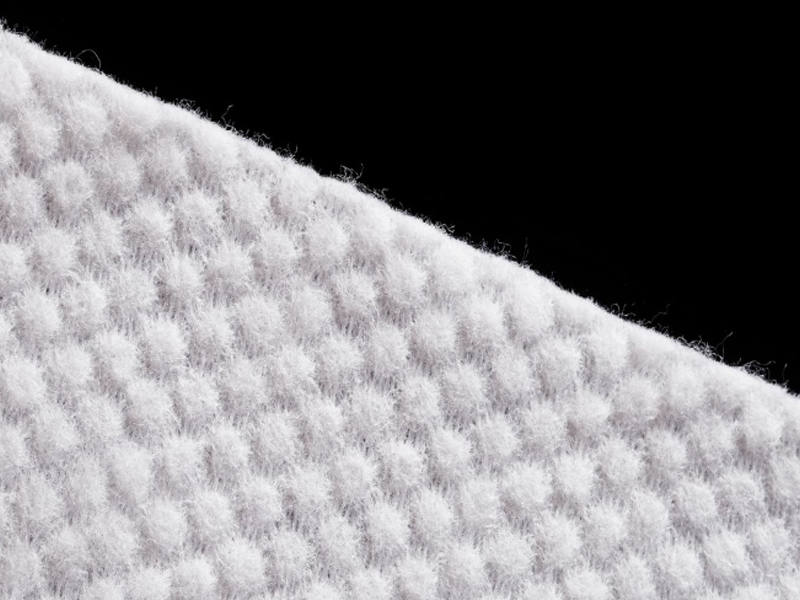
3mm Dot Spunlace Non-woven Fabric
Understanding 3mm Dot Spunlace Nonwoven Fabric
Spunlace nonwoven fabric is a fibrous sheet in which loose fibers are mechanically entangled by streams of water. The water jets pass through the fiber web and cause the fibers to wrap around, interlock, and bind with one another. After hydroentanglement, the fabric is dewatered, dried, inspected, and wound into rolls or converted into finished products.
The 3mm dot pattern is formed as part of the fabric structuring or embossing process. Repeated dot-shaped areas provide a regular surface appearance and can influence tactile feel, friction, liquid distribution, and visual quality. Pattern depth, spacing, density, and overall arrangement may be adjusted for different customer requirements, subject to production conditions and application needs.
The product can be manufactured from polyester, viscose, bamboo fiber, tencel fiber, cotton, low-melt polyester fiber, polypropylene, or blended combinations of these materials. The blending ratio can be customized. This is important because each fiber contributes different properties. Viscose and rayon can provide softness and absorbency. Polyester can improve strength, dimensional stability, and durability. Bamboo fiber can support a soft and natural hand feel. Cotton is valued for its familiar touch and absorbency. Tencel fiber can contribute smoothness and a premium sensory profile. Low-melt polyester fiber may be used when additional bonding or a stiffer hand is required.
The product range supports weights from approximately 20 grams per square meter to 100 grams per square meter, depending on the intended use. Lightweight grades may be appropriate for medical gauze, masks, and certain composite structures, while heavier grades may be selected for wipes, reinforced sheet materials, and products requiring greater coverage or strength.
Core Product Advantages
Soft and Comfortable Surface
Softness is one of the most important performance characteristics in hygiene and personal-care materials. Products such as facial masks, baby wipes, cleansing wipes, and cotton wipes remain in direct contact with skin. A harsh, rough, or uneven material can reduce consumer acceptance even when its other technical properties are satisfactory.
Hydroentanglement creates a flexible fiber network without the rigid yarn intersections associated with woven fabrics. By selecting suitable fiber types, carding methods, and water-jet parameters, the manufacturer can produce a smooth and fluffy surface. The 3mm dot pattern adds a controlled texture while maintaining a soft hand feel. This allows customers to develop products that feel substantial and premium without becoming excessively stiff or abrasive.
High Tensile Strength and Friction Resistance
Softness alone is not sufficient for wipes or medical materials. A finished product must also resist tearing, stretching, and damage during use. Spunlace fabric can provide high tensile performance because the fibers are thoroughly entangled throughout the web. The final strength depends on fiber composition, basis weight, carding direction, web orientation, and water-jet treatment.
The available production technologies include single-carding, double-carding, triple-carding, parallel carding, semi-cross carding, and tambour transfer. These configurations influence the orientation and distribution of fibers. Parallel structures may provide specific machine-direction characteristics, while semi-cross structures can help balance strength between machine direction and cross direction. Tambour transfer technology can be used when a lower machine-direction to cross-direction ratio is desired.
Friction resistance is valuable in wet wipes, dry wipes, industrial cleaning materials, and composite products. During dispensing, folding, wiping, or converting, the fabric may experience repeated contact with surfaces and processing equipment. A well-engineered fiber network helps the fabric retain its integrity and reduces the risk of excessive linting, tearing, or deformation.
Uniform Appearance and Fine Texture
Surface uniformity is important for both product performance and brand presentation. Irregular fiber distribution can produce weak spots, visible defects, inconsistent absorbency, or an unattractive appearance. Advanced carding and web-forming processes help distribute fibers evenly before hydroentanglement.
The 3mm dot pattern gives the fabric a consistent and recognizable visual structure. A regular pattern can help distinguish a product from plain nonwoven materials and may support premium positioning in consumer packaging. The pattern can also be customized for customers that require a different appearance or functional surface design.
Adaptable Absorbency and Liquid Management
Fiber selection and finishing treatment strongly influence absorbency. Rayon, viscose, cotton, bamboo, and tencel fibers are commonly selected when softness and liquid uptake are important. Polyester may be included to improve strength, resilience, and drying behavior. Blending these fibers makes it possible to balance absorbency with durability and cost.
Hydrophilic finishing can improve the ability of a polyester-containing fabric to accept and distribute aqueous liquids. This is useful in wet wipes, medical materials, and other products where rapid wetting is required. The treatment can be developed according to the target liquid, converting process, and final performance requirements.
Wide Basis-Weight Range
A product that is available in only one weight may not meet the needs of different converting lines or finished products. The 3mm dot spunlace range can be customized from approximately 20 grams per square meter to 100 grams per square meter. This allows customers to select a suitable balance of coverage, hand feel, absorbency, opacity, strength, and material consumption.
Lower-weight material can support lightweight medical and hygiene products. Medium-weight grades are widely applicable to wet wipes, dry wipes, facial masks, and mask cloth. Higher-weight structures may be selected for durable wipes, composite products, or applications requiring a more substantial feel.
Fiber Options and Their Functional Roles
| Fiber or Material | Typical Functional Contribution | Potential Application Direction |
|---|---|---|
| Viscose or rayon | Softness, absorbency, drapability, and a comfortable skin feel | Wet wipes, dry wipes, facial masks, and medical materials |
| Polyester | Tensile strength, dimensional stability, durability, and process consistency | Mask cloth, composites, wipes, and technical nonwovens |
| Bamboo fiber | Soft touch, natural fiber profile, and absorbency | Dry wipes and selected personal-care applications |
| Cotton | Familiar natural hand feel and liquid absorption | Cotton wipes, dry wipes, and skin-contact products |
| Tencel fiber | Smoothness, softness, and a premium sensory experience | Facial care and high-value hygiene products |
| Low-melt polyester fiber | Support for thermal bonding and a firmer or stiffer structure | Specialty grades and composite materials |
| Polypropylene | Lightweight structure and suitability for layered constructions | Sandwich products and selected composite applications |
The ability to combine fibers is one of the main advantages of a customized spunlace program. A customer may require high absorbency for a wet wipe, greater strength for a cleaning wipe, improved softness for a facial mask, or additional firmness for a structured component. Instead of using one universal material, the manufacturer can develop a formulation and process route that matches the finished product.
Manufacturing Technology and Process Control
Raw Material Preparation
Manufacturing begins with the selection and preparation of fibers. Incoming materials must be evaluated for fiber length, fineness, moisture, cleanliness, color, and compatibility with the intended blend. Different fiber types may have different opening, carding, and entanglement behaviors. Proper blending is therefore essential to achieve a uniform web and stable finished-fabric performance.
For customized orders, the blending ratio can be adjusted according to technical requirements. For example, a rayon and polyester blend may be selected when the product needs both absorbency and strength. A bamboo or cotton grade may be preferred where a natural fiber touch is important. A structure containing low-melt polyester may be considered for a stiffer-feel product or a construction that requires additional bonding support.
Carding and Web Formation
Carding separates and aligns fibers into a controlled web. Single-carding, double-carding, and triple-carding processes offer different possibilities for web thickness, fiber distribution, and surface formation. More complex carding arrangements can support multilayer construction and improved uniformity.
Parallel carding generally produces a stronger orientation in one primary direction. Semi-cross carding changes the angle of the fibers to help improve cross-direction performance. The correct selection depends on the converting direction, product geometry, required tensile ratio, and handling conditions.
The manufacturer also supports “sandwich” structures in which layers such as fibers, polypropylene, and fibers are combined. This type of construction may provide higher cross-breaking strength and a thicker fabric compared with a simple single-layer web. It can be considered when the customer needs increased substance, reinforcement, or a more robust tactile profile.
Hydroentanglement
During hydroentanglement, high-pressure water jets penetrate the fiber web. The turbulence and force of the jets cause fibers to move, loop, and interlock. The process binds the fabric without relying primarily on chemical adhesives, which helps preserve softness and flexibility.
Water-jet pressure, nozzle arrangement, line speed, web density, and the number of treatment stages all influence fabric properties. Controlled hydroentanglement can help achieve a reliable balance of strength, softness, bulk, absorbency, and surface texture. Excessive treatment may alter bulk or hand feel, while insufficient treatment may reduce integrity. Production expertise is therefore critical.
Pattern Formation
The 3mm dot pattern is produced with specialized patterning equipment and process control. A repeatable dot design requires stable web handling, accurate surface pressure, and consistent line conditions. The pattern should remain visually uniform across the roll and should not create unacceptable weak points or excessive stiffness.
Pattern customization may involve changes to dot size, spacing, arrangement, or overall surface design. Customers can discuss the desired appearance and functional characteristics with the technical team before confirming a production specification.
Drying, Finishing, and Winding
After hydroentanglement, the fabric is dewatered and dried. Drying conditions affect residual moisture, dimensional stability, softness, and roll quality. The finished material may then receive hydrophilic, antistatic, coating, or other treatment depending on the application.
Winding is also important. A roll that is too loose may telescope or deform during transportation. A roll that is too tight may affect softness, pattern definition, or downstream unwinding. Stable roll formation supports efficient converting, accurate cutting, and consistent finished-product output.
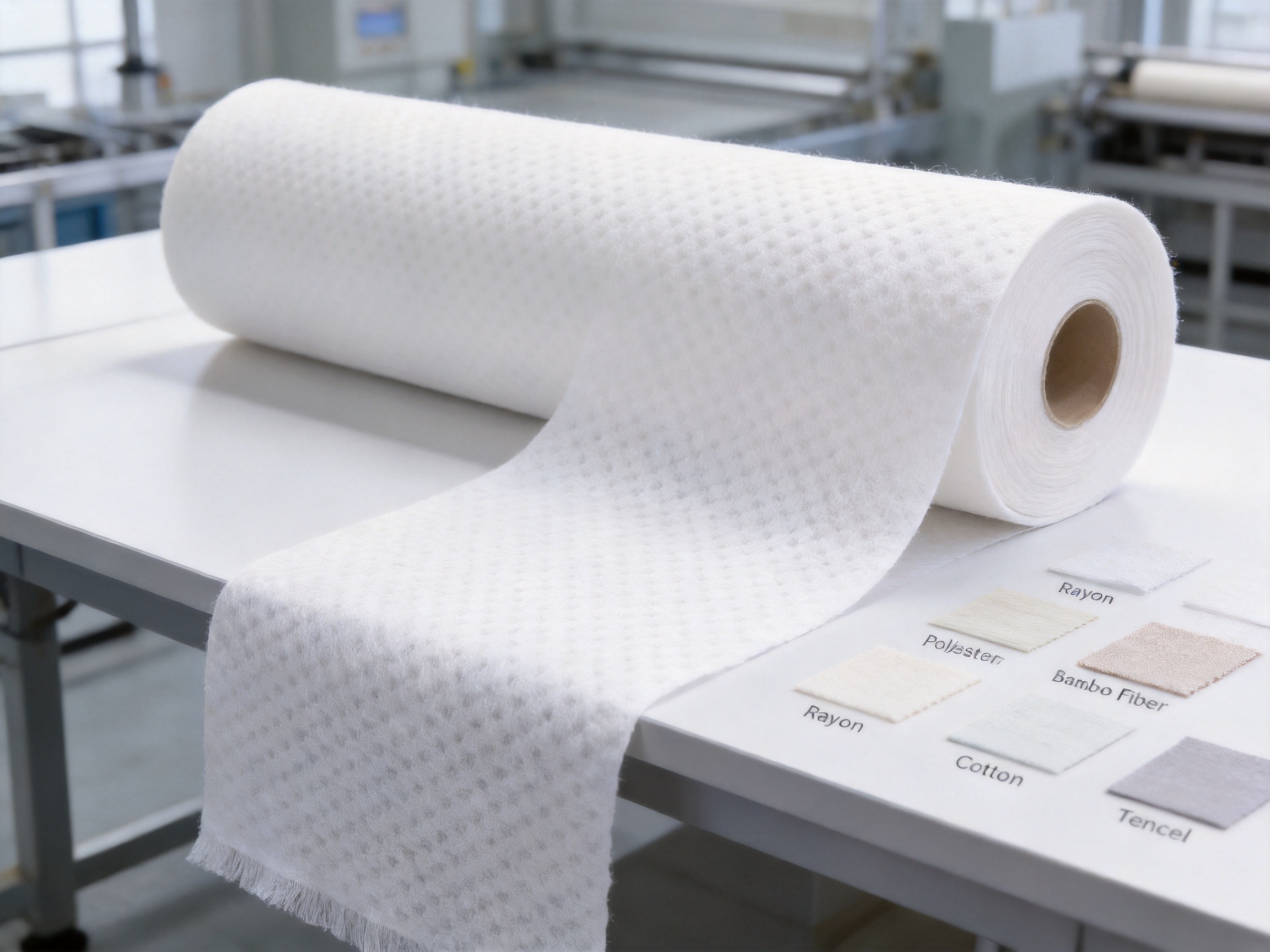
Special Construction: Sandwich Spunlace Products
Sandwich products are made by combining fiber layers around an intermediate layer such as polypropylene. The resulting structure may provide higher cross-breaking strength and increased thickness. This construction is useful when a customer needs a nonwoven that feels more substantial than a conventional single-layer fabric.
The sandwich design can also support functional separation between layers. One layer may contribute softness or absorbency, while another improves strength, thickness, or structural stability. By selecting suitable fiber types and layer proportions, the manufacturer can create a more balanced material for demanding applications.
For wipes, a thicker structure may improve hand feel and wiping coverage. For composite products, the additional thickness may support lamination or integration with another substrate. For hygiene components, a multilayer structure may help provide a combination of softness and resistance to deformation.
The specific construction must be evaluated according to the customer’s converting equipment and product design. Layer compatibility, bonding behavior, roll winding, cutting, and final tensile performance should all be considered during development.
Tambour Transfer and Balanced Directional Performance
Machine-direction and cross-direction performance are important considerations in nonwoven fabric design. A material that is extremely strong in one direction but weak in the other may not perform well during wiping, folding, die cutting, or high-speed converting.
Tambour transfer technology can produce a lower machine-direction to cross-direction ratio. This means the difference between the two primary directions may be reduced, creating a more balanced structure. Such balance may be advantageous for products that are handled from multiple directions or subjected to multidirectional stress.
Applications such as medical gauze, wipes, facial masks, and formed hygiene components can benefit from predictable dimensional behavior. The best directional profile depends on the product’s shape, cutting direction, folding pattern, and end-use forces. Technical consultation allows the manufacturer to select a suitable carding and transfer configuration.
After-Finishing Options
Hydrophilic Finishing
Hydrophilic finishing is designed to improve the wetting behavior of the fabric. It may help water-based formulations spread more quickly across the surface and enter the fiber network more consistently. This is particularly relevant for wet wipes, medical gauze, and other products that must absorb or distribute liquid.
Hydrophilic performance should be evaluated together with the customer’s lotion or formulation. Liquid composition, pH, preservatives, surfactants, storage conditions, and packaging can affect the final result. A fabric suitable for one formulation may require adjustment for another.
Antistatic Finishing
Static electricity can create handling and processing problems in dry environments or when synthetic fibers are used. Antistatic finishing can help reduce static accumulation and improve material handling. The product range includes antistatic polyester options for customers that require this function.
Antistatic performance should be verified under the expected humidity, processing speed, and equipment conditions. The treatment must also be compatible with the finished product and any subsequent coating, printing, laminating, or converting operation.
Coating and Surface Treatment
Coating may be used when the customer needs a modified surface, additional functional layer, or improved compatibility with a composite structure. The suitable coating depends on the desired barrier, bonding, release, softness, or surface behavior.
Because coating can affect air permeability, absorbency, drape, and hand feel, it should be developed as part of the complete product specification. A technical trial can help determine the correct coating amount and production conditions.
Application Examples
Wet Wipes
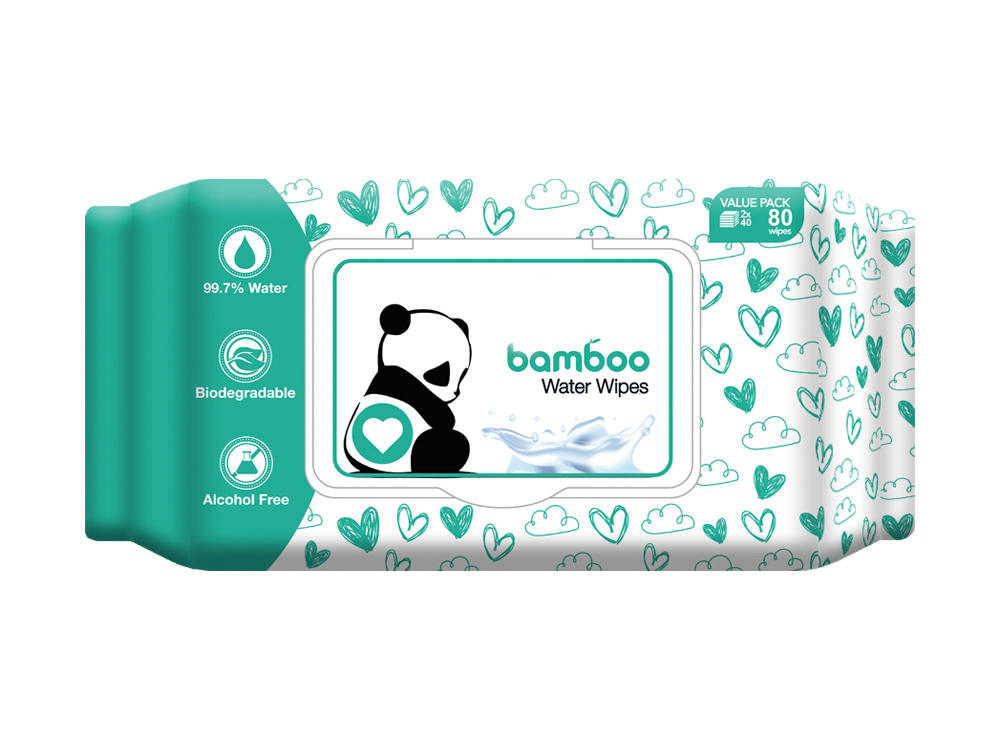
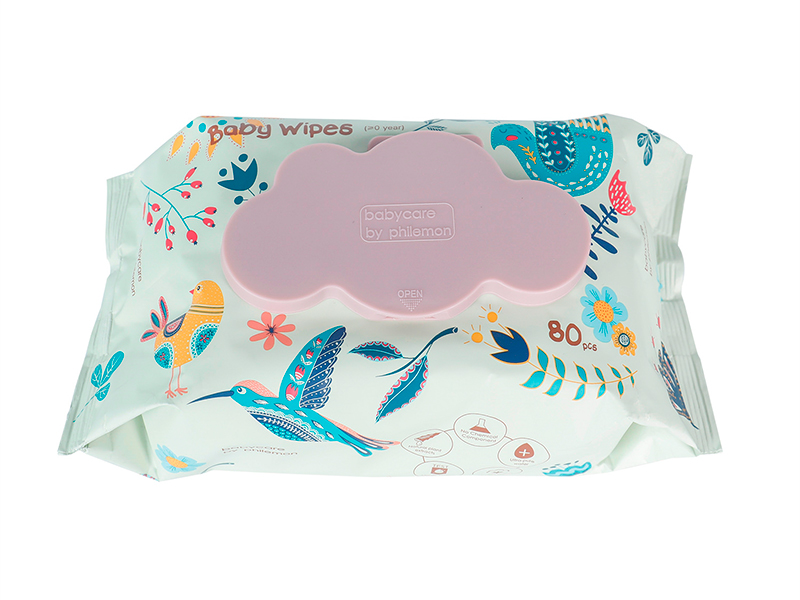
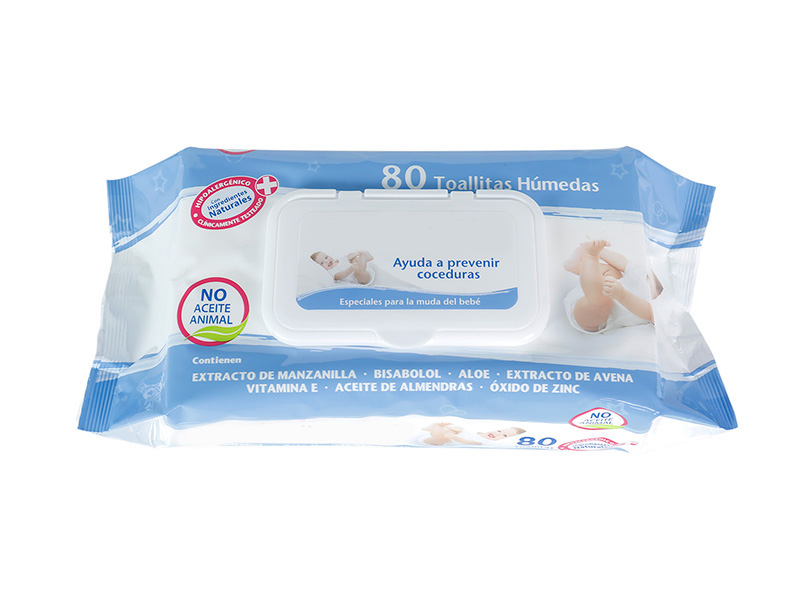
Wet wipes require a fabric that can absorb and retain lotion, remain intact when wet, and provide a pleasant wiping sensation. A 100 percent rayon grade at approximately 60 grams per square meter can be produced with double-carding and semi-cross construction for conventional wet wipes. A parallel-carded plain version is also available for customers with different directional or surface requirements.
The 3mm dot pattern can help create a distinctive appearance and tactile surface. Depending on the lotion and finished-product design, the material may be customized for softness, wet strength, absorbency, and dispensing behavior.
Dry Wipes
Dry wipes are used for household cleaning, personal care, baby care, food-service environments, and general-purpose applications. A 100 percent rayon, 60-gram grade may be selected for a soft and absorbent wipe. Bamboo and cotton options can support different positioning strategies and sensory preferences.
For example, a 40-gram bamboo grade may be suitable when a lightweight, soft, natural-fiber profile is desired. A 60-gram cotton grade may be preferred for customers seeking a familiar natural material. The final choice depends on target absorbency, texture, strength, cost, and converting performance.
Facial Masks
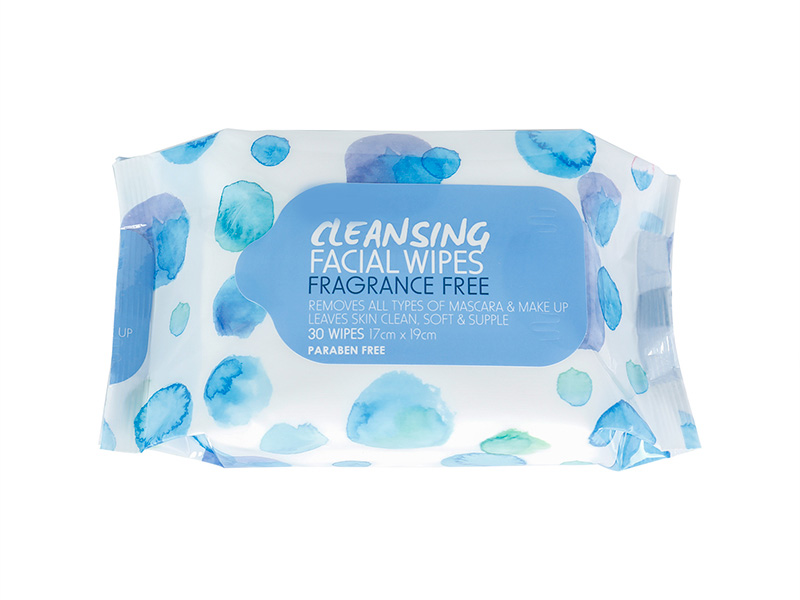
Facial-mask substrates must conform comfortably to the face and support even distribution of cosmetic essence. A 100 percent rayon grade at approximately 42 grams per square meter, produced with double-carding and semi-cross technology, can provide softness and drapability.
A suitable mask fabric should not feel excessively coarse, should remain stable during soaking, and should fit the intended cutting and folding process. Pattern selection can be used to create a differentiated appearance, while hydrophilic treatment may support rapid essence absorption and distribution.
Medical Gauze
Medical gauze requires softness, cleanliness, suitable absorbency, and reliable mechanical integrity. A 70 percent rayon and 30 percent polyester grade at approximately 30 grams per square meter can be manufactured using single-carding and parallel technology with a mesh structure.
The exact specification for medical use must be confirmed according to applicable regulatory, cleanliness, sterilization, packaging, and performance requirements. The nonwoven substrate can be adapted to the customer’s finished medical product and validation program.
Diaper Core Components
Diaper core materials require controlled distribution, dimensional stability, and compatibility with absorbent structures. A 30 percent rayon and 70 percent polyester grade at approximately 31 grams per square meter can be produced with single-carding and parallel technology in a plain structure.
The suitable grade depends on the diaper architecture, absorbent core design, acquisition layer, bonding method, and converting line. Material selection should be reviewed together with liquid management and structural requirements.
Composite Materials
Composite applications often require a stable substrate that can be bonded, laminated, coated, or combined with another material. A 100 percent polyester grade at approximately 35 grams per square meter may provide strength and dimensional stability for composite construction.
The 3mm dot surface can be considered when a patterned interface or differentiated appearance is needed. Coating, bonding, and heat-processing conditions should be tested to ensure that the final composite retains its intended properties.
Mask Cloth and Other Technical Uses
A 100 percent polyester grade at approximately 45 grams per square meter can be used for mask cloth and similar applications. Polyester offers strength, stability, and process consistency, while the finished fabric can be customized for softness, pattern, air permeability, or surface treatment.
Other potential uses include cotton wipes, cleansing wipes, clothing interlining, industrial cleaning materials, and selected high-end apparel or hygiene components. The correct specification depends on whether the primary requirement is absorbency, strength, bulk, softness, appearance, or processing stability.
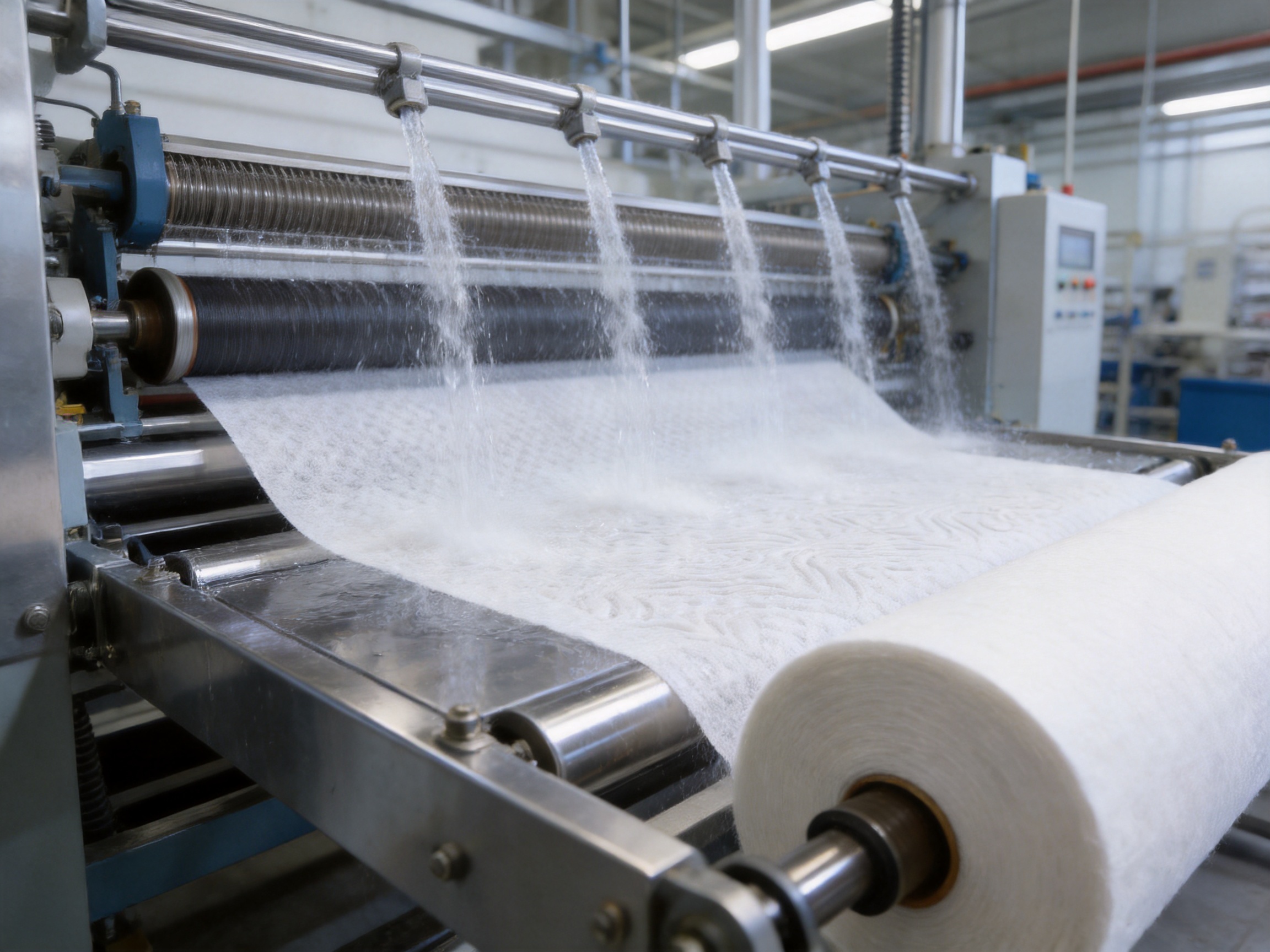
Representative Product Specifications
| Application | Fiber Composition | Basis Weight | Technology and Pattern |
|---|---|---|---|
| Conventional wet wipes | 100% rayon | 60 g/m² | Double-carding, semi-cross, dot |
| Wet wipes | 100% rayon | 60 g/m² | Double-carding, parallel, plain |
| Dry wipes | 100% rayon | 60 g/m² | Double-carding, semi-cross, dot |
| Dry wipes | 100% bamboo | 40 g/m² | Double-carding, semi-cross, plain |
| Dry wipes | 100% cotton | 60 g/m² | Double-carding, semi-cross, plain |
| Facial masks | 100% rayon | 42 g/m² | Double-carding, semi-cross, dot |
| Medical gauze | 70% rayon, 30% polyester | 30 g/m² | Single-carding, parallel, mesh |
| Diaper core | 30% rayon, 70% polyester | 31 g/m² | Single-carding, parallel, plain |
| Composite | 100% polyester | 35 g/m² | Single-carding, parallel, plain |
| Mask cloth | 100% polyester | 45 g/m² | Double-carding, semi-cross, plain |
| Stiffer-feel specialty grade | 50% rayon, 45% polyester, 5% low-melt polyester | 30 g/m² | Single-carding, parallel, plain |
| Antistatic grade | 100% polyester | 50 g/m² | Double-carding, semi-cross, plain, antistatic |
| Hydrophilic grade | 100% polyester | 40 g/m² | Double-carding, parallel, plain, hydrophilic |
| Sandwich patent structure | 50% rayon, 32% polyester, 18% polypropylene | 45 g/m² | Double-carding, parallel, dot |
These examples illustrate the breadth of the product platform rather than a restriction to fixed formulas. Fiber percentages, basis weight, pattern, carding method, and finishing can be discussed during product development. Customers should confirm final technical specifications through samples and testing before mass production.
Advantages Over Conventional Alternatives
Compared with Woven Fabric
Woven fabric is produced by interlacing yarns in an organized structure. It can provide strength and dimensional stability, but it may be less flexible in terms of fiber composition, basis-weight adjustment, and disposable-product economics. Woven structures can also have a more pronounced grid or yarn intersection feel.
Spunlace fabric offers a softer, more textile-like surface without requiring yarn production and weaving. It can be manufactured from short fibers and blended materials, making it suitable for absorbent and disposable products. The fiber network can be adjusted for softness, bulk, liquid uptake, and directional strength.
Compared with Air-Laid Nonwoven
Air-laid materials are formed by suspending fibers in air and depositing them onto a forming surface. They can provide bulk and absorbency, but the surface and tensile profile may differ from hydroentangled fabric. Spunlace can offer a smoother, more cloth-like touch and strong flexibility for wiping and skin-contact applications.
The best material depends on the finished product. Air-laid structures may be preferred for certain absorbent cores, while spunlace is particularly attractive when softness, surface quality, wet strength, and drape are important.
Compared with Spunbond and Meltblown Materials
Spunbond and meltblown materials are formed from polymer filaments or microfibers. They are widely used for filtration, barriers, and protective structures. However, they may not provide the same absorbent and textile-like sensation as fiber-based spunlace.
The 3mm dot spunlace fabric can be designed with absorbent fibers, natural fibers, or blends. It is therefore better suited to many wipes, facial masks, gauze products, and soft hygiene materials where liquid handling and tactile comfort are central requirements.
Compared with Chemically Bonded Nonwovens
Chemical bonding uses binders to hold fibers together. Although this can provide strength and stiffness, the binder may influence softness, absorbency, odor, skin compatibility, or downstream processing. Hydroentanglement mechanically binds fibers through water jets and can maintain a soft, flexible structure without depending primarily on adhesive bonding.
For products intended for direct skin contact, a carefully controlled spunlace structure can offer a more comfortable hand feel. The suitability of any material must still be verified according to the formulation, regulatory requirements, and final product specifications.
Manufacturing Strengths of the Supplier
The supplier has operated in the medical and hygiene nonwoven sector since 1987. Over more than three decades, it has developed capabilities in research and development, production, and sales of spunlace nonwoven fabrics, spunmelt nonwovens, air-through nonwovens, flushable and degradable nonwovens, wet wipes, dry wipes, baby diapers, pull-ups, wet toilet paper, cleansing wipes, and related products.
The company has established multiple production bases in China, including operations associated with Zhejiang, Guangdong, Jiangsu, and Hubei. A distributed manufacturing structure can support production capacity, regional supply, technical specialization, and continuity planning. It also provides experience across different product categories and customer requirements.
International production equipment and technologies from Germany, France, and Italy have been introduced into the manufacturing system. Modern equipment can support more accurate web formation, stable water-jet entanglement, controlled patterning, consistent drying, and reliable roll winding. Equipment alone, however, is not sufficient; process knowledge and disciplined quality management are equally important.
The company’s experience across medical, maternal and baby care, beauty, home care, industrial cleaning, and clothing applications allows technical teams to understand how the same fabric may behave differently in different products. A wipe manufacturer may prioritize lotion retention and wet strength, while a facial-mask manufacturer may prioritize drape and skin feel. A composite customer may focus on bonding and dimensional stability. Application knowledge helps guide material selection.
Customization is another important strength. Customers can request changes to fiber blend, gram weight, carding structure, pattern, surface finish, color, and special function. The company can also support product development for private-label and original-equipment manufacturing programs involving wipes, diapers, and training pants.
Long-term cooperation with domestic and international brands has contributed to the company’s understanding of supply-chain coordination, product consistency, documentation, packaging, and delivery requirements. For buyers, this experience may reduce the technical risk associated with introducing a new nonwoven fabric into an established converting line.
Quality and Development Considerations
Product quality should be evaluated using a complete set of tests rather than a single property. Basis weight, thickness, tensile strength, elongation, absorbency, wet strength, surface appearance, pattern uniformity, moisture content, linting, and roll dimensions may all be relevant.
For wet wipes, testing may include liquid uptake, lotion retention, wet tensile strength, tear resistance, wipe feel, and compatibility with folding and dispensing. For dry wipes, softness, absorbency, dry tensile strength, lint release, and cleaning performance may be more important.
For facial masks, customers should examine drape, cut-edge behavior, essence absorption, facial comfort, dimensional stability, and folding performance. For medical gauze, cleanliness, absorbency, structure, packaging, sterilization compatibility, and applicable regulatory requirements should be included in the evaluation program.
For diaper components, testing may include liquid acquisition, fluid distribution, rewet behavior, compression resilience, bonding compatibility, and dimensional stability. For composite materials, peel strength, coating adhesion, heat resistance, flexibility, and final laminate performance should be considered.
A product-development project normally begins with a technical discussion. The customer identifies the end use, target basis weight, desired fiber profile, pattern, converting method, packaging format, and performance objectives. The manufacturer then recommends a preliminary specification, prepares samples, and adjusts the process based on test results.
Samples should be tested on the customer’s actual production line whenever possible. Laboratory performance may not fully predict behavior during high-speed unwinding, folding, wetting, slitting, die cutting, laminating, or packaging. Line trials help identify practical issues such as static, edge fraying, roll tension, dust, or inconsistent feeding.
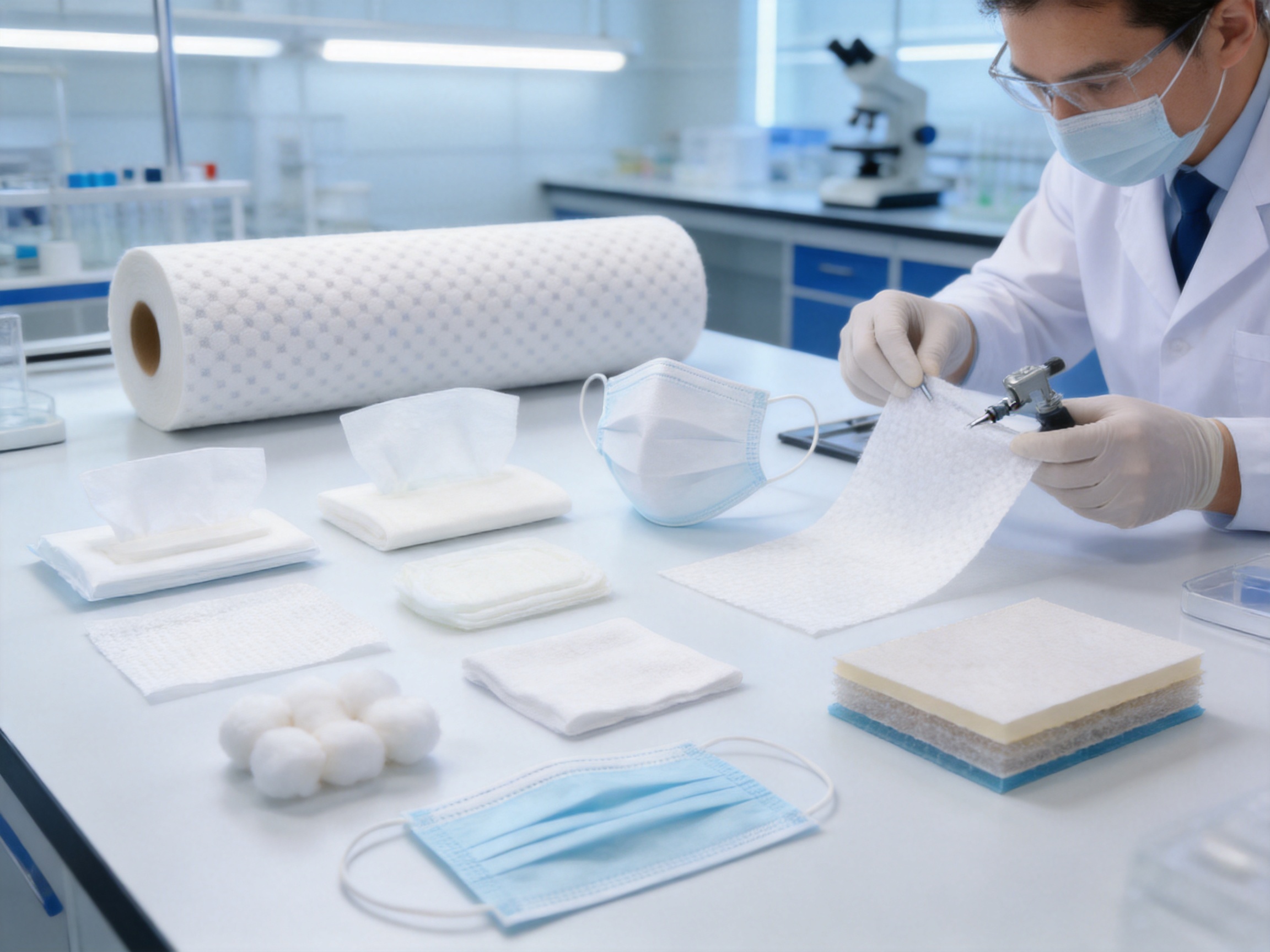
Environmental and Resource Considerations
Material selection is increasingly influenced by environmental objectives. Customers may request natural fibers such as cotton, bamboo, rayon, or tencel, or may seek flushable, degradable, or reduced-plastic constructions. The appropriate choice depends on the complete product system rather than one fiber name alone.
Natural or regenerated fibers may improve softness and liquid uptake, but their sourcing, processing, durability, and end-of-life behavior must be assessed. Polyester can provide long-term strength and process stability, while polypropylene may be useful in layered structures. A responsible material decision considers the entire product life cycle, including raw materials, manufacturing, packaging, use, and disposal.
Water-jet entanglement uses water as the primary binding medium, and industrial production requires careful management of water circulation, filtration, treatment, and discharge. Modern manufacturing systems can improve process efficiency through water reuse, controlled filtration, and operational monitoring. Actual environmental performance should be confirmed through site-specific data and relevant documentation.
Customers seeking degradable or flushable structures should define the required test methods and market regulations at the beginning of development. Claims such as biodegradable, compostable, or flushable require appropriate evidence and should not be inferred solely from the presence of a particular fiber.
How to Select the Correct Specification
The first question is the intended application. A facial mask, wet wipe, medical gauze, diaper core, and composite substrate place different demands on the fabric. Defining the end use helps prevent over-specification and ensures that the material is optimized for actual performance.
The second question is the desired hand feel. Customers may need a fluffy and soft surface, a smooth premium touch, a firm structure, or a high-friction cleaning texture. Fiber type, basis weight, pattern, water-jet intensity, and finishing treatment can all affect the final sensation.
The third question is directional strength. If the product is pulled or converted primarily in one direction, a parallel structure may be appropriate. If balanced strength is required, semi-cross or tambour transfer technology may offer advantages. The cutting and folding layout should be considered before finalizing the roll specification.
The fourth question is liquid behavior. Absorbent natural or regenerated fibers may be suitable for dry wipes and wet wipes, while hydrophilic treatment may be useful for synthetic-fiber grades. The actual lotion or liquid should be used during testing because fabric performance can change with formulation chemistry.
The fifth question is thickness and basis weight. A heavier fabric may feel more premium and provide greater coverage, but it also consumes more material and may affect folding, packaging, and cost. A lighter fabric may improve material efficiency but could require additional engineering to achieve the needed strength.
The sixth question is downstream compatibility. Customers should identify whether the fabric will be slitted, folded, perforated, die cut, laminated, coated, printed, impregnated, sterilized, or packed at high speed. This information helps the supplier recommend the correct roll width, tension, edge quality, surface treatment, and winding condition.
Packaging, Supply, and Custom Orders
Nonwoven fabric is generally supplied in rolls with customer-defined widths, lengths, core sizes, labels, and packaging methods. Roll specifications should be matched to the customer’s unwinding and converting equipment. Packaging should protect the material from moisture, dust, compression, and damage during storage and transportation.
For large-volume programs, customers may establish a master specification covering fiber composition, basis weight, pattern, finish, roll dimensions, inspection criteria, and acceptable tolerances. A clear master specification supports consistent production across repeat orders.
For new products, a staged approach is recommended. The first stage is application analysis and sample selection. The second stage is laboratory evaluation. The third stage is line testing and adjustment. The fourth stage is pilot or trial production. The final stage is mass production under an approved quality standard.
Customers should communicate expected annual demand, order frequency, forecast changes, destination requirements, and delivery schedules. Early planning helps the manufacturer coordinate raw materials, production capacity, quality inspection, and shipment preparation.
Frequently Asked Questions
What is 3mm Dot Spunlace Nonwoven Fabric?
It is a hydroentangled nonwoven fabric with a repeated 3mm dot surface pattern. The fabric can be made from polyester, viscose, rayon, bamboo, tencel, cotton, polypropylene, low-melt polyester, or customized blends.
What products can use this material?
Common applications include wet wipes, dry wipes, facial masks, medical gauze, diaper cores, composite materials, cotton wipes, cleansing wipes, and mask cloth. The material may also be evaluated for industrial cleaning and clothing interlining applications.
Can the fiber composition be customized?
Yes. The blending ratio can be adjusted according to softness, absorbency, strength, thickness, cost, dimensional stability, and processing requirements. The proposed composition should be confirmed through sampling and testing.
What basis weights are available?
The product range supports customized basis weights from approximately 20 grams per square meter to 100 grams per square meter. The practical range for a specific pattern and fiber blend should be confirmed with the technical team.
Is the 3mm dot pattern mandatory?
No. The 3mm dot pattern is the featured design, but the pattern can be customized. Plain, mesh, and other structures may be available for different product applications.
What is the difference between parallel and semi-cross carding?
Parallel carding tends to orient more fibers in one primary direction. Semi-cross carding changes the orientation to help improve balance between machine direction and cross direction. The suitable option depends on the customer’s product design and converting process.
What is the benefit of a sandwich construction?
A sandwich structure combines multiple layers, such as fibers, polypropylene, and fibers. It can provide higher cross-breaking strength, increased thickness, and a more substantial hand feel compared with a simple single-layer structure.
Can the fabric be hydrophilic?
Yes. Hydrophilic finishing is available for applications that require improved wetting or liquid distribution. Compatibility with the customer’s lotion or liquid should be tested before approval.
Can the fabric be antistatic?
Yes. An antistatic polyester grade can be developed for applications where static accumulation may interfere with handling, converting, or product performance.
Can the material be used for medical products?
It may be used for medical gauze and other medical applications, subject to the customer’s required specifications, validation, quality system, regulatory obligations, cleanliness standards, and finished-product approvals.
How should customers evaluate a sample?
Customers should test basis weight, thickness, tensile strength, elongation, absorbency, wet strength, linting, softness, pattern uniformity, roll handling, and converting performance. The sample should ideally be tested on the actual production line.
Does the manufacturer support OEM and ODM projects?
Yes. The company has experience supporting customized nonwoven materials and OEM or ODM programs for wipes, diapers, training pants, and related nursing products. Project details should be agreed through a technical and commercial specification.
What information is needed to request a quotation?
Useful information includes the intended application, fiber composition, basis weight, pattern, finish, roll width, roll length, core size, estimated order quantity, packaging requirements, delivery destination, and required testing or documentation.
Conclusion
3mm Dot Spunlace Nonwoven Fabric offers a flexible platform for manufacturers that need softness, absorbency, strength, surface texture, and customized performance in one material. Its hydroentangled fiber structure provides a textile-like feel, while the 3mm dot pattern adds visual and tactile differentiation. With multiple fiber choices, carding technologies, basis weights, sandwich constructions, directional options, and finishing treatments, the material can be adapted to a broad range of hygiene, medical, beauty, household, and technical products.
The manufacturing capabilities of Zhejiang Uniquality Nursing Products Technology Co., Ltd. support this flexibility through long-term industry experience, multiple production bases, international equipment and technology, application knowledge, and customized product development. Customers can select conventional rayon grades, natural-fiber alternatives, polyester-based technical materials, specialty stiffer-feel structures, antistatic products, hydrophilic grades, and sandwich constructions according to their market and production objectives.
The most effective purchasing decision should be based on the complete end-use requirement rather than on basis weight or fiber composition alone. By combining application analysis, sample testing, line trials, and a clearly controlled master specification, customers can obtain a nonwoven fabric that performs consistently and supports efficient production of finished wipes, masks, gauze, diaper components, composites, and other products.
References
1. Internal product specification for 3mm Dot Spunlace Nonwoven Fabric, including raw materials, carding technologies, surface patterns, basis-weight range, finishing options, and application examples.
2. Internal technical information concerning conventional, wet-wipe, dry-wipe, facial-mask, medical-gauze, diaper-core, composite, mask-cloth, antistatic, hydrophilic, and sandwich nonwoven grades.
3. Company manufacturing profile and corporate history describing research, development, production, and sales of medical and hygienic nonwoven materials and nursing products.
4. General principles of hydroentanglement, carding, fiber blending, web formation, patterning, drying, finishing, and roll winding in nonwoven-fabric production.
5. General technical guidance for evaluating nonwoven materials through basis-weight, thickness, tensile, absorbency, wet-strength, linting, softness, dimensional-stability, and converting-performance tests.