中文简体
中文简体 English
 日本語
日本語 русский
 Español
Air-through non-woven fabric is a specialized thermal-bonded material designed for applications where softness, bulk, air permeability, cleanliness, and functional liquid management must work together. In modern hygiene products, medical consumables, masks, filter materials, and absorbent care items, the surface material is no longer a simple cover layer. It is expected to deliver comfort, rapid fluid transfer, skin-friendly contact, stable strength, and reliable processing performance on high-speed production lines. Air-through non-woven fabric meets these expectations by using carefully selected fibers, controlled web formation, and hot-air bonding technology to create a soft, fluffy, breathable, and customizable material.
This article introduces the properties, applications, production strengths, and competitive advantages of Air-through Non-woven Fabric. It also explains how advanced manufacturing capability, functional fiber selection, strict process control, and customization support help the material perform in demanding hygiene and filtration markets. The product discussed here is made with functional two-component ES fibers such as PE/PP and PE/PET, with options including water-repellent, hydrophilic, weak-acid, and blended fiber structures. Gram weights from 15 gsm to 50 gsm can be customized according to product use, and common applications include baby diapers, adult diapers, feminine hygiene products, masks, and filter materials.
1. Product Overview: What Is Air-through Non-woven Fabric?
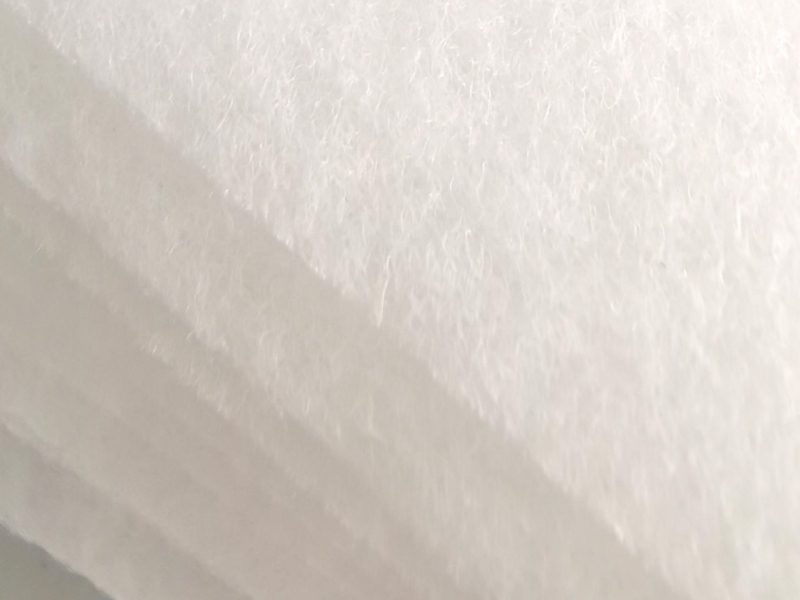
Air-through non-woven fabric is a type of non-woven textile produced by forming a fiber web and bonding it with heated air. Unlike needle-punched, chemical-bonded, or spunmelt materials, air-through non-woven fabric uses thermal energy carried by hot air to melt or soften the low-melting component of bicomponent fibers. When the fibers cool, contact points are bonded together, forming a stable web with a soft, bulky, and highly porous structure.
The core material in this product is functional two-component ES fiber. ES fiber generally has a sheath-core or side-by-side bicomponent structure. In many hygiene applications, PE/PP or PE/PET combinations are preferred because the polyethylene component provides a lower melting point for bonding, while polypropylene or polyester supports structural integrity. Fiber fineness can be selected according to softness, bulk, and permeability requirements, and the available range includes fine denier options such as 1.2D to 3D. Blending with cotton or Tencel can also be customized to improve natural touch, moisture interaction, and comfort.
The resulting fabric is soft, fluffy, smooth, white, breathable, and functionally adjustable. It can be made hydrophilic for quick liquid penetration, water-repellent for backsheet or barrier use, or weak-acid for skin-contact applications that require a more comfortable microenvironment. Because of these characteristics, air-through non-woven fabric is widely used as the surface layer, bottom layer, acquisition or diversion layer of diapers and feminine hygiene products. It is also used in masks and filter materials when a soft, breathable, and controlled porous layer is needed.
2. Key Material Features
The value of Air-through Non-woven Fabric comes from the balance between comfort and performance. Many materials can be soft, but not all soft materials remain stable under high-speed converting. Some materials can be strong, but they may feel rough against the skin. Some materials may be breathable, but they may not control liquid flow well. This product is designed to balance these requirements through fiber selection, surface treatment, gram weight control, and thermal bonding.
2.1 Soft and Fluffy Touch
Softness is essential for baby care, adult care, and feminine hygiene products. A diaper topsheet or surface layer touches delicate skin for long periods, so roughness, stiffness, or friction can reduce user comfort. Air-through non-woven fabric has a three-dimensional bulky structure because hot-air bonding preserves fiber loft better than some compression-based bonding methods. The fabric feels cushion-like, smooth, and gentle, helping improve the perceived quality of the finished product.
2.2 High Air Permeability
Breathability is another important performance factor. The open porous structure of air-through non-woven fabric allows air to pass through efficiently. In hygiene products, good air permeability helps reduce stuffiness and supports a drier, more comfortable wearing experience. In mask and filtration applications, air permeability contributes to lower breathing resistance and better user comfort, especially when the material is used as part of a multilayer structure.
2.3 Customizable Hydrophilic and Water-repellent Properties
Liquid management is one of the most important reasons to choose air-through non-woven fabric. For diaper topsheets and diversion layers, hydrophilic treatment helps liquid pass quickly into the absorbent core or acquisition layer. For bottom layers, water-repellent treatment helps reduce rewetting and improves the barrier function of the construction. The same base material can therefore be customized for different zones of an absorbent product, allowing manufacturers to build a complete performance system with compatible layers.
2.4 Fine White and Clean Appearance
Finished hygiene products are strongly influenced by visual quality. A fine white, clean, smooth surface gives consumers confidence in hygiene, softness, and safety. Air-through non-woven fabric can be produced with a bright and uniform appearance, supporting premium product positioning. Consistent color and surface quality also help brand owners maintain stable visual standards across product batches.
2.5 Weak-acid and Skin-friendly Options
Skin-contact hygiene materials are increasingly expected to provide more than basic coverage. Weak-acid surface options can be developed to support a skin-friendly environment. Since human skin is naturally slightly acidic, weak-acid non-woven surfaces may help improve comfort perception in personal care products. This is especially relevant for baby diapers, adult incontinence products, and feminine hygiene products.
3. Technical Specifications and Application Options
Air-through Non-woven Fabric can be customized according to the target application. The following table summarizes typical specifications and use scenarios based on the provided product information.
No. |
Application |
Typical Specification |
Main Performance Purpose |
1 |
Bottom layer of diapers |
Finest white, water-repellent, 15 gsm and above, 1.2D ultra-fine denier option, commonly around 20 gsm |
Soft barrier support, reduced liquid return, breathable comfort |
2 |
Surface layer of diapers |
Finest white, hydrophilic, commonly 20–25 gsm |
Soft skin contact, quick liquid penetration, dry-feel surface |
3 |
Diversion layer of diapers |
White, hydrophilic, commonly 20–25 gsm |
Fluid guidance, improved distribution, reduced local saturation |
4 |
Mask material |
White, hydrophilic, commonly 35–50 gsm |
Softness, breathability, structural support in multilayer masks |
5 |
Filter material |
White, hydrophilic, commonly 30–50 gsm |
Porous support, airflow management, stable fabric structure |
These specifications are not fixed limitations. The product can be customized from 15 gsm to 50 gsm, and fiber blends can be adjusted. Customers may choose PE/PP or PE/PET bicomponent fibers, select water-repellent or hydrophilic functions, modify hand feel, and request cotton or Tencel blending. This makes the material suitable for different product grades, from economical absorbent products to premium baby care and specialized filtration structures.
4. Why Air-through Technology Matters
The performance of this fabric cannot be fully understood by looking only at raw materials. Manufacturing technology plays a decisive role. Air-through bonding differs from calender thermal bonding because it uses heated air to bond fibers throughout the web rather than pressing selected points between hot rollers. This produces a fabric with higher bulk, softer texture, and more uniform three-dimensional bonding.
In hot-air bonding, the fiber web is carried through a hot-air oven or bonding system. The low-melting sheath of the ES fiber softens, and contact points between fibers become bonded. Because the web is not heavily compressed, fiber loft is retained. This is why air-through non-woven fabric feels fluffy and cushiony. The method also helps maintain a porous structure, which is critical for air permeability and liquid transfer.
For hygiene products, this process creates an important advantage. A topsheet should be soft but should not collapse easily after contact with liquid. A diversion layer should be porous and capable of guiding liquid. A bottom layer should be smooth, breathable, and stable. The hot-air bonding process supports these requirements by forming bonds without destroying bulk.
Compared with some chemical bonding methods, air-through bonding can reduce reliance on binders and support a cleaner textile structure. Compared with stiff thermal point-bonded webs, it offers superior loft and touch. Compared with very loose carded webs, it offers improved stability and processability. This balance makes it a preferred material for premium hygiene applications.
5. Competitive Advantages Over Conventional Non-woven Materials
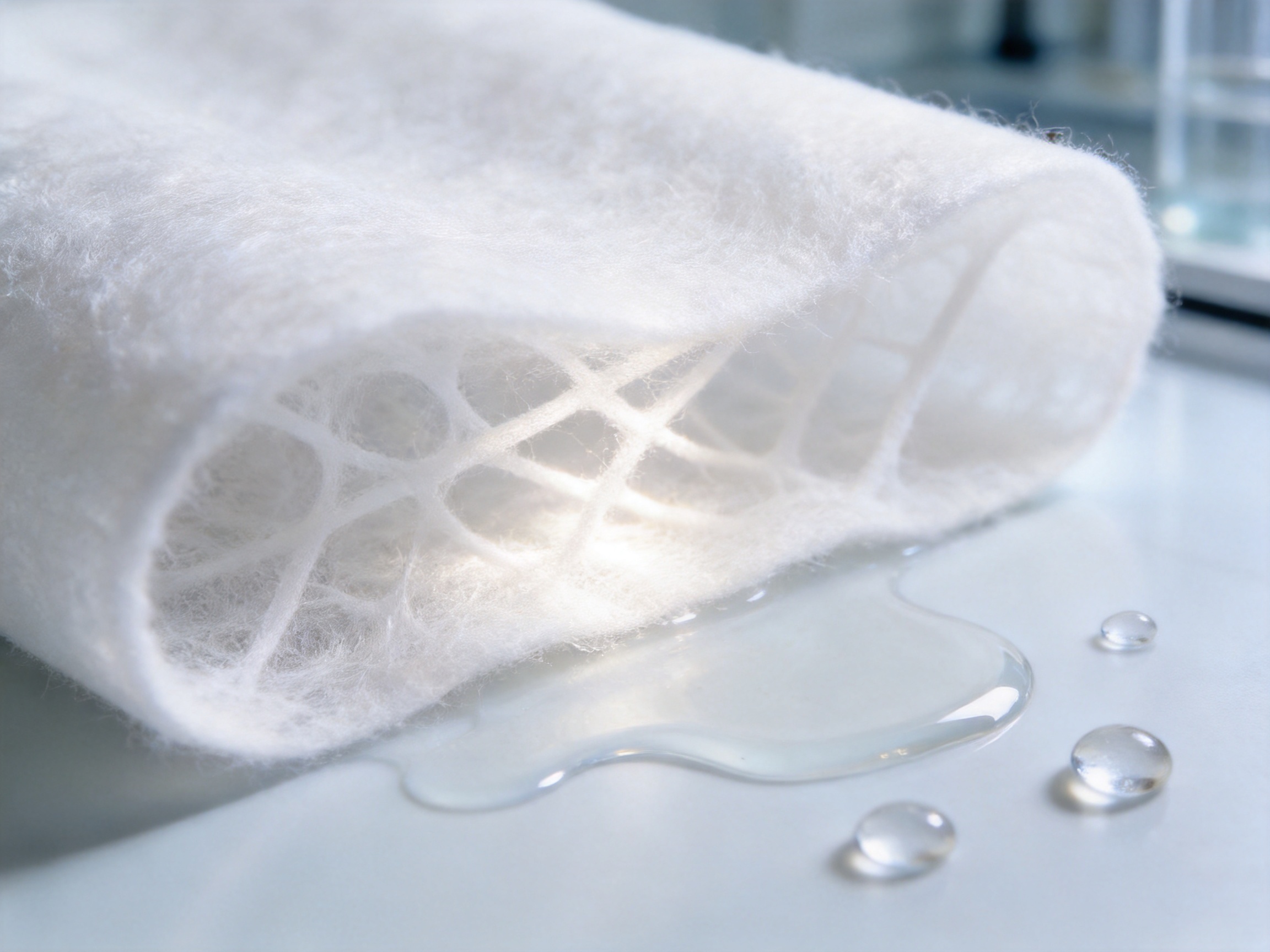
In the hygiene and filtration industries, manufacturers often choose among spunbond non-woven fabric, spunlace non-woven fabric, thermal-bonded carded fabric, airlaid materials, and air-through non-woven fabric. Each has its strengths, but air-through non-woven fabric offers a distinctive combination of softness, breathability, bulk, and customizable fluid behavior.
5.1 Better Softness Than Many Spunbond Materials
Spunbond fabrics are strong and cost-efficient, but they may feel flatter or less cushiony than air-through materials. For premium diapers and personal care products, skin contact comfort is critical. Air-through non-woven fabric can provide a softer, more textile-like hand feel, helping finished products stand out in the market.
5.2 Higher Bulk and Cushioning
The three-dimensional web structure creates a fluffy, voluminous fabric. This bulk can help improve comfort, visual thickness, and liquid acquisition behavior. A bulky topsheet may feel softer and more premium, while a bulky diversion layer can help create temporary space for liquid intake before it moves into the absorbent core.
5.3 More Functional Liquid Management
Because the product can be made hydrophilic, water-repellent, or customized with different treatment levels, it can support different liquid flow strategies. For example, a hydrophilic topsheet allows liquid to pass quickly, while a water-repellent bottom layer helps prevent undesired wetness. This flexibility gives product designers greater control over the absorbent product structure.
5.4 Excellent Breathability
Breathability is a major comfort factor in baby diapers, adult diapers, sanitary products, and masks. The open fiber network of air-through non-woven fabric allows good airflow, helping reduce stuffiness. This is especially valuable in products worn for long periods.
5.5 Strong Customization Potential
Competitors may provide standard materials with limited variation, but a strong manufacturer can customize gram weight, fiber fineness, fiber blend, hydrophilic grade, water-repellent grade, whiteness, smoothness, thickness, and hand feel. Customization helps customers develop differentiated products rather than relying on generic material solutions.
5.6 Stable Converting Performance
Softness alone is not enough. A material must unwind smoothly, run on high-speed machinery, resist excessive linting, and maintain stable width and weight. Advanced air-through non-woven fabric production focuses on consistency so that downstream manufacturers can reduce waste and improve production efficiency.
6. Application in Baby Diapers
Baby diapers are among the most demanding applications for air-through non-woven fabric. A diaper must absorb quickly, keep the surface dry, prevent leakage, remain breathable, and feel soft against sensitive skin. Air-through non-woven fabric can be used in multiple parts of the diaper, including the surface layer, bottom layer, and diversion layer.
As a surface layer, hydrophilic air-through non-woven fabric helps liquid pass through the topsheet quickly. This can reduce the time liquid remains on the surface, helping babies feel drier. The soft and fluffy texture reduces friction during movement, which is important because babies have delicate skin and may wear diapers continuously for many hours.
As a diversion layer, hydrophilic air-through non-woven fabric helps guide liquid away from the point of entry and distribute it more evenly. This supports better use of the absorbent core and may help reduce leakage caused by local saturation. A bulky, porous structure allows temporary liquid handling while the core absorbs.
As a bottom layer, water-repellent air-through non-woven fabric can provide a soft and breathable outer or inner support depending on product design. The water-repellent function helps control liquid migration, while the breathable structure supports comfort.
In premium diaper design, the material is not selected only by cost. It is selected for consumer experience. Parents judge diapers by touch, dryness, leakage protection, and skin comfort. Air-through non-woven fabric contributes to all of these factors, making it a valuable choice for manufacturers targeting higher-quality baby care products.
7. Application in Adult Diapers and Incontinence Products
Adult incontinence products require reliability, discretion, comfort, and skin protection. Users may wear these products for long periods, and the absorbent load may be heavier than in baby diapers. Therefore, the surface material must provide softness, quick intake, breathable comfort, and structural stability.
Hydrophilic air-through non-woven fabric can be used as a topsheet to help move liquid away from the skin. Its soft hand feel improves wearing comfort, especially for elderly users or people with sensitive skin. In adult care products, skin health is a major concern because prolonged moisture exposure can cause discomfort. A material that supports fast liquid transfer and improved dryness can help enhance user experience.
The fluffy structure also provides a more comfortable surface under pressure. Adult users may sit, stand, and move while wearing the product. A material with cushioning and resilience can improve the overall wearing feel. For incontinence product manufacturers, this can help create products that are not only absorbent but also dignified and comfortable.
8. Application in Feminine Hygiene Products
Feminine hygiene products require softness, cleanliness, rapid fluid handling, and a comfortable surface. Air-through non-woven fabric can be used as a surface layer or internal acquisition layer in sanitary napkins and related care products. Its fine white appearance and smooth touch support a clean and premium visual impression.
A hydrophilic surface helps improve liquid intake, while customized weak-acid options may support skin-friendly positioning. The material can also be engineered to deliver different softness and thickness levels according to product category. For ultra-thin products, controlled gram weight and uniformity are important. For comfort-focused products, softness and bulk may be prioritized. Air-through non-woven fabric offers enough flexibility to support both directions.
In a competitive feminine care market, consumers are sensitive to comfort and surface dryness. A rough or poorly performing topsheet can quickly reduce user satisfaction. Air-through non-woven fabric helps brands develop products that feel gentle and perform reliably.
9. Application in Masks
Masks require a combination of breathability, structural support, cleanliness, and user comfort. Air-through non-woven fabric can be used as a layer in mask constructions, especially where softness and airflow are important. Common mask-related specifications include white hydrophilic material in the 35–50 gsm range, depending on the design and performance requirement.
Although filtration efficiency usually depends on the full multilayer structure and may involve meltblown or other specialized filter media, air-through non-woven fabric can contribute to comfort, support, and air passage. A soft inner or support layer can reduce irritation during extended wearing. The material’s porous structure can also help maintain lower breathing resistance when properly designed within the mask system.
Mask manufacturers benefit from stable web uniformity, clean appearance, and reliable thickness control. Since mask production lines often operate at high speeds, material stability is essential. Air-through non-woven fabric produced under advanced quality control can support efficient converting and consistent finished products.
10. Application in Filter Materials
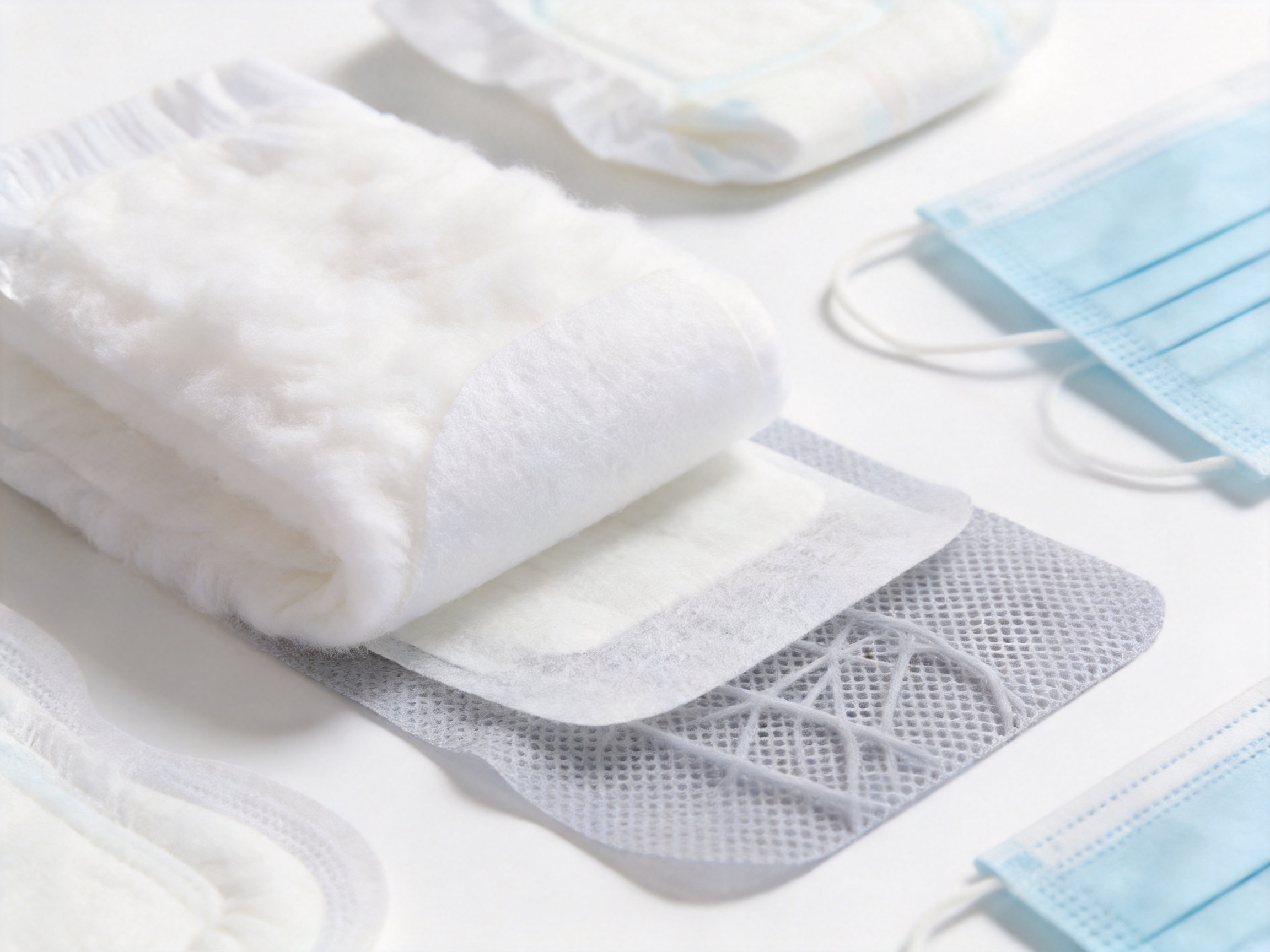
Filtration applications require controlled porosity, airflow, and stable structure. Air-through non-woven fabric can be used as a filter support or functional porous layer in certain filter constructions. Typical specifications include white hydrophilic material from 30 gsm to 50 gsm. The open web structure provides air passage while maintaining enough integrity for handling and processing.
Different filtration products may require different fiber fineness, thickness, and surface treatment. A finer fiber can increase surface area, while a thicker bulky structure can support dust-holding or airflow management depending on design. Air-through non-woven fabric gives engineers flexibility to adjust these factors.
In filtration, consistency is as important as nominal performance. Variations in gram weight, thickness, or pore distribution can cause uneven airflow or unstable filtration behavior. A manufacturer with advanced equipment, process expertise, and strict inspection systems can provide materials that help customers maintain predictable filter performance.
11. Raw Materials: The Importance of Functional ES Fiber
The raw material system is central to the product’s performance. Functional two-component ES fibers such as PE/PP and PE/PET are widely used because they enable thermal bonding without destroying the entire fiber structure. The lower-melting PE component softens during hot-air bonding, while PP or PET provides higher-temperature structural support.
Fiber fineness, such as 1.2D to 3D, influences softness, opacity, strength, and permeability. Ultra-fine denier fibers can provide a smoother and softer surface, which is particularly useful for skin-contact layers. Coarser fibers may create more loft or improve certain mechanical properties. By selecting the correct fiber mix, the manufacturer can build a fabric that matches the customer’s application.
Hydrophilic and water-repellent functions are also connected to raw material and finishing technology. Hydrophilic treatment improves liquid wetting and penetration. Water-repellent treatment reduces wetting and helps liquid stay away from protected zones. In absorbent hygiene products, the ability to combine different functional layers is a major advantage.
Blending ES fibers with cotton or Tencel can further enhance product differentiation. Cotton provides a natural perception and familiar softness. Tencel can contribute smoothness and moisture-related comfort. Such blends may be used in premium product lines where consumers expect a more natural or upgraded skin-contact experience.
12. Manufacturing Strength and Process Control
Advanced manufacturing capability is one of the most important reasons to choose a reliable supplier for air-through non-woven fabric. Zhejiang Uniquality Nursing Products Technology Co., Ltd., supported by the broader Kingsafe & Uniquality industrial foundation, benefits from long-term experience in non-woven materials, hygiene products, and related textile technologies. Founded in 1987, the enterprise has developed through decades of production, research, and market service.
The company specializes in research and development, production, and sales of medical and hygienic non-woven materials, nursing products, and high-end clothing interlining. Its product range includes spunlace non-woven fabrics, spunmelt non-woven fabrics, hot air-through non-woven fabrics, flushable and degradable non-woven fabrics, wet wipes, dry wipes, baby diapers, pull-ups, wet toilet paper, cleansing wipes, and related products. This broad platform gives the company a strong understanding of both raw material production and finished product requirements.
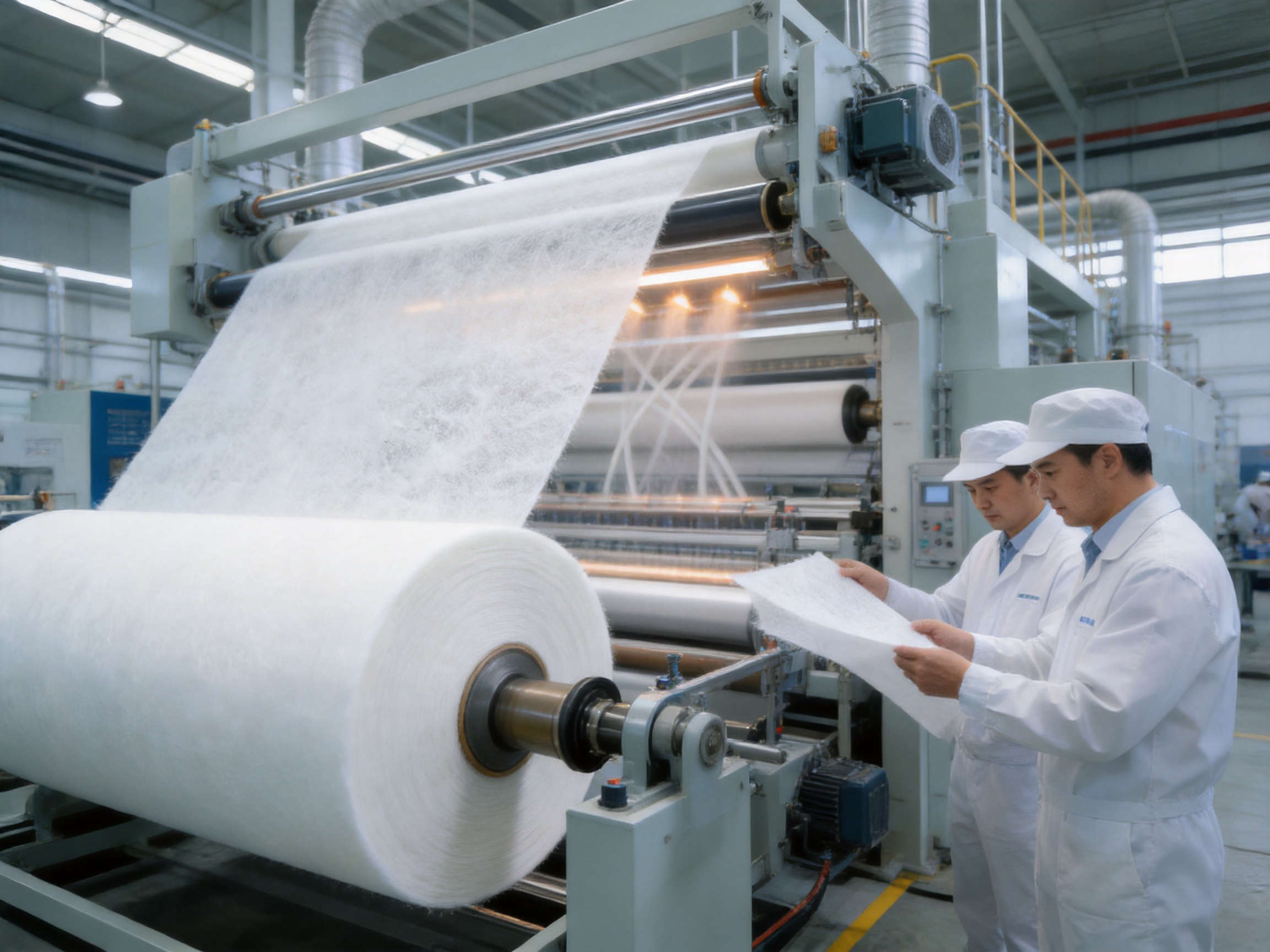
For air-through non-woven fabric, manufacturing strength includes several important areas. First, the company can select and process functional bicomponent fibers. Second, it can control web formation to achieve uniform basis weight and appearance. Third, it can manage hot-air bonding temperature, airflow, and residence time to produce the desired softness, strength, and bulk. Fourth, it can provide surface treatments such as hydrophilic or water-repellent functions. Fifth, it can support customization for different customer applications.
The company has introduced advanced production equipment and technology from countries including Germany, France, and Italy. International equipment and process know-how support stable production, precise control, and efficient manufacturing. In non-woven fabric production, equipment quality directly affects web uniformity, bonding consistency, and surface quality. Advanced lines help reduce variation and improve product reliability.
With multiple production bases in China, including locations in Zhejiang, Guangdong, Jiangsu, and Hubei, the company has strong manufacturing capacity and supply flexibility. This supports large-volume orders, customized production, and stable delivery for domestic and international customers. For global hygiene brands and converters, supply reliability is a key factor when choosing a material partner.
13. Quality Control and Reliability
Air-through non-woven fabric must meet strict requirements for hygiene, performance, and converting stability. Quality control begins with raw material inspection. Fiber composition, fineness, cleanliness, and functional properties influence the final fabric. During production, basis weight, thickness, tensile strength, elongation, whiteness, hydrophilicity, water repellency, and air permeability may be monitored according to product requirements.
Uniform gram weight is especially important. If a topsheet has uneven weight, it may show inconsistent fluid penetration, appearance defects, or weak zones. If a diversion layer is uneven, liquid distribution may be unstable. If a mask support layer varies too much, production efficiency and user comfort may be affected. Reliable quality control reduces these risks.
Hydrophilic performance must also be controlled. A topsheet that is insufficiently hydrophilic may slow liquid penetration and increase surface wetness. A material that is overly wettable in the wrong layer may cause unintended liquid spread. Water-repellent materials require similar precision because repellency must be stable and appropriate for the product design.
Appearance inspection is also important. Hygiene products require clean, white, smooth materials with minimal contamination, holes, wrinkles, or uneven areas. A stable supplier understands that visual quality affects consumer trust and finished product yield.
14. Customization for OEM and ODM Customers
One of the strongest advantages of Air-through Non-woven Fabric is customization. Different customers and finished products have different priorities. A premium baby diaper may require ultra-soft 20–25 gsm hydrophilic topsheet material with fine denier fibers. An adult diaper may require higher strength and improved fluid handling. A mask material may require higher gram weight and excellent breathability. A filter material may require a stable porous structure in the 30–50 gsm range.
The manufacturer can adjust gram weight from 15 gsm to 50 gsm, select PE/PP or PE/PET ES fiber, use fiber fineness between 1.2D and 3D, add cotton or Tencel blending, and provide hydrophilic, water-repellent, weak-acid, or other functional treatments. This flexibility supports product differentiation and allows customers to develop materials aligned with market positioning.
Customization is not only about changing a specification sheet. It requires communication between material engineers and product developers. The supplier must understand how the fabric will be used, what machine speed it must tolerate, what liquid performance is expected, what hand feel is desired, and what cost target must be met. A strong manufacturer can translate these needs into a practical material solution.
15. Advantages for Brand Owners and Converters
Brand owners and converters gain several practical benefits from choosing high-quality air-through non-woven fabric. The first benefit is improved product comfort. A softer surface can support higher consumer satisfaction, especially in baby and feminine care markets where touch is a major purchase factor.
The second benefit is better product performance. Hydrophilic topsheets and diversion layers can support faster liquid intake and improved dryness. Water-repellent layers can help guide liquid behavior and reduce unwanted wetness. Breathable structures improve wearing comfort.
The third benefit is production efficiency. Stable rolls, uniform basis weight, and controlled thickness help reduce converting problems such as breaks, wrinkles, uneven lamination, and inconsistent bonding. High-speed diaper and mask lines require materials that run smoothly. Poor material consistency can cause downtime and waste, increasing total cost even if the purchase price is lower.
The fourth benefit is product differentiation. In competitive markets, many finished products appear similar. Customized air-through non-woven fabric allows brands to create unique softness, appearance, liquid response, and skin-friendly features. This can support premium positioning and stronger consumer loyalty.
The fifth benefit is supplier integration. A manufacturer with experience in both non-woven materials and finished hygiene products understands practical application requirements. This helps customers solve problems faster and develop better materials for real product structures.
16. Sustainability and Material Efficiency Considerations
The hygiene industry is increasingly focused on sustainability, material efficiency, and responsible manufacturing. Air-through non-woven fabric can contribute to these goals in several ways. First, customized gram weight allows product developers to choose the minimum effective material level rather than using excessive weight. A well-designed 20 gsm fabric may deliver better performance than a poorly designed heavier material.
Second, advanced process control can reduce waste during production and converting. Uniform materials help finished product manufacturers reduce rejects, line stoppages, and off-spec products. Less waste supports both cost efficiency and environmental responsibility.
Third, the possibility of fiber blending, including cotton or Tencel, offers opportunities for different product concepts. While each project requires technical evaluation, the ability to customize fiber composition gives brands more options when developing products with improved consumer appeal or material storytelling.
Fourth, the company’s broader experience with flushable and degradable non-woven materials indicates an active position in evolving material technologies. As hygiene markets continue to move toward responsible innovation, suppliers with strong research and development capabilities will be better positioned to support future product upgrades.
17. How to Select the Right Air-through Non-woven Fabric
Selecting the right air-through non-woven fabric requires a clear understanding of the final product. The first question is where the material will be used. A topsheet, bottom layer, diversion layer, mask layer, and filter layer have different requirements.
For a diaper surface layer, hydrophilic performance, softness, whiteness, low irritation, and liquid penetration speed are important. A common specification is 20–25 gsm hydrophilic air-through non-woven fabric. Fine denier fibers can improve surface smoothness and comfort.
For a diaper bottom layer, water repellency and breathability are important. A 15 gsm and above water-repellent material may be suitable, depending on product structure. If a premium feel is desired, ultra-fine denier options can improve softness.
For a diversion layer, liquid intake and distribution are key. Hydrophilic 20–25 gsm material can support fluid movement into the absorbent core. Thickness and pore structure should be evaluated based on core design and target acquisition speed.
For masks, softness, air permeability, cleanliness, and stable processing are essential. White hydrophilic 35–50 gsm material may be selected according to the multilayer design.
For filter materials, airflow, porosity, thickness, and structural stability must be considered. White hydrophilic 30–50 gsm air-through non-woven fabric can be customized to support different filter constructions.
In every case, trial testing is recommended. Laboratory tests should be combined with machine trials and finished product evaluation. A qualified supplier can provide samples, technical guidance, and specification adjustments until the material meets application needs.
18. Company Strengths Supporting the Product
Zhejiang Uniquality Nursing Products Technology Co., Ltd. is part of an enterprise group with a long history in non-woven and hygiene-related industries. Founded in 1987, the organization has grown into a significant manufacturer with strong research, production, and sales capabilities. It is recognized as a national high-tech enterprise specializing in medical and hygienic non-woven materials, nursing products, and high-end clothing interlining.
The company’s headquarters are located in Changxing, Huzhou, in the Yangtze River Delta region, an area known for convenient land, sea, and air transportation. This location supports efficient logistics, supply chain coordination, and customer service. The company has also established multiple production bases in China, improving capacity and regional supply flexibility.
Years of development have helped the company become a leading enterprise in China’s industrial textile industry. Its strong position in the non-woven sector reflects accumulated knowledge, manufacturing scale, and market trust. The company serves medical, maternal and baby, beauty, home, industrial cleaning, clothing, and other fields, allowing it to understand diverse material requirements.
The company’s strengths are particularly relevant for air-through non-woven fabric because this product requires precise process knowledge and stable production. From raw material selection to web formation, thermal bonding, finishing, roll winding, inspection, and delivery, each step affects final performance. A manufacturer with long-term industrial experience is better able to control these steps and provide reliable quality.
The company also emphasizes differentiation, functionalization, and customization. This is important because modern customers do not only need a basic non-woven fabric. They need a material that fits their product design, market positioning, machine conditions, and performance claims. Strong research and development capability helps transform customer needs into stable material solutions.
19. Market Trends Favoring Air-through Non-woven Fabric
Several market trends are increasing demand for high-quality air-through non-woven fabric. The first trend is premiumization in baby care. Parents are increasingly willing to choose diapers with softer surfaces, better breathability, and improved dryness. Air-through non-woven fabric supports these premium claims.
The second trend is population aging and growth in adult care products. Adult incontinence products require comfort, reliability, and skin-friendly performance. Soft and breathable air-through materials can improve product acceptance and user dignity.
The third trend is rising expectations in feminine hygiene. Consumers expect sanitary products to be gentle, clean, and comfortable. Customized weak-acid, hydrophilic, and soft surface materials can support differentiated product development.
The fourth trend is continued demand for mask and filtration materials. Even as markets fluctuate, breathable and stable non-woven layers remain important in protective and filtration products. Air-through non-woven fabric can contribute to comfort and structure in these applications.
The fifth trend is the move toward customized material solutions. Brand owners want unique product features rather than standard commodity inputs. Air-through non-woven fabric offers a strong customization platform because gram weight, fiber type, denier, surface treatment, and blending can all be adjusted.
20. Practical Performance Evaluation
When evaluating air-through non-woven fabric, customers should consider both laboratory data and actual product performance. Important tests may include basis weight, thickness, tensile strength, elongation, air permeability, liquid strike-through time, rewet performance, water repellency, hydrophilic durability, whiteness, surface smoothness, and linting.
For diaper topsheets, liquid strike-through and rewet are particularly important. A good topsheet should let liquid pass quickly while helping the surface return to a dry feel. For diversion layers, acquisition speed and fluid spread are important. For bottom layers, repellency and breathability should be balanced. For masks, air permeability and comfort should be evaluated together with the full mask structure. For filters, airflow and structural stability should be tested in the final filter design.
Machine trials are also essential. A fabric that performs well in the lab must also run smoothly on converting equipment. Roll tension, winding quality, edge stability, static behavior, and bonding compatibility can all affect production. High-quality suppliers understand these practical details and can support customers during trials.
21. Frequently Asked Questions
Q1: What is the main advantage of Air-through Non-woven Fabric?
The main advantage is its combination of softness, bulk, air permeability, and customizable liquid management. It can be hydrophilic for quick liquid transfer, water-repellent for barrier support, or adjusted for special skin-contact requirements.
Q2: What raw materials are used in this product?
The product uses functional two-component ES fibers such as PE/PP and PE/PET. Fiber fineness can range from 1.2D to 3D, and blends with cotton or Tencel can be customized according to product requirements.
Q3: What gram weights are available?
Products from 15 gsm to 50 gsm can be customized. Common options include 20–25 gsm for diaper surface and diversion layers, 35–50 gsm for masks, and 30–50 gsm for filter materials.
Q4: Can the fabric be used in baby diapers?
Yes. It can be used as the surface layer, bottom layer, or diversion layer of baby diapers. Hydrophilic versions are suitable for topsheets and acquisition layers, while water-repellent versions can be used for bottom or barrier-related layers.
Q5: Is the fabric suitable for adult diapers?
Yes. Its softness, breathability, and liquid management performance make it suitable for adult incontinence products that require comfort and stable absorption support.
Q6: How does air-through bonding improve softness?
Hot air bonds the fibers without heavy compression, helping preserve the web’s loft and three-dimensional structure. This creates a fluffy, cushion-like hand feel compared with flatter bonding methods.
Q7: Can the material be customized for different brands?
Yes. Gram weight, fiber type, fiber fineness, hydrophilic level, water-repellent level, weak-acid function, whiteness, smoothness, and fiber blending can be adjusted to meet different brand and product needs.
Q8: Why is breathability important?
Breathability improves comfort by allowing air movement. In diapers and hygiene products, it helps reduce stuffiness. In masks and filtration layers, it supports airflow and user comfort.
Q9: What makes this product competitive against standard non-woven fabrics?
Compared with many standard non-woven fabrics, air-through non-woven fabric offers better softness, higher bulk, strong air permeability, customizable fluid control, and a premium hand feel. These qualities are especially valuable in hygiene and skin-contact applications.
Q10: What manufacturing strengths support stable quality?
The manufacturer has decades of non-woven industry experience, advanced production equipment and technology introduced from Europe, multiple production bases, research and development capability, and experience in both raw materials and finished hygiene products.
22. Conclusion
Air-through Non-woven Fabric is a high-value material for modern hygiene, medical, mask, and filtration applications. Its soft and fluffy texture, high air permeability, fine white appearance, smooth surface, and customizable hydrophilic or water-repellent functions make it especially suitable for baby diapers, adult diapers, feminine hygiene products, masks, and filter materials.
The product’s performance comes from both material science and manufacturing expertise. Functional two-component ES fibers provide the foundation for thermal bonding, while hot-air bonding technology preserves bulk and softness. Customizable gram weights from 15 gsm to 50 gsm allow the material to match different applications. Fine denier fibers, PE/PP or PE/PET structures, cotton or Tencel blending, weak-acid options, and surface treatments provide additional flexibility.
Compared with many conventional non-woven materials, air-through non-woven fabric offers a stronger balance of comfort, breathability, liquid management, and premium tactile quality. For brand owners and converters, this means better consumer experience, improved product differentiation, and reliable processing performance.
Supported by advanced manufacturing processes, long-term industrial experience, strong research and development capabilities, and large-scale production resources, Zhejiang Uniquality Nursing Products Technology Co., Ltd. is well positioned to provide customized air-through non-woven fabric solutions for customers seeking quality, consistency, and innovation. As hygiene and filtration markets continue to demand softer, cleaner, more breathable, and more functional materials, air-through non-woven fabric will remain an important material platform for next-generation product development.
References
1. Russell, S. J. Handbook of Nonwovens. Woodhead Publishing.
2. EDANA. Nonwovens Standard Procedures and Testing Guidelines.
3. INDA. Nonwoven Fabrics Handbook.
4. Krcma, R. Manual of Nonwovens: Technology, Structure, and Applications.
5. Albrecht, W., Fuchs, H., and Kittelmann, W. Nonwoven Fabrics: Raw Materials, Manufacture, Applications, Characteristics, Testing Processes.
6. Hutten, I. M. Handbook of Nonwoven Filter Media.