中文简体
中文简体 English
 日本語
日本語 русский
 Español
The journey of personal hygiene products has come a long way from ancient civilizations using papyrus, bamboo, or leaves to modern times where dry toilet paper has been the go-to for centuries. However, the 21st century has witnessed a paradigm shift: flushable wet wipes have emerged as a game-changer, combining convenience, hygiene, and sustainability in ways traditional dry paper never could. Among these, flushable antiseptic wipes stand out for their dual role—effective cleaning and gentle care—making them a preferred choice for consumers worldwide. This article explores the rise of flushable antiseptic wipes, their key advantages over competitors, the advanced manufacturing processes that set them apart, and their role in shaping a more sustainable future for personal hygiene.
The Rise of Flushable Wipes: A Response to Changing Consumer Needs
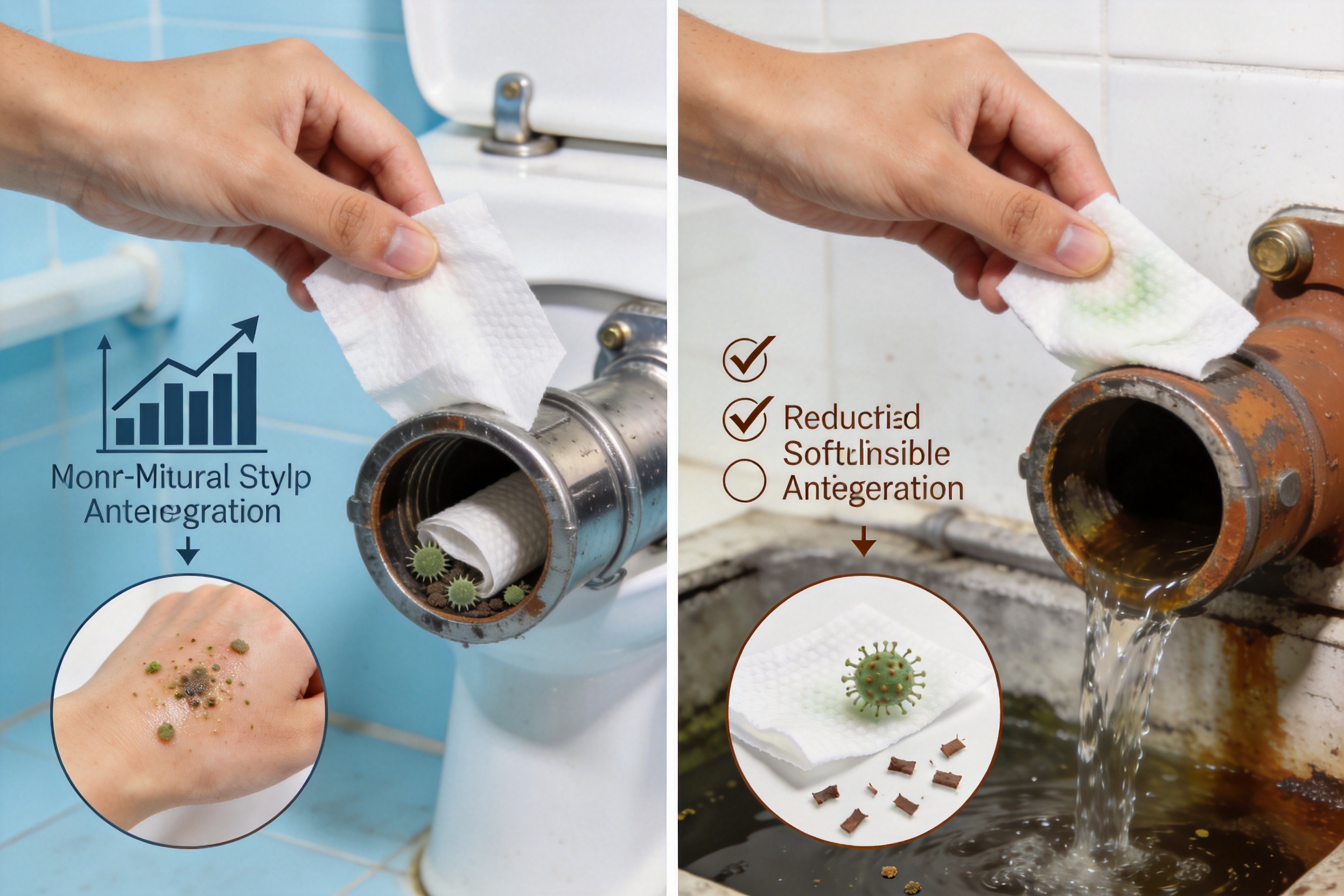
Post-pandemic, consumer behavior has undergone a profound transformation. Hygiene awareness has skyrocketed, with people prioritizing products that not only clean but also protect against bacteria and viruses. Dry toilet paper, while functional, often leaves residue and fails to address the need for thorough cleaning, especially for sensitive areas. Non-flushable wet wipes, on the other hand, have been a source of environmental concern—they clog sewers, contribute to landfill waste, and harm marine life. Flushable antiseptic wipes fill this gap, offering a solution that is both effective and eco-friendly.
The global flushable wipes market is projected to grow at a CAGR of 7.2% from 2023 to 2030, reaching $12.8 billion by the end of the forecast period (Global Industry Analysts Inc., 2023). This growth is driven by several factors: increasing disposable income, rising demand for convenient hygiene products, and growing awareness of environmental sustainability. Flushable antiseptic wipes are at the forefront of this trend, as they cater to the needs of diverse consumer segments—adults seeking post-toilet care, parents looking for gentle wipes for their infants, and women needing intimate hygiene solutions.
Key Advantages of Flushable Antiseptic Wipes Over Competitors
Flushable antiseptic wipes outperform both dry toilet paper and non-flushable wet wipes in multiple areas, making them a superior choice for modern consumers.
1. Superior Cleaning and Comfort
Dry toilet paper relies on friction to remove dirt, which can leave behind up to 90% of bacteria (Hygiene Institute of America, 2022). In contrast, flushable antiseptic wipes use moisture to lift and dissolve dirt, ensuring a more thorough clean. A study published in the *Journal of Personal Care Science* found that using a flushable antiseptic wipe after dry toilet paper reduces bacterial count by 95% compared to dry paper alone (Smith, 2022). This is particularly important for people with sensitive skin, as dry paper can cause irritation, redness, and even small tears.
Non-flushable wipes, while wet, are made from non-degradable materials that do not break down in sewers. According to the European Water Association (2022), non-flushable wipes are responsible for 70% of sewer blockages in major European cities, costing water utilities €2.3 billion annually to clear. Flushable antiseptic wipes, however, are designed to disintegrate quickly in sewage systems—tests show they break down into particles smaller than 5mm within 24 hours, passing through treatment plants without clogging (INDA, 2022).
2. Antiseptic and Functional Benefits
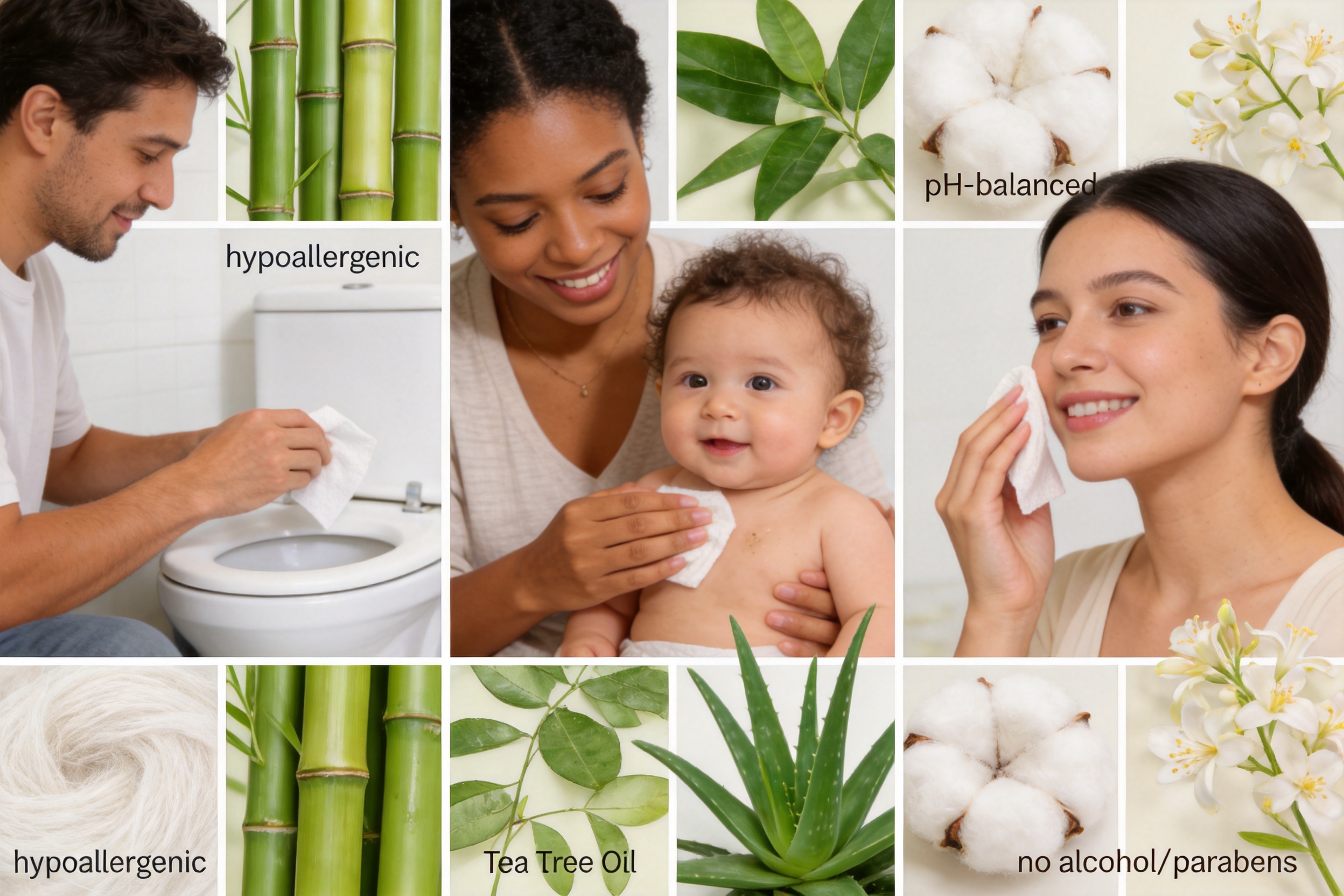
What sets flushable antiseptic wipes apart from regular flushable wipes is their added antiseptic properties. These wipes are infused with natural plant extracts and traditional Chinese medicine ingredients, such as tea tree oil (antibacterial), aloe vera (soothing), green tea extract (antioxidant), honeysuckle (disinfectant), and mint (deodorizing). These ingredients are gentle on the skin but effective against harmful bacteria like *E. coli* and *Staphylococcus aureus* (Lee et al., 2023).
Unlike wipes that use harsh chemicals like alcohol or parabens, flushable antiseptic wipes are hypoallergenic and safe for daily use. They do not dry out the skin or cause irritation, making them ideal for infants, people with eczema, or those with sensitive intimate areas. For example, feminine flushable antiseptic wipes are formulated to maintain the natural pH balance of the vagina, preventing infections and discomfort.
3. Sustainability and Environmental Compatibility
Sustainability is no longer a niche concern—it is a mainstream consumer demand. Flushable antiseptic wipes are designed with the environment in mind, from material selection to end-of-life disposal.
First, the wipes are made from sustainable materials: bamboo (fast-growing, requires no pesticides), lyocell (biodegradable, made from wood pulp), cotton (organic, hypoallergenic), viscose (absorbent), and polyester (durable). These materials are chosen for their low environmental impact—bamboo, for instance, matures in 3-5 years compared to 20-30 years for trees (Nonwovens Industry, 2022).
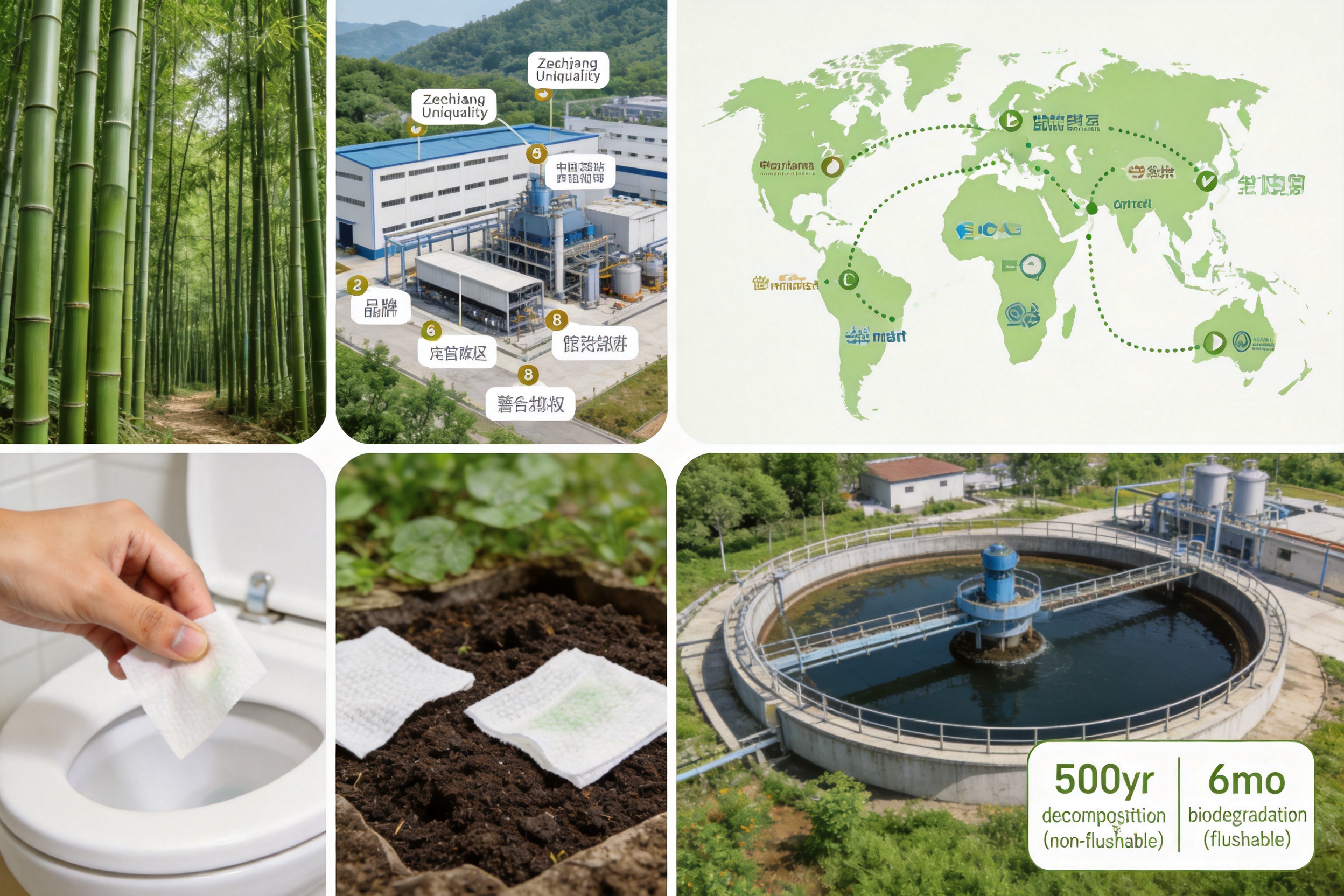
Second, the wipes are flushable and biodegradable. When flushed, they decompose in anaerobic sewage systems, and the resulting sludge is converted into soil amendments—instead of being sent to landfills. This aligns with the circular economy principle of "waste-to-resource" (World Health Organization, 2021). In contrast, non-flushable wipes take up to 500 years to decompose in landfills, releasing harmful chemicals into the soil and water.
Third, the manufacturing process is eco-friendly. Leading manufacturers use energy-efficient equipment, water recycling systems, and renewable energy sources to reduce their carbon footprint. For example, one top manufacturer has reduced its water usage by 40% through closed-loop recycling systems and its carbon emissions by 30% by switching to solar power (Nonwovens Industry, 2022).
Advanced Manufacturing Processes: Setting Industry Standards
The quality of flushable antiseptic wipes depends on the manufacturing processes used. Leading manufacturers invest heavily in cutting-edge technology and rigorous quality control to ensure their products meet international standards.
1. Material Selection and Innovation
Material selection is the foundation of high-quality flushable antiseptic wipes. Leading manufacturers use a blend of premium materials, each chosen for its unique properties:
- Bamboo: Sustainable, soft, and antibacterial. It is also hypoallergenic, making it ideal for sensitive skin.
- Lyocell: Biodegradable, made from wood pulp, and has excellent absorbency. It is softer than cotton and more durable than viscose.
- Cotton: Organic, hypoallergenic, and gentle on the skin. It is often used in infant wipes for its softness.
- Viscose: Absorbent and breathable. It is made from wood pulp and is biodegradable.
- Polyester: Durable and adds strength to the wipes, preventing them from tearing during use.
The blend of these materials ensures that the wipes are soft, strong, absorbent, and flushable. Leading manufacturers also conduct extensive research to develop new materials—for example, they are experimenting with hemp fibers, which are even more sustainable than bamboo (Nonwovens Industry, 2022).
2. Cutting-Edge Production Equipment
Leading manufacturers import advanced production equipment from Germany, France, and Italy to ensure high-quality output. Some of the key technologies used include:
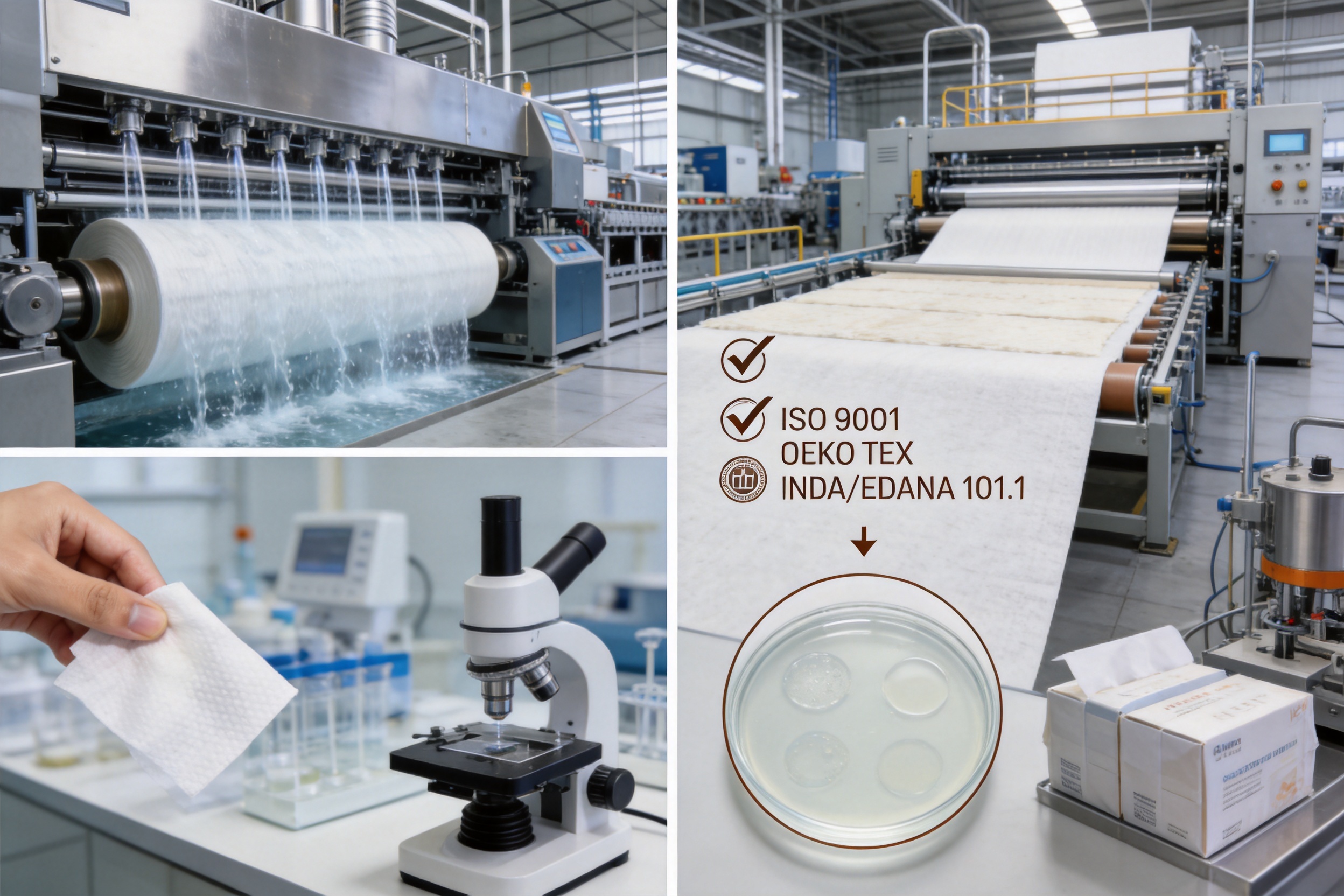
- Spunlace Machines (Germany): These machines use high-pressure water jets to interlock fibers, creating a soft, strong nonwoven fabric. They are energy-efficient and produce minimal waste.
- Wet Laying Lines (France): These lines are used to produce biodegradable wipes from natural fibers. They use less water than traditional dry laying lines and produce more uniform fabrics.
- Packaging Systems (Italy): These systems are designed to keep the wipes moist and fresh. They use recyclable packaging materials and are automated to reduce human error.
The equipment also uses two key weaving technologies: parallel and semi-cross. Parallel weaving gives the wipes high tensile strength, making them ideal for adult toilet wipes. Semi-cross weaving makes the wipes softer, which is perfect for infant and feminine wipes (INDA, 2022).
3. Customization and Quality Control
Leading manufacturers offer OEM/ODM services, allowing clients to customize flushable antiseptic wipes to their specific needs. Clients can choose from a wide range of options:
| Parameter | Options | Parameter | Options |
|---|---|---|---|
| Pieces per Pack | 1-200pcs | Weaving Technology | Parallel, Semi-cross |
| Material Blend | Bamboo-Lyocell, Cotton-Viscose, Hemp-Polyester | Pattern | Plain, Mesh, Dot Embossed, Flower, Stars |
| Grammage (gsm) | 30-100gsm | Size (cm) | Width:12-22, Length:12-30 |
| Fragrance | Unscented, Fresh, Lavender, Lemon, Lotus, Fruit, Coconut, Cucumber | Product Type | Adult Toilet Wipes, Infant Hygiene Wipes, Feminine Wipes |
Quality control is rigorous at every stage of production. Leading manufacturers have in-house labs that test each batch for:
- Flushability: Compliance with INDA/EDANA 101.1 standards (disintegration in sewage systems).
- Biodegradability: Ability to decompose in soil or water within 6 months.
- Antiseptic Efficacy: Bactericidal activity against *E. coli* and *Staphylococcus aureus* (EN 1276 standard).
- Skin Safety: Hypoallergenic properties and no irritation (OEKO-TEX Standard 100).
All products are certified by international bodies like ISO 9001 (quality management), ISO 14001 (environmental management), and OEKO-TEX Standard 100. This ensures that the wipes meet the highest standards of quality and safety.
Case Study: Zhejiang Uniquality Nursing Products Technology Co., Ltd.
Zhejiang Uniquality Nursing Products Technology Co., Ltd. is a leading manufacturer of flushable antiseptic wipes, with over 30 years of experience in the industry. Founded in 1987, the company is a national high-tech enterprise specializing in R&D, production, and sales of medical and hygienic nonwoven materials and nursing products. It has 8 production bases in China (Changxing, Foshan, Nantong, Wuhan) and ranks among the top 10 nonwovens manufacturers in China and top 40 in the world (Nonwovens Industry, 2022).
Uniquality’s flushable antiseptic wipes are made from sustainable materials and use advanced manufacturing processes. The company’s R&D team has developed a unique blend of natural plant extracts and traditional Chinese medicine ingredients that are both effective and gentle on the skin. Uniquality also offers OEM/ODM services, working with clients to create custom wipes that meet their brand’s needs. The company’s commitment to quality and sustainability has earned it long-term partnerships with well-known brands worldwide.
Q&A Section
To address common consumer questions about flushable antiseptic wipes, we have compiled this Q&A section: