中文简体
中文简体 English
 日本語
日本語 русский
 Español
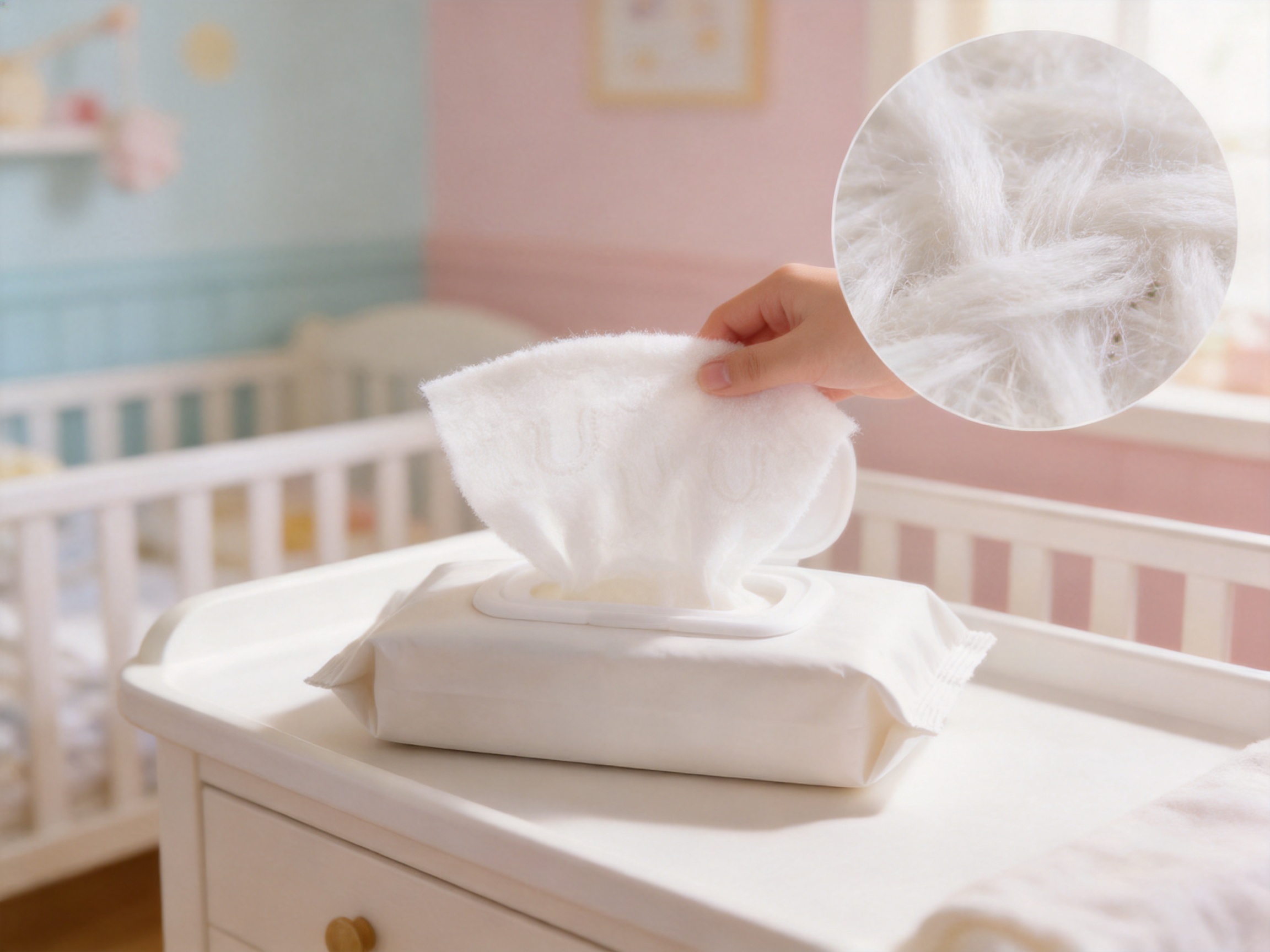
Modern baby care products must meet a demanding set of expectations: they should be gentle on delicate skin, strong enough for practical use, absorbent enough to deliver a smooth wiping experience, and increasingly responsible in their environmental profile. Lyocell/pulp flushable fabric for baby wet wipes is designed to answer these needs through a balanced fiber structure that combines the wet strength of lyocell with the high water absorption and dispersibility potential of wood pulp. This material is engineered for baby wet wipes and related hygiene applications where softness, liquid management, dimensional stability, and biodegradability matter.
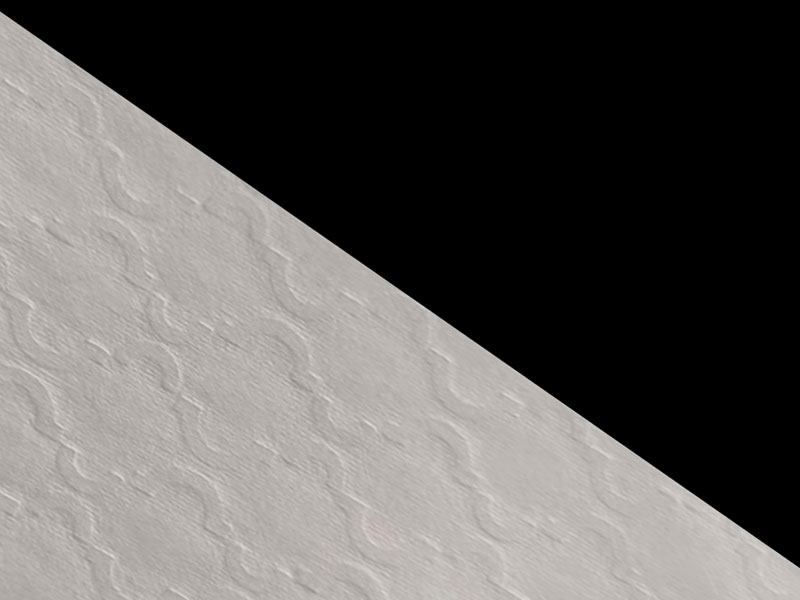
The fabric is produced using wet-laid spunlace technology, a manufacturing route that enables uniform fiber distribution, reliable web formation, and effective hydroentanglement without relying on conventional plastic-based reinforcement. With a typical composition of 30% lyocell and 70% pulp, and with blending ratios available for customization, the material can be adjusted to meet different requirements for strength, hand feel, thickness, absorbency, roll width, and end-use performance. Its U-style pattern contributes to a soft, fluffy texture while supporting liquid uptake and a comfortable skin-contact surface.
For baby wet wipe manufacturers, private label brands, and hygiene product developers, this fabric offers a strong value proposition. It is soft enough for sensitive baby skin, strong enough to maintain product integrity during wet use, and engineered to support flushable and biodegradable product concepts. In a market where many wet wipe substrates still rely on synthetic fibers or compromise between comfort and environmental responsibility, lyocell/pulp flushable fabric provides a more balanced solution.
Lyocell/Pulp Flushable Fabric For Baby Wet Wipes
Why Baby Wet Wipe Substrates Require More Than Basic Softness
Baby wet wipes are used on some of the most sensitive skin areas, often many times per day. A substrate that feels soft at first touch is only one part of the performance equation. The material must also remain stable after being saturated with lotion, resist tearing during use, release moisture evenly, and avoid excessive linting or roughness. If the wipe is too weak, it may break apart during cleaning. If it is too stiff, it may cause discomfort. If it retains water poorly, it may feel dry or require excess lotion. If it is too slow to disperse, it may not fit the expectations of flushable product design.
This is why fiber selection is critical. Lyocell is a regenerated cellulose fiber recognized for its high wet strength, smooth hand feel, and good moisture management. Wood pulp, meanwhile, is a natural cellulose-based fiber source known for rapid liquid absorption and suitability for dispersible structures when properly engineered. By combining these two fiber types, the fabric can achieve a practical balance between strength and dispersibility, softness and stability, absorbency and biodegradability.
Compared with standard wet wipe fabrics that may use polyester, polypropylene, or other synthetic fibers, lyocell/pulp flushable fabric supports a more environmentally conscious product direction. Synthetic fibers can deliver strength, but they are not typically biodegradable in the same way cellulose-based fibers are. All-pulp structures may provide absorbency and dispersibility but can lack the wet strength and dimensional stability needed for premium baby wipes. The lyocell/pulp blend is therefore positioned between these extremes, delivering a performance profile suitable for high-quality baby wet wipes.
Core Product Overview
The material is a flushable, wet-laid spunlace nonwoven fabric designed primarily for baby wet wipes. The standard formulation uses 30% lyocell and 70% pulp, though the ratio can be customized according to customer requirements. This customization is important because different markets and product lines may prioritize different characteristics. Some baby wipe brands may want extra softness and strength, while others may want faster dispersibility, lower basis weight, or a particular surface pattern.
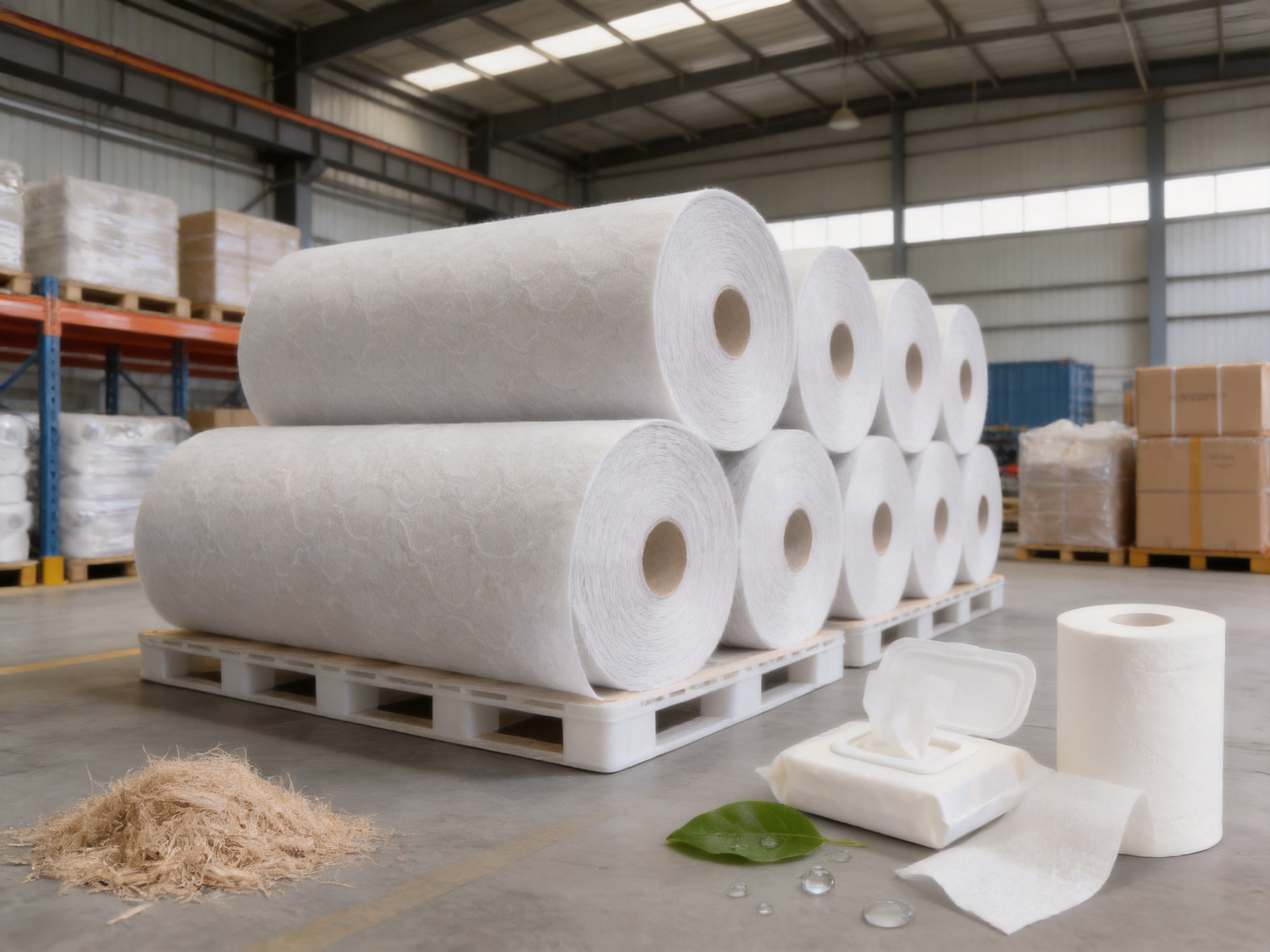
The fabric is available in gram weights from 50g to 100g, allowing manufacturers to select lighter or heavier substrates based on wipe size, lotion load, folding style, and packaging format. Roll widths range from 10cm to 320cm, supporting both narrow converting needs and large-scale production efficiency. Finishing options include hydrophilic treatment, coating, antistatic finishing, and other functional treatments. These finishing technologies help adapt the material to specific processing and consumer performance requirements.
Product Type |
Lyocell/pulp flushable fabric for baby wet wipes |
Standard Composition |
30% lyocell, 70% pulp |
Customization |
Blending ratio can be customized according to performance needs |
Manufacturing Technology |
Wet-laid spunlace, designed for flushable applications |
Pattern |
U style |
Gram Weight |
From 50g to 100g |
Roll Width |
From 10cm to 320cm |
Finishing Options |
Hydrophilic, coating, antistatic, and other functional treatments |
Main Usage |
Baby wet wipes and related hygiene wipe products |
The Advantage of Lyocell in Wet Wipe Fabric
Lyocell is valued in hygiene and nonwoven applications because it combines natural cellulose origin with high performance. It has a smooth surface, good moisture absorption, and higher wet strength than many conventional viscose fibers. In baby wipes, wet strength is essential because the wipe is used after being fully wetted with lotion. A weak substrate may tear, stretch excessively, or deform during use. Lyocell helps the fabric maintain dimensional stability, which improves the user experience and supports efficient converting.
The dimensional stability provided by lyocell is particularly important during manufacturing and packaging. Wet wipes are folded, stacked, saturated, sealed, and dispensed. If a substrate changes shape too easily, it can cause production inefficiencies, uneven folding, or poor dispensing. Lyocell contributes to a more stable web structure, helping manufacturers achieve consistent product quality at scale.
For the consumer, lyocell contributes to a soft, clean, and comfortable wiping sensation. Baby skin is thinner and more sensitive than adult skin, and parents often look for wipes that feel gentle without sacrificing cleaning ability. The fiber’s smoothness helps reduce harshness, while its wet strength supports effective cleaning without needing aggressive rubbing. This combination allows wipe manufacturers to position finished products as premium, gentle, and practical.
The Role of Pulp in Absorbency and Flushable Design
Wood pulp is a key component in the fabric because it absorbs water quickly and helps lock in liquid efficiently. In a baby wet wipe, the substrate must hold enough lotion to feel moist from the first wipe to the last, yet it should not release liquid uncontrollably or feel overly wet. Pulp fibers help build a liquid-friendly structure that supports rapid uptake and retention.
Pulp also plays an important role in flushable and biodegradable product design. Cellulose-based pulp fibers can be engineered into structures that break down more readily under appropriate conditions than synthetic fiber-based wipes. When used in a wet-laid spunlace process, pulp can be distributed evenly throughout the web, supporting both absorbency and dispersibility objectives.
Competitor products that use a high proportion of synthetic fibers may offer strength but can face increasing environmental scrutiny. In contrast, all-cellulose systems such as lyocell/pulp blends support the development of products that align better with consumer expectations for responsible hygiene. While final flushability claims depend on product design, local regulations, test methods, lotion formulation, sheet size, and finished wipe construction, this fabric provides a strong foundation for flushable wipe development.
Wet-Laid Spunlace Technology: A Manufacturing Route for Consistency
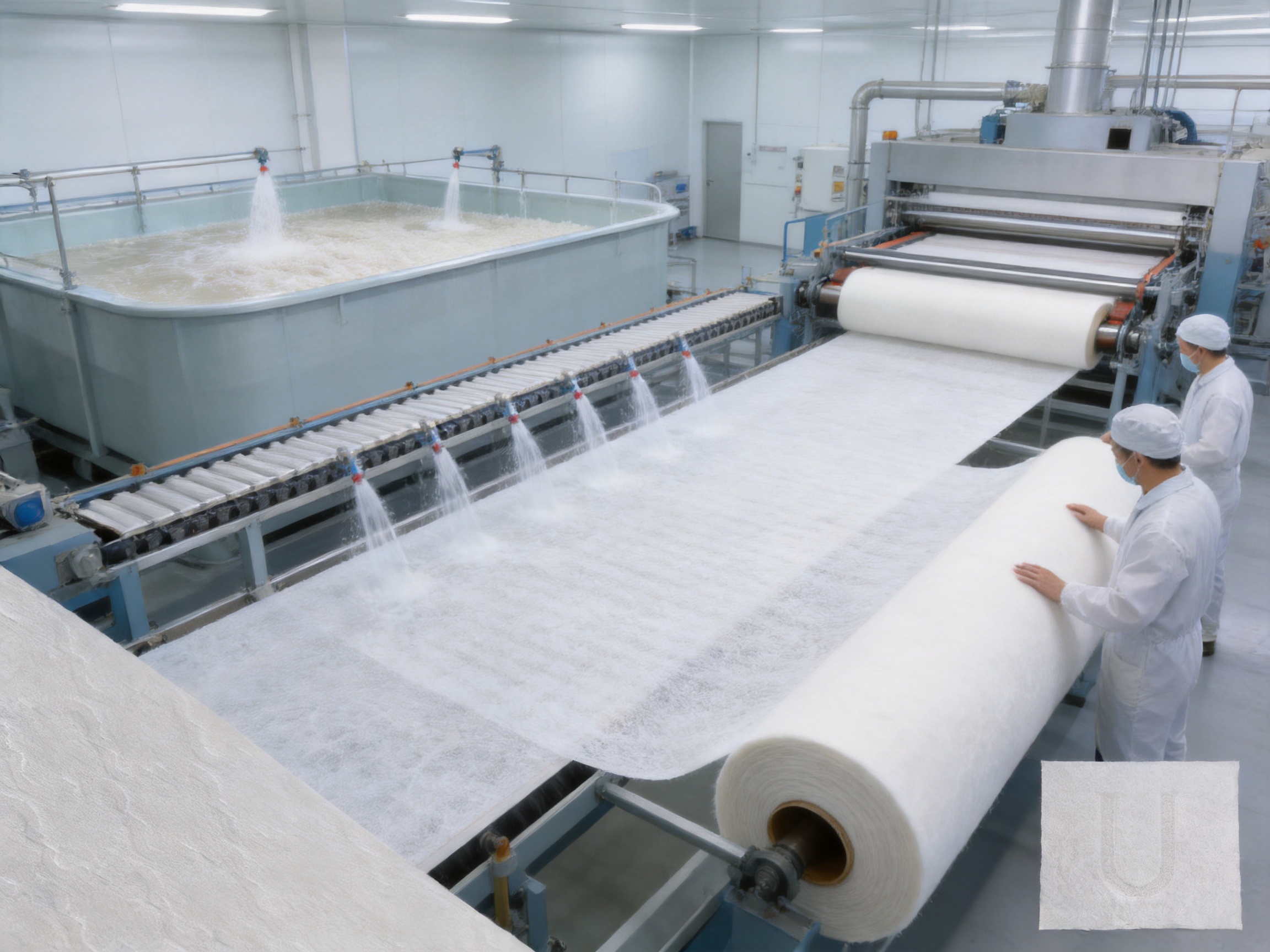
The wet-laid spunlace process combines the uniformity of wet-laid web formation with the bonding power of hydroentanglement. In wet-laid formation, fibers are dispersed in water and laid into a web in a controlled manner. This helps create an even structure, especially when blending shorter pulp fibers with longer regenerated cellulose fibers such as lyocell. Uniform fiber distribution is essential for consistent strength, absorbency, and hand feel across the roll.
Spunlace technology uses high-pressure water jets to entangle fibers mechanically. This bonding method can reduce the need for chemical binders while creating a soft, textile-like structure. For baby wet wipes, mechanical entanglement is particularly valuable because it helps maintain softness while delivering enough integrity for wet use. The result is a nonwoven fabric that feels gentle but performs reliably.
Compared with thermal bonding methods, wet-laid spunlace is more suitable for cellulose-based fibers that are not designed to melt and fuse like synthetic thermoplastic fibers. Compared with adhesive bonding, spunlace can help create a cleaner and softer fabric structure. Compared with air-laid systems, wet-laid formation can provide high uniformity and effective blending of different fiber types. These process advantages support the production of a premium flushable fabric with stable specifications.
Softness and Fluffy Texture for Baby Skin Protection
The U-style pattern and fluffy texture of the fabric are designed to improve skin comfort and wiping performance. A wipe that is too flat may not clean efficiently, while a wipe that is too abrasive may irritate delicate skin. The surface pattern helps create a soft contact area with enough texture to lift residues gently. This balance is essential for baby wet wipes used during diaper changes, hand cleaning, face cleaning, and daily care routines.
Softness is not only a matter of fiber type; it is also influenced by web formation, entanglement energy, basis weight, finishing, and moisture content. By controlling these factors, the fabric can be engineered to feel smooth and cushiony while still maintaining strength. The fluffy structure can also improve lotion distribution, giving the finished wipe a pleasant, moist feel.
Many low-cost wipe substrates compete mainly on price and may compromise softness, uniformity, or environmental profile. This lyocell/pulp fabric is designed for brands that want a more premium user experience. Its combination of cellulose-based fibers, wet strength, absorbency, and soft texture allows finished baby wipes to stand out in a crowded market where parents increasingly compare touch, safety perception, and sustainability.
Strength Without Sacrificing Dispersibility
One of the major technical challenges in flushable wet wipe substrates is achieving strength during use while allowing the product to break down after disposal under appropriate conditions. If a wipe is too strong, it may not disperse as needed. If it is too weak, it may fail during use. The lyocell/pulp blend is designed to address this contradiction by using lyocell for wet-use strength and pulp for absorbency and dispersible structure.
Wet strength matters because baby wipes are pulled from packs, unfolded, stretched, rubbed, and sometimes used on uneven surfaces. The wipe must resist tearing in the consumer’s hand. Lyocell contributes to this in-use durability. At the same time, the high pulp content supports water responsiveness and potential breakdown behavior in flushable product designs.
This balanced structure gives manufacturers greater flexibility than many competitor materials. A synthetic-reinforced wipe may be strong but less environmentally favorable. A low-strength dispersible sheet may not satisfy consumer expectations. A carefully engineered lyocell/pulp wet-laid spunlace fabric can support both usability and responsible design objectives.
Absorption, Liquid Locking, and Lotion Compatibility
A baby wet wipe substrate must interact effectively with lotion. It must absorb lotion during production, retain it during storage, and release it evenly during use. If the substrate absorbs too slowly, production speed may be affected. If it releases liquid too quickly, the wipe may feel overly wet at first and dry later. If it holds liquid too tightly, cleaning performance may decline. The lyocell/pulp blend provides a useful balance of absorption and controlled release.
Pulp fibers absorb liquid rapidly, helping the sheet take in lotion efficiently during converting. Lyocell also contributes moisture management and helps maintain the structural integrity of the wet sheet. Together, the fibers support a wipe that feels moist, stable, and comfortable. Hydrophilic finishing can further improve liquid uptake and uniformity, depending on customer needs.
For manufacturers, good lotion compatibility can reduce production waste, improve packing consistency, and support reliable shelf performance. For consumers, it creates a wipe that feels pleasantly moist and effective from the first sheet to the last. This advantage becomes especially important in baby care, where dryness, roughness, or uneven wetness can quickly lead to dissatisfaction.
Customization for Brand Differentiation
The product is not limited to a single fixed specification. The blending ratio, gram weight, roll width, pattern, and finishing technology can be customized. This flexibility is valuable for private label brands, OEM customers, and established hygiene companies seeking differentiated products. A premium baby wipe may require a heavier basis weight and extra softness. A value-oriented flushable wipe may prioritize cost efficiency and dispersibility. A sensitive-skin product may need a specific lotion interaction and ultra-soft hand feel.
Customization also supports different regional requirements. Markets may differ in consumer preferences, packaging formats, flushability expectations, and regulatory frameworks. By adjusting the fiber blend and production parameters, the fabric can be tailored to support these varied needs. This makes it suitable for both local brands and international product programs.
Roll width flexibility from 10cm to 320cm allows compatibility with a wide range of converting equipment. Narrower rolls can serve specialized production lines, while wider rolls support large-scale converting efficiency. Gram weights from 50g to 100g provide options for lightweight, standard, and premium wipes. Finishing technologies such as hydrophilic treatment, coating, and antistatic processing further expand design possibilities.
Company Manufacturing Strength Behind the Product
Zhejiang Uniquality Nursing Products Technology Co., Ltd., together with Kingsafe & Uniquality, brings decades of experience in nonwoven materials and hygiene products. Founded in 1987, the company has grown into a national high-tech enterprise specializing in research, development, production, and sales of medical and hygienic nonwoven materials, nursing products, and high-end clothing interlining. This background is important because flushable fabric for baby wet wipes requires both material science expertise and large-scale production capability.
The company is headquartered in Changxing, Huzhou, in the Yangtze River Delta region, an area known for convenient land, sea, and air transportation. This location supports efficient logistics for domestic and international customers. Over more than 30 years of development, the enterprise has established multiple production bases in China, including facilities in Guangdong, Jiangsu, and Hubei. This production network helps provide capacity, supply stability, and responsiveness to customer orders.
The company has ranked among leading enterprises in China’s industrial textile industry and has been recognized among major global nonwoven manufacturers for consecutive years. Such industry standing reflects not only production scale but also technical capability, quality management, and continuous innovation. For customers choosing a flushable baby wet wipe substrate, the strength of the manufacturer is as important as the material specification itself.
Advanced Equipment and International Technology
The company has introduced advanced production equipment and technology from Germany, France, and Italy. Internationally sourced equipment supports precision, efficiency, and consistency in nonwoven manufacturing. For wet-laid spunlace fabric, equipment quality directly influences web uniformity, entanglement control, basis weight stability, and surface appearance. In baby wipe applications, small variations in substrate quality can affect converting speed, lotion absorption, folding, packaging, and final consumer satisfaction.
Advanced production systems enable tighter process control. Fiber dispersion, web formation, hydroentanglement, drying, winding, inspection, and finishing must be managed carefully. A reliable manufacturing platform reduces defects such as uneven texture, weak spots, excessive lint, roll instability, or inconsistent thickness. These strengths help customers build stable supply chains and maintain finished product quality.
Competitors with less advanced equipment may struggle to provide consistent quality at scale, especially for customized cellulose-based flushable substrates. By combining imported technology with decades of nonwoven manufacturing experience, the company can support both standard product supply and tailored development projects. This is a major advantage for customers who need repeatable performance across large orders.
Broad Expertise Across Nonwoven and Hygiene Categories
The company’s product coverage includes spunlace nonwoven fabrics, spunmelt nonwoven fabrics, hot air through nonwoven fabrics, flushable and degradable nonwoven fabrics, wet wipes, dry wipes, baby diapers, pull-ups, wet toilet paper, cleansing wipes, and related products. This broad portfolio provides a strong knowledge base for developing baby wet wipe materials. Understanding both raw substrate production and finished wipe manufacturing helps the company anticipate practical converting and consumer-use requirements.
For example, a substrate supplier that also understands wet wipe production can better optimize roll structure, lotion absorption, folding behavior, and packaging compatibility. A manufacturer experienced in baby diapers and pull-ups also understands the broader baby care market, including expectations for softness, safety perception, absorbency, and skin comfort. This cross-category expertise supports more effective product development.
The company is able to meet customer needs for differentiation, functionalization, and customization. This capability is especially valuable in the private label and OEM/ODM markets, where customers may require unique specifications, brand-specific performance, or packaging-ready solutions. Rather than supplying only a basic commodity substrate, the company can support a more complete product development pathway.
Advantages Over Common Competing Materials
In the wet wipes market, substrates vary widely. Some products use polyester/viscose blends, some use polypropylene-based structures, some rely on traditional viscose, and others use air-laid pulp-based sheets. Each material has strengths and limitations. Lyocell/pulp flushable fabric offers an attractive balance that can outperform many common alternatives in baby wet wipe applications.
Compared with synthetic-containing wipes, the lyocell/pulp fabric offers a cellulose-based structure that better supports biodegradability and environmentally responsible positioning. As consumers become more aware of plastic content in disposable wipes, brands using cellulose-based substrates can communicate a stronger sustainability story. This is especially relevant for baby care, where parents often prefer products that feel safer, softer, and more responsible.
Compared with all-pulp or weak dispersible substrates, the lyocell component improves wet strength and dimensional stability. This helps prevent tearing and deformation during use. A wipe that breaks too easily can frustrate users and may require multiple sheets for one cleaning task, reducing both convenience and cost-effectiveness.
Compared with conventional viscose/pulp structures, lyocell can offer higher wet strength and a premium touch. While viscose remains widely used, lyocell provides performance advantages that are well suited to higher-end wipe products. Its smooth feel and strength help finished products achieve a more refined user experience.
Compared with low-cost commodity nonwovens, this fabric provides stronger customization potential. Gram weight, width, fiber ratio, pattern, and finishing can be adjusted. This allows customers to develop targeted products rather than accepting one-size-fits-all material. For brands competing in crowded retail channels, such differentiation can be decisive.
Environmental Responsibility and Biodegradable Potential
Environmental expectations for disposable hygiene products continue to rise. Wet wipes, in particular, are frequently discussed in relation to plastic content, sewer impact, and waste management. A lyocell/pulp fabric addresses these concerns by using cellulose-based fibers that are biodegradable under suitable conditions. The high pulp content and lyocell component create a material direction that is more aligned with responsible product design than synthetic-heavy substrates.
Flushable product development must be handled carefully and honestly. A material described as flushable should be evaluated in the context of finished product design and recognized test protocols. Sheet dimensions, wet strength, lotion chemistry, packaging moisture, basis weight, and local wastewater requirements can all influence performance. This fabric provides a suitable foundation for flushable applications, but final products should be tested according to relevant standards and market regulations.
For brands, using a cellulose-based flushable substrate can support clearer communication with environmentally conscious consumers. It can help reduce reliance on fossil-derived fibers and contribute to product lines focused on biodegradability and responsible disposal. As retailers and regulators raise expectations for wipe labeling and performance, material selection becomes a strategic decision.
Quality Control and Supply Reliability
Quality control is essential in baby care materials. A wet wipe substrate must be consistent from roll to roll and batch to batch. Variations in basis weight, softness, strength, absorption, or width can create converting problems and inconsistent consumer experience. The company’s long history in nonwoven manufacturing, advanced production equipment, and multiple production bases help support stable quality and reliable supply.
Supply reliability matters because wet wipe production is typically high-volume and schedule-sensitive. Delays or inconsistent materials can disrupt filling lines, packaging operations, retail commitments, and private label programs. A manufacturer with large-scale capacity and established industry experience can reduce these risks. This is especially important for international customers who require predictable lead times and export-ready support.
The company’s ability to provide OEM and ODM services further strengthens customer cooperation. Customers can develop private label wipes, diapers, training pants, wet toilet paper, cleansing wipes, and other hygiene products with support from an experienced manufacturing partner. For customers seeking both substrate and finished product expertise, this integrated capability can reduce development complexity.
Applications in Baby Wet Wipes and Beyond
The primary application of the lyocell/pulp flushable fabric is baby wet wipes. In this use, the fabric supports gentle cleaning, lotion absorption, wet strength, softness, and potential flushable product design. Baby wet wipes may be used during diaper changes, after feeding, during travel, or for general daily hygiene. A high-quality substrate can improve every one of these use occasions.
Beyond baby wet wipes, similar material concepts may be suitable for wet toilet paper, personal cleansing wipes, sensitive-skin wipes, feminine hygiene wipes, and other flushable or biodegradable wipe products. The exact specification should be adjusted according to the application. For example, wet toilet paper may prioritize dispersibility and toilet compatibility, while baby wipes may prioritize softness and skin comfort. Personal cleansing wipes may require a different balance of strength, thickness, and lotion release.
The availability of customized fiber ratios and finishing treatments makes the fabric adaptable across product categories. This versatility helps brands create families of hygiene products with a consistent sustainability message and performance profile.
How the Fabric Supports Private Label and OEM Product Development
Private label hygiene products must compete directly with established brands, often while meeting strict retailer requirements for quality, price, sustainability, and packaging appearance. A strong substrate is the foundation of a successful wet wipe. If the fabric performs poorly, even a well-designed lotion and package cannot fully compensate. Lyocell/pulp flushable fabric gives private label developers a premium material platform with clear advantages.
The company’s experience as a manufacturer and factory for private label wipes, baby diapers, training pants, and related nursing products allows it to support customers from concept to production. Customers can select substrate specifications, request performance adjustments, develop finished wipe formats, and coordinate production according to target market needs. This integrated service model is particularly useful for buyers who want to reduce supplier complexity.
OEM and ODM support can include material selection, functional finishing, product testing guidance, packaging compatibility, and mass production planning. With advanced nonwoven manufacturing and hygiene product experience, the company can help customers move from idea to commercial product more efficiently. This is a competitive advantage over suppliers that provide only raw material without application support.
Consumer Experience: What Parents Notice
Parents may not know the technical details of wet-laid spunlace manufacturing or lyocell fiber chemistry, but they quickly notice how a wipe feels and performs. They notice whether it is soft enough for the baby’s skin, whether it tears when pulled from the pack, whether it is moist enough, whether it cleans effectively, and whether it feels trustworthy. A well-designed lyocell/pulp fabric contributes directly to these consumer impressions.
The soft and fluffy texture helps the wipe feel gentle. The wet strength helps it stay intact. The absorption and liquid locking help it remain moist and comfortable. The cellulose-based composition supports a more responsible product image. Together, these qualities can improve repeat purchase rates and brand loyalty.
In baby care, trust is critical. Parents often choose products based on comfort, safety perception, and reliability. A wipe that feels premium and performs consistently can strengthen a brand’s position. For manufacturers and retailers, investing in a higher-quality substrate can therefore create value beyond the material itself.
Technical Balance: Why the 30% Lyocell and 70% Pulp Blend Works
The standard 30% lyocell and 70% pulp composition reflects a practical balance between strength and absorbency. Lyocell provides wet strength and stability, while pulp provides absorbency, softness contribution, and flushable design potential. Too little lyocell may reduce in-use durability. Too much lyocell may increase cost or affect dispersibility goals. The 30/70 structure offers a strong starting point for baby wet wipes.
However, different customers may need different ratios. A premium wipe with higher strength requirements may benefit from an adjusted lyocell content. A product focused heavily on dispersibility may require a different balance. This is why customization is important. The manufacturer can work with customers to align fiber ratio with product goals, cost targets, and market requirements.
The gram weight range from 50g to 100g also supports performance tuning. Lighter materials may be suitable for economical or compact wipes, while heavier materials may create a thicker, more luxurious feel. The selected weight should match wipe size, lotion level, packaging type, and consumer expectations.
Finishing Technologies That Enhance Performance
Finishing technology can significantly influence how a wipe substrate performs. Hydrophilic finishing improves liquid affinity, helping the fabric absorb lotion quickly and evenly. Coating can provide additional functional properties depending on the product design. Antistatic finishing may improve processing and handling in certain converting environments. Other treatments can be considered based on customer requirements.
The goal of finishing is not simply to add features, but to optimize the material for its final use. For baby wet wipes, finishing should support softness, skin comfort, lotion compatibility, and production efficiency. The right finishing process can help reduce issues such as uneven wetting, difficult unwinding, static-related handling problems, or inconsistent surface feel.
Because the company has experience across multiple nonwoven technologies and hygiene products, it can recommend finishing approaches that align with practical production needs. This application knowledge helps customers avoid trial-and-error development and achieve more stable commercial results.
Logistics, Scale, and Global Customer Support
The company’s location in the Yangtze River Delta provides access to efficient transportation routes. For international customers, logistics reliability is an important part of supplier selection. Materials must be delivered on time, properly packed, and consistent with order specifications. Large production capacity and multiple bases help support stable supply for customers with ongoing procurement needs.
Scale also matters when customers plan to grow. A small supplier may be able to produce trial quantities but struggle with large commercial orders. A leading nonwoven manufacturer with decades of production experience can better support expansion from sample development to mass production. This makes the company a suitable partner for both emerging brands and established hygiene product companies.
Long-term cooperation with well-known domestic and international brands further reflects the company’s ability to meet demanding customer requirements. In hygiene products, supplier relationships are built on quality, trust, responsiveness, and technical capability. The company’s history and industry position strengthen confidence in its ability to support long-term projects.
Q&A Section
What is lyocell/pulp flushable fabric for baby wet wipes?
It is a wet-laid spunlace nonwoven fabric made from lyocell and pulp fibers. The standard composition is 30% lyocell and 70% pulp, with customization available. It is designed for baby wet wipes and other hygiene wipe applications where softness, absorbency, wet strength, biodegradability, and flushable product design are important.
Why is lyocell used in the fabric?
Lyocell provides high wet strength, smooth touch, and dimensional stability. These properties help the wipe remain intact after being saturated with lotion and used for cleaning. Lyocell also supports a soft skin-contact feel, which is important for baby care products.
What does pulp contribute to the material?
Pulp contributes rapid water absorption, liquid retention, softness, and a cellulose-based structure that supports biodegradable and flushable product concepts. It helps the wipe absorb lotion efficiently and provides an important foundation for dispersible design.
Is the blending ratio fixed?
No. The standard ratio is 30% lyocell and 70% pulp, but the blending ratio can be customized. Customers can adjust the composition according to desired strength, softness, absorbency, dispersibility, cost, and market requirements.
What manufacturing technology is used?
The fabric is produced using wet-laid spunlace technology. Wet-laid formation helps distribute fibers evenly, while spunlace hydroentanglement mechanically bonds the fibers with water jets. This creates a soft, uniform, and functional nonwoven fabric suitable for wet wipe applications.
What gram weights are available?
The fabric is available from 50g to 100g. Lighter weights can support economical or compact wipe designs, while heavier weights can provide a thicker and more premium feel.
What roll widths are available?
Roll widths range from 10cm to 320cm, allowing the material to fit different converting machines, wipe sizes, and production formats.
What finishing options are available?
Finishing options include hydrophilic treatment, coating, antistatic finishing, and other functional treatments. These options help improve liquid absorption, processing performance, and final product characteristics.
How does this fabric compare with synthetic wet wipe substrates?
Compared with synthetic-containing substrates, this lyocell/pulp fabric provides a cellulose-based material direction that better supports biodegradability and environmentally responsible product positioning. It also maintains softness and wet strength suitable for baby wet wipes.
How does it compare with all-pulp materials?
All-pulp materials can absorb liquid well and may disperse more readily, but they can lack wet strength. The addition of lyocell improves dimensional stability and in-use durability while maintaining a high pulp content.
Can this fabric be used for products other than baby wet wipes?
Yes. Depending on specification and testing, it may be suitable for wet toilet paper, personal cleansing wipes, feminine hygiene wipes, sensitive-skin wipes, and other biodegradable or flushable wipe concepts.
Does the material guarantee flushability in every market?
Flushability depends on the finished product design, test standards, local regulations, lotion chemistry, sheet size, and disposal conditions. The fabric is designed for flushable applications, but final products should be tested according to relevant standards and market requirements.
Why is the manufacturer’s experience important?
Flushable baby wipe fabric requires technical control over fiber blending, wet-laid formation, spunlace bonding, finishing, and roll quality. An experienced manufacturer with advanced equipment and large-scale production capability can provide more consistent quality and stronger customization support.
Conclusion
Lyocell/pulp flushable fabric for baby wet wipes offers a strong combination of softness, wet strength, absorbency, dimensional stability, biodegradability, and customization potential. By blending 30% lyocell with 70% pulp, the material provides a balanced structure that meets the practical needs of baby wet wipe production while supporting environmentally responsible product development. Its wet-laid spunlace manufacturing process creates a uniform, soft, and functional nonwoven fabric suitable for premium hygiene applications.
For brands and manufacturers, the fabric provides advantages over many competing materials. It offers a more responsible alternative to synthetic-heavy substrates, stronger wet-use performance than many all-pulp materials, and greater customization flexibility than commodity nonwovens. With options for gram weight, roll width, fiber ratio, pattern, and finishing, it can be tailored to different product strategies and market requirements.
Behind the product is a manufacturer with decades of nonwoven and hygiene product experience, advanced international equipment, multiple production bases, and strong OEM/ODM capabilities. This manufacturing foundation supports consistent quality, large-scale supply, and technical collaboration. For baby wet wipe brands seeking a substrate that combines gentle care with reliable performance and responsible material design, lyocell/pulp flushable fabric is a compelling solution.
References
1. EDANA and INDA. Guidelines for Assessing the Flushability of Disposable Nonwoven Products.
2. Woodings, C. Regenerated Cellulose Fibres. Woodhead Publishing.
3. Russell, S. J. Handbook of Nonwovens. Woodhead Publishing.
4. Kissa, E. Wet Forming of Nonwovens and Cellulose-Based Web Structures. Textile and Nonwoven Technical Literature.
5. INDA. Nonwoven Fabrics Handbook.
6. European Disposables and Nonwovens Association. Sustainability and Performance Considerations for Single-Use Hygiene Products.